
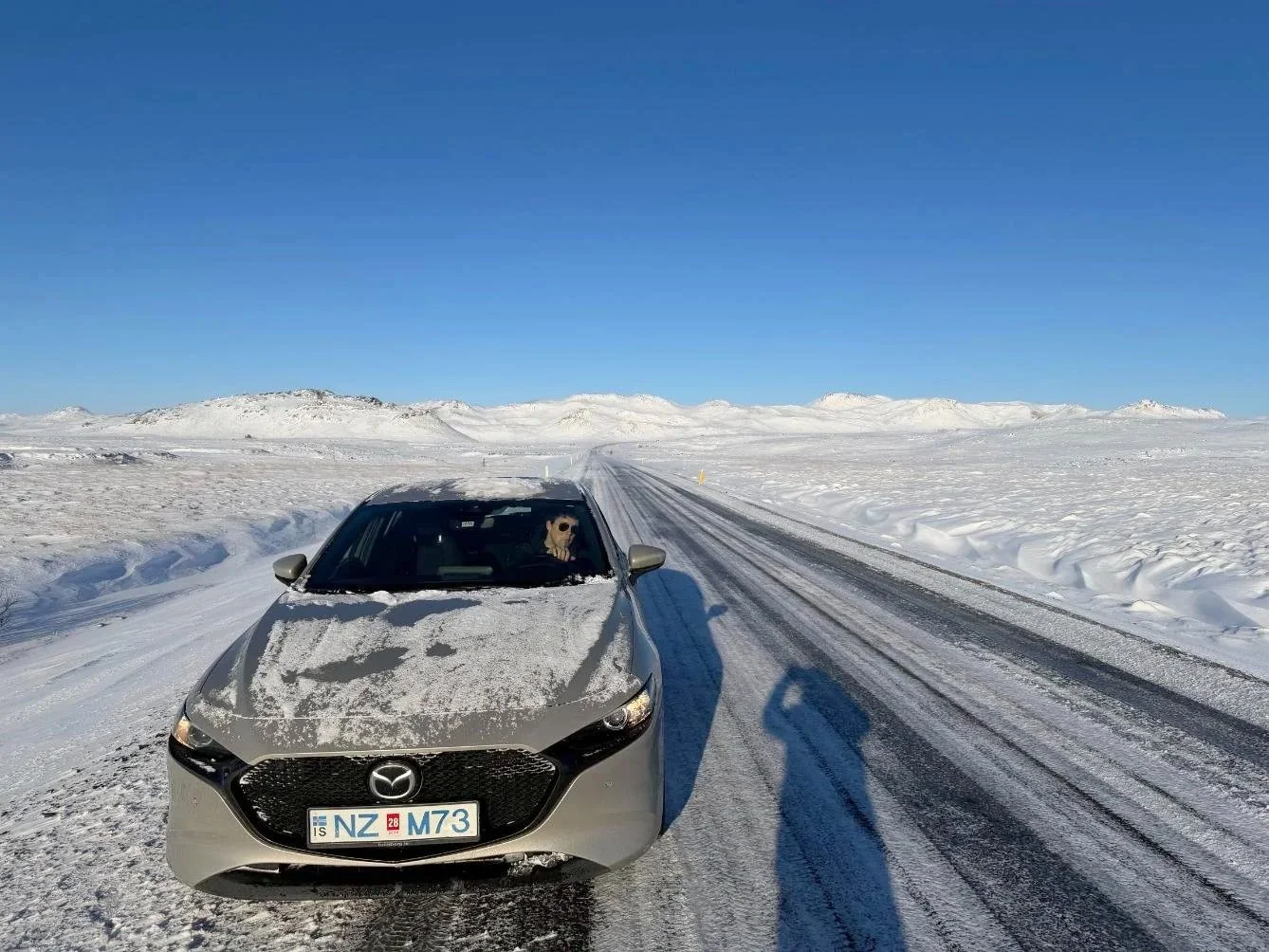
Jake testing his Arctic-driving skills in February!
We've driven Iceland three times, twice in fall and once in winter, and the rental car is always a big decision. It sets your route, your budget and how much stress you carry on the road. Rules and fees also changed in 2026, so make sure to read our latest updates below.
This guide to renting a car in Iceland covers whether you need a car at all, who can rent one, 4x4 or regular, the insurance that matters, winter driving and the new per-kilometer fee.
And if you’re driving south, read our Ring Road Self-Drive guide, and our guide to Where to Stay on Iceland's Ring Road.
🛌 Where to stay:
• Hotel Keflavik — Where we stayed, 5 minutes from the airport, a handy first or last night around your car pickup and return.
• Brekka Retreat, Hvalfjörður — We stayed in the Rok spa suite, with a kitchen, sauna and hot tub.
• Aurora Igloo South, Hella — Our private igloo near Hella, with a heated bed and a sky full of stars.
🇮🇸 Top experiences:
• Silfra snorkeling with Tröll Expeditions — We snorkeled between two continents, just the two of us and our guide.
• Ice cave and glacier hike with Icelandia — We hiked the glacier and ice cave in Skaftafell with Icelandic Mountain Guides.
• Lava field horseback ride with Sólhestar — We rode the Red Lava Horse Riding Tour near Hafnarfjörður.
• Northern lights tour from Reykjavík — A Viator tour for the nights you'd rather not drive.
🚗 Compare car rentals in Iceland — We rented a Hyundai i10 from Avis through Booking.com, with the premium insurance added.
Jump to: Do you need a car · Who can rent · 4x4 or regular · Insurance · Winter · Pick up and booking · Costs and fees · Driving rules · FAQ
Renting a car in Iceland: quick answer
Do you need a car? Not for Reykjavik, but it would be a shame to just stay there. Not if you book tours for everything. Yes for the Ring Road self-drive, Snæfellsnes or anything with several bases.
Which car? A regular car for paved roads, and a 4x4 only for F-roads, where it's the law.
Insurance: add gravel protection and sand and ash protection.
Winter: rentals have winter tires, and you should check road conditions daily.
Where to pick up: Keflavik Airport, or Akureyri if you visit the North.
New in 2026: a per-kilometer fee on every vehicle.
Do you need to rent a car in Iceland?
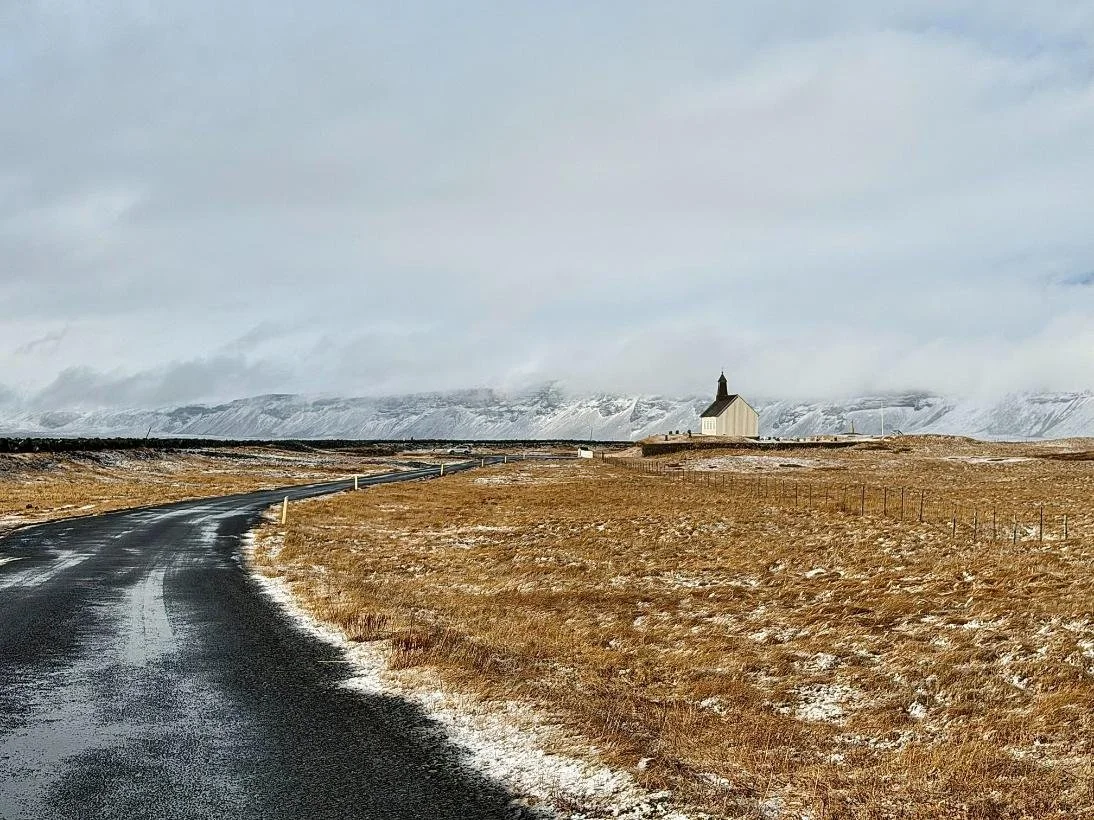
Road to Strandarkirkja church in Selvogur, completely off the beaten path
It depends on the trip. If you're staying in Reykjavik and use it as a base for tours, you probably don't. The city center is compact and relatively flat, and city buses cover the rest. Keflavik Airport is about 50 km from the capital, and the Flybus takes around 45 minutes to the BSÍ bus terminal.
Outside the capital, the answer changes. Local buses don't stop at waterfalls or viewpoints, and rural schedules are thin, especially in winter. If you only have a few days, guided trips to the Golden Circle and the South Coast work well, and you can browse Iceland tours here.
For the Ring Road self-drive, Snæfellsnes, or any trip with more than one base, we'd definitely rent. Our winter guide puts it plainly: a car is essential in Iceland. In winter, storms can delay rural buses and close roads, so if you're nervous about driving in snow, ice and wind, a Reykjavik base with day tours is a good option.
📖 Read our full guide: Iceland Road Trip: South Ring Road Self-Drive
Also useful: Where to Stay on Iceland's Ring Road - How to Travel Iceland on a Budget
Can you rent a car in Iceland? Age, license and credit card
Yes, most visitors can. Rules vary by company, so check yours before you book. These are the usual ones:
Age
Most companies set the minimum at 20 for a regular car. Many 4x4s need a driver of 23 or older, and a few vehicles go higher. Drivers under 25 may pay a young driver charge.
License
You'll need to have held it for at least 12 months. A license in English or in Roman script is accepted. Otherwise you'll need an official translation, and an International Driving Permit is recommended (they didn’t check ours, but just in case).
Credit card
Most rental car companies require a valid credit card in the driver's name. Some offer a package that lets you rent without one, so check before you book.
4x4 or regular car for Iceland?
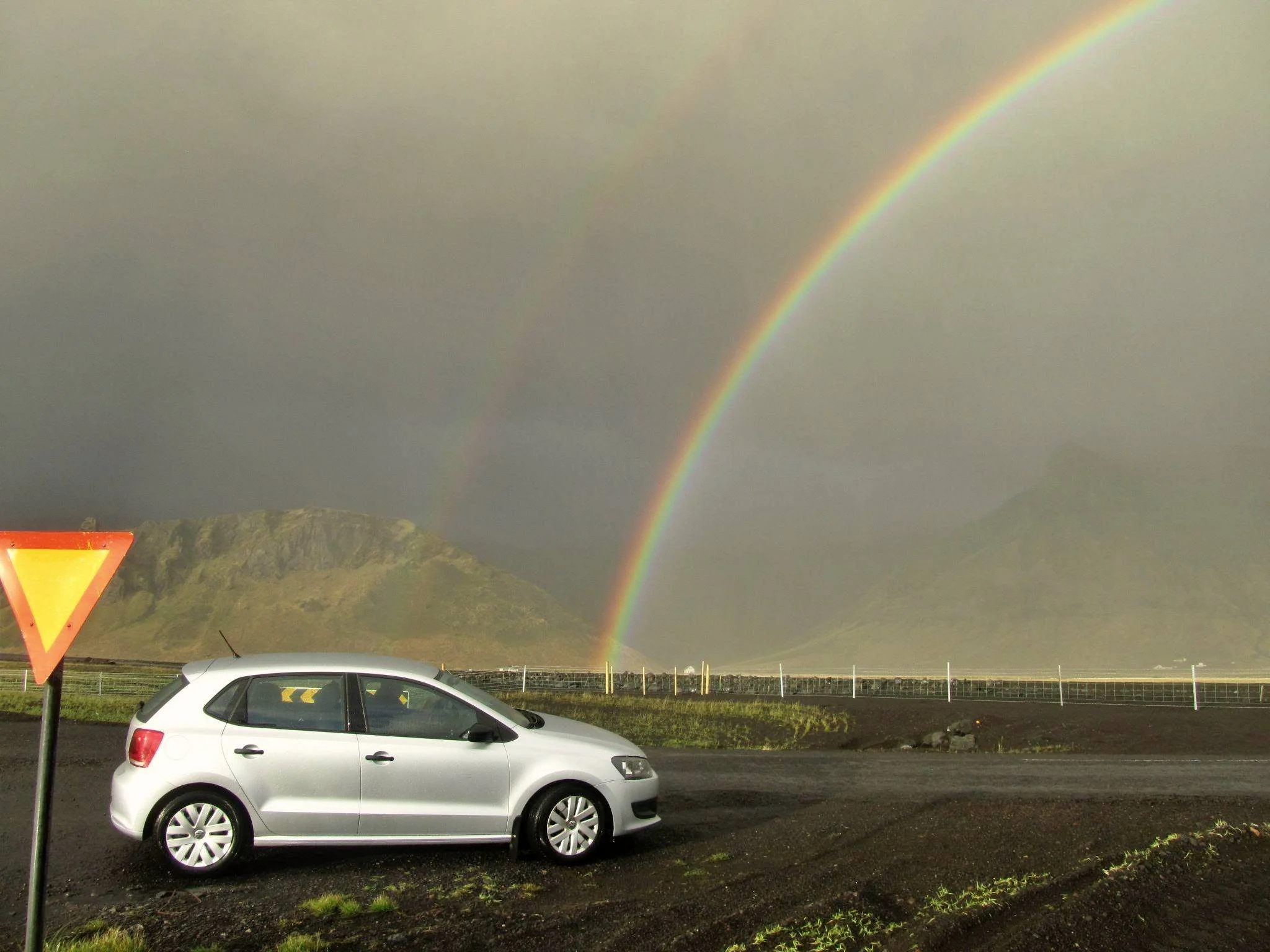
We usually rent a regular car. Here near Vík
For most trips, a regular car is enough. The Ring Road, the Golden Circle, the South Coast and Snæfellsnes are paved. The money you save can go toward accommodation closer to Jökulsárlón. A 4x4 can cost a lot more than a small 2WD, and manual cars usually cost less than automatics if you can drive one.
The exception is F-roads. These are the highland mountain tracks, and a 4x4 is legally required. Driving a regular car on an F-road is dangerous and illegal, and it can void your rental insurance. Most F-roads open between June and early July and close in September, depending on snow melt. Check road conditions before you go.
Not every 4x4 qualifies, either. Rental companies mark which models are highland capable. Many F-roads also have unbridged rivers, and no Icelandic rental insurance covers river crossings. That being said, most first-time visitors don't need the highlands at all.
Winter is a different question. If you strictly stay on Road 1, the Ring Road, you don't need a 4x4, as long as you have some winter driving experience. If you take smaller roads, a 4x4 makes it easier. We got through our itinerary in a Hyundai i10, but we sometimes had traction issues on steep, narrow roads with a lot of snow. Jake did really well, but he has snow and Arctic-driving experience!
Rental car insurance in Iceland
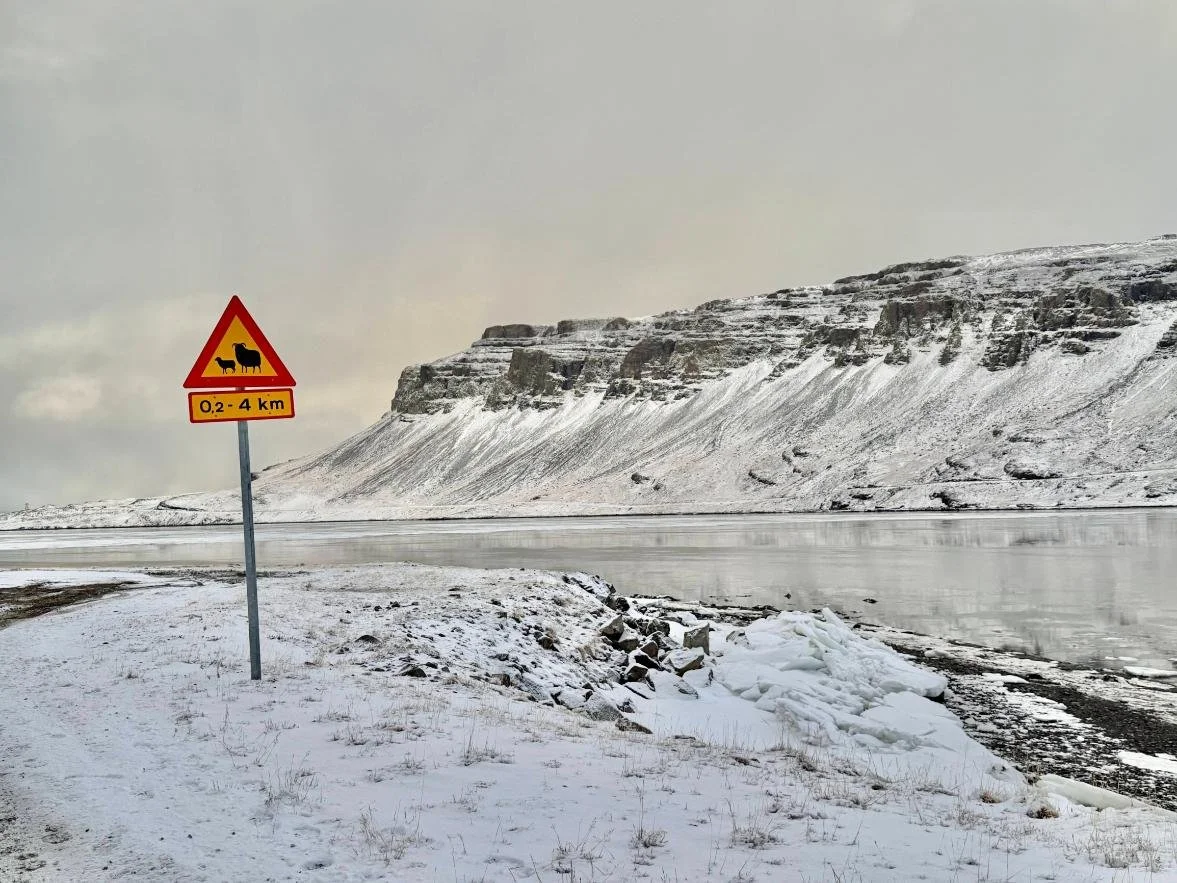
Watch out for crossing sheep in summer!
A collision damage waiver and third-party liability come with every rental and meet the legal minimum. But they leave you with an excess, and standard cover often excludes damage from gravel, sand and volcanic ash. Those are the three things Iceland's roads and weather do to cars. On my first trip to Iceland, we pulled over on the side to look at the mysterious Kleifarvatn and see if we could spot the monster. Little did we know that volcanic sand is not like regular sand! We couldn’t get the car out, not even with rocks under the wheels, and had to wait an hour for a local car to stop and help us out!
Super collision damage waiver lowers your excess.
Gravel protection covers chips and cracks to the paint, windshield and headlights, and it's the one we'd never skip.
Sand and ash protection covers wind-blown sand and volcanic ash, and the highest-risk stretch is the South Coast from Vík to Jökulsárlón.
Tire protection is sold separately at some companies, and without it, a tire is your cost. Prices change, so read the terms of your own rental.
Some things aren't covered anywhere. River crossings and water damage are excluded. So are damage to the undercarriage and drivetrain from rough roads, and anything from off-road driving or banned routes.
If you plan to rely on credit card coverage, get written confirmation that it covers gravel, tires, windshields and 4x4s in Iceland, since those are often excluded.
🐧 Penguin tip: At pickup, photograph and film the whole car and have every existing mark written on the agreement. Check the lights, tires and spare too.
For your own medical and trip cover, see our Travel Insurance for Iceland guide.
Car rental in Iceland in winter
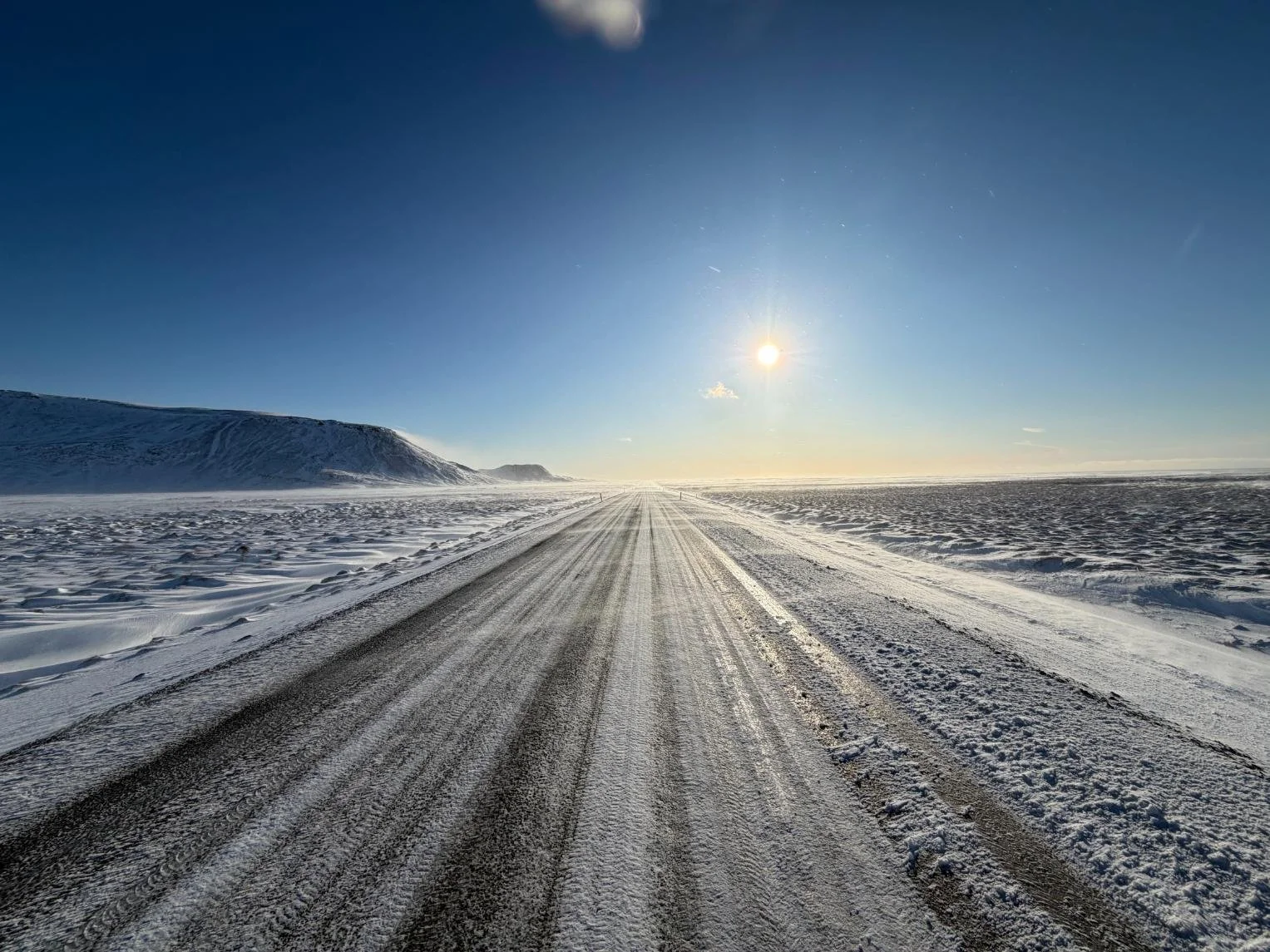
Reykjanes roads get icy and windy in winter. Here in February!
Our last winter trip was 17 days of driving, ending at Hotel Keflavik in March 2026. Rental companies fit winter tires automatically from October to April, and studded tires are allowed from early November to mid-April. Winter tires help, but they really don't make you… invincible!
Black ice is common, especially on bridges, which freeze before the road does. Even major roads can ice over. Wind is the other hazard. Slow down or wait when gusts reach roughly 15 to 20 meters per second, hold the door firmly when you open it (we can’t stress that enough. If you think you know strong wind, think again), and park facing into the wind. Some policies exclude wind-damaged doors, so check yours.
In December you may get only four to five hours of daylight, so plan fewer kilometers per day than in summer. Check road.is every morning, watch the weather at en.vedur.is and read alerts at safetravel.is. Don't drive in orange or red storm warnings.
Many companies sell a zero-excess upgrade. In winter, it's worth pricing out. And if you're going for the northern lights, our guides cover where to stay and when to go.
📖 Read our full guide: Things to Do in Iceland in Winter
Also useful: Best Northern Lights Hotels in Iceland - Best Time for Northern Lights in Iceland - Northern Lights in Iceland: Is It Worth It?
Where to pick up your rental car in Iceland and when to book
We rented a Hyundai i10 from Avis, booked through Booking.com. We added Booking.com's premium insurance, which we've tested on earlier rentals and it worked well, and our Genius membership gave us 10% off. Genius discounts vary by account, so check yours at checkout.
We pick up our car at Keflavik Airport on arrival rather than in the city. It saves the transfer, and you can drive out in whatever direction the trip goes. If your first nights are in Reykjavik and you won't need a car there, pick it up on the day you leave instead, because city parking is limited and divided into colored zones.
Book early. Last-minute bookings in peak season can cost multiple times what the same car costs months ahead, so lock in the car as soon as your flights and accommodation are set. Comparing rental companies in one search is faster than checking each site.
🐧 Compare car rentals at Keflavik Airport
Return the car with a full tank, which is standard, unless you rent an electric car. Filling up at the airport or nearby is usually more expensive than on the road. If you're traveling for longer with a partner, a campervan is also worth a look as a budget option, and our Iceland budget guide covers it.
📖 Read our full guide: Hotels in Keflavik, Near the Airport and the Blue Lagoon
Also useful: Hotel Keflavik & Spa - Hotels in Reykjavik
Costs and fees: the new kilometer fee, tolls, fuel and parking
Kilometer fee
Since January 1, 2026, Iceland charges a kilometer fee on all vehicles. For cars up to 3.5 tonnes, the government rate is ISK 6.95 per kilometer. Rental companies pass it on based on distance driven, and some add a service fee, which Hertz lists at ISK 1.40 per kilometer plus VAT. On a 2,000 km trip, the government fee alone is about ISK 13,900. It appears on your rental agreement, separate from the daily rate.
Tolls
Tolls are few. Vaðlaheiðargöng, the tunnel near Akureyri, charges about ISK 2,216 per trip, and you pay online by license plate within 24 hours before or after you drive through. A toll on the Ring Road section near Höfn is now active, listed at ISK 1,500 per trip, with a lower rate for repeat crossings in the same month. The Hvalfjörður tunnel is free. If you miss a payment, the rental company usually charges your card, with a handling fee. Prices can change any time.
Fuel
Fuel is cheaper at self-service stations like ÓB, Orkan and Atlantsolía, which take card or phone payment. Stations are scarce on stretches of the south and east, so fill up whenever you see one east of Vík.
Parking
Parking is now paid (it wasn’t on my first two trips) at popular stops like Þingvellir, Reynisfjara and Jökulsárlón, and you usually pay on arrival, so keep a payment app handy.
Iceland driving rules at a glance
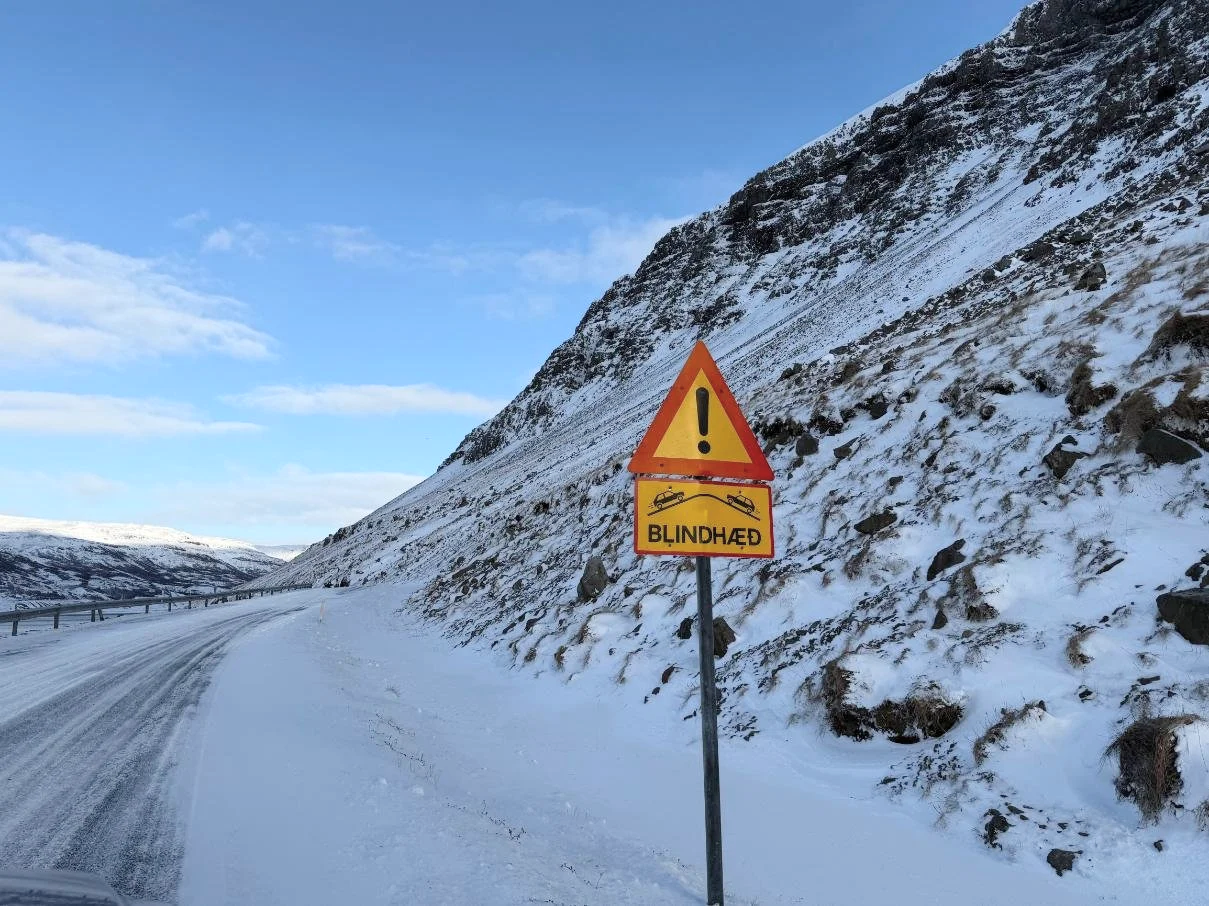
Our favorite road sign, here in Hvalfjördur
Speed limits
Speed limits are 50 km/h in towns, 80 on gravel and 90 on paved rural roads, unless a sign says otherwise. Headlights stay on at all times, and seat belts are mandatory for everyone. The blood alcohol limit is 0.02 percent, which is about one beer, so skip it if you're driving. Handheld phones are illegal.
Slow down before the road turns to gravel, not after. Sheep roam free from May to October, and if you hit one, you're liable for compensation. They’re very stubborn and can linger on the warm tarmac, so be patient! There are also a few reindeer near Jökulsárlón. Off-road driving is illegal everywhere and heavily fined. Never stop on the road, and use the pullouts. The emergency number is 112.
Funny road signs & tunnels
Some road signs are in Icelandic, and they’re unique (and pretty cool in our humble opinion).
Einbreið brú means single-lane bridge, and the car closest to the bridge has priority.
Blindhæð means blind hill. It’s our favorite sign! Keep to your lane, slow down and expect a car coming over the top. On narrow one-lane roads, we usually give a short honk before the crest, as per a local’s recommendation.
Malbik endar means the pavement ends, so ease off before the gravel starts.
Útskot is a blue sign with a white M, marking a passing place where you pull in to let others by.
Vegavinna means road work.
Single-lane tunnels work the same way. Passing places come roughly every 100 to 150 meters, and if the passing place is on your side, the right, you stop and let the oncoming car through. Enter slowly with your headlights on.
Planning where to sleep along the way? Start with Where to Stay on Iceland's Ring Road, then Vík and Jökulsárlón for the South Coast.
📖 Read our full guide: Best Time to Visit Iceland & Things to Do
Also useful: Things to Do in Iceland in Summer - Iceland Without the Crowds
✈️ Find flights
🏨 Explore hotels, apartments, guesthouses, cabins
🧭 Browse activities and tours
🚗 Compare car rentals
🧳 Get travel gear
🛡️ Travel safe with Heymondo Travel Insurance (5–15% off)
📱 Get a travel eSIM
🐾 Protect & track Arctic wildlife with Fahlo Bracelets (20% off)
FAQ: Renting a car in Iceland
Do you need to rent a car in Iceland?
Not if you're staying in Reykjavik, where the center is walkable and buses cover the rest. For the Ring Road, Snæfellsnes or any trip with several bases, yes. Buses don't stop at waterfalls or viewpoints, and day tours only cover the best-known routes.
Can you rent a car in Iceland?
Yes. Most companies require you to be at least 20 for a regular car and 23 for many 4x4s, with a license held for at least 12 months and a valid credit card. A license not in English or Roman script needs an official translation.
Do you need a 4x4 to rent a car in Iceland?
Only for F-roads, where it's legally required. The Ring Road, Golden Circle, South Coast and Snæfellsnes are paved. In winter, you can stay on Road 1 without one, but a 4x4 is easier on smaller roads with a lot of snow.
What insurance do you need to rent a car in Iceland?
Basic collision cover and third-party liability come with every rental. We'd add gravel protection and sand and ash protection, and look at tire protection and a lower excess. River crossings aren't covered by any rental insurance.
Is it safe to drive in Iceland in winter?
It can be, with care. Rentals come with winter tires, but black ice, wind and short daylight make it harder. Check road.is and safetravel.is every morning, and don't drive in orange or red storm warnings.
What is the Iceland kilometer fee for rental cars?
Since January 1, 2026, all vehicles pay a fee of ISK 6.95 per kilometer for cars up to 3.5 tonnes. Rental companies charge it based on distance driven, and it shows on your rental agreement. Some also add their own service fee.
Where should I pick up my rental car in Iceland?
Keflavik Airport is the easiest, because you skip the 50 km transfer to Reykjavik. If you're staying in the city for the first few days, pick up on the day you leave.
Can you drive on F-roads in a regular rental car?
No. It's illegal, dangerous, and it can void your rental insurance. F-roads need a highland-capable 4x4 and usually open between June and early July.
Our pick: a regular car with gravel protection and sand and ash protection for most trips, and a 4x4 only if you're heading onto F-roads or want more traction on small snowy roads in winter. Compare car rentals here, book early, and plan the rest with our South Ring Road guide.
Finally, explore of all Iceland Travel Guides here.
Free guide
What to Wear in the Arctic
A full packing checklist for every season + our proven tips after two decades up north. Straight to your inbox.
No spam. Unsubscribe anytime.
Want help planning your Arctic trip? Book a private video consultation with us.
Best Northern Lights Hotels in Iceland
Things to Do in Iceland in Winter
Northern Lights in Iceland: Is It Worth It?
Best Time for Northern Lights in Iceland
Ring Road & Practical Planning:
Iceland Road Trip: South Ring Road Self-Drive
Where to Stay on Iceland's Ring Road
Best Time to Visit Iceland & Things to Do
How to Travel Iceland on a Budget
Iceland Without the Crowds
Where to Go Instead of Iceland
Travel Insurance for Iceland
Things to Do in Iceland in Summer
Free and Cheap Things to Do in Reykjavík
Horseback Riding in Iceland
Lava Show in Reykjavík
Silfra Snorkeling in Þingvellir
Glacier Hike & Ice Cave in Iceland
Stays & Hot Springs:
Brekka Retreat, Hvalfjörður
Hvammsvík Hot Springs, Hvalfjörður
Aurora Igloo South, Hella
Hotel Keflavik & Spa, near KEF Airport & Blue Lagoon
