
Northern Lights in Iceland: Is It Actually Worth It?
Is Iceland a good northern lights destination? Here's our honest answer on weather, odds, and the things no guide tells you. Iceland is one of Europe's top aurora destinations — but it's not flawless!
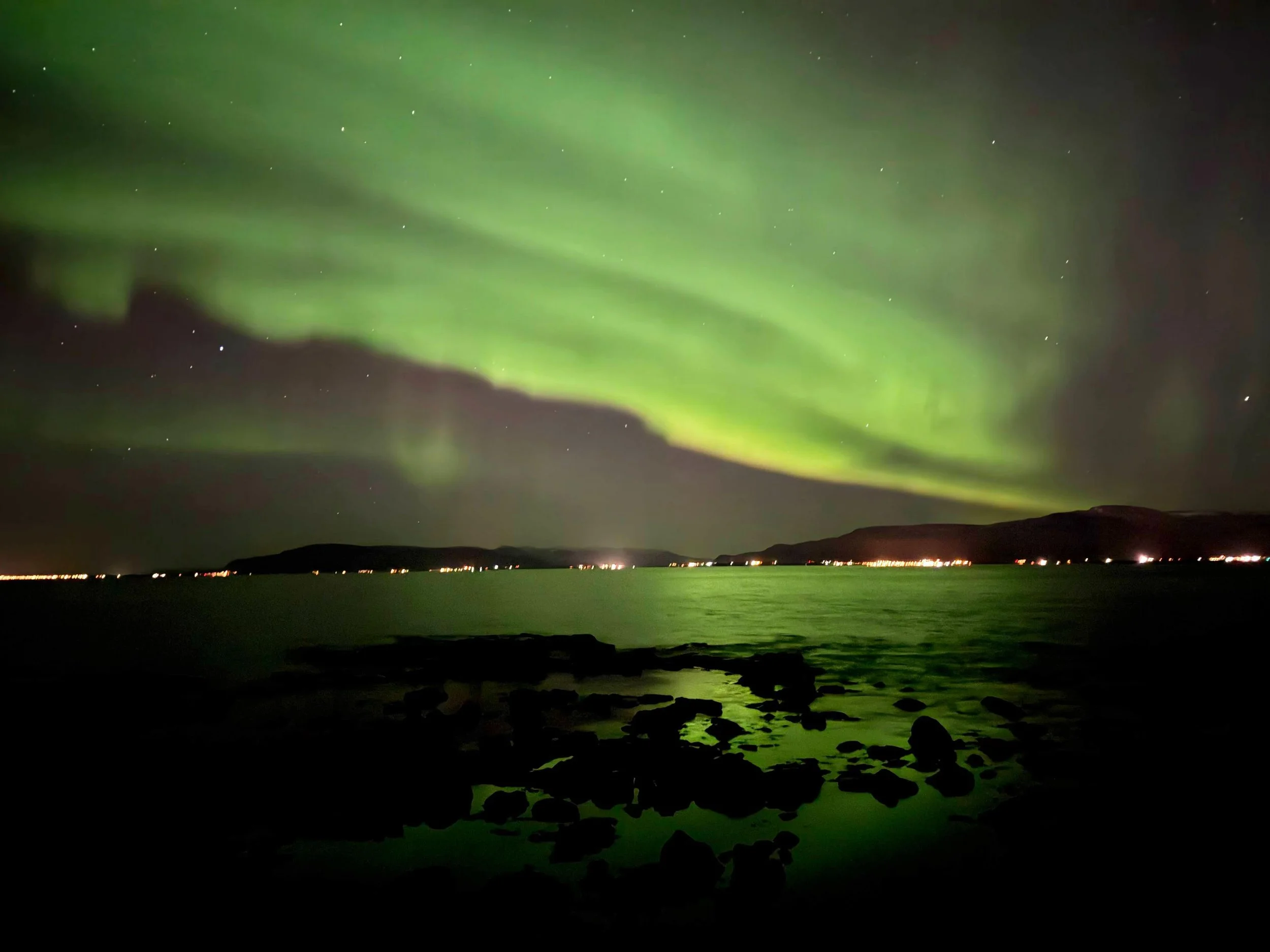
When we got a clear sky on our first night in Reykjavík, we knew that was a rare opportunity… and the lights delivered!
Last update: August 2026
Iceland is probably the most Googled northern lights destination on the planet. And honestly? There are good reasons for that — but also a few things the average aurora guide won't tell you. If you're deciding whether Iceland is the right choice for your northern lights trip, this is the honest version of that answer.
The short version: yes, Iceland is a legitimate aurora destination and for most people it's a brilliant choice. But it comes with a specific set of trade-offs that are worth understanding before you book. Because if you're going solely to see the lights with the highest possible odds, Iceland isn't actually your best bet. If you're going to Iceland for the full experience — and you want the lights as a bonus that will make the whole thing extraordinary — it might be the best trip of your life.
🛌 Where to stay:
• Aurora Igloo South, Hella — we stayed here. Transparent dome pods, heated bed, open South Coast skies.
• Brekka Retreat, Hvalfjörður — we stayed here. Private sauna and hot tub, darkest skies near Reykjavík.
• Glacial Glass Cabin, Hella — three glass walls with Hekla volcano in the distance.
• Hali Country Hotel, East Iceland — we stayed here. Good value, near Jökulsárlón, open northern skies.
🇮🇸 Top experiences:
• Northern lights tour from Reykjavík — guides chase clear skies; free return if the lights don't show.
• Ice cave & glacier tour, Vatnajökull — blue ice and a natural cave under Europe's largest glacier.
🚗 A car is close to essential in Iceland. Book your rental here — chasing clear skies when the forecast shifts is half the game.
Is Iceland good for the northern lights? Short answer
Iceland is one of the most Googled aurora destinations in the world, but it's not the most reliable one, and this article is honest about why. Most of the country sits on the southern edge of the auroral oval, cloud cover is a real problem, and if pure odds are the goal, northern Norway or Swedish Lapland have a measurable edge. That said, Iceland wins on something the statistics don't capture: seeing the northern lights over a glacier lagoon, a black sand beach, or a volcano is a different experience than anywhere else in the Arctic. This guide covers the oval positioning honestly, how Iceland's weather works both for and against aurora hunters, the best time windows (including why the equinoxes matter), where to base yourself, whether a tour or a rental car makes more sense, and how many nights you actually need to give yourself a real chance.
What most aurora guides don't tell you: the oval problem
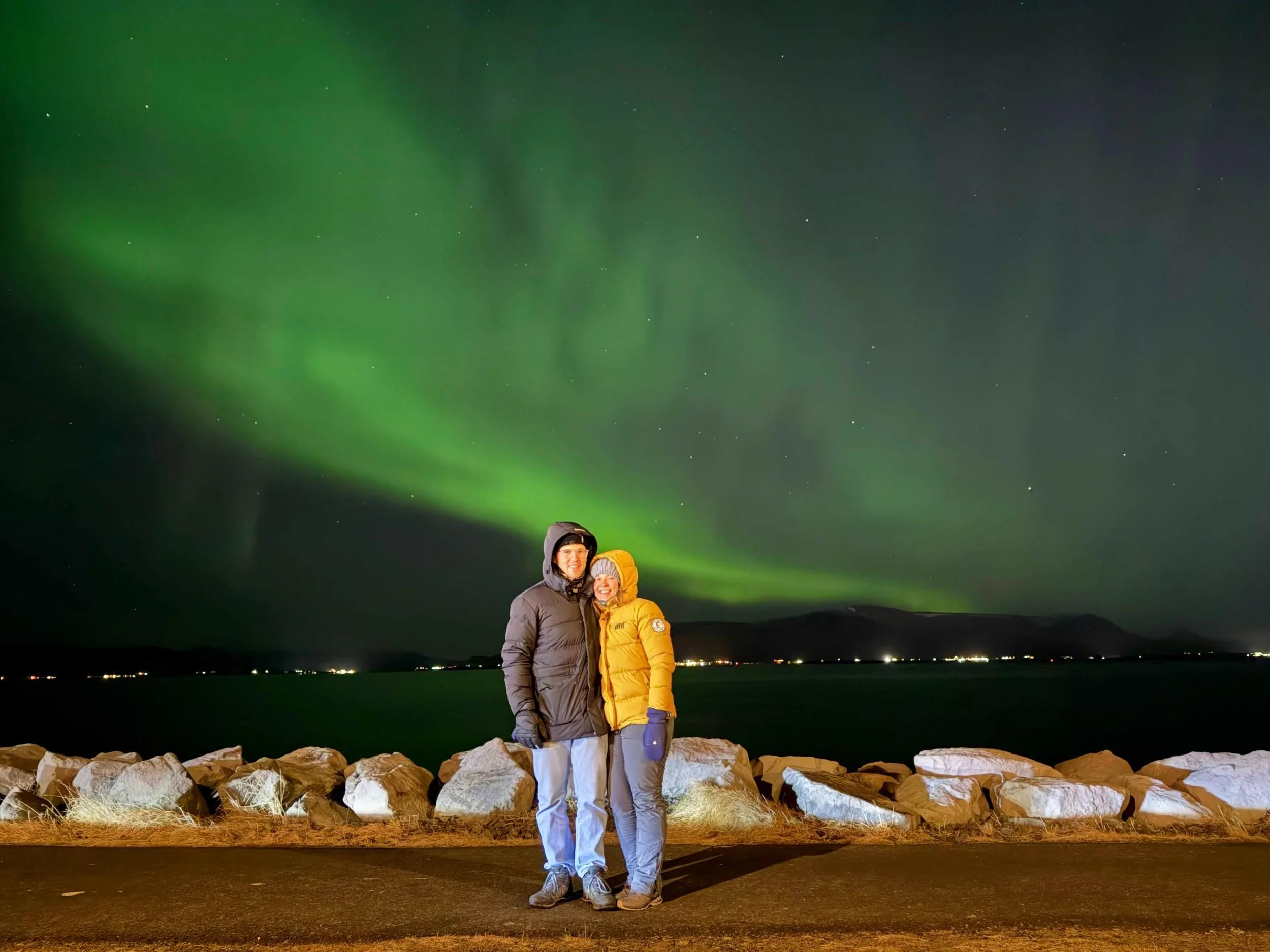
KP was 4 that night — here in Reykjavík
How the auroral oval works
Here's the bit that rarely comes up in travel content. The northern lights don't just happen everywhere above a certain latitude — they happen most intensely in a doughnut-shaped ring around Earth's magnetic pole called the auroral oval. The sweet spot of that oval sits roughly around 65–72° magnetic latitude. Places like Tromsø in Norway, Abisko in Sweden, and Fairbanks in Alaska sit right in the thick of it. You’ll find more info about the science behind the northern lights here (in simple words, we promise).
Where Iceland sits in all of this
Iceland is not quite there. Most of the country — including Reykjavik, the South Coast, and the Golden Circle — sits on the southern edge of that oval. That doesn't mean you can't see the lights; you absolutely can, and plenty of people do every winter. But during lower levels of solar activity, the oval contracts northward and Iceland can sit just outside it. During stronger activity, it expands south and Iceland gets draped in color.
The exception is the very north of Iceland — the Westfjords, the area around Akureyri, and the north coast generally. If you're specifically optimizing for aurora odds, that's where to base yourself. The further north, the better positioned you are.
The 2026 factor
The good news for right now: we're currently in the peak of Solar Cycle 25, and 2026 is still seeing elevated solar activity. The oval is expanding regularly and pushing further south than it does in quieter years. For the next season or two, Iceland's oval positioning matters less than it normally would. We can totally confirm that, as 2026 has been very successful for us so far, aurora-wise!
The weather: Iceland's biggest variable (and it goes both ways)
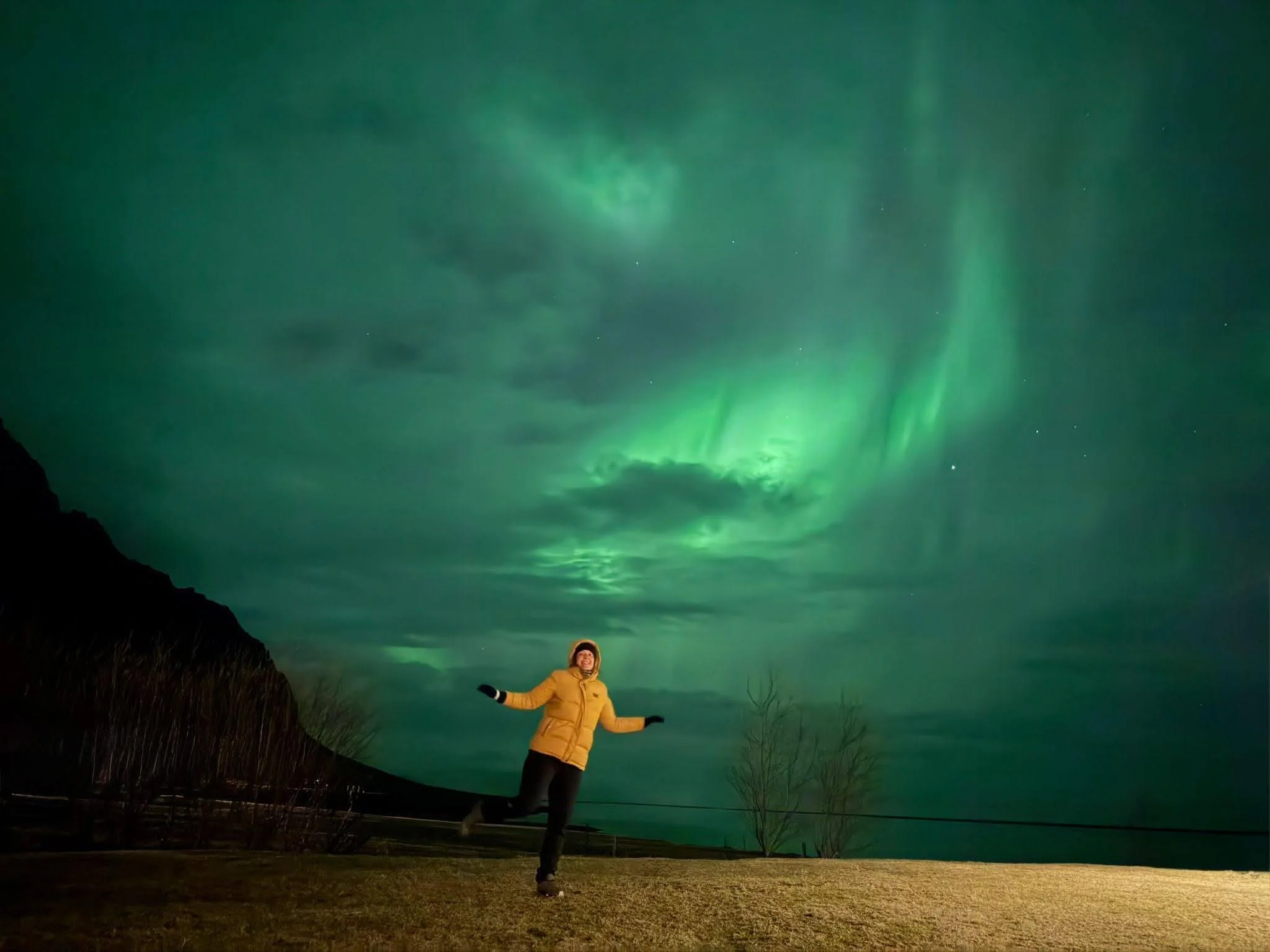
Amid a snowstorm, the clouds cleared for a brief moment and that’s my happy aurora dance! — Here near Jökulsárlón
This is the honest double-edged sword of aurora hunting in Iceland, and it's worth spending some time on because it's more nuanced than most guides make it sound.
The downside: it's an island in the North Atlantic
Iceland is one of the cloudiest aurora destinations you can pick. Cloud cover is, more often than not, the thing that stops people from seeing the lights — not the aurora activity itself. Reykjavik averages around 20 wet days in December. Northern Norway gets significantly fewer. And crucially, if it's cloudy in northern Norway, you can get in a car and drive inland, away from the coastal weather systems. In Iceland, you're on an island. You can still move around, but the options are more limited, and weather patterns often cover larger areas all at once.
For winter travel, it’s a good idea to have travel insurance. Read our guide: Travel Insurance for Iceland.
The upside: Iceland's weather doesn't hang around
Iceland's weather is famously, almost comically, volatile. Locals have a saying that if you don't like the weather, wait fifteen minutes — we would argue five is enough. What that means, in practice, for aurora hunters is that a cloudy evening doesn't totally write off the night. It's genuinely common for skies to open up after midnight or for a break in the clouds to appear just long enough to catch an active display. We’ve experienced that repeatedly. The forecasts change by the hour. That unpredictability cuts both ways, but if you're flexible and willing to stay up or set an alarm, Iceland rewards the patient.
It’s also worth mentioning that temperatures never drop as low as they do in Lapland, for example. However, the wind chill can make things much less enjoyable than a dry cold at -20ºC.
What to do about it
Give yourself more nights than you think you need, stay somewhere with a direct sky view, and use the Icelandic Met Office's cloud cover forecast alongside the aurora forecast (more about that in our guide: Northern Lights for Dummies and our guide to the best time to see the aurora in Iceland). Chasing clear patches by driving is very much part of the Iceland aurora experience — which is another reason a rental car is close to essential. Just drive with caution, especially in winter (read our guide to a road trip in Iceland). And, as always with nature, patience is the key.


Penguin tip:
Chasing northern lights in Iceland? Travel insurance is a smart idea. We use and recommend HeyMondo — great coverage, and you get 5–15% off if you book through us!
When to go to Iceland for the northern lights
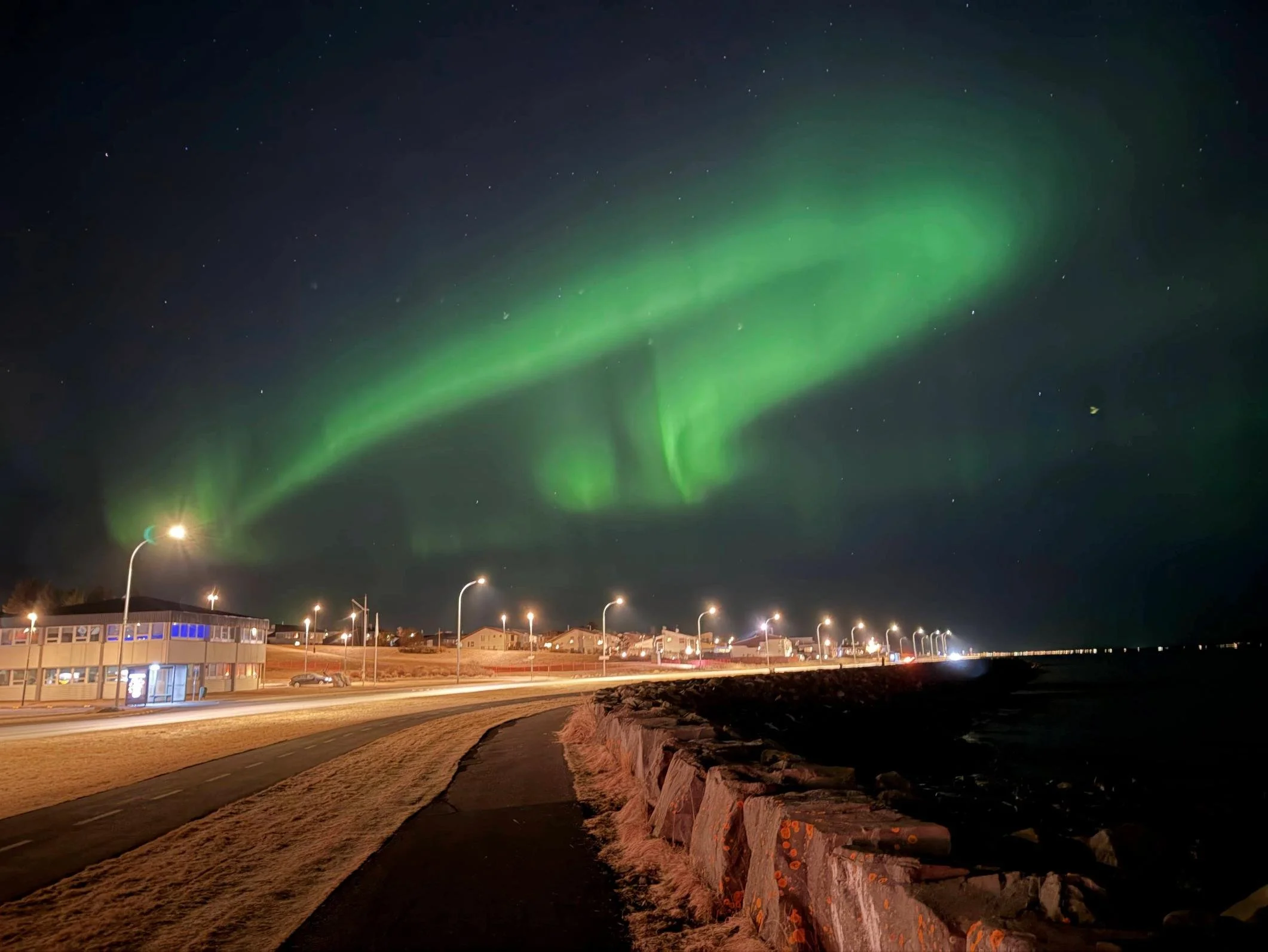
We took this picture in Reykjavík in February
The aurora season in Iceland
The aurora season in Iceland runs from around late August through to mid-April — essentially, whenever the nights are dark enough. The deep midwinter months (November through January) give you the longest dark windows, but they also tend to come with the worst weather odds and the shortest days for everything else you want to do. Oh, and the wind chill... The lovely wind chill. Read our Iceland in winter guide and our guide to the best time for seeing the northern lights in Iceland.
The sweet spots
If you're trying to balance aurora chances with actually enjoying Iceland, late September through October and February through early March are consistently the better windows. The weather is marginally more stable, there's still meaningful daylight for exploring, and the contrast between dark nights and bright snowy days is one of Iceland's best features.
The equinox effect
The equinox periods — around September 22–23 and March 19–20 — are worth building your trip around if you can. Around the equinoxes, Earth's orientation to the solar wind tends to generate stronger geomagnetic activity, which pushes aurora odds up. It's not guaranteed, but it's a well-documented pattern, and it's free information worth using.
Where in Iceland can you see the northern lights
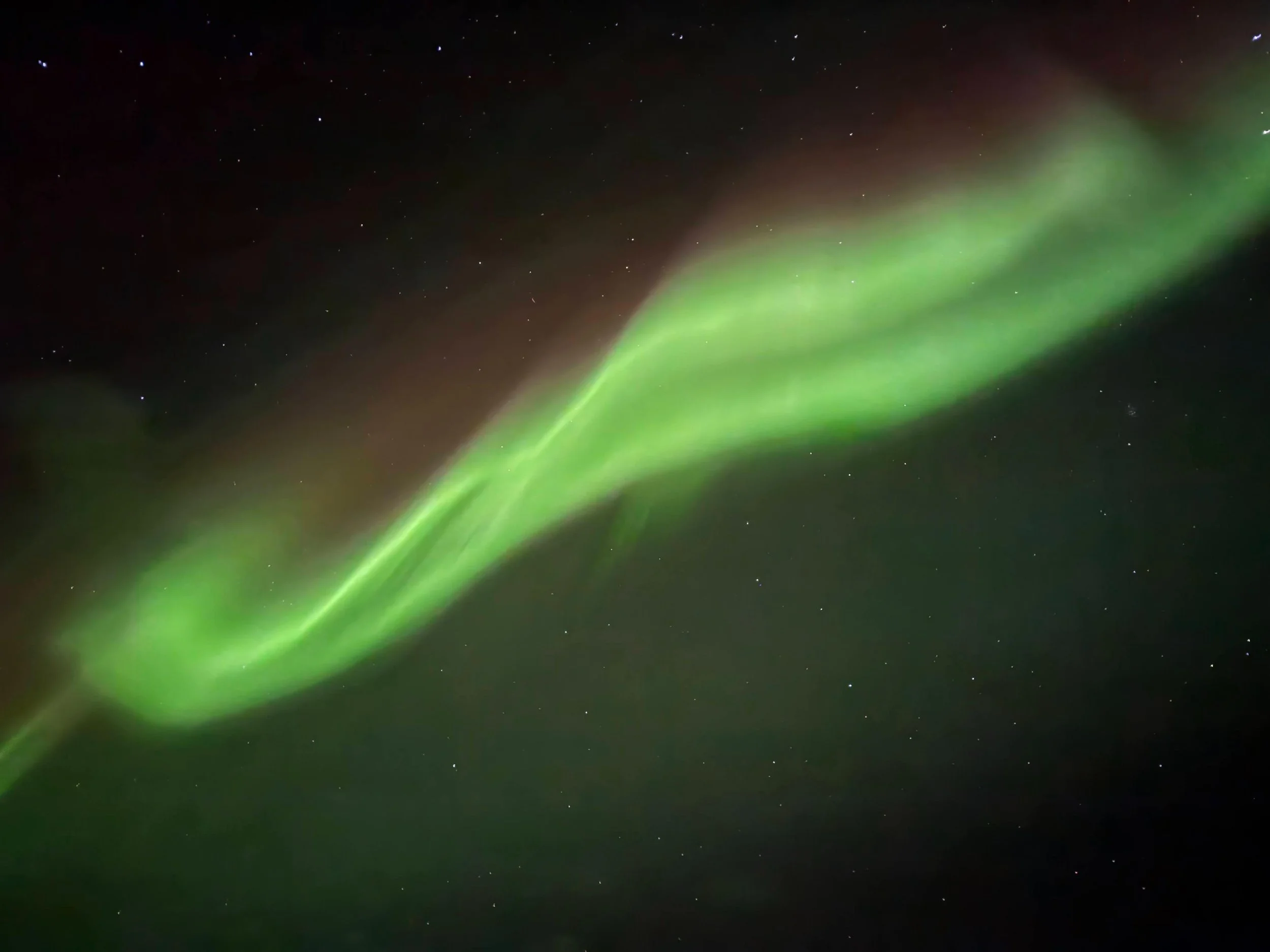
We saw this very vivid, overhead aurora between Jökulsárlón and Hofn
Getting away from Reykjavik
Getting out of the city is step one. Reykjavik has light pollution that washes out all but the strongest displays. You don't have to go far — 30–40 minutes from the city center, and you're in noticeably darker skies — but the further you go, the better.
If you’re stuck in the capital, go to Grotta.
Some of the best accessible spots from Reykjavik include the Snæfellsnes Peninsula, the Reykjanes Peninsula, Hvalfjörður, the Þingvellir area, and the South Coast heading towards Vík. All are within a couple of hours' drive and combine well with daytime sightseeing.
Going north for better odds
If you're prepared to go further, or you're building your trip around aurora odds specifically, the north of the country changes the equation. Akureyri and the surrounding area, the Westfjords, and the Tröllaskagi peninsula put you more comfortably within the auroral oval's consistent range. Thje conditions up there are genuinely comparable to what you'd find in northern Norway or Finnish Lapland for activity levels.
Should you take an aurora tour?
For first-timers or anyone without a car, aurora tours from Reykjavik are worth considering. Most run on minibuses, depart after dark, and do the forecast-watching for you — the guide is tracking conditions in real time and will redirect to wherever skies look clearest. Many operators also have a free-return policy: if the lights don't appear, you get another attempt at no extra cost. The trade-off is flexibility. Tours run on a schedule, and you're moving as a group, which means less time to linger and fewer chances to react quickly when conditions shift. If you have a rental car and you're comfortable using vedur.is and a live aurora forecast app, self-driving gives you a meaningful edge in responsiveness. If you don't, a reputable tour is a solid fallback and takes the stress out of the forecasting side of things.
How long do you need to see the aurora in Iceland?
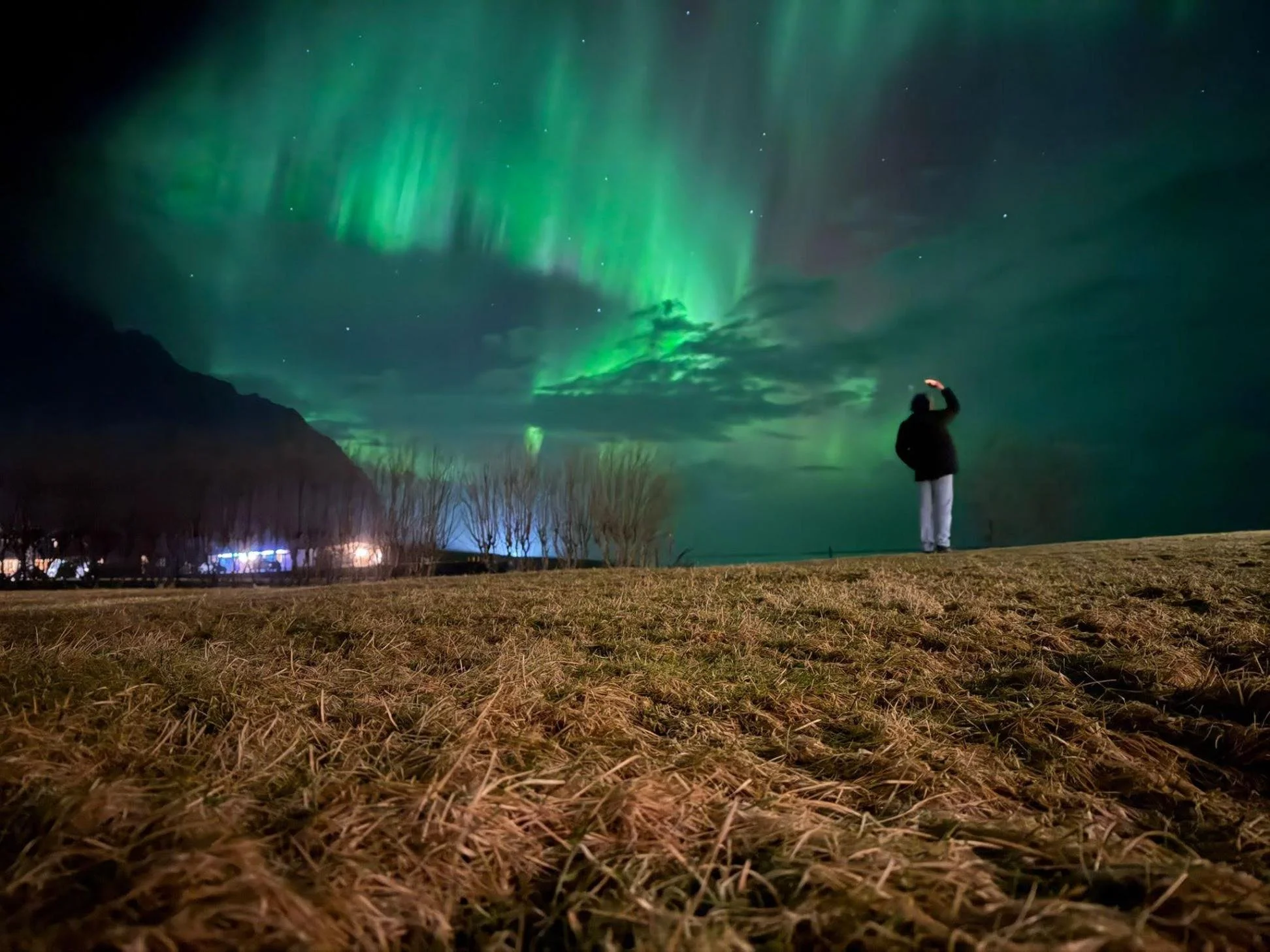
After many days of completely cloudy sky and/or low activity, finally!!
The minimum
Five nights is the floor if seeing the lights is a priority. Fewer than that and you're essentially gambling — one or two cloudy nights can wipe out your whole window. With five nights, you have enough attempts to hit a clear sky with some aurora activity behind it, but, as always in nature, there are really no guarantees.
The comfortable window
Seven nights or more give you a real buffer. It means you can afford to be selective — waiting for the forecast to look genuinely promising before committing to a late night, rather than going out every night on hope alone (which you should be doing anyway, in our experience).
Short trips
If you're doing a long weekend and the lights are a secondary hope rather than the main goal, go for it — just don't plan your whole trip around seeing them. Iceland is worth visiting in winter for a hundred other reasons, and if the lights happen to show up, even better.
Iceland vs Norway vs Sweden vs Finland: The European aurora comparison

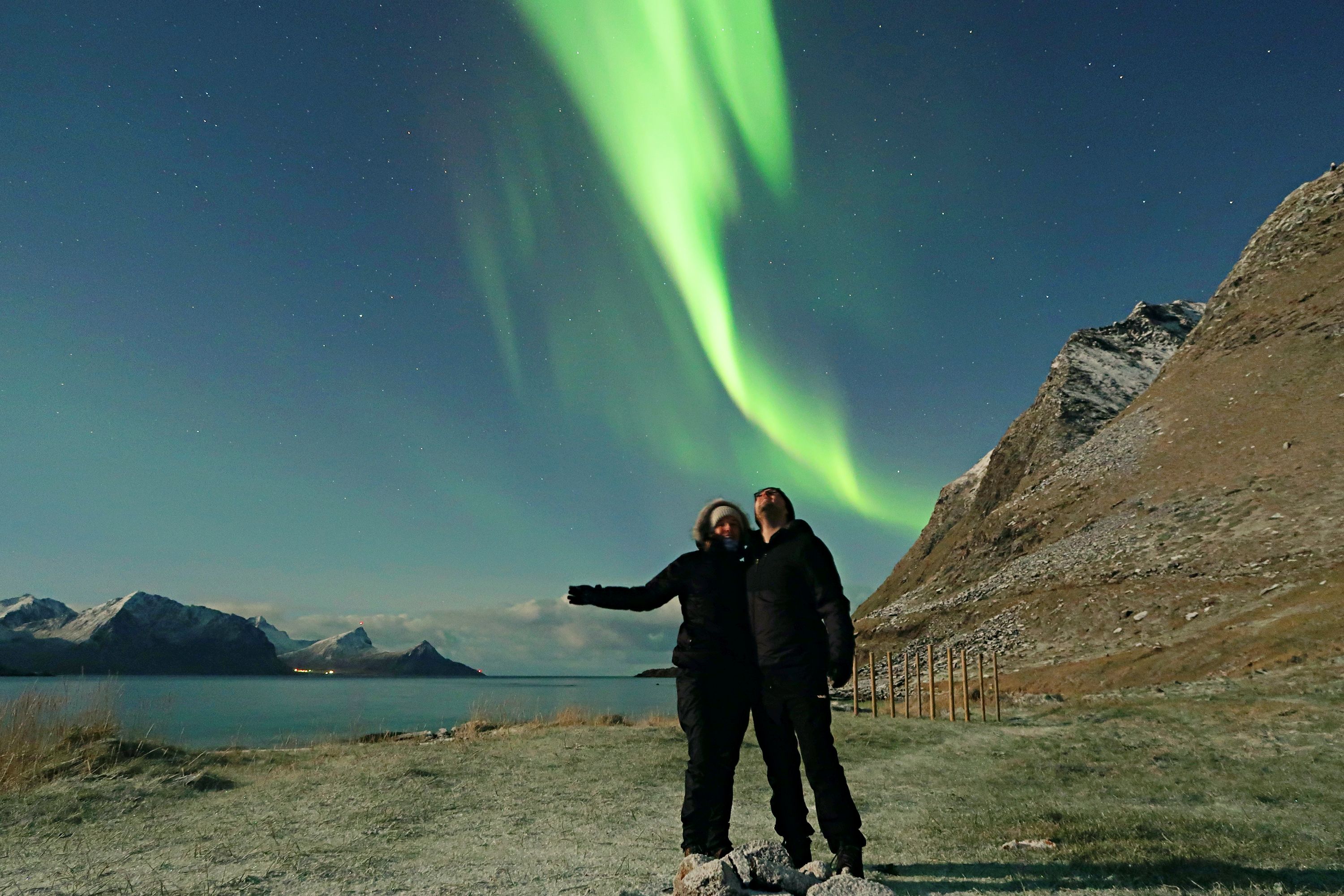
Northern lights in Alta, Norway
If you're weighing up your options across Europe, here's the honest breakdown. You can also read our in-depth guide: Best destinations to see the northern lights in Europe.
Norway
Northern Norway — Tromsø, Alta, Lofoten, Senja — is the strongest competition for Iceland on pure aurora odds. 12 points à la Norvège ! The auroral oval positioning is better, the ability to chase clear skies by driving inland towards the Finnish border is a genuine tactical advantage, and the tour infrastructure is among the best in the world. If maximising your chances is the goal, Norway edges it. We actually wrote a full guide about northern lights in Norway!
Sweden
Sweden doesn't get talked about enough in this conversation. Swedish Lapland — particularly the area around Abisko and Kiruna — has some of the highest clear-sky rates of anywhere in the auroral zone, largely because the Scandinavian Mountains create a rain shadow that keeps the skies drier and clearer than the Norwegian coast. Abisko has a specific microclimate that makes it a genuine favourite among aurora photographers (more about Abisko’s blue hole here). It's quieter (and cheaper) than Norway and Iceland, the infrastructure is good, and the dog sledding and snowmobile scene adds a lot if you want activities beyond the lights themselves.
Finland
Finnish Lapland sits in a similar position to Sweden — inland, drier, with good clear-sky odds. The sauna culture adds a specific experience that you don't get anywhere else (watching the lights from a lakeside sauna is as good as it sounds). It tends to be slightly more family-friendly in its aurora tourism setup than Norway, and aurora tours near Rovaniemi are well-developed.
Iceland's case
Despite what social media might say, Iceland can't beat any of the above on pure odds. But it offers something none of them can match: the landscape the lights appear over. Seeing the aurora reflected in a glacier lagoon, arcing over a black sand beach, or silhouetting a volcano is a fundamentally different visual experience to seeing it over pine forest or frozen tundra — not better or worse, just different in a way that's hard to put into words until you've seen it. It's not a competition Iceland wins on statistics. It's one it wins on spectacle.
The thing about Iceland is that even if the lights don't show up — or only show up briefly — you're not going home disappointed. The country is extraordinary in winter: waterfalls half-frozen, the South Coast dramatic and wild, hot pools steaming in the cold, darkness that makes the whole place feel like another planet. You're building in the aurora as something that could happen, not something the entire trip depends on. We actually recommend this approach for any destination, as nature’s magic lies in its unreliability.
Where to stay in Iceland for the best aurora chances

I was about to go to bed at Hali Country Hotel, when I got a feeling… hence the PJs!
Getting your base right
Accommodation choices matter more in Iceland than most aurora destinations because you're often relying on the weather to shift rather than driving somewhere new. Countryside guesthouses and farm stays give you immediate dark sky access the moment you step outside. And, sometimes, you have to be very fast! Glass-roof cabins and aurora igloos take it further — they're purpose-built for exactly this, and Iceland has some genuinely outstanding options.
Cabins and hotels with a hot tub or pool, or even a sauna, are also an excellent choice. You can warm up fast. while you’re waiting — for example, at our favorite, Brekka Retreat.
You can explore more options in our guide: Where to stay on Iceland's Ring Road.
Our pick on the South Coast
We've stayed at an aurora igloo and it's hard to beat. The full review of Aurora Igloo South in Hella covers what the experience is actually like — it puts you on the South Coast with dark skies built into the experience and easy access to Iceland's best winter landscapes.
👉 Book Aurora Igloo South here
The best northern lights hotels in Iceland
For a complete rundown of the best hotels and stays across Iceland for aurora viewing — from budget-friendly guesthouses to high-end glass cabin experiences — our best northern lights hotels in Iceland guide has everything with notes on location and what each option actually offers.
Explore northern lights hotels around Iceland:
✈️ Find flights
🏨 Explore hotels, apartments, guesthouses, cabins
🧭 Browse activities and tours
🚗 Compare car rentals
🧳 Get travel gear (including for the Arctic)
🛡️ Travel safe with Heymondo Travel Insurance (5–15% off)
📱 Get a travel eSIM
🐾 Protect & track Arctic wildlife with Fahlo Bracelets (20% off)
FAQ: Northern lights in Iceland
Is Iceland a good place to see the northern lights?
Yes. Iceland is one of the most accessible and well-set-up destinations in Europe for aurora hunting. It's not the highest-odds destination on the continent (northern Norway and Swedish Lapland edge it on clear-sky statistics), but it combines real aurora potential with world-class winter scenery in a way no other destination does.
What are the chances of seeing the northern lights in Iceland?
It depends heavily on how long you stay and how flexible you are. With five or more nights during the season, actively tracking forecasts, and getting away from city light pollution, most travelers see at least one display. A short two or three night trip carries much lower odds — cloud cover can wipe out an entire short window without warning.
When is the best time to see the northern lights in Iceland?
The aurora season runs from late August to mid-April. For the best balance of dark skies, reasonable weather, and still-useful daylight hours, late September through October and February through early March are the strongest windows. The equinox periods (around September 22–23 and March 19–20) also tend to coincide with increased geomagnetic activity.
How many nights do I need to see the northern lights in Iceland?
Five nights is the practical minimum if seeing the lights is a real priority. Seven nights gives you a more comfortable buffer and means you can wait for genuinely good conditions rather than going out every night regardless of the forecast.
Is it better to see the northern lights in Iceland or Norway?
Norway edges Iceland on pure odds. Better auroral oval positioning and the ability to chase clear skies inland are real advantages. But Iceland offers a different experience: the lights over glaciers, lava fields, and black sand beaches are unlike anywhere else. If maximum odds are the goal, Norway. If total experience is the goal, Iceland is hard to argue with.
Do you need a tour to see the northern lights in Iceland?
No, but it helps if you don't have a rental car or you're new to reading aurora forecasts. Tours from Reykjavik handle the forecast-tracking and transport, and most offer a free return trip if the lights don't show. With a car and some practice using the Icelandic Met Office's cloud cover map and a live KP index app, self-driving gives you more flexibility to react quickly when conditions shift.
Here is a playlist to call the aurora (it works… 80% of the time):
Iceland is a genuinely good northern lights destination — just not a flawless one. The weather will test your patience, and if pure odds are what you're after, northern Norway or Lapland (Sweden & Finland) have a measurable edge. But Iceland combines the aurora with some of the most dramatic winter scenery on Earth, and for most people that combination is more than worth it.
Go with at least five nights, get a car, use the forecasts obsessively, and be prepared to adapt. Do those things and the odds shift meaningfully in your favor.
For everything else — the full seasonal breakdown, how Iceland sits in the bigger aurora picture, and where else to consider — our northern lights hub is the place to start.
Finally, explore all our Iceland Travel Guides here.
Planning a Northern Lights Trip? ✨
Get a free aurora checklist straight to your inbox.
No spam. Just northern lights strategy (and occasional penguin energy).
Thank you, little penguin! 🐧
Check your inbox — our best Northern Lights tips are on the way.
Best Northern Lights Hotels in Iceland
Things to Do in Iceland in Winter
Northern Lights in Iceland: Is It Worth It?
Best Time for Northern Lights in Iceland
Ring Road & Practical Planning:
Iceland Road Trip: South Ring Road Self-Drive
Where to Stay on Iceland's Ring Road
How to Travel Iceland on a Budget
Travel Insurance for Iceland
Best Time to Visit Iceland & Things to Do
Things to Do in Iceland in Summer
Free and Cheap Things to Do in Reykjavík
Iceland Without the Crowds
Horseback Riding in Iceland
Lava Show in Reykjavík
Silfra Snorkeling in Þingvellir
Glacier Hike & Ice Cave in Iceland
Stays & Hot Springs:
Brekka Retreat, Hvalfjörður
Hvammsvík Hot Springs, Hvalfjörður
Aurora Igloo South, Hella
Hotel Keflavik & Spa, near KEF Airport & Blue Lagoon
