
Iceland Road Trip: The South Ring Road from Reykjavík to Höfn (+ Easy Additions for a Self-Drive Tour)
Our guide to Iceland's most drivable road trip — black sand beaches, glacier lagoons, and the most dramatic coastal drive in Europe, without needing a 4x4.
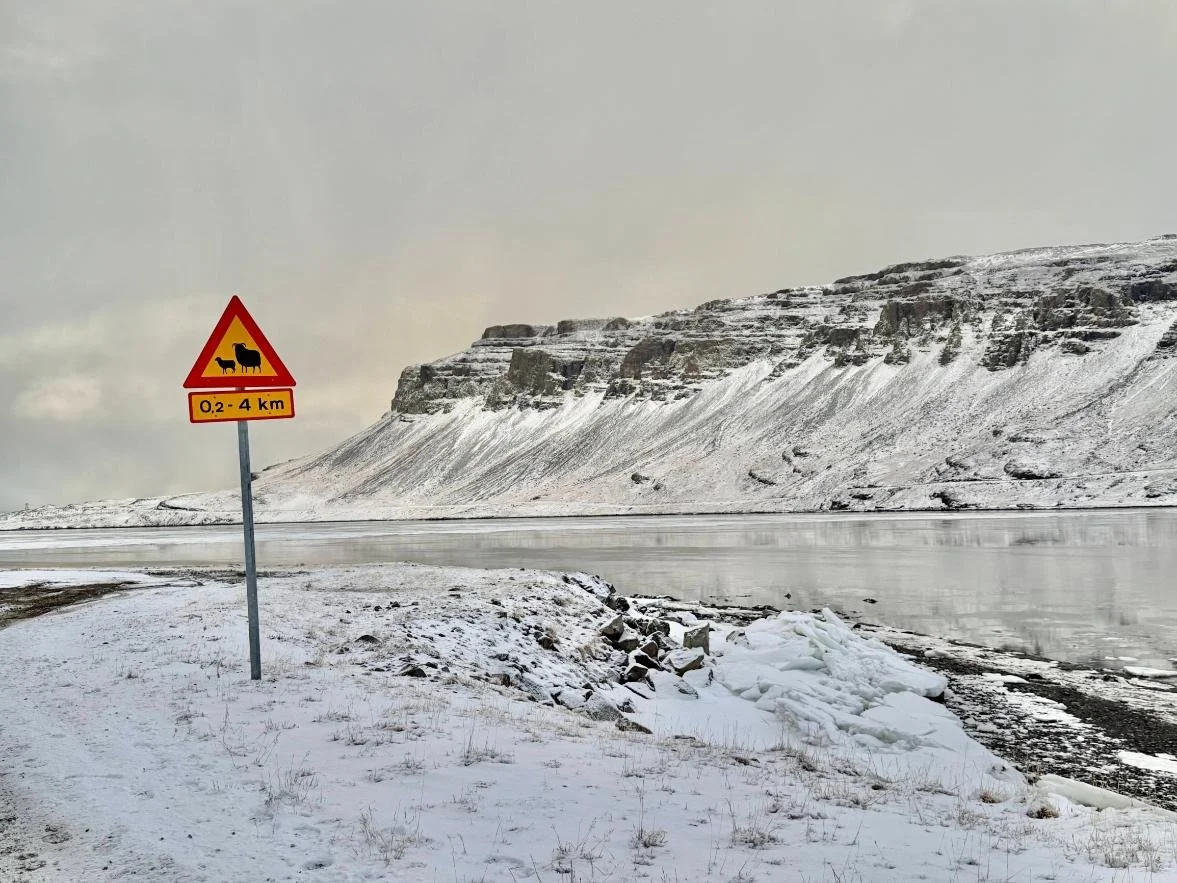
Outside of winter, watch out for the sheep!
Last update: August 2026
We've driven Iceland three times — twice in fall, once in winter — and every time we've covered a version of the same stretch: Reykjavík east along the south coast to Höfn, with various detours depending on the season and what we had time for. We haven't done the full Ring Road (or Route 1). The north and east of the island are on our list, and we'll be honest about that rather than paste in itinerary days we haven't actually driven.
What we have done, thoroughly and repeatedly, is the section that most people mean when they say "Iceland road trip": the south coast to the glacier lagoon, with additions to the Reykjanes Peninsula, the Golden Circle, Hvalfjörður, and Snæfellsnes when time allows. That's the trip this guide is built around.
One more thing upfront: this self-drive tour is entirely doable in a regular car. You don't need a 4x4 for the route described here. More on that below — and it changes the budget and logistics considerably.
🛌 Where to stay:
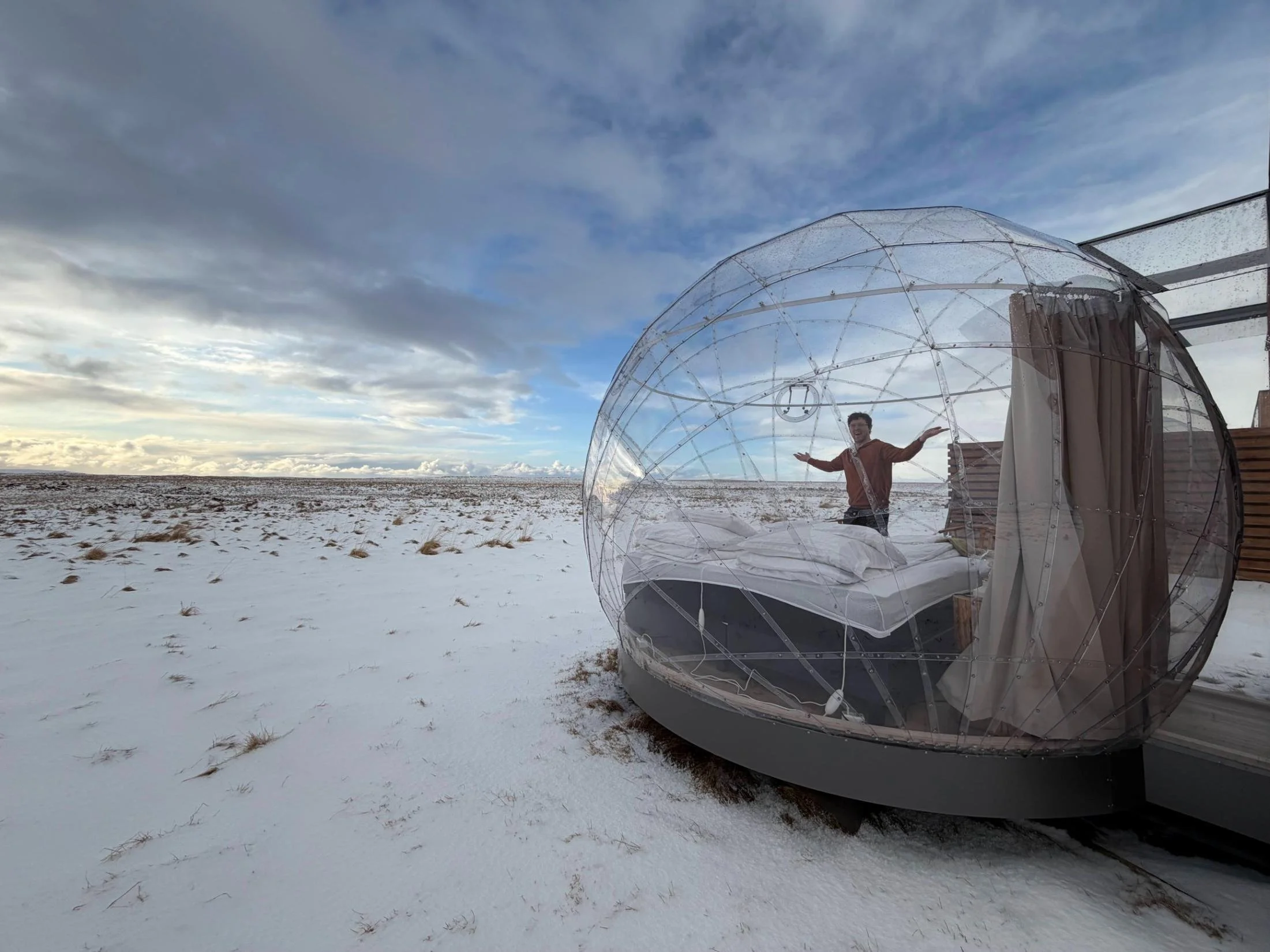
• Aurora Igloo South, Hella — we stayed here. Transparent walls, heated beds, open sky.
• Frost and Fire Boutique Hotel, Hveragerði — we stayed here. Geothermal hot tubs by the river, a good first night before the driving starts.
• Hotel Kría, Vík — right in the village, best position for Reynisfjara and an early start.
• Hotel Laki, Kirkjubæjarklaustur — the budget pick between Vík and the glaciers, dark skies included.
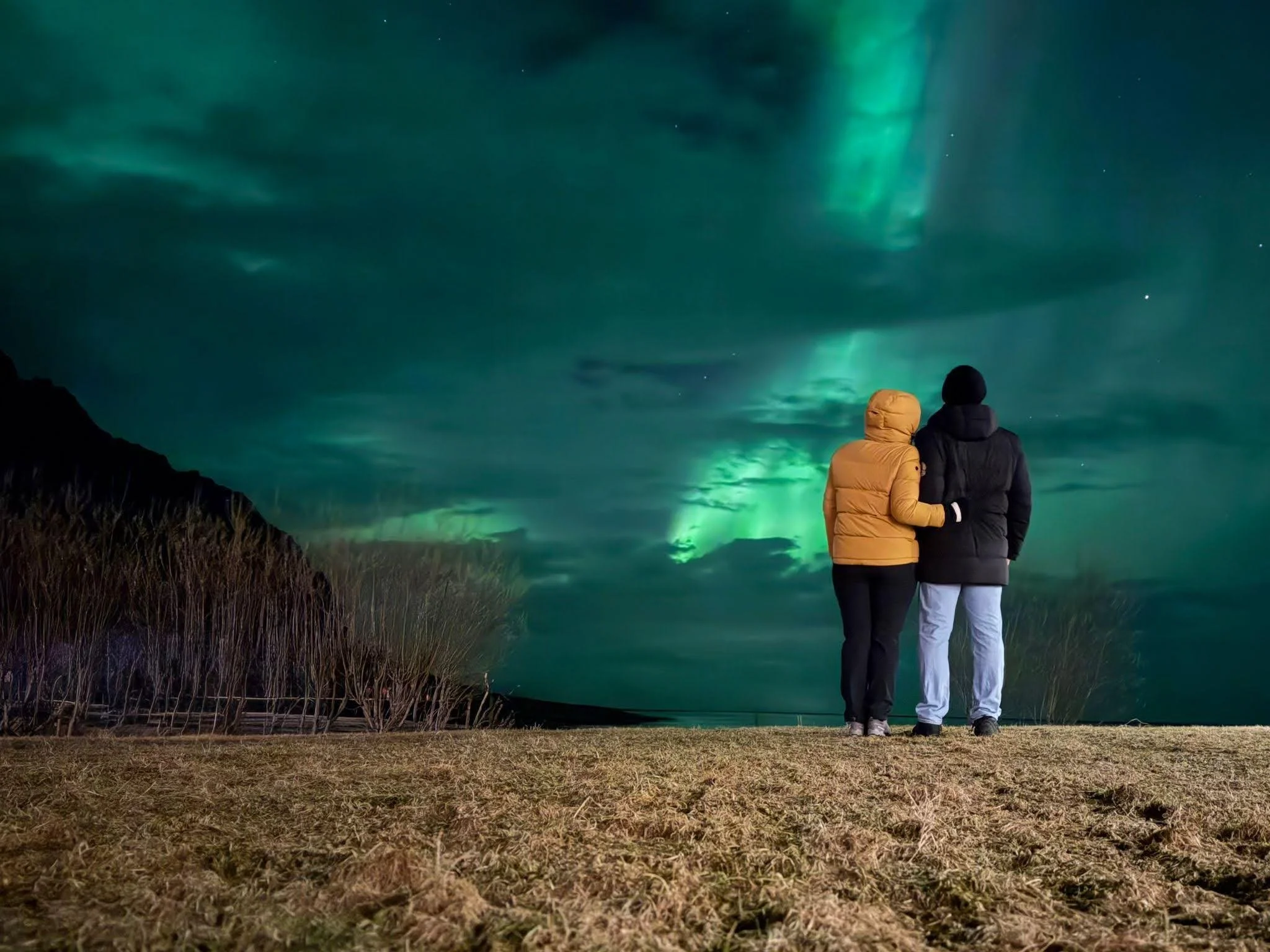
• Hali Country Hotel, Jökulsárlón — we stayed here. 15 minutes from the lagoon, good value, caught a great aurora from the grounds.
• Vagnsstaðir Guesthouse, southeast Iceland — we stayed here. Farm stay between the lagoon and Höfn, remote and exactly the point.
🇮🇸 Top experiences:
• Northern lights tour from Reykjavík — guides chase clear skies; free return if the lights don't show.
• Ice cave & glacier tour, Vatnajökull — blue ice and a natural cave under Europe's largest glacier.
🚗 A car is essential in Iceland. Book yours here — the whole country opens up once you leave Reykjavík.
Iceland South Ring Road: the self-drive route at a glance
South Ring Road (core trip): Reykjavík → Hveragerði → Seljalandsfoss & Skógafoss → Vík → Kirkjubæjarklaustur → Skaftafell/Vatnajökull → Jökulsárlón & Diamond Beach → Höfn
Easy additions (2–3 extra days):
Reykjanes Peninsula (half day from Reykjavík)
Golden Circle (full day from Reykjavík)
Hvalfjörður (half to full day detour)
Snæfellsnes Peninsula (1–2 days, detour from Reykjavík end)
Map of our self-drive road trip in Iceland
🌿 Before you go... Iceland's remoteness means accidents and medical situations can be far from help. We use Heymondo for travel insurance — it covers adventure activities, has a real app for claims, and you get 5–15% off through our link. Essential for Iceland. → Get Heymondo travel insurance · Read our Iceland insurance guide
The South Ring Road: Reykjavík to Höfn
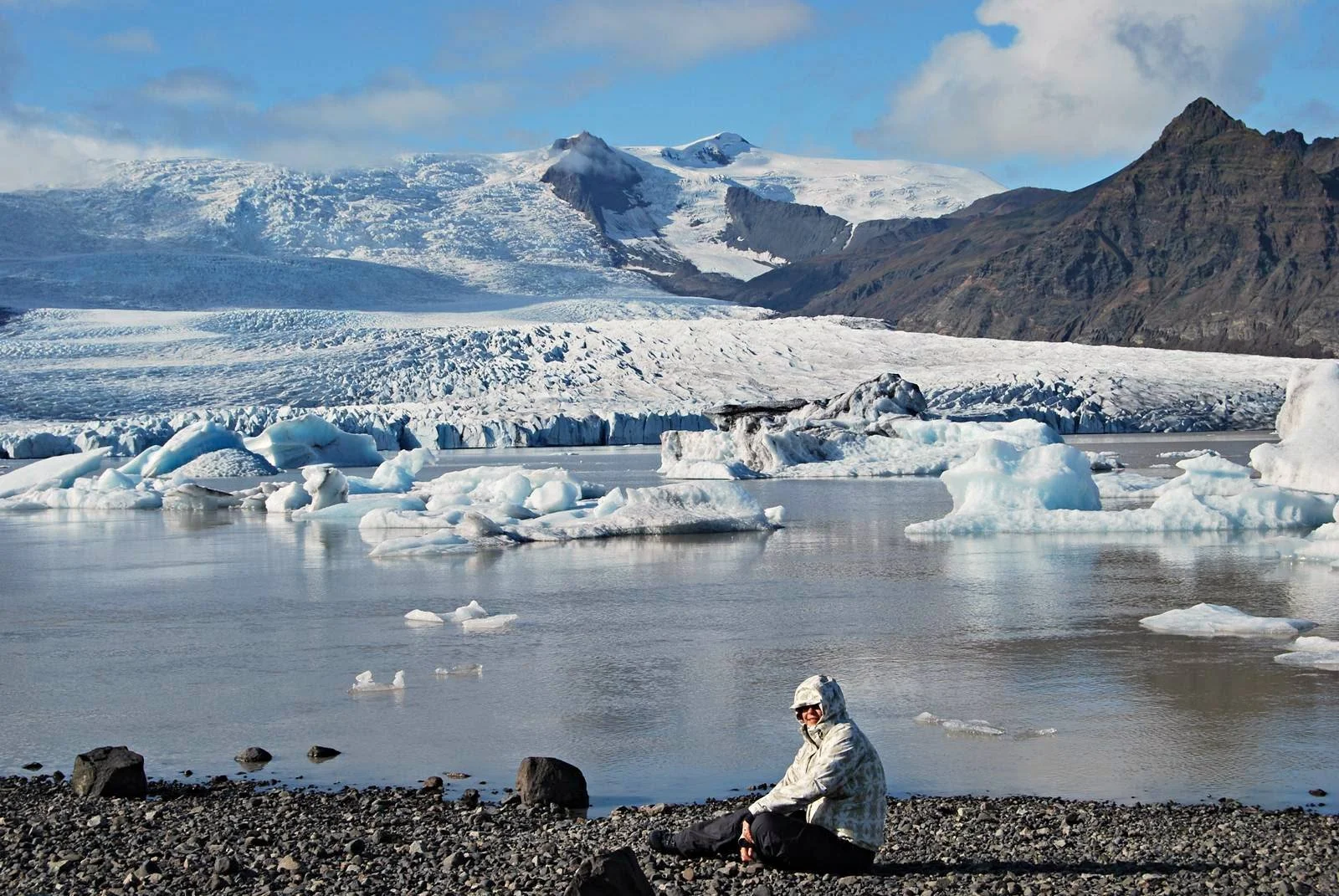
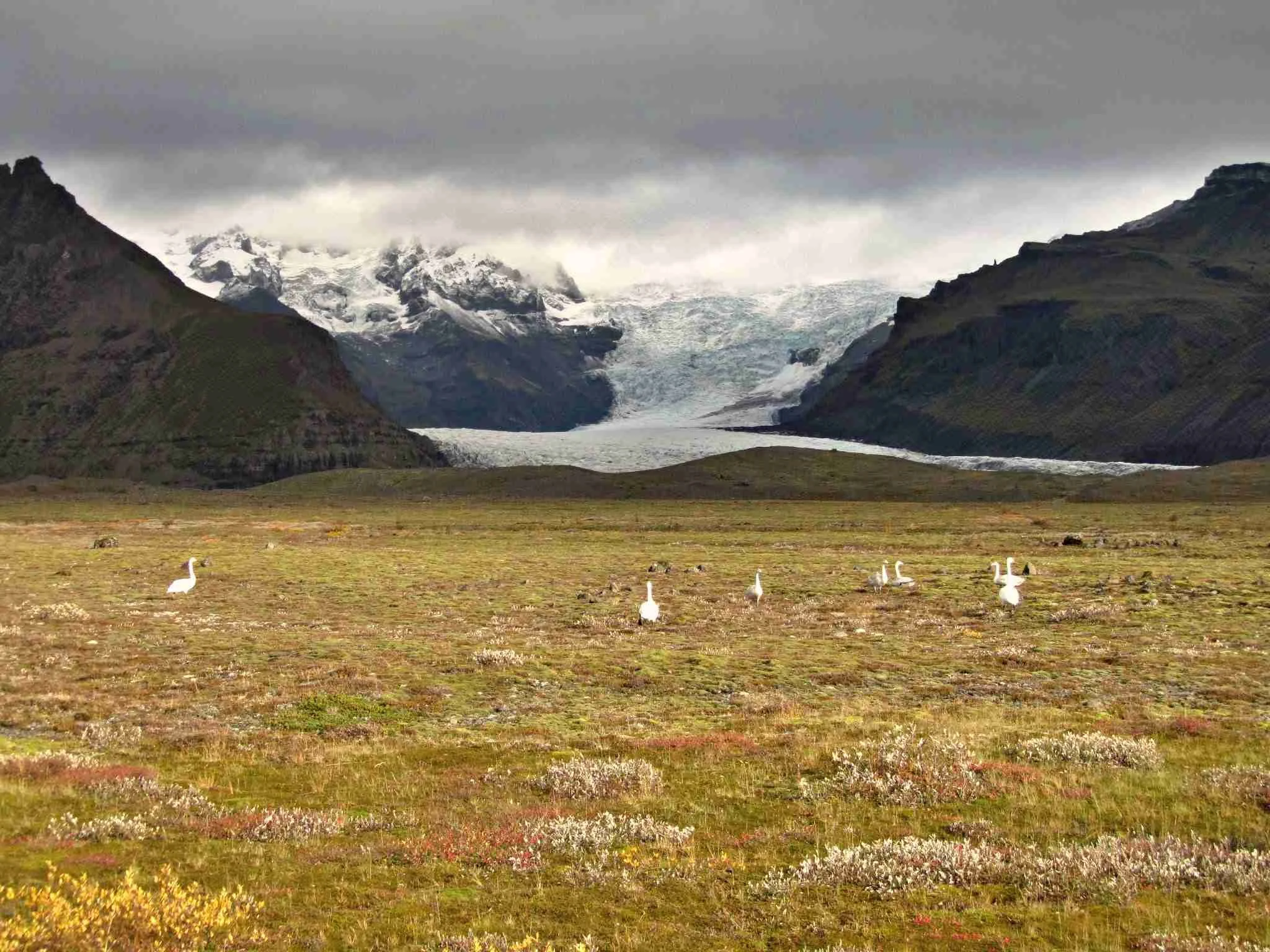
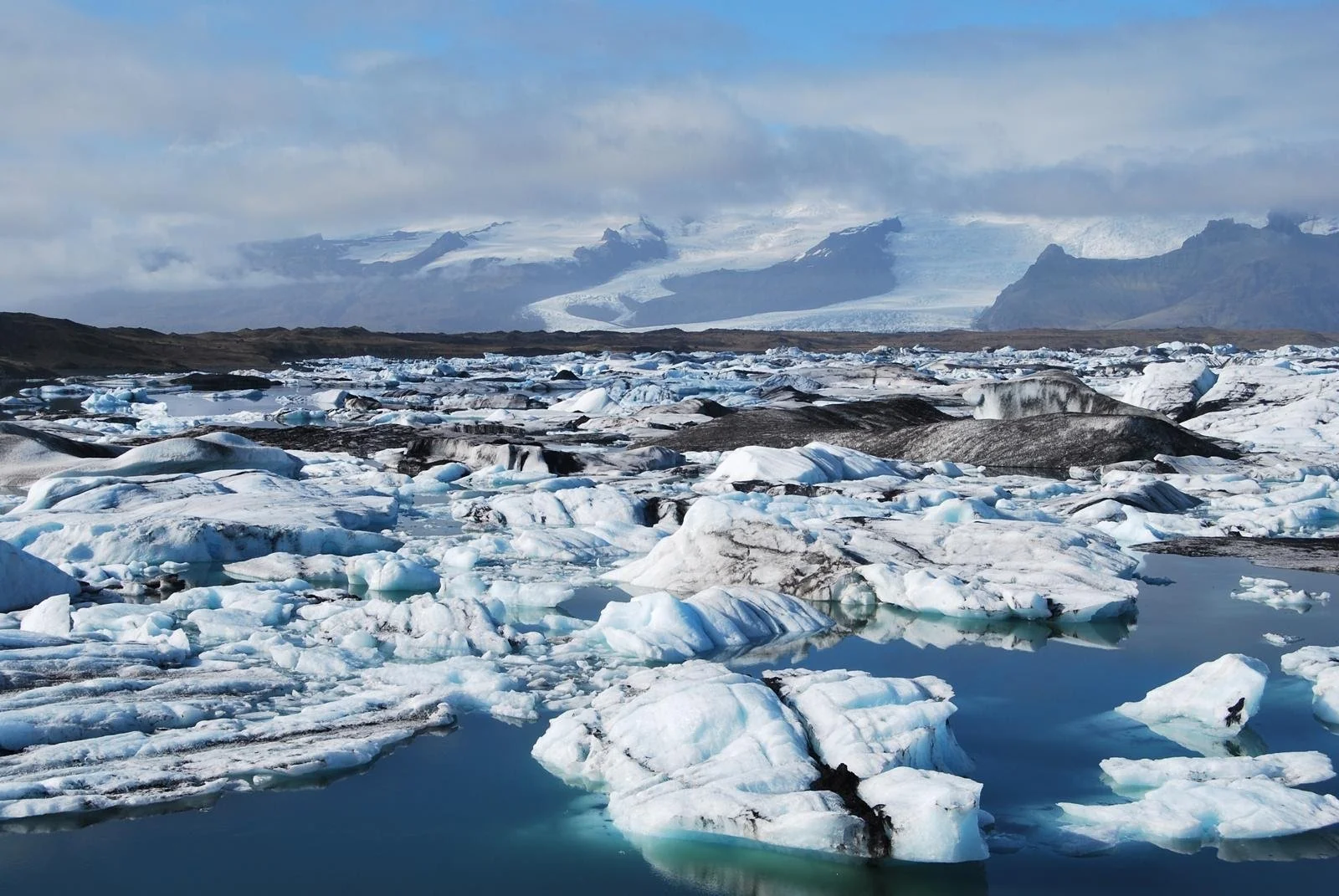
Fjallsárlón, next to Jökulsárlon — one of our alternatives to Iceland’s main tourist spots
Reykjavík & surroundings
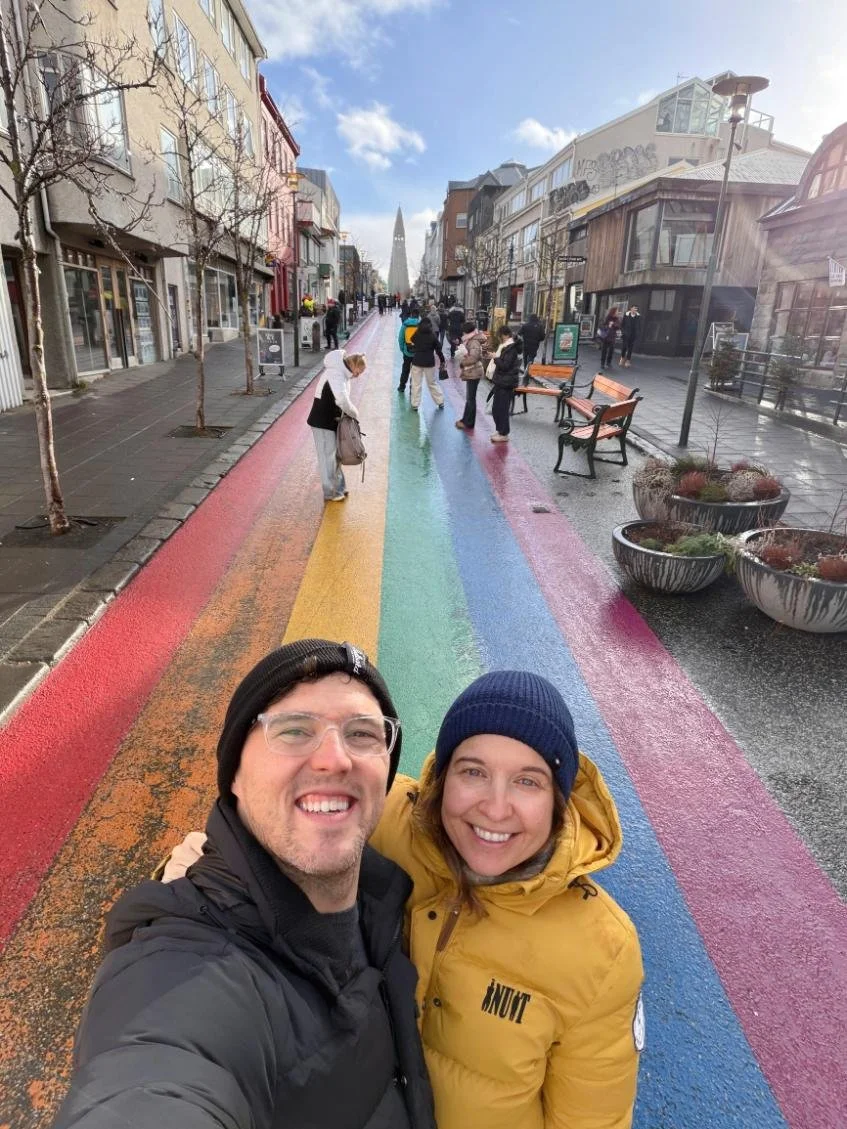
Most people spend a night or two in Reykjavík before hitting the road. It earns more time than that — the city is genuinely interesting, the food scene has improved dramatically, and some of the best day activities in Iceland (the Lava Show, the Whales of Iceland museum, a geothermal pool morning) are right here. Our free and cheap things to do in Reykjavík guide has the full list if you're watching the budget.
The Lava Show, specifically, is worth an hour of anyone's time — watching real molten lava flow meters in front of you in a controlled indoor setting is more impressive than it sounds. We went and wrote about it.
Pick up your rental car from Keflavík Airport on arrival rather than from the city — it saves a shuttle and gets you on the road immediately. If you're arriving late or flying out early, Hotel Keflavík is right by the airport and nothing like the airport hotel you'd expect.
Zoom in and out on the map below to find a hotel in or near Reykjavík:
Hveragerði and the geothermal valley
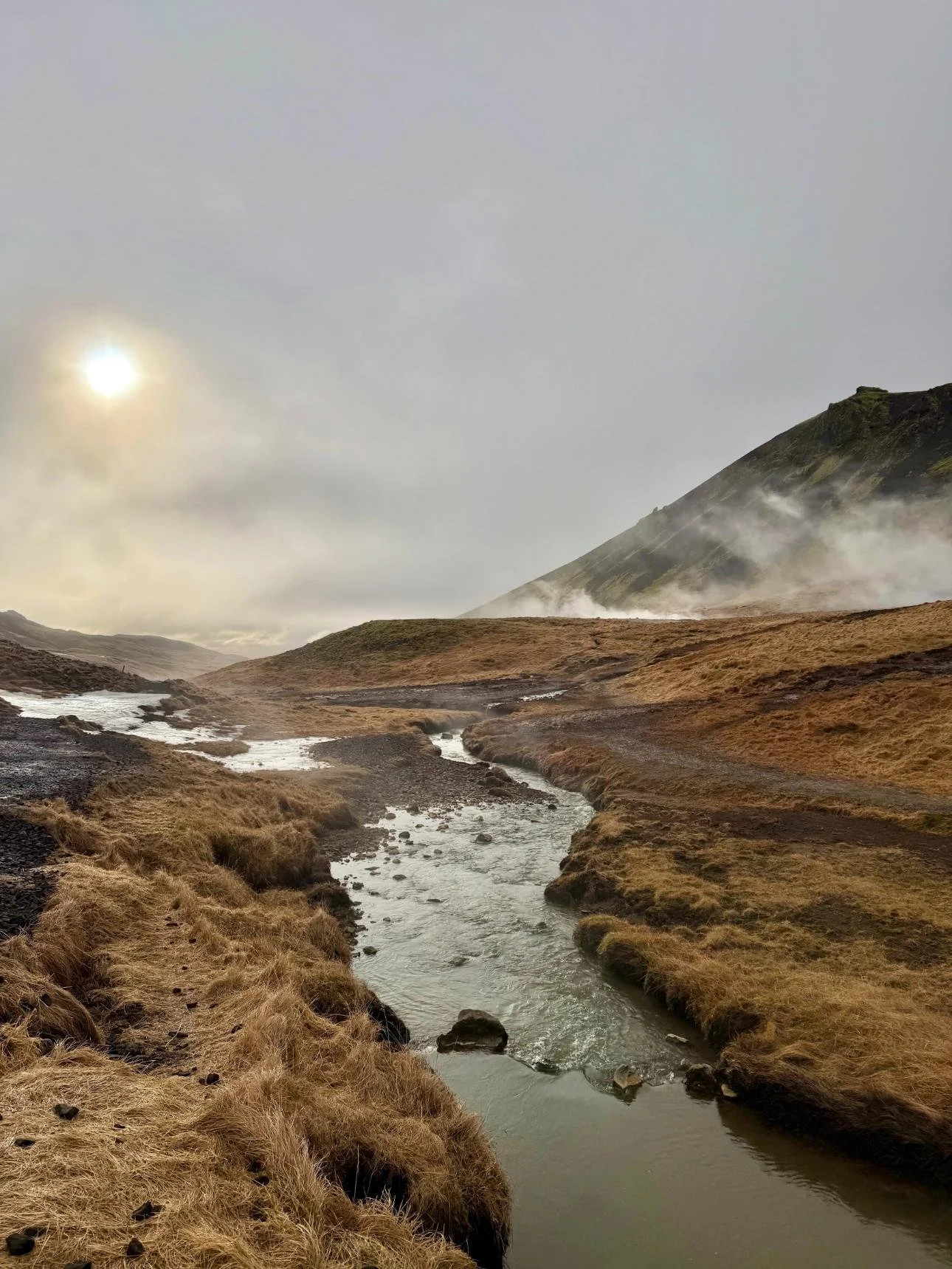
About an hour east of Reykjavík, Hveragerði is worth a stop for the Reykjadalur hot spring river — a 3km hike up a geothermal valley to a river you can actually bathe in. It's free, it's wild, and it's the antithesis of the Blue Lagoon. In summer especially, go early to beat the tour buses.
Where to stay: Frost and Fire Boutique Hotel sits here on a geothermal river with outdoor hot tubs. A genuinely atmospheric first-night option if you want to ease into the road trip rather than driving straight through.
Seljalandsfoss, Skógafoss & the waterfall coast
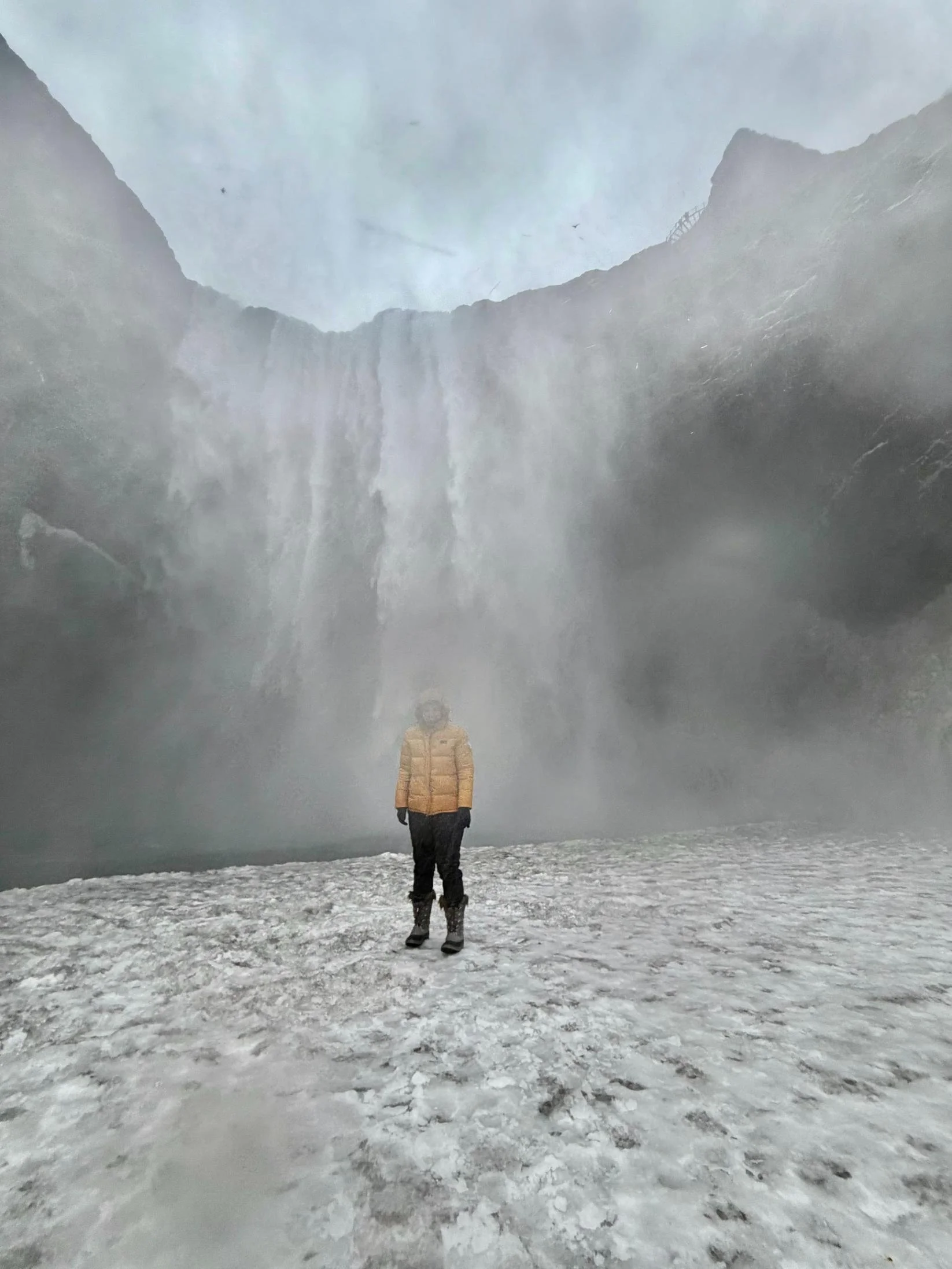
The south coast's famous pair of waterfalls are within an hour of each other and both are worth stopping for — Seljalandsfoss for the path behind the curtain of water, Skógafoss for the scale. Both are packed in summer by mid-morning. Go before 8am or after 7pm and they look completely different.
From Skógafoss, the trail up to the top leads onto the Fimmvörðuháls hiking route — one of Iceland's best and covered in our summer in Iceland guide if that's on your list.
Where to stay: The Hella area (30 minutes east) is where we'd base for this section. Hotel Rangá has an on-site observatory and aurora wake-up calls. Aurora Igloo South — which we stayed in and wrote about — puts you under a transparent dome pod facing the sky. Both fill up months ahead.
Explore hotels near Hella:
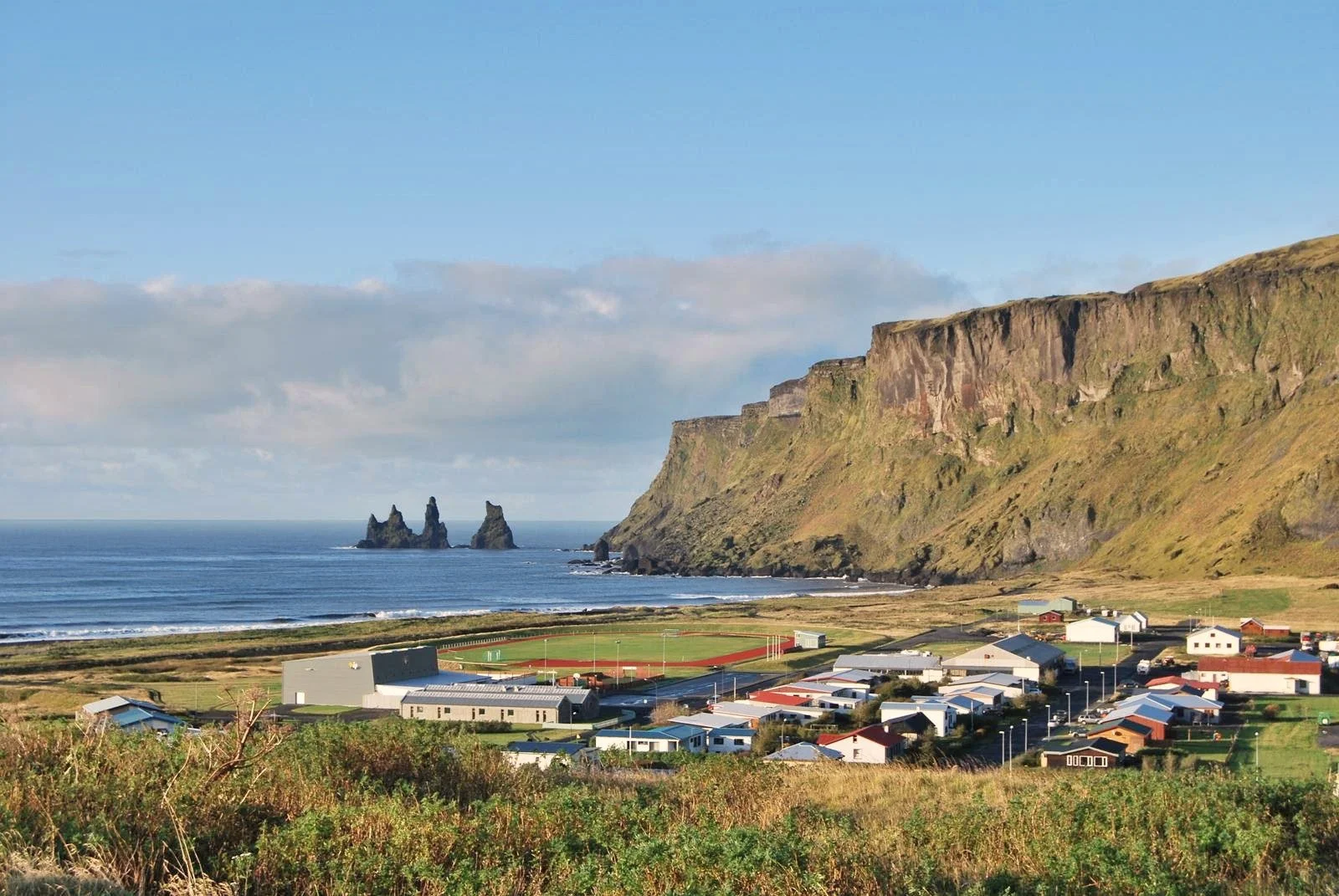
Vík
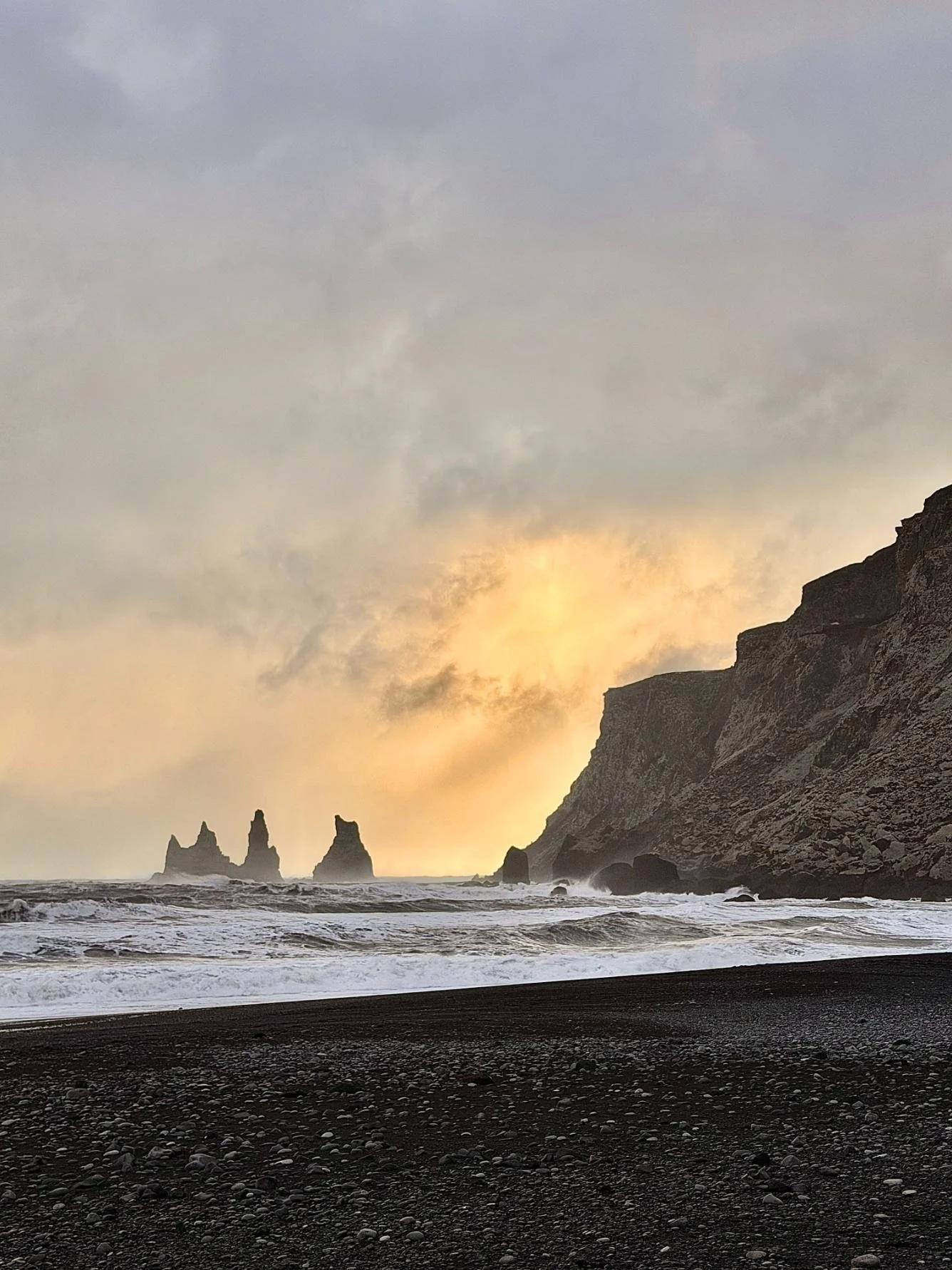
The southernmost village in Iceland sits beneath dramatic sea stacks and the famous black sand beach at Reynisfjara. The beach is dangerous — rogue waves with no warning, no slope to run up — and the signs saying so are not decorating. Watch the waves from a distance before walking anywhere near the water line. The basalt column formations at Reynisfjara are some of the most photographed in Iceland (as of 2026, most of the beach is closed due to a storm).
We personally prefer the much less crowded Vík beach, which is spectacular at sunrise and sunset. We got it all to ourselves a couple of times. We actually included in our alternatives to tourist spots in Iceland and our favorite beaches in Europe!
The village itself is small but now has a well-stocked supermarket (one of the last before the emptier stretches east), a good bakery, and the famous church on the hill that appears in half of the Iceland photography you've ever seen.
Where to stay: Hotel Kría is in the village centre. Black Beach Suites on the outskirts has floor-to-ceiling ocean views and more space — better aurora positioning too.
Explore hotels, cabins, and apartments in Vík and around:
Kirkjubæjarklaustur and the lava fields
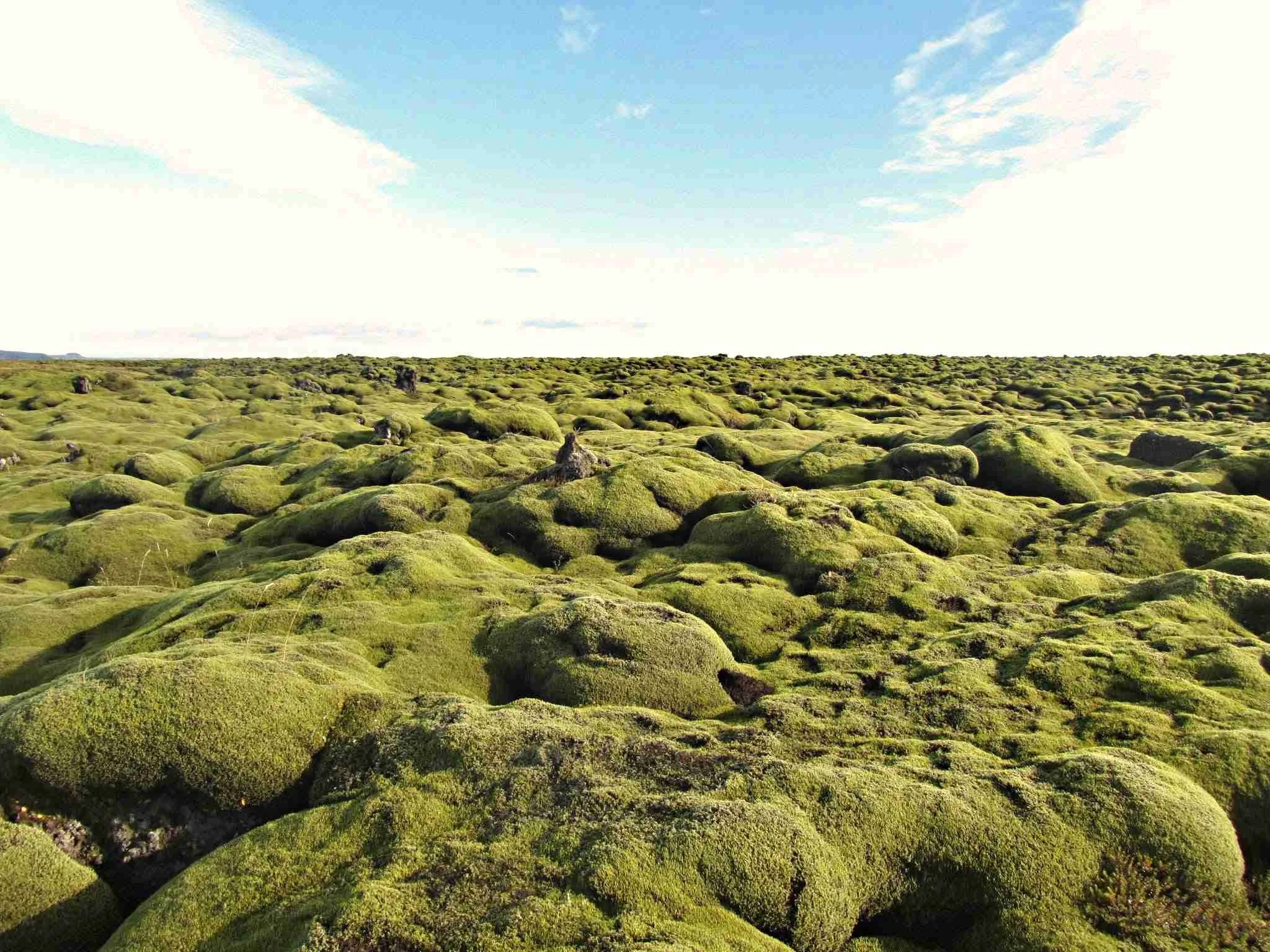
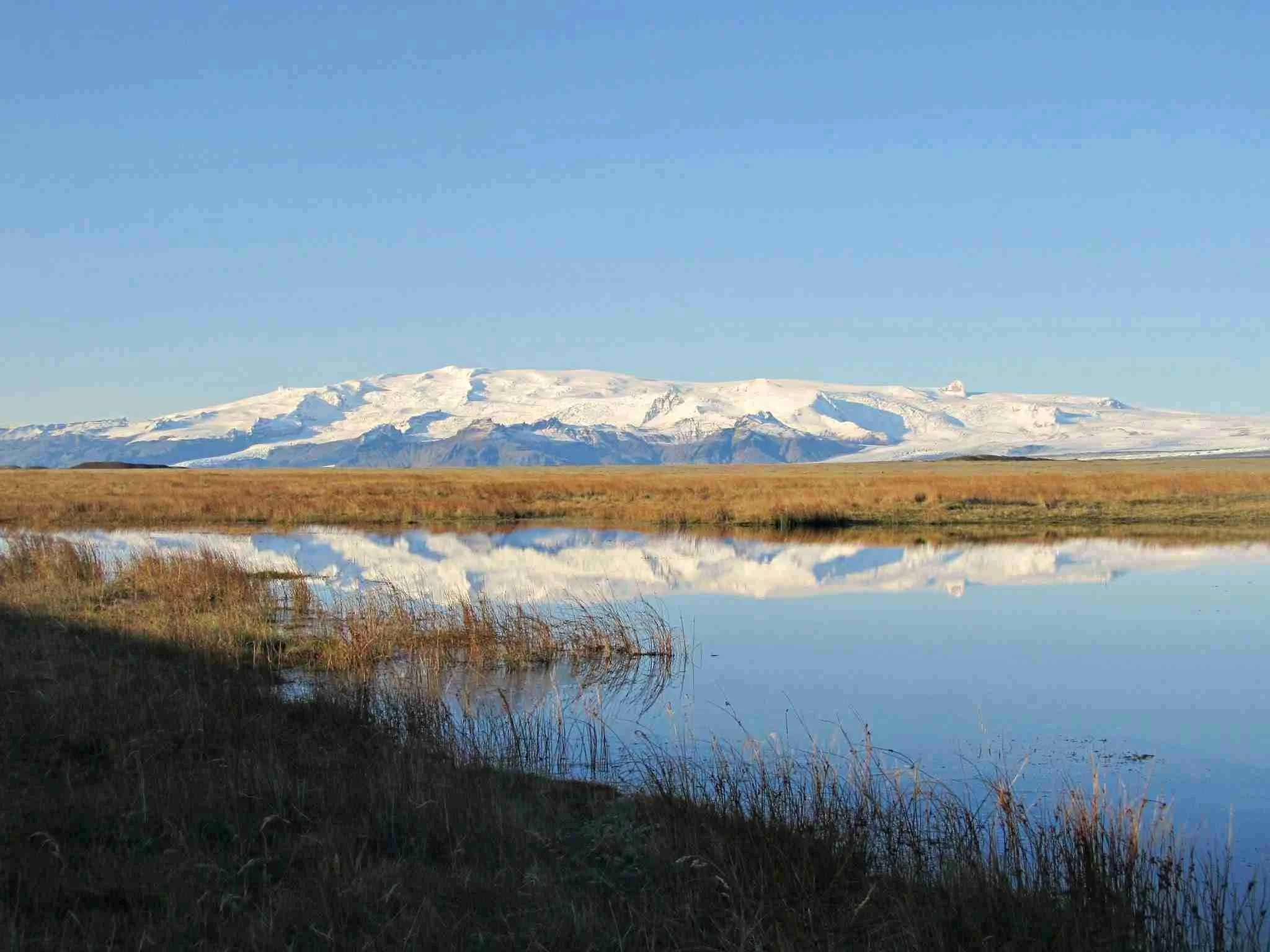
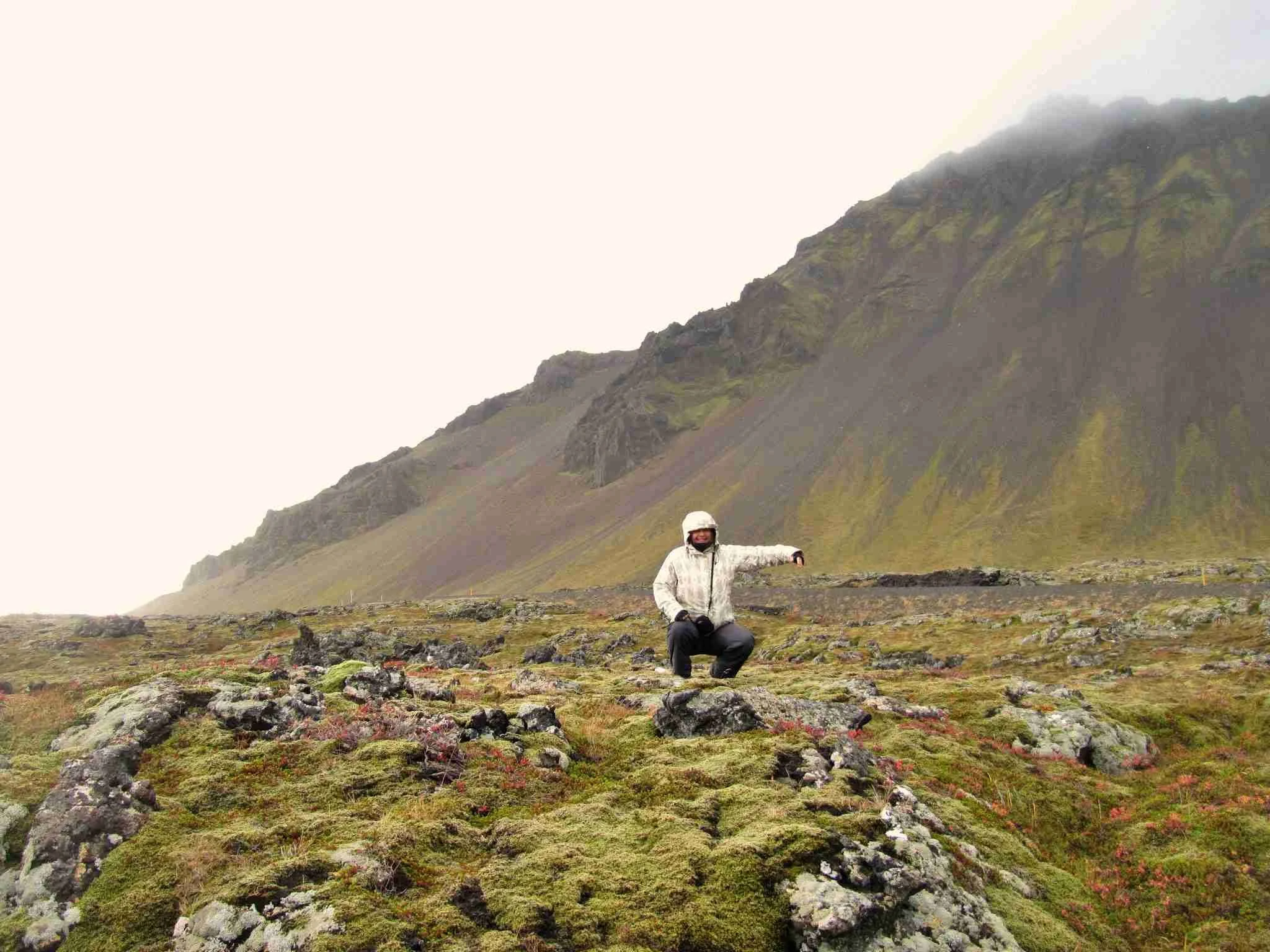
After Vík, the landscape changes: you enter the vast Eldhraun lava field, covered in the kind of dense green moss that looks fake (it’s really cool, and much better without snow). This is the lava flow from the 1783 Laki eruption — one of the largest in recorded history, which caused crop failures across Europe and contributed to the conditions leading to the French Revolution. The scale of it, driving through, is hard to process.
Kirkjubæjarklaustur (locals call it Klaustur, mercifully) is the main stop in this stretch — small, quiet (although it really grew between our first and last visit), and a good overnight if you don't want to push straight through to the glacier lagoon area.
Where to stay: Hotel Laki is family-run, good value, and has dark skies for aurora.
Explore accommodation options near Kirkjubæjarklaustur:
Skaftafell and Vatnajökull
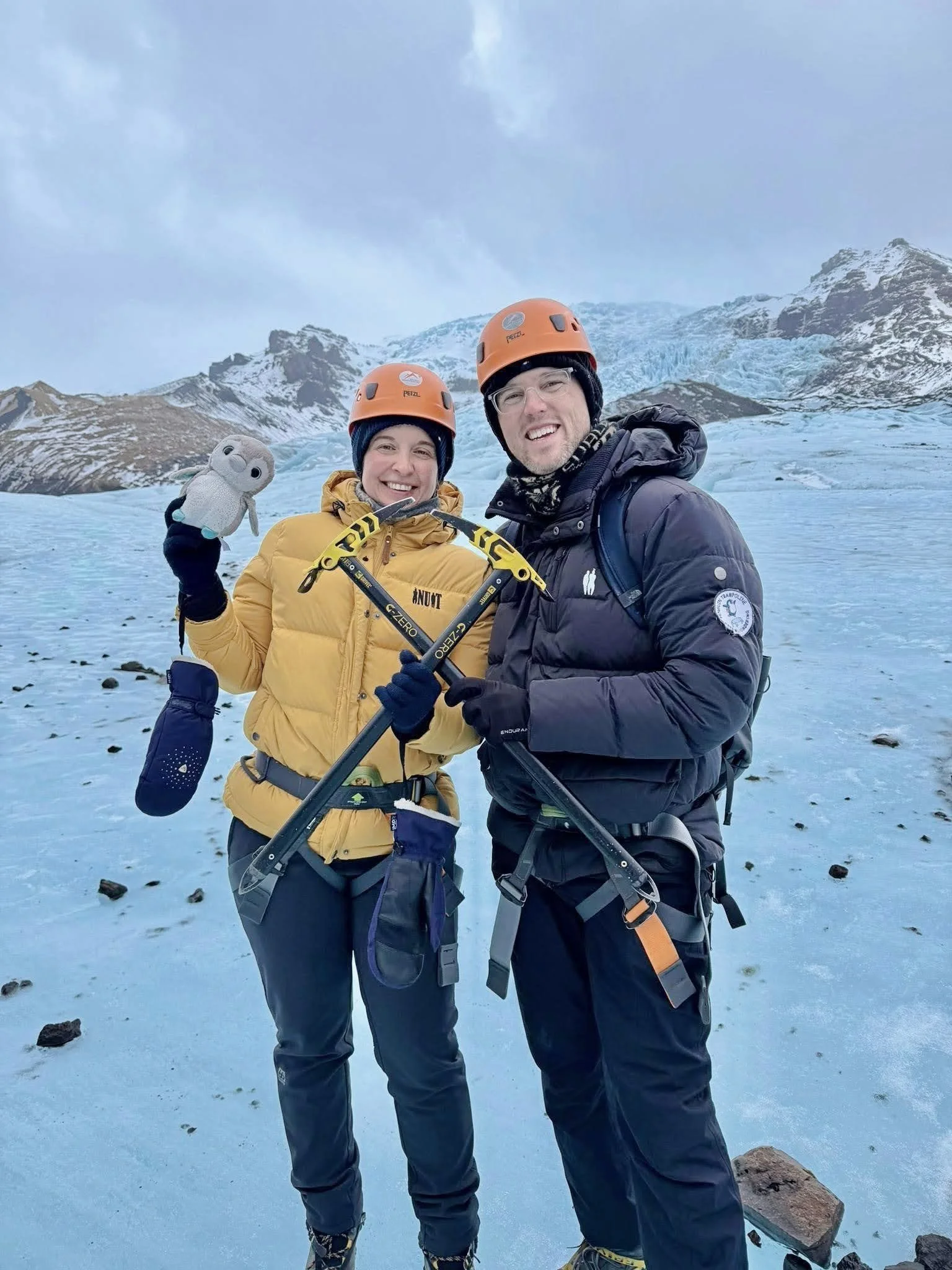
Skaftafell is the western gateway to Vatnajökull National Park — Europe's largest glacier covers the interior, and from here you can walk to the edge of it, do a guided glacier hike, or take an ice cave tour in winter. We did the full glacier hike and ice cave, and it remains one of the most extraordinary things we've done anywhere. We included it in our favorite things to do in Iceland in winter.
The Svartifoss waterfall — framed by basalt columns that inspired the design of Reykjavík's Hallgrímskirkja church — is a short hike from the visitor’s center and often missed by people who don't leave the car park.
Where to stay: Fosshotel Glacier Lagoon is the upscale option with private hot tubs and a restaurant. The most remote-feeling accommodation in this stretch.
Jökulsárlón and Diamond Beach
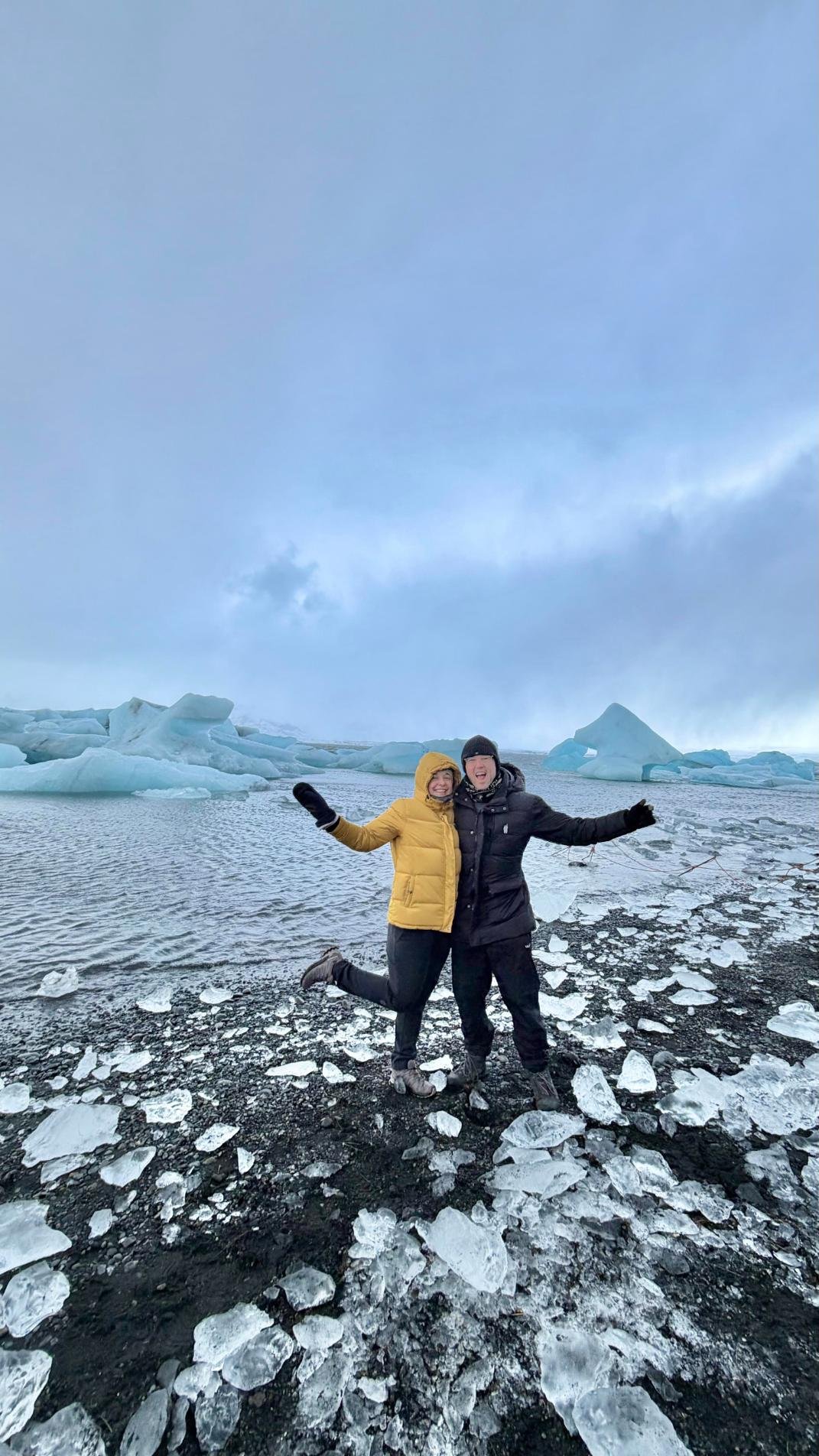
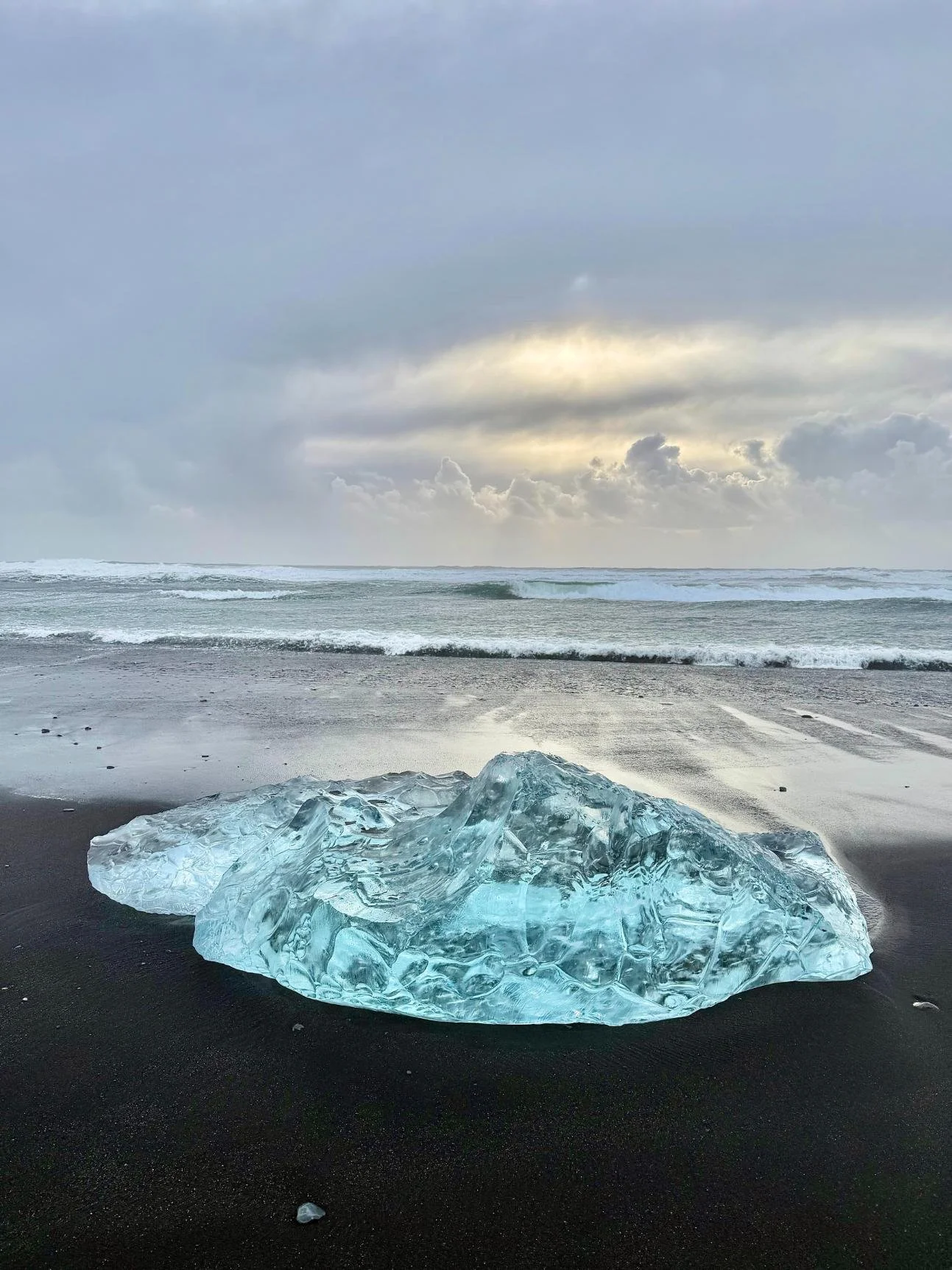
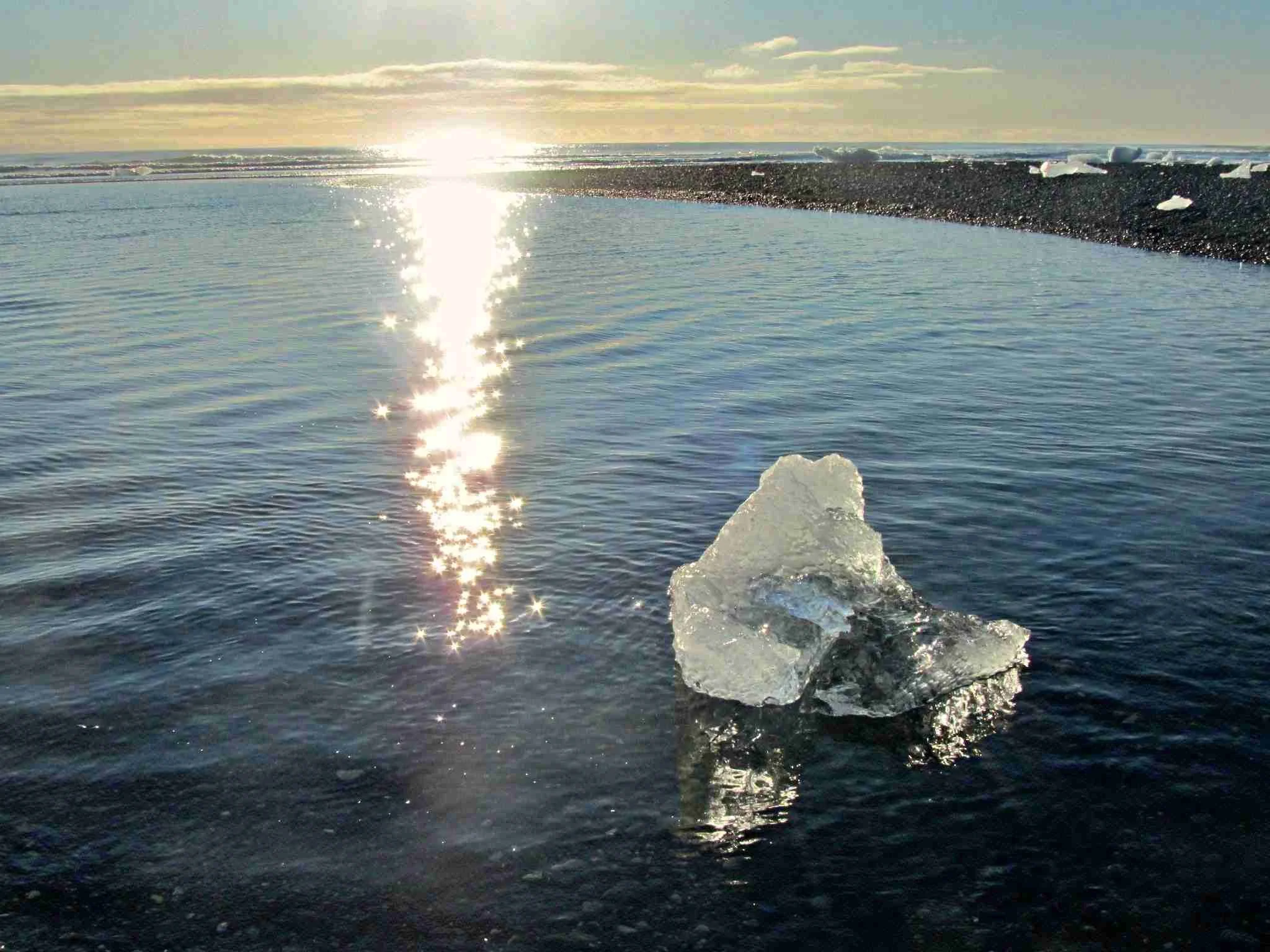
This is the one. We've been to Jökulsárlón three times across our Iceland trips and have been amazed every single visit. The glacier lagoon — where icebergs calve off the Breiðamerkurjökull glacier and drift slowly to sea — looks different every visit depending on the light, weather, and how many ice blocks have broken off recently. The bergs drift through a tidal channel to Diamond Beach, where they wash up on black sand and catch the light like something from a different planet.
The tour buses arrive at the main car park by 10am. Get there at dawn or stay until dusk. The boat tours onto the lagoon are worth it — being among the icebergs rather than looking at them from shore is a different experience entirely, although the lagoon is nicer without boats on it. Imagine it with the northern lights (check our guide to the best time to see the aurora in Iceland)…
Where to stay: This section is where accommodation books out first. Hali Country Hotel — where we stayed — is 15 minutes from the lagoon with a farm-sourced restaurant and cultural center on-site. Vagnsstaðir Guesthouse has horses on the grounds and glacier views. Book both as early as possible — months ahead for summer, weeks ahead for shoulder season.
Höfn
The end of the south coast stretch and one of the best-placed small towns in Iceland — mountains behind, the sea ahead, and the closest town to the glacier lagoon with actual restaurant options. Höfn is known for langoustine (humarsúpa is one of our favorite Arctic dishes…), and the local catch served simply in the harbor restaurants is the right way to end a south coast drive.
From Höfn, the Ring Road continues east and north, but that's beyond what we've driven. If you're continuing, the eastfjords and Mývatn lake area are consistently recommended by people who've done it. And we’d love to drive the whole road all the way to Akureyri and Husavík.
Where to stay: Berjaya Iceland Hotels has sea views and is a short walk to the harbor restaurants. Hotel Höfn is the central, practical option.
Find a hotel in Höfn:
Easy additions for self-drive tours if you have more time
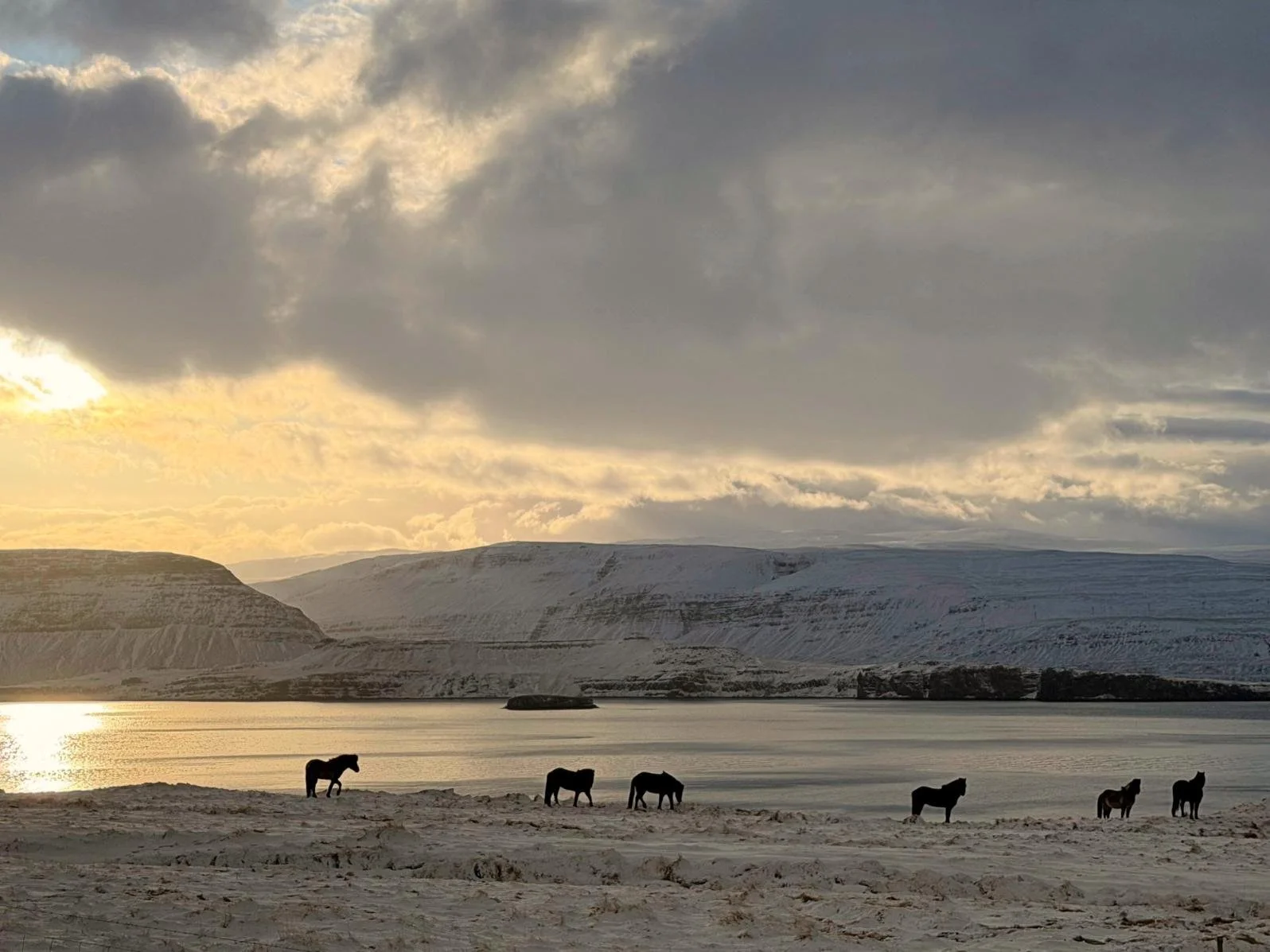
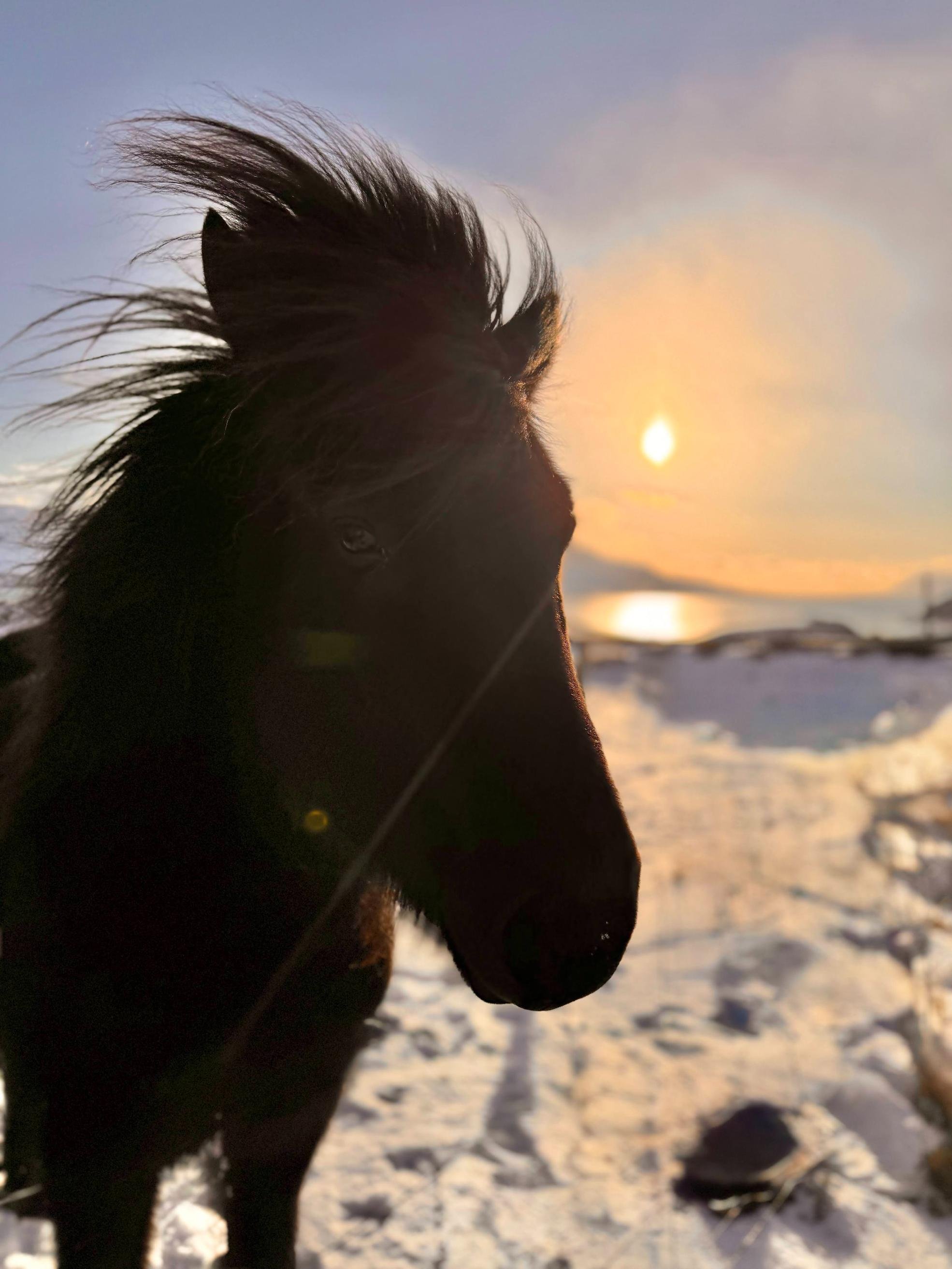
Horses in Hvalfjörður
Reykjanes Peninsula
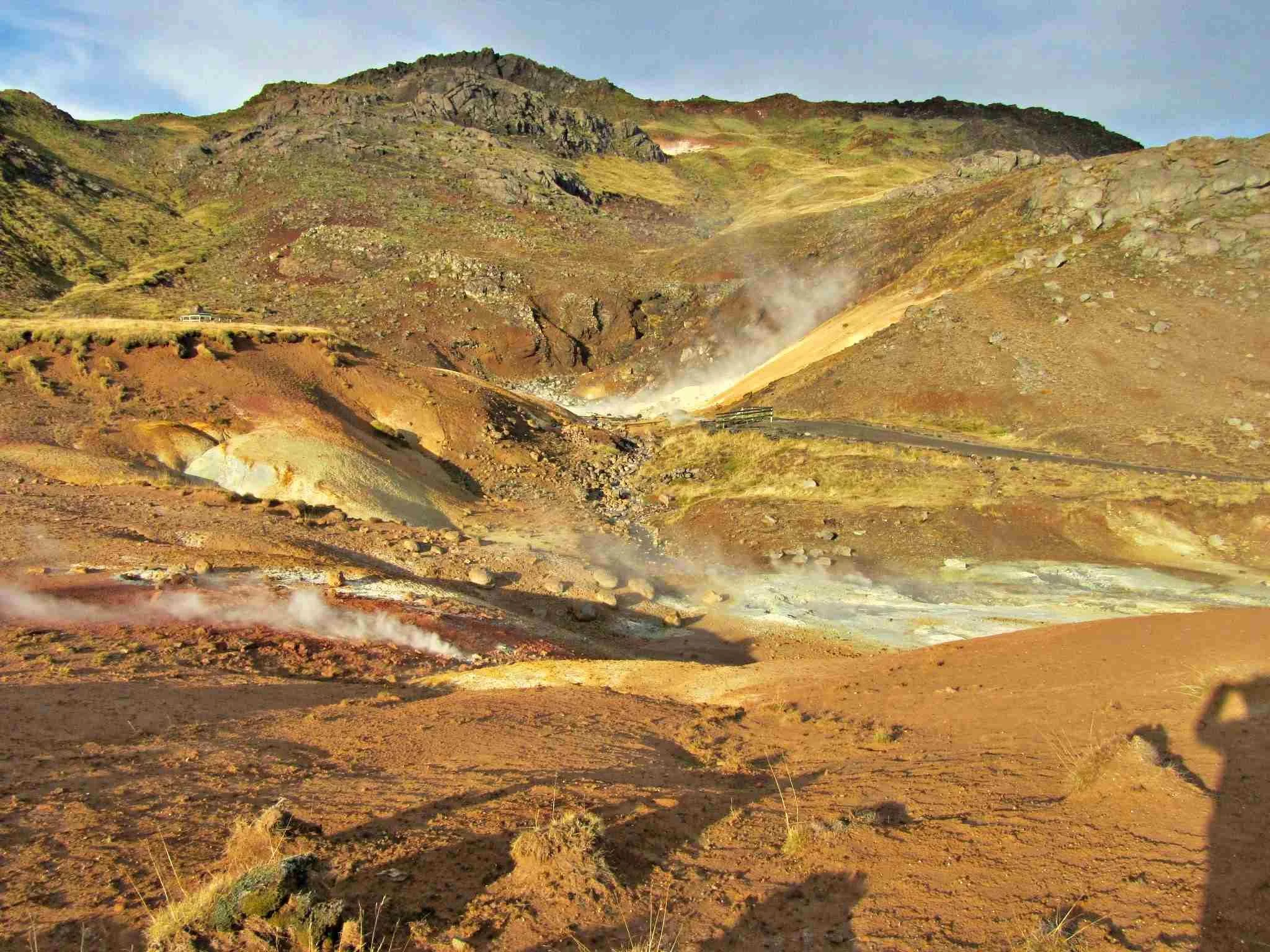
The peninsula southwest of Reykjavík often gets reduced to "where the airport and Blue Lagoon are." It's much more interesting than that — a geologically active landscape of lava fields, geothermal vents, fishing villages, and the Bridge Between Continents, where you can stand with one foot on the North American plate and one on the Eurasian. The Gunnuhver geothermal area, with its mud pools and steam vents, is one of the most active geothermal sites you can walk around freely. Half to a full day from Reykjavík, no detour required on arrival or departure.
You’ll find more information in our alternatives to tourist spots in Iceland.
The Golden Circle
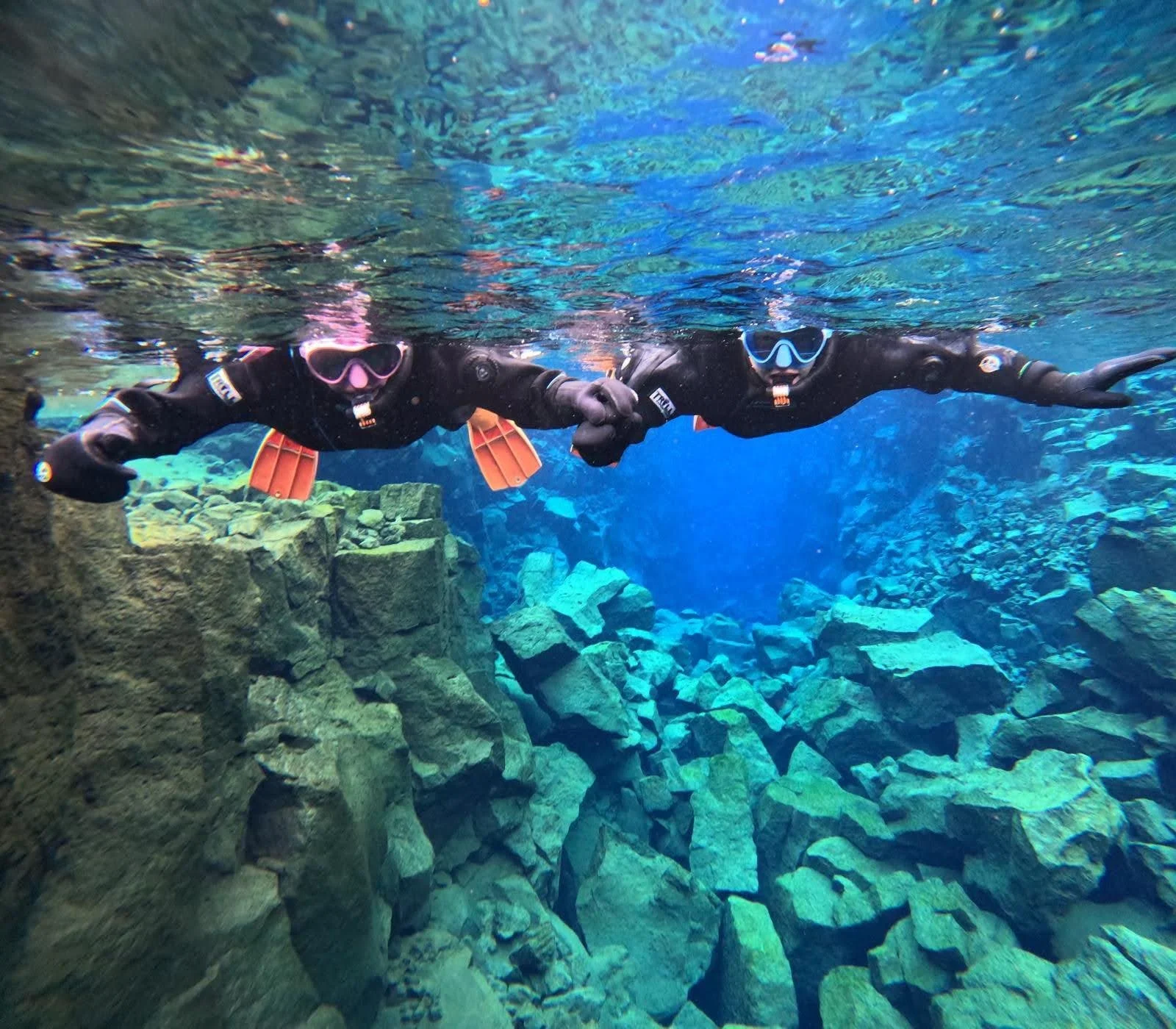
It’s the most-driven day trip from Reykjavík, and the reputation is earned: Þingvellir National Park (where the original Icelandic parliament met in 930 AD, and where the tectonic plates are visibly pulling apart), the Geysir hot spring area (Strokkur erupts reliably every few minutes), and Gullfoss waterfall. We snorkeled the Silfra fissure in Þingvellir — between the plates, in glacial water at 2°C — which is one of the more surreal experiences we've had.
The Golden Circle is extremely well-travelled (that’s an understatement). Again: early morning changes everything. A full day is enough.
Hvalfjörður
The fjord north of Reykjavík that most people bypass on the tunnel. Taking the old road around the fjord adds an hour but passes some of the most quietly beautiful scenery near the capital — deep blue water, small farms, waterfalls dropping directly into the fjord. Glymur, Iceland's second-highest waterfall, is accessible by trail from the fjord road.
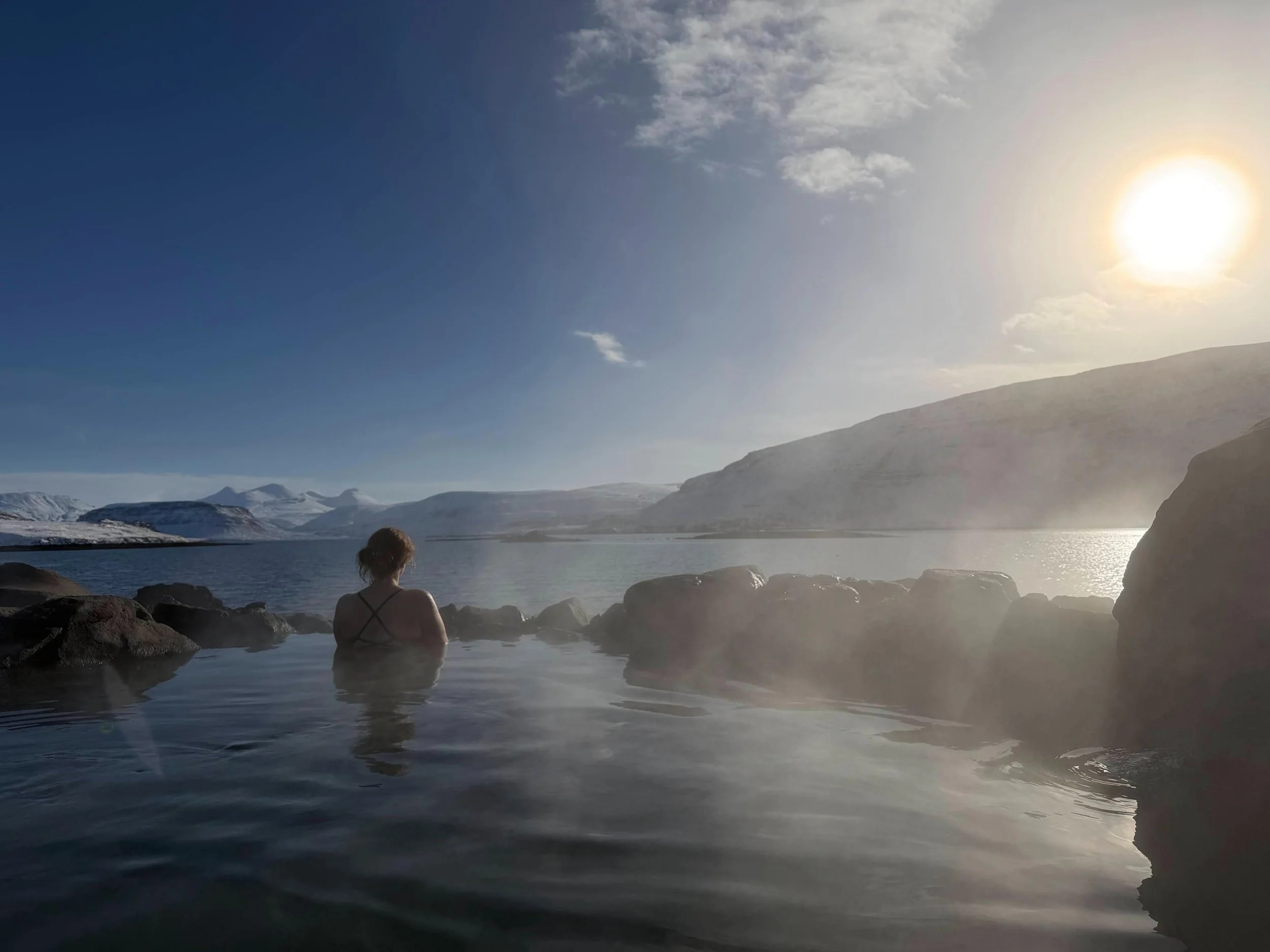
Hvammsvík hot springs and Brekka Retreat are both in this fjord — the former for a genuinely wild hot spring experience, the latter for an overnight with fjord views and northern lights potential. Worth the detour, and you won’t find any crowds there.
Snæfellsnes Peninsula
The peninsula northwest of Reykjavík takes 2–3 hours to reach and is best done as an overnight rather than a day trip. Snæfellsjökull — the glacier-capped volcano Jules Verne used as the entrance to the center of the earth — dominates the tip of the peninsula. The drive around it passes black beaches, lava formations, fishing villages, sea cliffs, and the Snæfellsjökull National Park. Horseback riding across the lava fields here is one of the most distinctive ways to see it, but it’s just awesome to drive around and stop along the way. The atmosphere is very special (inhabited by many hidden people, I’d say).
Driving in Iceland: what you actually need to know
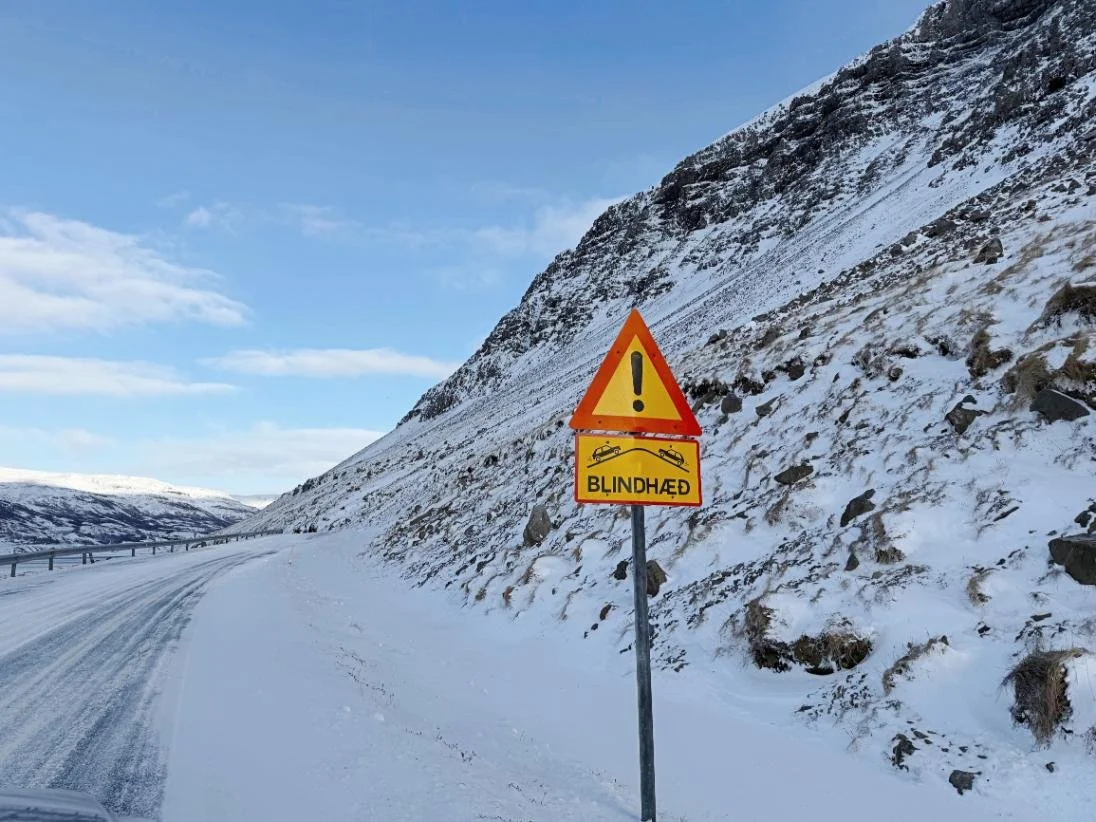
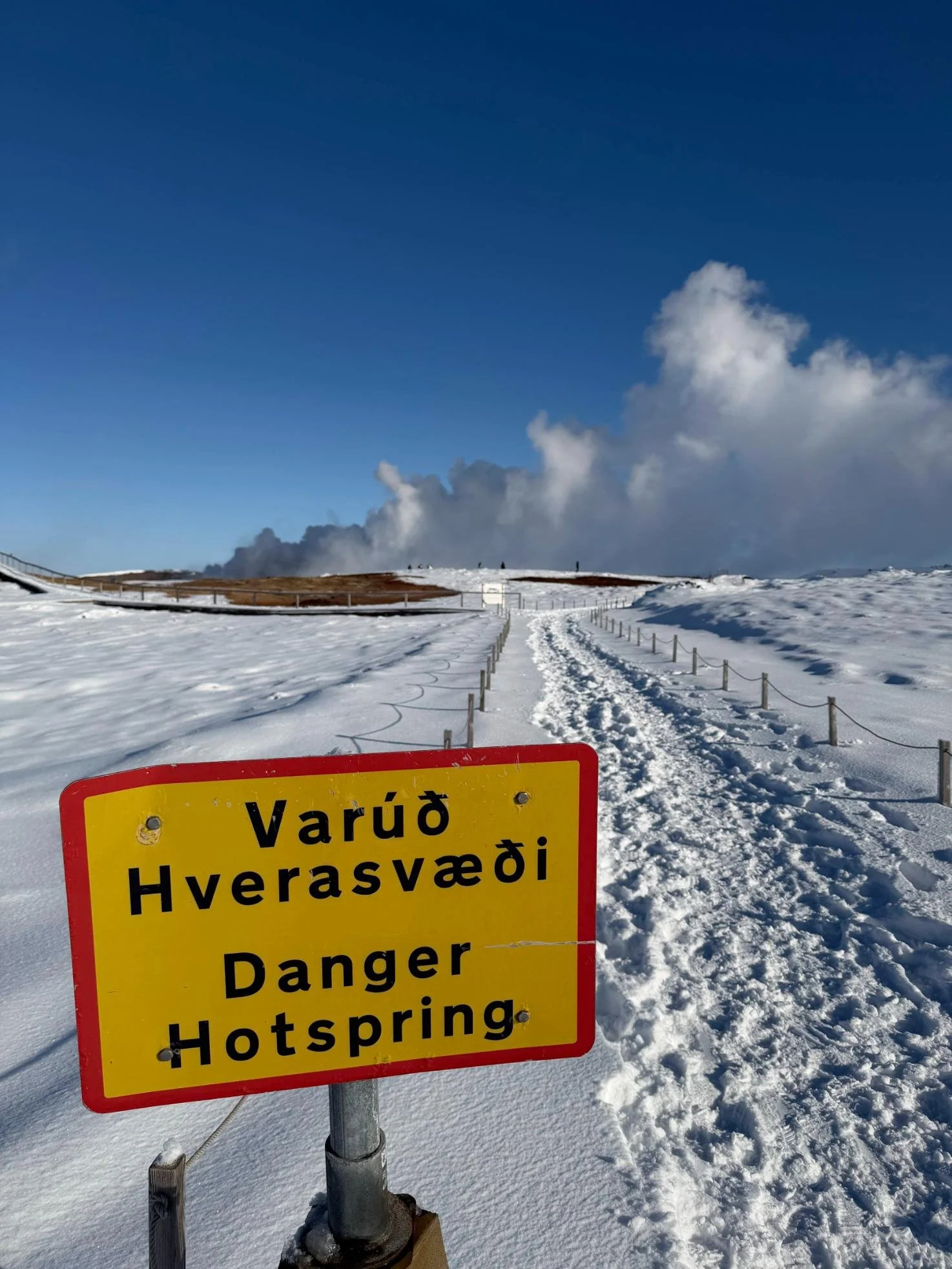
Icelandic road signs are fun! Here in Hvalfjördur
The regular car question
As covered above: the Ring Road, Golden Circle, Reykjanes, Hvalfjörður, and Snæfellsnes are all perfectly manageable in a standard car. Rental companies include winter tires automatically from October to April. The main things to add: gravel protection (stones from other vehicles chip paint and windscreens on rural roads), and check whether your policy covers volcanic ash and sand damage separately — standard coverage often doesn't, and Iceland has both.
Iceland-specific road signs and rules
Blindur vegur / blindir eiðir — "blind road" or "blind hill." These yellow warning signs appear before crests and dips where oncoming traffic is invisible. Slow down and stay right. You can also honk to signal your presence. Ignoring them is how head-on collisions happen on single-lane sections.
Single-lane bridges (einbreiðar brýr) — Common throughout Iceland, marked with a single bridge sign. The general rule: whichever vehicle reaches the bridge first goes first. In practice, slow down and make eye contact. They're narrow enough that there's genuinely no room for two cars.
Sheep — On the road. Everywhere, in summer and shoulder seasons. Particularly on rural sections in the east and north. They move unpredictably, they don't register cars as a threat, they love to just stand in the middle of the road, and their lambs are often on the opposite side of the road from them. Slow down significantly when you see any and be patient.
Speed cameras — Fixed and unmarked, very common. Speed limits are strictly enforced: 50km/h in towns, 80km/h on gravel roads, 90km/h on paved roads. The fines are significant.
Off-road driving is illegal — Iceland has serious environmental protection laws around its mosses and lava fields. Driving off marked roads or tracks carries heavy fines and can cause damage that takes centuries to recover. The moss you'd be driving over is typically 100+ years old.
Road.is — Check it every morning before driving. Icelandic roads close without much warning due to weather, and road.is shows the current conditions, closures, and weather alerts across the entire country. Download the app.
Winter driving
Winter driving in Iceland on the Ring Road is possible in a regular car with winter tires — but it requires more respect than summer driving. Ice, snow, and low visibility are real. Black ice on road bridges is common (bridges freeze before road surfaces). The Icelandic Met Office forecast and road.is together before any morning drive is non-negotiable in winter.
The general rule: if the forecast shows a storm warning (orange or red), don't drive. Iceland's emergency services will tell you the same thing.

Penguin Trampoline tip:
Fill up with fuel whenever you see a petrol station east of Vík. The stretches between stations in the Skaftafell and glacier lagoon area are long, and running low on the Ring Road in the middle of the lava fields is a very specific kind of avoidable stress.
Do you need a 4x4 in Iceland for this road trip?
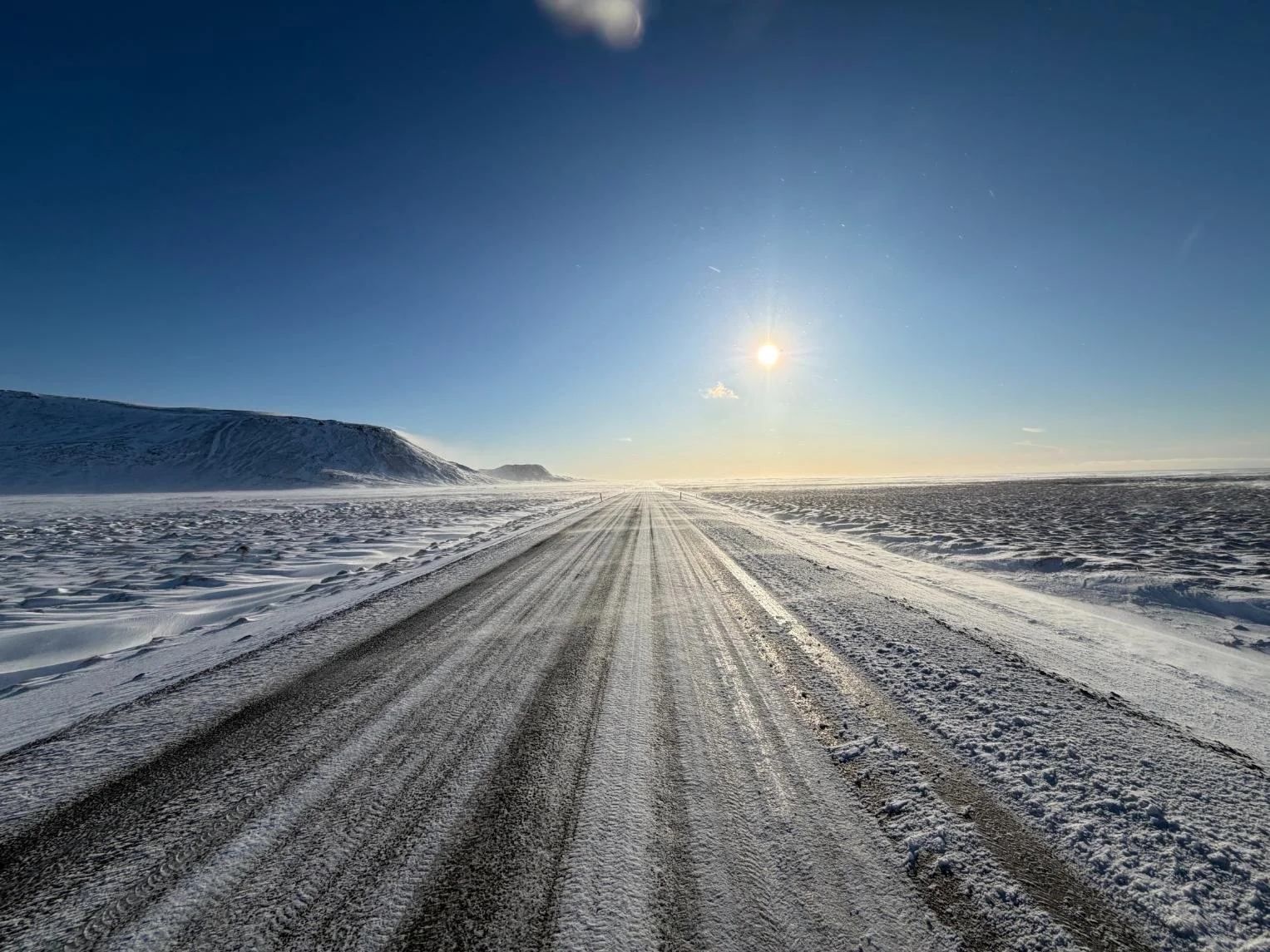
All rental cars have snow tires and work on paved roads (with caution) — here in Reykjanes
For the south Ring Road from Reykjavík to Höfn, and all the additions covered in this guide: no, you don't need a 4x4. A standard car handles the Ring Road, the Golden Circle, Reykjanes, Hvalfjörður, and the main Snæfellsnes roads without any issue, summer or winter (with winter tires, which rental companies include automatically in Iceland). Note that in case of extreme winter weather, you might need to alter your route, especially in Snæfellnes, Reykjanes and possibly Hvalfjörður if you go deep into the fjord.
A 4x4 becomes necessary for F-roads — the highland interior tracks that require genuine high clearance and are marked with an "F" prefix (F208, F225, etc.). Landmannalaugar, Kerlingarfjöll, the Kjölur route — none of these are on the itinerary below, and all of them are 4x4 only. Driving a regular car on an F-road is both dangerous and illegal in Iceland, carrying heavy fines and voiding your rental insurance.
The practical upshot: if the highland interior isn't on your list, save your money. Rent a comfortable regular car, check that it includes winter tires and gravel protection, and spend the saving on accommodation closer to Jökulsárlón.
Where to stay
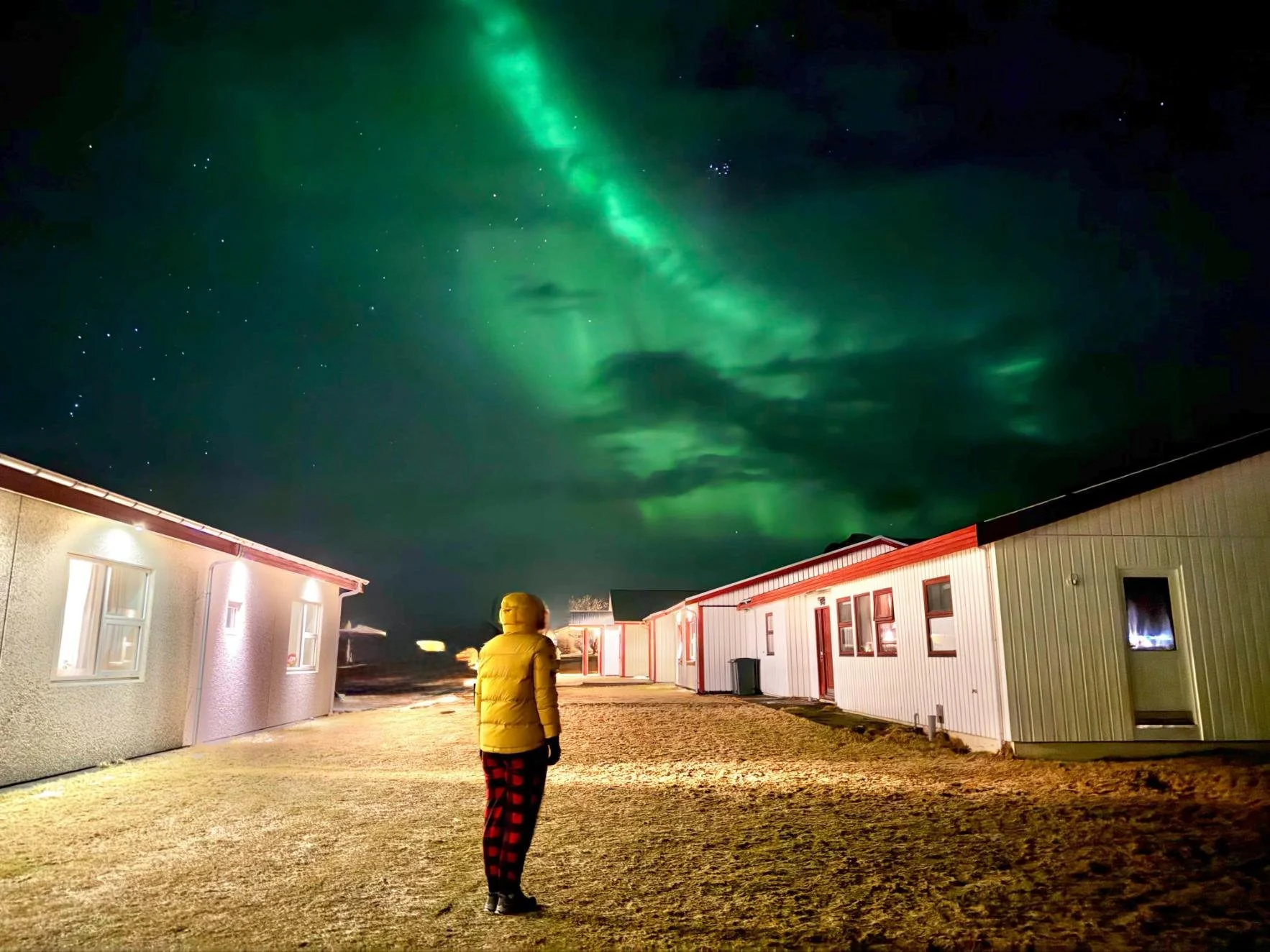
We were about to go to bed at Hali Country Hotel when I had a feeling… hence the PJ pants!
We've put together a full guide to accommodation along the south Ring Road — from Reykjavík to Höfn, with specific recommendations for each section — in our Ring Road hotels guide. The short version: book the glacier lagoon area first, at least three months ahead for summer and well in advance for winter aurora season. Everything else fills in around it.
If you’re visiting in winter, also check out our favorite northern lights hotels in Iceland.
When to go
Summer (June–August) gives you the midnight sun, all F-roads open, puffins, and the best hiking conditions. Winter (November–March) gives you the northern lights and a completely different, more dramatic landscape — but shorter days and weather that requires flexibility. Shoulder seasons are underrated and cheaper, with fewer crowds.
Our Iceland summer guide and Iceland winter guide cover both seasons in detail. For the northern lights timing specifically, our best time for northern lights in Iceland guide has the month-by-month breakdown. And our main Iceland travel guide — which covers the full picture of when to visit and what to do — is the place to start if you're still in the planning phase.

Did you know?
A stretch of Iceland’s Ring Road crossing the glacier plains has been wiped out before — and it could happen again. In November 1996, a subglacial eruption beneath Vatnajökull triggered a massive jökulhlaup (glacial outburst flood). At its peak, 45,000 m³ of water per second tore through the landscape, carrying house-sized icebergs and destroying the 880-meter bridge over the Skeiðará. The road was completely washed away across Skeiðarársandur — but thanks to close monitoring, it had been closed in time and no one was hurt. Today, the route has been rebuilt elsewhere, while the old bridge pillars still stand in the sand as a reminder of what happened.
On the pic: Us paying our respect to Vatnajökull… just in case
✈️ Find flights
🏨 Explore hotels, apartments, guesthouses, cabins
🧭 Browse activities and tours
🚗 Compare car rentals
🧳 Get travel gear (including for the Arctic)
🛡️ Travel safe with Heymondo Travel Insurance (5–15% off)
📱 Get a travel eSIM
🐾 Protect & track Arctic wildlife with Fahlo Bracelets (20% off)
FAQ: Iceland road trip & self-drive tours
Do you need a 4x4 in Iceland?
Not for the route in this guide. The South Ring Road from Reykjavík to Höfn, the Golden Circle, Reykjanes, Hvalfjörður, and Snæfellsnes are all doable in a regular car. A 4x4 with high clearance is required for F-roads — the highland interior tracks leading to places like Landmannalaugar and Kerlingarfjöll. If those aren't on your itinerary, save the money.
How many days do you need for the South Ring Road?
A minimum of five days for Reykjavík to Höfn with the main stops. Seven days is more comfortable and allows for weather delays, spontaneous detours, and spending more than one night at the glacier lagoon area. Add two to three days for any of the peninsula additions.
What is the best time of year for an Iceland road trip?
June to August for the midnight sun, open roads, and best hiking access. September to October and February to March for a combination of aurora potential and reasonable road conditions. January is peak aurora season but the shortest days. All seasons have trade-offs — there's no wrong time, only different trips.
Can you drive the Ring Road in winter?
Yes, in a regular car with winter tires — which are included automatically in Icelandic rentals October to April. The roads are maintained, but weather can close them on short notice. Check road.is every morning and don't drive in heavy storm conditions.
Is the Iceland Ring Road actually a ring?
Yes — Route 1 circles the entire island at approximately 1,332km. The route in this guide covers the southern section from Reykjavík to Höfn, roughly 460km of the full loop. Driving (and actually enjoying) the complete ring typically takes 7–10 days minimum, though many people do it faster.
How much does an Iceland road trip cost?
Iceland is expensive — accommodation, fuel, and food all cost more than most European destinations. Our Iceland on a budget guide has actual numbers and practical ways to reduce costs without skipping the highlights
Here is a playlist for your Iceland road trip:
The south Ring Road is one of the most consistently rewarding drives in Europe, because almost every kilometer is spectacular. The first time you see Vatnajökull. The glacier lagoon at dawn. The moment the lava fields open up after Vík. The Seljalandsfoss path behind the waterfall. These are experiences that don't really compress into photographs.
Drive it slowly. Book accommodation at the glacier lagoon first. Check road.is every morning. And let the magic unfold.
Plan your car rental early too: compare Iceland rental options here — securing your vehicle at the same time as your accommodation is a smart idea, especially in summer.
Finally, explore all our Iceland Travel Guides here.

Free download
Travel Cheaper Cheat Sheet
27 tips on flights, hotels, hidden costs and more — spend less without missing what actually matters.
No spam. Unsubscribe anytime.
Best Northern Lights Hotels in Iceland
Things to Do in Iceland in Winter
Northern Lights in Iceland: Is It Worth It?
Best Time for Northern Lights in Iceland
Ring Road & Practical Planning:
Iceland Road Trip: South Ring Road Self-Drive
Where to Stay on Iceland's Ring Road
How to Travel Iceland on a Budget
Travel Insurance for Iceland
Best Time to Visit Iceland & Things to Do
Things to Do in Iceland in Summer
Free and Cheap Things to Do in Reykjavík
Iceland Without the Crowds
Horseback Riding in Iceland
Lava Show in Reykjavík
Silfra Snorkeling in Þingvellir
Glacier Hike & Ice Cave in Iceland
Stays & Hot Springs:
Brekka Retreat, Hvalfjörður
Hvammsvík Hot Springs, Hvalfjörður
Aurora Igloo South, Hella
Hotel Keflavik & Spa, near KEF Airport & Blue Lagoon
