
Hvammsvík Hot Springs, Iceland: The One That Actually Feels Wild
Our experience at Hvammsvík Hot Springs in Hvalfjörður, which offers eight natural geothermal pools on the North Atlantic coast, Viking history dating to AD 900, and a genuinely wild setting — 45 minutes from Reykjavík.
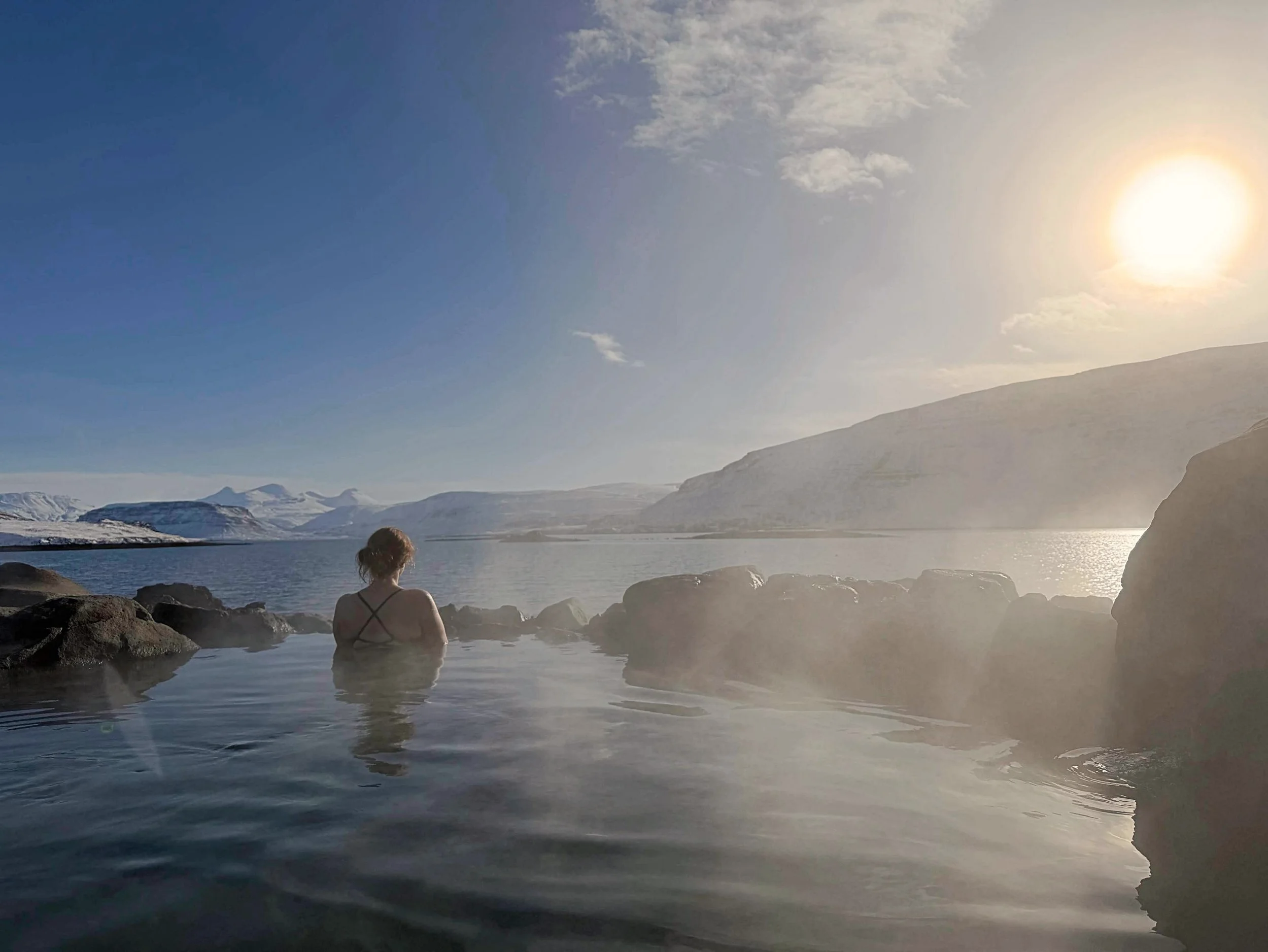
After snorkeling in cold Silfra the day before, this was even more amazing!
Last update: August 2026
There's a particular type of tourist attraction in Iceland that does the same thing: ambient music, a café serving overpriced skyr, and a few hundred people in matching robes shuffling between milky pools. They're great. The views are real. But after the third one, you start to wonder if you're visiting Iceland or the set of an influencer's photo shoot…
Hvammsvík is different.
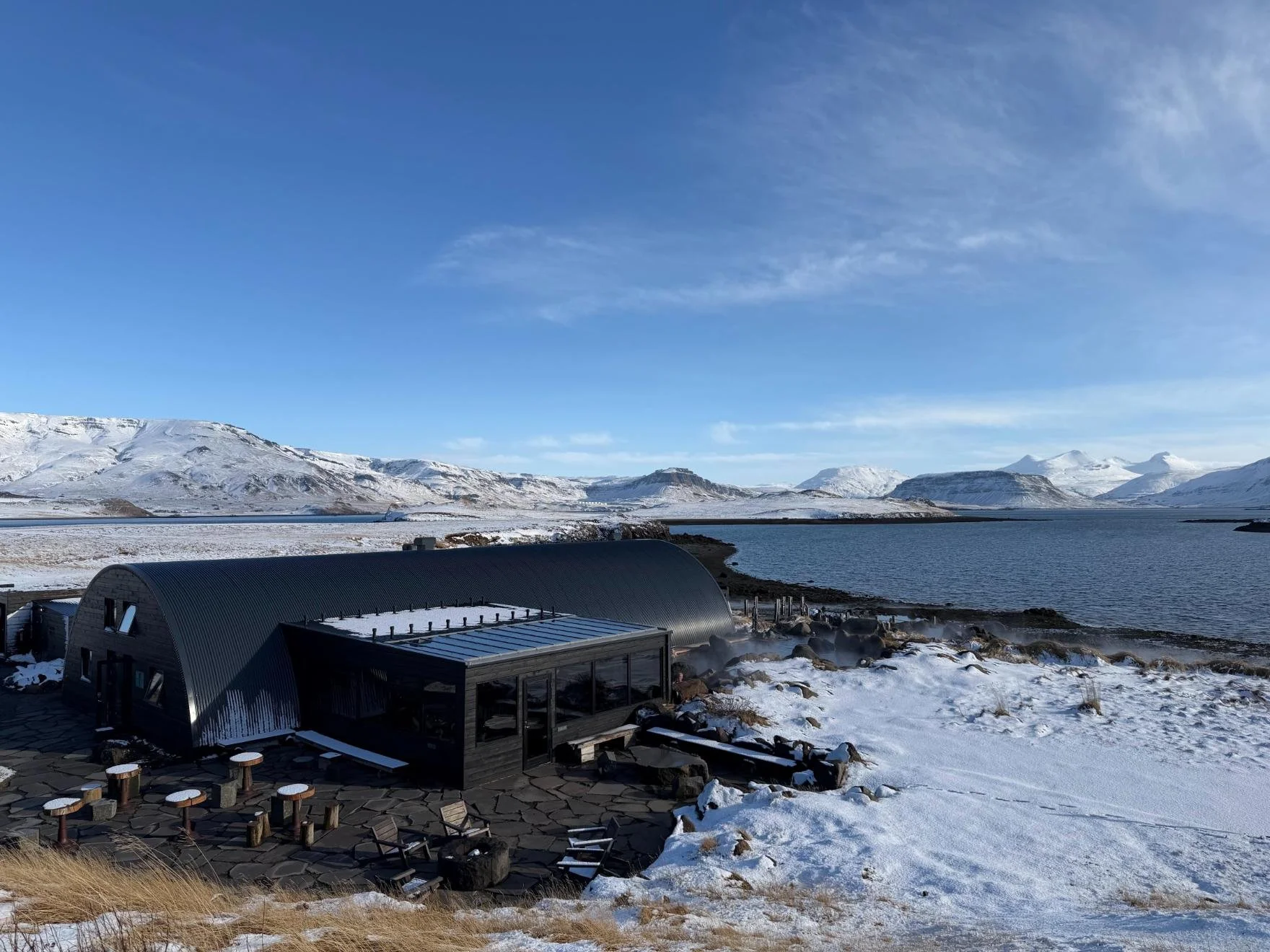
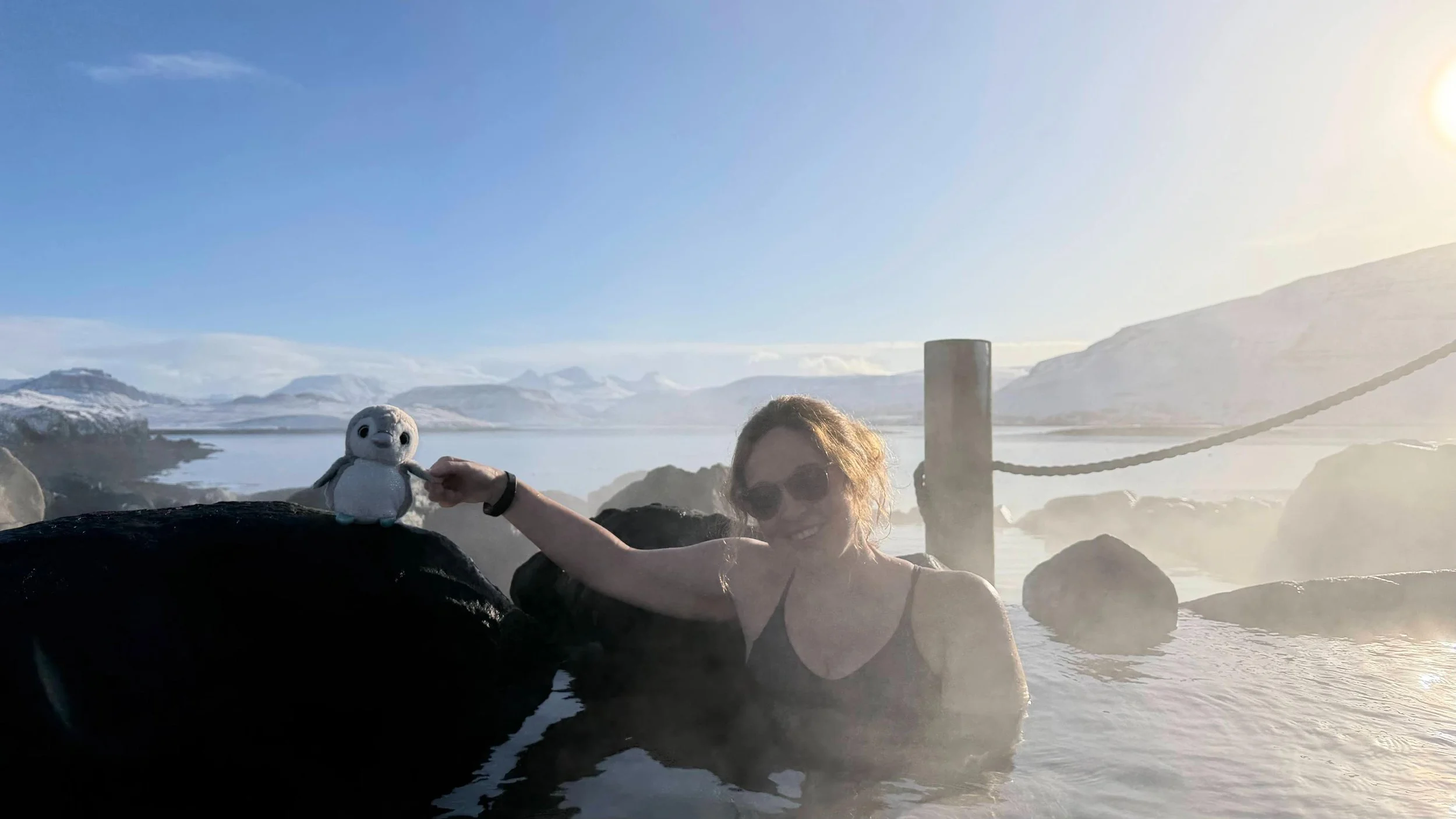
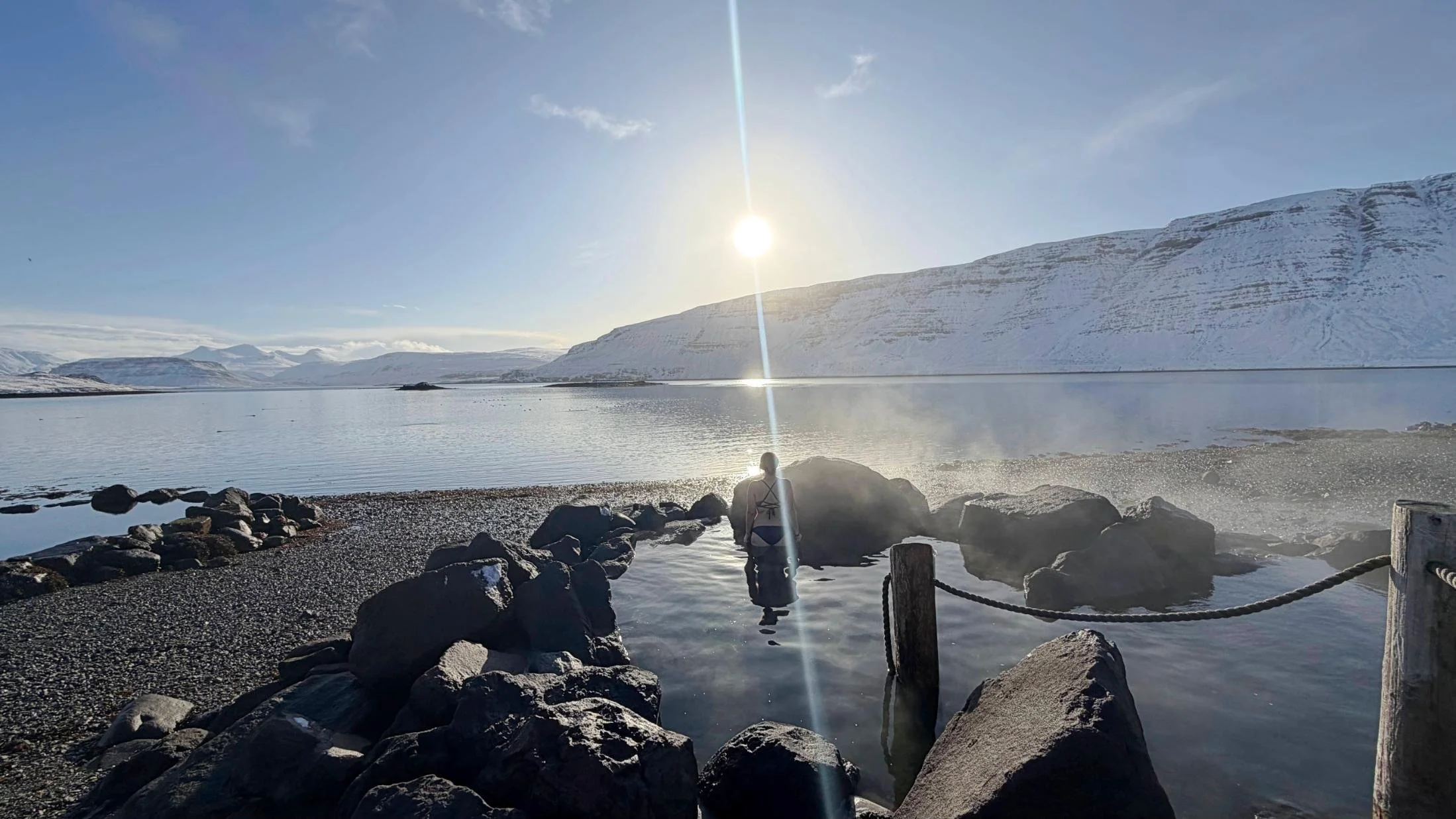
It’s eight natural geothermal pools cut directly into the North Atlantic shoreline of Hvalfjörður — Whale Fjord — about 56 kilometers from Reykjavík. At high tide, the lowest pools merge with the sea. There's no ambient playlist. No silica mud ceremony. No instructions on applying a complimentary face mask. Just warm water, cold and salty air and kelp from the fjord, mountain views across the water, and — if you go on a quiet winter morning and time it right — almost nobody else is there.
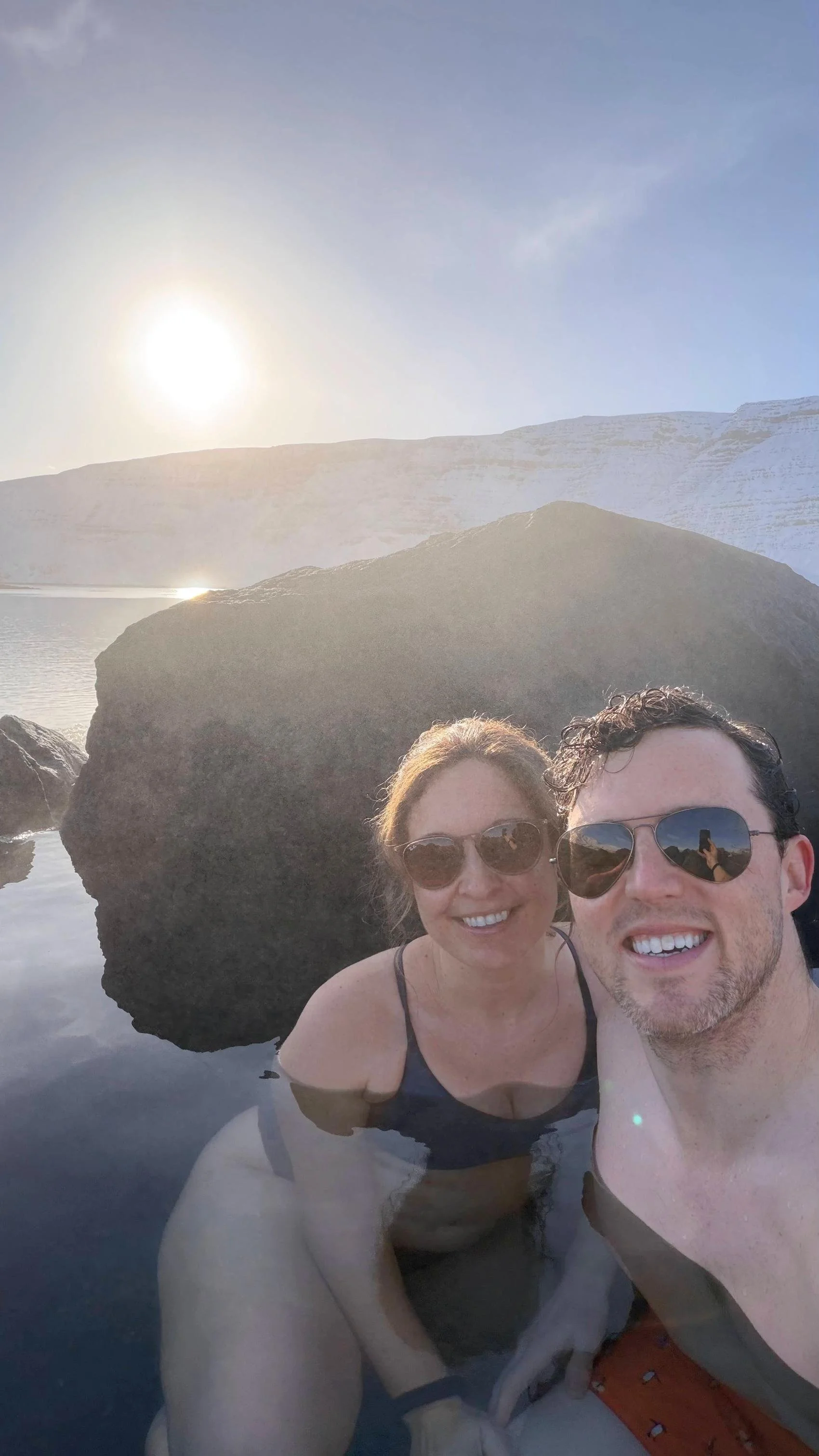
We went on exactly that morning. One of the better decisions we've made when choosing hot springs in Iceland.
🛌 Where to stay:
• Brekka Retreat, Hvalfjörður — we stayed here. Private sauna and hot tub, darkest skies near Reykjavík and very close to Hvammsvík.
• Hvammsvík Nature Resort — peaceful, open skies, right by the springs and the fjord.
🇮🇸 Top experiences:
• Hvammsvík Hot Springs tour from Reykjavík — includes ticket and transport.
• Hvammsvík and Golden Circle from Reykjavík — a great combo if you're short on time.
🚗 A car is essential to get to the hot springs if you're not on a tour. Book yours here — Iceland opens up once you leave Reykjavík.
A thousand years before the hot springs
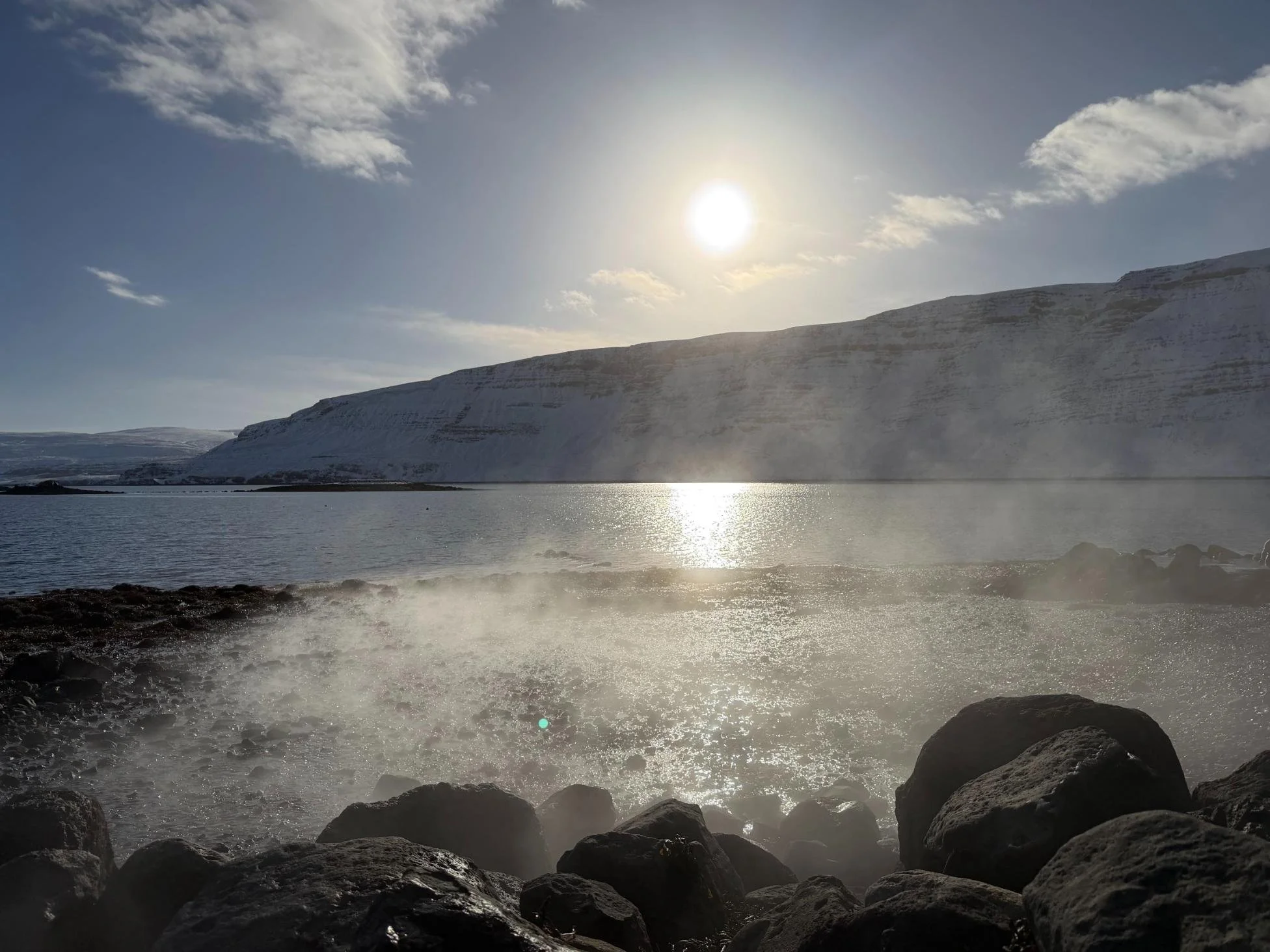
It’s hard to imagine the violent history of such a peaceful place!
The first settler and his cow drama
The land at Hvammsvík was occupied long before anyone built pools on it. The estate is recorded in Landnáma — the medieval Icelandic Book of Settlers, which catalogues the Norse colonization of Iceland in the 9th and 10th centuries. The first settler here was a man named Thorir, known as Hvamm-Þórir, who established his farm around AD 900 and named it Hvammur.
He is remembered not for great deeds but for a magnificently Icelandic dispute with a neighbor named Refur — which translates, helpfully, as Fox. The argument was about a cow named Brynja who went missing, turned up wild in a nearby valley with forty offspring, and whose calves both men claimed loudly and irreconcilably. The valley is still called Brynjudalur after her. The dispute ended in a battle at the hills now known as Þórishólar — Thorir's Hills — where Thorir and eight of his men were killed. All over a cow's calves. Vikings were no joke, and neither were cows!
The farm outlasted him. His son Ormur became a regional chieftain, mentioned in the saga Harðarsaga og Hólmverja. A later figure, Jörundur the Great, led men from Hvammur at the Bæjarbardagi battle of 1237 and appears in the Sturlunga saga. For centuries, Hvammur was one of the most significant estates in the region.
Life on the shore
The people who lived here worked the fjord hard: foraging eiderdown, hunting seals, gathering shellfish and dules (a reddish-brown seaweed) for food, and catching fish directly from the shore. The steep hills made farming difficult; the winter tides made keeping sheep nearly impossible. Despite this, Hvammsvík remained a working farm until the 1970s.
From Norse temple to half-church
The original Norse settlers worshipped Thor, Odin, and Freyja, and would have built a hof — a pagan temple — for their rituals. When Christianity became Iceland's official religion around AD 1000, many of these temples were repurposed rather than demolished. The oldest record of a Christian church on the Hvammsvík land dates to 1367. It was dedicated to St. Lucas and operated as a half-church, holding services only every other Sunday because there was no full-time priest. It remained so as late as 1705 and was deconsecrated in 1765.
This long arc of religious continuity inspired the estate's newest structure: the Temple, or Hof — a large outdoor concrete sculpture open to the elements, its roof shaped like a Maltese Cross floating above a floor that echoes a Celtic Cross. Built in 2025, it's simultaneously a contemporary art piece and a meditation on sacred spaces persisting across faiths and centuries.
World War II: Falcon Crest
During WWII, the Allied forces took over Hvammsvík as their naval headquarters in Iceland. At its peak, nearly 40,000 soldiers were stationed here and over 200 ships moored in the fjord. The estate was code-named Falcon Crest and Falcon Beach to keep its location classified. The Hilltop House — now one of the property's rental accommodations — was built by the British Navy during this period as a communications headquarters.
The Hvammsvík hot springs experience
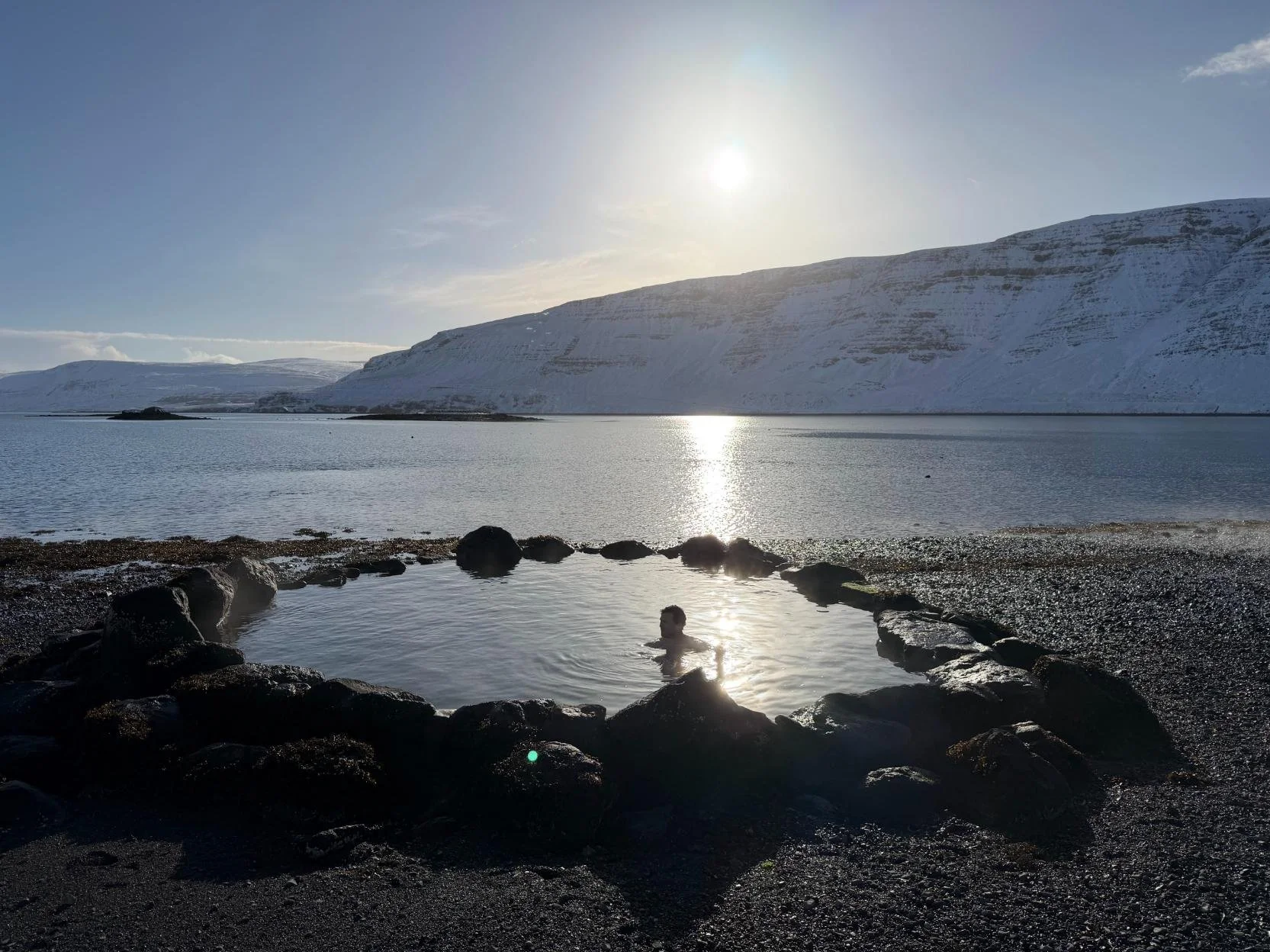
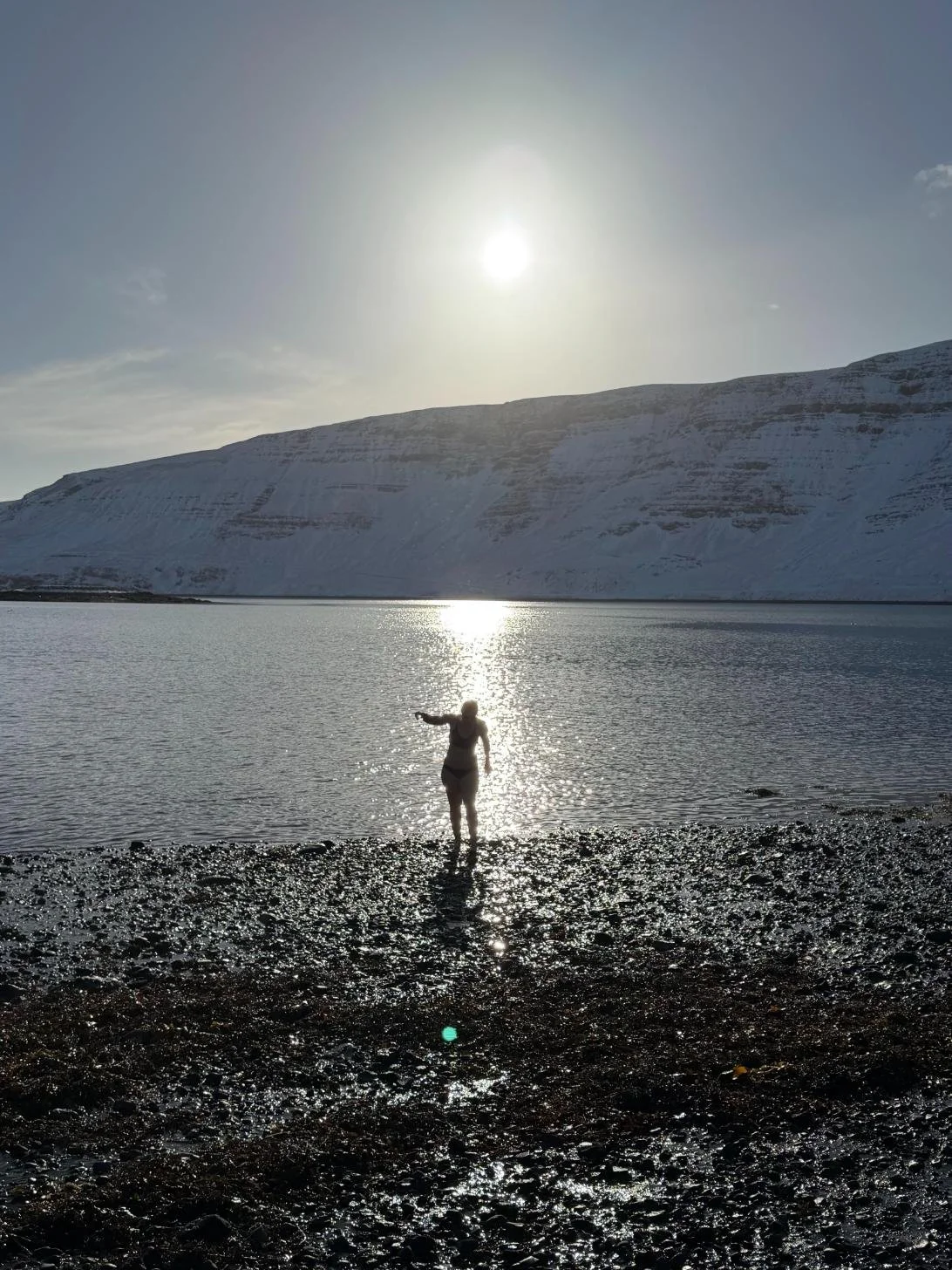
This pool was cold, but not as cold as the ocean!
Eight pools, each one different
The pools are arranged along the rocky shoreline, staggered down toward the water. Each has its own character.
At the top, the Lounge Pool (38°C) has the swim-up bar and is where most people settle in. The Upper Beach Pool (38°C) has an elf stone in the center — rub it for good luck, say the Icelanders, and who are we to argue (never question the hidden people. never). The Old Hot Spring (40°C) is the oldest and warmest on the property. The Tidal Pool (around 35°C) is the most unpredictable: at high tide it merges with the Atlantic, sometimes disappearing entirely under the sea. It was low tide when we went, so we could walk to it. The Lower Rock Pool and Lower Beach Pool sit closest to the water, where the line between geothermal and North Atlantic is genuinely blurry depending on what the tide is doing.
Between pools, there's a steam bath at 48°C — good for resetting when you've been in and out of the ocean too many times (guilty!).
The ocean plunge
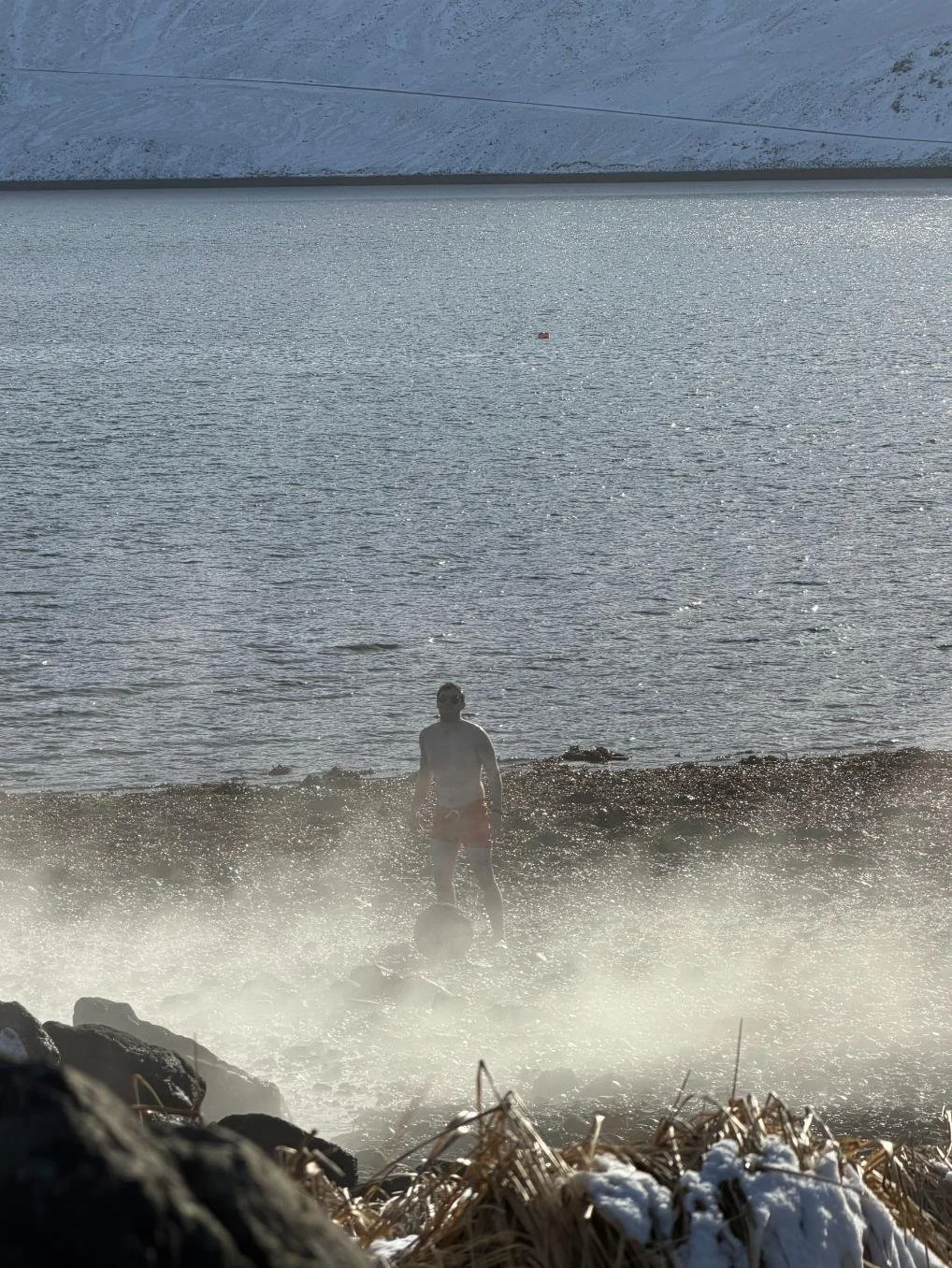
The North Atlantic is part of the offering, and we absolutely recommend dipping in it. Hvammsvík runs instructed ocean swimming sessions for beginners. We've been doing this long enough (cold water and heat is our drug), but there's a version of it that only works in places like Hvammsvík: warm pool, cold air carrying kelp and salt, the fjord ahead, and then the water. Trust us, the sense of adrenaline and then calm you get afterwards is addictive.
Bring water shoes and towels, or you can rent them if needed.
What to expect on a winter morning
On the morning we were there, the pools were quiet with only a handful of other guests spread across the water. Oystercatchers were working the rocks below with the occasional seal surfacing in the fjord. And there was the algae-dark smell of the North Atlantic when the wind shifted. Plus a skein of geese crossed the mountains at some point — Icelandic nature as its best.
The low winter sun hits the fjord sideways, and we recommend booking an early slot.
Facilities and admission
Three admission tiers: Natural includes open-sky changing rooms and access to all pools and steam bath. Classic adds private lockers and covered changing rooms. Comfort adds towel, wading shoes, and a drink. All tiers include the swim-up bar wristband, ocean access, and Stormur Bistro entry.
Stormur Bistro serves light Nordic dishes with locally sourced ingredients. The seafood soup is their signature.
Opening hours: Daily, 10:30 am–8:30 pm. Book in advance — the pools have a capacity limit and popular slots fill up, especially on weekend mornings.
The Atlas Challenge
If you're feeling competitive — or just want to know where you stand against a thousand years of Icelandic farmers — there's the Atlas Challenge: three lifting stones of increasing weight, carried over your shoulder. It's based on an old Icelandic strength tradition, and Hvammsvík has their own set on the property. Complete it and you win a surprise. We're not telling you what it is. We're also not telling you how Jake did…
Hvammsvík vs. the Blue Lagoon
Not a competition, but a useful distinction. The Blue Lagoon is a beautifully designed, large-scale facility with a controlled environment and a lot (a lot) of people. Hvammsvík is natural, tidal, much quieter and weather-dependent. There's wind, seaweed, and the lowest pool occasionally vanishes under the sea. If you want a curated Icelandic spa experience and milky water, Blue Lagoon. If you want warm water that feels connected to the actual ocean it's sitting next to, Hvammsvík. If you can, try both!

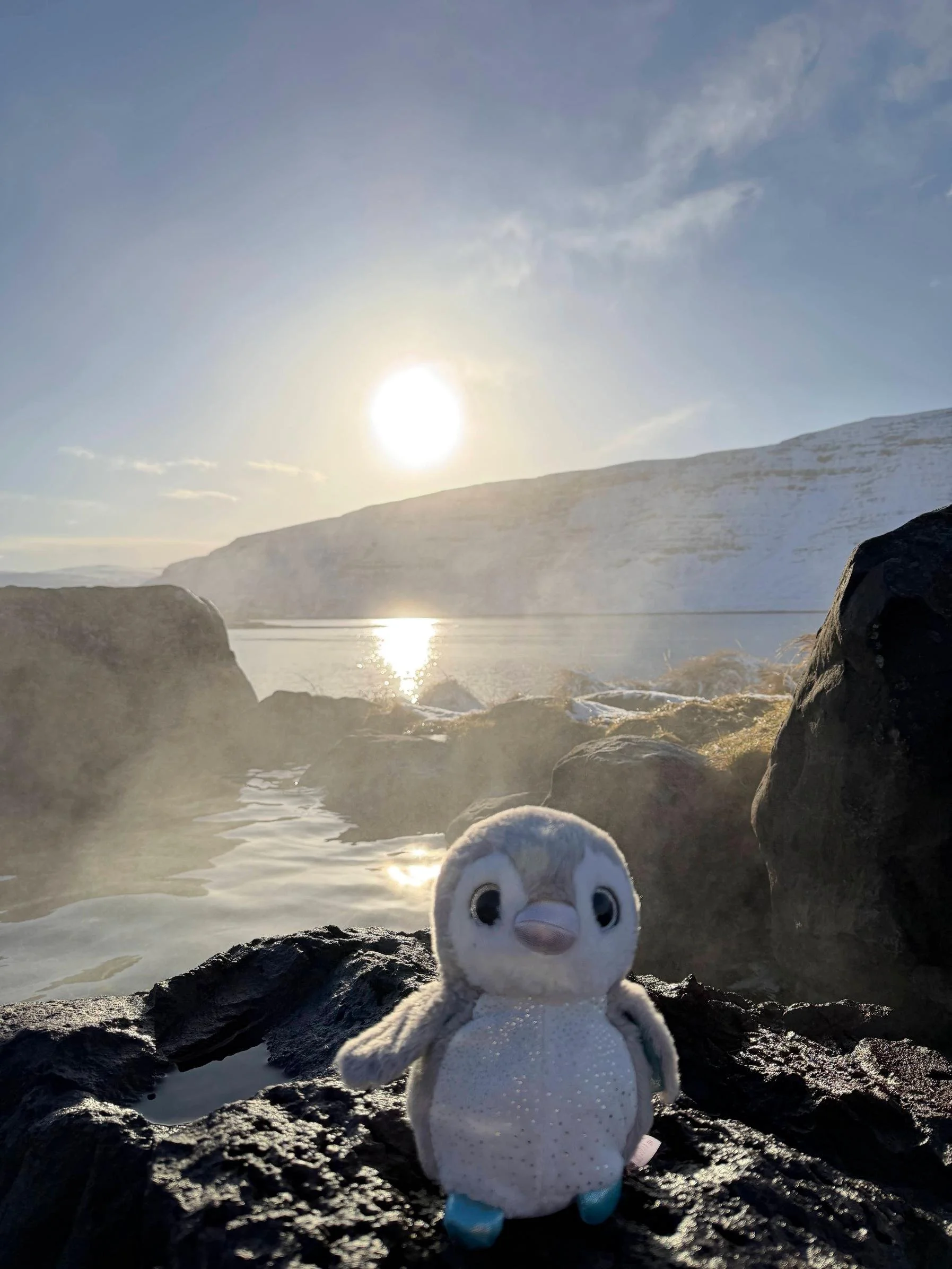
Penguin tip:
In Iceland, travel insurance is always a good idea: cold sea dips, volcanic activity, crazy weather changes, ice, etc. We use and recommend HeyMondo — great coverage, and you get 5–15% off if you book through us!
Hvalfjörður: the fjord that took itself off the map
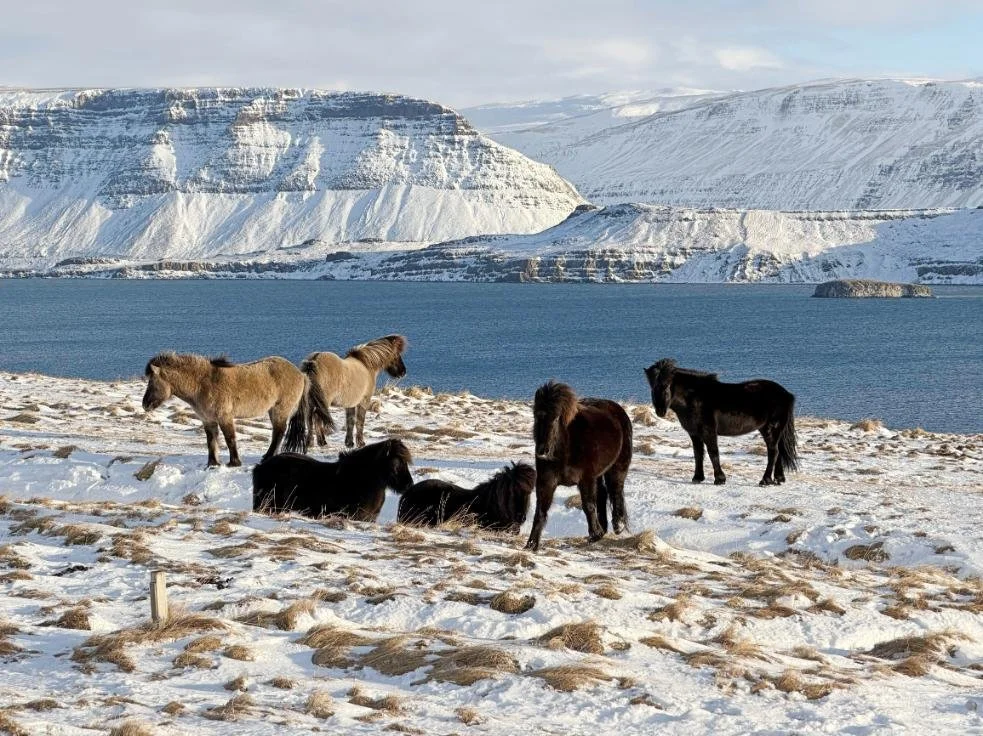
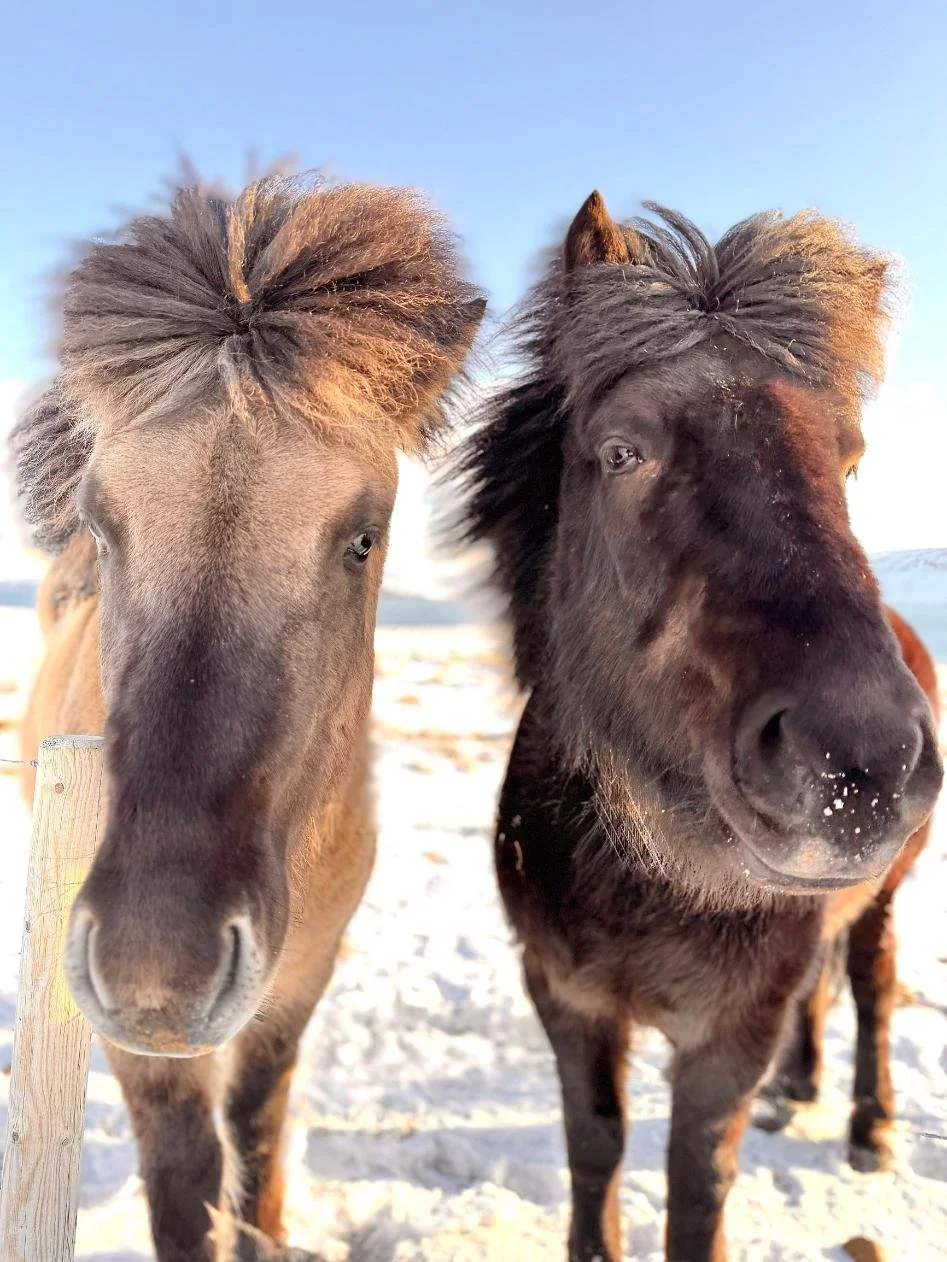
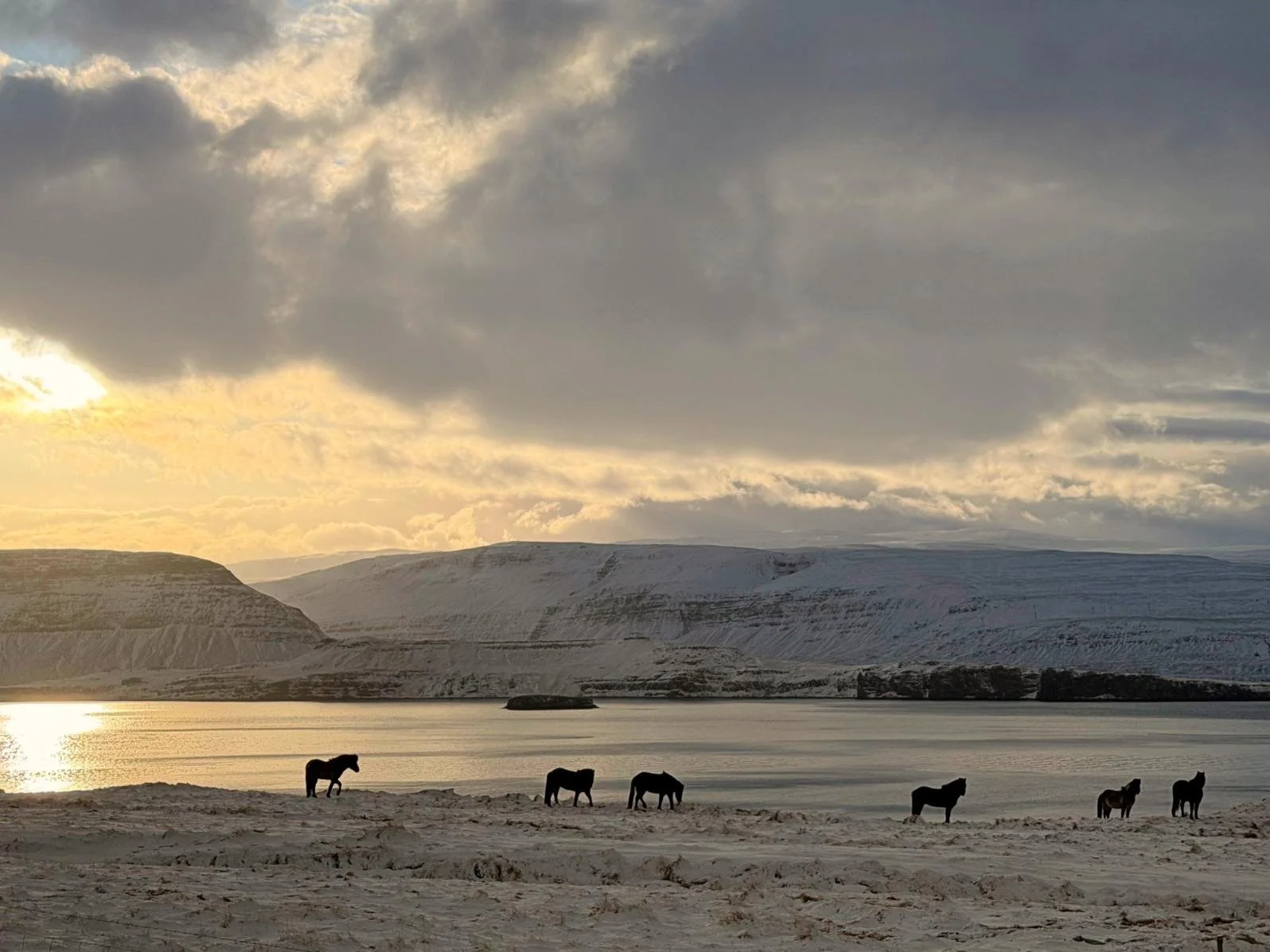
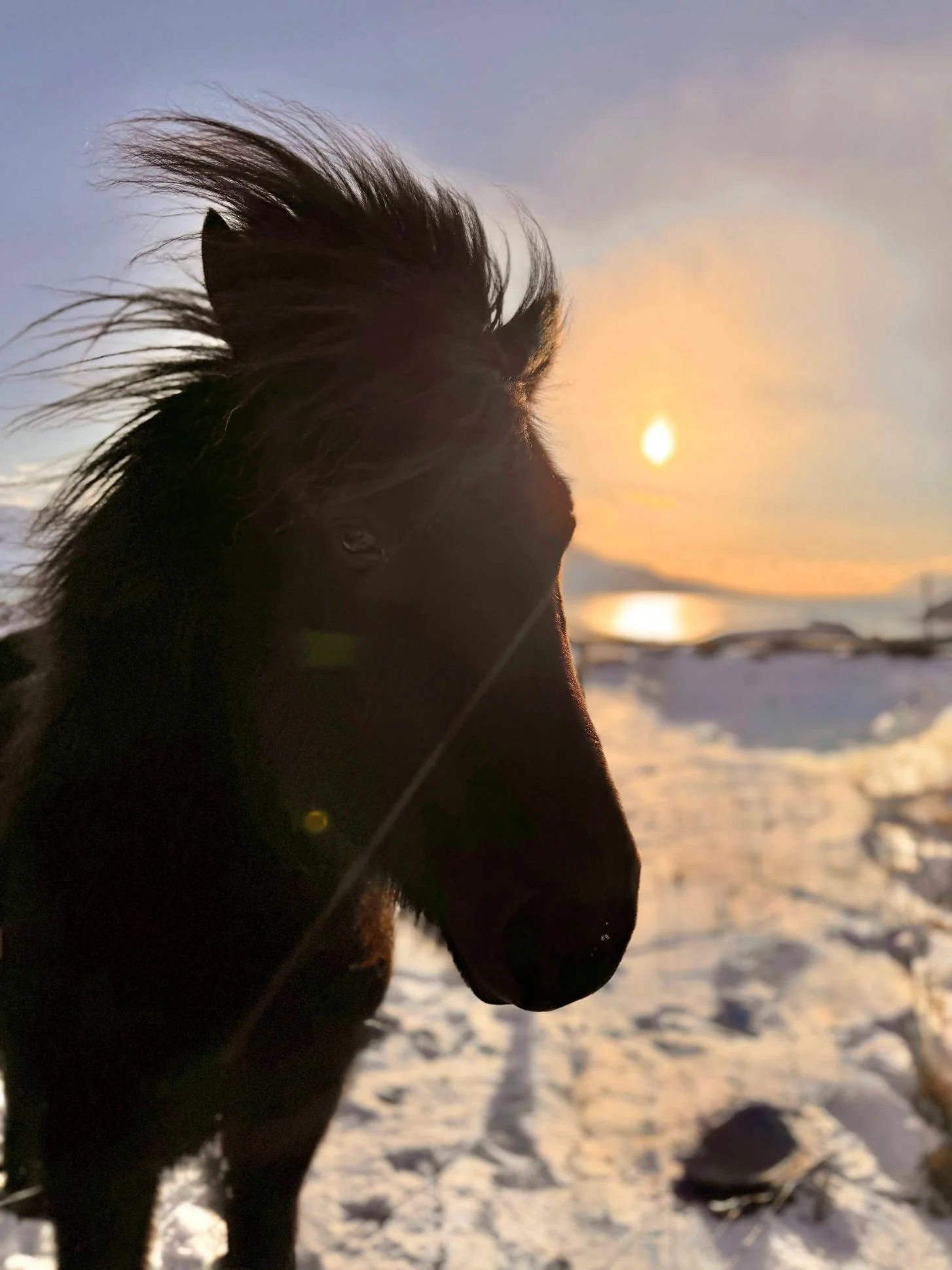
These horses have the best view ever… and were super friendly, by the way
The tunnel effect
In 1998, a road tunnel opened beneath Hvalfjörður, cutting 42 kilometers off the drive north. Almost overnight, one of Iceland's most dramatic fjords became an optional detour — and most people don't take optional detours when they have a northern lights tour at six. The result: a 62-kilometer fjord road with almost no through-traffic, no coach stops, and a quality of silence increasingly rare in a country that now hosts millions of tourists a year.
Weather allowing, drive around it. Don't take the tunnel.
The fjord itself
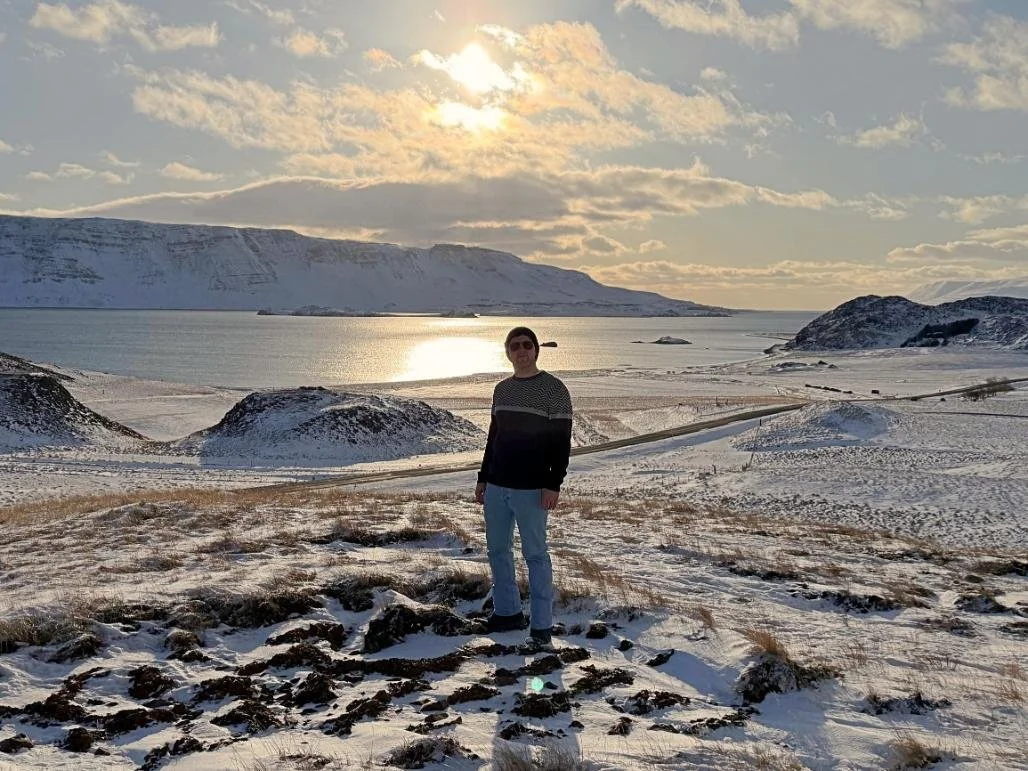
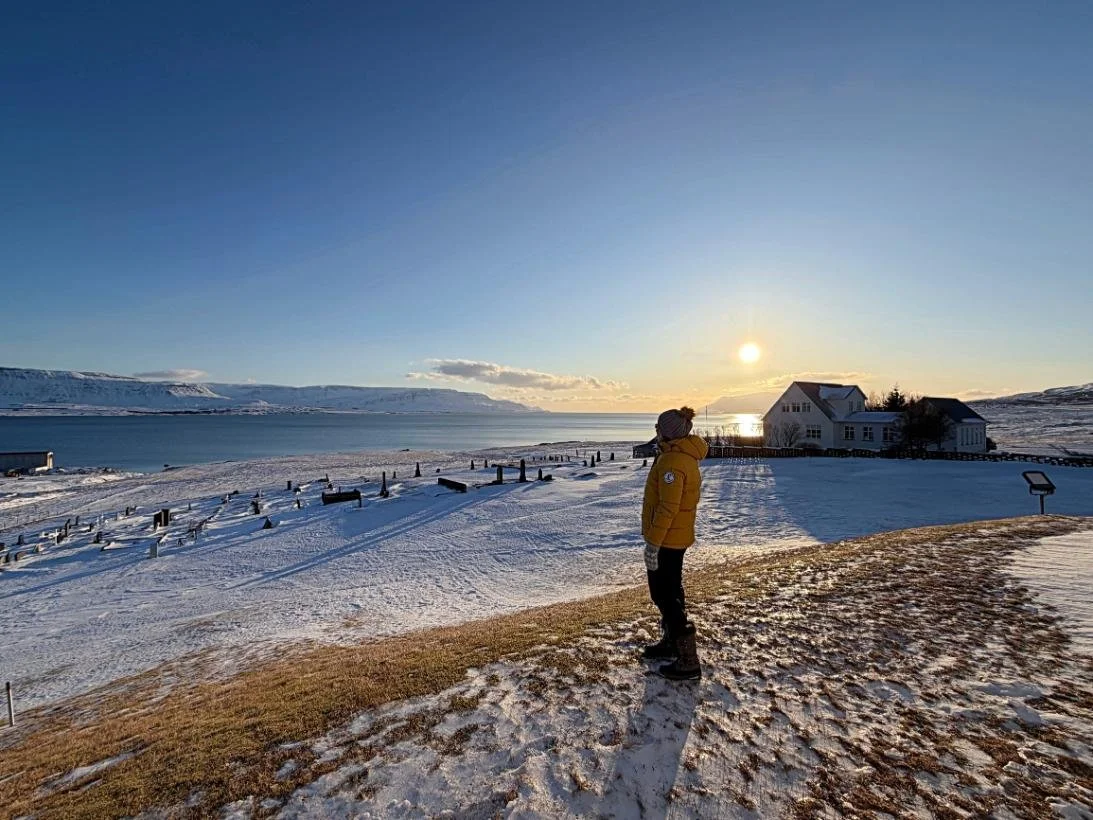
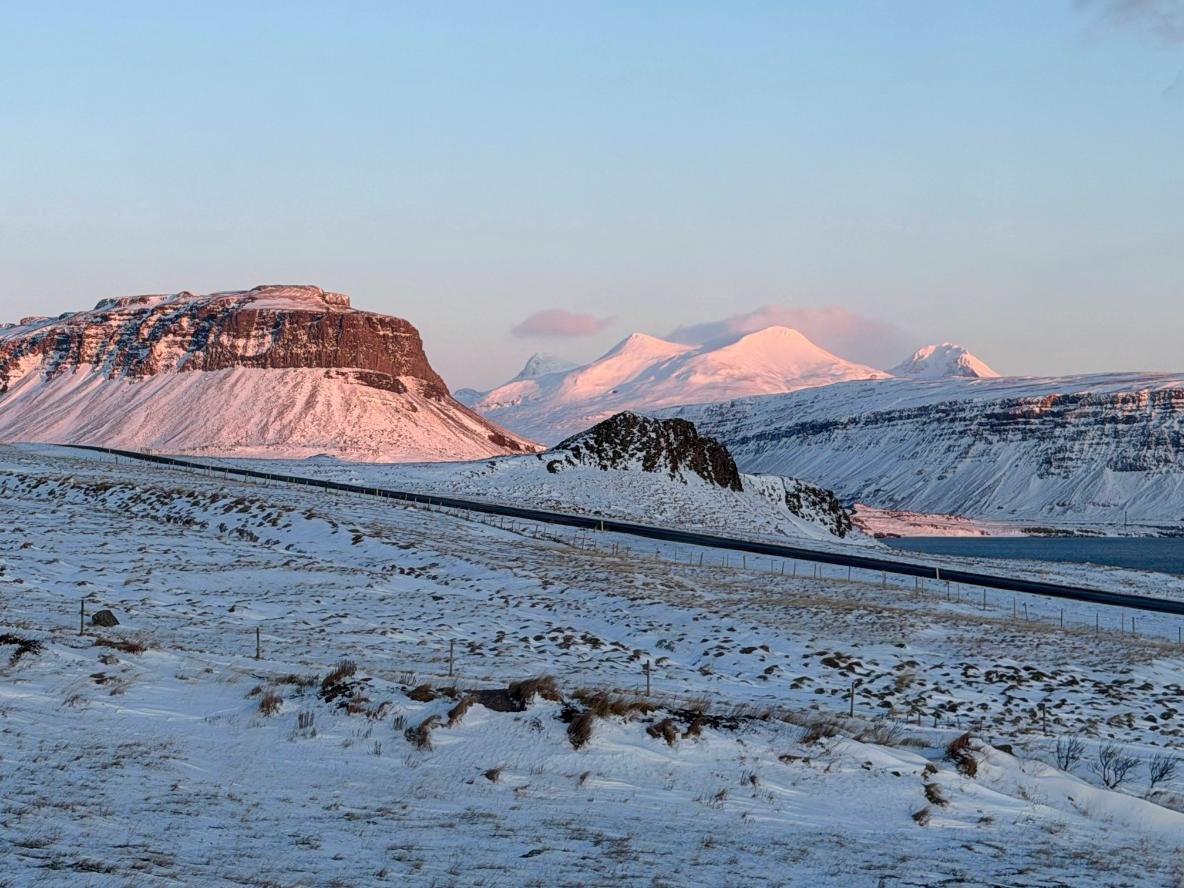
Mountains come straight down into the dark water on both sides. The road hugs the shoreline closely enough that you occasionally lose the horizon entirely. The sky does something different every few hours — pink light on the peaks at dawn, cloud shadows rolling across the water at midday, the whole western end goes amber at sunset. In winter, it can snow while the fjord below stays still and black.
The name means Whale Fjord. The exact reason is disputed: one theory points to historical whale populations before the herds moved on; another suggests the fjord's shape from above. And then there's the folklore version — there is always a folklore version — involving a blind pastor who outwitted a great red-headed whale terrorizing the coast and drove it inland to die in the lake above Glymur. The stories behind Icelandic location names are rarely boring.
Whales are not commonly spotted in the fjord today. However, between November and May, humpback whales and orcas migrate through Icelandic fjords elsewhere. You can follow a real whale's journey with our partner Fahlo — their Whale Bracelet supports marine research and lets you track a whale's North Atlantic migrations in real time. 💙🐋 Our readers get 20% off: Track a whale with Fahlo
Wildlife in the fjord
What you will reliably see: harbor seals along the shoreline, and oystercatchers (tjaldur in Icelandic) — black-and-white wading birds with a long orange bill and a territorial piping call that carries across the water whether you want it to or not (you can hear them from the hot springs). We spotted plenty in early March. You won't have to look for them. They'll make themselves heard!
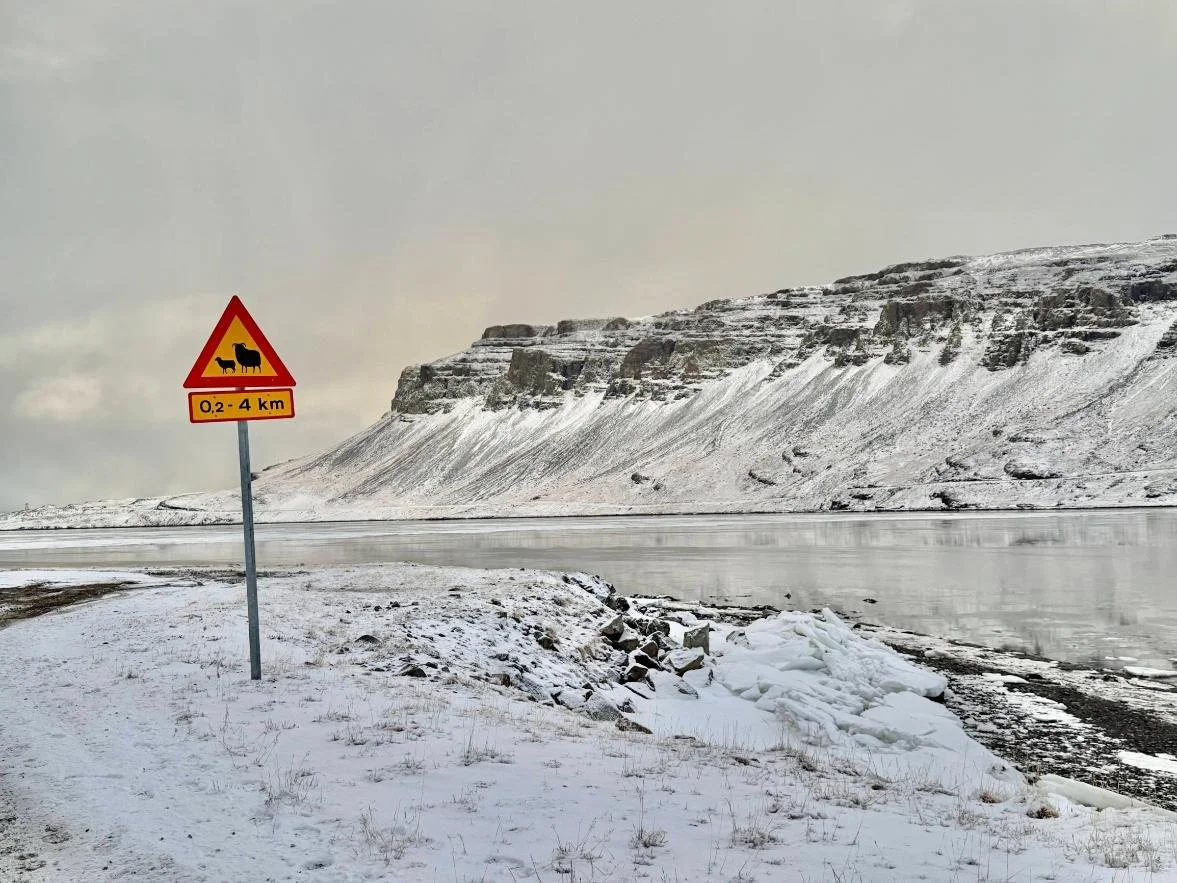
White-tailed eagles hunt along the fjord if you're patient and lucky. In summer, Arctic terns and Icelandic sheep appear. Horses roam year-round.
Things to do around Hvalfjörður
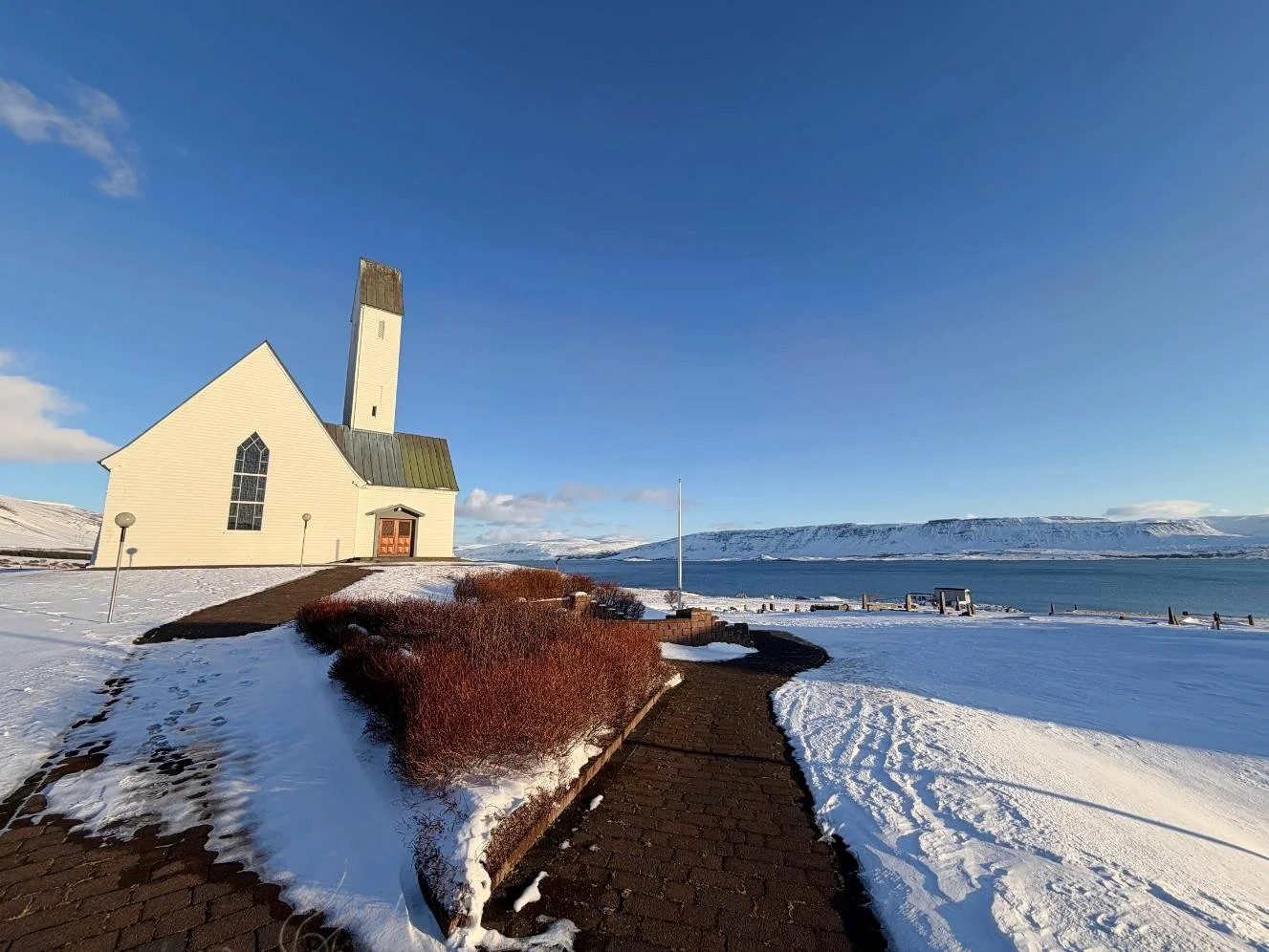
Hallgrímskirkja í Saurbæ — If you watched Sense8 on Netflix, this is the small, solitary church where Riley visits the graves of her family (big fan here). The stained-glass windows inside are by sculptor Gerður Helgadóttir. The church was consecrated in 1957 and named after Hallgrímur Pétursson — the same poet as the famous Reykjavík tower — who was actually pastor of this parish from 1651 to 1669 and wrote Iceland's most beloved religious work, the 50 Passion Hymns, from here. He was also a leper. Iceland drops these biographical details casually.
Glymur Waterfall — Iceland's second-highest waterfall at 198 meters. Reached by a moderate-to-difficult 4.4-mile hike involving a cave and a log river crossing. Safer between June and September when the log bridge is in place. Always check conditions.
Akranes Lighthouse — A short drive across the bay. The keeper, Hilmar, has a neighborhood cat (Mandla) who showed up to work one day and never left, and was subsequently featured on Icelandic news in a segment about the country's working cats.

Did you know?
The lighthouse has remarkable cylindrical acoustics — a whisper carries end to end — and Hilmar has turned it into a venue, inviting musicians to perform and record inside, such as the Lighthouse Project. We tested the acoustics. Our performance was not invited back.
Where to stay — If you want to stay in the fjord rather than just pass through, Brekka Retreat is about 20 minutes further along the road. We spent several nights in the Rok spa suite — private sauna, geothermal hot tub, floor-to-ceiling fjord views — and didn't particularly want to leave. You can book it here.
Hammsvík also offers accommodation on site, in their beautiful Nature Resort. You can book it here.
✈️ Find flights
🏨 Explore hotels, apartments, guesthouses, cabins
🧭 Browse activities and tours
🚗 Compare car rentals
🧳 Get travel gear (including for the Arctic)
🛡️ Travel safe with Heymondo Travel Insurance (5–15% off)
📱 Get a travel eSIM
🐾 Protect & track Arctic wildlife with Fahlo Bracelets (20% off)
FAQ: Hvammsvík Hot Springs
Is Hvammsvík Hot Springs worth it?
Yes, particularly if you want a natural geothermal experience rather than a polished spa resort. Eight pools on a real North Atlantic shoreline, tidal fluctuation, ocean swimming, and genuine fjord scenery — it's the best of this type within striking distance of Reykjavík.
How far is Hvammsvík from Reykjavík?
About 56 km, or 45 minutes in good weather by the fjord road. Don't take the Hvalfjörður tunnel — it's faster but bypasses the entire fjord drive that makes the trip worthwhile.
Do I need to book Hvammsvík in advance?
Yes. The pools have a capacity limit and popular slots fill up quickly, especially on weekends and winter mornings.
Can you swim in the ocean at Hvammsvík?
Yes — ocean access is included with all admission tickets. Hvammsvík runs instructed sessions for beginners, or you can enter independently. The water is cold and the rock surfaces are uneven; wading shoes (available to rent) are recommended.
How many pools does Hvammsvík have?
Eight natural geothermal pools ranging from around 35°C to 40°C, plus a steam bath at 48°C. Some pools fluctuate in temperature and water level with the tides; the lowest can merge with the Atlantic entirely at high tide.
What is the difference between Hvammsvík and the Blue Lagoon?
The Blue Lagoon is a large, designed spa facility with a controlled environment. Hvammsvík is a natural hot spring complex on a working North Atlantic shoreline — wilder, less polished, and significantly less crowded. They’re different experiences; which is right for you depends on what you're after.
What is the history of Hvammsvík?
The estate has been inhabited for over 1,000 years. The first recorded settler was Hvamm-Þórir, around AD 900, documented in Landnáma, the Icelandic Book of Settlers. During WWII it served as the Allied naval headquarters in Iceland, code-named Falcon Crest, with nearly 40,000 soldiers stationed there and over 200 ships in the fjord.
What wildlife can you see at Hvammsvík?
Oystercatchers (tjaldur) are a near-certainty year-round. Harbor seals surface in the fjord regularly. White-tailed eagles are present in Hvalfjörður. In summer, you’ll see arctic terns. In winter, you’ll see geese and various wading birds.
Does Hvammsvík have a restaurant?
Yes — Stormur Bistro serves light Nordic dishes using locally sourced ingredients. The seafood soup is their signature and worth ordering.
Is there accommodation at Hvammsvík?
Yes. Twelve houses for rent: four larger renovated historic farmhouses and eight newly built Artist Lodges. All include access to the hot springs.
Here is a playlist to soak (literally) in the views:
Hvammsvík is what geothermal bathing looks like before it gets packaged. No hordes of tourists, no queue for a lagoon that looks the same in every photo. Just eight pools on a working North Atlantic shoreline, a fjord that most people drive under rather than around, and — on a quiet winter morning — the kind of stillness that's getting harder to find in Iceland.
The oystercatchers will be there. The seals might come to say hi. The water will be warm and the air will smell like the sea, and at some point you'll realize you've been in the same pool for forty-five minutes without checking your phone. After all, that's the point.
Finally, explore all our Iceland Travel Guides here.

Free download
Travel Cheaper Cheat Sheet
27 tips on flights, hotels, hidden costs and more — spend less without missing what actually matters.
No spam. Unsubscribe anytime.
Best Northern Lights Hotels in Iceland
Things to Do in Iceland in Winter
Northern Lights in Iceland: Is It Worth It?
Best Time for Northern Lights in Iceland
Ring Road & Practical Planning:
Iceland Road Trip: South Ring Road Self-Drive
Where to Stay on Iceland's Ring Road
How to Travel Iceland on a Budget
Travel Insurance for Iceland
Best Time to Visit Iceland & Things to Do
Things to Do in Iceland in Summer
Free and Cheap Things to Do in Reykjavík
Iceland Without the Crowds
Horseback Riding in Iceland
Lava Show in Reykjavík
Silfra Snorkeling in Þingvellir
Glacier Hike & Ice Cave in Iceland
Stays & Hot Springs:
Brekka Retreat, Hvalfjörður
Hvammsvík Hot Springs, Hvalfjörður
Aurora Igloo South, Hella
Hotel Keflavik & Spa, near KEF Airport & Blue Lagoon
