
Best Time to See the Northern Lights in Iceland: Month-by-Month Guide & Forecast
When is northern lights season in Iceland, which months are the best, how to read the Icelandic forecast, and why the best 2025–2026 window in over a decade is spilling over to 2027.
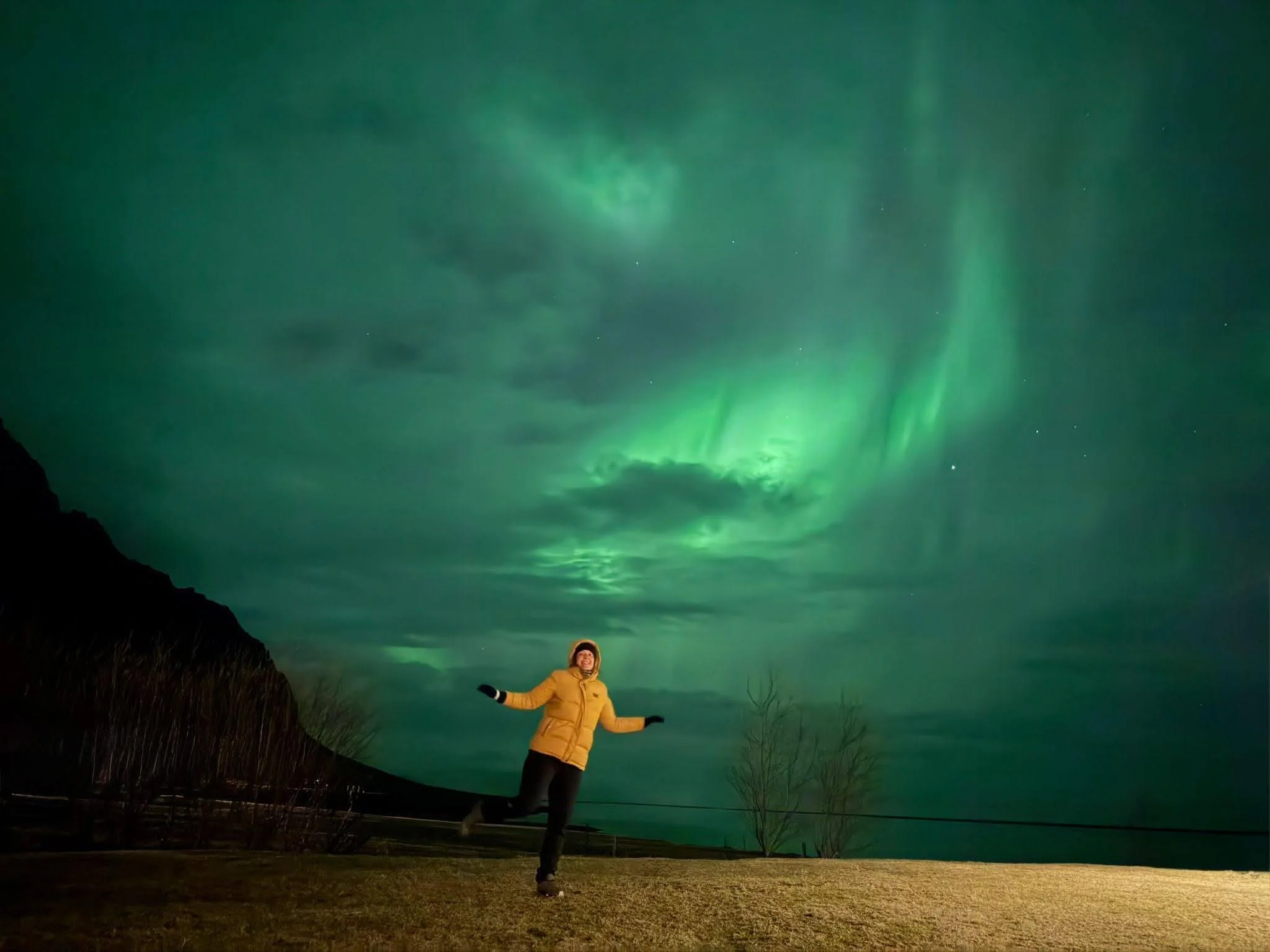
Amid a February snowstorm, the clouds cleared for a brief moment and that’s my happy aurora dance! — Here near Jökulsárlón
Last update: September 2026
We've chased the northern lights in Iceland several times — and the single most important thing we learned is that timing is only half the equation. The other half is knowing how to read the conditions on the night itself and being willing to move when the forecast tells you to (well, and a bit of elf magic and luck too).
The best time to see the northern lights in Iceland depends on many factors, and this article is specifically about timing and forecasting.
If you're still deciding whether Iceland is the right aurora destination for you at all, we've covered that in detail in our northern lights Iceland guide. If you're new to aurora hunting altogether, start with our northern lights for dummies guide first. And if you're ready to book and need hotel recommendations, go straight to our best northern lights hotels in Iceland.
Everything here is part of our northern lights hub — our full library of aurora guides covering destinations, gear, photography, and planning.
🛌 Where to stay:
• Aurora Igloo South, Hella — we stayed here. Transparent dome pods on the South Coast flat, heated bed, no light pollution for miles
• Brekka Retreat, Hvalfjörður — we stayed here and it's one of the best aurora setups in Iceland. Private Finnish sauna and geothermal hot tub to warm up while you wait, 50 minutes from Reykjavík, zero light pollution
• Hali Country Hotel, East Iceland — we stayed here and got a great aurora display, 12km east of Jökulsárlón
• Glacial Glass Cabin, Hella — three walls of floor-to-ceiling glass, private hot tub above the river, and Hekla volcano on the horizon
🇮🇸 Top experiences:
• Northern lights tour from Reykjavík — if you don't have a car, this is the move. Local guides track the forecast in real time and most offer a free return if the lights don't show
• Ice cave & glacier tour, Vatnajökull — the crystal-blue caves only form in winter. Pair it with an aurora night on the South Coast and you've got Iceland's two best things in one trip
🚗 Chasing the aurora means following clear skies. Book your rental car ahead — a 4x4 gives you the freedom to move when the forecast shifts
Quick navigation: Aurora season overview · Month by month · How to read the forecast · The 2026/2027 factor · Where to stay · FAQ
When is the best time to see the northern lights season in Iceland?
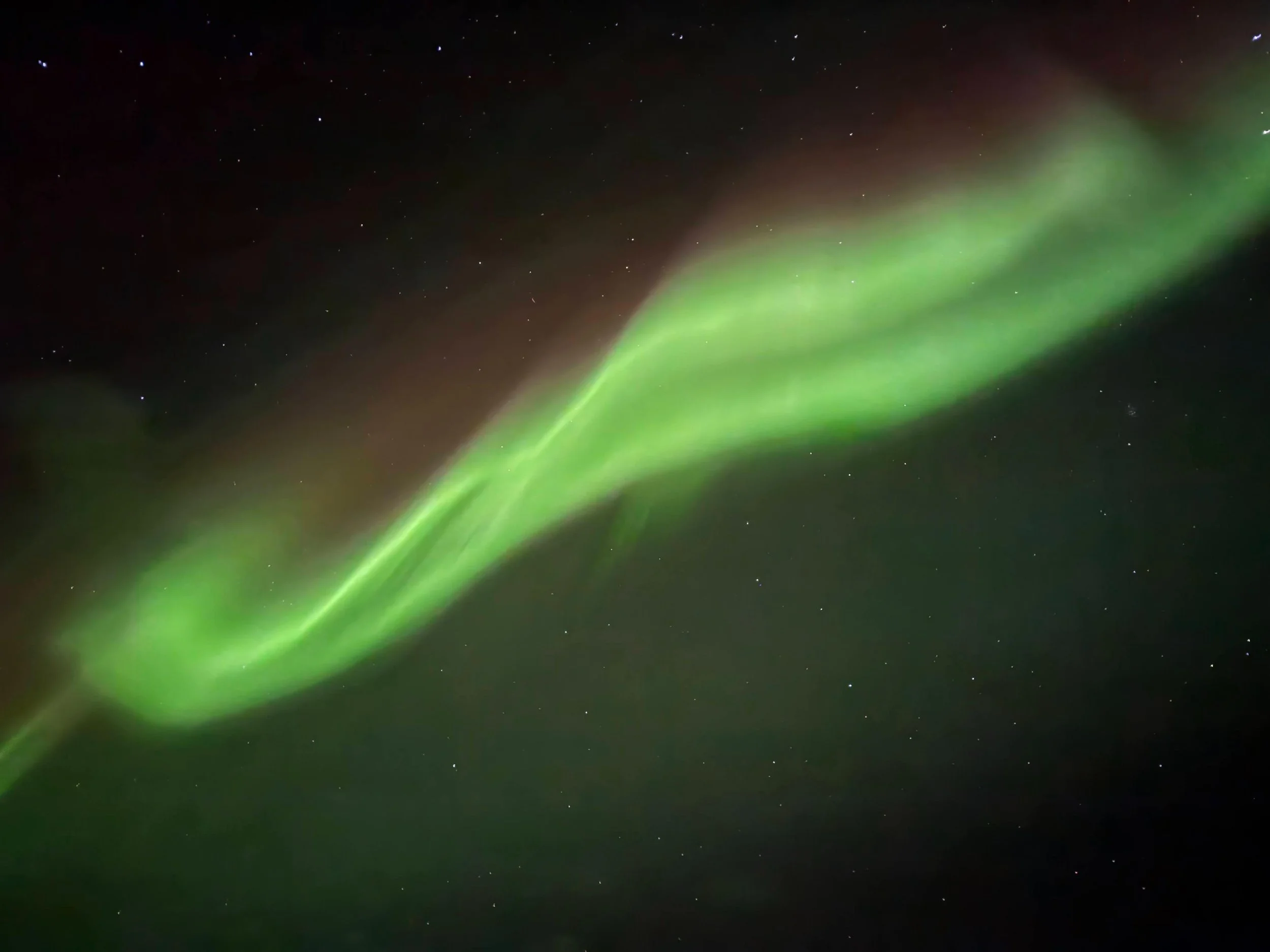
We saw this very vivid, overhead aurora between Jökulsárlón and Hofn in October
The best time to see the northern lights in Iceland is from late August to early April, when nights are long and dark enough for aurora activity to be visible. Within that period, conditions matter more than exact dates — clear skies, low cloud cover, and strong solar activity are what actually determine whether you’ll see anything on a given night.
Outside of those months, Iceland experiences the midnight sun, and no amount of aurora activity will be visible in a sky that never fully darkens.
Within that season, there's a meaningful difference between "technically possible" and "genuinely good odds." The sweet spots are late September through October and February through early March — periods that balance reasonable darkness with better weather odds and the geomagnetic boost that comes around both equinoxes.
The single biggest factor working against you in Iceland isn't aurora activity — it's cloud cover. Iceland is one of the cloudiest countries in northern Europe, and cloud coverage will cancel out even a strong aurora display completely. This is why knowing how to read the Icelandic northern lights forecast in real time matters more than picking the theoretically perfect month. If you're also weighing up other Nordic destinations, our best places to see the northern lights in Europe guide covers the full comparison.
Month by month: when can you see the northern lights in Iceland?
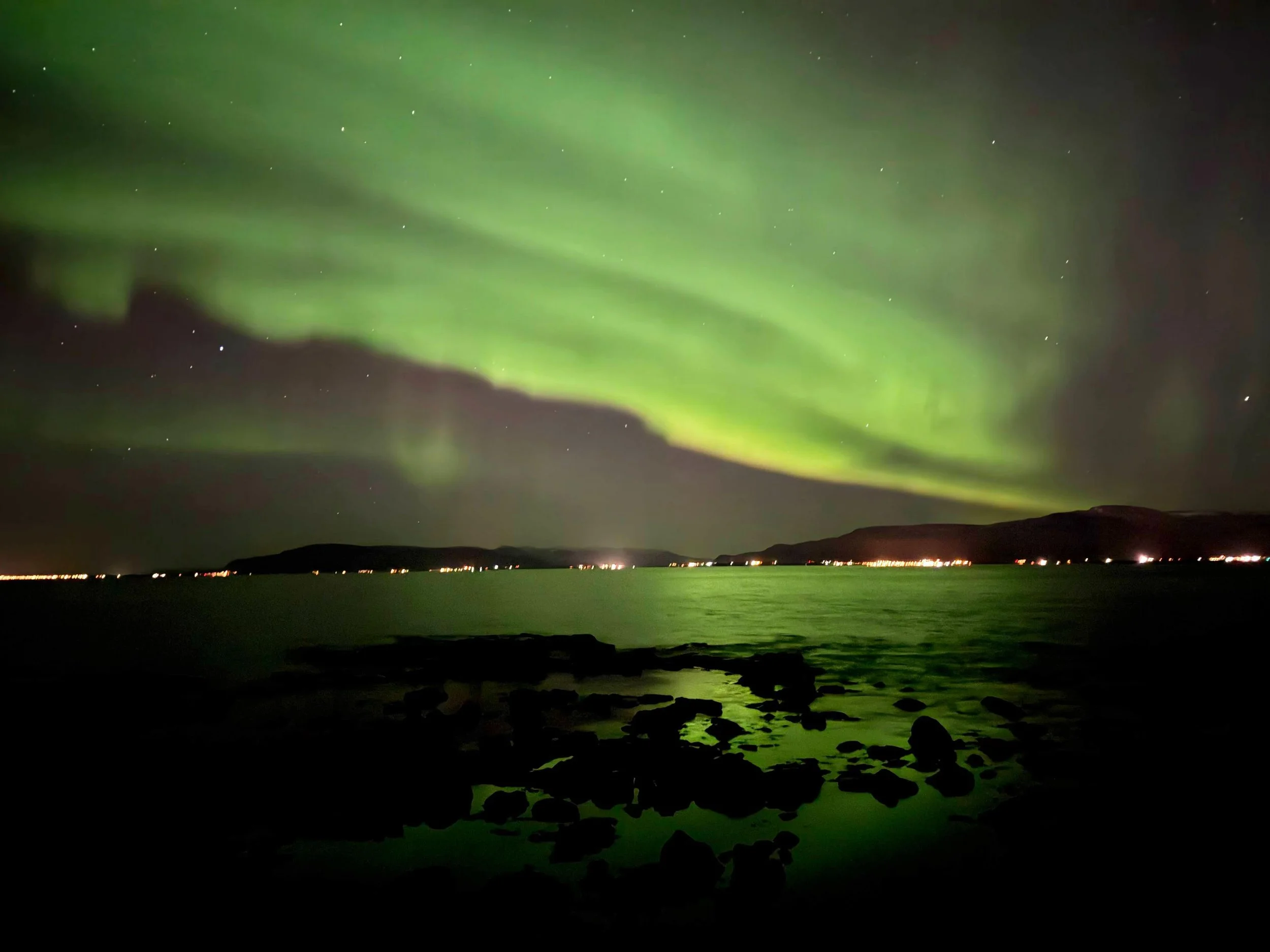
When we got a completely clear sky on our first night in Reykjavík (February 2026), we knew that was a rare opportunity… and the lights delivered!
September
September is the most underrated month on this list. The equinox falls around September 22–23, and the Russell-McPherron effect — a geophysical phenomenon that increases the interaction between solar wind and Earth's magnetic field around the equinoxes — means aurora activity tends to spike in this window. Nights are growing darker, temperatures are still relatively mild, roads are clear, and you're not competing with peak winter tourism. If you're flexible on timing and want the best odds-to-comfort ratio, late September is a genuinely strong choice. It’s also a great time to visit Iceland in general.
The downside: in early September the nights are still short. You need to be at dark-sky locations by 10pm at the earliest, and the window for viewing is narrower than winter months.
October
October is consistently the month we'd point most travellers to first — and we love to travel to the Arctic around that time. Around 15 hours of darkness, the equinox effect still lingering in early October, weather that's getting chilly but manageable, and roads that are still reliably accessible without 4WD. Aurora odds are high, the landscape is spectacular (autumn colors, the first snow on the higher ground), and you're ahead of the main winter crowds.
If you can only go once and you want the best overall balance of aurora odds, weather, and experience, October is a great choice.
November
November brings serious darkness — nights stretch to 18–19 hours — which gives you a long window for viewing each night. Aurora odds are solid. The challenge is weather: November in Iceland can be volatile, with storms rolling in from the Atlantic and cloud cover that's harder to outrun than in October. You'll need to be flexible and willing to get a rental car and drive for clear skies.
December
December is the darkest month in Iceland — around the solstice, you get close to 20 hours of darkness in the south and virtually no daylight at all in the north. The aurora window is enormous (don’t you love this word?). The atmosphere is magical, especially around the solstice. The catch: December weather in Iceland is often cloudy and stormy, which is the worst combination for aurora hunting. You might get lucky, but you need to come with realistic expectations and a willingness to move around.
January
January is statistically one of the strongest months for aurora activity — long, dark nights, high KP index readings, and in good years the sky delivers. Weather is cold and can be harsh (especially the wind chill), but clear nights do happen, and when they do the displays can be extraordinary. The 2025–2026 season was excellent due to the solar cycle (more on that below). For winter travel, it’s a good idea to have travel insurance. Read our guide: Travel Insurance for Iceland.
February
February is our personal favorite, and the data backs it up. Nights are still very long, but Iceland's weather tends to be noticeably more stable than December or January — more high-pressure systems, more clear nights, better odds of the sky actually cooperating. The combination of strong aurora activity and clearer skies makes February consistently deliver more visible displays than any other month. We had some fantastic displays in February 2026, despite challenging weather. Check out our Iceland winter guide for other things to do.
March
March is the second equinox month, and the same Russell-McPherron effect that boosts September applies here — aurora activity spikes around March 19–20. Nights are getting shorter, but they're still dark enough for excellent viewing. Temperatures are starting to moderate. The F-roads are beginning to open. And the equinox boost can produce some of the most intense displays of the year.
If you missed the October window, March is your equivalent on the other side of winter.

Did you know?
2025 and 2026 are the peak years of Solar Cycle 25 — the sun's 11-year activity cycle. The sun reached maximum activity around 2025, with elevated solar storms carrying into 2026. This means the geomagnetic activity driving aurora displays is significantly stronger than in a typical year. If you've been thinking about an Iceland aurora trip "at some point," this is the window. The next comparable opportunity won't come until the mid-2030s (Eli crying here)
Pic: January 2026 near Rovaniemi, Finnish Lapland.
🛡️ Before your Iceland trip... Aurora hunting often means hiking out to dark locations, driving remote roads at night, and spending hours outside in sub-zero temperatures (part of the fun, trust me). Make sure you're covered. We use Heymondo — it covers adventure activities and you get a 5–15% discount through our link. → Get Heymondo travel insurance
How to read the Icelandic northern lights forecast
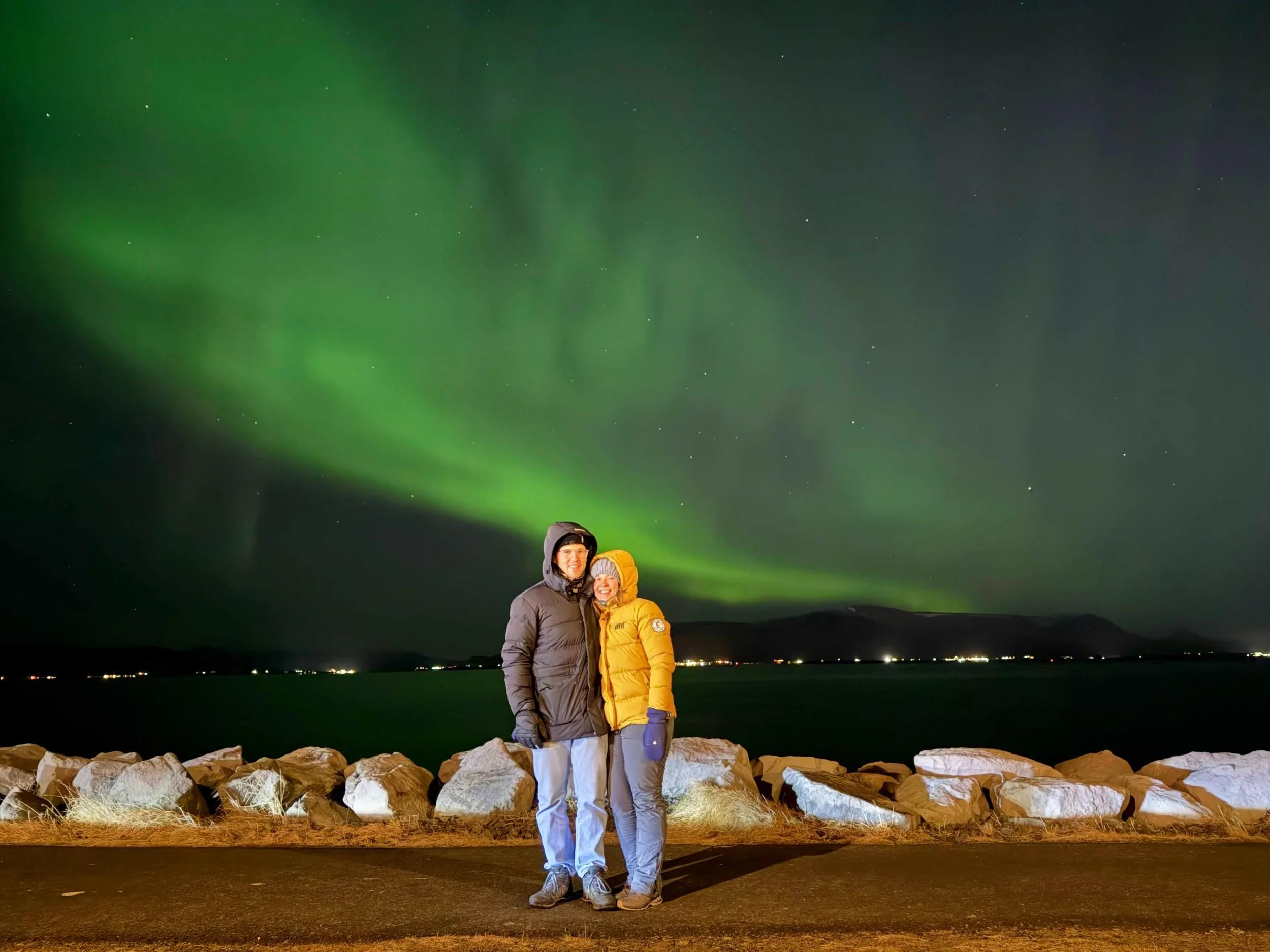
KP was 4 that night in February — here in Reykjavík
This is the part most aurora guides skip, and it's the most practically useful thing you can know, especially for Iceland’s capricious weather (seriously, it throws a lot of tantrums).
The Icelandic Met Office forecast
The best single source for an Icelandic northern lights forecast is the Vedur — the Icelandic Meteorological Office — at en.vedur.is. It combines aurora activity predictions with a cloud coverage map of Iceland, updated regularly. This is the one to check on the night itself, not weeks ahead. Aurora forecasting beyond 48 hours is essentially guesswork.
What you're looking at: a numbered scale from 0–9 (aurora activity) overlaid on a cloud coverage map. You want high activity and a gap in the clouds above your location. If the whole map is grey, it doesn't matter what the aurora number says — drive until you find a clear patch, or accept the night and try again tomorrow.
The KP index — and why it's not enough
You might have heard about it,. The KP index is the most commonly cited aurora metric, and it's useful as a general indicator. A KP of 3 or above is typically enough to see aurora from Iceland. A KP of 4+ suggests a strong display. But the KP is a planetary average captured over three-hour intervals — it misses short-lived substorms that can produce brilliant displays lasting 10–15 minutes before fading.
If you're in Iceland, you're already in the aurora zone (or slightly below). Don't wait for a KP-5 forecast before going outside. A KP-2 or KP-3 night can produce very visible lights in dark locations.
What else to look at
Bz value
This measures the north-south orientation of the interplanetary magnetic field (I mean, the elf lights). Negative values — especially around -10nT or lower — are what you want. A sustained negative Bz means solar wind is interacting efficiently with Earth's magnetosphere. For a deeper explanation of what's actually happening in the sky, our science behind the northern lights guide breaks it down simply.
Cloud cover
Bigger obstacle than aurora activity for most trips. Check the Vedur cloud map and be willing to drive. Being 30 minutes from clouds can be the difference between seeing nothing and seeing everything. Because trust us, you’ll get frustrating nights where KP is high and the sky is completely cloudy, and the other way around. Grrrr.
Moon phase
A full moon won't cancel the northern lights, but it does reduce contrast and makes faint displays harder to see. New moon periods are optimal. That being said, if you get a strong northern lights display with a full moon, the landscape will be naturally lit up and your photos will be amazing (also great if you’re taking photos of people under the aurora).
Best apps for the aurora forecast in Iceland
Vedur (Icelandic Met Office) — best cloud + aurora combination
Hello Aurora — built by Icelandic developers, uses weather, magnetic fields and solar data together
My Aurora Forecast & Alerts — clean interface, push notifications for KP spikes. It’s one of the most user-friendly, especially for beginners.
SpaceWeatherLive — for the data-oriented; shows Bz, Bt, solar wind speed in real time
Aurora Forecast at auroraforecast.is — Iceland-specific

Penguin tip:
Check the forecast at 9pm, not in the afternoon. Conditions change fast in Iceland (let us insist on fast) — a cloudy evening can clear by midnight, and a clear forecast can cloud over within minutes. The Vedur map updated in the evening is significantly more useful than anything you checked at lunchtime. Set an alert and be ready to move.
The 2026/2027 factor: why right now is the best aurora window in a decade
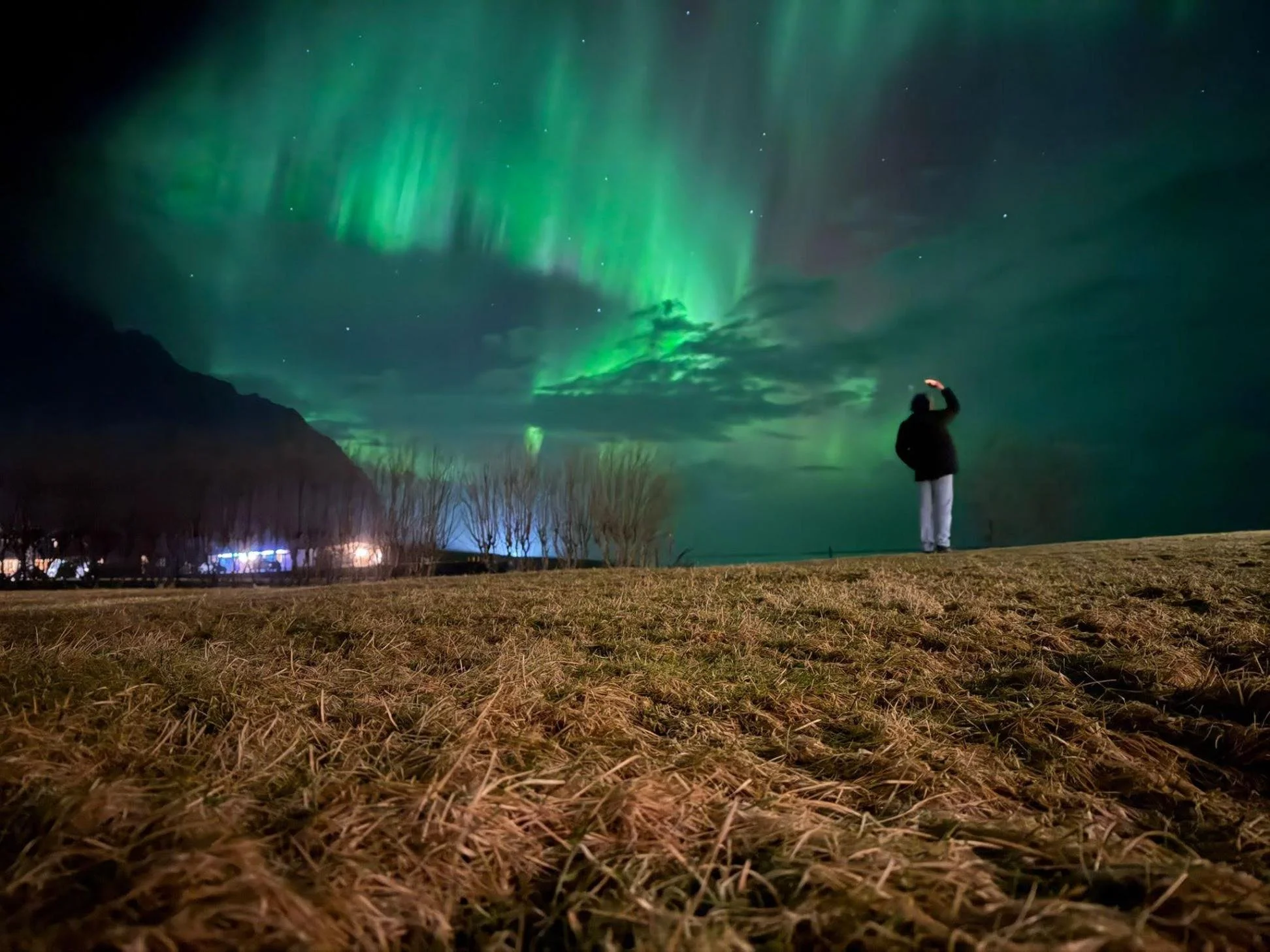
Jake enjoying the wonderful 2025-2026 solar cycle!
Solar Cycle 25 peaked around 2025, and the elevated activity is carrying into 2026 and 2027. What this means in practice: the sun is producing more coronal mass ejections (CMEs) — the solar storms that trigger geomagnetic activity and create northern lights displays — than at any point since the mid-2010s.
In a typical aurora season, you might get two or three genuinely spectacular displays per week of clear nights. In a solar maximum year like this one, that number goes up significantly (without taking the weather into consideration), and the lights are more intense when they do appear. The 2026/2027 season is producing displays that are visible further south than usual — which is good news for Iceland, which sits on the southern edge of the auroral oval. In January and February 2026 alone, I (Eli) saw 6 displays!
The next solar maximum won't arrive until approximately the mid-2030s. If you've been waiting for the right time, this is it — it’s not marketing, it’s a genuine astronomical fact.
We wrote more about Iceland's positioning in the auroral oval, and how it compares to Norway and Scandinavia for aurora odds, in our full northern lights Iceland guide.
Where to stay for the northern lights in Iceland

We were about to go to bed at Hali Country Hotel, when I got a feeling… hence the PJs!
Location matters more than luxury when it comes to aurora hunting. You want dark skies, which means getting out of Reykjavík and into the countryside. Hotels on the South Coast along the Ring Road, around Thingvellir, and on the Snæfellsnes Peninsula all put you in reach of genuinely dark skies within minutes of leaving the door.
We've covered this in detail in our guide to the best northern lights hotels in Iceland — including glass igloo options, countryside lodges with observatories, and the most practical mid-range picks for different parts of the island. If you're planning to go without a rental car, our northern lights without a car guide covers tours and logistics. And before you pack, read our what to wear for a northern lights trip guide — Iceland in January requires more layers than most people expect.
Explore northern lights hotels around Iceland (zoom in on the map below)
✈️ Find flights
🏨 Explore hotels, apartments, guesthouses, cabins
🧭 Browse activities and tours
🚗 Compare car rentals
🧳 Get travel gear (including for the Arctic)
🛡️ Travel safe with Heymondo Travel Insurance (5–15% off)
📱 Get a travel eSIM
🐾 Protect & track Arctic wildlife with Fahlo Bracelets (20% off)
FAQ: When is the northern lights in Iceland?
When is the best time to see the northern lights in Iceland?
February and October are consistently the strongest months — February for its combination of long dark nights and relatively stable weather, October for its balance of aurora odds, accessible roads, and the lingering equinox effect. If you can only go once, choose one of those two windows.
When can you see the northern lights in Iceland?
Aurora season runs from late August through mid-April. Outside those months, Iceland experiences the midnight sun and the sky never gets dark enough to see the lights. Within the season, the best odds are from late September through early March.
What is the best month for northern lights in Iceland?
February, followed closely by October and March. February offers the best combination of darkness and weather stability. October has the edge on weather and accessibility. March gets a boost from the spring equinox, which increases geomagnetic activity.
How do I read the Icelandic northern lights forecast?
The Icelandic Met Office (Vedur) publishes a combined aurora activity and cloud coverage forecast at en.vedur.is — this is the most useful tool for planning a specific night. Check it at 9–10pm on the night itself rather than days ahead. Aurora forecasting beyond 48 hours is unreliable.
What KP index do I need to see the northern lights in Iceland?
A KP of 3 or above is usually enough to see aurora from Iceland in a dark location. But don't wait for a high KP forecast — even KP 2–3 nights can produce visible displays, and short substorms often aren't reflected in the three-hour KP average.
Is 2026 a good year to see the northern lights in Iceland?
Yes — one of the best in over a decade. Solar Cycle 25 peaked around 2025 and elevated solar activity is carrying into 2026, producing more frequent and more intense aurora displays than in a typical year. The next comparable solar maximum won't arrive until the mid-2030s.
How many nights do I need to see the northern lights in Iceland?
A minimum of five nights gives you a reasonable chance of one clear aurora display. Seven nights is better. The northern lights are a weather-dependent natural phenomenon — no number of nights guarantees a sighting, but more nights improve your odds significantly, especially in Iceland's changeable weather.
Here is a playlist to call the aurora (it works… 90% of the time):
The northern lights don't run to a schedule, and no guide — including this one — can guarantee you'll see them. And that’s all the magic about it and nature in general! What we can tell you is that the odds are genuinely better in some months than others, that knowing how to read the Icelandic forecast on the night itself is more valuable than any general timing advice, and that 2026 is an unusually strong window that's worth taking seriously.
Pick October or February. Book more nights than feels necessary. Check the Vedur forecast at 9pm and be ready to drive. The rest is up to the sky (and the elves?).
For everything else, our northern lights hub and our Iceland travel guides are the places to start.
Planning a Northern Lights Trip? ✨
Get a free aurora checklist straight to your inbox.
No spam. Just northern lights strategy (and occasional penguin energy).
Thank you, little penguin! 🐧
Check your inbox — our best Northern Lights tips are on the way.
Best Northern Lights Hotels in Iceland
Things to Do in Iceland in Winter
Northern Lights in Iceland: Is It Worth It?
Best Time for Northern Lights in Iceland
Ring Road & Practical Planning:
Iceland Road Trip: South Ring Road Self-Drive
Where to Stay on Iceland's Ring Road
How to Travel Iceland on a Budget
Travel Insurance for Iceland
Best Time to Visit Iceland & Things to Do
Things to Do in Iceland in Summer
Free and Cheap Things to Do in Reykjavík
Iceland Without the Crowds
Horseback Riding in Iceland
Lava Show in Reykjavík
Silfra Snorkeling in Þingvellir
Glacier Hike & Ice Cave in Iceland
Stays & Hot Springs:
Brekka Retreat, Hvalfjörður
Hvammsvík Hot Springs, Hvalfjörður
Aurora Igloo South, Hella
Hotel Keflavik & Spa, near KEF Airport & Blue Lagoon
