
Glacier Hike & Ice Cave in Iceland: Inside Vatnajökull
We hiked on Vatnajökull and explored a natural ice cave in Skaftafell — here's what the experience is really like, plus blue ice science, the park's history, and everything you need to know before you go.

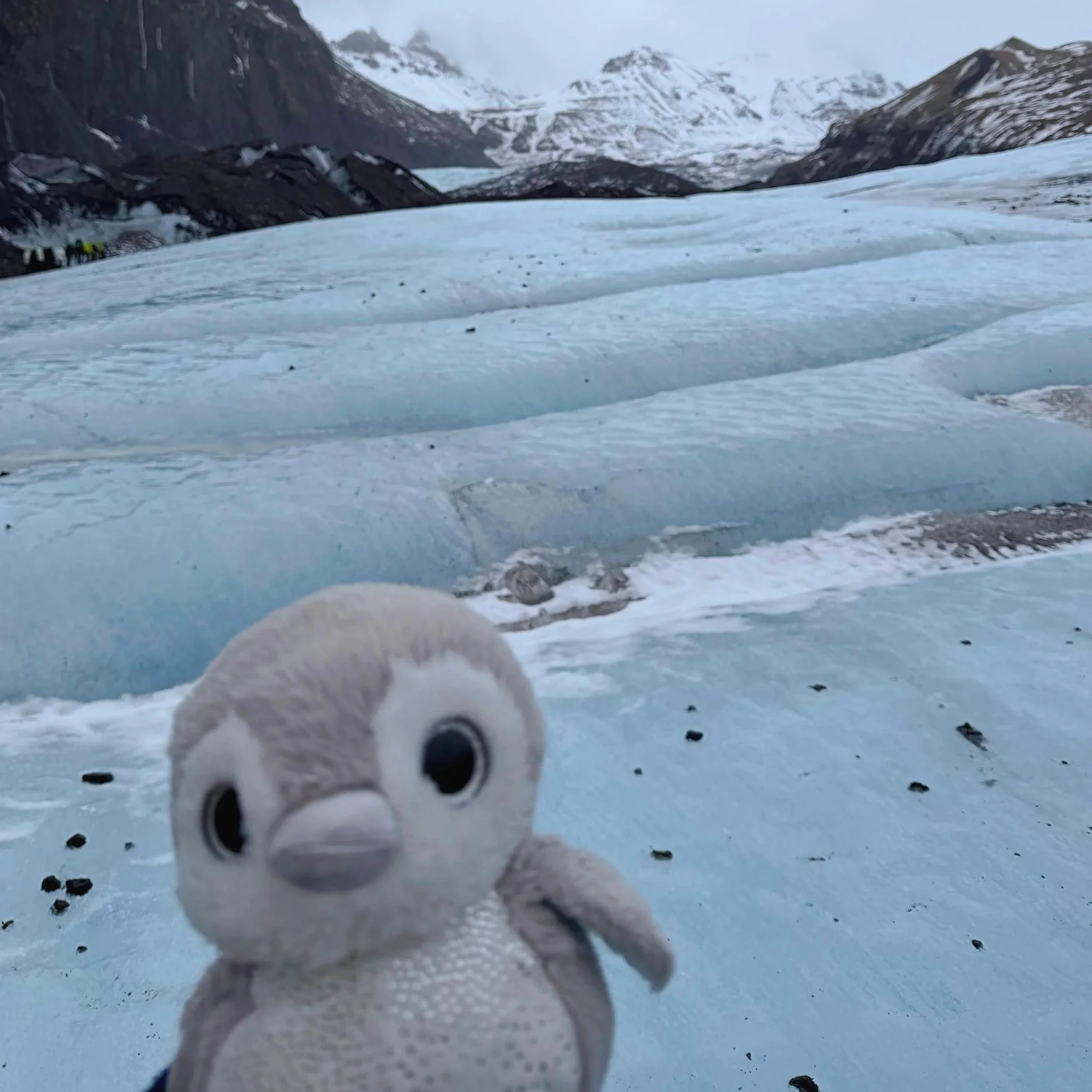
Of course, Mac our mascot wanted to join the hike!
Last update: June 2026
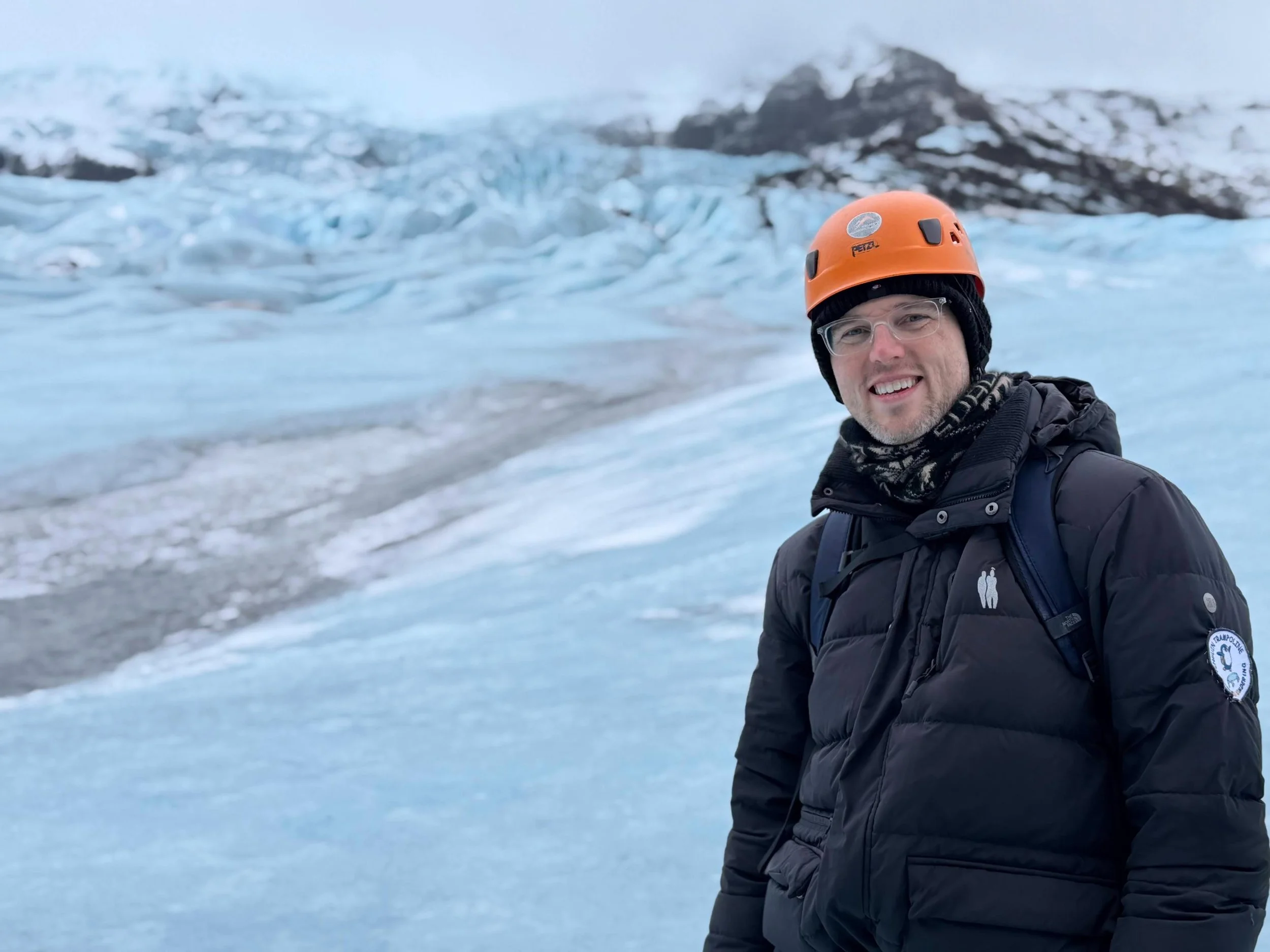
We did the Ice Cave & Glacier Hike in Skaftafell, Iceland, with Icelandia — the tour brand of Icelandic Mountain Guides, one of the most established glacier guiding operations in Iceland, and our guide was Brook. Here’s our experience.
I (Eli) have walked on a glacier before. Specifically, on the Root Glacier in Wrangell-St. Elias National Park in Alaska — it’s one of the coolest things I have ever done, literally. I came away from that trip with something I hadn't expected: a genuine obsession. Not with glaciers as a category, but with the specific, irrepeatable character of each one. They move differently, they look different, they feel different underfoot. Each glacier is like a natural museum. I will never get tired of them.
This was Jake's first glacier hike, though we both had been in an ice cave in Svalbard. And here's the thing: it didn't matter that I'd done it before. Walking onto Vatnajökull felt new for both of us.
What is a glacier hike and ice cave tour in Vatnajökull, Iceland like?
A glacier hike and ice cave tour in Vatnajökull is one of those Iceland experiences where you’re constantly reminded how extreme the environment is, and one of our favorite things to do when the destination allows. You’re walking on a massive ice cap that shifts and creaks under your feet, surrounded by deep blue ice formations that look almost unreal up close. The ice caves themselves are the highlight — natural structures that change every year, with light filtering through compressed ice in shades of blue that don’t really exist anywhere else.
What makes this experience stand out is the combination of movement and stillness: you’re actively hiking across a glacier with crampons and guides, then stepping into completely silent ice caves that feel frozen in time. It’s not just a sightseeing stop in Iceland — it’s a full immersion into one of the most dynamic and fragile landscapes in Europe.
Glacier hike on Vatnajökull: the experience in details

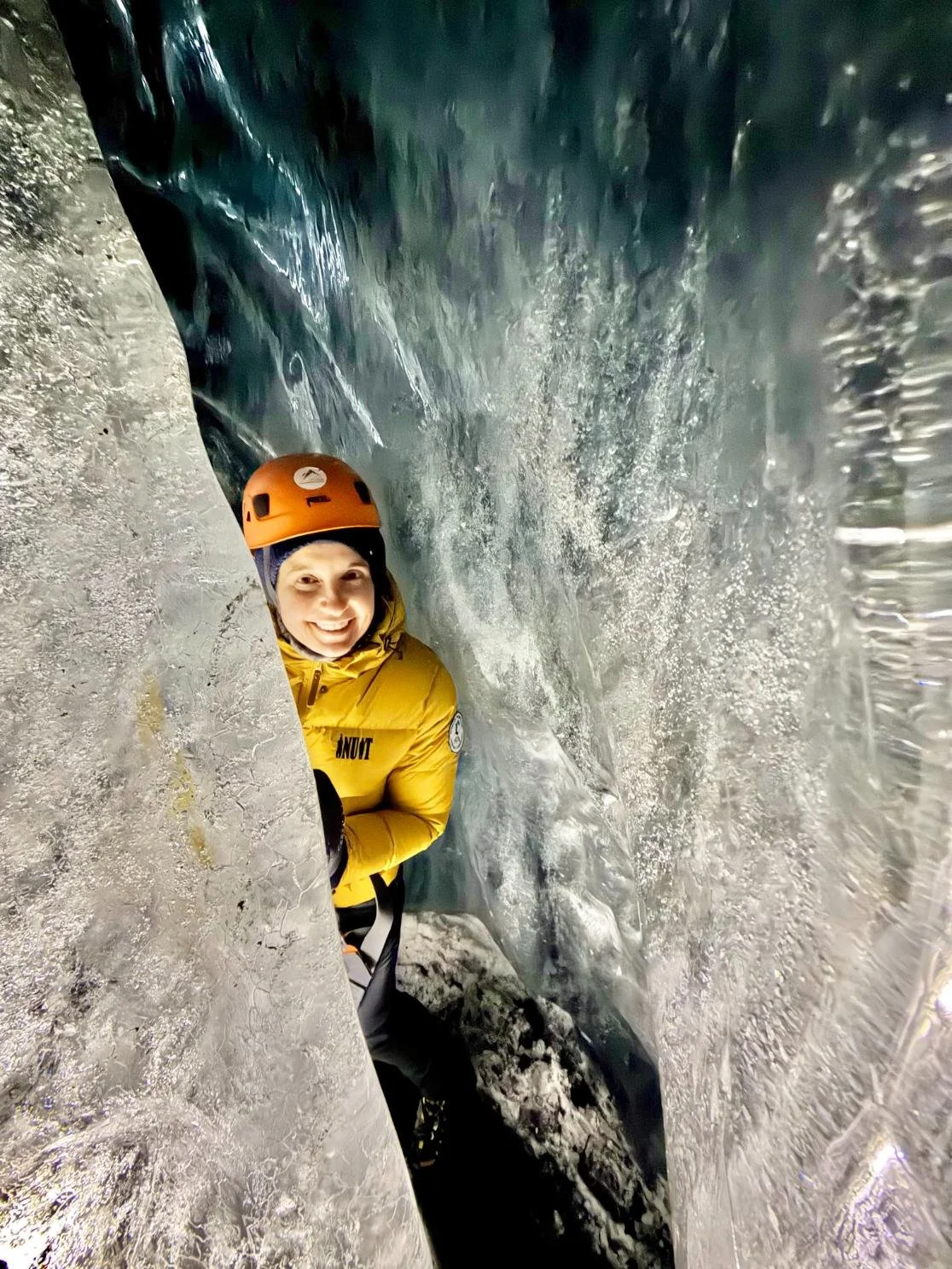
Entering the ice cave!
Skaftafell sits roughly four hours from Reykjavík along the Ring Road, tucked between black outwash plains and the enormous white mass of Vatnajökull. The base camp is right inside the camping area — well-signed and operating with the efficient energy you'd expect from a company that makes its living sending people onto glaciers.
You're asked to arrive 30 minutes before departure, which isn't bureaucratic padding. Getting a group fitted with crampons, helmets, and ice axes takes actual time, and a properly adjusted crampon and hiking boot is the difference between confident movement on ice and a very undignified (and potentially dangerous) slide. Brook and his colleague ran us through the gear fitting with professionalism and a great sense of humor.
Waterproof, high hiking boots are non-negotiable. If you don't have them, you can rent boots and rain gear at the base camp.
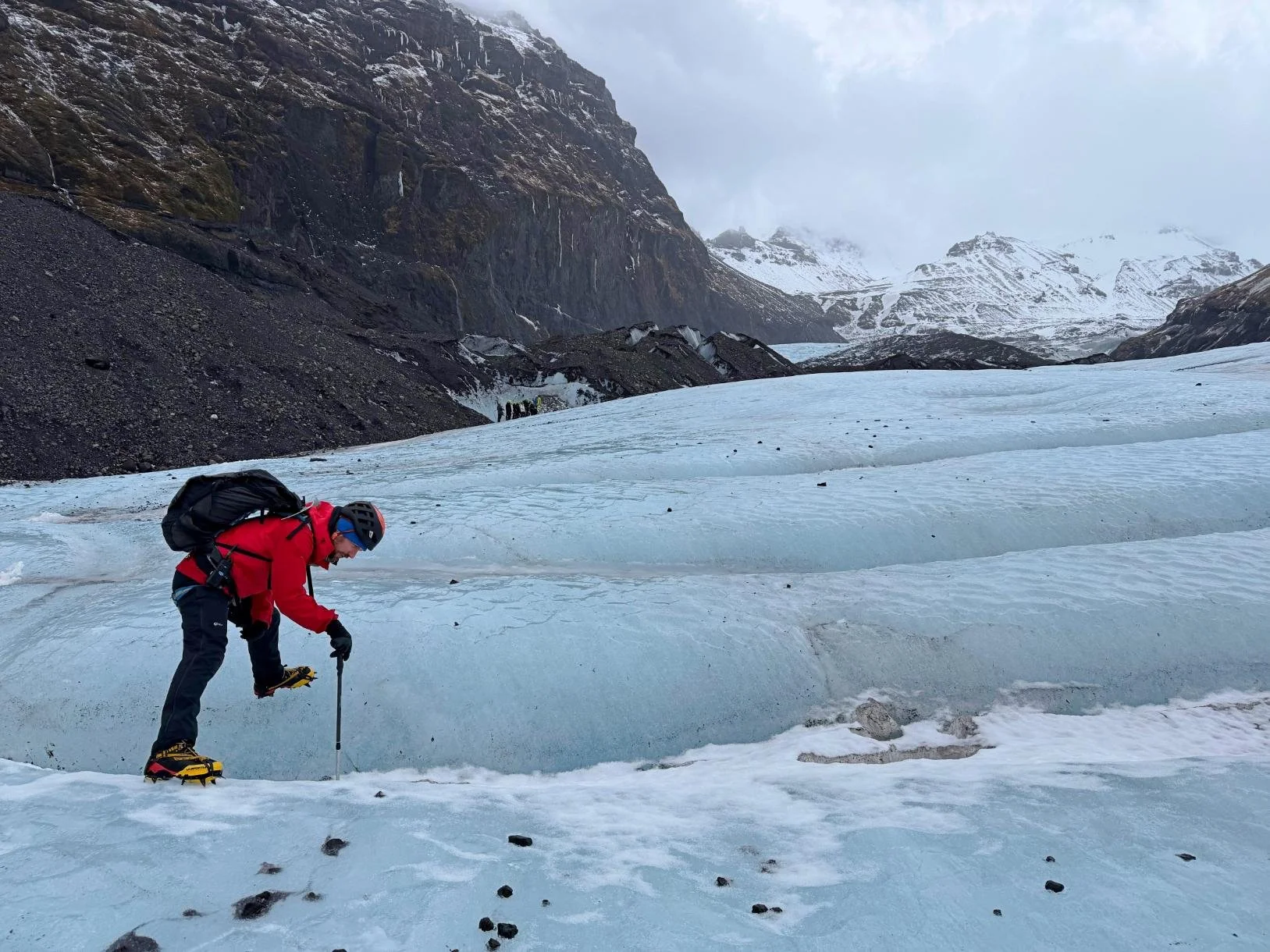
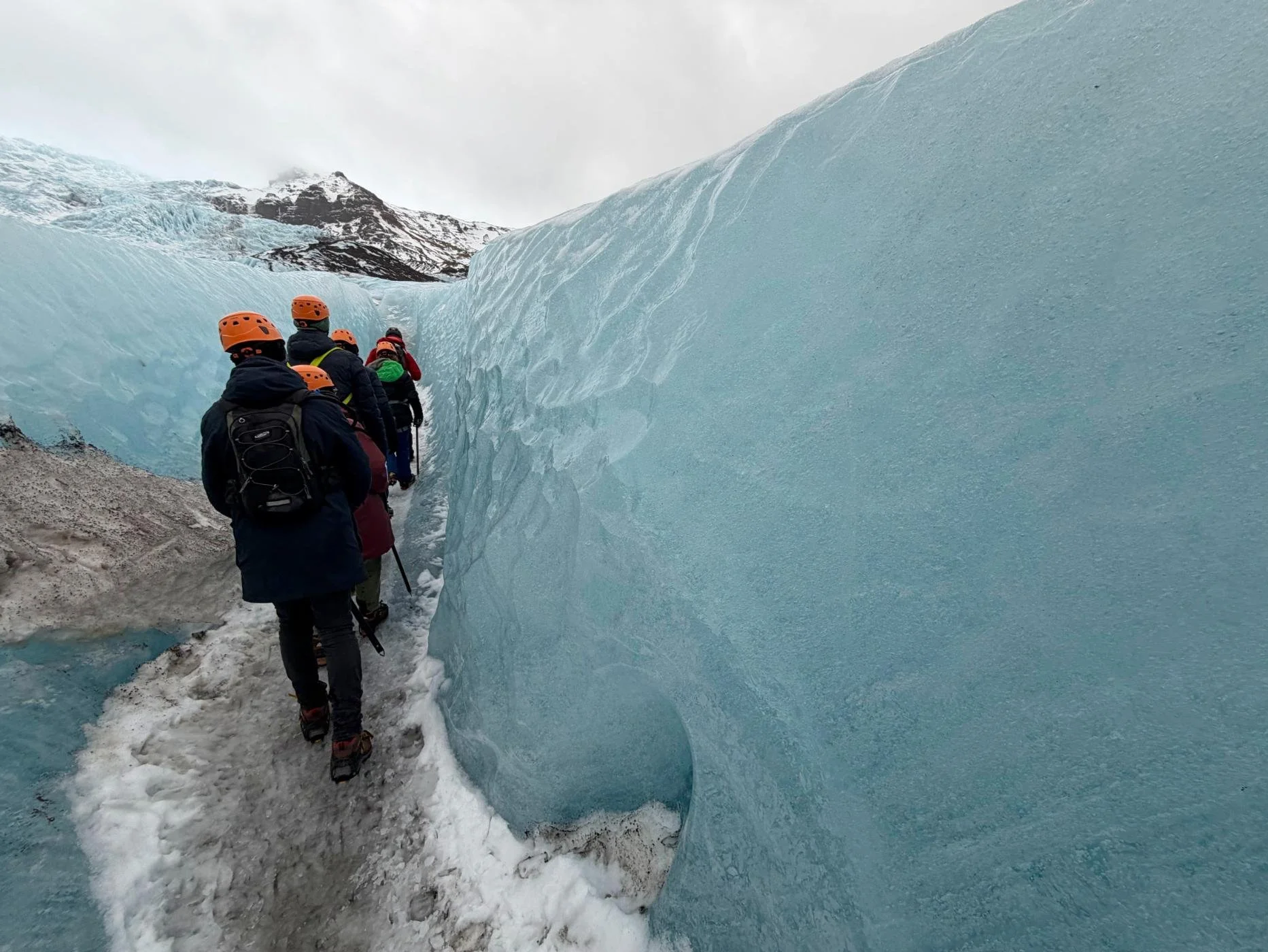
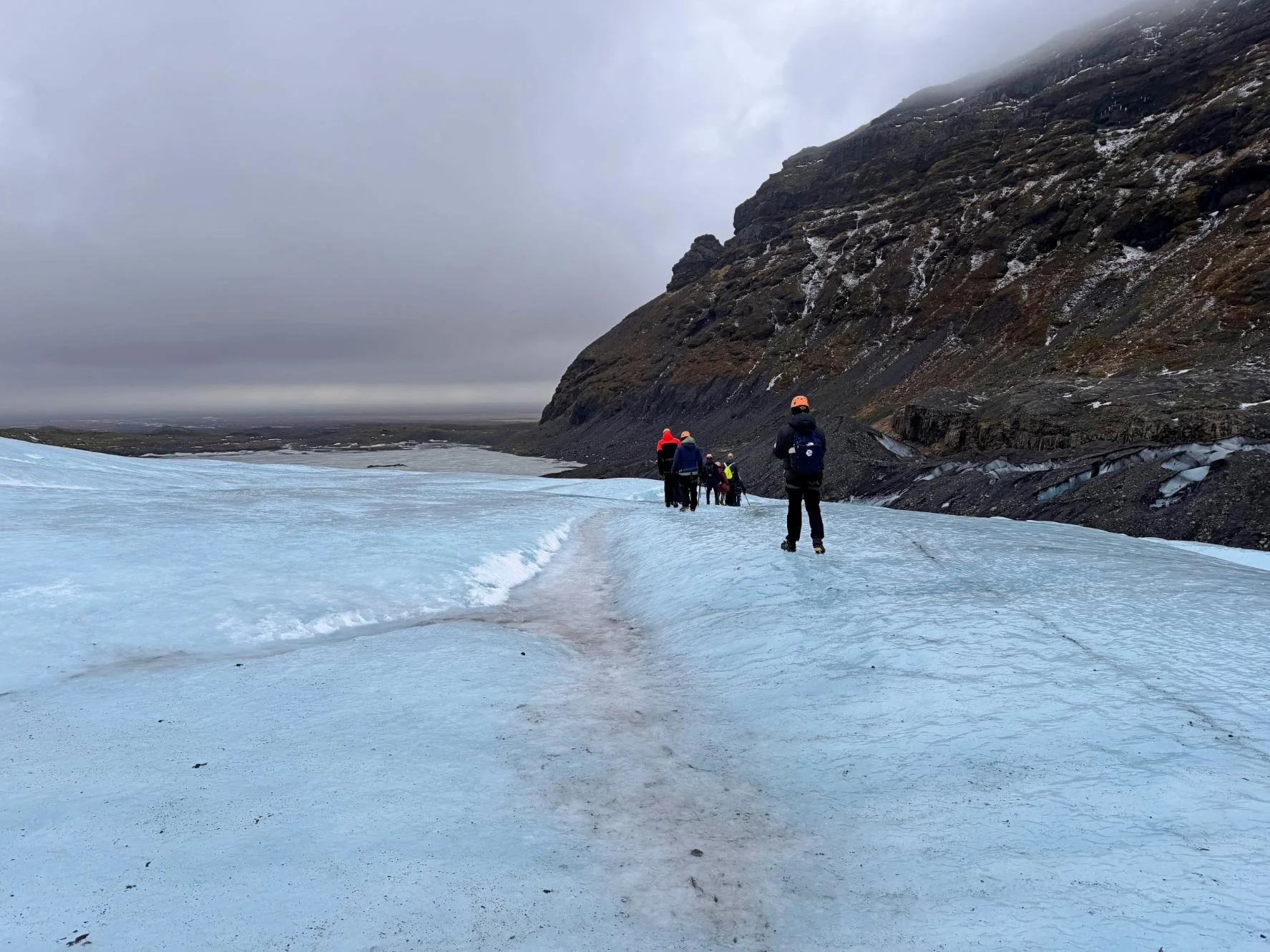
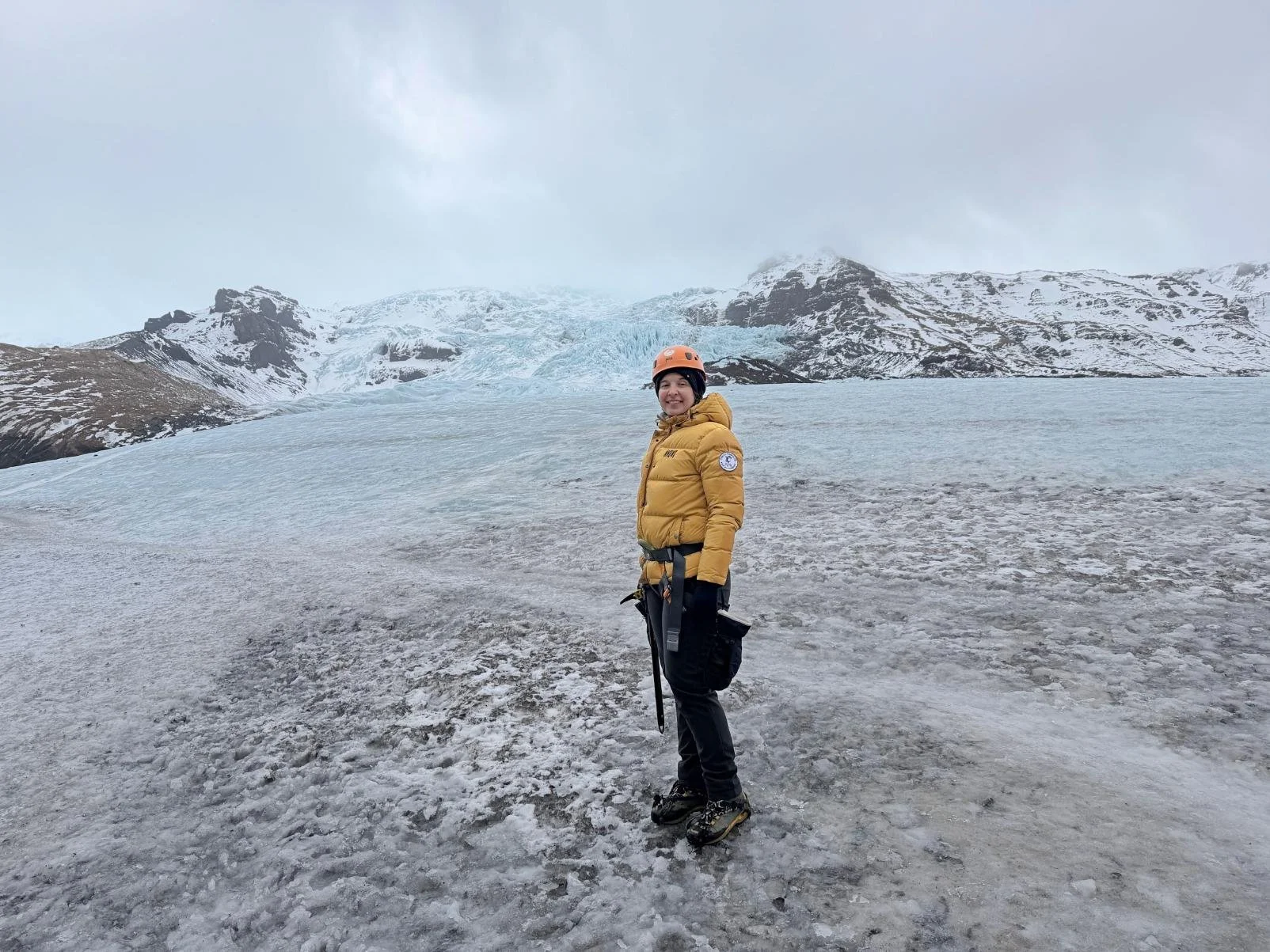
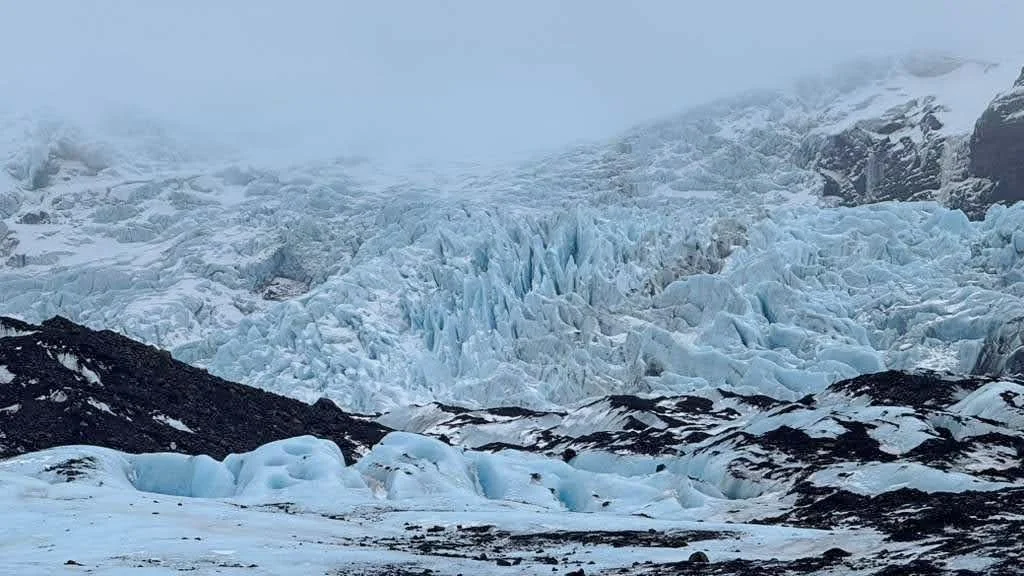
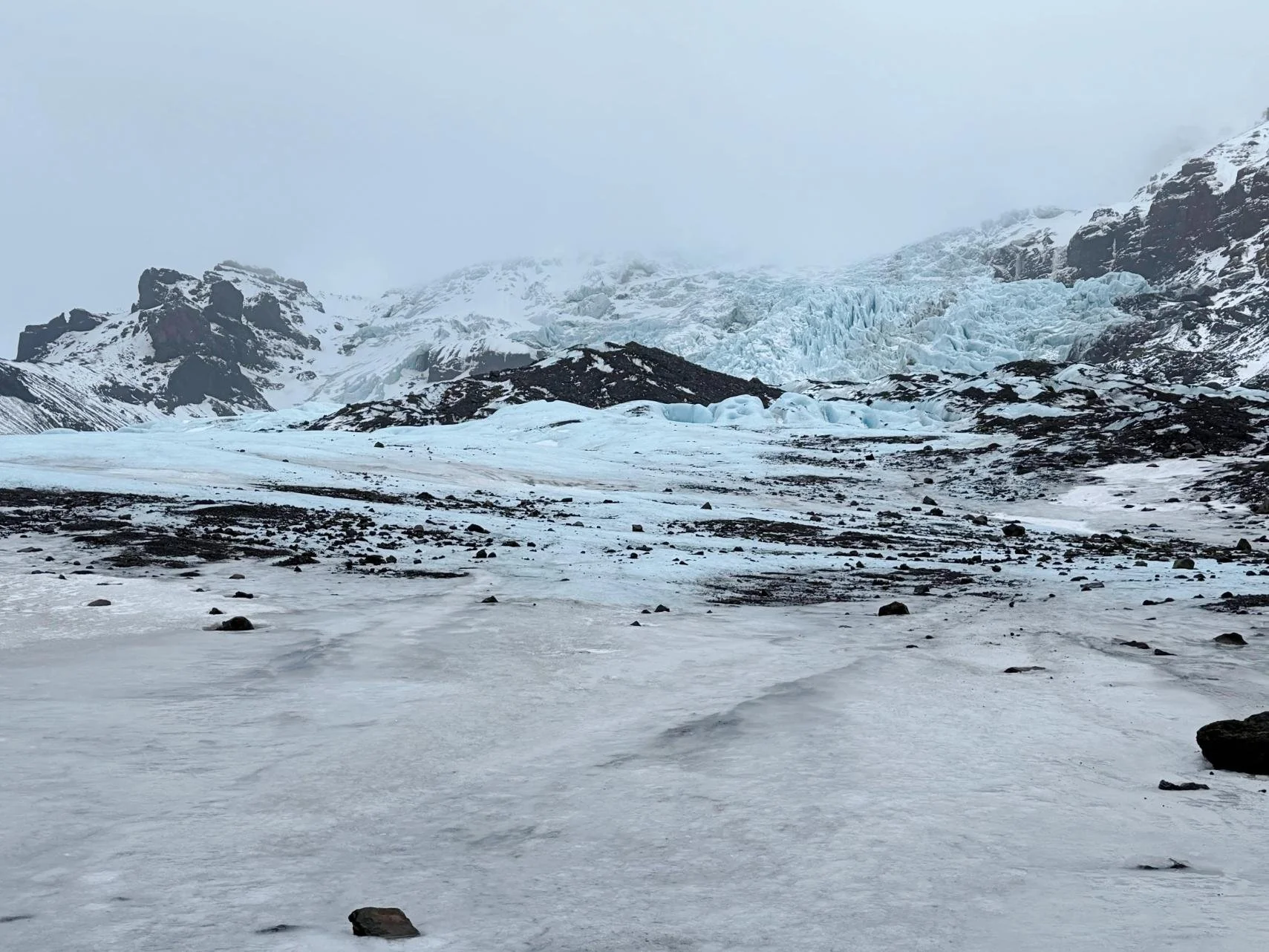
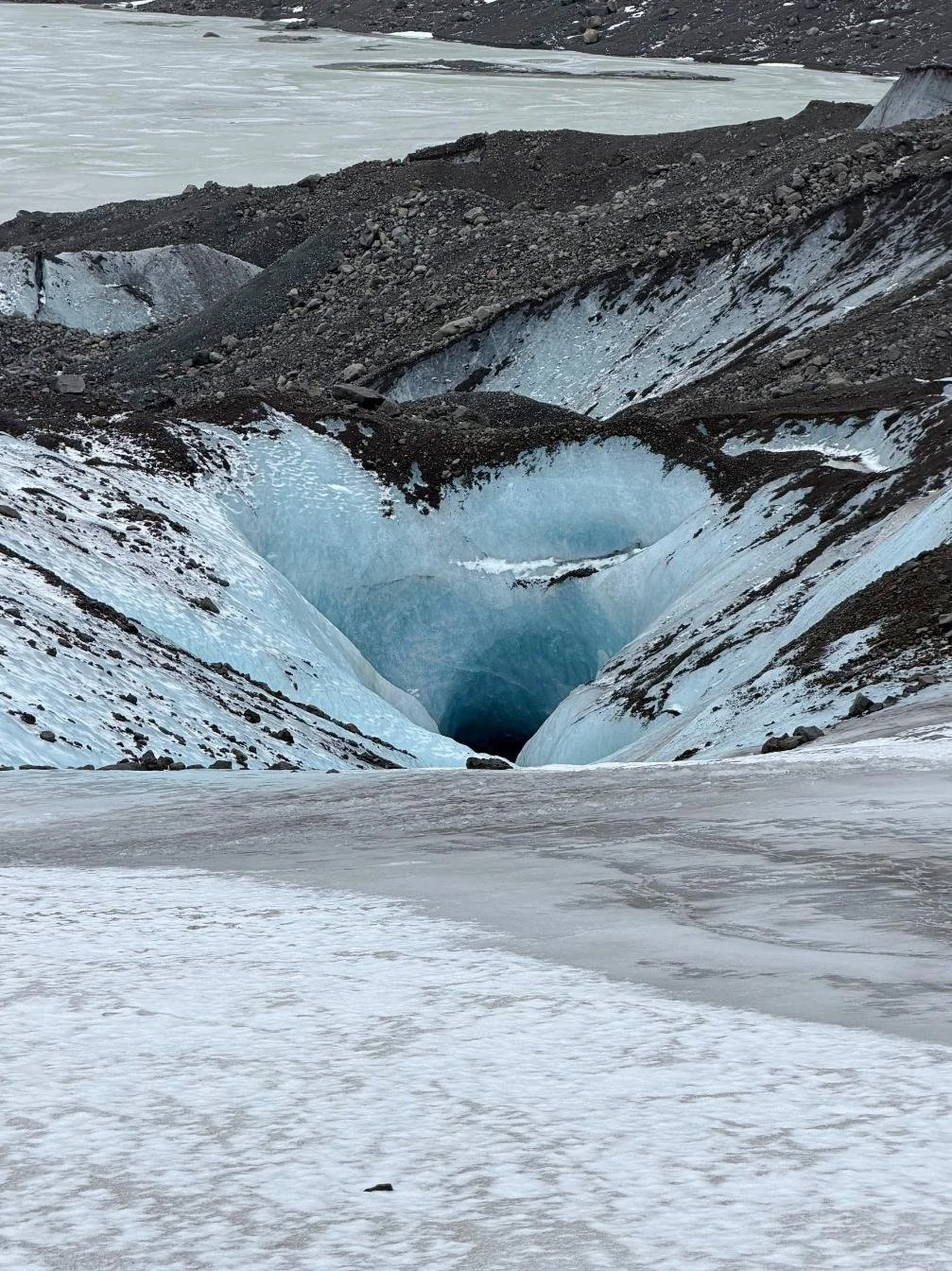
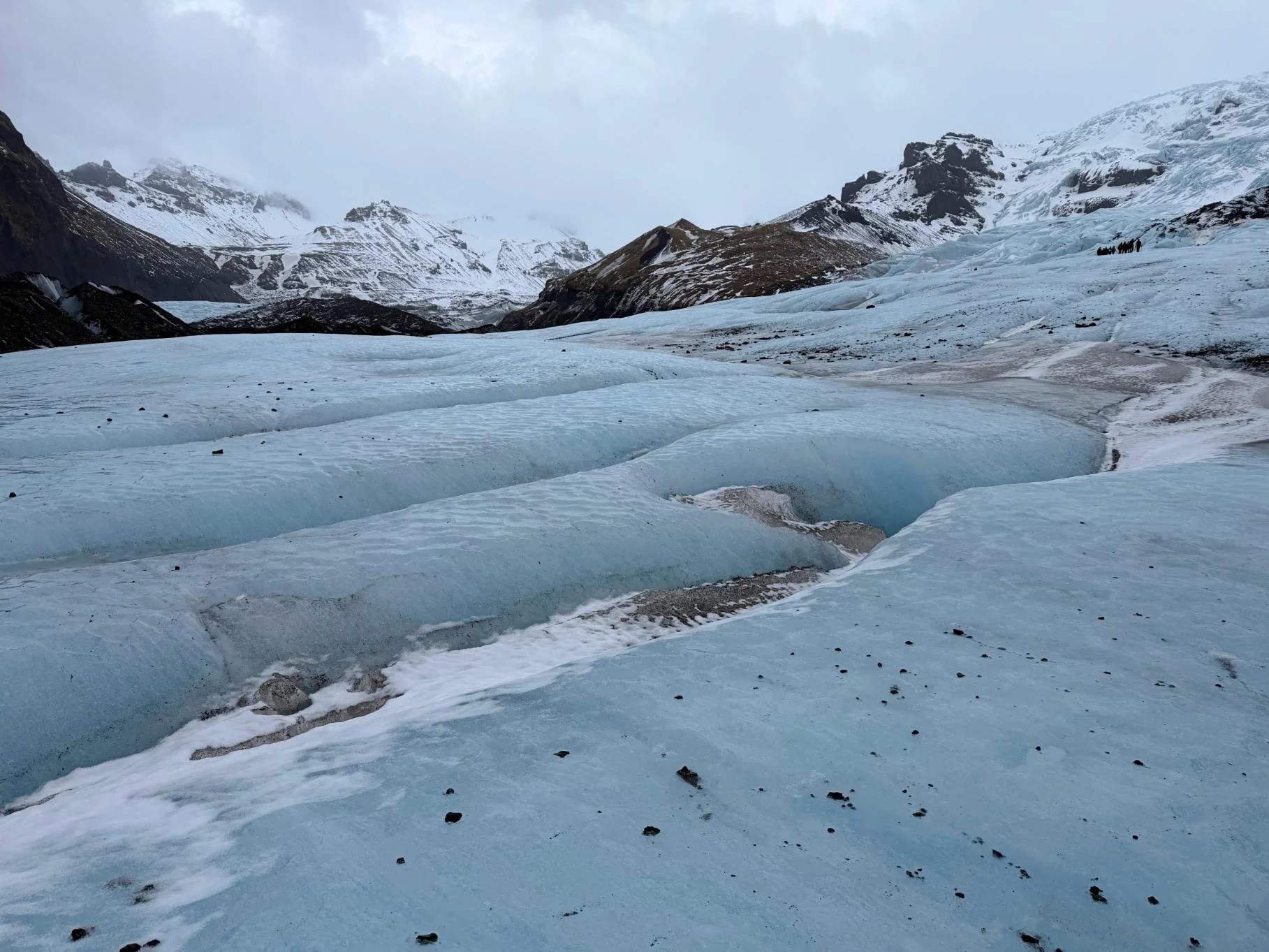
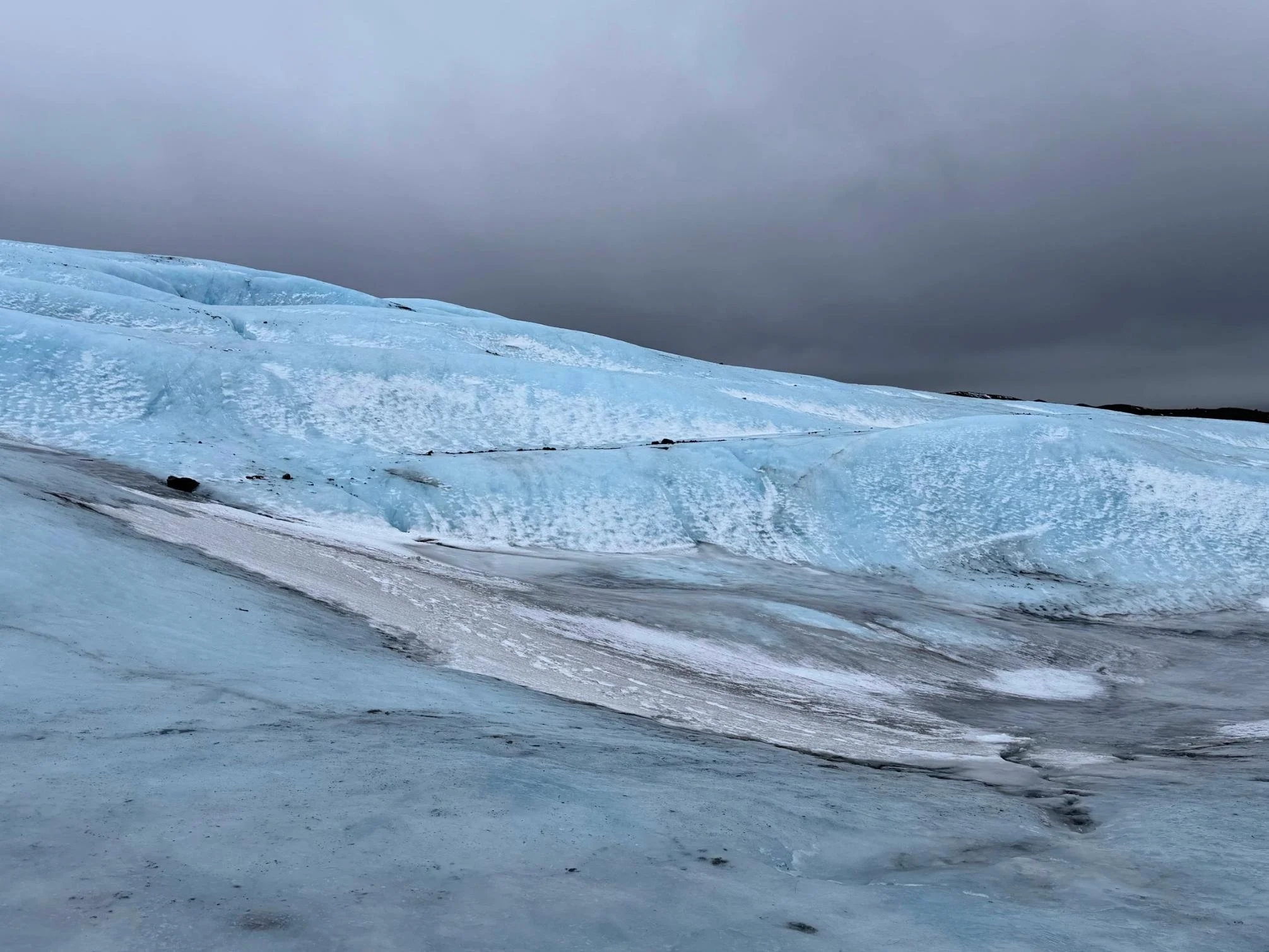
A “buggy” bus took us from base camp to the glacier edge, and the transition from ordinary ground was incredible. One moment you're on rock and gravel; the next, crampons are crunching into the surface of a glacier that covers eight percent of Iceland. It’s not immediately the photogenic smooth expanse that turns up on screensavers. It is ridged, fractured, and striated with dark ash layers from eruptions that happened centuries ago. And that’s actually what makes Iceland’s glaciers unique.
Brook moved us across the ice with practiced efficiency, reading the surface for safe routes and keeping an eye on the weather forecast. We'd occasionally pause at a crevasse or a vivid blue exposure to hear why the ice looks the way it does, and then press on toward the cave. The movement itself, once you get used to the crampons, is actually very satisfying — the teeth grip in a way that feels secure, and within a few minutes you stop thinking about your feet and start actually looking around. The views from partway up the glacier — the lowlands, the Atlantic glinting in the distance, the black sands stretching west — are the kind of eye openers that Iceland offers and which recalibrates your sense of scale.
The ice cave
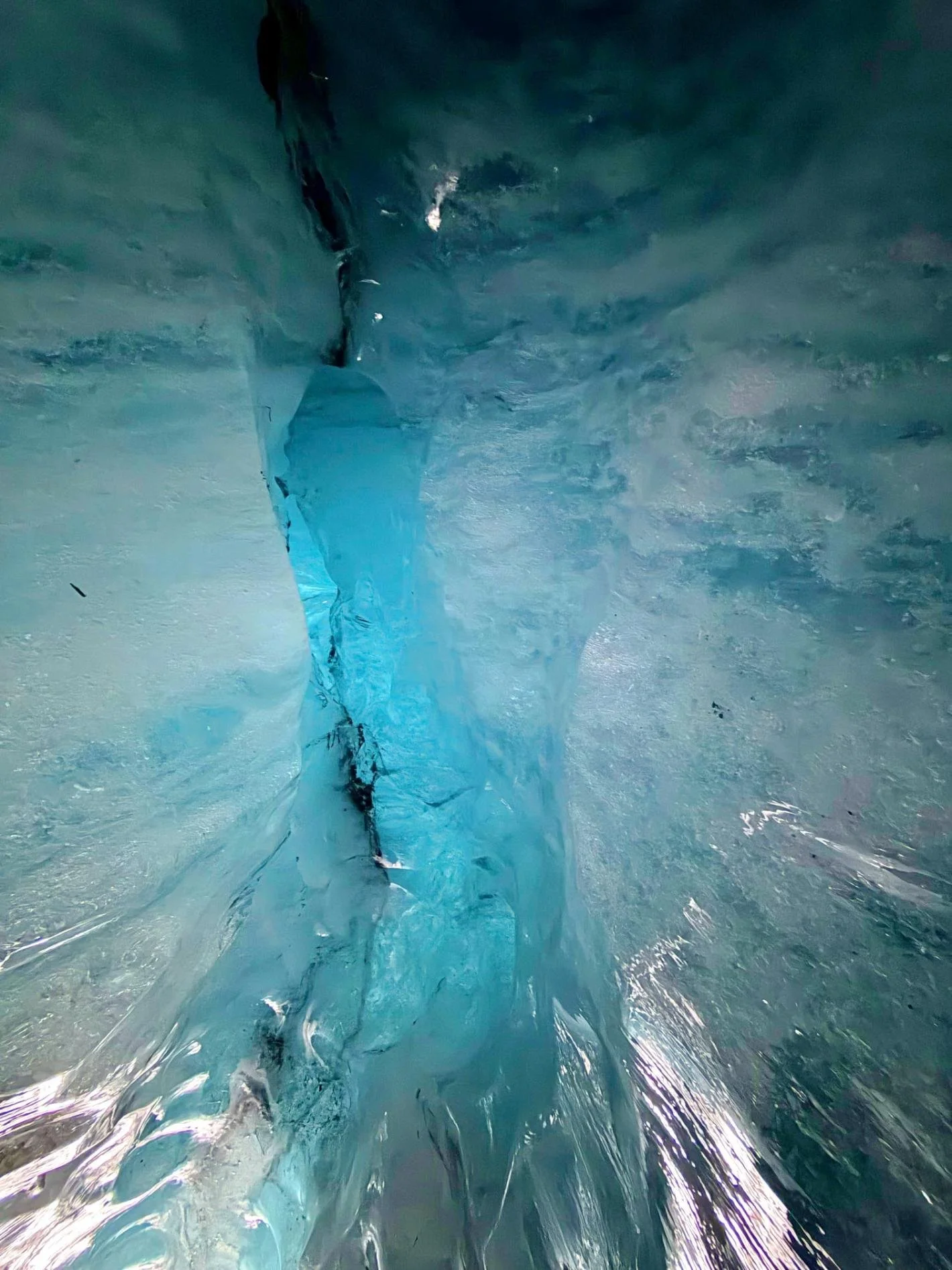
Ice caves at Vatnajökull are naturally formed, which means they're also naturally impermanent. The cave you visit on any given tour is not the same cave that existed last season, and it may not exist next season. Meltwater carves them out each summer; cold refreezes and reshapes them each winter. Glacier guides select the safest and most impressive accessible cave on that specific day, meaning there's some variability, but it also means that your guide actually knows what to look for rather than following a fixed route regardless of conditions.
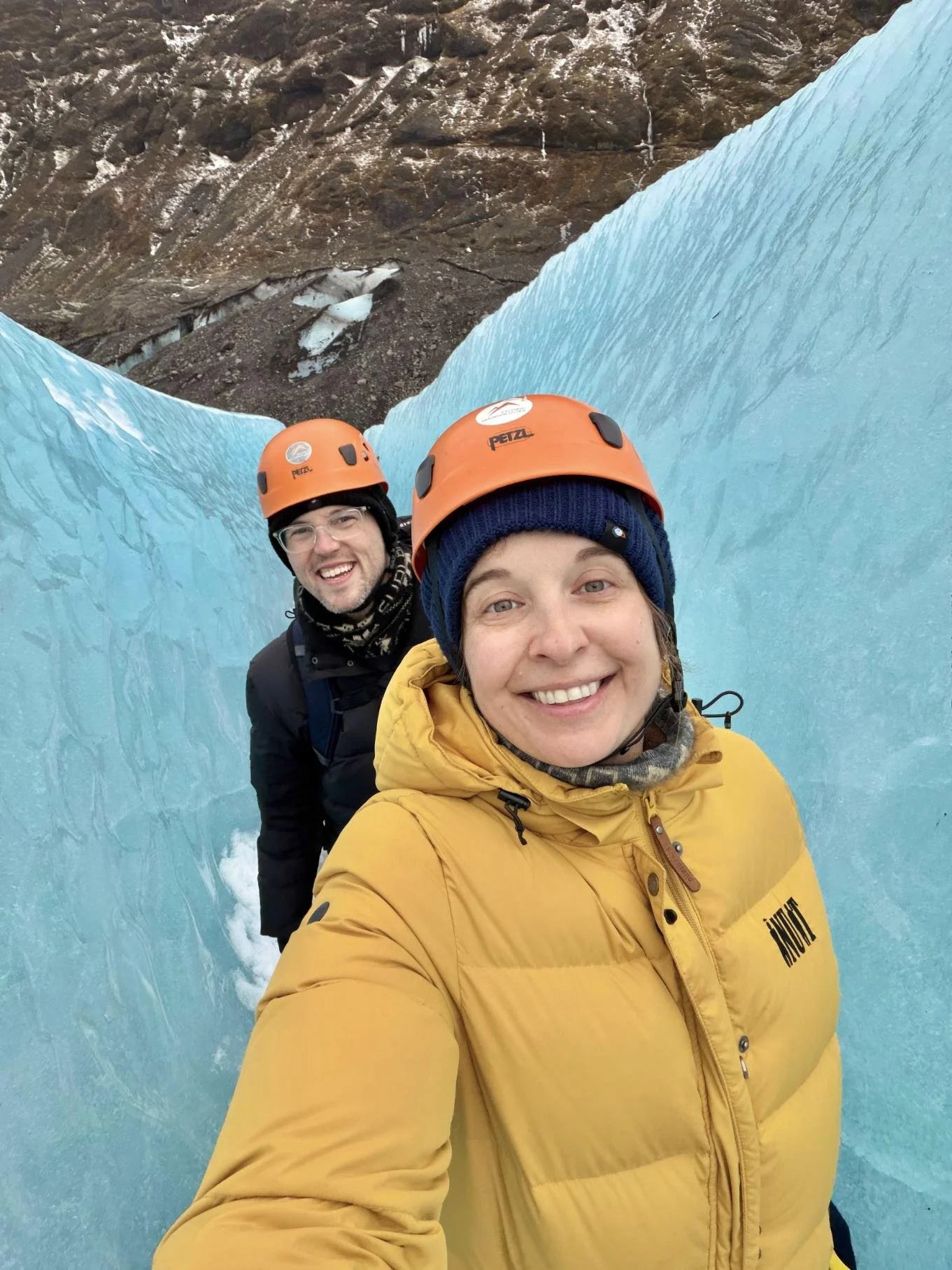
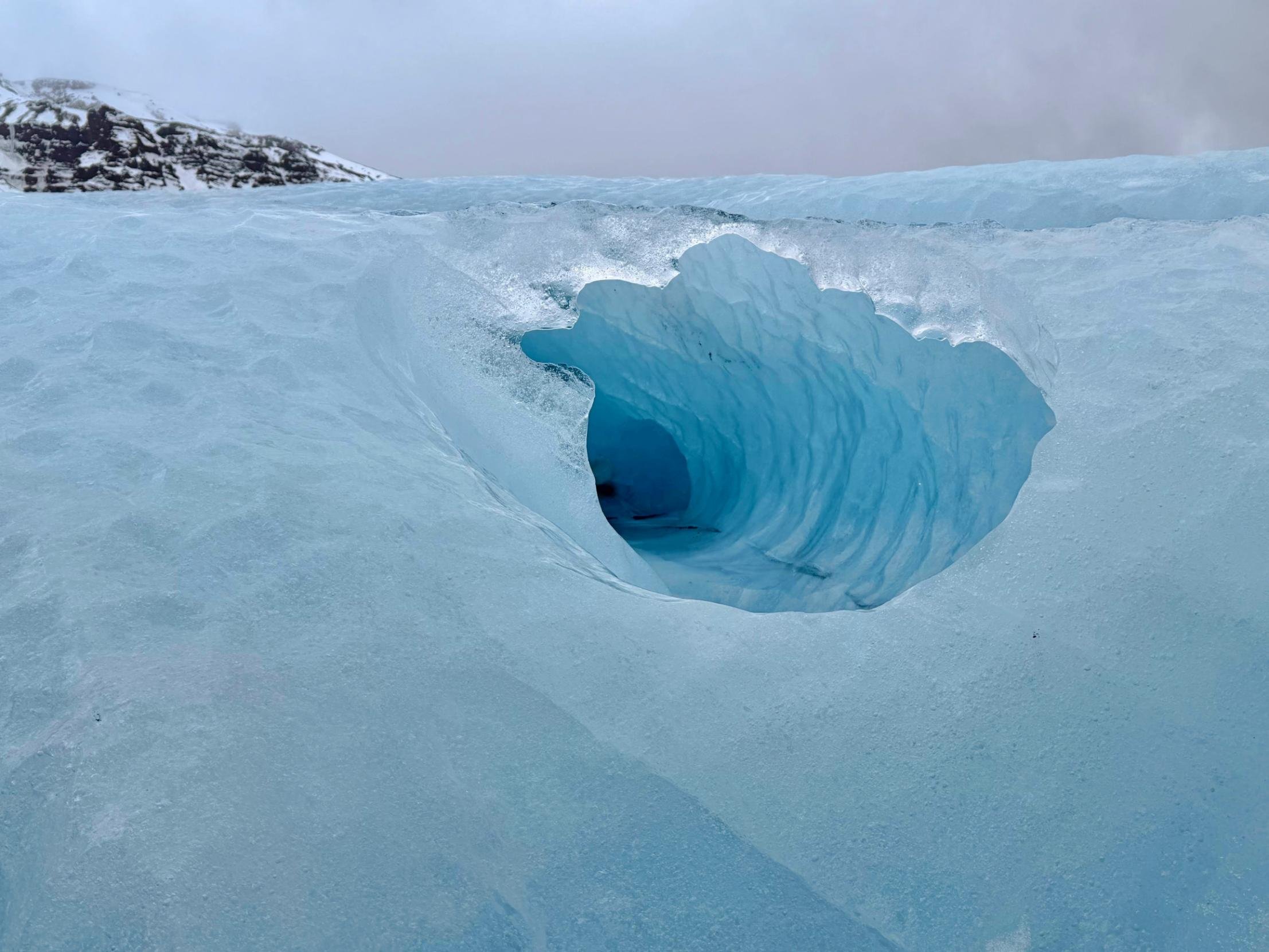
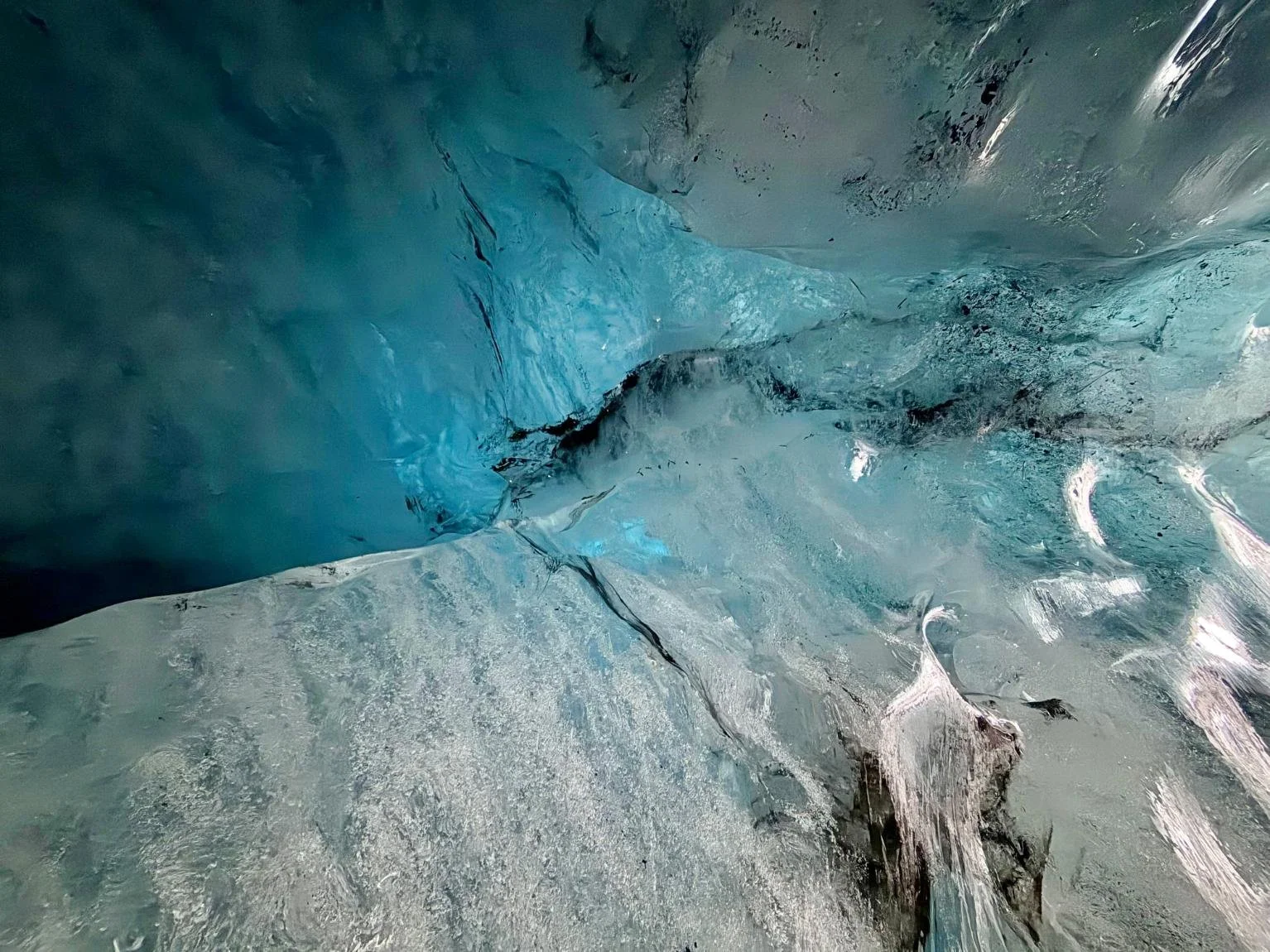
Ours was a low tunnel that opened into a chamber of insanely blue ice. This was saturated — almost radiant — the color of something that has been compressing light for centuries. Only one person could fit at the very end of the tunnel. We loved “hugging” the ice!
Brook explained the geology, pointing out where different pressures had created different densities and colors, where older ice sat below younger. We had enough time to actually absorb the place before moving back out onto the surface. The tour finishes with a descent toward the glacier's edge and a final stretch of views toward the coastline on a clear day, which was not exactly the case for us. We actually had to start our descent a bit early at the end due to strong winds picking up, but personally, we could have stayed forever as it wasn’t cold that day!
Is the tour right for you?
The "moderate" difficulty rating is accurate. You don't need to be a mountaineer, but you should be comfortable walking on uneven terrain for a few hours. The crampons help significantly, and Brook calibrated the pace well for a mixed-ability group. One important thing to remember: ice caves are only accessible in fall, winter, and spring. Summer tours run without the cave component — which is definitely still a worthwhile experience, but not this one. Winter and early spring tend to produce the most vivid blue ice, when the cave formations have had time to consolidate and the meltwater has refrozen.
For this type of outdoor winter activity, it’s a good idea to have travel insurance. Read our guide: Travel Insurance for Iceland.
Vatnajökull, the blue ice, and the park: cool facts
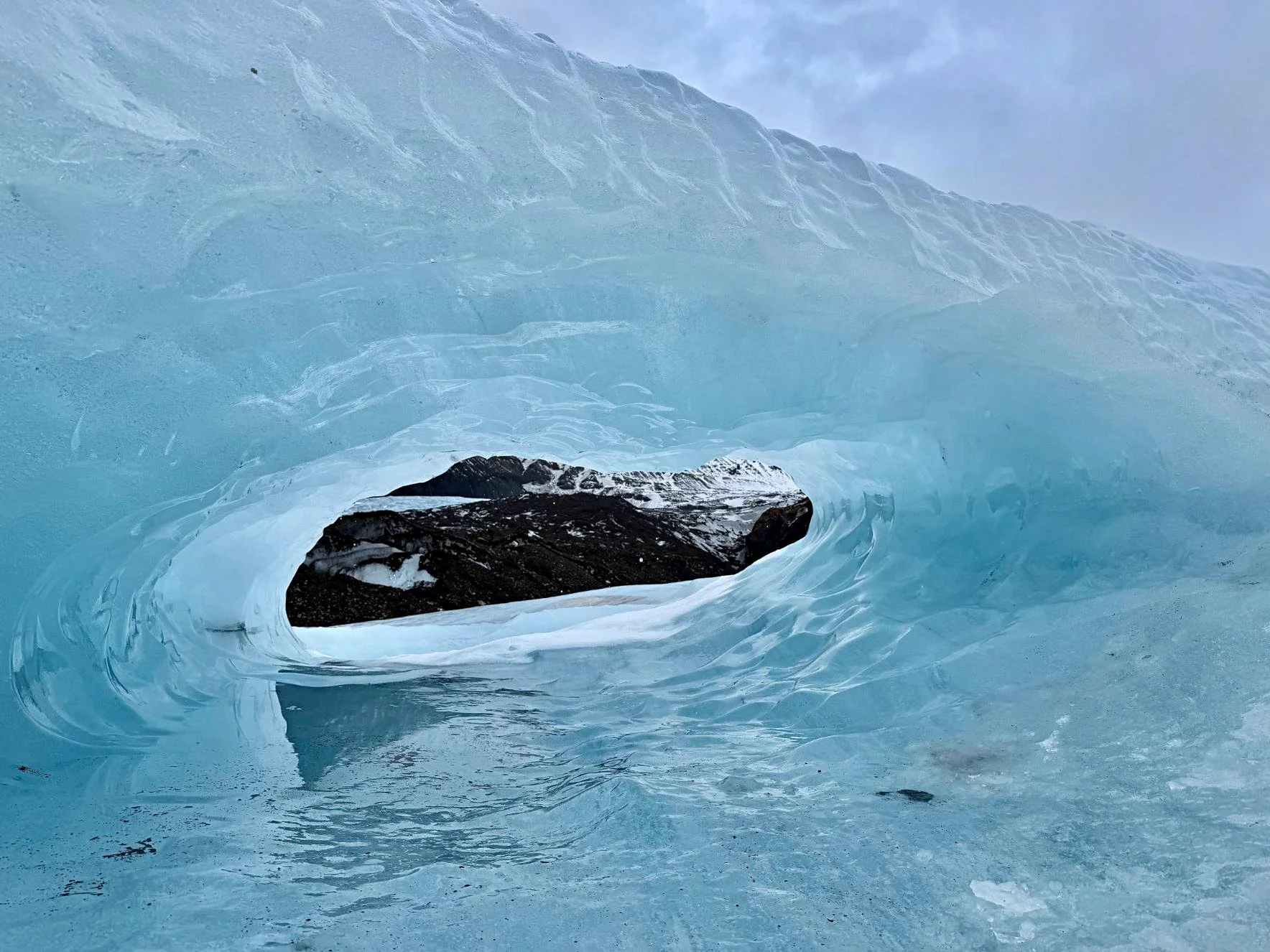
Nature’s best art!
Even before you step onto it, Vatnajökull earns some attention. It covers around 8,100 square kilometers — roughly eight percent of Iceland's total land area, and larger than all the glaciers in mainland Europe combined. Its average thickness sits between 400 and 500 meters, with a maximum depth of around 950 meters in places — nearly a kilometer of solid ice sitting on bedrock. The glacier base at its lowest point actually reaches around 300 meters below sea level. It has around 30 outlet glaciers crawling outward from the main ice cap, including the ones you hike on from Skaftafell.
Then there's what's underneath it. Beneath Vatnajökull sit seven central volcanoes, including four of the most active in Iceland — Grímsvötn, Bárðarbunga, Kverkfjöll, and Öræfajökull. Grímsvötn, the most active, erupted as recently as 2011, sending ash plumes 20 kilometers into the atmosphere. When subglacial eruptions occur, the resulting meltwater can trigger what Icelanders call a jökulhlaup — a glacial flood of occasionally catastrophic scale. A 1996 eruption of Grímsvötn released an estimated 3,000 billion cubic liters of water within hours, carrying icebergs across the lowlands and over the Ring Road and destroying bridges in its path. The park monitors subglacial activity continuously, and this is also why you don’t walk on Vatnajökull (or any glacier, actually) without a guide who knows what they're looking at and has the latest reports.
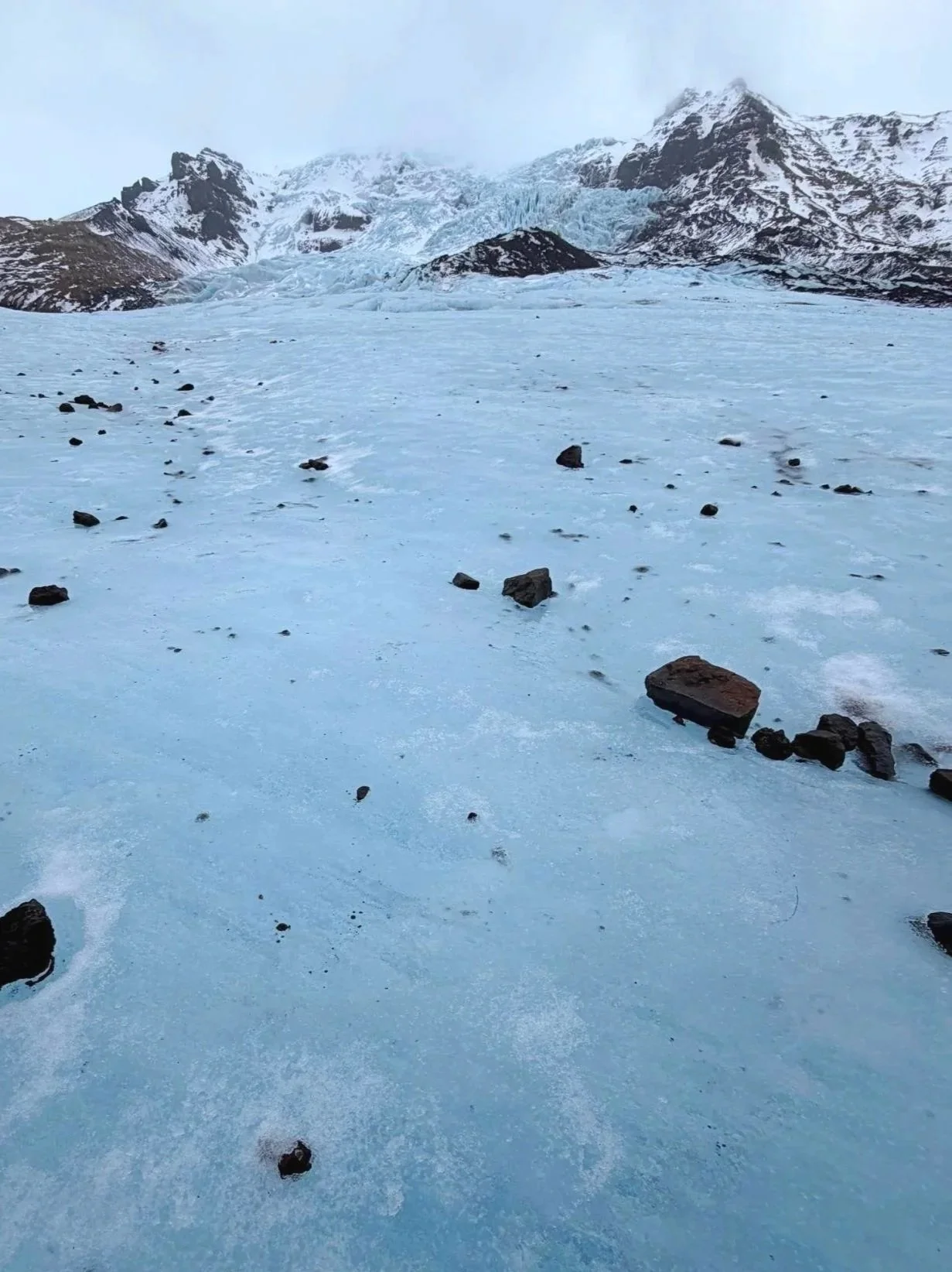
Did you know?
Iceland's most famous glacier-volcano combo isn't Vatnajökull — it's Eyjafjallajökull, the one just up the south coast that brought all of Europe to a grinding halt in April 2010 and briefly made every news anchor on Earth look mildly panicked. The eruption sat directly beneath a thick sheet of glacial ice, and when the magma hit that ice, it created an ash cloud that sent fine glass-rich particles more than eight kilometers into the atmosphere and straight into the jet stream. The result was the largest air-traffic shutdown since World War II — over 100,000 flights cancelled and roughly 10 million passengers stranded. The eruption lasted 71 days. The pronunciation tutorials lasted considerably longer.
All the southern outlet glaciers are currently retreating and thinning at rates glaciologists describe as unprecedented. Vatnajökull is estimated to be losing roughly a meter of depth per year on average, with outlet glaciers at lower elevations retreating faster. One of the more counterintuitive facts about all of this: the glacier reached its maximum Holocene size — its largest extent in the last 10,000 years — only about 130 years ago, near the end of a climate period called the Little Ice Age that lasted roughly from 1450 to 1900. It has been retreating since.
Why the ice is blue — and what that actually means
You will spend a few minutes inside the cave wondering why it looks the way it does. The short answer: time and pressure. The longer answer is considerably more interesting.
When snow falls on a glacier, it accumulates in layers. Over decades and centuries, the weight of new layers compresses the older ice below, squeezing out the air bubbles that give ordinary ice its white, scattered appearance. Without those bubbles scattering all wavelengths equally, light travels deeper into the ice — and as it does, the red end of the spectrum gets absorbed while blue wavelengths pass through and scatter back to your eye. The thicker and denser the ice, the more intensely blue it appears. The ice in a Vatnajökull cave is ancient, compressed, and almost completely bubble-free. Hence the color.
The blue shades aren’t just incredibly pretty. It's literally a record of pressure and time made visible. The bluer the ice, the older it is. You're essentially reading the glacier's biography in color. Inside the cave, where light filters through meters of dense ice above your head rather than reflecting off a white surface, the blue intensifies further. It's not a trick of lighting or photography (no filters on our pics!). It just looks like that.
The park and its history
Skaftafell was formally established as a national park on September 15, 1967 — with a local farmer, Ragnar Stefánsson, as its first ranger, a detail that somehow fits Iceland perfectly. It was expanded twice before being absorbed into the larger Vatnajökull National Park when that was created on June 7, 2008. The park now covers about 14% of Iceland's total area and is the second-largest national park in Europe. On July 5, 2019, it was designated a UNESCO World Heritage Site — recognized for the exceptional interplay of glacial, volcanic, and tectonic forces that have shaped the landscape over time.
Before any of this, Skaftafell was a working farm established not long after Iceland's settlement in the 9th century. In 1362, the Öræfajökull volcano erupted with enough force to destroy the entire surrounding community and bury the district under ash. The area was renamed Öræfi — "wasteland" — and has kept that name ever since, even as the farms were eventually reestablished, and the land returned to something green. The black sand plains you drive across to get there are mostly volcanic ash from the Grímsvötn eruptions, carried to the coast by glacial floods over centuries.

Penguin tip:
Going on a glacier hike? Travel insurance is always a good idea for any outdoor activity, especially in Iceland. We use and recommend HeyMondo — great coverage, and you get 5–15% off if you book through us!
Going to Vatnajökull? Here's what you need to plan

The contrast between the blue ice and the dark side is Iceland’s typical palette!
Skaftafell is located along Route 1 in southeast Iceland — roughly four hours from Reykjavík, with the closest towns being Kirkjubæjarklaustur 70 km to the west and Höfn 130 km to the east. There is no direct public transport to the base camp, so a rental car or organized transfer is the practical option for most visitors.
Winter and early spring slots fill up, particularly on weekends. If you're combining this with a south coast road trip — which you absolutely should — the tour sits naturally as a half-day stop, leaving time to reach Jökulsárlón or Höfn before dark, depending on the season.
Tour: Ice Cave & Glacier Hike in Skaftafell — Icelandia (Icelandic Mountain Guides)
Duration: 3.5 hours | Difficulty: Moderate | Minimum age: 10
Meeting point: Skaftafell Base Camp, Vatnajökull National Park
What's included: Guide, crampons, helmet, ice axe
What to bring: High, waterproof hiking boots (you can rent some if yours are too low), warm layers, rain gear (rentable at base camp), water, snacks
Season: Fall, winter, and spring (ice caves not accessible in summer)
After your glacier adventure, get some well-deserved good rest (unless the northern lights show up!) in one of our favorite accommodations on the Ring Road (South).
✈️ Find flights
🏨 Explore hotels, apartments, guesthouses, cabins
🧭 Browse activities and tours
🚗 Compare car rentals
🧳 Get travel gear (including for the Arctic)
🛡️ Travel safe with Heymondo Travel Insurance (5–15% off)
📱 Get a travel eSIM
🐾 Protect & track Arctic wildlife with Fahlo Bracelets (20% off)
FAQ: Glacier hike and ice cave in Iceland
When is the best time to visit an ice cave in Iceland?
Fall, winter, and early spring — roughly November through March — offer the best conditions. Ice caves form as summer meltwater carves tunnels through the glacier, then refreeze and stabilize as temperatures drop. Winter ice tends to be the most vivid blue and structurally sound. Summer tours still run as glacier hikes but without cave access. Read our guide to Iceland in summer for more.
Do I need experience to go on a glacier hike in Iceland?
No prior experience is needed. The Skaftafell tour is rated moderate and designed for first-timers. Your guide will walk you through crampon use before you step onto the ice. Reasonable fitness and waterproof hiking boots are the main requirements. The minimum age is 10.
What should I wear for a glacier hike in Iceland?
Layer up: a moisture-wicking base layer, an insulating mid-layer (fleece or light down), and a waterproof outer shell. Waterproof trousers and sturdy hiking boots with ankle support are essential — jeans will make you miserable. Bring warm gloves, a hat, and sunglasses. All glacier safety equipment including crampons, helmet, and ice axe is provided.
Are natural ice caves at Vatnajökull safe?
With a certified guide, yes. Guides assess cave conditions daily before taking any groups in, and tours are redirected or adjusted if the safety conditions require it. Ice caves are dynamic environments — which is also part of what makes them extraordinary — and you should never attempt to enter one without an experienced guide.
Why is glacier ice blue?
Dense, ancient glacier ice has been compressed over centuries until virtually all air bubbles have been forced out. Without those bubbles to scatter all wavelengths equally, red light gets absorbed as it travels through the ice while blue wavelengths scatter back to your eye. The older and denser the ice, the bluer it appears. Inside an ice cave, where light filters through meters of compressed ice above you, the effect is striking.
How do I get to Skaftafell from Reykjavík?
Skaftafell is on Route 1 (the Ring Road), roughly four hours southeast of Reykjavík. A rental car is the most practical option — there's no direct public transport to the base camp. Most visitors combine the glacier tour with a south coast road trip, stopping at Seljalandsfoss, Skógafoss, Reynisfjara, and Jökulsárlón along the way.
Here is a playlist to get in the glacier mood:
A glacier hike in Iceland is recommended so often that it risks sounding obligatory — one of those things you tick off because you're supposed to, like a waterfall stop on the way to somewhere else. But this is really not just a “bucket list” activity.
Standing inside a natural ice cave under Vatnajökull, in a chamber that didn't exist a year ago and won't exist in the same form next season, watching the walls glow blue in the specific way that only centuries of compressed time can produce — there is no version of that which feels like a box ticked. It feels like the kind of experience you end up describing badly to people who weren't there, and then giving up and saying: you should just go.
So… You should just go!
Finally, read all our Iceland Travel Guides here.

Free download
Travel Cheaper Cheat Sheet
27 tips on flights, hotels, hidden costs and more — spend less without missing what actually matters.
No spam. Unsubscribe anytime.
Planning a trip to Iceland? Check out our guides:
🌋 Iceland Travel Guide — Volcanoes, waterfalls, and the road trip of your geothermal dreams.
🇮🇸 Things to Do in Iceland in Winter — Ice caves, auroras, and all the frozen magic you didn’t know you needed.
☀️ Things to Do in Iceland in Summer — The most popular season and for a good reason.
🚗 Iceland Road Trip — South Ring Road self-drive tour from Reykjavík to Höfn with easy additions
💚 Northern Lights in Iceland — Is it a good destination for the aurora, and things nobody tells you.
🌌 Best Time for Northern Lights in Iceland — Month-by-month, forecast tools, and why 2025–2026 is the strongest aurora window in a decade.
🤫 Iceland Without the Crowds— Quieter alternatives to the main tourist spots.
💸 How to Travel Iceland on a Budget — Iceland is expensive. Here's how to make it significantly less so.
🛏️ Where to stay on Iceland's Ring Road — A segment-by-segment hotel guide from Reykjavík to Höfn, covering every overnight from the South Coast to the glacier lagoon.
🌈 Free and cheap things to do in Reykjavík— Walking tours, sightseeing, geothermal pools, nature… the list is longer than you think.
🛁 Brekka Retreat, Hvalfjörður — Private sauna, geothermal hot tub & northern lights over Iceland's most underrated fjord.
🏨 Best Northern Lights Hotels in Iceland — Cozy cabins, glass igloos, and wild skies where the aurora dances right above your bed.
🐴 Horseback Riding in Iceland — Learn about the horse culture in Iceland and our experience near Reykjavik.
🔥 Lava Show in Reykjavík — Watch lava melt and solidify right in front of you.
🤿 Silfra snorkeling in Þingvellir — Swim between two continents in the clearest water on Earth.
♨️ Hvammsvík Hot Springs, Hvalfjörður — Eight geothermal pools cut into the North Atlantic coast and a Viking settlement older than Iceland's parliament.
🛖 Aurora Igloo South, Hella — Transparent dome pods, a heated bed, and a South Iceland sky that delivers with or without the aurora.
🛡️Travel Insurance for Iceland— What you need before you go
