
Iceland's Most Famous Spots Have a Quieter Version Right Next Door
You don't have to skip the classics. You just have to stay five minutes longer — or drive five minutes further.
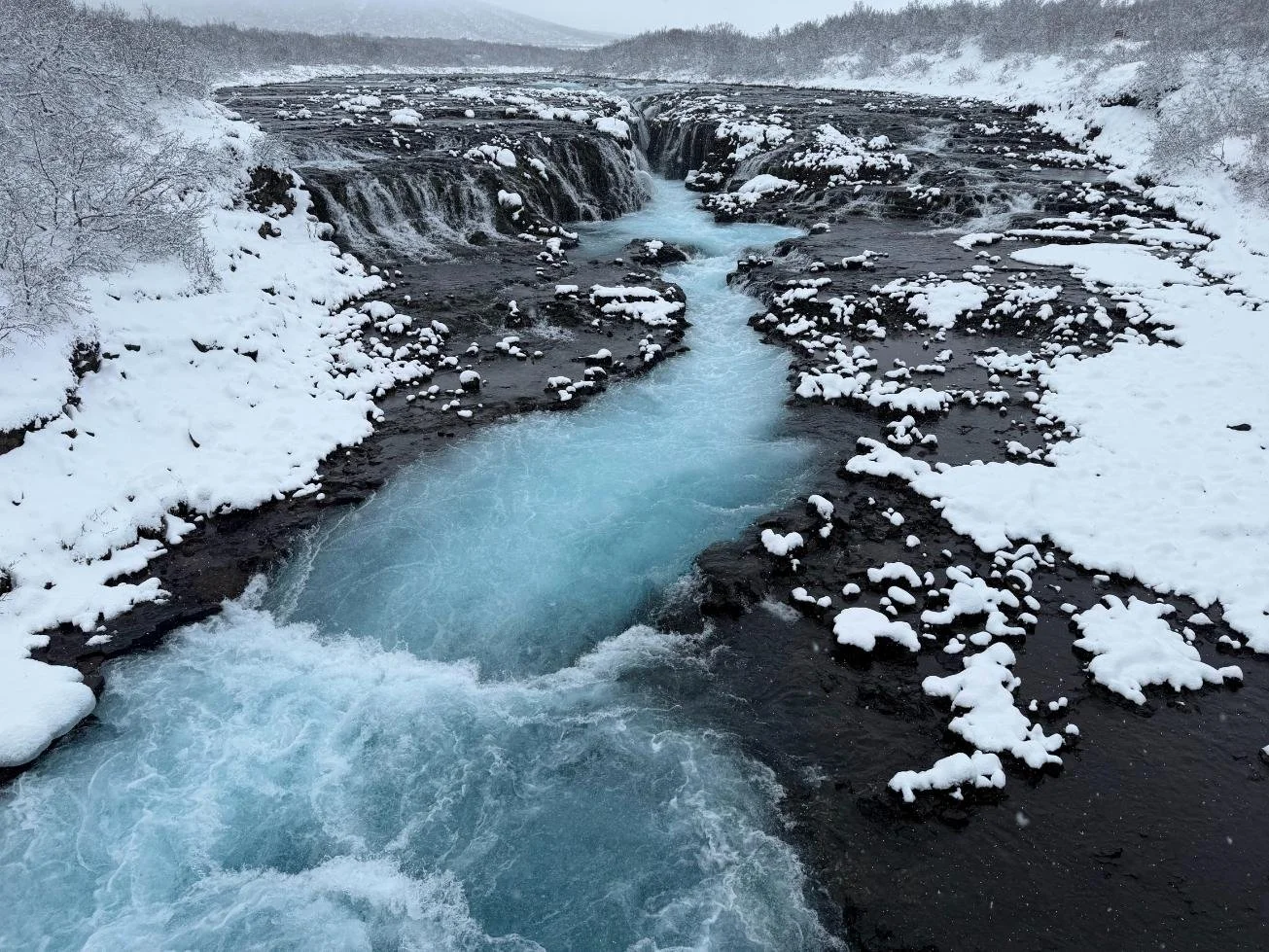
Brúarfoss is spectacular in winter, when the white, black and blue shades paint a typical Icelandic palette
Last update: August 2026
Iceland has a well-worn tourist circuit. Jökulsárlón, Reynisfjara, the Blue Lagoon, Gullfoss, Geysir — these are famous for good reason, and most people see all of them in a week-long ring road loop. They're genuinely spectacular. No one's going to talk you out of visiting them.
But here's the thing: these places have become way too popular. When we first visited 17 years ago, we had them mostly to ourselves in autumn. In 2026, it’s a different story. However, for most of these spots, the best-kept secret is that you barely have to go anywhere to find a slightly hidden gem just as good with a fraction of the people. The alternatives aren't buried on some niche hiking forum. They're right there — a 10-minute walk in most cases, or a short drive at most. You just have to know to look.
This guide is for people who already have the classics on the itinerary, got tired of the crowds and want to know what else is hiding nearby. All of these slightly off-the-beaten-path places in Iceland are doable with a rental car and no specialist equipment. Most of them are free.
🛌 Where to stay:
• Brekka Retreat, Hvalfjörður — we stayed here. Private sauna and hot tub, darkest skies near Reykjavík.
• Aurora Igloo South, Hella — we stayed here. Transparent walls, heated beds, open sky.
• Hotel Keflavik — we stayed here. Solid value right by the airport, good base for the South Coast.
🇮🇸 Top experiences:
• Northern lights tour from Reykjavík — guides chase clear skies; free return if the lights don't show.
• Ice cave & glacier tour, Vatnajökull — blue ice and a natural cave under Europe's largest glacier.
🚗 A car is essential in Iceland. Book yours here — the whole country opens up once you leave Reykjavík.
Where are the quieter alternatives to Iceland’s famous tourist spots? Short answer
Iceland's famous spots are famous for a reason — but most of them have a quieter version right next to them. Across the road from Jökulsárlón is Diamond Beach, where glacier ice washes up on black volcanic sand; keep walking the shore and you'll lose the crowds entirely. Eleven kilometres west, Fjallsárlón has the same glacier system, less infrastructure, and a fraction of the visitors.
Five minutes from Reynisfjara, Víkurfjara has the same sea stacks from a different angle, calmer waves, and free parking. The same logic applies to waterfalls: Gljúfrabúi is 150 metres from Seljalandsfoss and hides inside a cave; Kvernufoss is 15 minutes' walk from Skógafoss and almost always quiet.
For geothermal, the Reykjanes Peninsula has more dramatic volcanic activity than Geysir with a fraction of the tour buses — Seltún, Gunnuhver, and the Bridge Between Two Continents are all there.
And for hot springs, Hvammsvík on the Hvalfjörður fjord, the geothermal river at Reykjadalur, and Nauthólsvík beach in Reykjavik are all more interesting alternatives to the Blue Lagoon if what you want is the actual earth rather than a spa. Keep reading for details.
Jökulsárlón: Don't just stop at the parking lot
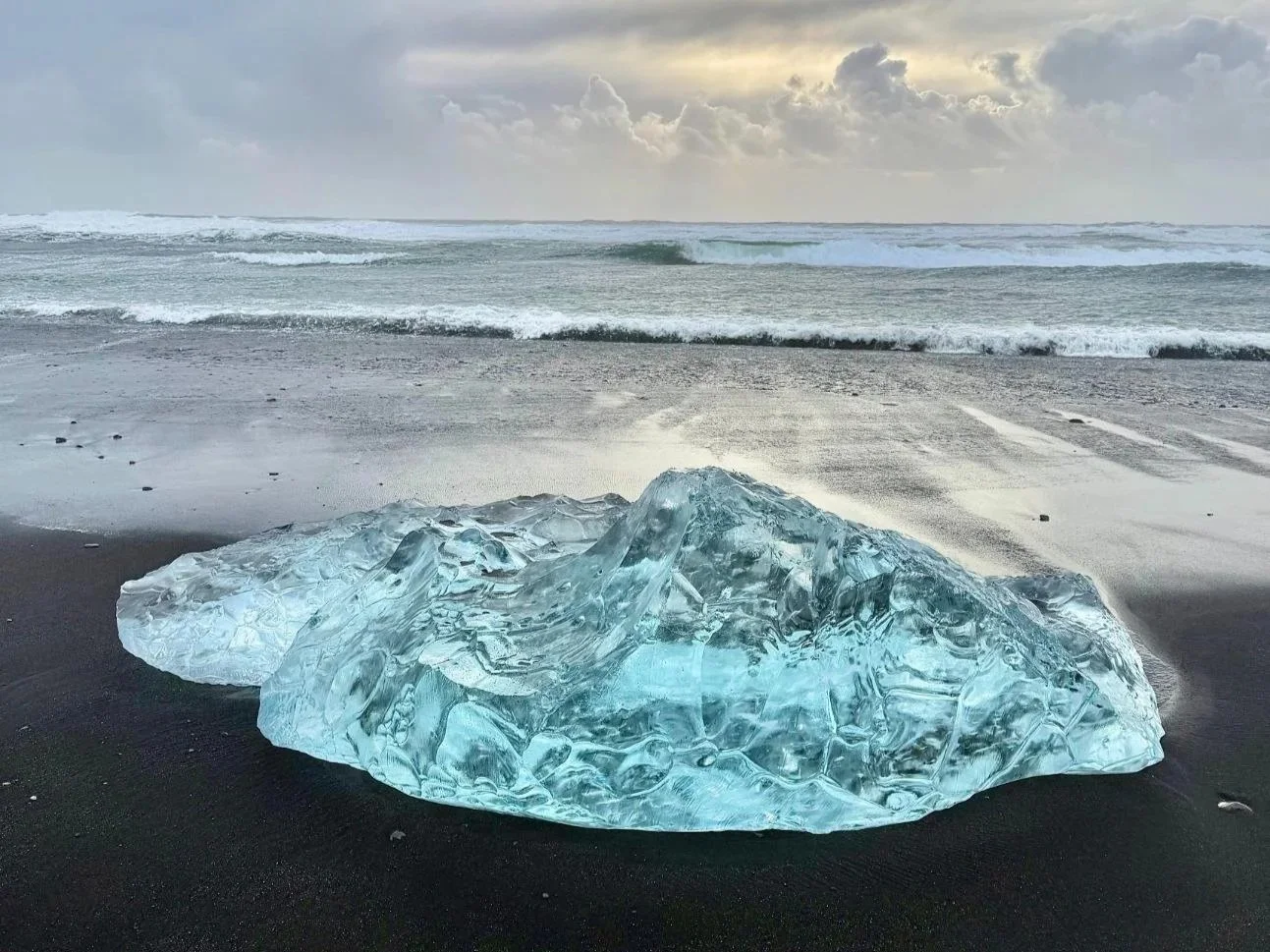
A blue diamond… on Diamond Beach!
Keep walking in both directions
Jökulsárlón is one of the most photographed places in Iceland, and for good reason — watching icebergs calve off Breiðamerkurjökull glacier and float across that still, dark water is genuinely surreal. It used to be my favorite place in the whole world, but admittedly, there are so many people that it has lost some of its magic. That said, most visitors do exactly the same thing: park, walk to the railing, take photos of the lagoon, get back in the car. They miss the best part by about 200 metres.
Allow plenty of time and just keep walking along the shore until the end of the trail. After 10 minutes of walking, you’ll most likely be alone and will be able to truly appreciate the beauty of the place.
Then, cross the road from the main parking area and walk toward the sea. There, you’ll find Diamond Beach — a stretch of black sand where icebergs washed out to the ocean, wash back in and strand themselves on the shore. Blocks of ice from a thousand years ago, backlit and translucent, scattered across volcanic black sand. Ok, not exactly an Iceland ‘hidden’ gem, but a surprising number of people who stop at Jökulsárlón never make it across the road. And the ones who do take a quick picture and walk back. And the beach is long!
Parking is valid for both sites of the road.
If you can, book an accommodation nearby so you can come early morning, late afternoon or even at night for the northern lights. The light is surreal no matter the weather.
Fjallsárlón: the one you can't see from the road
About 11 kilometers back west on the Ring Road, before you reach Jökulsárlón, is Fjallsárlón — the glacier lagoon that most tour buses drive straight past because it isn't visible from the road. It feeds from the same glacier system, but it's smaller, quieter, and in some ways, more dramatic because the glacier face sits closer to the shore. You're right up against the ice.
There's one tour operator running boat trips on the lagoon (in season), which means you're not competing with four different companies and a minibus queue. If you want a glacier lagoon with nobody in the frame, this is where you go.
I used to think it was an insider tip… because it was, before they built a big parking lot. But it’s still worth it if you visit early or late, and parking is free!
Look for a hotel or stay and a tour near Jökulsárlón:
Reynisfjara: Cross the headland
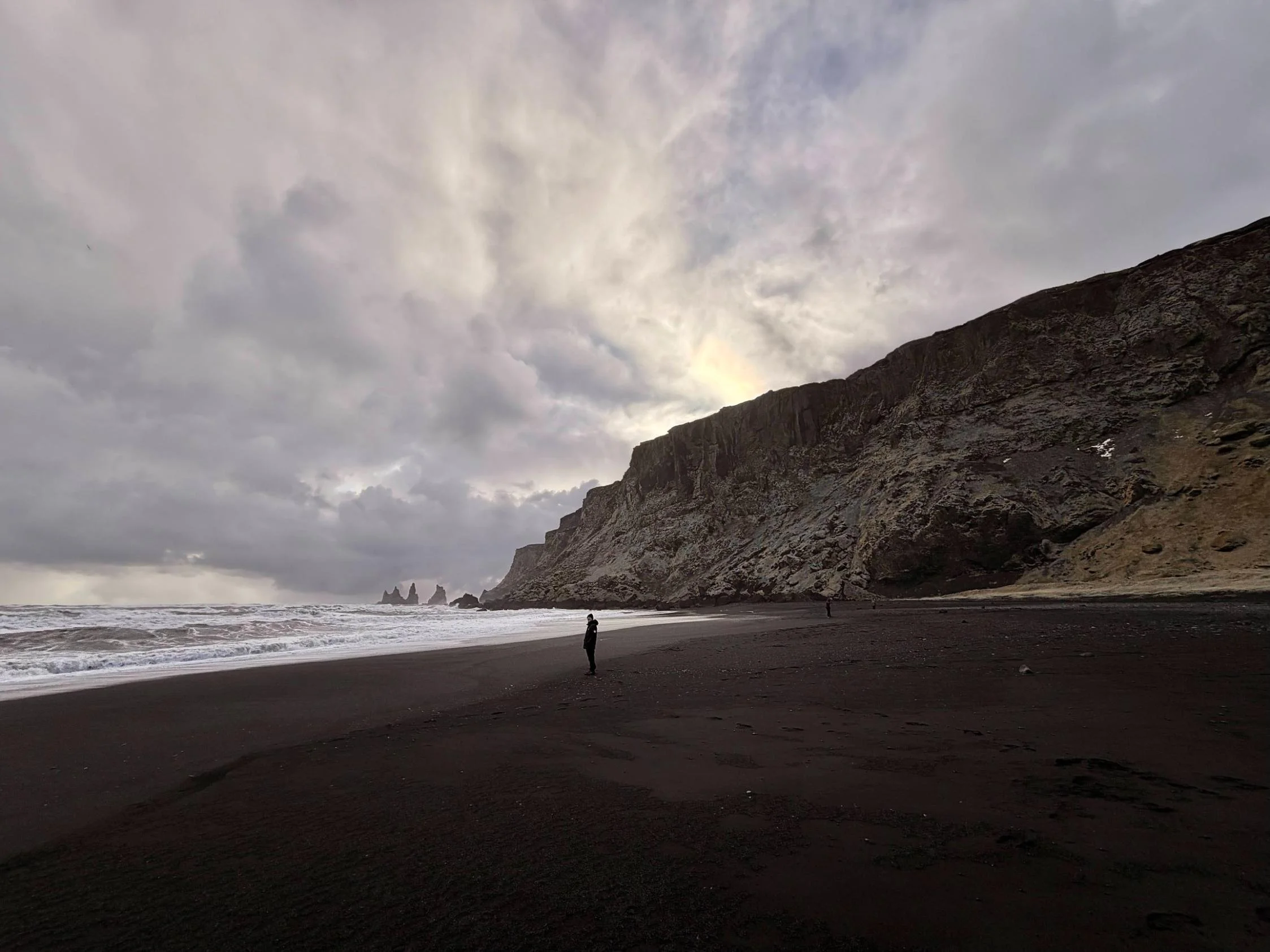
Jake beating the crowds in Vík!
Víkurfjara: same sea stacks, different angle, half the people
Reynisfjara is extraordinary and also, by mid-morning, extremely (we insist on extremely) busy. The basalt columns, the aggressive surf, the Reynisdrangar sea stacks — it's everything Iceland's reputation promises. It's also one of the more genuinely dangerous tourist spots in the country; the sneaker waves here have killed people, and there are very real safety signs for good reason.
A recent storm washed out most of the beach, so you basically pay an expensive parking fee for a quick glance.

Penguin Trampoline tip:
Chasing waves and icebergs in Iceland? Travel insurance is a smart idea. We use and recommend HeyMondo — great coverage, and you get 5–15% off if you book through us!
But, on the other side of Reynisfjall mountain, just a five-minute drive toward the town of Vík, is Víkurfjara. Same sea stacks from a different angle, same black volcanic sand, significantly fewer people. The waves are calmer here too — you're more sheltered — which makes it a better beach to actually walk around on rather than just photograph from a safe distance. And parking is free! Most visitors to Reynisfjara don't know it exists. Personally, we think Vík beach is even more beautiful, and we included it in our ranking of the best beaches in Europe. If you need a place to stay nearby, check out our accommodation guide on Iceland Ring Road.
Find a place to stay in Vík and around:
Seljalandsfoss and Skógafoss: Two bonus waterfalls hiding in plain sight
Gljúfrabúi: 150 metres from Seljalandsfoss, inside a cave
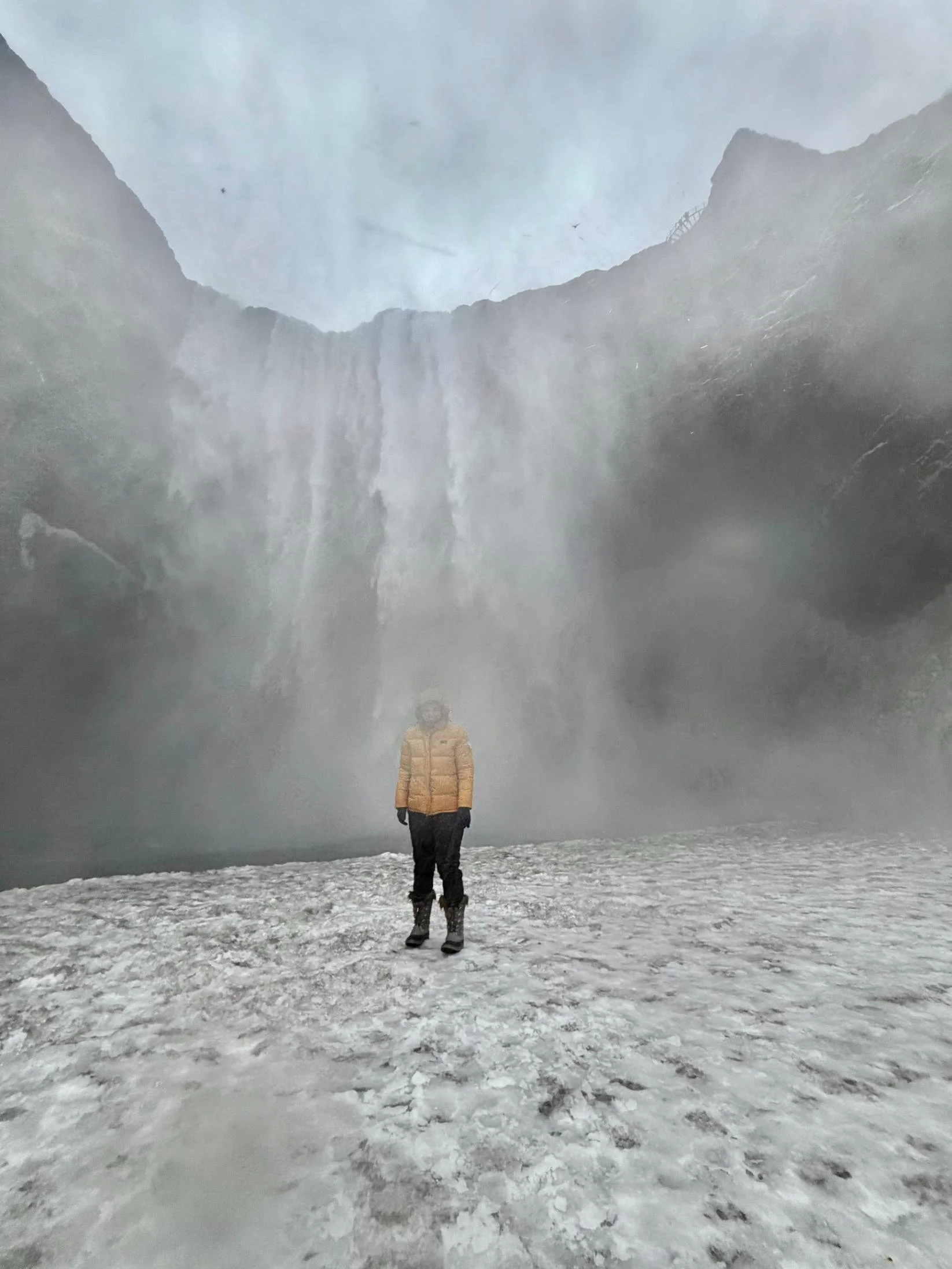
Don’t you love getting soaked right before a glacier hike?
Seljalandsfoss — the waterfall you can walk behind — draws large crowds, and they all concentrate at the obvious spot. Walk 150 metres north along the cliff face and you find Gljúfrabúi, a 40-metre waterfall hidden inside a narrow gorge. You have to squeeze through a rock opening to get to it, and once inside, you're in a cathedral-scale cave with a waterfall crashing down into a pool and light filtering through the gap above.
You will get wet. Bring waterproofs, or at minimum, accept that your shoes are done for the day. The rocks are slippery. But none of this stops it from being one of the best things you can do on the South Coast. It's so close to Seljalandsfoss that there's almost no excuse not to go, and yet the crowd at the main waterfall and the crowd at Gljúfrabúi are not remotely comparable.
Kvernufoss: the walk-behind waterfall with no queue
Skógafoss is spectacular… and usually packed. Park at the Skógar Museum, walk 15 minutes east along the river trail, and you reach Kvernufoss — a walk-behind waterfall so quiet that visitors who've spent 30 minutes there report seeing fewer than five other people the whole time. It's the same walk-behind experience as Seljalandsfoss, without the shuffle queue and the selfie poles, as it’s slightly off Iceland's beaten path. In summer you can step behind the curtain of water and look out over the lowlands toward the ocean. Read our guide to Iceland in summer for more things to do. In winter the ice makes it too slippery to attempt, but the waterfall itself is still worth the walk.
Find an accommodation near the “foss”:
Gullfoss: There are better waterfalls on the same road
Brúarfoss: Iceland's bluest waterfall, 15 minutes from Geysir
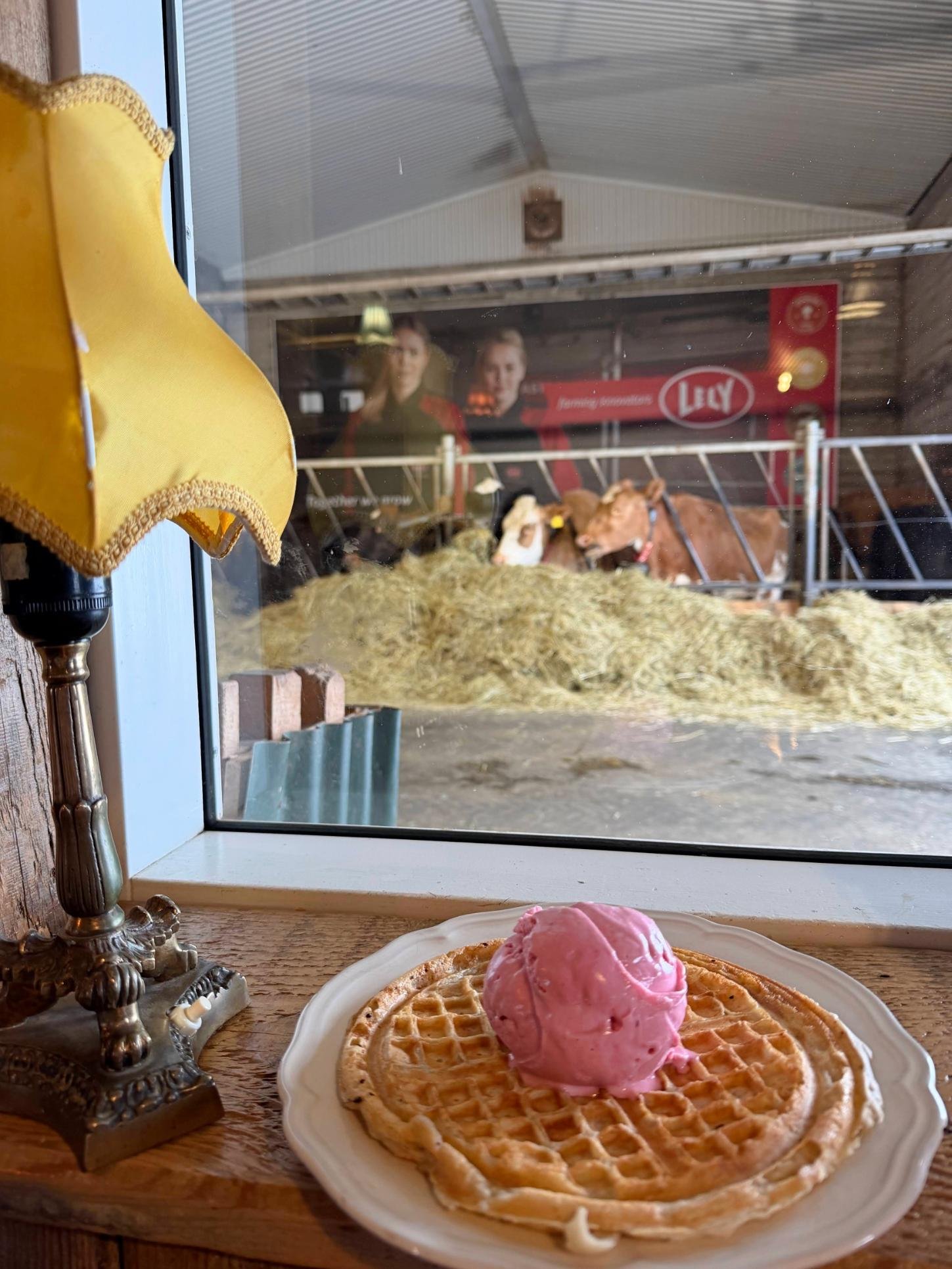
Cows enjoying their hay, us enjoying this waffle with blueberry ice cream at Efstidalur II (thank moo for the milk!)
And speaking of foss…. Most people on the Golden Circle do Þingvellir, Geysir, Gullfoss, done. Don’t get us wrong: Gullfoss is genuinely impressive, especially in winter — a two-tiered cascade dropping into a dramatic canyon — but it also sees more visitors than almost any other natural site in Iceland. Parking is free, but the whole infrastructure makes it a bit too “Niagara fallsy” for us.
Fifteen minutes from the Geysir area, a roughly 4-kilometre round-trip hike leads to Brúarfoss, known straightforwardly as Iceland's bluest waterfall. The color comes from glacial meltwater passing through specific rock formations, and it's the kind of electric blue that looks edited until you're standing in front of it. While you might share it with a few influencers, you might be alone if you go very early or late. It’s especially spectacular in winter, when the white, black and blue shades paint a typical Icelandic palette.
Oh, and while you’re at it, go eat a waffle with ice cream while chatting with the cows at nearby farm Efstidalur II!
Faxi: the forgotten waterfall on the Golden Circle route
Even closer and even quieter, Faxi sits right on the Golden Circle route and gets a fraction of the traffic of Gullfoss despite being genuinely lovely — 80 metres wide, 7 metres tall, with a salmon ladder that's active in season. There's no real reason it's overlooked except that Gullfoss is more dramatic and more famous. If you're doing the Golden Circle and you want one more stop that isn't crawling with tour groups, Faxi takes 20 minutes and costs nothing.
Bonus (not a foss): Kerið, the volcanic crater lake everyone drives past
While you're on the Golden Circle, Kerið is a volcanic crater lake about 55 metres deep with vivid red and black slopes dropping into blue-green water. It gets a brief mention in most itineraries and then people spend about five minutes there before moving on. It deserves more than that — you can walk the full rim and descend to the crater floor, and the color contrast between the volcanic soil and the water is genuinely striking. It's the one Golden Circle stop that still feels quiet even in peak season, mostly because it sits outside the main Þingvellir–Geysir–Gullfoss triangle.
Find an accommodation near Gulfoss and Geysir:
Þingvellir: The tectonic experience without the tour buses
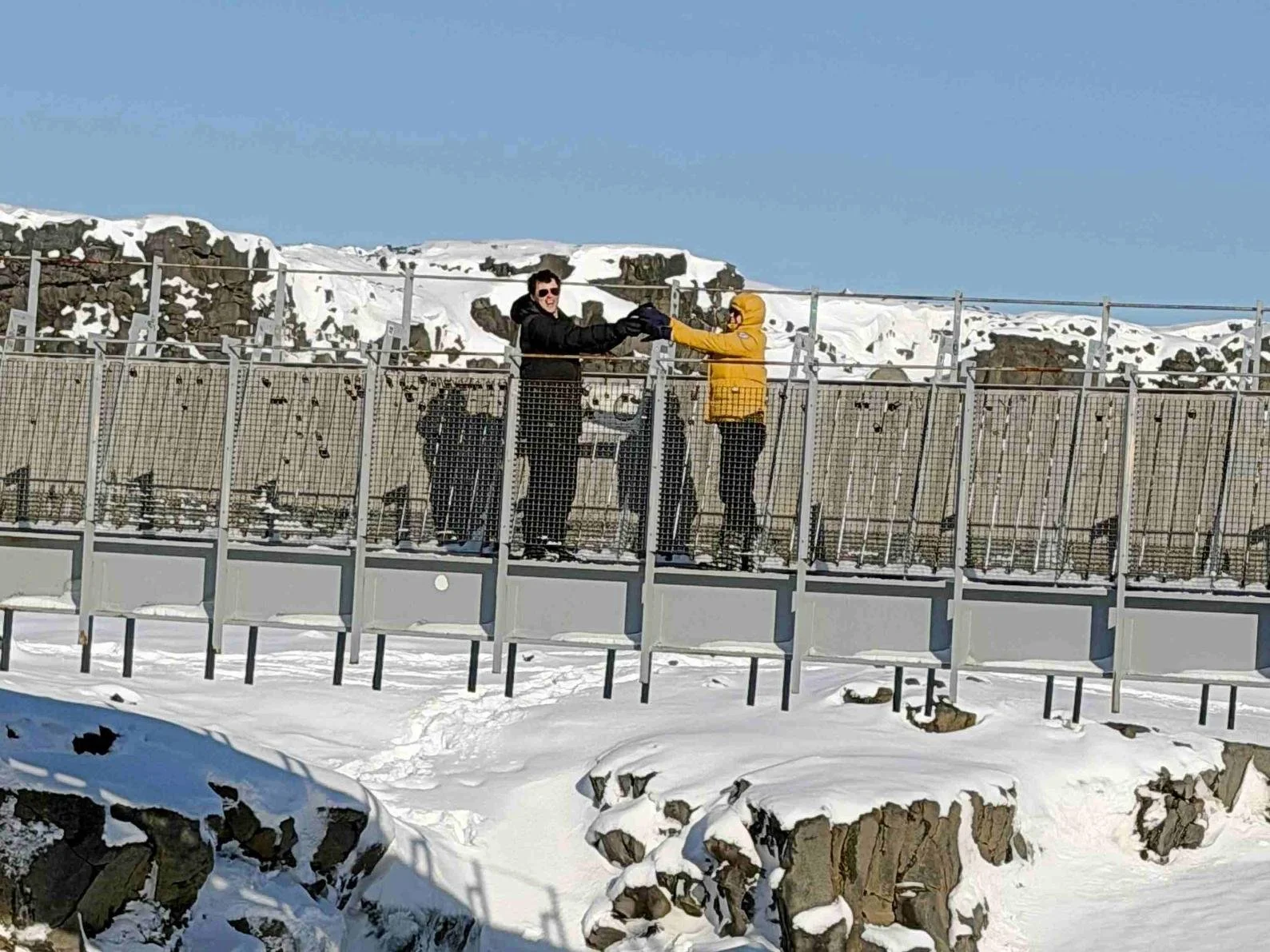
Europe and America meeting in between… literally!
The Bridge Between Two Continents, Reykjanes
Þingvellir is extraordinary — the rift valley where the North American and Eurasian tectonic plates are literally pulling apart, a UNESCO site, and the location of Iceland's original parliament going back to 930 AD. Most people visit it as part of the Golden Circle and see it properly. But a significant portion also comes specifically because they want to stand between two tectonic plates — and if that's your main draw and you're not planning to or can’t snorkel or dive the Silfra fissure (we highly recommend it), the Reykjanes Peninsula 40 minutes from Reykjavik makes a good case for itself.
The Bridge Between Two Continents near Sandvík on Reykjanes is a footbridge that literally spans the visible rift between the North American and Eurasian plates. It's free, it's accessible in ten minutes from the car, and standing in the gap looking down into the fissure is the kind of thing that lands differently in person than it sounds on paper. As an American-European couple, it was even cooler for us!
The Reykjanes Peninsula as a whole is dramatically under-visited for somewhere so close to Reykjavik — active geothermal fields, lava landscapes, and the sense of standing on a land that isn’t finished.
The supermarket built over the Mid-Atlantic Ridge
This one sounds made up and isn't. The Bónus supermarket inside the Sunnumörk Shopping Center in Hveragerði — the geothermal town about 45 minutes from Reykjavik, we’ll come back to it in this article — is built directly over the Mid-Atlantic Ridge, the fissure that separates the North American and Eurasian plates. The store has a glass floor panel that lets you look directly down into the geological rift while you're doing your shopping. Iceland is genuinely the only place on Earth where the Mid-Atlantic Ridge rises above sea level, and this is one of the more unexpected ways to experience that fact. Worth a stop on the way to or from the South Coast (and get some rúsinur for the road!).
Find a place to stay in Hveragerði/Reykjaladur:
Geysir: the whole Reykjanes Peninsula is one big alternative
Seltún and Gunnuhver: geothermal fields without the tour bus queue
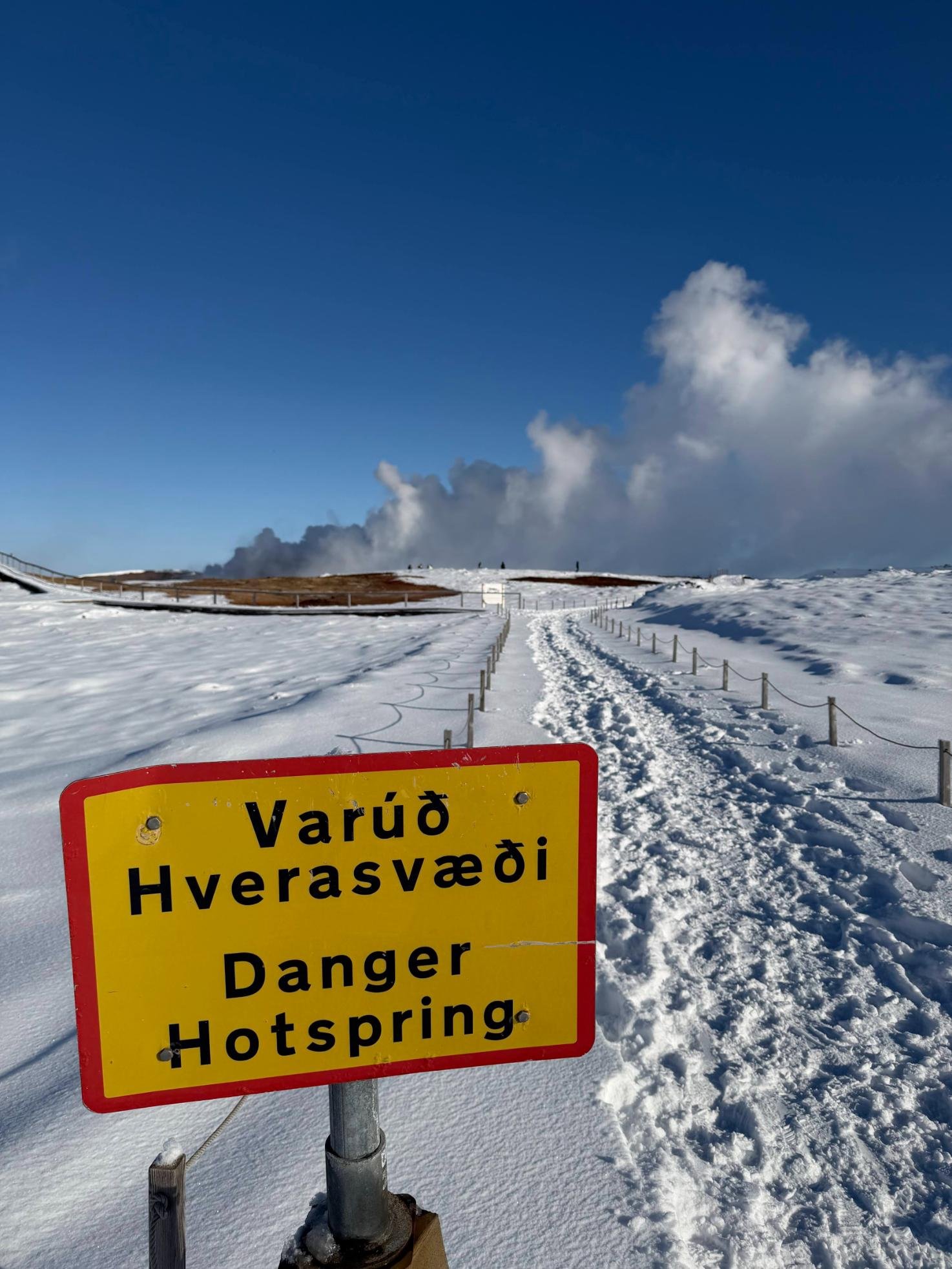
The mighty Gunnuhver (don’t you love that name?)
The Geysir geothermal area in Haukadalur is fun. Strokkur erupts every few minutes, the steaming landscape is genuinely otherworldly, and it's right on the Golden Circle so everyone stops. The problem is everyone stops at the same moment (which is continuous) and clusters around the same geyser.
The Reykjanes Peninsula, about 40 minutes from Reykjavik in the opposite direction, has geothermal activity that's arguably more dramatic (in our honest opinion) and a fraction of the visitors. Seltún is a bubbling, steaming, sulphur-yellow landscape with a boardwalk running through it — mud pots, steam vents, vivid color gradients in the earth. Gunnuhver, nearby, has the largest mud pool in Iceland. Ok, neither has the spectacle of a geyser erupting on cue, but both have the sense of standing on genuinely active ground without a tour group's worth of people pressed up against you.
Find an accommodation on the Reykjanes Peninsula:
Blue Lagoon: four alternatives worth knowing
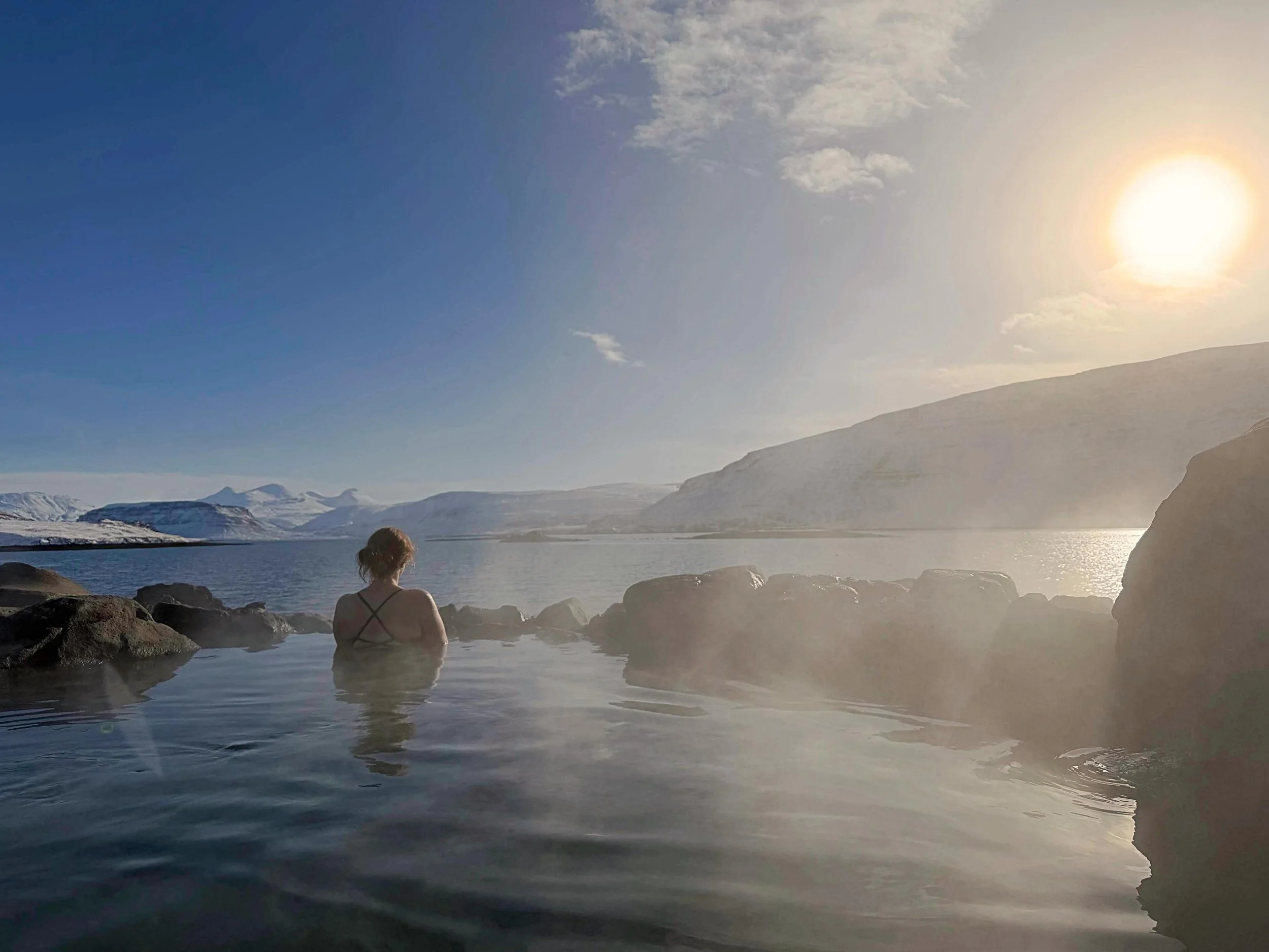
Nothing beats Hvammsvík on a calm winter morning
The Blue Lagoon is a legitimate, unique experience and also a very specific one: a luxury geothermal spa with neon-blue silica water, high production values, and prices to match. It's not a natural hot spring — it's a purpose-built facility on top of geothermal runoff from the nearby power plant. That doesn't make it bad. It makes it a particular kind of thing. If you want something closer to the actual earth, here are three options that feel meaningfully different.
Hvammsvík: tidal hot springs on a fjord
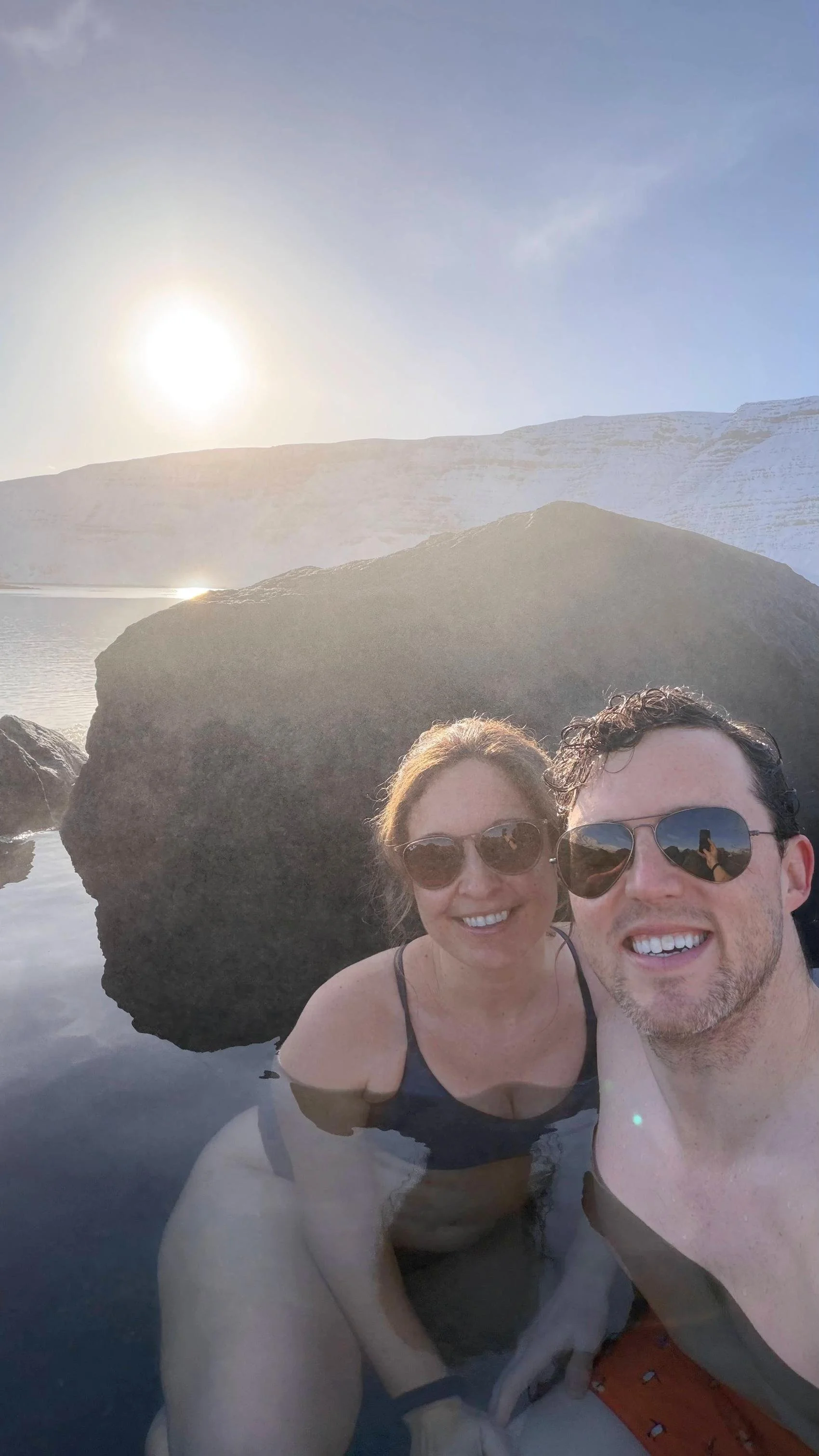
Hvammsvík Hot Springs, 45 minutes north of Reykjavik on the Hvalfjörður fjord (in good weather), has eight natural pools fed by actual geothermal springs sitting directly above the ocean. The water temperature changes with the tides because the seawater mixes with the geothermal source. The views across the fjord to the mountains are unobstructed, and you can cold-plunge in the actual ocean. It's still a proper facility with changing rooms and a café — but the experience of sitting in naturally sourced thermal water on the edge of an Icelandic fjord is genuinely different from the Blue Lagoon, and the crowds are significantly thinner. We included this fjord in our guide to an Iceland road trip.
Read about our experience at Hvammsvík here.
Reykjadalur: the hot spring you hike to
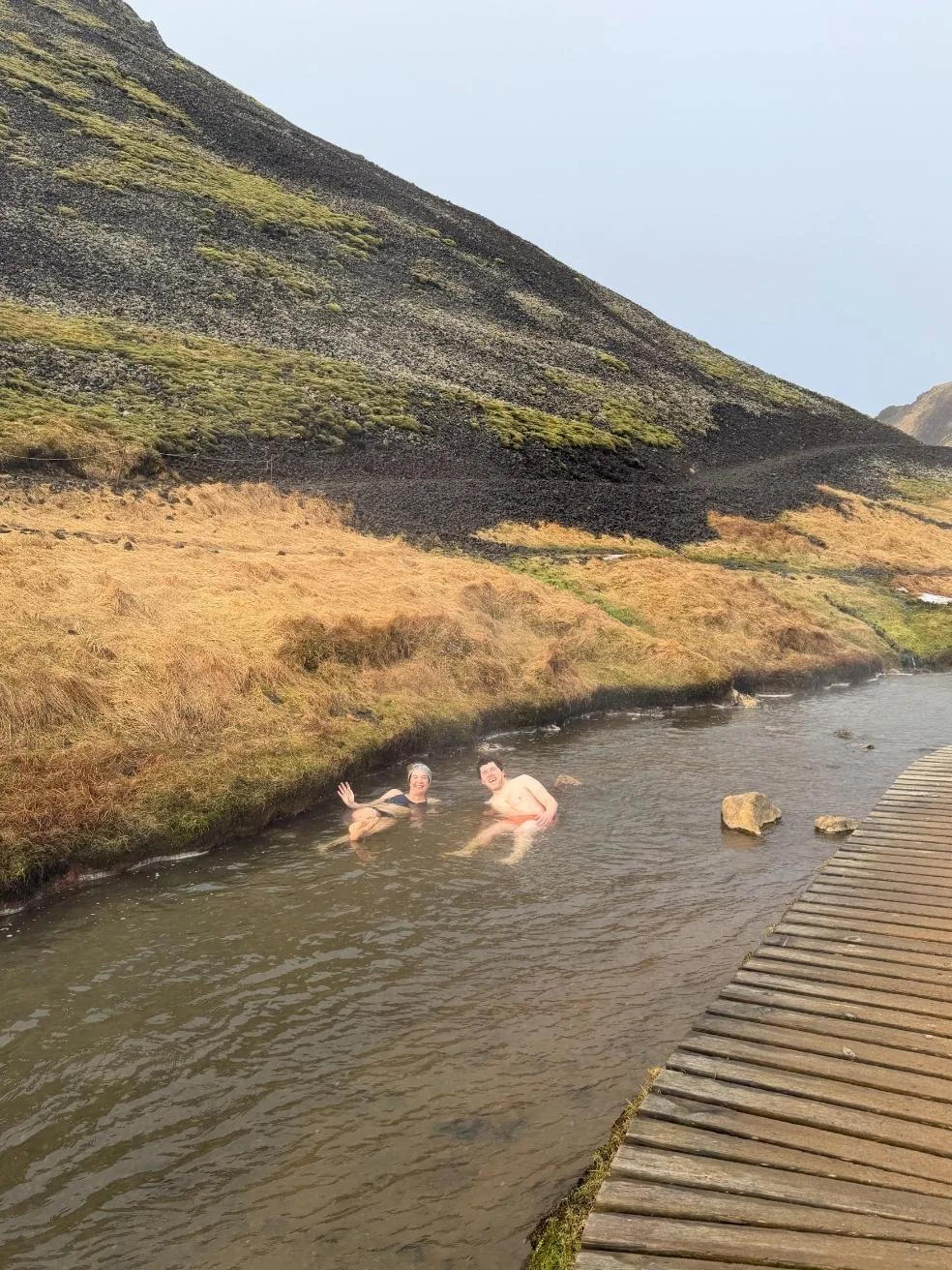
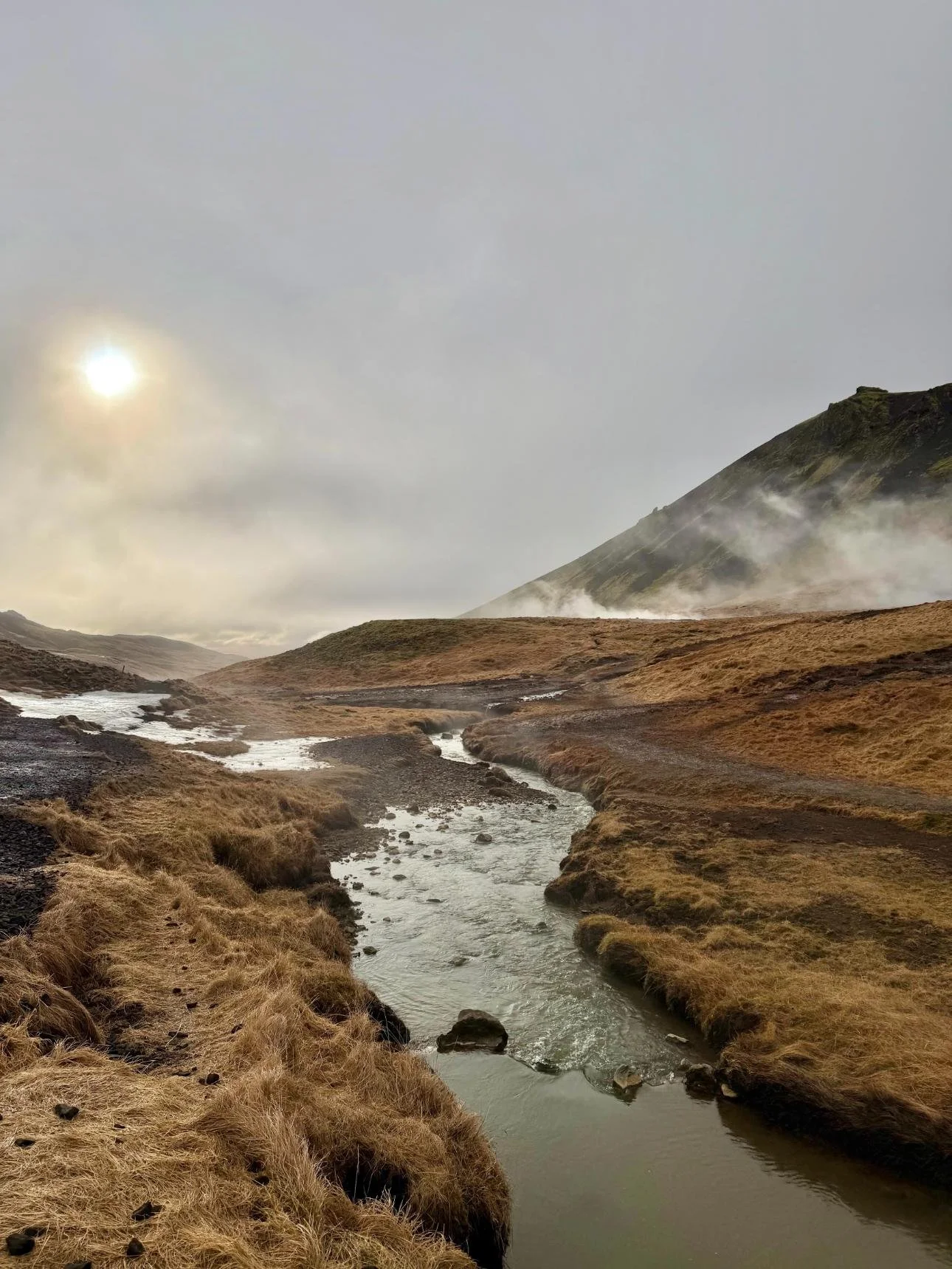
Above the town of Hveragerði, about an hour's walk up a valley, is a geothermal river warm enough to bathe in. You bring a towel, find your spot in the stream, and sit in thermal water with mountains on either side and nothing booked in advance. What used to be an insider tip is now well-known enough to appear in most Iceland guides, but the hike acts as a natural filter — the effort weeds out the crowds. Anyone willing to walk for an hour gets rewarded with something no spa can replicate. I did it twice in autumn and once in winter (more challenging with a snow/sleet blizard), and this is still my favorite hot springs experience in Iceland.
Hveragerði itself is worth a stop too: it's a small town where hot springs bubble up between the houses and the roads and where they grow flowers and veggies in geothermal greenhouses, which gives it a slightly surreal quality even if you're just passing through. We actually mention Reykjadalur in our tips to travel Iceland on a budget.
For winter hiking especially, it’s a good idea to have travel insurance. Read our guide:Travel Insurance for Iceland.
Nauthólsvík: the beach that Reykjavik locals actually use
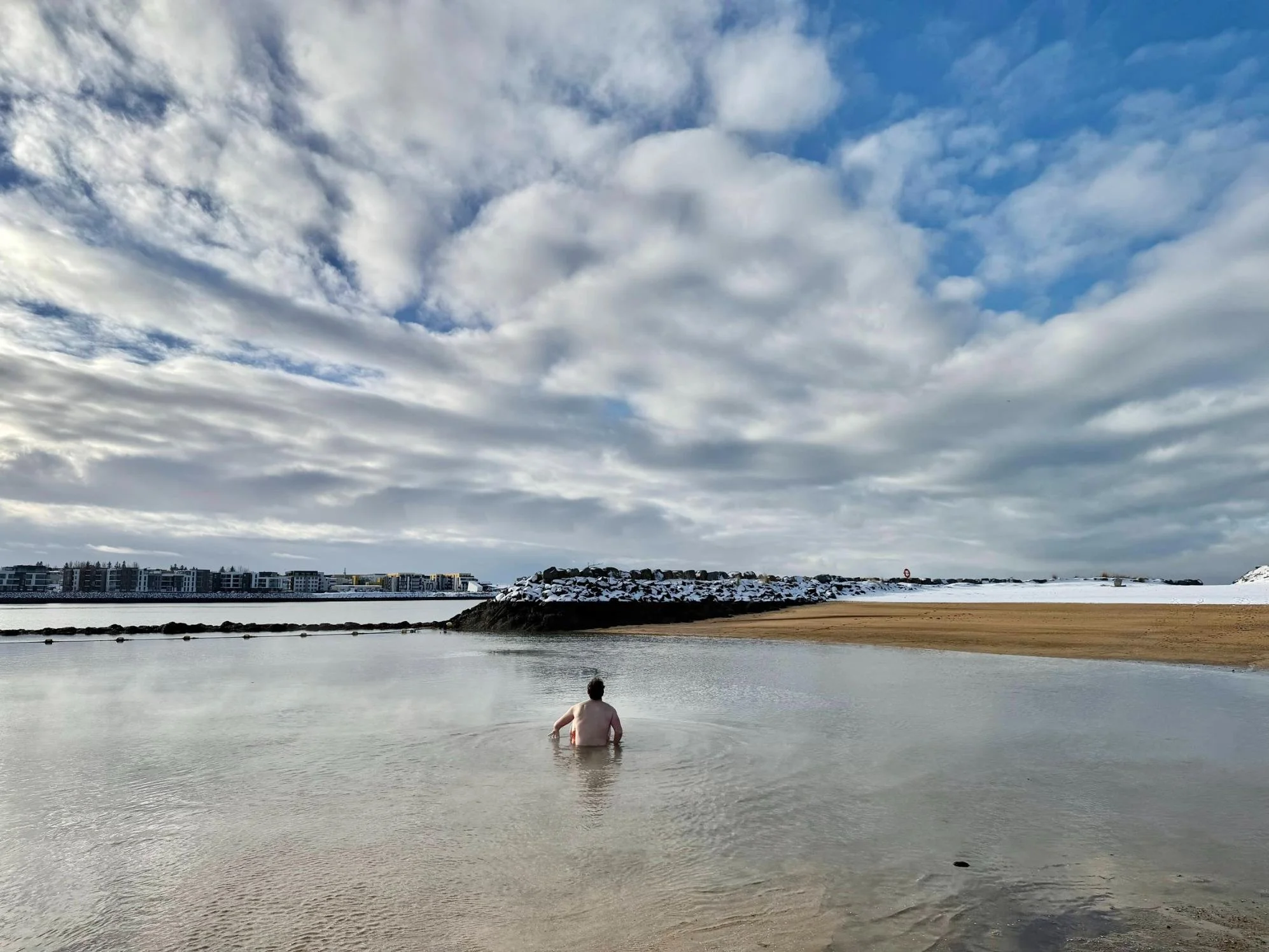
If you want to understand how Icelanders actually relate to geothermal water, skip the spa and go to Nauthólsvík. It's a small golden sand beach on the edge of Reykjavik, tucked beside the university, where geothermal water is pumped directly into the bay to keep the temperature bearable year-round. There are a couple of hot tubs on the sand, a basic changing facility, and on any given day it's mostly locals — people who live five minutes away and treat it like any other neighborhood amenity. No booking, no robe, no overpriced smoothie. You can swim in the bay itself and then blissfully run to the hot tub and chat with the locals. It's not glamorous at all, and that's exactly what makes it feel real in a way the Blue Lagoon doesn't. We actually included it in our favorite cheap or free things to do in Reykjavík!
The Secret Lagoon, Flúðir: the oldest in Iceland
We haven’t tried this one yet. The Gamla Laugin — or Secret Lagoon — in Flúðir is Iceland's oldest naturally heated swimming pool, dating to 1891, and it sits right off the Golden Circle route with a fraction of the visitors of the Blue Lagoon. A small geothermal pool surrounded by active hot springs and steam vents, an old wooden changing room, no silica mud or gift shop. It's not luxurious. It's the opposite of luxurious. That's entirely the point.
Explore hotels in Hvalfjörður (near Hammsvík), or zoom out for Reykjavík options:
✈️ Find flights
🏨 Explore hotels, apartments, guesthouses, cabins
🧭 Browse activities and tours
🚗 Compare car rentals
🧳 Get travel gear (including for the Arctic)
🛡️ Travel safe with Heymondo Travel Insurance (5–15% off)
📱 Get a travel eSIM
🐾 Protect & track Arctic wildlife with Fahlo Bracelets (20% off)
FAQ: Iceland without the crowds
Are the alternatives to Iceland's tourist spots actually worth it or just consolation prizes?
Most of them are genuinely as good as the famous versions — and in some cases better. Gljúfrabúi is more dramatic than Seljalandsfoss. Fjallsárlón is more intimate than Jökulsárlón. The reason they're less visited is usually just that they're not visible from the road or not on the standard tour bus route.
Do I need a 4WD or special equipment for any of these?
No. All of the spots listed here are accessible on standard roads with a normal rental car. Some require short hikes on maintained trails. Gljúfrabúi is the most physical — you're scrambling over wet rocks inside a gorge — but it's not technical.
How do I fit these into a standard Iceland ring road itinerary?
Most of them require very little extra time because they're right next to spots you're already visiting. Diamond Beach is across the road from Jökulsárlón. Víkurfjara is five minutes from Reynisfjara. Gljúfrabúi is a 10-minute detour from Seljalandsfoss. The ones that require more planning — Brúarfoss, Hvammsvík, Reykjadalur — are worth blocking out a half-day for.
Is Iceland too crowded to be worth visiting?
The iconic spots are busy, particularly from June to August. The rest of Iceland — including most of the places in this guide — is not. The country has roughly the population of a small city spread over an area the size of England. There's plenty of room.
When are these places least crowded?
Shoulder season — May, September, and early October — sees meaningfully fewer visitors than peak summer, and conditions are still excellent. Winter (November to March) is quietest of all outside of the northern lights tours. If you're visiting in July or August, go early in the morning; tour buses tend to roll in from 10am onwards.
Here is a playlist to get in the adventure mood:
Iceland's famous spots are famous for good reason. Go to Jökulsárlón. Walk Reynisfjara. Stand under Skógafoss. But before you get back in the car, check what's 10 minutes further down the road or across the road or around the headland. The crowds follow the signs. Iceland’s off-the-beaten-path alternatives and hidden gems are usually where the signs run out. And if you self-drive this part of the country, make sure to read our guide to an Iceland road trip and all our Iceland Travel Guides.

Free download
Travel Cheaper Cheat Sheet
27 tips on flights, hotels, hidden costs and more — spend less without missing what actually matters.
No spam. Unsubscribe anytime.
Best Northern Lights Hotels in Iceland
Things to Do in Iceland in Winter
Northern Lights in Iceland: Is It Worth It?
Best Time for Northern Lights in Iceland
Ring Road & Practical Planning:
Iceland Road Trip: South Ring Road Self-Drive
Where to Stay on Iceland's Ring Road
How to Travel Iceland on a Budget
Travel Insurance for Iceland
Best Time to Visit Iceland & Things to Do
Things to Do in Iceland in Summer
Free and Cheap Things to Do in Reykjavík
Iceland Without the Crowds
Horseback Riding in Iceland
Lava Show in Reykjavík
Silfra Snorkeling in Þingvellir
Glacier Hike & Ice Cave in Iceland
Stays & Hot Springs:
Brekka Retreat, Hvalfjörður
Hvammsvík Hot Springs, Hvalfjörður
Aurora Igloo South, Hella
Hotel Keflavik & Spa, near KEF Airport & Blue Lagoon
