
Horseback Riding in Iceland: Lava Fields, Viking Horses & the Magic of the Tölt
Ride Icelandic horses through lava fields near Reykjavík with us at Penguin Trampoline. Learn about the tölt gait, Viking horse culture, and our own experience. Feel like a viking for a day!

Look at these mane in the wind!
Last update: August 2026
Disclosure: Our experience was hosted by Sólhestar in exchange for an honest review. All thoughts and opinions are our own.
Iceland is a land shaped by fire and ice. Volcanoes erupt, glaciers creep across valleys, and the wind does whatever it wants.
In that kind of environment, you need a tough companion. And if it’s fluffy and cute, even better!
Enter the Icelandic horse, one of the most beloved symbols of the country. If you meet them, you’ll understand why.
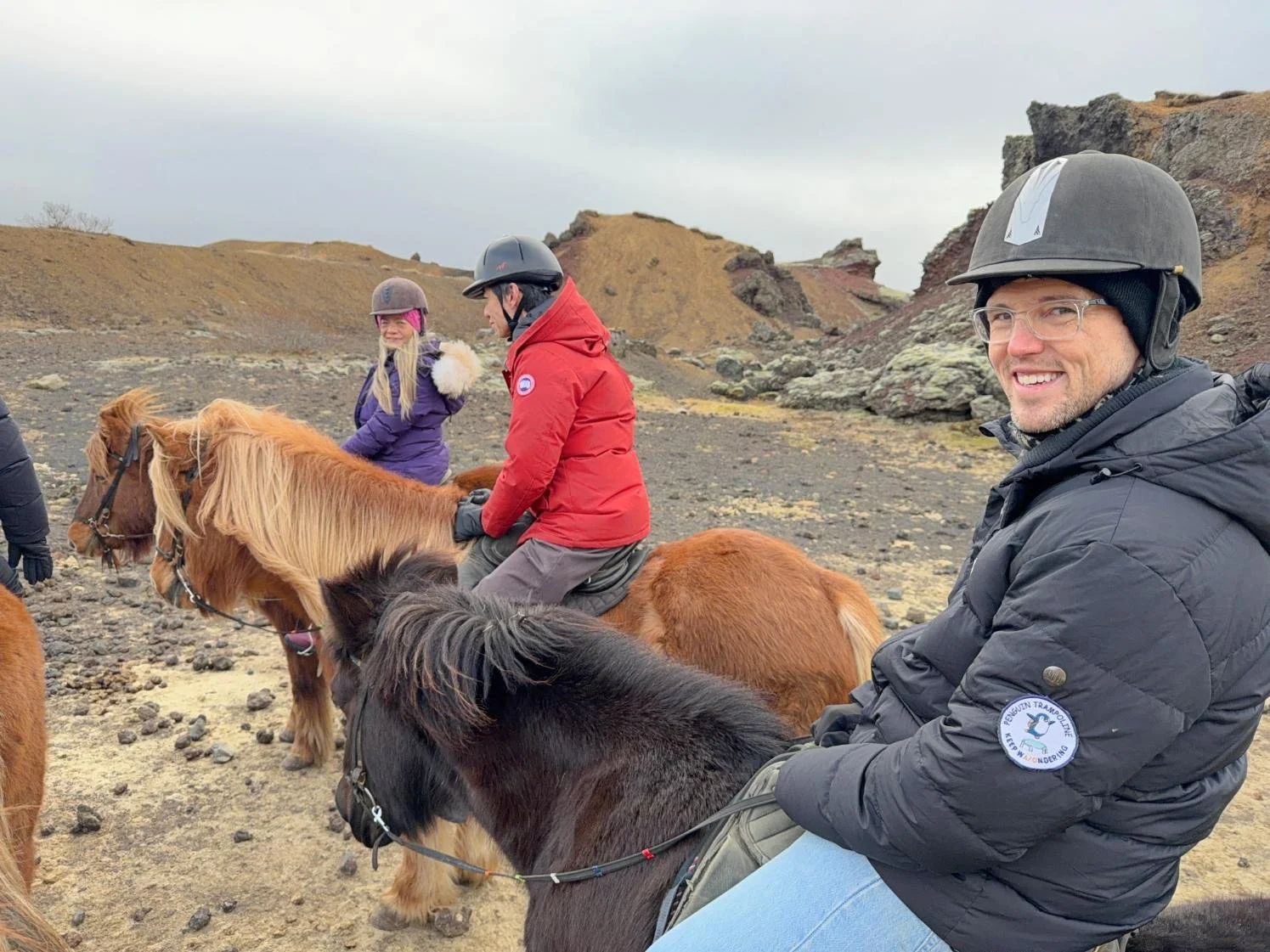
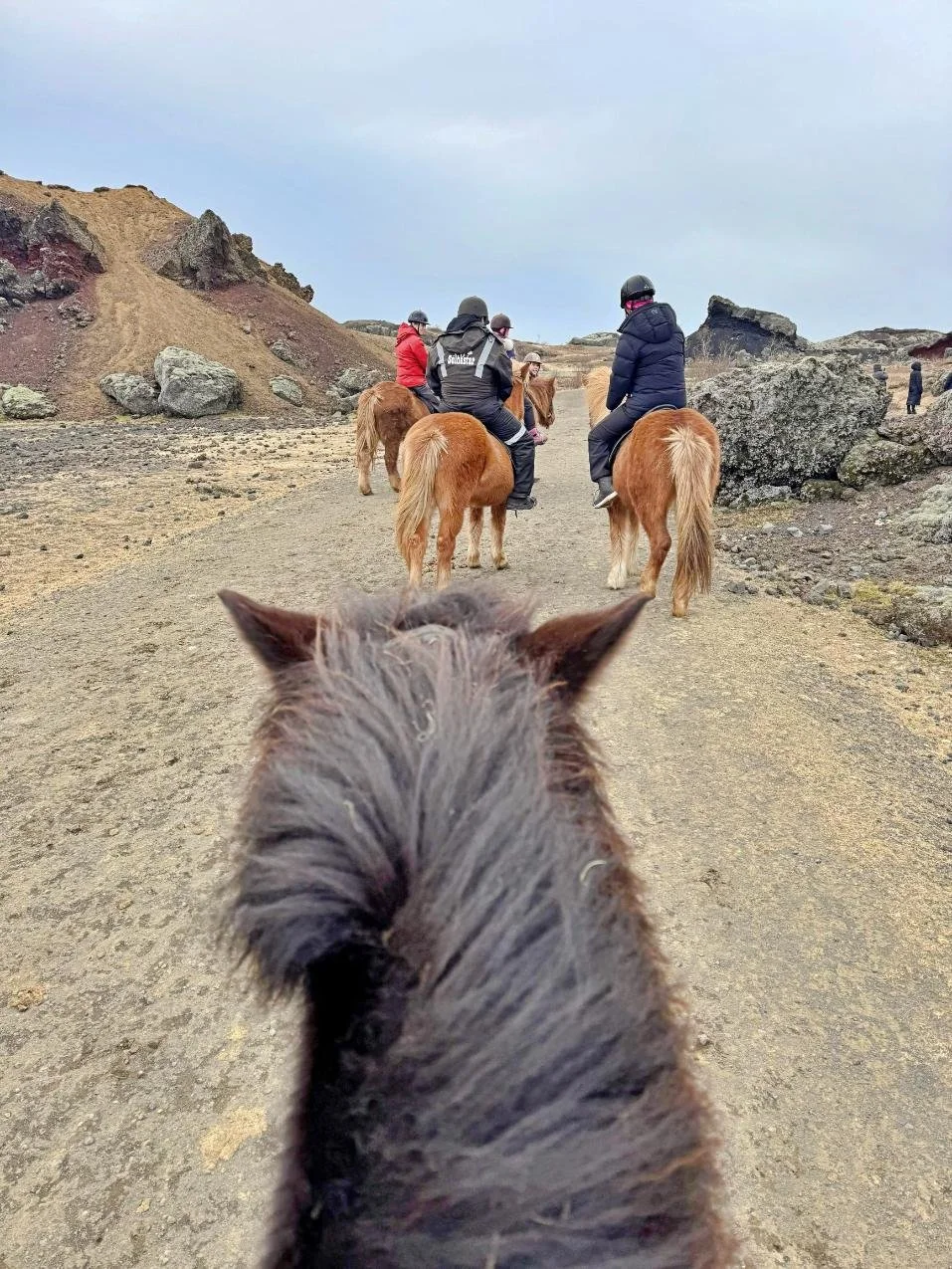
During our recent trip, we rode through the lava fields outside Reykjavík with the team at Sólhestar and their fabulous horses. No crowds, no gimmicks.
Just lovely animals, good guides, and miles of volcanic landscape.
And one very opinionated horse named Spirit.
Ready for the ride?
🛌 Where to stay:
• Brekka Retreat, Hvalfjörður — we stayed here. Private sauna and hot tub, darkest skies near Reykjavík.
• Aurora Igloo South, Hella — we stayed here. Transparent walls, heated beds, open sky.
• Hotel Keflavik — we stayed here. Solid value right by the airport, good base for the South Coast.
🇮🇸 Top experiences:
• Horseback riding through a lava field — with Sólhestar, the company we used.
🚗 A car is essential in Iceland. Book yours here — the whole country opens up once you leave Reykjavík.
A Viking horse with 1,000 years of history
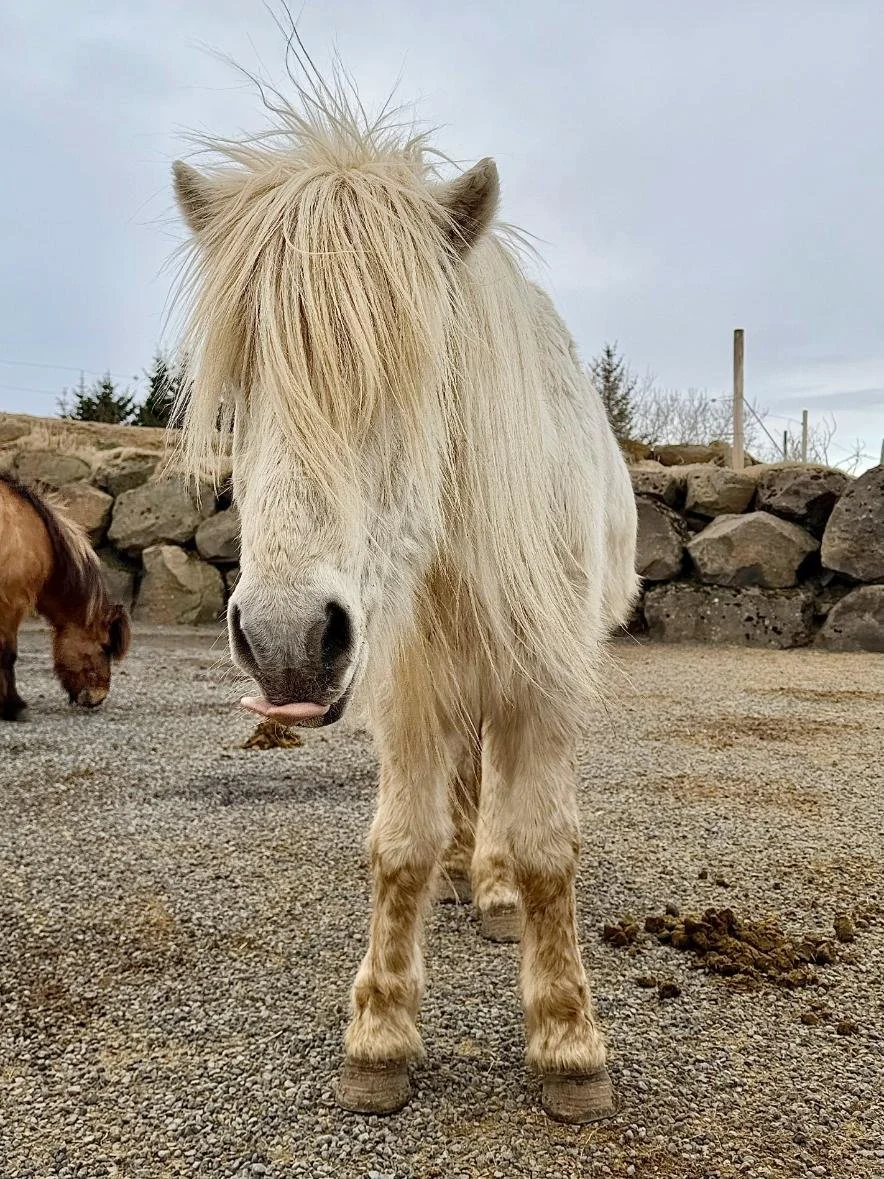
Icelandic horses are recognizable by their long, thick manes and tails
Icelandic horses arrived with the first Norse settlers around the 9th century. Vikings brought horses from Scandinavia, and over the next thousand years something remarkable happened.
The breed stayed completely isolated.
Iceland has strict laws: once a horse leaves the country, it can never return. That rule protects the genetics of the breed and prevents disease. The result is one of the purest horse breeds on Earth.
A few things make Icelandic horses unique:
They are small but powerful, built for endurance rather than size. On this tour, the weight limit was 110kg!
They grow thick winter coats that make them look like adorable fluffy tanks
They are famously calm and intelligent, which makes them great riding partners
And they have something almost no other horse breed has: five gaits
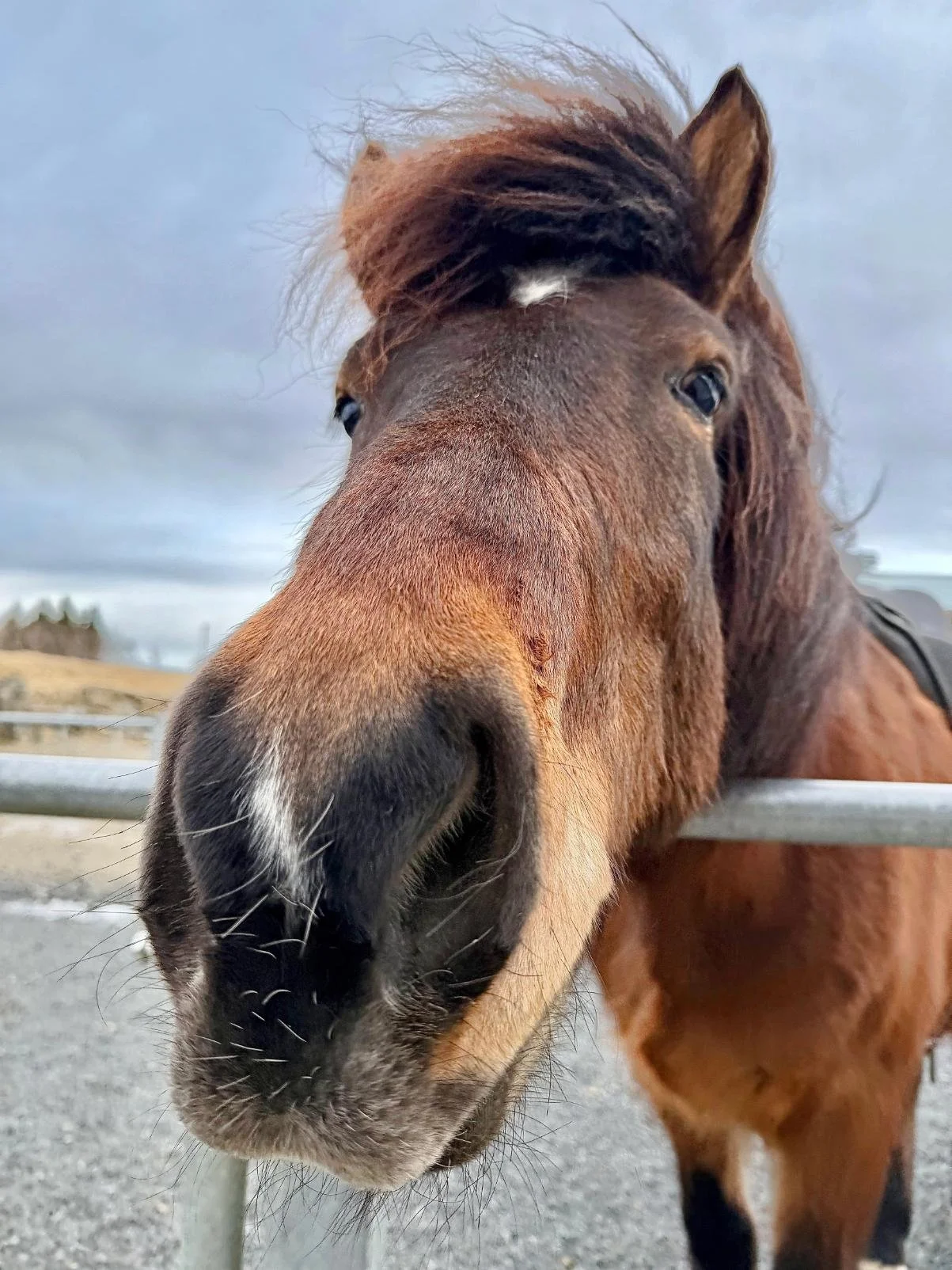
Icelandic faux pas
Despite their short height (which makes it easier to hop on them!), Icelandic horses are horses and not ponies. As we explain in our Iceland travel guide, don’t you dare call them a pony in front of locals… or in front of them!
Pic: What did you call me?
The famous Icelandic gait: the tölt
Most horses have three gaits: walk, trot, and gallop.
Icelandic horses have two extras, and the most famous is the tölt.
If you’ve never experienced it, imagine riding at a brisk pace while your coffee barely ripples. The gait is incredibly smooth because at least one hoof always stays on the ground. Instead of the bouncing motion of a trot, you glide forward.
If you’re a beginner, you’ll feel like a decent rider within about thirty seconds.
During our ride, the guides helped us try it out on the open trails through the lava fields. Once you get the rhythm, the horse settles into a comfortable cruising speed that feels almost effortless.
It’s easy to see why Icelanders have loved these horses for centuries. When your country is made of lava, moss, and weather, smooth transport matters.
Icelandic horses and Icelandic culture
In Iceland, horses aren’t just a tourist attraction. They’re deeply woven into the country’s culture.
For centuries, horses were the main form of transportation across Iceland’s rugged terrain. Farmers relied on them to travel between isolated farms and villages. Even today, horse culture remains strong.
Every summer, locals gather for horse festivals and competitions celebrating the breed’s unique gaits.
You’ll also see Icelandic horses everywhere across the countryside, often in small herds grazing freely against backdrops of mountains, waterfalls, or lava fields. They’re usually super friendly and happy to see visitors, especially in remote areas.
They are part of the national identity in a way that’s hard to explain until you see them in their natural environment.
Our horse riding experience in Iceland
Horse riding through the lava fields of Hafnarfjörður

Meet beautiful Spirit!
The Red Lava Horse Riding Tour ride takes place just outside Reykjavík, near the town of Hafnarfjörður.
This part of Iceland is a geological playground. The ground is made almost entirely of ancient lava flows, covered in soft green moss that looks like something from a fantasy film.
Locals sometimes call Hafnarfjörður the “town of elves.” When you ride through the lava fields, you begin to understand why. The landscape is full of jagged rock formations, hidden hollows, and winding trails. Keep an eye out!
It feels wild, but also strangely peaceful, with forests on one side of the road and red lava fields on the other.
It’s the kind of place where time slows down a little. There was no snow on the ground when we went (although it started snowing at the end), but it must be even more magical when it’s all white!
Meeting Spirit (the horse with opinions)
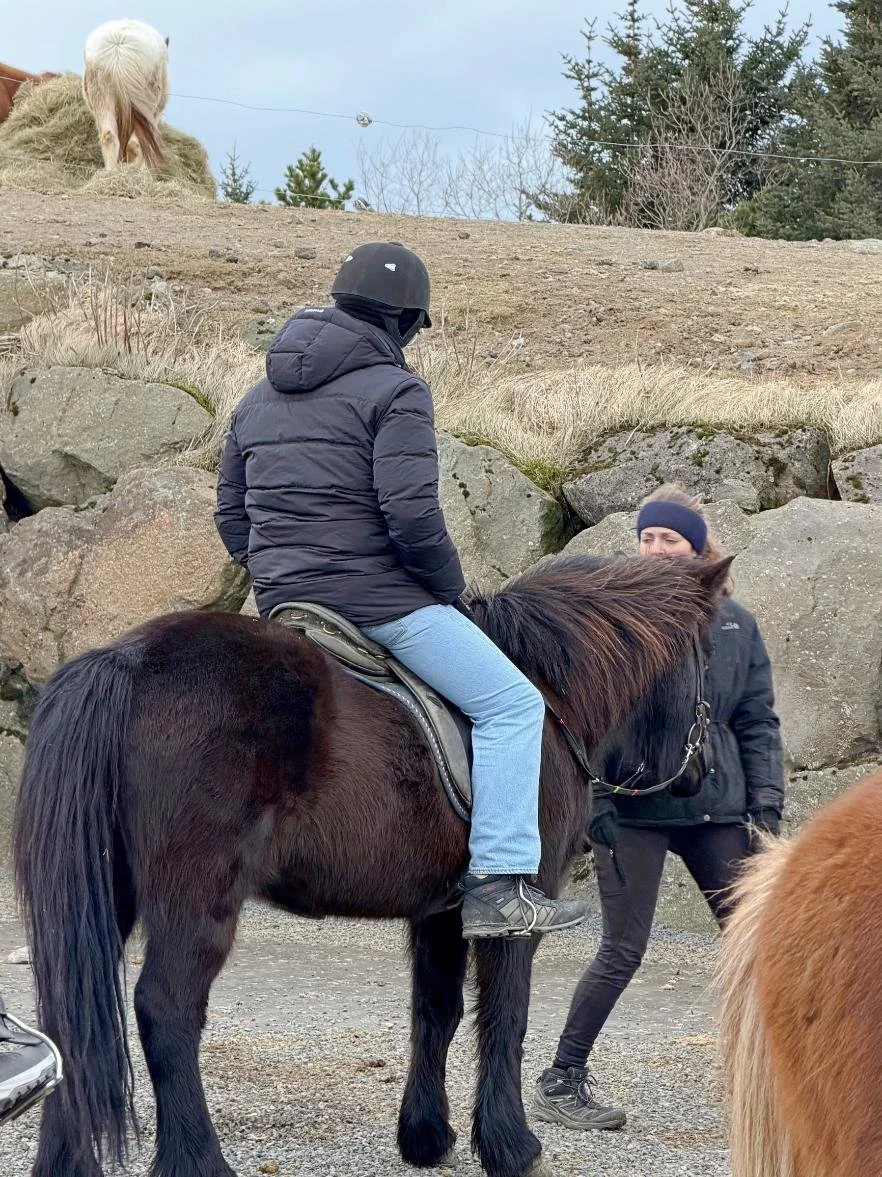
Every rider gets paired with a horse suited to their experience level and, according to our awesome guide Claudia, according to their vibe.
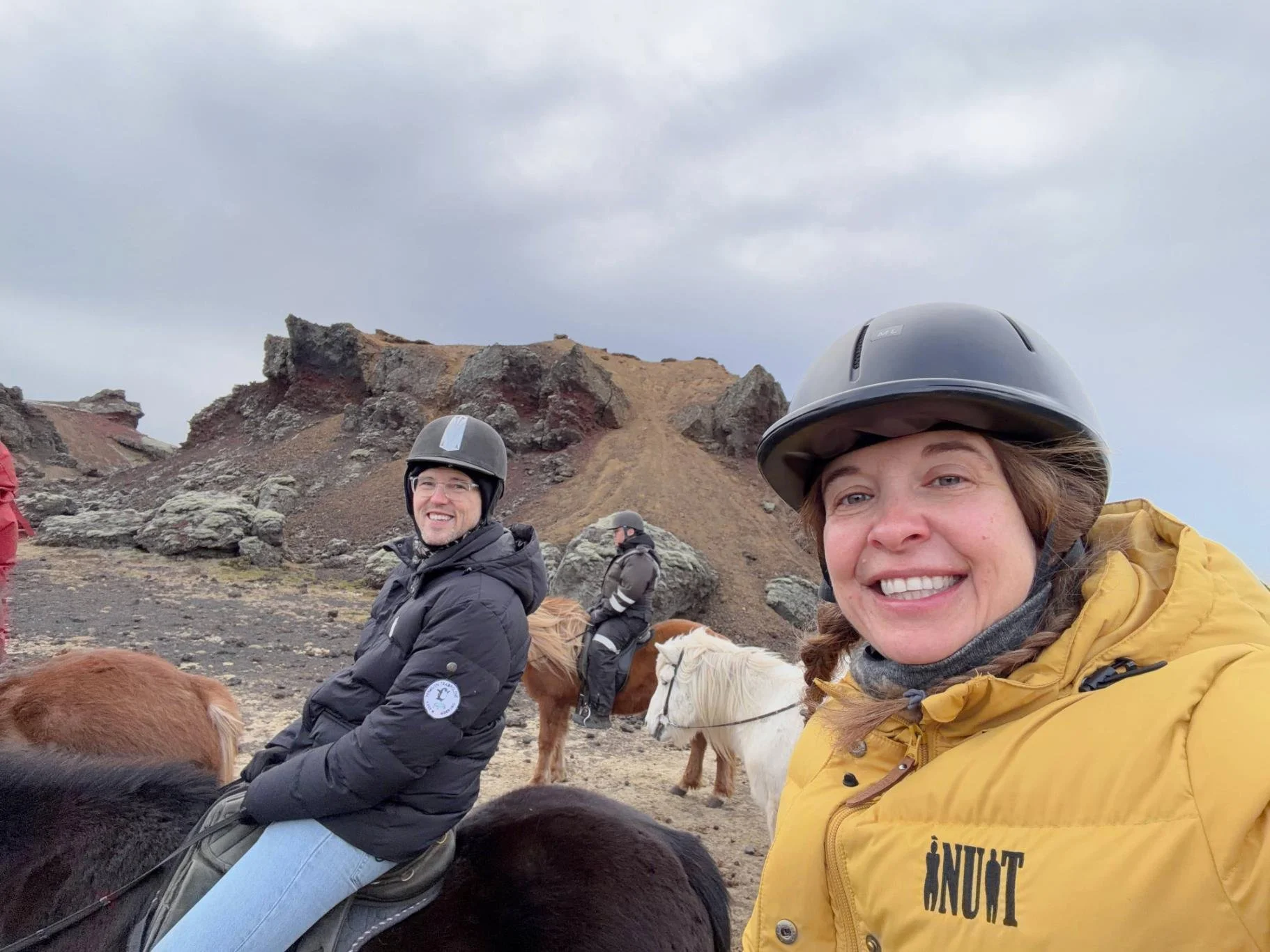
Mine was Spirit. Spirit has a stunning light brown coat and a big personality. I could tell he is a free… spirit.
He appeared to me like a fuzzy Viking warrior and immediately established his leadership ambitions.
The thing about Icelandic horses is that they’re extremely social and expressive. You can feel their personalities during the ride. Some are curious, some relaxed, some eager to move faster once the trail opens up.
Spirit fell into the “I like to carry humans, but I do what I want as well” category.
Jake got paired with a beautiful black, super-chilled horse with a mane any horse would envy.
The Sólhestar experience
Sólhestar runs horseback rides just outside Reykjavík and offers pickup from the city, which makes logistics easy if you don’t have a car.
A few things stood out immediately. The guides were excellent. They were friendly, professional, and clearly experienced with both riders and horses. Before heading out, they explained the basics of riding Icelandic horses and gave everyone time to get comfortable.
The pace of the ride felt right, not rushed but not slow either.
There was just enough time to settle into the rhythm of the horse and enjoy the scenery without feeling like you’re part of a conveyor belt tour.
Another big plus: the horses looked healthy and well cared for, which is a non-negotiable for us when choosing an experience involving animals.
Why this ride works
Some activities in Iceland feel a little… mass-produced. I visited Iceland twice, 17 years and 15 years ago, and, unfortunately, we can’t deny it’s getting very crowded. But this tour was different.
A few reasons it works well:
Close to Reykjavík, so it’s easy to add to a short itinerary
Small groups, so the pace can be adapted to everyone’s level
Beautiful volcanic terrain that feels uniquely Icelandic
Well-trained Icelandic horses, perfectly adapted to the landscape and used to people
Professional guides who know the horses and the trails
And honestly, riding through lava fields on a Viking horse just feels right in Iceland.



Penguin tip:
For horse riding or any other outdoor adventure, we recommend a travel insurance. Get 5 to 15 % with our partner HeyMondo!
Horse riding in Iceland: practical info

Mac about to go horse riding!
Location: Hafnarfjörður, just outside Reykjavík (they also run tours in the beautiful Reykjadalur geothermal valley)
Transport: Pickup available from Reykjavík, but you can also drive there if you rent a car in Iceland
Experience level: Suitable for all levels. They also offer longer tours for experienced riders
Ride environment: Lava fields, moss landscapes, volcanic terrain
Tours run year-round, and Icelandic horses handle winter conditions surprisingly well thanks to their thick coats. We wish we had such an efficient coat for our Arctic travels!
It’s actually one of the winter activities in Iceland we recommend.
For this type of outdoor winter activity, it’s a good idea to have travel insurance. Read our guide: Travel Insurance for Iceland.
✈️ Find flights
🏨 Explore hotels, apartments, guesthouses, cabins
🧭 Browse activities and tours
🚗 Compare car rentals
🧳 Get travel gear (including for the Arctic)
🛡️ Travel safe with Heymondo Travel Insurance (5–15% off)
📱 Get a travel eSIM
🐾 Protect & track Arctic wildlife with Fahlo Bracelets (20% off)
FAQ: Horse riding in Iceland
Are Icelandic horses ponies?
No. Icelandic horses are often mistaken for ponies because they are smaller than many other horse breeds, but they are officially classified as horses. Their compact size comes from centuries of adaptation to Iceland’s harsh environment. They are strong, resilient, and capable of carrying adults comfortably across long distances.
What is the tölt gait in Icelandic horses?
The tölt is a unique gait that only a few horse breeds can perform, and Icelandic horses are famous for it. It is a four-beat gait where at least one hoof always touches the ground, creating an extremely smooth ride. Unlike the bounce of a trot, the tölt allows riders to move quickly while remaining comfortable and stable.
Do you need horseback riding experience in Iceland?
Most horseback riding tours in Iceland are designed for beginners as well as experienced riders. Guides typically match each rider with a suitable horse and explain the basics before heading out. Icelandic horses are known for their calm temperament, which makes them ideal for first-time riders.
Where can you go horseback riding near Reykjavík?
Several horseback riding farms operate near the capital, especially around Hafnarfjörður and the lava fields of the Reykjanes Peninsula. These areas offer dramatic volcanic landscapes while remaining close enough to Reykjavík for half-day excursions.
How long are horseback riding tours in Iceland?
Most tours last between 1.5 and 3 hours, including time for preparation and instructions. Longer tours and full-day riding adventures are also available for those who want to explore deeper into Iceland’s countryside.
What should you wear for horseback riding in Iceland?
The weather in Iceland changes quickly, so it’s best to dress in warm layers and waterproof clothing. Sturdy shoes or hiking boots are recommended. Riding helmets are typically provided by the tour operator.
Are Icelandic horses friendly?
Yes. Icelandic horses are widely known for their gentle temperament and intelligence. Because the breed has been carefully protected for centuries, they tend to be calm, social, and well suited to both beginners and experienced riders.
Here is a playlist to get you in the rythm:
Some travel experiences are loud — helicopters, jeep rides, adrenaline. This one is quieter.
Just the sound of hooves on volcanic rock, wind moving across the moss fields, and a horse named Spirit deciding whether the group should maybe go a little faster. In Iceland, that feels exactly right, and the type of culture-tied experiences we seek.
🐧 Book your horseback riding experience here
Finally, explore all our Iceland Travel Guides here.

Free download
Travel Cheaper Cheat Sheet
27 tips on flights, hotels, hidden costs and more — spend less without missing what actually matters.
No spam. Unsubscribe anytime.
Best Northern Lights Hotels in Iceland
Things to Do in Iceland in Winter
Northern Lights in Iceland: Is It Worth It?
Best Time for Northern Lights in Iceland
Ring Road & Practical Planning:
Iceland Road Trip: South Ring Road Self-Drive
Where to Stay on Iceland's Ring Road
Best Time to Visit Iceland & Things to Do
How to Travel Iceland on a Budget
Iceland Without the Crowds
Where to Go Instead of Iceland
Travel Insurance for Iceland
Things to Do in Iceland in Summer
Free and Cheap Things to Do in Reykjavík
Horseback Riding in Iceland
Lava Show in Reykjavík
Silfra Snorkeling in Þingvellir
Glacier Hike & Ice Cave in Iceland
Stays & Hot Springs:
Brekka Retreat, Hvalfjörður
Hvammsvík Hot Springs, Hvalfjörður
Aurora Igloo South, Hella
Hotel Keflavik & Spa, near KEF Airport & Blue Lagoon
