
How to Travel Iceland on a Budget
Iceland will cost you. Here's how to make sure it costs less.
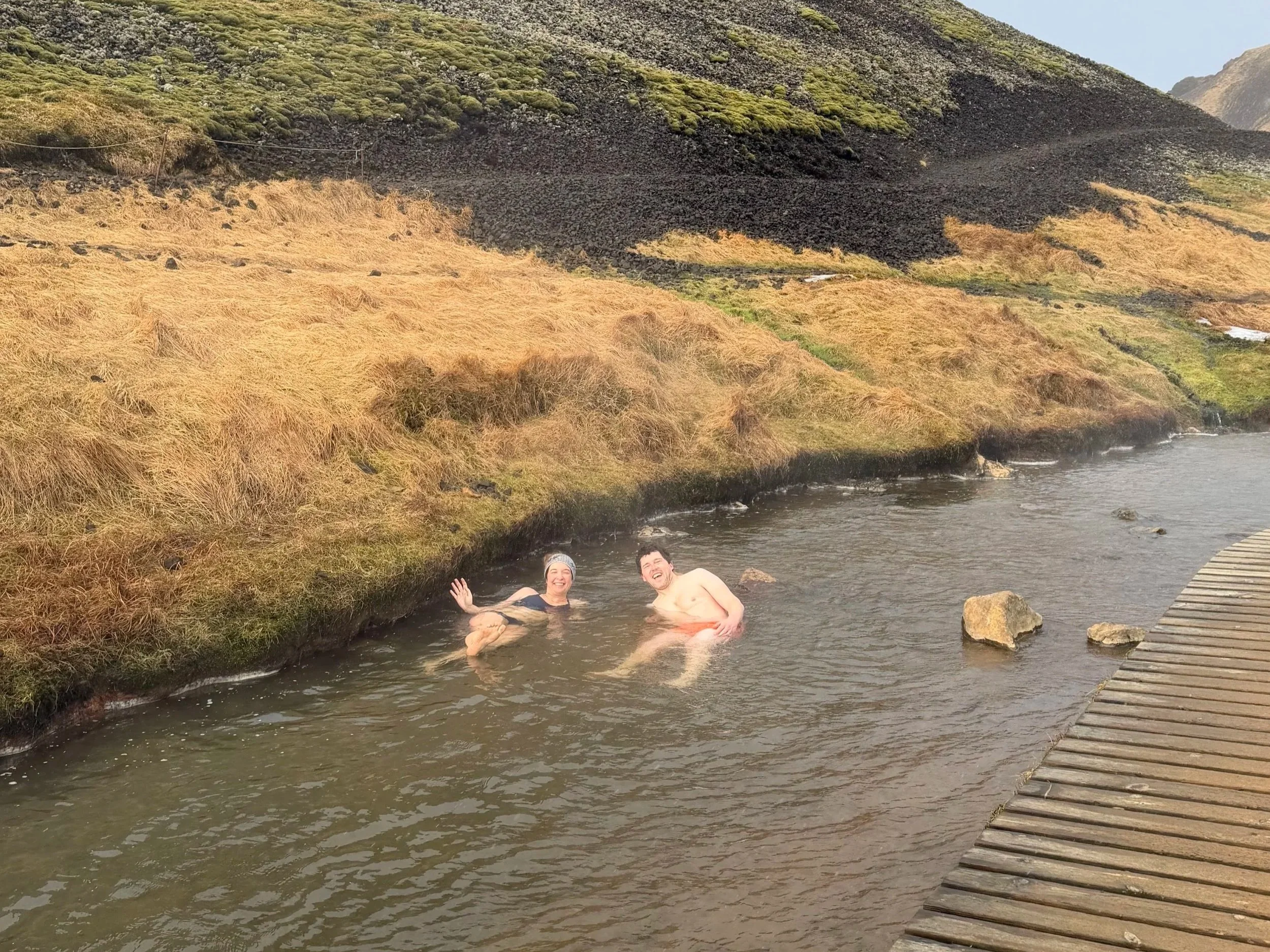
Free hot springs at Reykjadalur
Last update: August 2026
We've been to Iceland three times. The first was right after the 2008 financial crisis, when the Icelandic króna had collapsed and the country briefly became a very affordable destination. A private room in a hostel for €60. Those days are firmly gone.
If you’re wondering if Iceland is that expensive, let's be direct: Iceland is one of the most expensive countries in the world to visit. A coffee will make you wince. A restaurant meal will drain your budget. The silver lining? It’s so expensive that even Norway will look cheap after it!
But here's the thing. The gap between a poorly planned Iceland trip and a well-planned one is enormous. A few smart decisions on flights, car rental, food, and accommodation can cut your total spend dramatically without touching the parts of Iceland that actually matter. The volcanoes, the waterfalls, the glaciers, the northern lights — those are mostly free. What costs money is everything around them, and that's where the savings are.
🛌 Where to stay:
• Brekka Retreat, Hvalfjörður — we stayed here. Private sauna and hot tub, darkest skies near Reykjavík.
• Aurora Igloo South, Hella — we stayed here. Transparent walls, heated beds, open sky.
• Hotel Keflavik — we stayed here. Solid value right by the airport, good base for the South Coast.
🇮🇸 Top experiences:
• Northern lights tour from Reykjavík — guides chase clear skies; free return if the lights don't show.
• Ice cave & glacier tour, Vatnajökull — blue ice and a natural cave under Europe's largest glacier.
🚗 A car is essential in Iceland. Book yours here — the whole country opens up once you leave Reykjavík.
How to travel Iceland on a budget: Quick answer
Iceland is one of the most expensive countries in the world to visit — but the gap between a badly planned trip and a well-planned one is enormous. The waterfalls, glaciers, lava fields, black sand beaches, and northern lights are mostly free. What costs money is everything around them. Book flights and car rental as early as possible, travel in shoulder season (May or September), stay somewhere with kitchen access, buy groceries at Bónus, get fresh fish from a fiskbúð instead of restaurants, and use Iceland's geothermally heated public pools instead of tourist spas. A little planning goes a long way here.
Flights to Iceland: when you go matters more than where you book
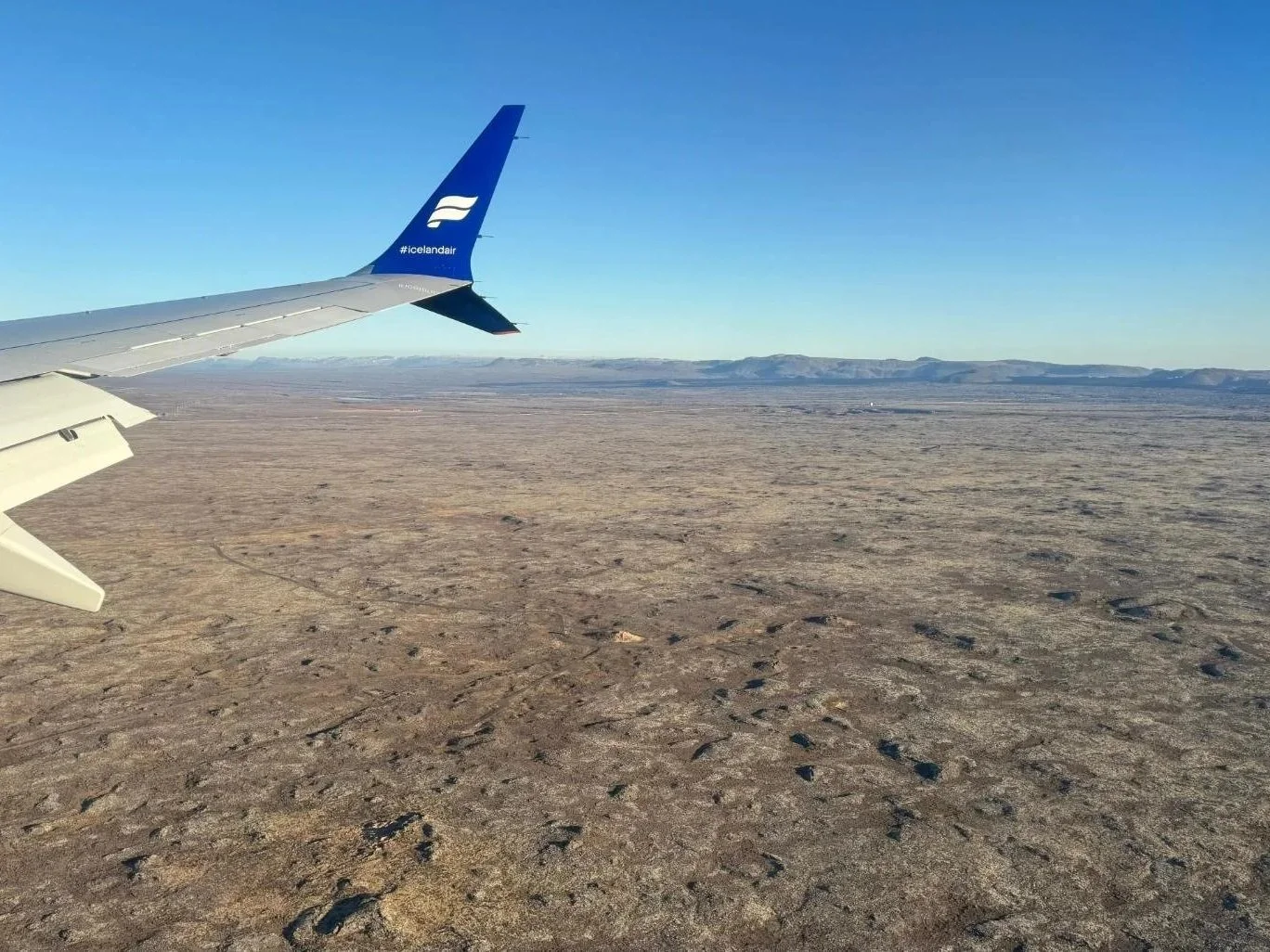
About to land on Reykjanes Pensinsula — Yay!
Iceland lost its main budget carriers when Iceland Express, and more recently, Play Airlines ceased operations, which means the budget flight landscape looks different than it did. From North America, Icelandair is now essentially the primary option for direct flights to Iceland, which limits how cheap transatlantic tickets get.
From Europe, there are more options — Wizz Air, easyJet, Ryanair, and Transavia all operate routes to Keflavík from various European cities. That said, it's worth doing the math before assuming the budget carrier is cheaper. Icelandair flies direct from a number of European cities including Barcelona, and once you add checked baggage fees to a budget airline fare — plus the time and cost of a connection — the price gap often narrows and is not worth the trouble. Direct is direct, and the convenience has a real value on top of the numbers.
Timing makes the biggest difference
The cheapest time to fly to Iceland is the deep winter window — roughly November through February, excluding the Christmas and New Year period. Flights during this stretch can be a fraction of peak summer prices, and while the days are short, the northern lights are active and the crowds are a fraction of what they are in July. If you do want to visit in summer, read our guide to Iceland in summer.
If you want daylight but lower prices, May and September are the best compromise — shoulder season rates with genuinely good conditions. Avoid late June through August if budget is the priority; that's when Iceland hits peak pricing across flights, accommodation, and activities simultaneously.
A few habits worth developing
Book as far in advance as possible — Iceland flights and accommodation prices tend to move in one direction as dates approach. Midweek departures and returns are usually cheaper than weekends. And if you're flying transatlantic, it's worth checking whether routing through a European city on budget carriers beats a direct fare.
👉 Check out our other tips to find cheap flights
Getting around: renting a car in Iceland without overpaying
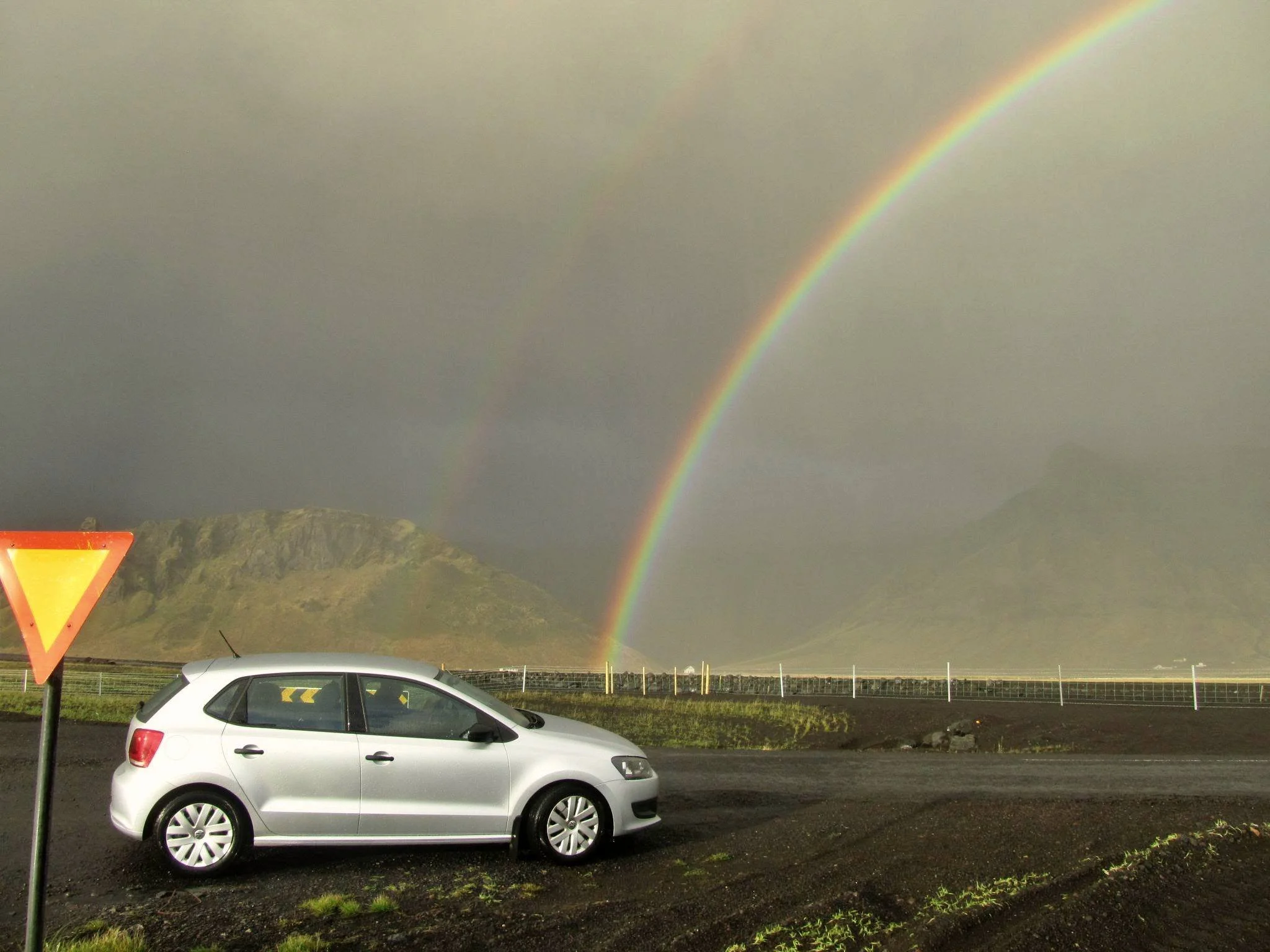
Iceland, the rainbow country! — Here near Dyrhólaey
A rental car is close to non-negotiable for Iceland — public transport won't get you to most of what you came to see. Some people prefer to book tours, but the budget will be much higher. The good news is that car rental costs are controllable if you make the right choices early. Make sure to read our guide to an Iceland road trip.
Book as early as you can
This is the single most important thing. Iceland rental car prices escalate sharply as availability shrinks, and last-minute bookings in peak season can be multiple times the cost of the same car booked months earlier. Treat the car like the flight — lock it in as soon as the rest of the trip is confirmed.
2WD is fine for the Ring Road
A huge amount of what makes Iceland extraordinary — the South Coast, the Golden Circle, the Snæfellsnes Peninsula, the north — is accessible on paved roads in a standard 2WD vehicle, weather allowing (winter might be challenging, especially in the North). The F-roads that require a 4WD are highland routes, and most visitors doing a first trip don't need them. The price difference between a small 2WD and a 4WD can be significant. Unless you have specific plans that take you off the main roads, 2WD will do the job.
Manual transmission cars are typically cheaper than automatic — worth considering if you're comfortable driving manual.
Get the gravel and sand protection
Iceland's standard rental insurance often excludes damage from gravel, sand, and volcanic ash — all of which are genuinely common on Icelandic roads. The supplement for this protection is worth paying. It's one of the few add-ons that earns its keep.
Use comparison tools and return with a full tank
Compare rental companies instead of booking directly. We usually book our car and premium insurance through Booking, as we’ve had good experiences in the past when we needed to claim something. Returning your car with a full tank is standard — filling up at the airport or nearby is always more expensive than filling up on the road before you return.
Campervans: transport and accommodation in one
A campervan is worth serious consideration as a budget strategy, particularly for longer trips. When you factor in what you'd otherwise spend on accommodation, the combined cost of a campervan rental can come out favorably — especially for two people splitting it. You're also gaining flexibility, since you can move when you want without worrying about check-in times or whether the next guesthouse has availability. Oh, and we love not having to unpack every night!
The catch is the same as everything else in Iceland: book well in advance. Campervan availability in peak season dries up fast, and late bookings are significantly more expensive. You'll also need to plan your stops around registered campsites — Iceland has over 200 of them spread around the country, most open from around mid-May to mid-September. Since 2015, campervans are legally required to sleep at designated sites; pulling off the road for the night elsewhere isn't permitted and carries real fines. On popular routes the busier campsites can fill up, so booking spots ahead during peak season is worth doing too.
One more thing worth knowing: true wild camping — pitching a tent on open uncultivated land away from roads and residences — is technically permitted for one night under strict conditions, but it doesn't apply in national parks, nature reserves, or anywhere near the main tourist routes, which covers most of the places people actually visit. For practical purposes, assume you'll be using designated sites.

Penguin Trampoline tip:
Planning an Iceland adventure? Travel insurance can save you money down the road. We use and recommend HeyMondo — great coverage, and you get 5–15% off if you book through us!
Accommodation in Iceland: the location trick most people miss

Mac is enjoying our HomeExchange in Reykjavík!
Off the Ring Road is often better value
One of the most underused budget strategies in Iceland is simply not staying where everyone else stays. Accommodation right next to the major attractions — near Jökulsárlón, in Vík, at the Golden Circle — commands premium prices because demand is concentrated and offer is very limitied. Move even 20 or 30 minutes further along the road and the same quality of guesthouse can cost noticeably less, often with more availability and a quieter setting. This is genuinely how locals and experienced Iceland travelers approach booking — they use the Ring Road as a corridor rather than a destination in itself.
Kitchens and kitchen access change the maths
The single most impactful accommodation choice you can make on a budget is getting somewhere with a kitchen, kitchenette, or at minimum a shared kitchen area. Most Icelandic guesthouses have something — at minimum a shared fridge, kettle, and microwave in a communal area. Some have full kitchen facilities. This matters because eating out every meal in Iceland is where budgets collapse fastest. Even the ability to make your own breakfast and packing a lunch can net significant savings on the daily spend.
The camping card for summer trips
If you're visiting during summer (roughly mid-May to mid-September), the Iceland Camping Card is one of the most straightforward budget tools available. It's a flat-fee pass covering up to 28 nights across more than 40 campsites around the country for two adults. The math works out clearly in your favor if you're doing more than about ten nights of camping — and camping in Iceland, with access to the same landscapes as everyone else, is a legitimate and popular way to travel.
HI membership card
Hostelling International memberships are worth having. We used it on two of our three trips. The card is now digital rather than physical, but it works the same way — reduced rates at HI hostels worldwide, including several in Iceland. Iceland has a small but solid network of HI-affiliated hostels, and the membership pays for itself quickly if you're staying in them for more than a couple of nights.
Home exchange
If you have a home someone in Iceland might want to visit, home exchange platforms are genuinely worth looking at. Iceland is a popular destination, and Icelandic participants on these platforms tend to be active. You won't always find a match, but when you do, you eliminate accommodation costs entirely and often end up with a much more local experience. We exchanged our home in Spain with a couple from Reykjavík and spent 10 days at their amazing place by the sea!
If you decide to subscribe to HomeExchange, use our code elinor-a6ee3 and get bonus points!
Zoom in on the map to explore hotels and stays in Iceland
Food in Iceland: the guide to not going broke and still enjoying local food
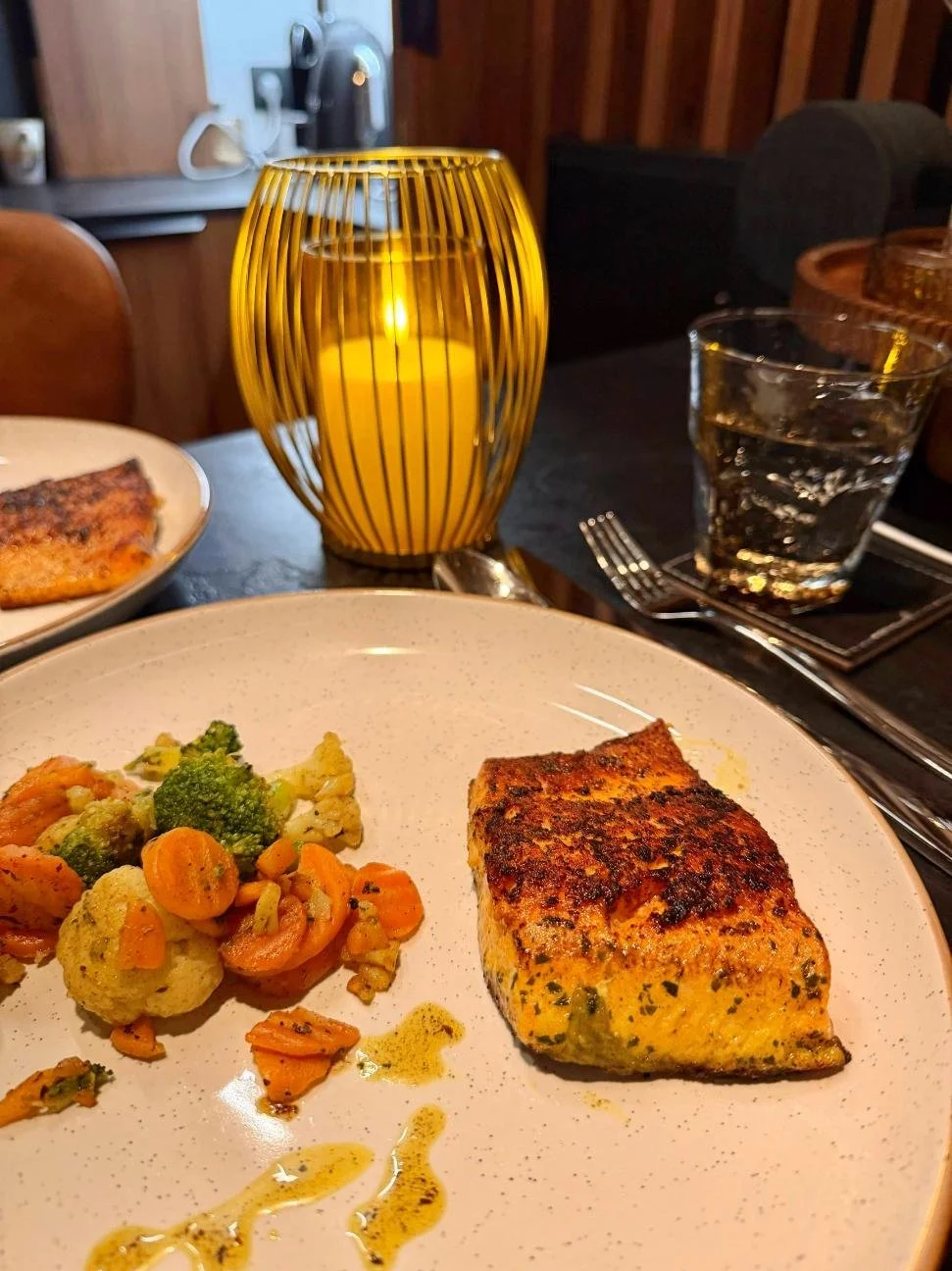
Delicious Arctic char bought at a fiskbúð
The harsh reality
Even groceries in Iceland are expensive by most standards (and we’re used to Nordic prices). This isn't a destination where eating local food at local prices saves you much — it's expensive at every level of the market. The goal isn't to find cheap food; it's to spend on food strategically so the money goes toward things worth spending on.
Book breakfast if offered
In Nordic countries generally and Iceland specifically, guesthouse/hotel/hostel breakfasts are worth taking seriously as a budget strategy. When accommodation includes breakfast — which many Icelandic guesthouses and smaller hotels do — it tends to be buffet style and genuinely substantial: homemade bread, skyr, local cheeses and cured meats, eggs, oatmeal. Eat properly at breakfast and you can easily get through to late afternoon on a packed lunch, which cuts a restaurant meal out of the day entirely. It sounds minor but it adds up across a week, and it’s actually one of our tips to travel cheaper.
Get accommodation with cooking access
This earns its own mention again because it's that important. Even a small shared kitchen lets you make breakfast, pack a lunch, and occasionally cook dinner — the three biggest levers on daily food spend. A guesthouse with a communal kitchen, a kettle, and a shared fridge is meaningfully better for budget travelers than one without, even if the nightly rate is slightly higher.
Fish from a fish market
We love Arctic food, and here's the genuinely good news about eating in Iceland: the fish is extraordinary, and if you buy it from a fiskbúð rather than ordering it in a restaurant, you can eat some of the best seafood you've ever had at a fraction of restaurant prices. A fiskbúð is a fish market or fish shop — most towns of any size have one, and the quality is exceptional. Cod, haddock, Arctic char, langoustine — buy it fresh and already marinated; cook it in your guesthouse kitchen, and eat better than you would at a sit-down restaurant for significantly less.
Lunch from a bakery or wrapped yourself
Icelandic bakeries (bakarí) usually carry savory pastries, soup, and filled rolls alongside the sweet stuff — a solid and relatively affordable lunch option. Making your own wraps or sandwiches from supermarket ingredients is cheaper still. In winter, if you're moving between locations without a fridge, our trick works perfectly: pack perishables and use a bag of snow as your cooler. You can also use Eli’s Alpine trick and hang the food outside at your accommodation!
Kebabs over restaurants for a hot meal out
When you want a proper hot meal without cooking, kebab shops are consistently among the most affordable sit-down (or takeaway) options in Iceland. They're cheap relative to the local market, often use Icelandic lamb, and are genuinely good. They'll still seem expensive compared to kebabs in most of Europe, but that's Iceland — everything does. In context, they represent solid value.
Bónus and Krónan for groceries
Bónus (the one with the pink pig sign) and Krónan are Iceland's main budget supermarket chains. They're cheaper than the convenience stores and tourist-facing shops, and they cover everything you need. Worth knowing before you wander into a petrol station for provisions.
Skip the coffee shops for caffeine
Coffee in Icelandic cafes and restaurants is priced for the tourist market. If you need caffeine on the road, a thermos filled before you leave the guesthouse goes a long way.
Cheap things to do in Iceland: most of what Iceland is about costs nothing
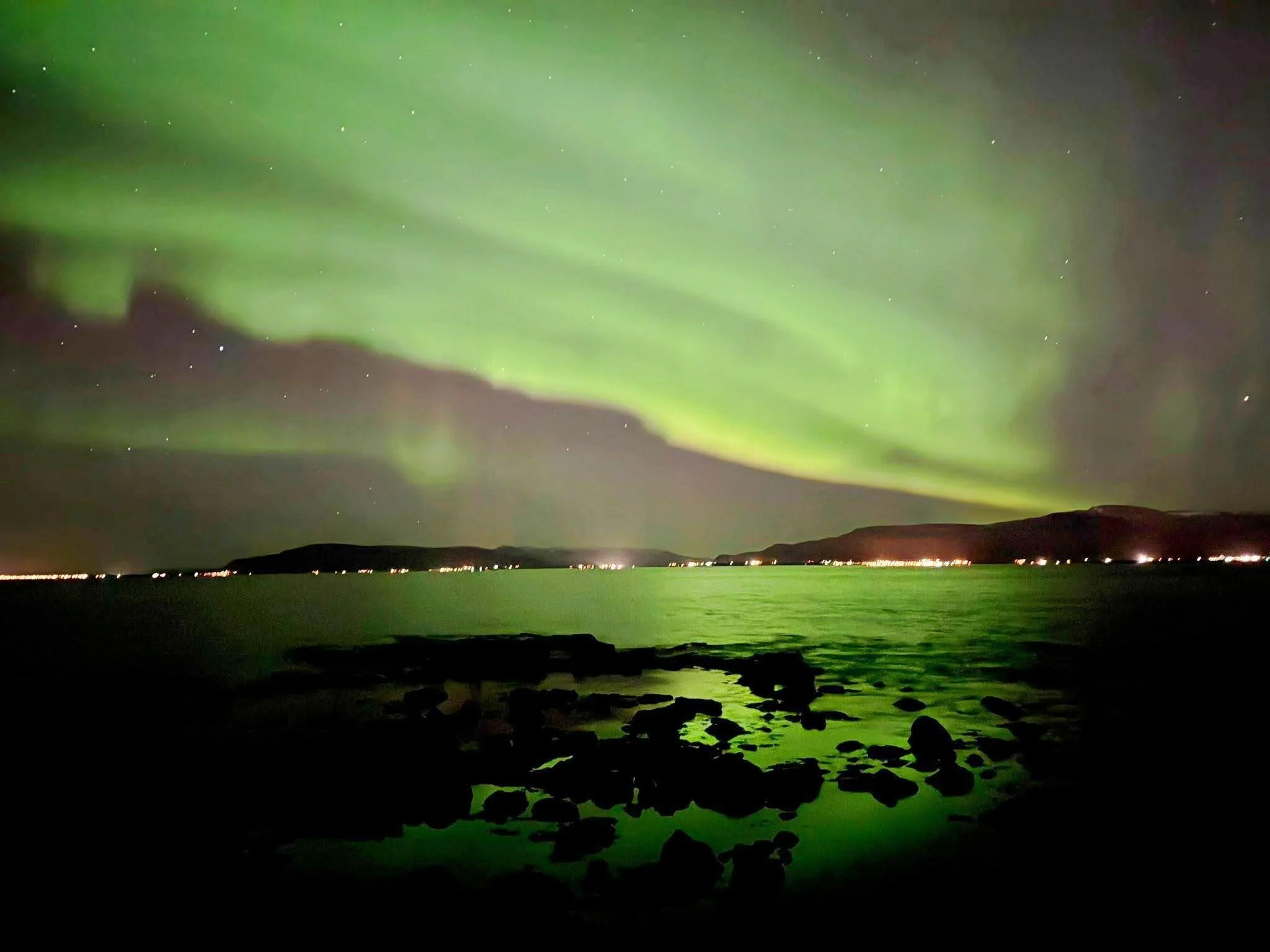
Free show from the sky in Reykjavík!
Nature is free
This is the fundamental truth that makes Iceland viable on a budget. The waterfalls, the lava fields, the glaciers, the volcanic landscapes, the black sand beaches, the geothermal steam vents — access to the actual country is free. Now, some of the more popular car parks charge a fee, but the sites themselves don't. Seljalandsfoss, Skógafoss, Reynisfjara, Þingvellir, the Snæfellsnes Peninsula, the Westfjords — free.
The northern lights are free
Aurora hunting costs nothing except patience, a rental car, and the right apps. The Icelandic Met Office's aurora forecast and cloud cover map (vedur.is) are free. Driving out of Reykjavik to dark skies costs fuel but it’s cheaper than a northern light tour, and waiting is free. Everything you need to know about maximizing your odds without paying for a tour is in our northern lights in Iceland guide and our northern lights hub.
If you’d like to book a tour though, make sure you compare your options.
The Reykjanes Peninsula for free geothermal
The Seltún geothermal field, the Bridge Between Two Continents, Gunnuhver — all free, all accessible, all genuinely impressive. For anyone wanting the dramatic geothermal landscape experience without the entrance fee or tour bus, Reykjanes delivers and costs only the petrol to get there.
Reykjadalur: the free hot spring
The geothermal river above Hveragerði requires about an hour's walk each way (in good weather), but the reward is bathing in a natural thermal stream with no booking, no entry fee, and a valley to yourself (more or less). It's the best free hot spring experience in Iceland — you earn it, and it definitely feels like it in winter! More on Hveragerði and what surrounds it in the Iceland’s tourist spots alternatives guide.
Public pools over tourist spas
Iceland's public swimming pools — geothermally heated, open year-round, used daily by locals — are one of the great underrated budget experiences in the country. Entry is a fraction of what the Blue Lagoon or Sky Lagoon charges. Every town of any size has one. Reykjavik's Laugardalslaug is the city's largest and a genuine local institution. We also really enjoyed Nauthólsvík beach. These aren't consolation prizes — they're how Icelanders actually use geothermal water, and the experience is more authentic than anything you'll find in a luxury spa.
One practical note: bring your own towel and pool shoes. Most facilities offer rentals but they add to the cost, and this is an easy thing to pack.
The Reykjavik City Card: worth it for some, not for all
The Reykjavik City Card gives you unlimited public transport plus free or discounted entry to a range of museums and attractions in the city. For anyone planning to visit several museums and use the buses heavily, it can make sense. But it's worth being honest about what Iceland is actually about, in our humble opinion: the extraordinary stuff is outside the city, in the landscape, and it doesn't require a card. Some of the included attractions — like the Perlan observation deck — charge significant entry fees on their own and are genuinely interesting, but Iceland's spectacularity lies in its nature, not in its museums. Do the maths based on what you actually plan to do before buying.
Free walking tours in Reykjavik
Reykjavik has well-established free walking tours that run daily — tip-based, genuinely good, and the best way to get oriented in the city quickly. They cover the main historic and cultural points and the guides are usually locals. For budget travelers, it's the obvious first morning activity. Don’t miss our guide to free and cheap things to do in Reykjavík, covering the walking tours and everything else in more detail.
Second-hand and outlet stores
Icelandic outdoor gear and clothing is expensive at full retail. If you need something — a warmer layer, better gloves, a rain jacket — second-hand stores (Góði Hirðirinn and the Red Cross are the main ones in Reykjavik) and outlet sections at shops like 66ºNorth are worth a look before paying full price at a tourist-facing shop. That said, prices are high even on second-hand by most countries' standards. The lesson is: pack everything you need before you go.
General rules to travel cheaper in Iceland
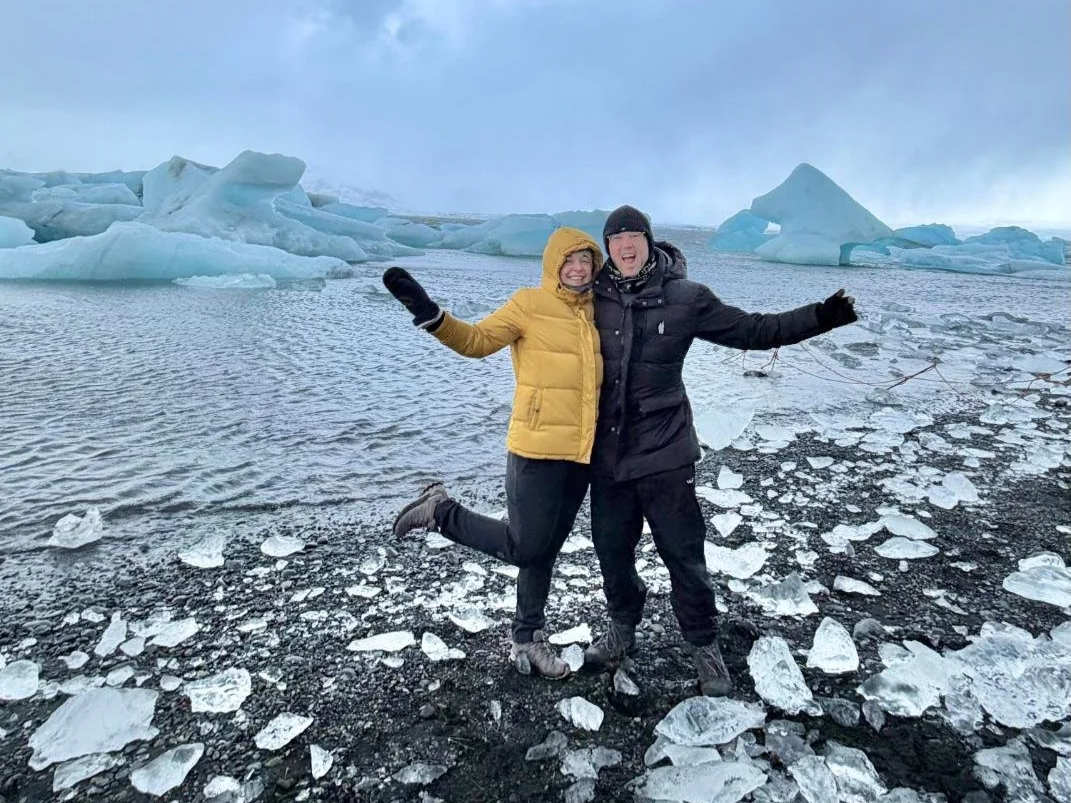
The best things in Iceland are free — it’s the logistics that are not! Here at Jökulsárlón
Book everything as early as possible
The earlier you book in Iceland, the less you pay — almost without exception. Flights, car rental, and accommodation all follow this pattern. Last-minute in Iceland is a budget strategy that doesn't work. Three to six months ahead for peak season is not excessive.
Travel in shoulder season
Late May, September, and early October hit the sweet spot — meaningfully cheaper across flights, accommodation, and car rental than peak summer, with conditions that are still excellent. September in particular is arguably the best month in Iceland: the light is extraordinary, the crowds have dropped, and aurora season is starting. November to March is the cheapest of all if you're primarily there for northern lights and winter landscapes, and you’ll have fewer crowds.
Plan your route to avoid backtracking
Fuel is expensive, there’s a new tax on driven kilometers, and distances in Iceland are longer than they look on a map. Planning a logical route — typically a clockwise or anticlockwise loop rather than a back-and-forth itinerary — keeps fuel costs down and maximizes the ground you cover per tank.
Accept that some things just cost what they cost
Part of budgeting well in Iceland is knowing where not to compromise. The car rental gravel protection is worth paying. So is a camping card if you're camping for more than a week. And some experiences — a glacier hike, an ice cave tour — are worth spending on because they're genuinely extraordinary and not replicated elsewhere. And you can’t do them solo! The goal is cutting spend on things that don't add much (expensive hotel breakfasts, overpriced tourist restaurant dinners, gift shops) so the money is there for things that do.
✈️ Find flights
🏨 Explore hotels, apartments, guesthouses, cabins
🧭 Browse activities and tours
🚗 Compare car rentals
🧳 Get travel gear
🛡️ Travel safe with Heymondo Travel Insurance (5–15% off)
📱 Get a travel eSIM
🐾 Protect & track Arctic wildlife with Fahlo Bracelets (20% off)
FAQ: Iceland on a budget
Is Iceland actually possible on a tight budget?
Yes, with the right planning. It's not a backpacker-cheap destination and it won't ever be, but there's a meaningful difference between an unplanned Iceland trip and a well-prepared one. Cooking your own food, booking early, camping or staying in guesthouses with kitchen access, and relying on free nature rather than paid tours makes a real trip viable at a fraction of the cost of a hotel-and-restaurant approach.
When is the cheapest time to visit Iceland?
November through February (excluding Christmas and New Year) is consistently the cheapest period for flights and accommodation. Shoulder season — May and September — offers a balance of lower prices and good conditions. Peak summer (late June through August) is the most expensive across the board.
Do I need a 4WD in Iceland?
Not for the Ring Road and most popular destinations. The F-roads require a 4WD, but they're highland routes that most first-time visitors don't need. A standard 2WD handles the South Coast, Golden Circle, Snæfellsnes, and the north without issue.
Is camping a realistic budget option?
Yes, during summer. The Iceland Camping Card covers 28 nights across 40+ campsites for a flat fee that works out well for anyone staying more than about ten nights. Outside of summer (roughly mid-September to mid-May), most campsites close, and weather makes camping genuinely difficult.
What's the best way to save on food in Iceland?
Get accommodation with cooking access, buy groceries at Bónus or Krónan, and buy fish from a fiskbúð rather than eating it in a restaurant. Bakeries for lunch, kebabs for the occasional hot meal out. These four habits make a significant difference to daily spend.
Is car rental unavoidable in Iceland?
For most itineraries, yes. Public buses cover Reykjavik and a few main routes, but the vast majority of what people visit Iceland to see requires a car. Budget for it, book early, and treat the rental as a fixed cost that makes everything else accessible.
Here is a playlist to get in the adventure mood:
Iceland isn't going to magically become cheap. But the difference between a thoughtless Iceland trip and a deliberate one is larger than almost anywhere else, because the most expensive parts are almost entirely optional. The country itself — the ice and fire and light and dark — doesn't charge admission. Everything else is negotiable.
Finally, explore all our Iceland Travel Guides here.

Free download
Travel Cheaper Cheat Sheet
27 tips on flights, hotels, hidden costs and more — spend less without missing what actually matters.
No spam. Unsubscribe anytime.
Best Northern Lights Hotels in Iceland
Things to Do in Iceland in Winter
Northern Lights in Iceland: Is It Worth It?
Best Time for Northern Lights in Iceland
Ring Road & Practical Planning:
Iceland Road Trip: South Ring Road Self-Drive
Where to Stay on Iceland's Ring Road
How to Travel Iceland on a Budget
Travel Insurance for Iceland
Best Time to Visit Iceland & Things to Do
Things to Do in Iceland in Summer
Free and Cheap Things to Do in Reykjavík
Iceland Without the Crowds
Horseback Riding in Iceland
Lava Show in Reykjavík
Silfra Snorkeling in Þingvellir
Glacier Hike & Ice Cave in Iceland
Stays & Hot Springs:
Brekka Retreat, Hvalfjörður
Hvammsvík Hot Springs, Hvalfjörður
Aurora Igloo South, Hella
Hotel Keflavik & Spa, near KEF Airport & Blue Lagoon
