
Lava Show Reykjavík: We Watched Real Molten Lava Flow — and Left Holding a Piece of It
We experienced the world's only live lava show in Reykjavík — real molten lava at 1,100°C, poured in front of you. The closest you'll legally get to a volcanic eruption! Here's exactly what to expect.
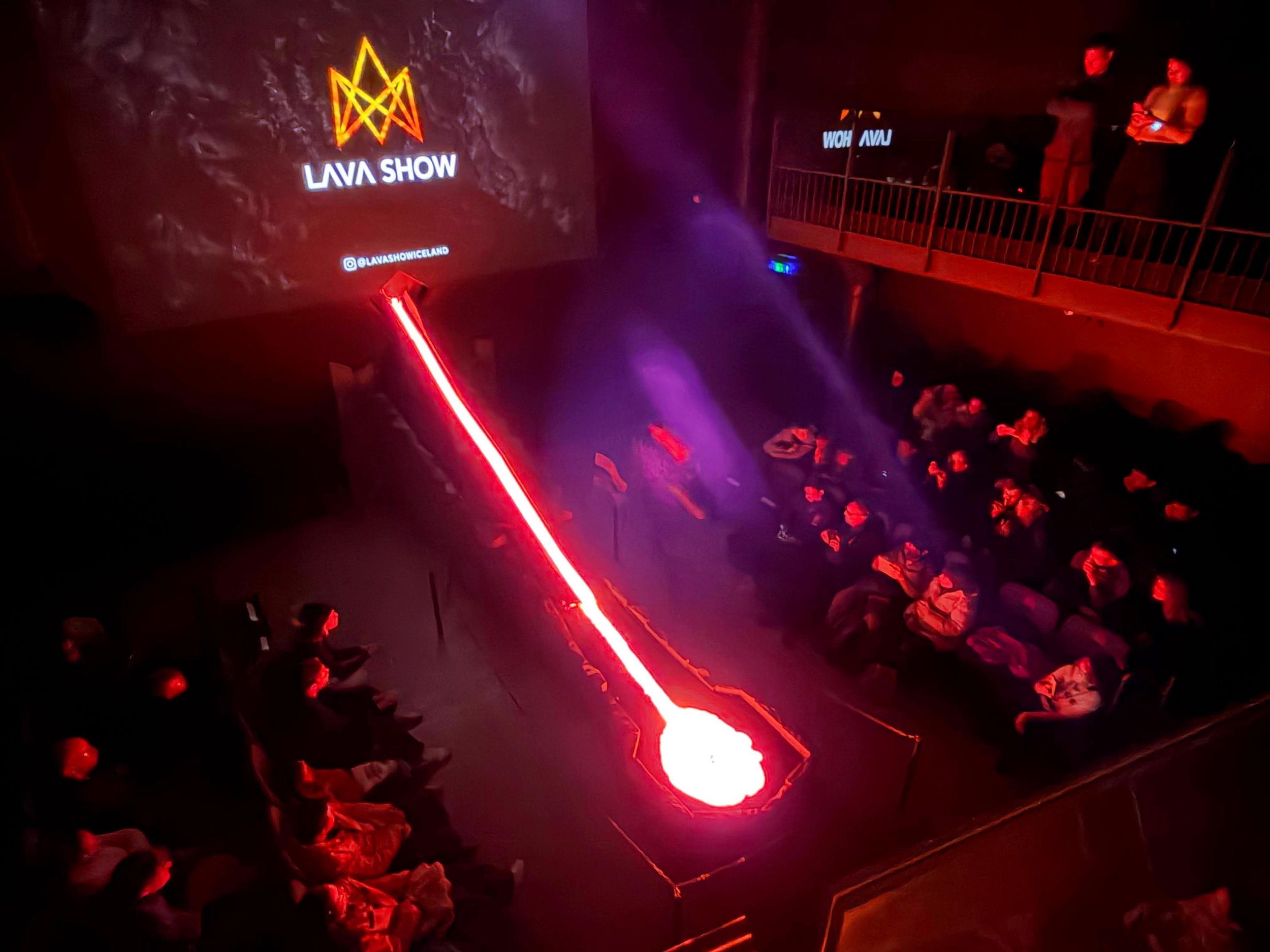
Let the lava flow!
Last update: August 2026
Disclosure: Our experience was hosted by Lava Show in exchange for an honest review. All thoughts and opinions are our own.
Iceland does not do subtle.
The ground cracks open. Glaciers melt over volcanoes. Geysers blast boiling water into the air every few minutes to remind you of the activity underneath.
And then, in a quietly lit room in Reykjavík's harbor district, a stream of glowing orange lava — real, 1,100°C (2,000°F) molten lava — pours in front of your face while you sit in your seat, feeling your cheeks get very, very warm.
That's the Lava Show. And yes, it's exactly as spectacular as it sounds.
We experienced it during our recent trip to Iceland, and it earned its place as one of the most fascinating things we've done in a country that is, let's be honest, already full of genuinely fascinating things.
Here's the full story — including how it works, where the lava actually comes from, and what happens when you hold a piece of Iceland's volcanic past in your hands.
🛌 Where to stay:
• Brekka Retreat, Hvalfjörður — we stayed here. Private sauna and hot tub, darkest skies near Reykjavík.
• Aurora Igloo South, Hella — we stayed here. Transparent walls, heated beds, open sky.
• Hotel Keflavik — we stayed here. Solid value right by the airport, good base for the South Coast.
🇮🇸 Top experiences:
• Lava show in Reykjavík — get your tickets in advance.
🚗 A car is essential in Iceland. Book yours here — the whole country opens up once you leave Reykjavík.
Iceland: the island that sits on top of two worlds
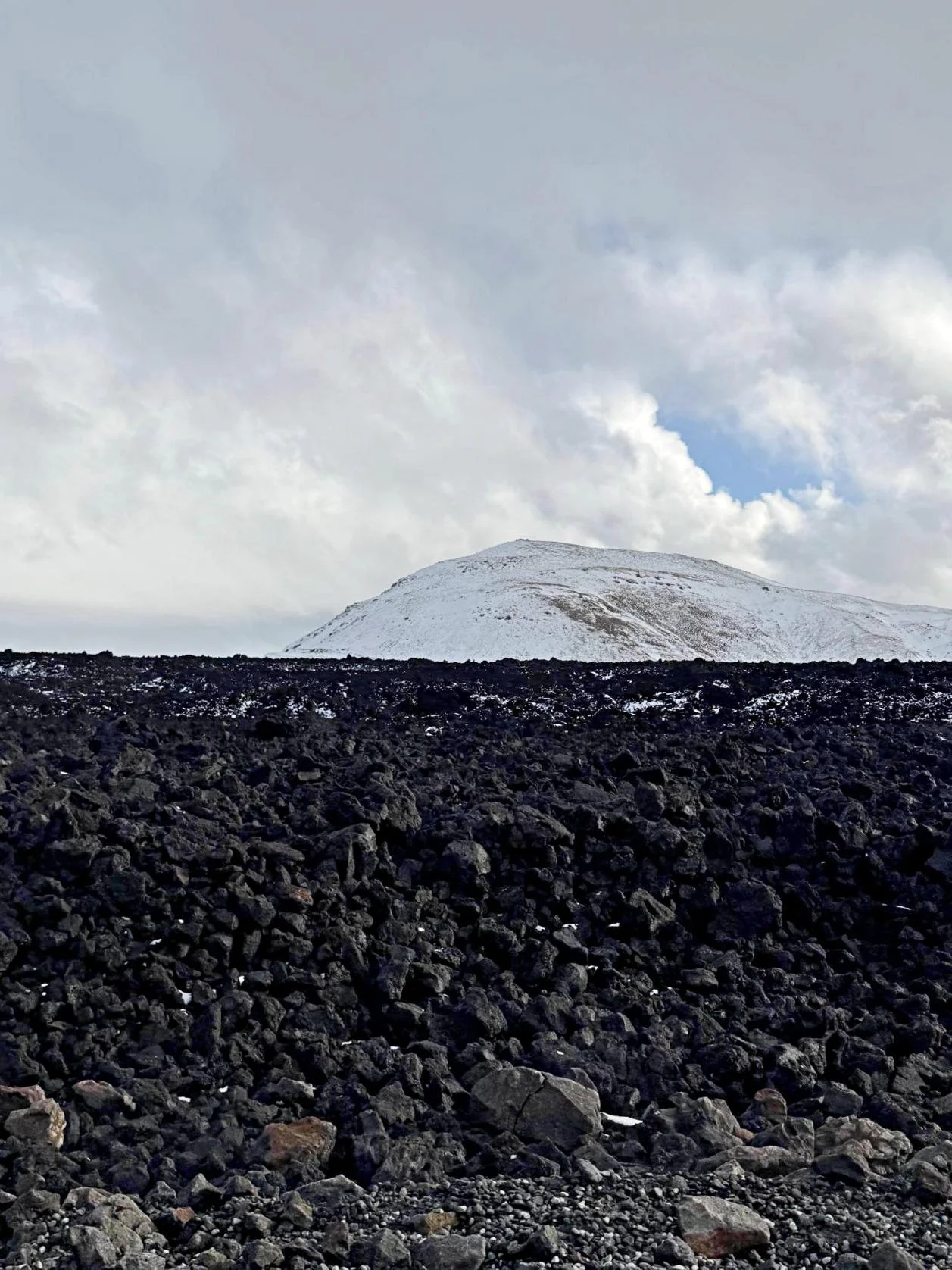
Lava rocks from recent eruptions on Reykjanes peninsula, near the Blue Lagoon
Before we get to the show itself, a little context — because Iceland's volcanic identity is genuinely mind-bending, and it makes the experience land differently once you understand it.
Most volcanic islands exist because of a hotspot: a fixed plume of abnormally hot material rising from deep in the Earth's mantle that punches through the crust above it. Hawaii is a classic example.
Iceland has that. But it also has something else entirely.
It sits directly on the Mid-Atlantic Ridge — the boundary where the North American tectonic plate and the Eurasian tectonic plate are pulling apart from each other. Most of this ridge is underwater, an underwater mountain chain running the length of the Atlantic Ocean. Iceland is the only place on Earth where that ridge rises above sea level as a landmass you can stand on.
You can literally see the rift at Þingvellir National Park, where the landscape has been pulled apart and the ground between has subsided into a long valley — one of Iceland's most dramatic and most underrated geological sights.
In other words, Iceland exists because of two separate geological forces acting together: the spreading plates creating space and the mantle plume filling it with magma. The result is an island that is, geologically speaking, extremely young and extremely active. The oldest surface rocks in Iceland are only around 15 million years old — a blink in geological time. And the island is still growing.
Iceland has around 30 active volcanic systems. Over the past 500 years, Iceland's volcanoes have produced roughly a third of all the lava erupted on Earth's surface. That is not a typo.
The most recent eruptions have been on the Reykjanes Peninsula, which had been quiet for nearly 800 years before erupting in 2021. It has been erupting on and off ever since. Visitors to the Lava Show's Reykjavík location get a live camera feed from the peninsula in the Premium lounge, and the show's content specifically covers this recent chapter of Reykjanes activity and its Viking-era volcanic history.
Iceland is not a place with a volcanic past. It's a place with a volcanic present.
Did you know?
The lava used in every Lava Show comes from a real eruption — specifically the 1918 eruption of Katla, one of Iceland's most powerful subglacial volcanoes, buried beneath the Mýrdalsjökull glacier in the south of the country. The 1918 event lasted 24 days, sent an ash plume 14–15 km into the atmosphere, triggered a catastrophic glacial flood (jökulhlaup) that temporarily extended Iceland's southern coastline by several kilometers, and deposited tephra across the entire island.
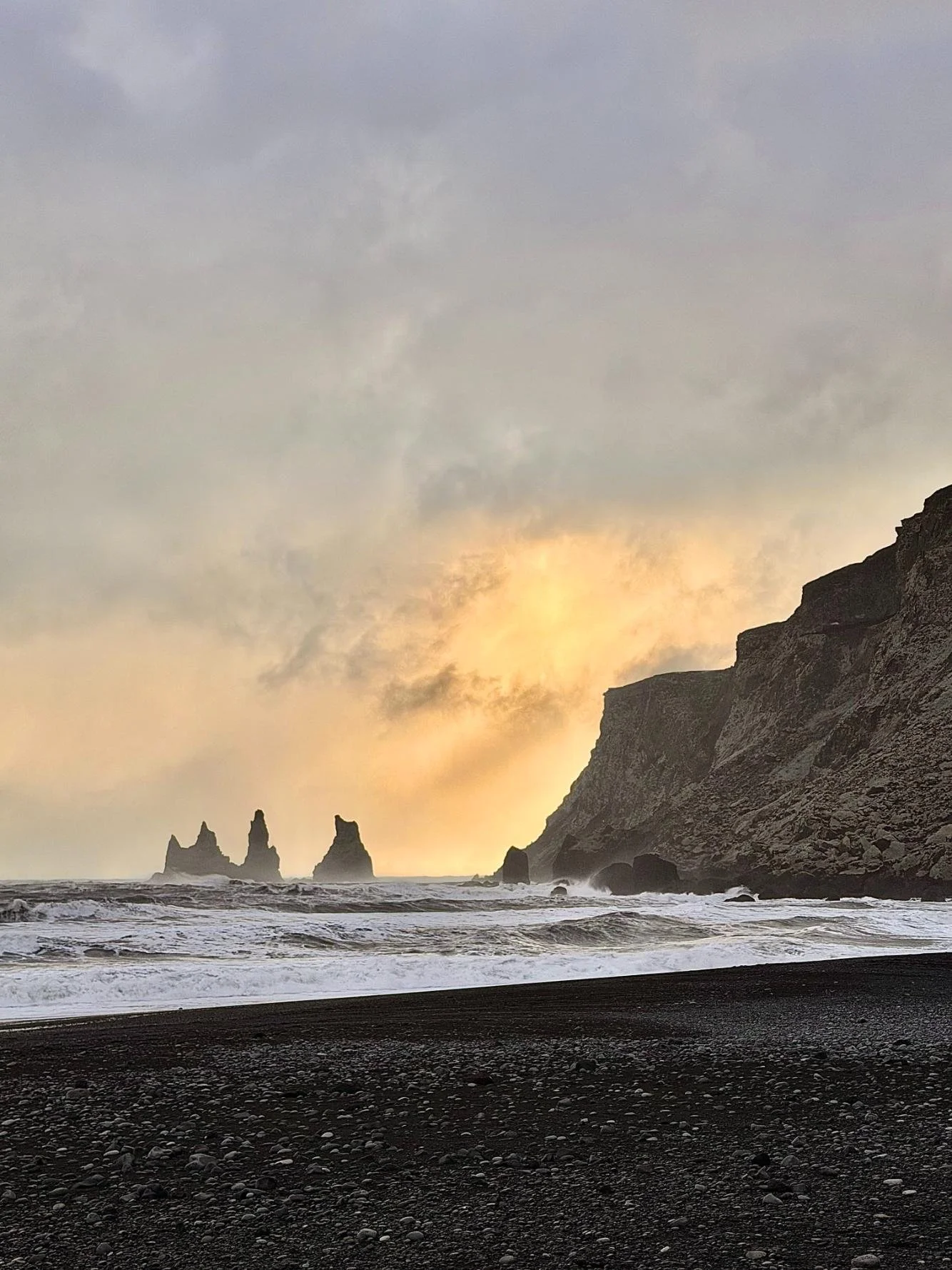
Pic: Vík black beach is a reminder of nearby volcanic activity
How they built the world's only live lava show

The big, the mighty furnace: Ragnarök!
The story of how the Lava Show came to exist is probably one of the better origin stories in Icelandic tourism.
In March 2010, husband and wife Júlíus Ingi Jónsson and Ragnhildur Ágústsdóttir stood watching the Fimmvörðuháls eruption in south Iceland — the eruption that preceded the far more famous Eyjafjallajökull eruption a few weeks later. A lavafall cascaded 200 meters down a cliffside in front of them. The question formed immediately: what if people could experience this safely, up close, all year round?
It took years to answer. When they committed to making it real in 2016, it looked frankly impossible. Real lava, at 1,100°C, poured into a room full of people? There was no blueprint. People told them it couldn't be done safely. They did it anyway (that’s the Icelandic spirit!) — working with engineers, including reportedly American rocket scientists, to design a custom furnace capable of superheating the lava and delivering it into the showroom in a controlled way. The furnace (called Ragnarök) runs on methane gas extracted from organic waste.
In 2018, the first Lava Show opened in Vík. And in 2022, the Reykjavík location followed in the Grandi Harbor District. It's since been named Best Immersive Experience at the Reykjavík Grapevine Best of Reykjavík 2026, won the Icelandic Travel Industry Innovation Award in 2021, and landed in TripAdvisor's top 1% of attractions globally.
The founders go by the names you'd expect from people who pour lava for a living: Mr. Lava Lava and Lady Lava. I can’t think of a cooler (well, actually, a hotter) job title, can you?

Penguin tip:
Iceland is one of those destinations where travel insurance is seriously useful: volcanic activity, sudden weather changes, and the odd adventure gone sideways are all part of the deal. We use and recommend HeyMondo — solid coverage, and you get 5–15% off if you book through us!
Inside the show: what actually happens
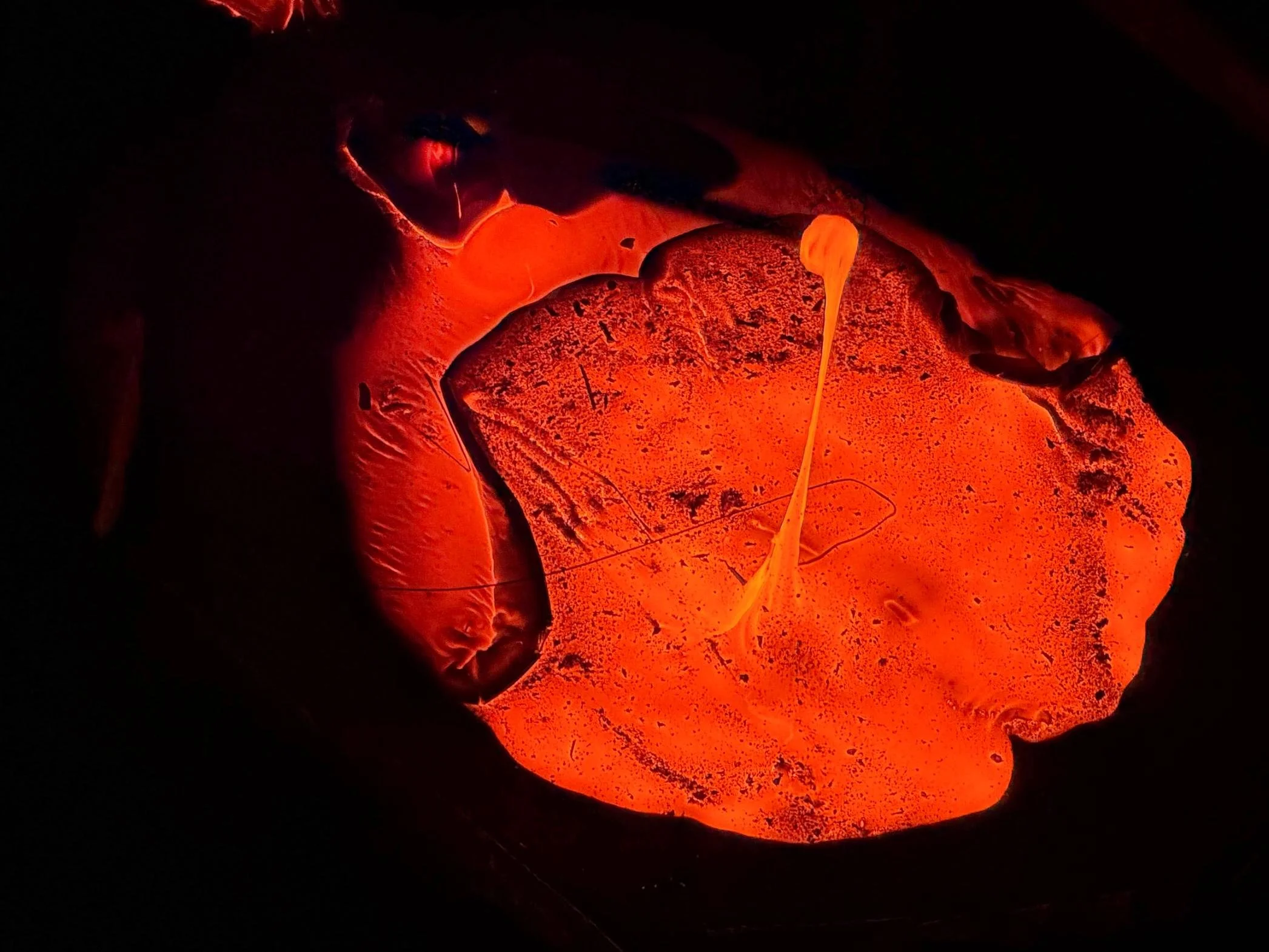
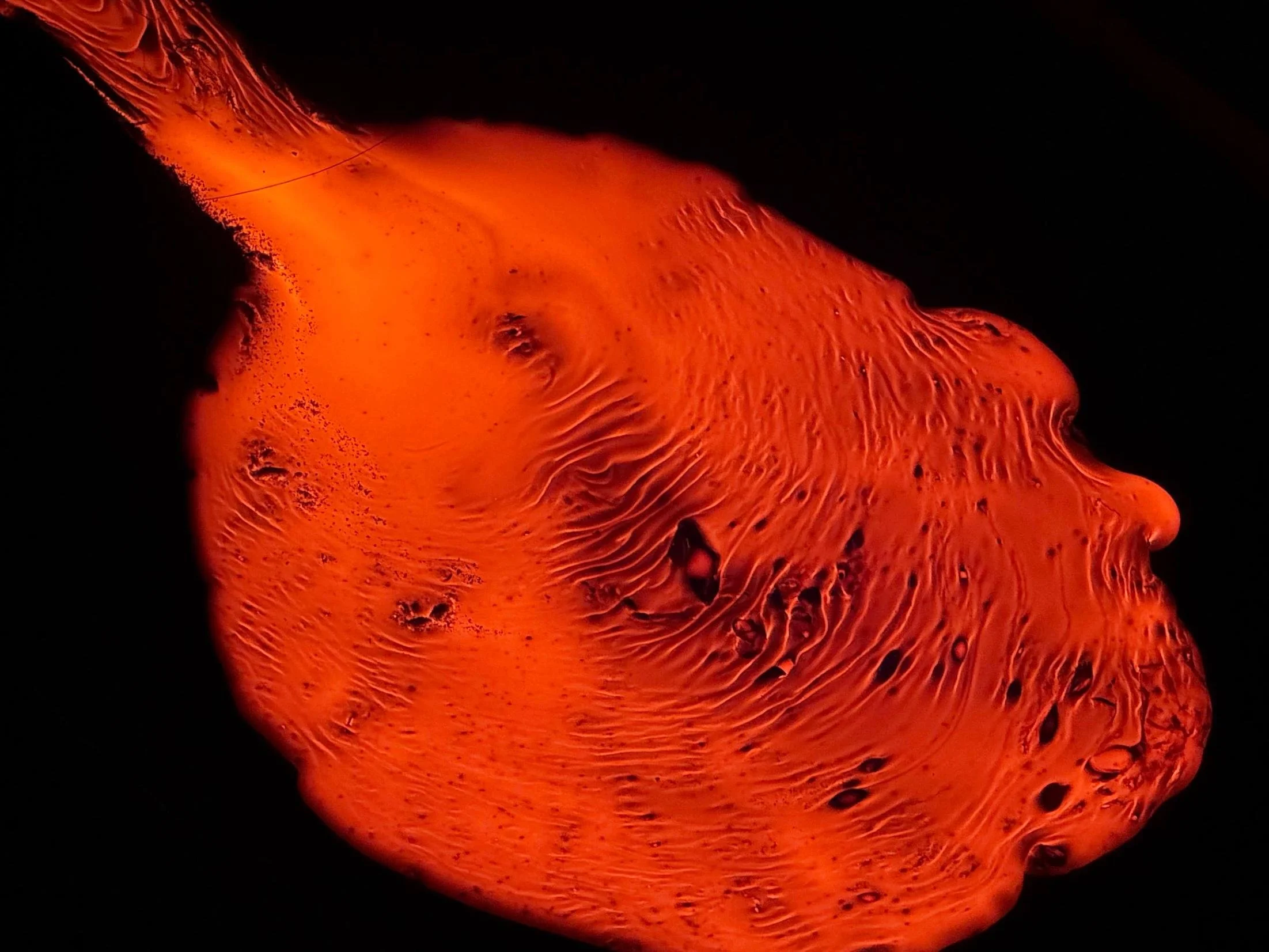
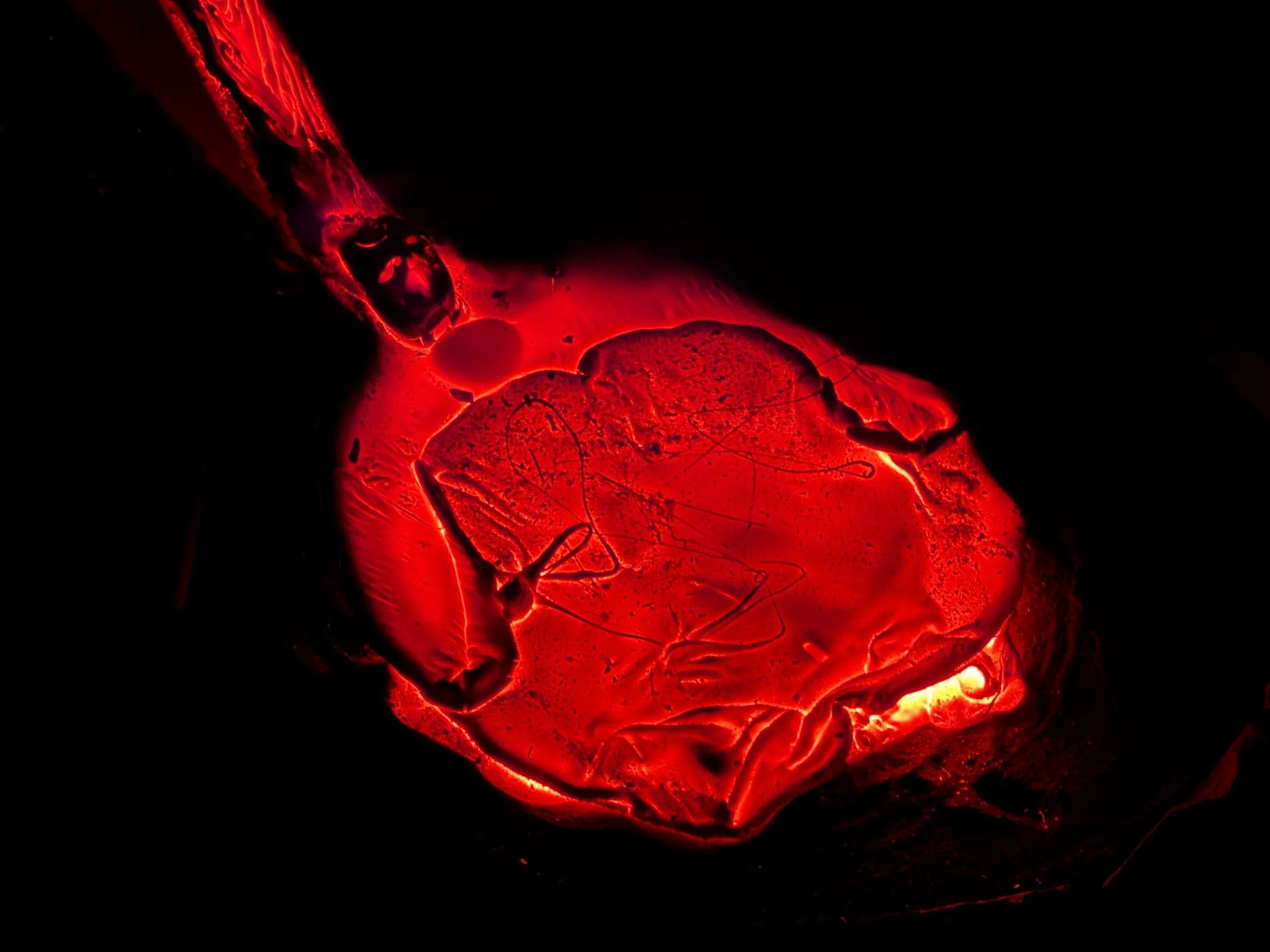
A crust forms quickly, but the interior will stay hot for a very, very long time
The Reykjavík show takes place in the Grandi Harbor District, at Fiskislóð 73 — a quick bus ride or drive from the city center. We actually walked there, as we had to pick up some groceries on our way home (a mission that got interrupted by a snow blizzard, but that’s another story). We did the Premium experience, which runs approximately 75 minutes.
The lounge (Premium)
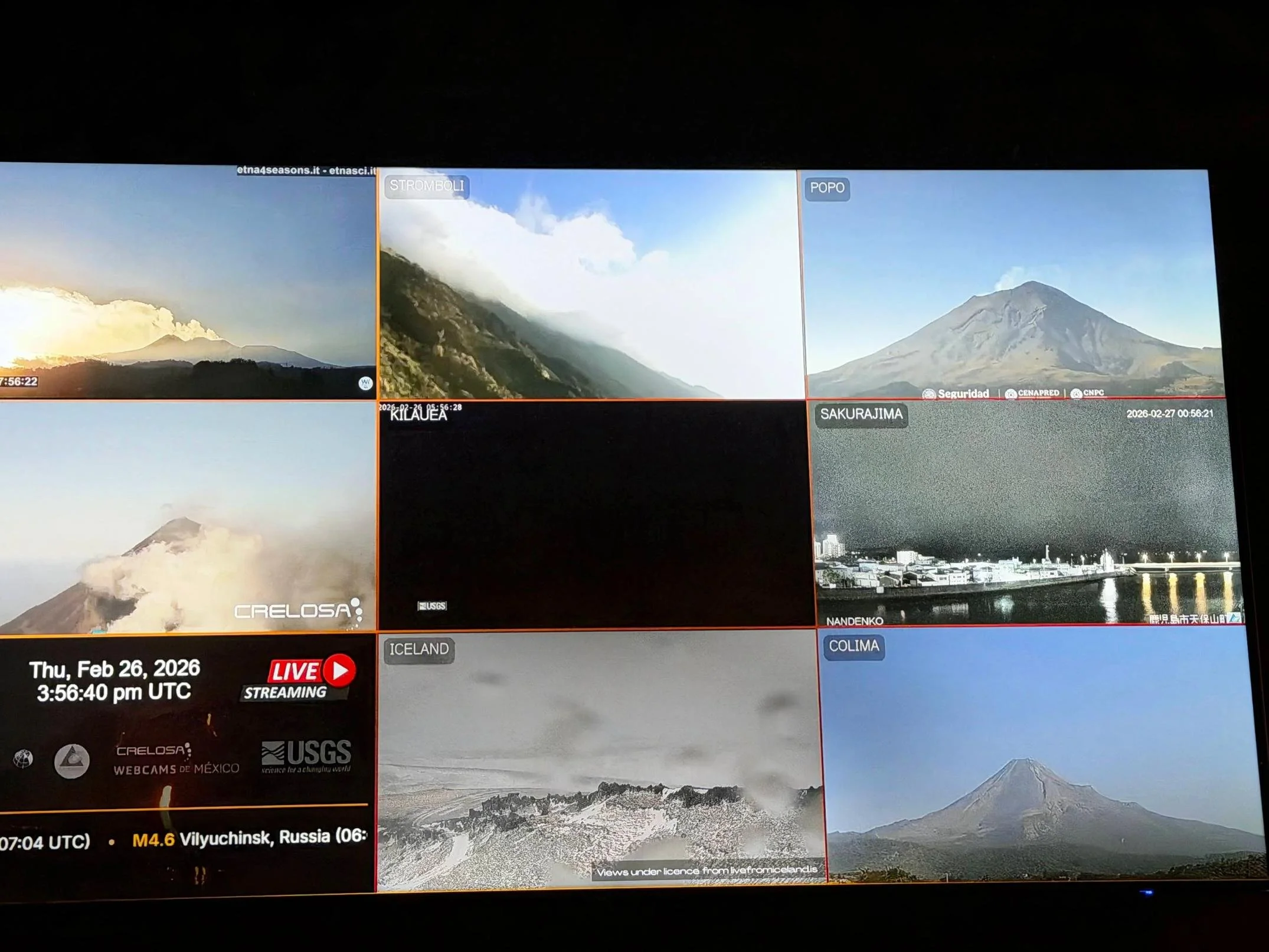
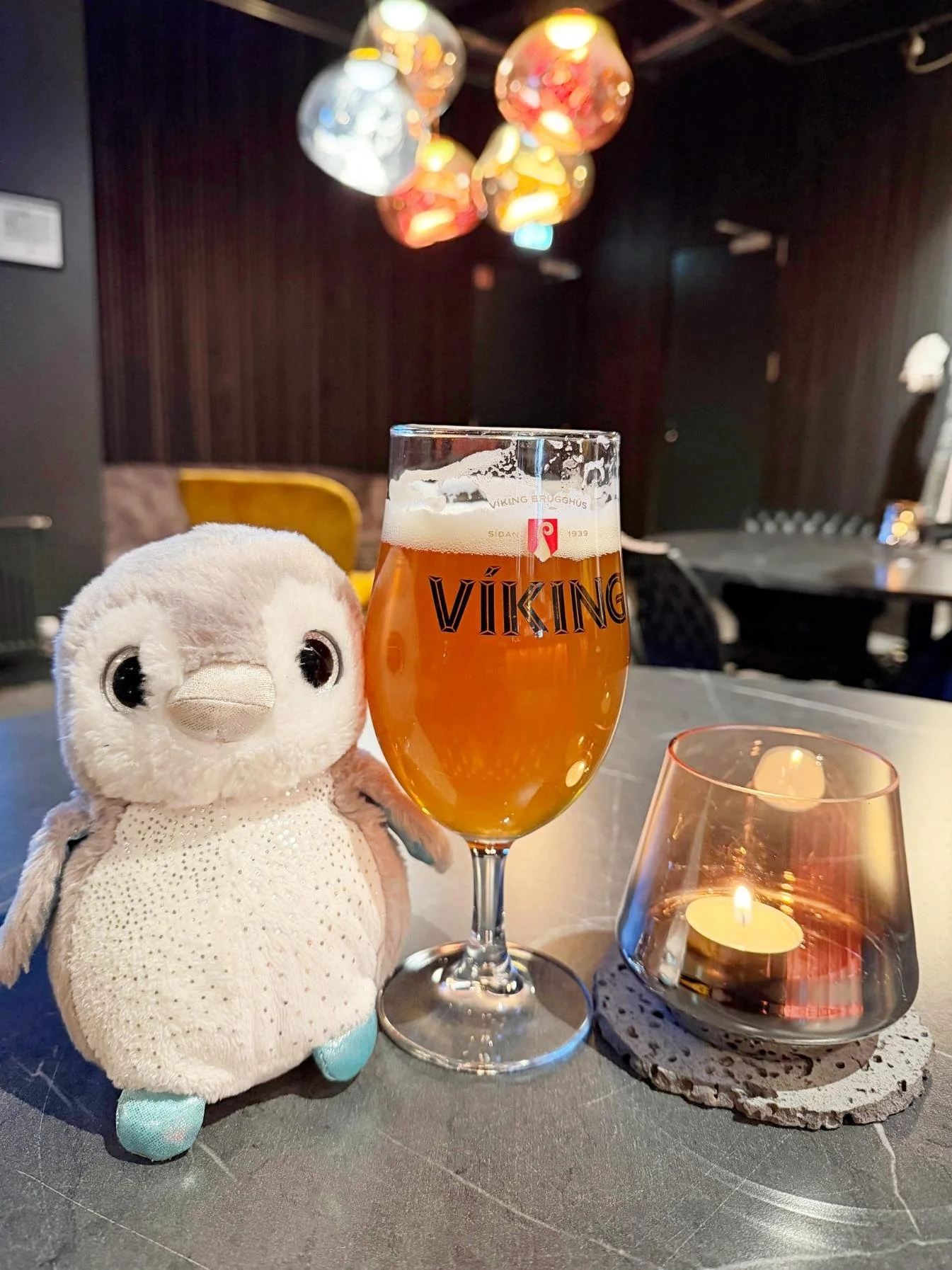
Premium guests arrive early and head upstairs to a cozy VIP lounge — walls lined with volcanic imagery, shelves of lava rock specimens, and a live camera feed showing the Reykjanes Peninsula in real time and other active volcanoes around the world. There's a welcome drink included, so I tasted the local beer: Gull.
The staff were clearly enthusiastic and deeply knowledgeable. Lava nerds, we could say!
We got to try on the Lava Master suit!
The show
When the doors open, Premium guests head to balcony seating — you get a fab vantage point, but you’re a little further away from the lava. Still, heat rises, so it gets really, really hot! Other guests sit on the ground floor, and the front row has to wear protective goggles.
The host begins with an introduction to the show and to Iceland's volcanic history. The Reykjavík show specifically covers the Viking-era connection to Iceland's volcanoes and the recent Reykjanes eruptions, which feels very, very close when you realize the peninsula is visible from the city! In fact, our hosts in Reykjavík had pictures of the recent eruption taken from their living room!
A video plays covering Iceland's geological story in more depth — think tectonic plates, hotspots, glacial eruptions, historical disasters. It's well made, slightly dramatic, and genuinely informative.
Then the lights go down...
The lava
The front row puts on their safety goggles. The room goes quiet.
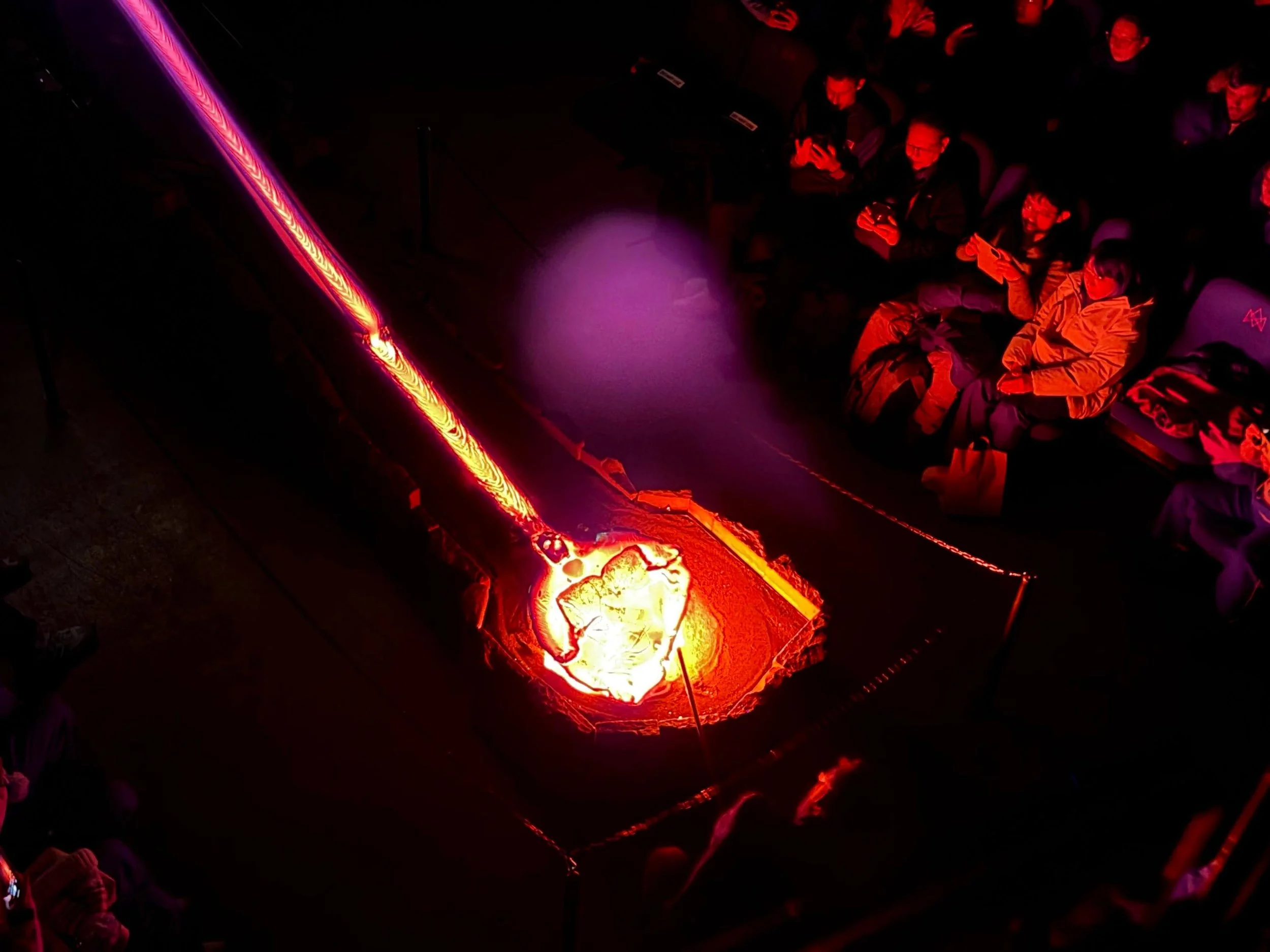
A point of bright orange-white light appears from the furnace channel, and then the lava flows!!!
It moves down a steel chute, over ice, and pools at the bottom. The ice contact creates an instant surge of steam and cracking sounds. The heat comes immediately, and we were sweating even in a tshirt!
What strikes you first, besides the heat, is the light. Around 50 liters of lava at 1,100°C illuminates an entire dark room in deep orange. Shadows move. The lava itself bubbles and shifts, a living thing cooling in real time.
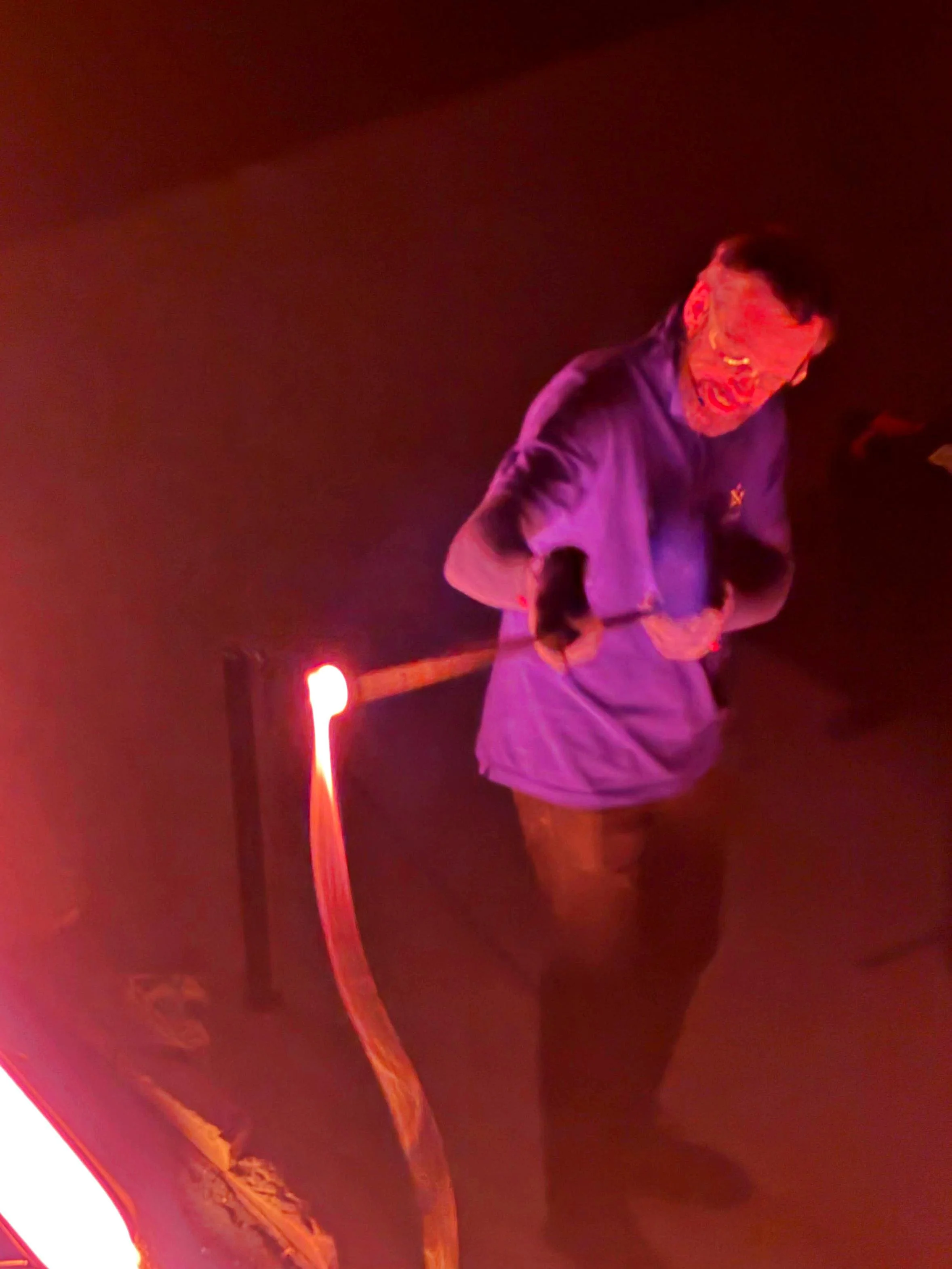
The host (Iain for us, and he was hilarious and informative) uses a long rod to demonstrate what the lava can do while it's still partly molten: lifting the cooling crust to reveal the red-hot interior underneath, pulling threads of lava into the air like glass being spun. It’s both a geology lesson and some kind of primal theater.
We learned things we didn't expect: that "cooled" black lava is often still 400–500°C, for instance. That the different textures and patterns the lava forms as it solidifies — smooth, ropy, jagged — have specific names and tell you about the speed and conditions of cooling. That what looks like solid rock could still burn through your boot (a very useful piece of information when you hike in Iceland!).
The backstage tour and gift (Premium)
After the show, Premium guests get a backstage tour of the furnace room.
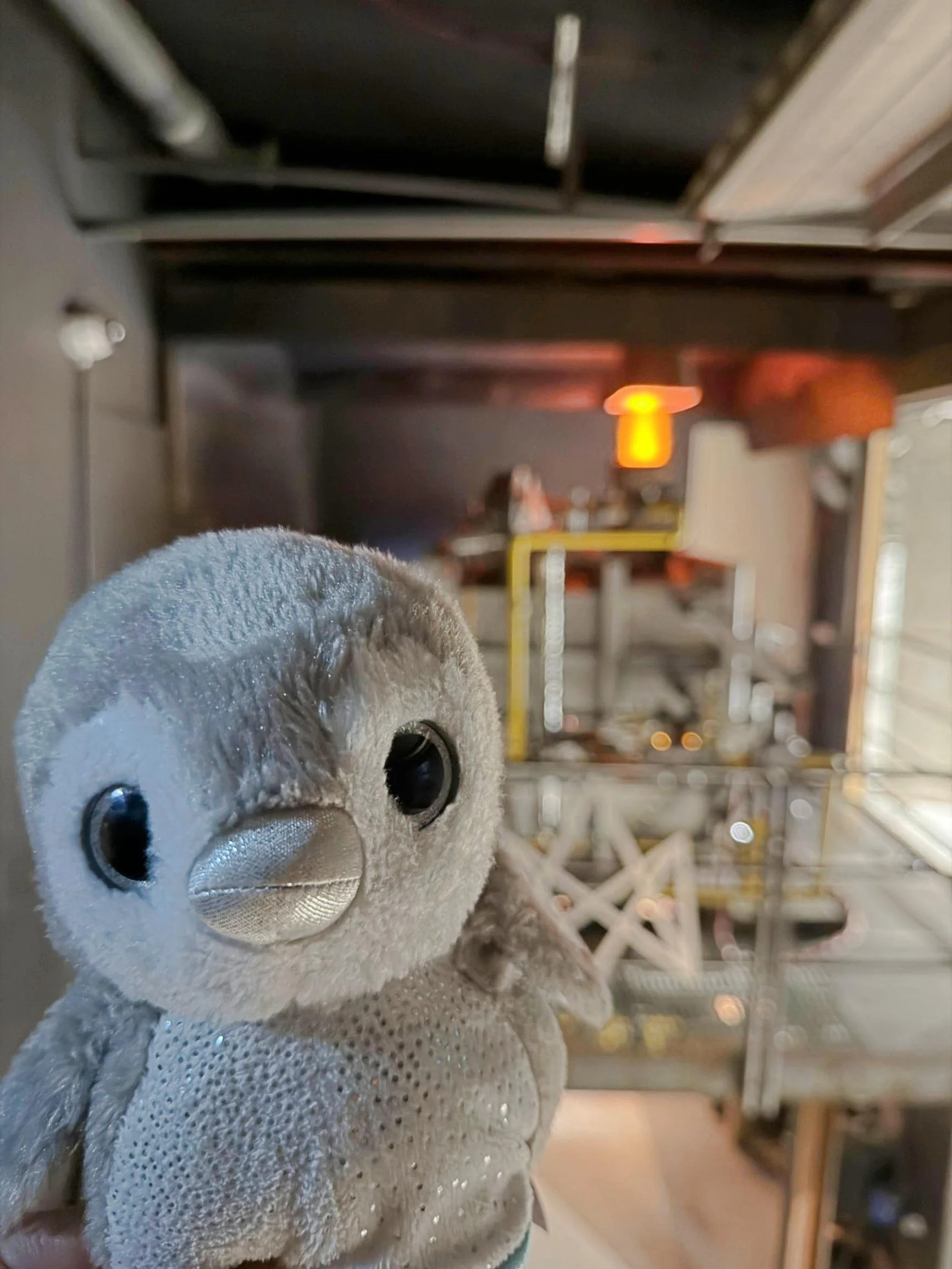
This is where the lava is kept between shows, in an industrial furnace (Ragnarök) that the team starts heating before dawn each morning to have the lava ready for the first show of the day. The operators wear full reflective heat-protection suits, the kind that looks like NASA gear or a Daft Punk costume… according to me!
Seeing the furnace room is a reminder of the sheer engineering involved in doing this safely, repeatedly, every day. The lava is scooped back in after each show, re-melted, and poured again. The rock from Katla's 1918 eruption gets used over and over, transformed from stone to liquid to stone again, the cycle repeating in a building in downtown Reykjavík.
That’s crazy to us.
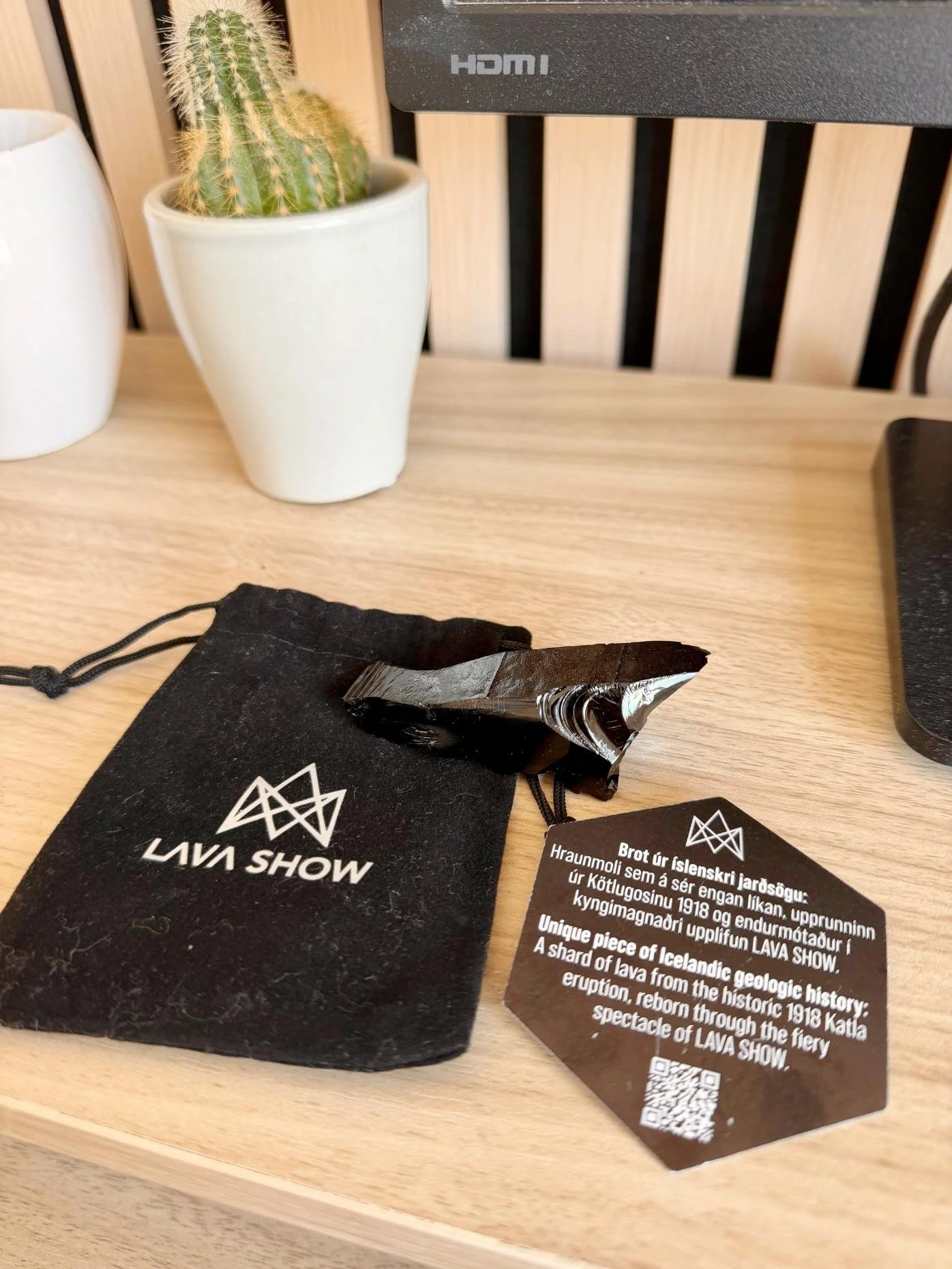
The experience ended with a gift: a piece of lava, gift-wrapped, to take home. It’s a piece of actual volcanic rock formed during the show, the kind that happens when molten lava rapidly cools into a glossy, obsidian-like texture.
These pieces of Katla's 1918 eruption are now standing proudly on our desks as we write this article!

Know before you go

The brightness is almost blinding at first
Arrive early. Seating is first-come, first-served (assigned section by ticket tier). Premium guests “board” first, but arrive 15–20 minutes ahead regardless.
Book in advance. Shows sell out regularly, especially in summer.
Getting there. Bus #3 and #14 stop near the Grandi location. Free parking is available on site if you're driving. Taxis work fine too, and you can absolutely walk from the city center (well, if you’re not caught in a blizzard).
No food inside the showroom. Eat beforehand. The Reykjavík location has several great restaurants within a short walk.
The heat is real. You'll be given safety goggles for the front rows, but leave your heavy layers at the door and wear a tshirt!
Children. Babies and infants are welcome in the Classic show but must be seated in the third row near an exit, and parents should be prepared to step out if needed. Young children may find the darkness and sudden heat startling. For very young ones, maybe save this one for next trip.
The two locations: Reykjavík vs. Vík — are they the same?
Not quite. Both have the same core experience — video, live lava pour, expert host — but the content differs:
Reykjavík: Focuses on Iceland's Viking-era volcanic history and the recent Reykjanes Peninsula eruptions
Vík: Focuses on the volcanic systems of the South Coast, particularly Katla — which makes geographical sense, since Vík sits almost in Katla's shadow
If you're doing the South Coast route and stopping in Vík for a night or two (which you absolutely should, for the black sand beach alone and surrounding area), the Vík show is a logical and excellent add-on. If you're based in Reykjavík, the Grandi location is the easy choice.
Classic vs. Premium: which should you book?
Classic experience (~50–55 minutes, all ages, both Reykjavík and Vík) The full show: intro, volcanic history video, live lava pour, Q&A. Everything you came for. A great choice for families and anyone on a shorter Iceland trip. Suitable for all ages.
Premium experience (~75 minutes, 13+, Reykjavík only) Classic show, plus: welcome drink in the VIP lounge, balcony seating in the "hot zone," backstage furnace tour, and a piece of lava to take home.
Our opinion? The Premium experience was awesome. The balcony seats make a meaningful difference to the view and the heat experience. And the backstage tour is a plus. The lava souvenir is a genuine keepsake, not a cheap souvenir made elsewhere.
That said, the Classic experience is already excellent, as the lava is the star regardless of where you're sitting. And it might be cool to sit in the front row!

✈️ Find flights
🏨 Explore hotels, apartments, guesthouses, cabins
🧭 Browse activities and tours
🚗 Compare car rentals
🧳 Get travel gear (including for the Arctic)
🛡️ Travel safe with Heymondo Travel Insurance (5–15% off)
📱 Get a travel eSIM
🐾 Protect & track Arctic wildlife with Fahlo Bracelets (20% off)
FAQ: Lava Show in Iceland
Is it really safe?
Yes. The lava has been melted and re-melted many times, which means the dangerous volcanic gases found in a live eruption have long since dissipated. Safety goggles are provided for front-row seats. The show has been running since 2018 across two locations without incident.
How hot does it get in the room?
Warm enough to feel very clearly, especially on the balcony in the Premium experience. Leave the big coat behind. You won't need it.
Can kids attend?
Classic show: yes, all ages. Premium experience: 13 and older. Very young children may find the darkness and heat startling — use your judgment.
Do I need to book in advance?
Yes, strongly recommended. Shows sell out regularly, particularly in the summer months and holiday periods.
Is there a lava show in both Reykjavík and Vík?
Yes. Reykjavík is in the Grandi Harbor District. Vík is on the South Coast, near the famous black sand beach. The content focus differs slightly between the two.
Can I visit the furnace room? Only with the Premium experience (Reykjavík only), which includes a backstage tour.
Iceland has never needed help being dramatic, and we usually prefer to spend our time outdoors. But the Lava Show does something the landscape can't always guarantee: it puts you face to face with the planet's interior on a schedule, in the warmth, regardless of weather or season. You walk in a tourist. You walk out holding a piece of something that was underground for a century, liquid twenty minutes ago, and cool in your hand right now.
That's a hard feeling to replicate anywhere else.
Finally, explore all our Iceland Travel Guides here.

Free download
Travel Cheaper Cheat Sheet
27 tips on flights, hotels, hidden costs and more — spend less without missing what actually matters.
No spam. Unsubscribe anytime.
Best Northern Lights Hotels in Iceland
Things to Do in Iceland in Winter
Northern Lights in Iceland: Is It Worth It?
Best Time for Northern Lights in Iceland
Ring Road & Practical Planning:
Iceland Road Trip: South Ring Road Self-Drive
Where to Stay on Iceland's Ring Road
Best Time to Visit Iceland & Things to Do
How to Travel Iceland on a Budget
Iceland Without the Crowds
Where to Go Instead of Iceland
Travel Insurance for Iceland
Things to Do in Iceland in Summer
Free and Cheap Things to Do in Reykjavík
Horseback Riding in Iceland
Lava Show in Reykjavík
Silfra Snorkeling in Þingvellir
Glacier Hike & Ice Cave in Iceland
Stays & Hot Springs:
Brekka Retreat, Hvalfjörður
Hvammsvík Hot Springs, Hvalfjörður
Aurora Igloo South, Hella
Hotel Keflavik & Spa, near KEF Airport & Blue Lagoon
