
Silfra Snorkeling in Iceland: We Swam Between Two Continents
We snorkeled Silfra Fissure in Þingvellir National Park — here's what it's really like: the geology, the experience, what to expect, and whether it's worth it.

America on one side, Europe on the other… squared!
Last update: August 2026
Disclosure: Our experience was hosted by Tröll Expeditions in exchange for an honest review. All thoughts and opinions are our own.
I (Eli) had been wanting to do this since my first trip to Iceland in 2009. In the years since, I'd been back to Þingvellir three times — it's historically and symbolically loaded, and geologically fascinating, but if I'm honest, it never quite blew me away visually. Silfra changed that completely.
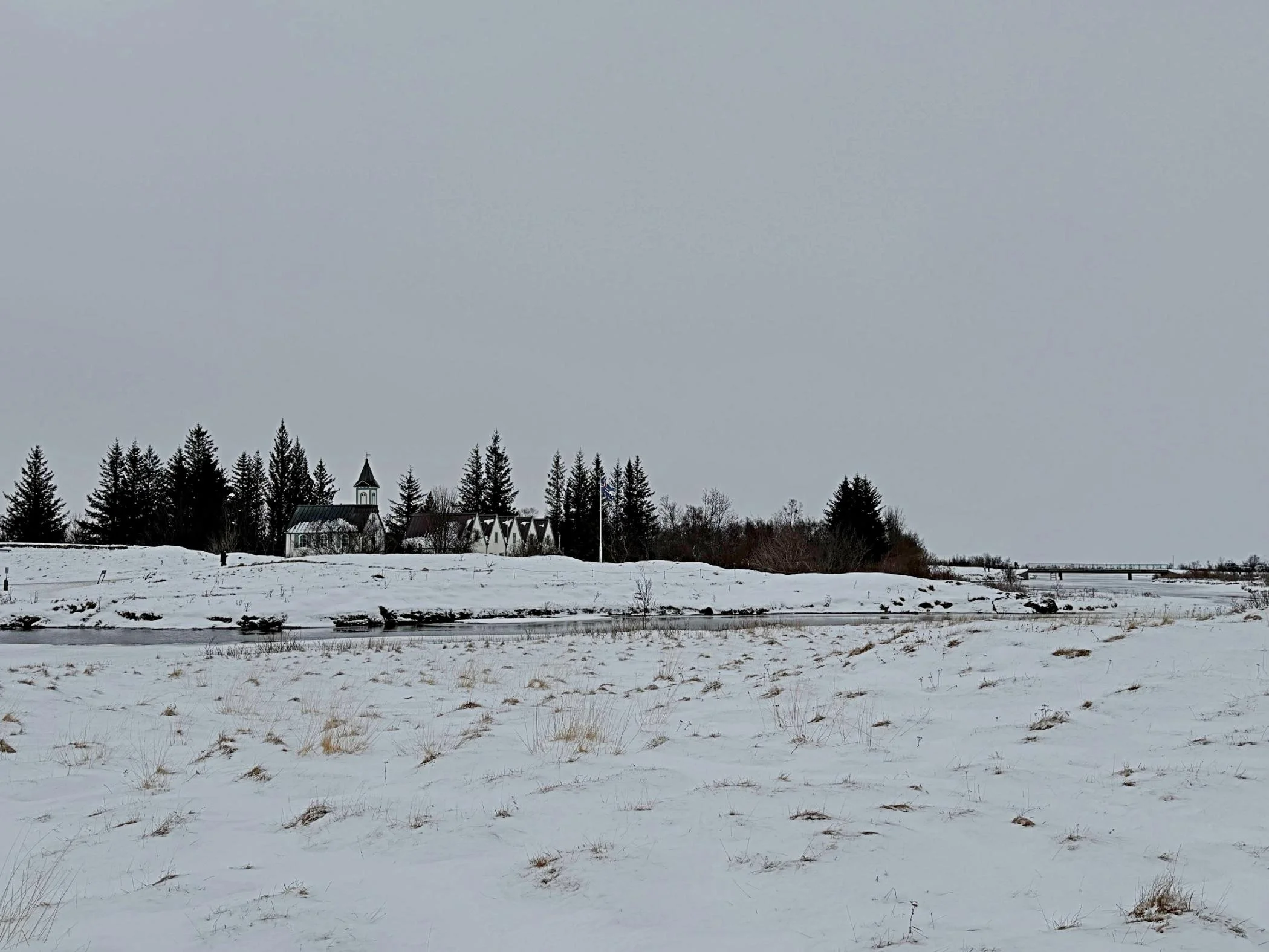
From the outside, you'd never know. There's a dark lake, some lava rock, scrubby Icelandic grass, wind coming in sideways — and if you're visiting in winter, horizontal snow. You're standing in a national park parking lot being handed what looks like an oversized astronaut suit.
We booked the Silfra snorkeling experience through Tröll Expeditions, and if you haven't heard of it: Silfra is a fissure in the Earth — a crack between the North American and Eurasian tectonic plates — filled with some of the clearest water on the planet. You can snorkel it year-round, and it’s genuinely unlike anything else you can do on the planet.
🛌 Where to stay:
• Brekka Retreat, Hvalfjörður — we stayed here. Private sauna and hot tub, darkest skies near Reykjavík.
• Aurora Igloo South, Hella — we stayed here. Transparent walls, heated beds, open sky.
• Hotel Keflavik — we stayed here. Solid value right by the airport, good base for the South Coast.
🇮🇸 Top experiences:
• Silfra snorkeling — with Troll Expeditions, the company we used and recommend.
🚗 A car is essential in Iceland. Book yours here — the whole country opens up once you leave Reykjavík.
Silfra and Þingvellir: what you need to know before you go
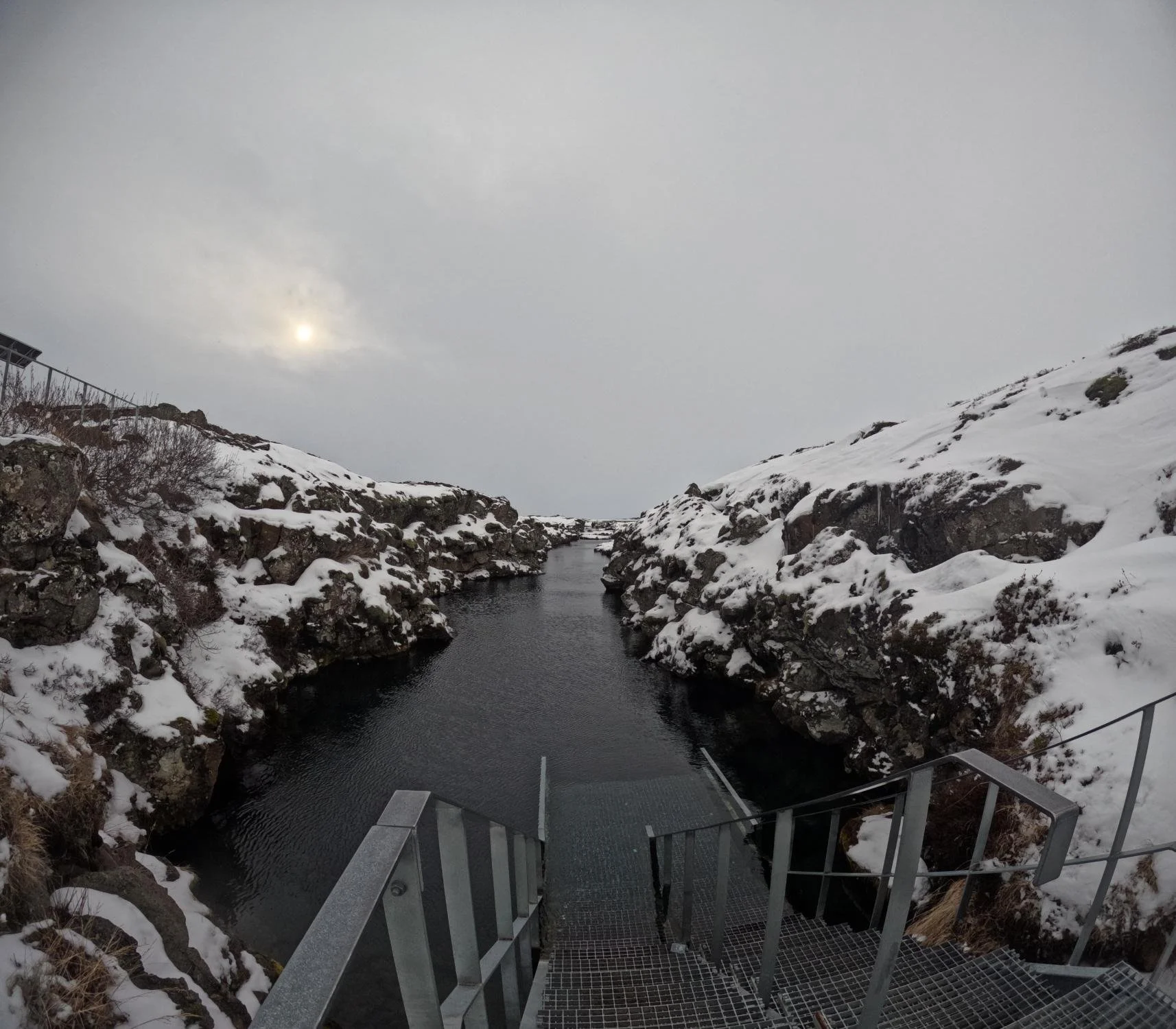
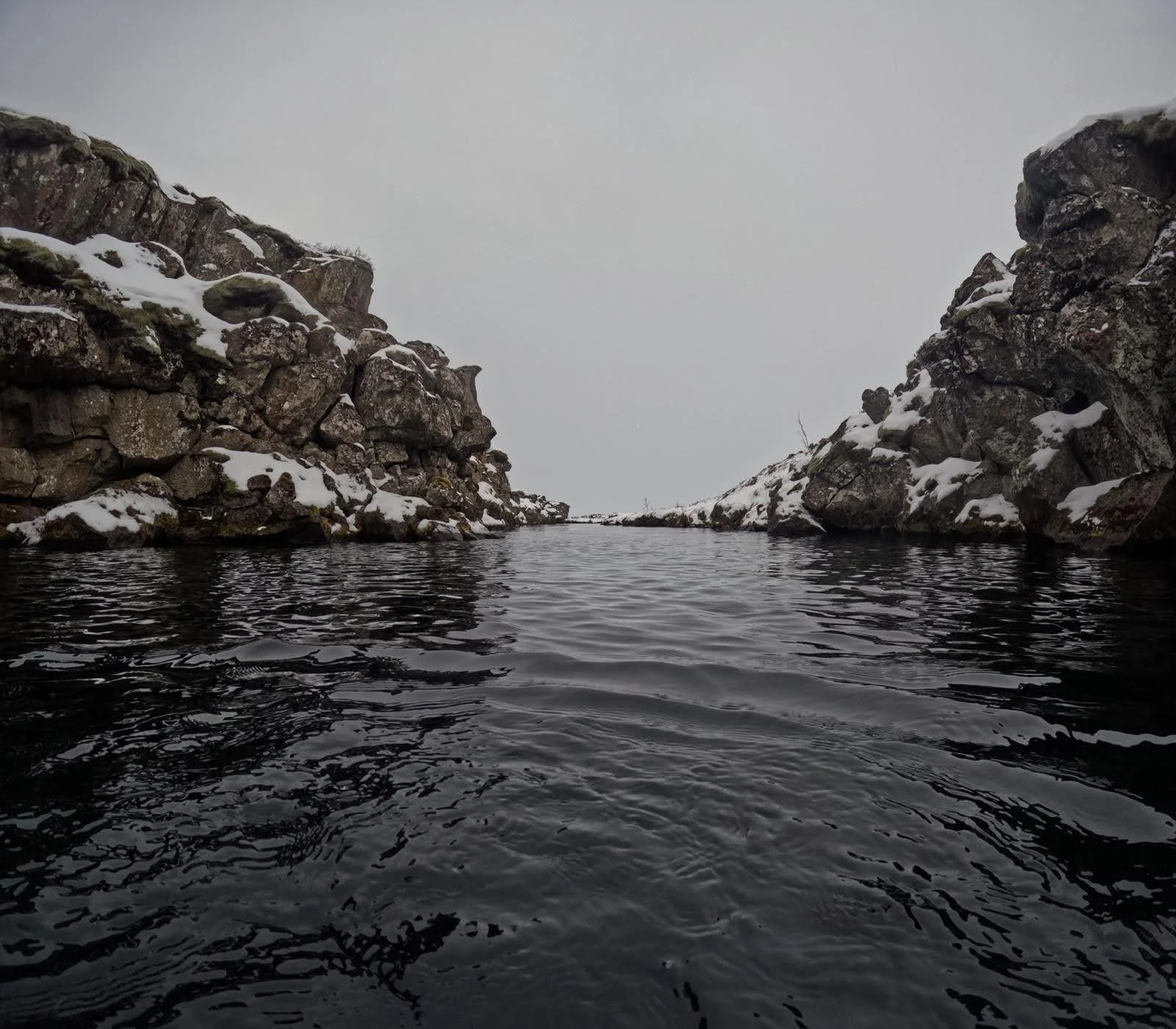
From above, the water doesn’t seem very engaging…
Þingvellir National Park — where geology and history compete for your attention
Þingvellir (anglicized as Thingvellir) sits directly on the Mid-Atlantic Ridge, the boundary where the North American and Eurasian tectonic plates are pulling apart at a rate of roughly 2 centimeters per year. That ongoing movement has been widening the rift valley for thousands of years, opening fissures, sinking the valley floor, and shaping the landscape into what you see today: a dramatic, raw expanse of lava fields, cliffs, and clear rivers.
Then there's the history, which is just as staggering. This is where the Alþing — Iceland's national parliament — was established in 930 AD, making it one of the oldest parliamentary assemblies in the world. For over 800 years, chieftains and free men gathered here every summer, camping for two weeks in temporary turf-and-stone shelters to make laws, settle disputes (who stole my sheep?!), and conduct the business of the Icelandic Commonwealth. The center of it all was the Lögberg (Law Rock), where the Law Speaker stood and recited the law of the land from memory — nothing was written down. The assembly met at Þingvellir until 1798, when Danish colonial rule effectively ended the sessions. The parliament was later revived in Reykjavík, where it still operates today.
Þingvellir became Iceland's first national park in 1930 — established to mark the Alþing's 1,000th anniversary — and received UNESCO World Heritage status in 2004, recognized both for its geology and its historical significance. You walk through all of this on your way to the water.
Silfra fissure — the geological backstory
Silfra as we know it today opened during a series of earthquakes in 1789, when the diverging tectonic plates released enough tension to crack the ground significantly. That crack cut into an underground aquifer fed by meltwater from Langjökull, Iceland's second-largest glacier, located about 50 kilometers to the north.
What makes the water extraordinary is what happens between the glacier and the fissure. The meltwater doesn't flow directly in — it percolates down through porous lava rock, the result of ancient volcanic activity, and filters underground for 30 to 100 years before emerging in Silfra. By the time it gets there, it's been filtered so thoroughly that underwater visibility exceeds 100 meters.
National Geographic has listed Silfra among the best dive sites in the world. The water is so pure that guides invite you to drink it (we did of course!) while you're floating through it.
The water temperature stays between 2°C and 4°C (35–39°F) year-round. It never freezes, because fresh filtered water is constantly feeding in from below. It never gets warm, either. Hence the dry suits.
The four sections of Silfra
The fissure is divided into four distinct sections, each with its own character:
Silfra Big Crack — the entry point, where the two tectonic walls close in to arm's reach. This is where you can literally touch both continents at once.
Silfra Hall — the widest section, where the fissure opens up and the scale of the place hits you. Visibility stretches from wall to wall and into the distance.
Silfra Cathedral — the deepest stretch, with a maximum depth of over 60 meters and visibility long enough to see nearly the full length of it at once. The colors here — blues, greens, blacks — are unlike anything above the surface.
Silfra Lagoon — the shallow exit oasis, carpeted in vivid green algae, with the most recent fissure. You have to swim against the current to reach it. Icelanders call it the "Real Blue Lagoon." The metal exit platform here protects the fragile terrain; you leave the water here.
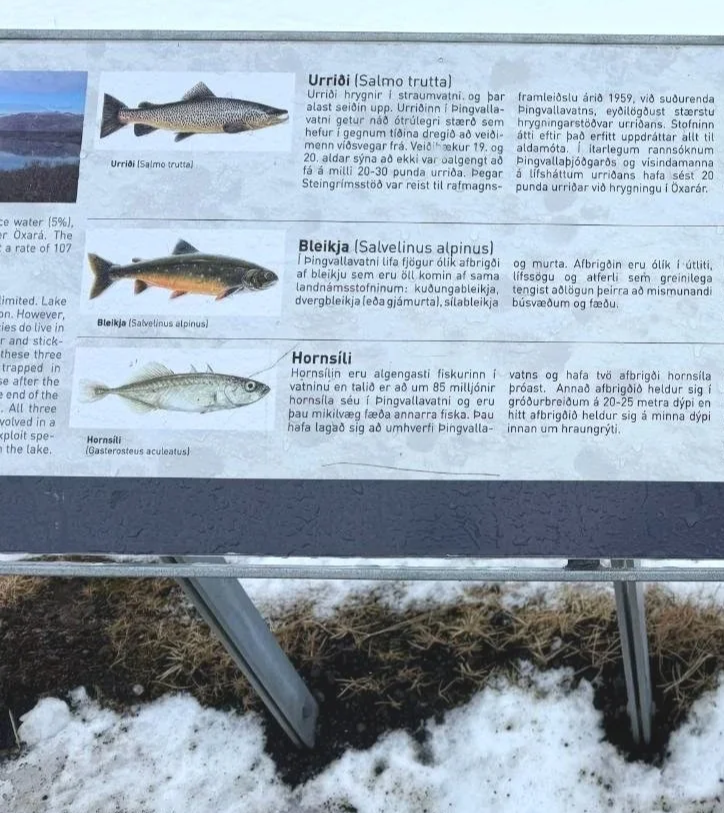
Did you know?
Þingvallavatn is home to three of Iceland's five freshwater fish species: brown trout (Salmo trutta), Arctic char (Salvelinus alpinus) and the three-spined stickleback (Gasterosteus aculeatus, or hornsili in Icelandic). Whether you'll actually see any of them in Silfra is another matter, as fish tend to stay in the broader lake. But the sheer fact that an isolated population has had roughly 10,000 years to adapt to the specific conditions of this lava-filtered glacial environment makes the ecosystem feel like one more layer of quiet wonder in a place that has plenty of them.
The experience: what it's really like
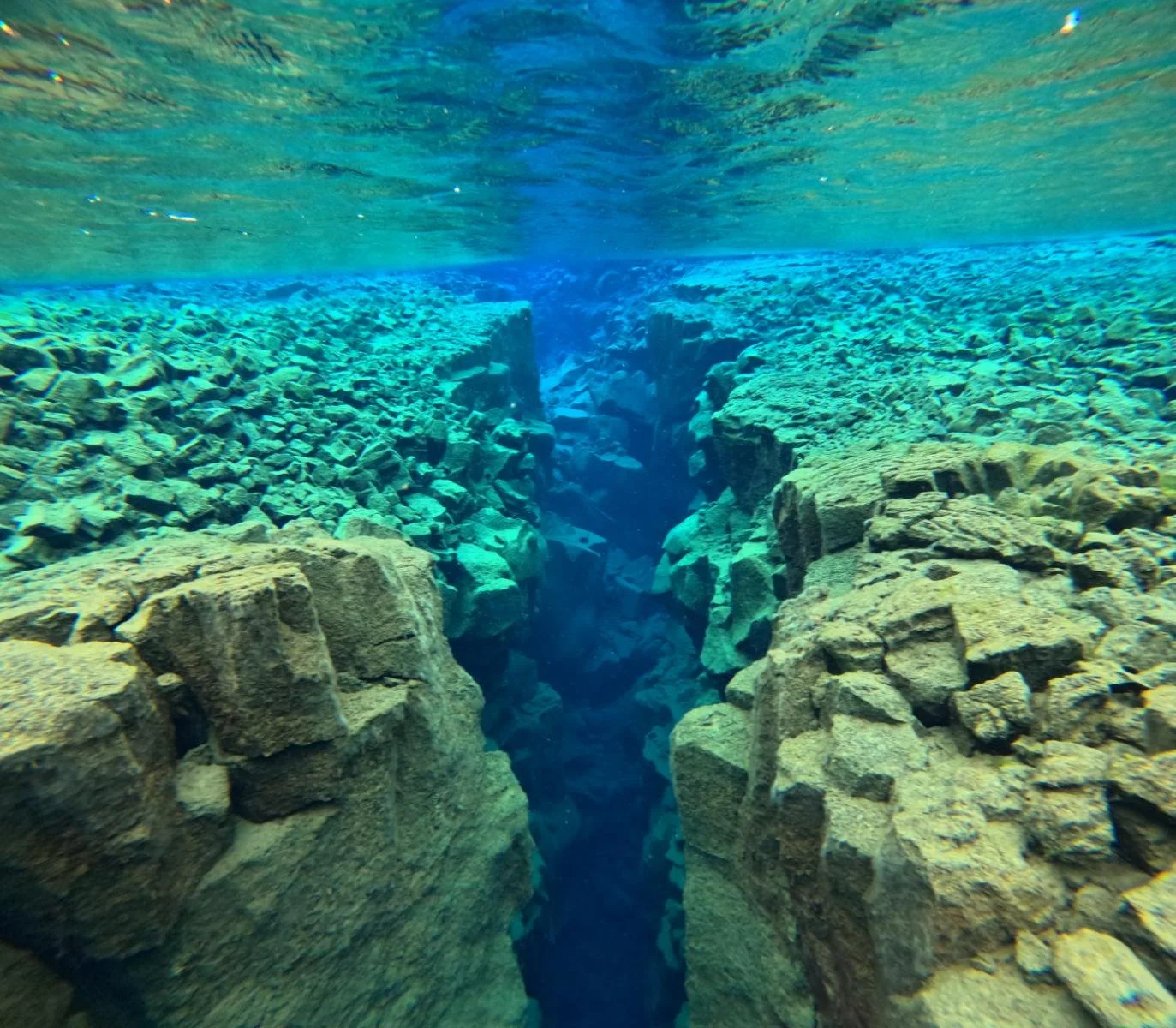
Entering a magical world…
Getting ready — safety first, and then the suit
The Tröll Expeditions team runs a genuinely safety-focused operation. When you arrive at the P5 parking lot and walk about five minutes to the meeting point, the first thing that happens is a proper briefing. Our guide, Anna, was very professional — knowledgeable, calm, and thorough. She covered the gear, what to do in the water, and what to do if anything felt wrong. With just the two of us, it felt like a private tour, though groups can go up to six.
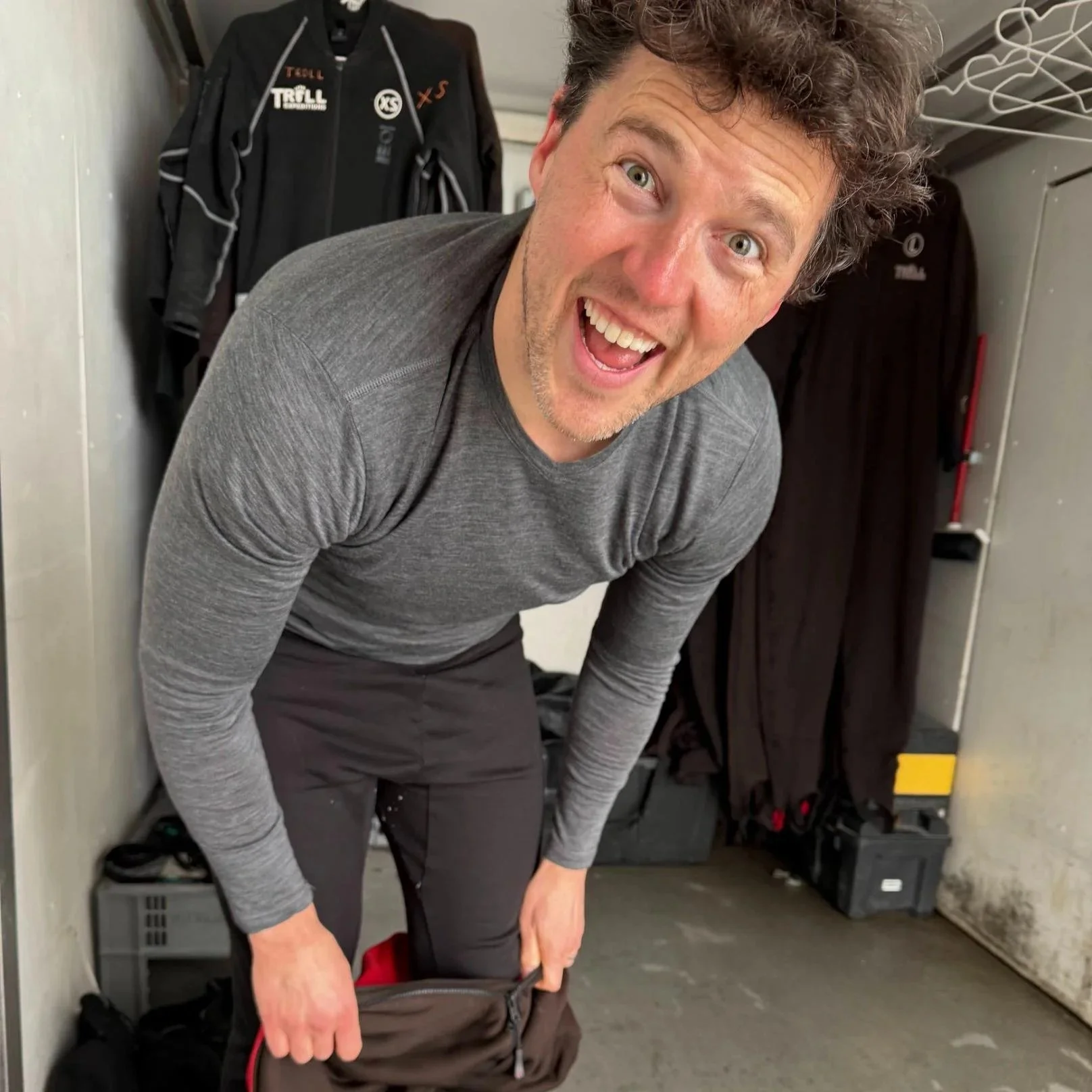
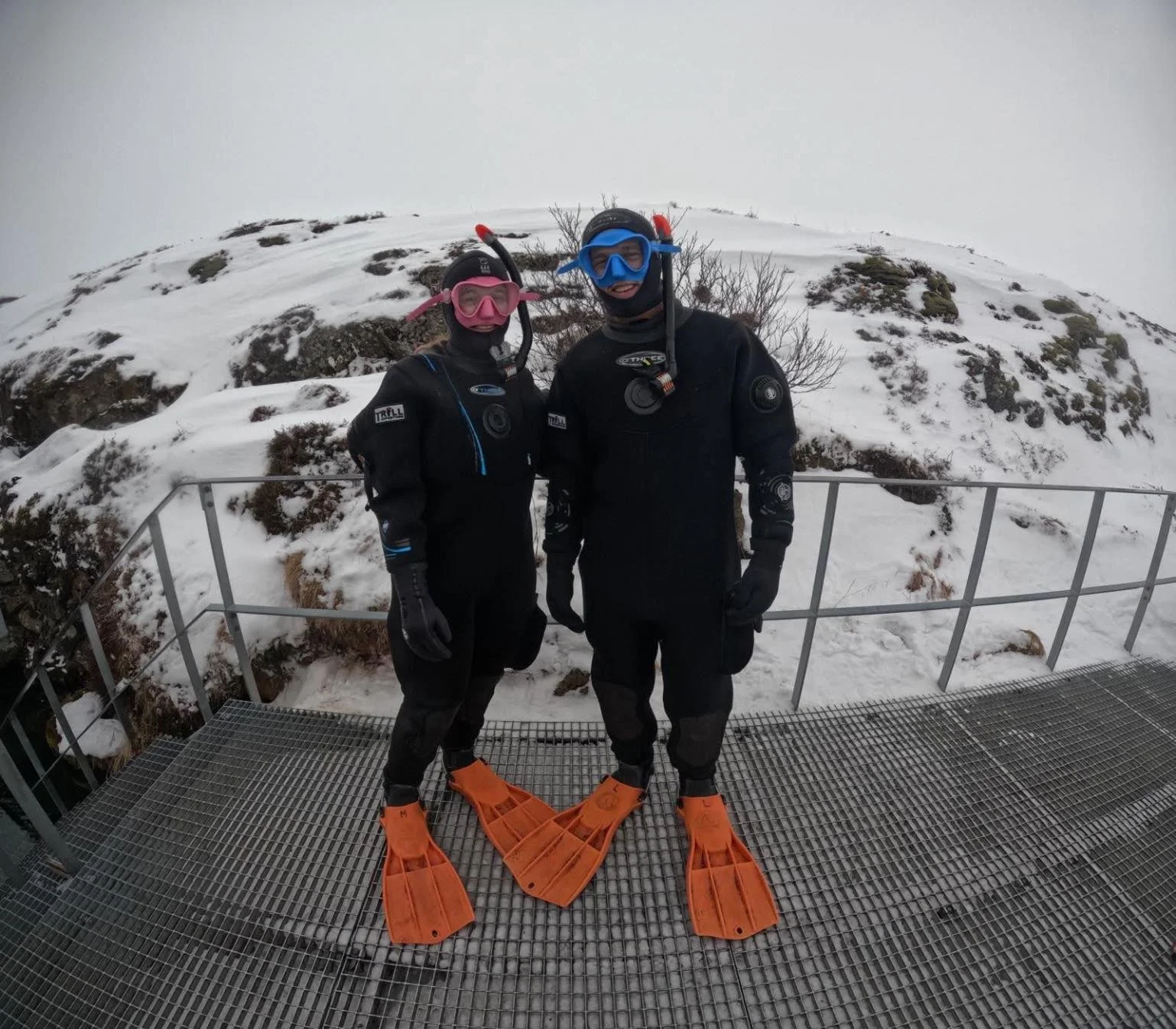
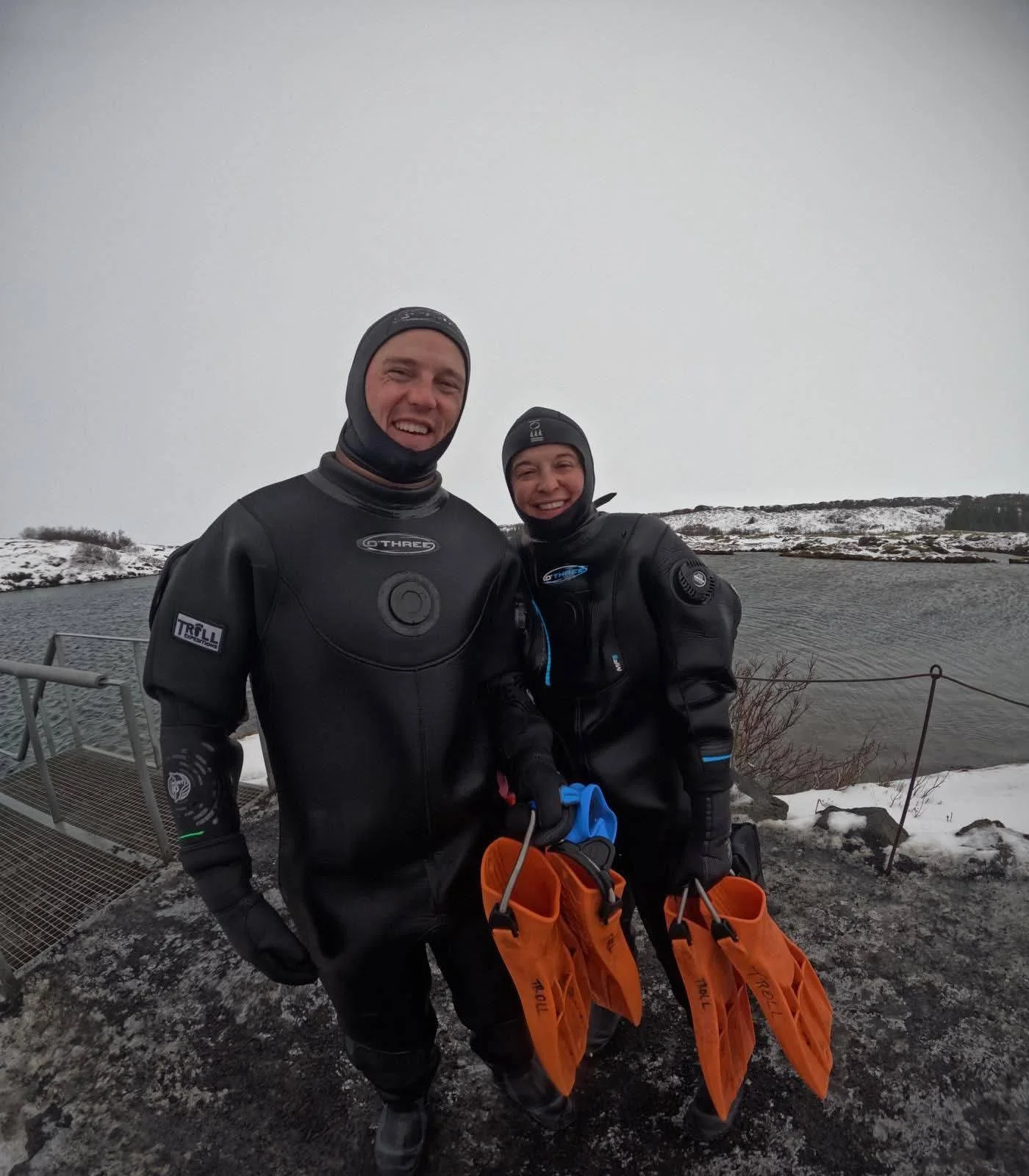
Getting into the gear is an experience in itself. You start with a thermal undersuit — a fleece-lined one-piece that is warmer and more comfortable than it looks — then the dry suit goes on top. The dry suit seals at the wrists and neck to keep you completely dry inside. The neck seal is snug at first, but you adjust quickly. Neoprene hood, gloves, mask, snorkel, and fins complete the setup.
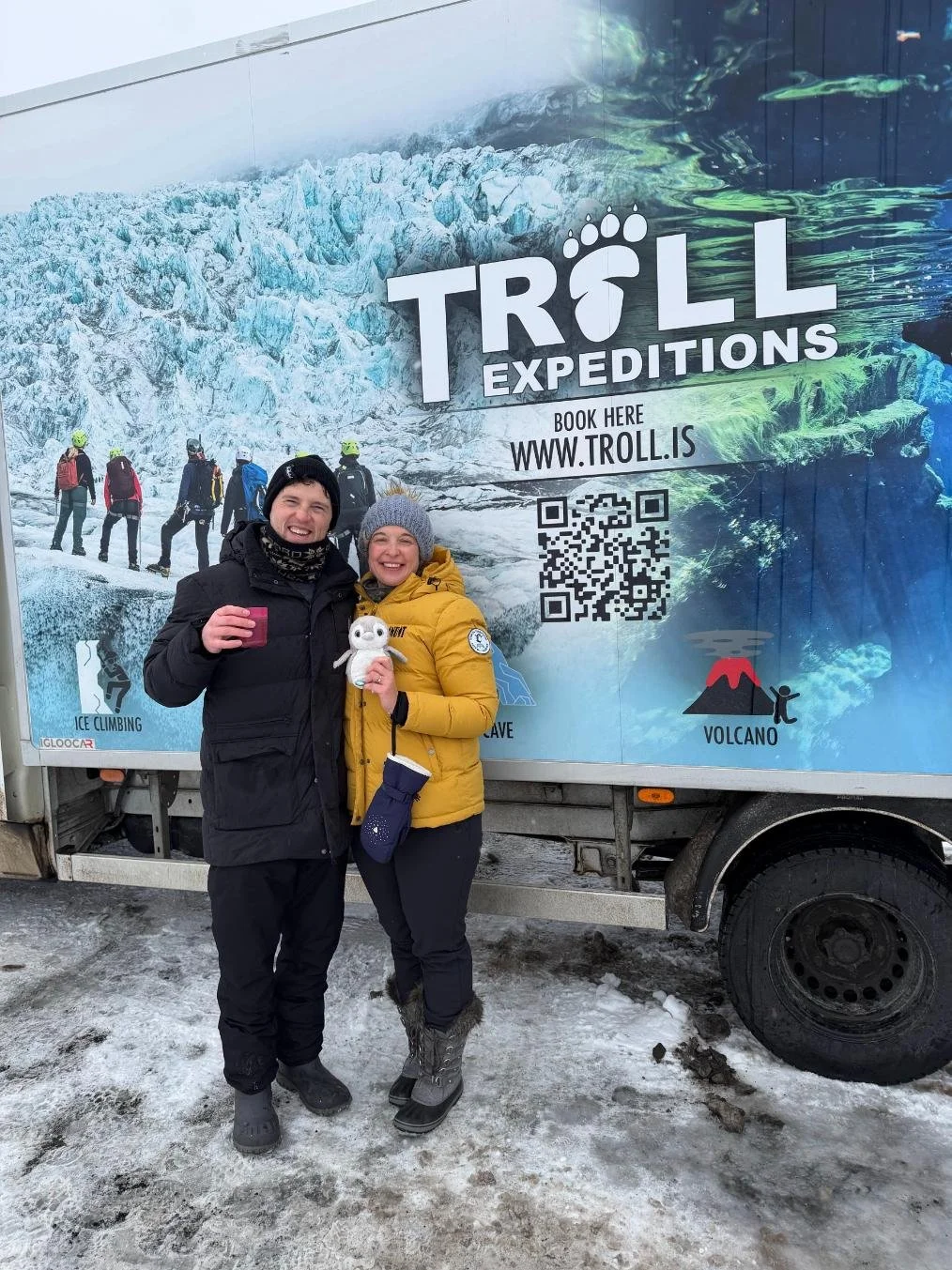
All of this happens in or around Tröll's heated truck parked right at the site, which we didn’t expect and was a welcome addition given the weather. It was cold outside — strong wind, snow, proper Icelandic winter — but you're stepping in and out of a warm space throughout the kit-up. By the time we walked the short distance to the entry platform, we were pretty warm inside the suit and genuinely looking forward to getting in!
In the water — the moment everything changes
We had seen pictures, but nothing prepared us for the blue.
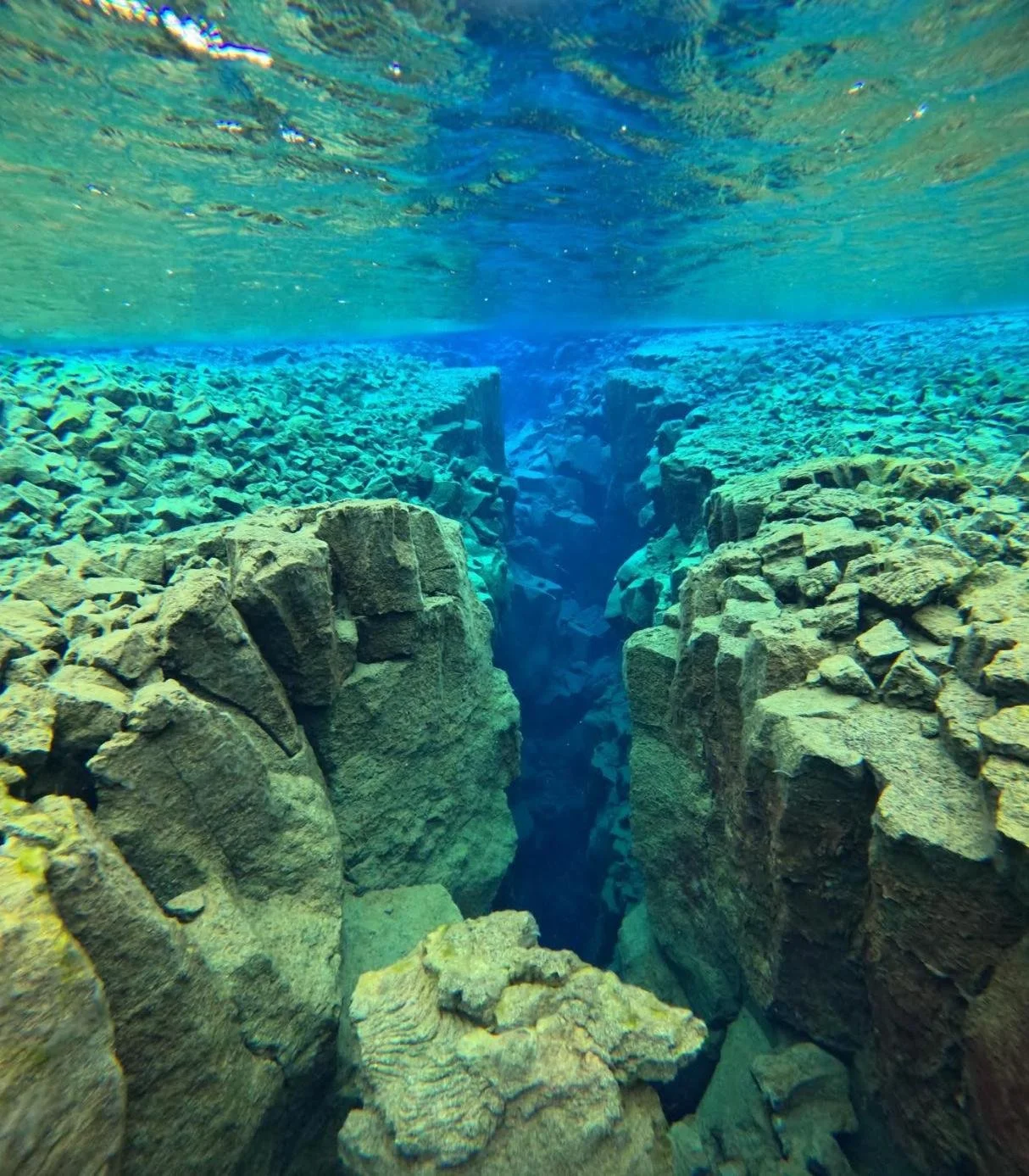
From above, the water looks dark and opaque. The moment you lean forward and put your face in, the world transforms. The visibility is so extreme it doesn't look like water — it almost looks like air. Vivid, saturated blue air, with canyon walls in shades of green and rust and volcanic black lining both sides of the fissure. The depth at the entry point is around 10 meters, and you can see all the way down. We involuntarily gasped, and I was so amazed and I even swallowed some water — delicious, by the way!
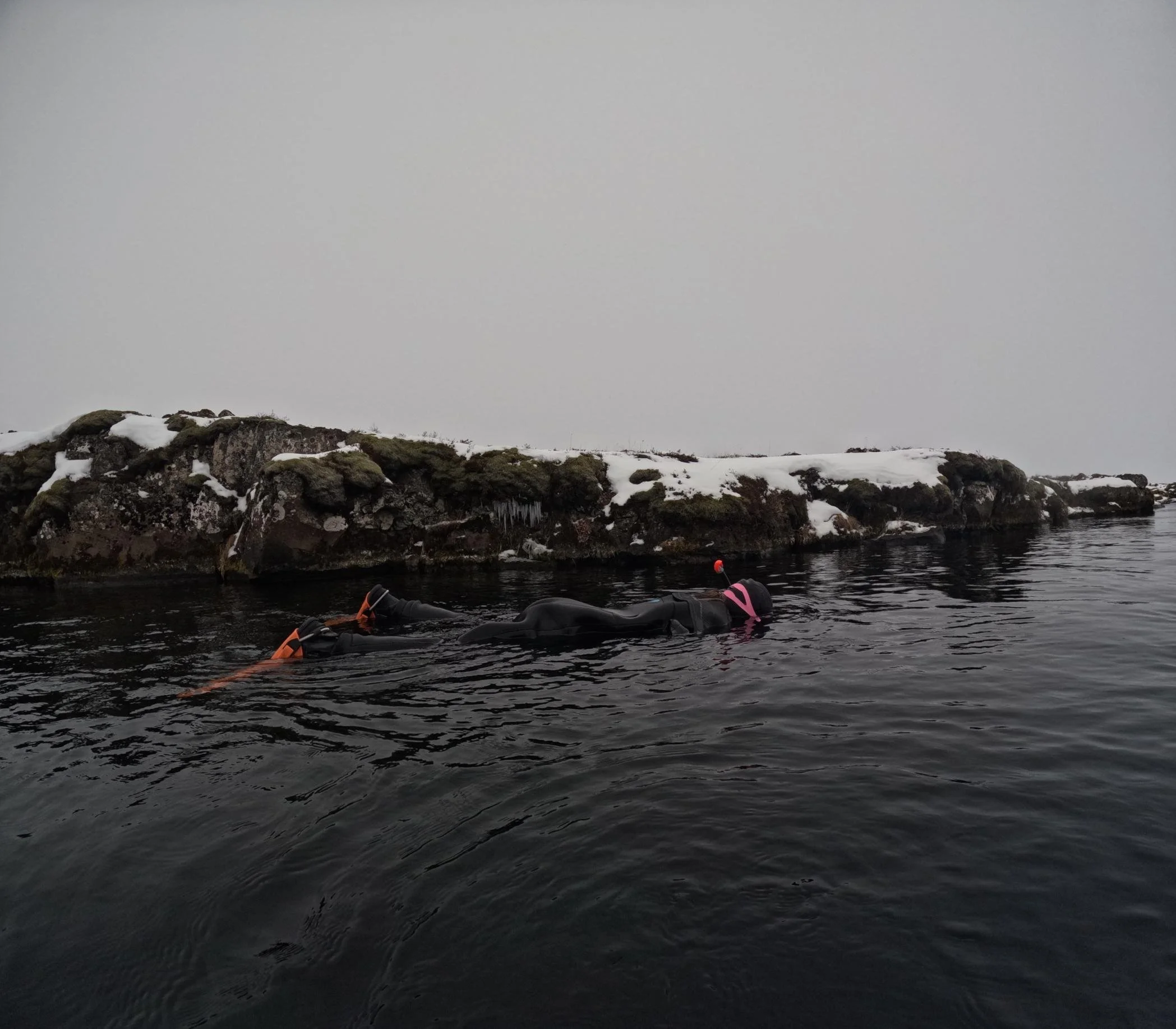
The snorkeling itself requires little effort for most of the route. A gentle current runs through the fissure from north to south — glacial meltwater moving toward Þingvallavatn Lake — and for much of the way, you simply float with it or gently swim. It's meditative in a way that's genuinely hard to describe: no sound except your own breathing through the snorkel, a slow drift through a world that looks lit from within. You forget entirely the outside world… and everything else.
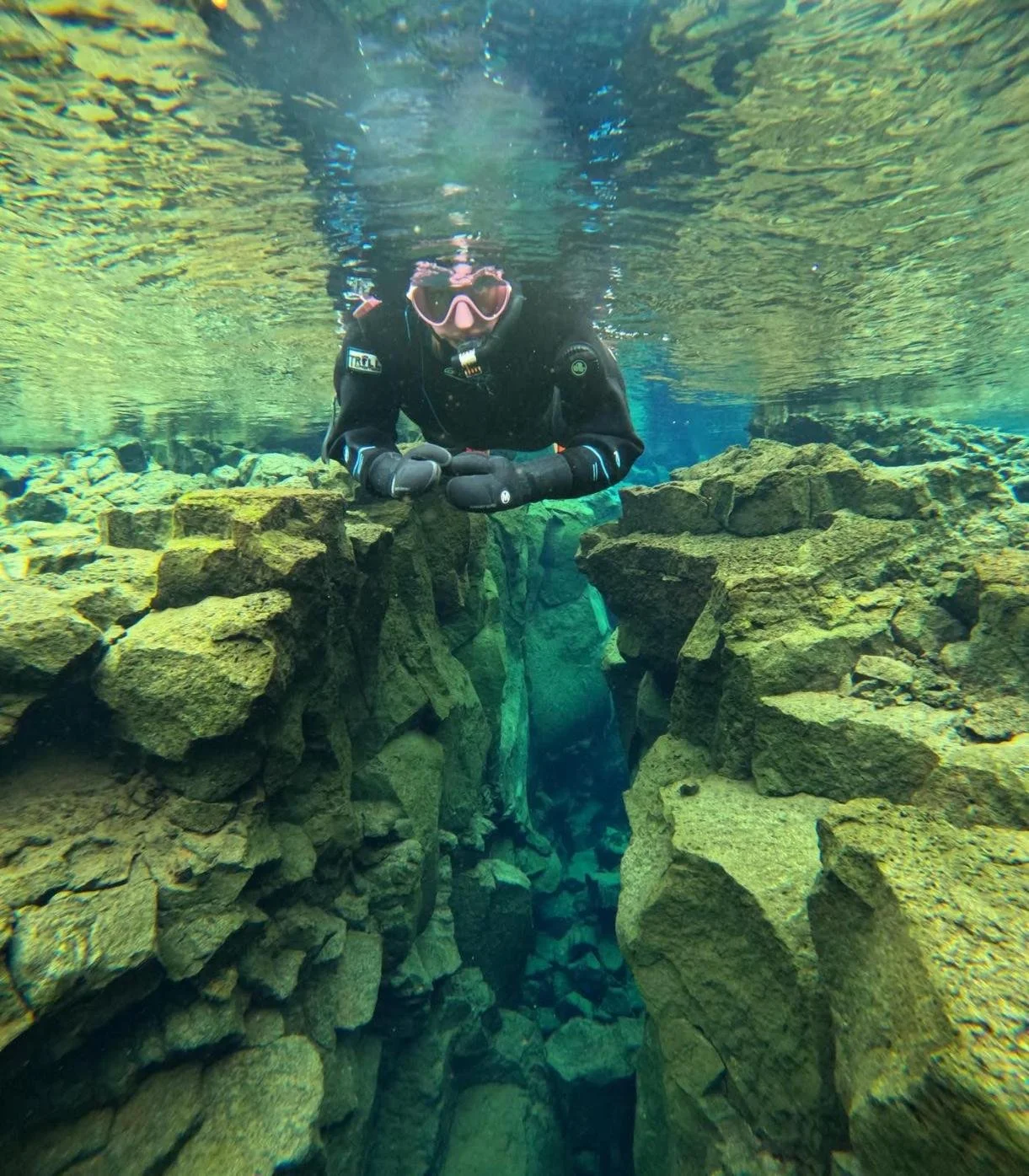
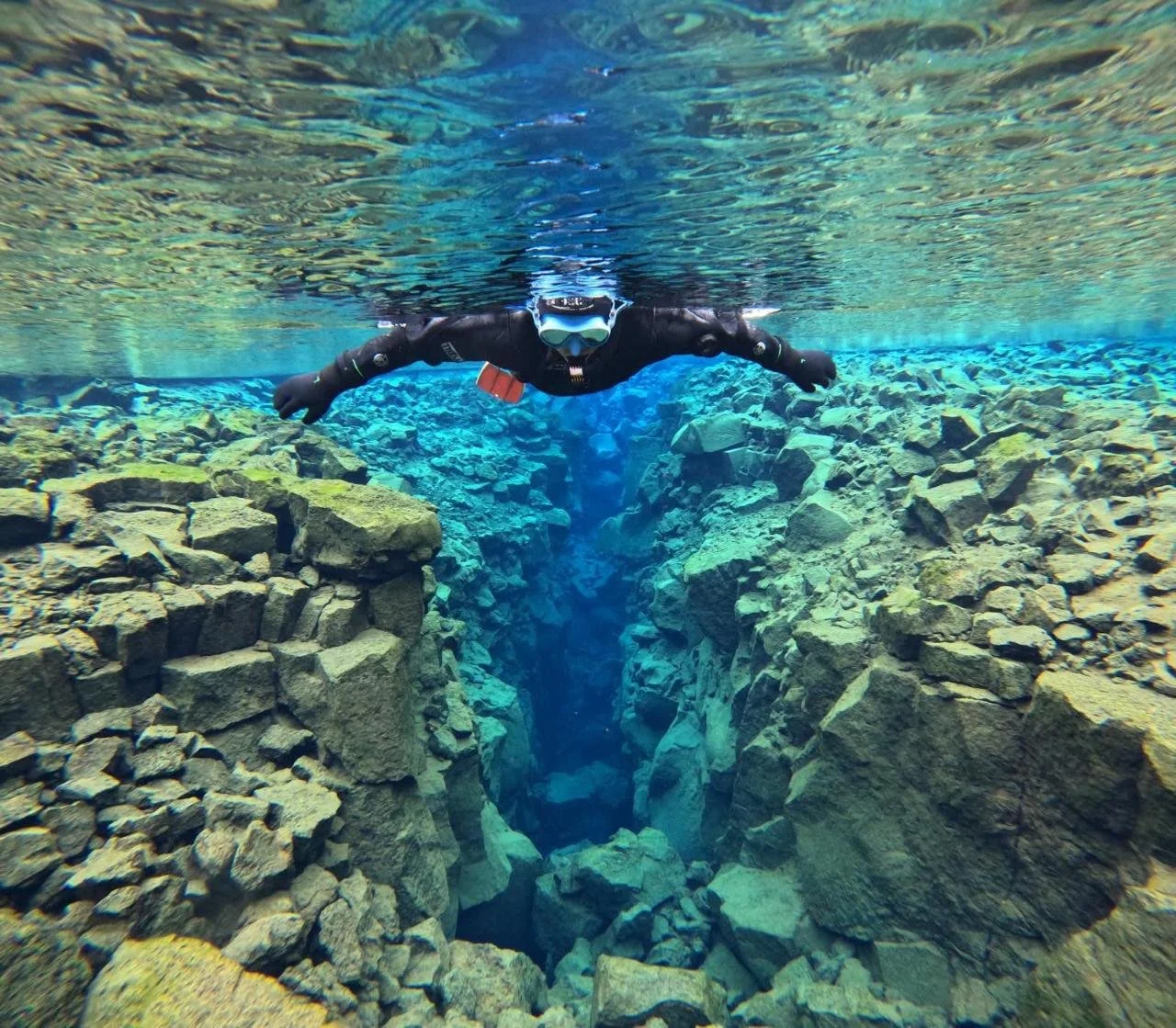
Anna had a GoPro camera and took amazing pictures of us (featured in this article), so we could focus entirely on the experience.
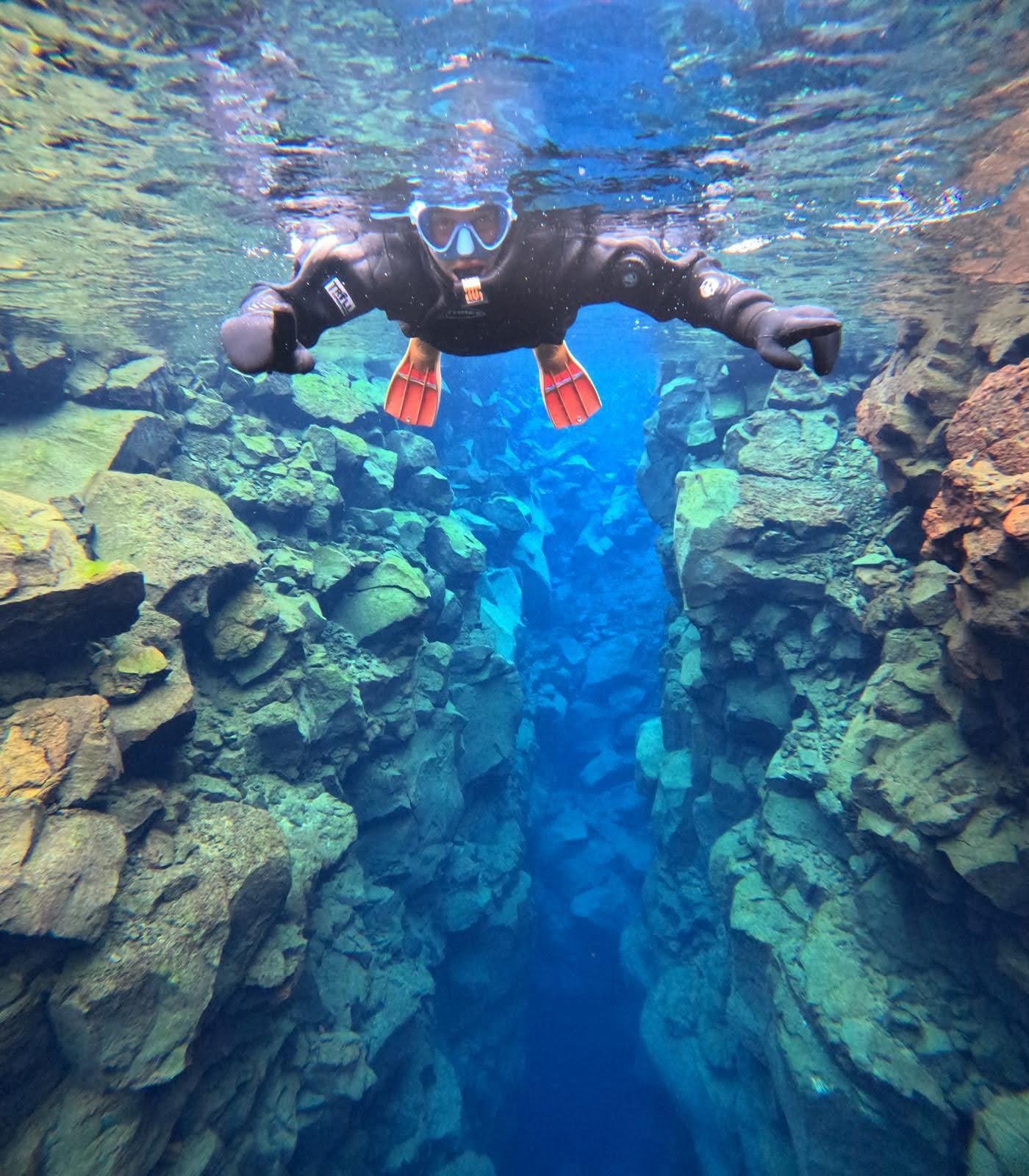
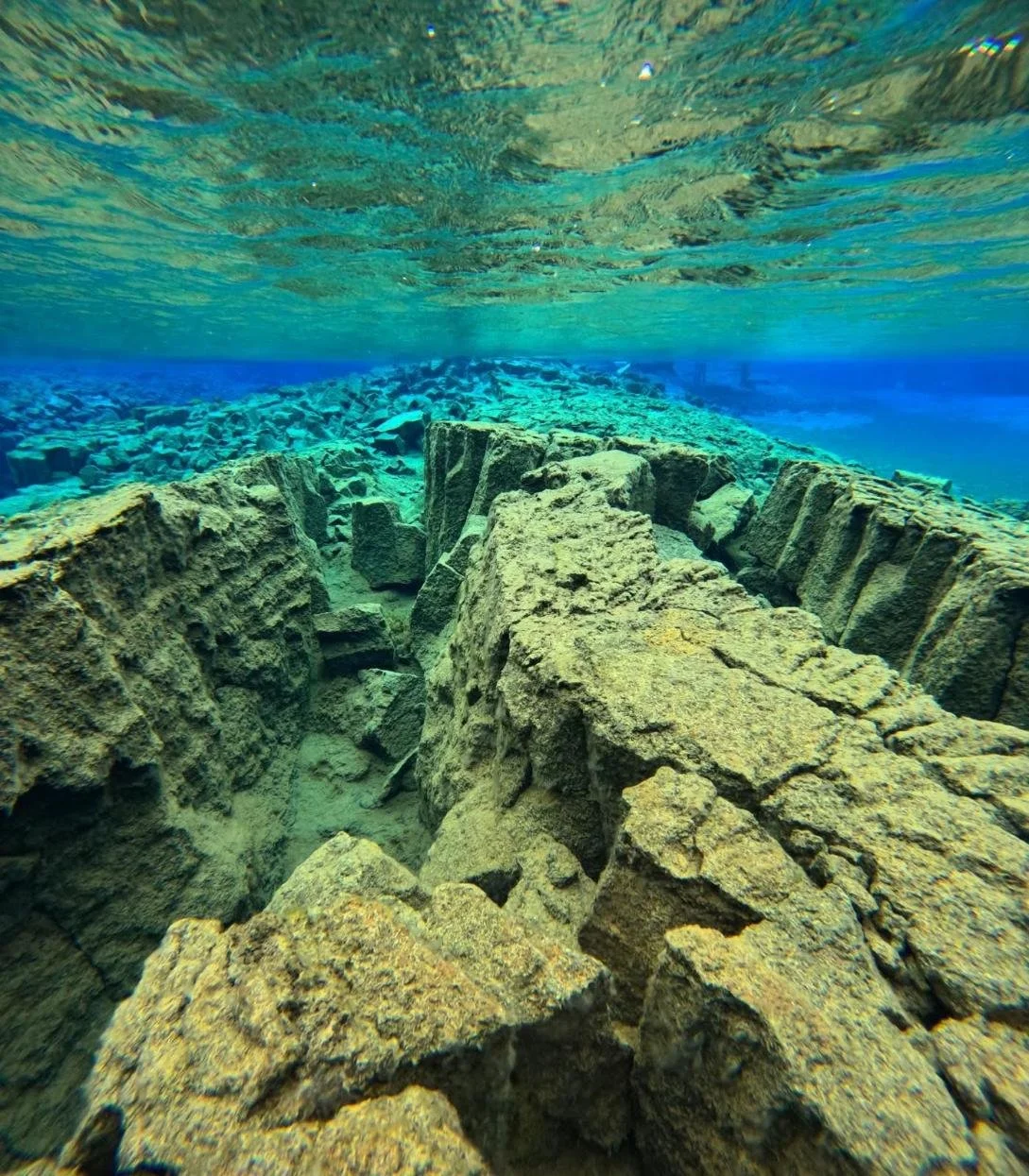
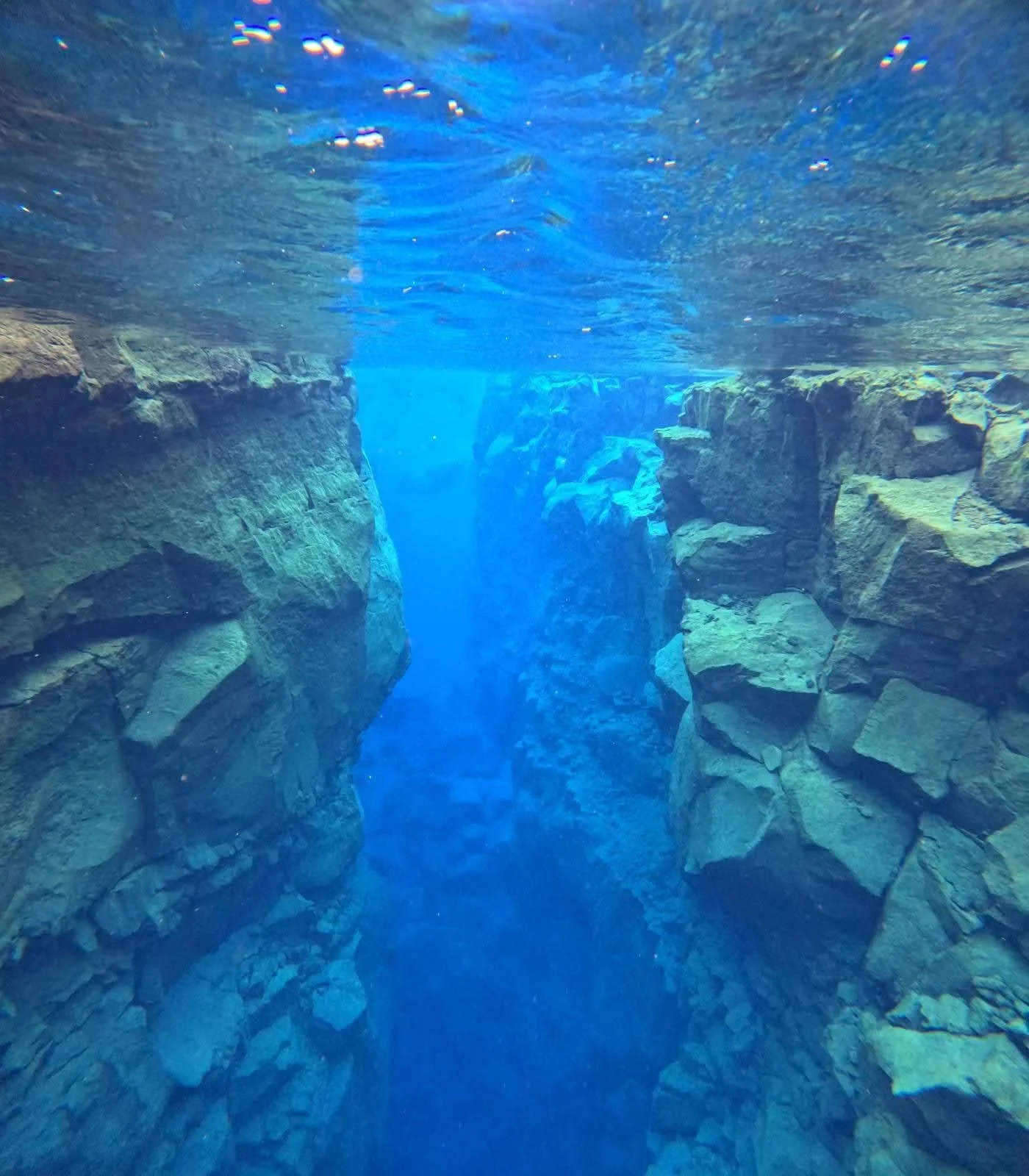
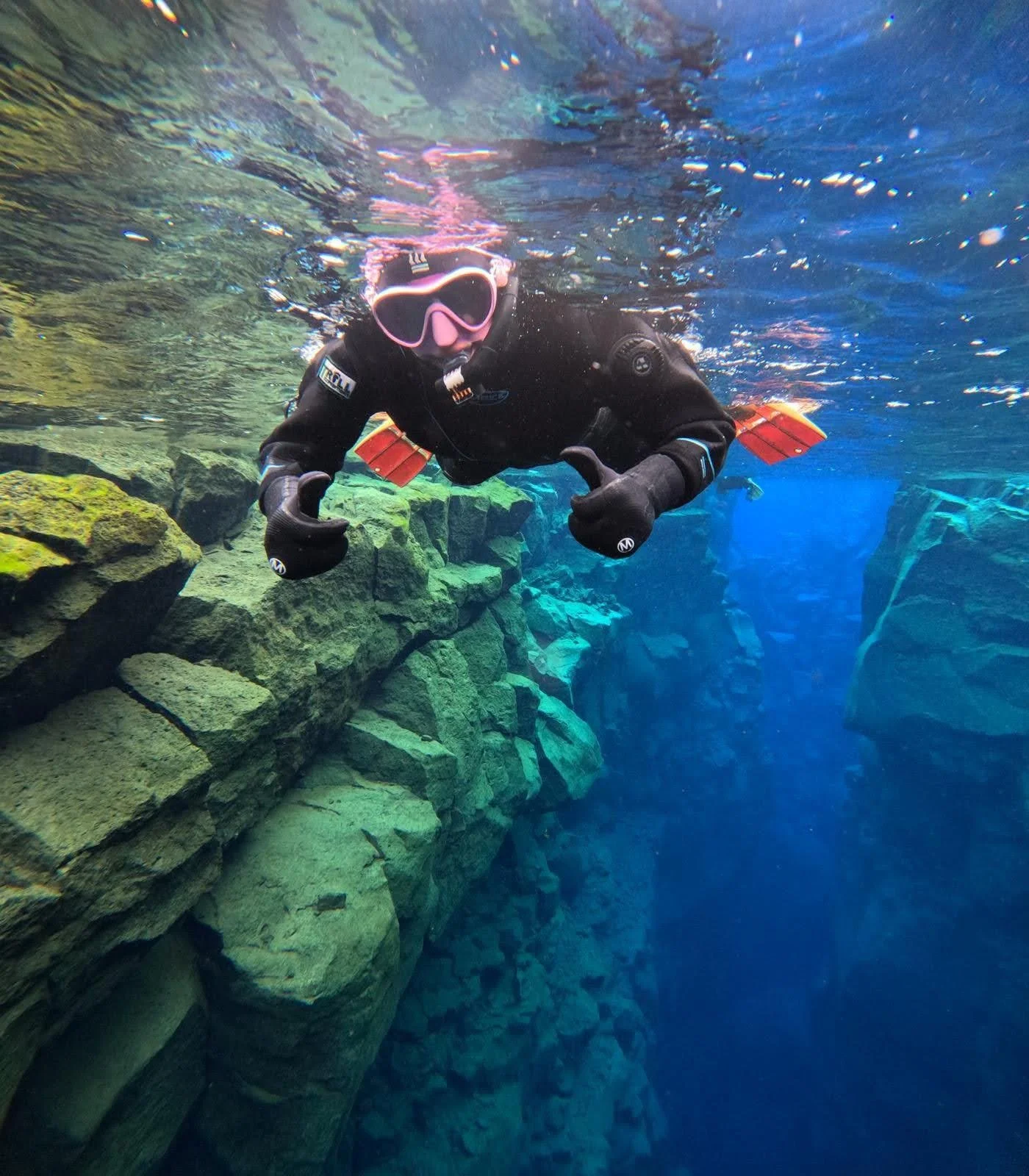
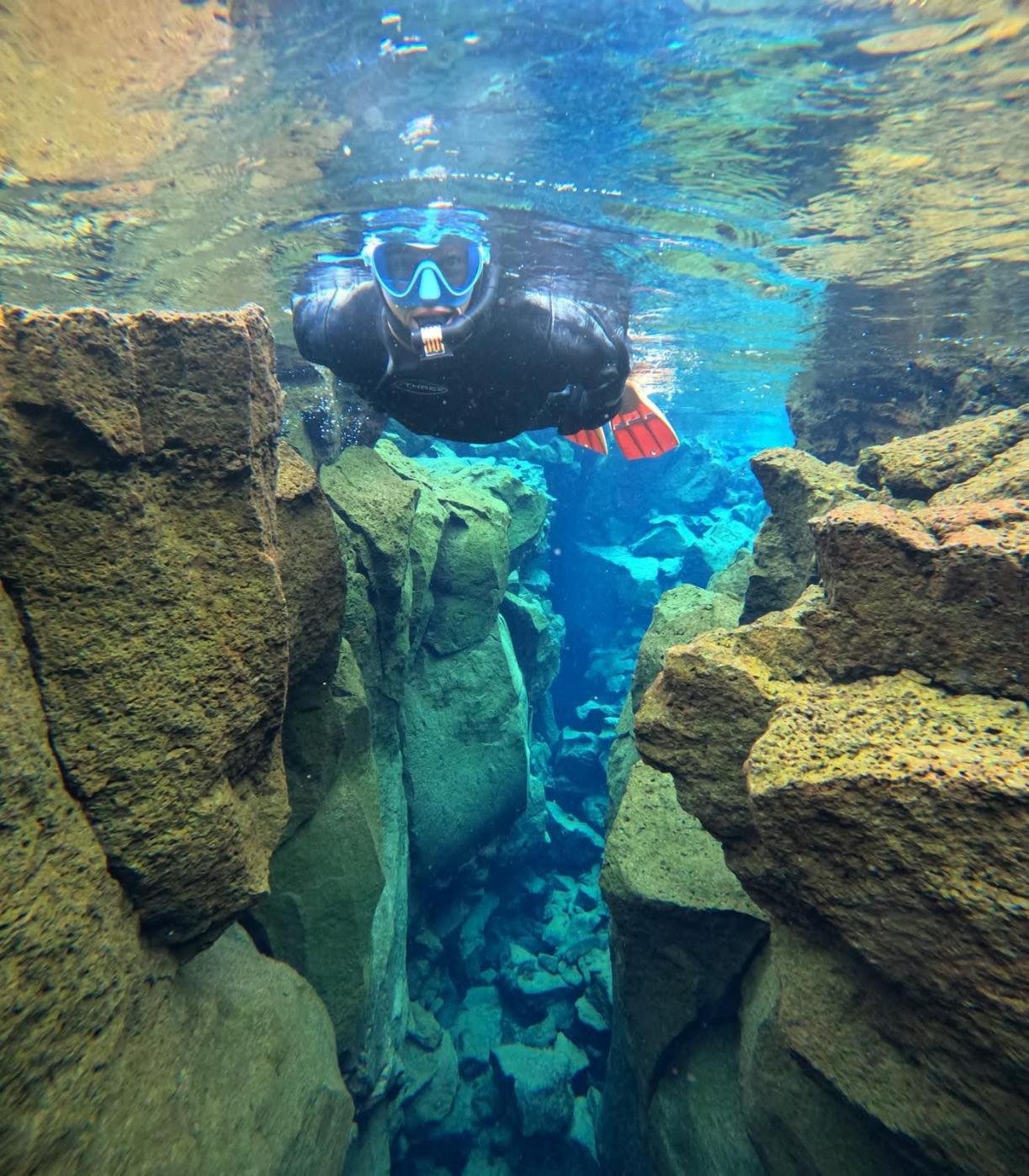
One hand on each continent
At the Silfra Big Crack, the two tectonic walls narrow to within arm's reach — close enough that you can extend both hands and touch North America on one side and Eurasia on the other simultaneously. As an American-European couple, it was highly symbolic for us! One hand on each continent, floating between plates that have been drifting apart for millions of years. Hard to top.
Going with the current — and against it
After the Big Crack, the route continues through Silfra Hall, where the fissure opens up and you get a sense of the full scale — it feels like flying through a cathedral, which is appropriate given what comes next. Silfra Cathedral itself is the deepest section, and the views from inside it are some of the most extraordinary we've encountered anywhere underwater. The length, the depth, the colors.
We also spent time swimming back upstream — against the current, toward the Cathedral — which actually requires a bit of effort with the cumbersome suit. Eventually the fissure opens into the Silfra Lagoon, all vivid green algae and shallow turquoise water. Anna told us we could stay as long as we wanted and we weren’t ready to go out just yet, so we explored the most recent fissure. And, eventually, we climbed the platform to exit into the cold air… and reality.
About the cold — less of an issue than we thought
The one question everyone asks before booking Silfra snorkeling is: how cold is it? The honest answer is that the only cold you feel is on your face — the one part of you in direct contact with 2°C water. That first exposure is… refreshing, but we enjoy cold-water dipping, so it wasn’t hard. After about 30 seconds, our face adjusted, and we stopped noticing it. Our lips went a bit numb, but we were so absorbed in the experience we didn’t even notice. The rest of our body, sealed inside the dry suit and thermal undersuit, stayed entirely warm. Hands: warm in the neoprene gloves. Head: warm under the neoprene hood.
We basically braced ourselves for misery that never arrived. The 40-odd minutes in the water even passed a little too quickly!
After exiting, we walked back to the Tröll truck, peeled off the gear in warmth, and thoroughly enjoyed a hot chocolate and an Icelandic Hraun chocolate bar while the weather was getting truly nasty… I mean… Icelandic.
Practical information for booking Silfra snorkeling
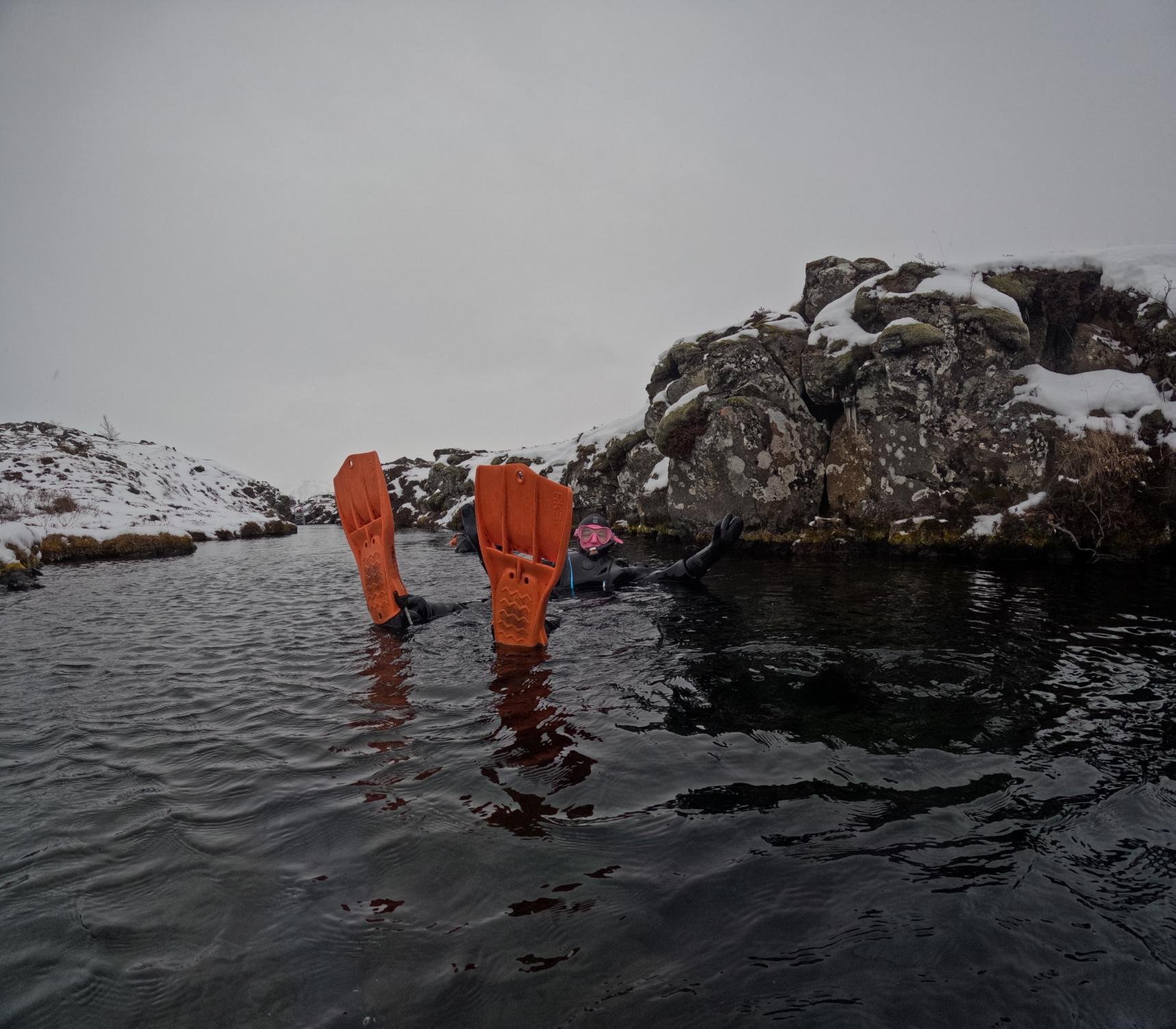
Floating in safety position is fun! Felt like a coark lid!
Getting there
Silfra is in Þingvellir National Park, about 50 minutes by car from Reykjavík along the Golden Circle route. Tröll Expeditions offers tours both for self-drivers (meet on location at the P5 parking lot) and with transfer from Reykjavík included. The park requires paid parking. If you self-drive, read our Road trip in Iceland guide.
What's included
All necessary gear is provided and included in the price: dry suit, thermal undersuit, neoprene hood and gloves, fins, mask, and snorkel. Your guide carries a GoPro throughout the tour and the photos — which are genuinely good — are sent to you after, free of charge.
What to bring
Thermal base layers (wool or fleece — no cotton) to wear under the dry suit (check our Arctic Travel Guide for more info on the perfect outfit)
Warm outer clothing for before and after — it can be cold and windy
A spare set of clothes and socks, just in case the suit has a leak (very rare)
Contact lenses if you normally wear glasses (glasses don't fit under the mask)
Remove all big jewelry before the tour — big rings, large earrings, and watches can damage the suit seals
A full stomach (eat breakfast or lunch before the tour)
Who can join
You need to be a confident swimmer — comfortable enough to swim against a current while wearing a bulky dry suit and fins, and at ease in water that narrows in places. It's not extreme, but it's not a lazy float from start to finish either. No prior snorkeling experience is needed. Here are the official requirements per Tröll Expeditions:
Age: Minimum 12 years old (exceptions possible for younger children who meet size requirements — email Tröll with age, weight, and height). Maximum age is 69. Participants aged 60–69 must bring a signed doctor's note.
Height and weight: Between 135 cm and 200 cm tall, and between 30 kg and 120 kg. This is a dry suit fit requirement — the suits need to seal properly to keep you safe and dry.
Fitness: You should be in reasonable health and able to walk about 10 minutes in a bulky suit and handle light exertion in cold conditions. If you have cardiovascular, respiratory, or other health concerns, read Tröll's medical statement carefully before booking.
Pregnancy: Pregnant participants are not permitted at any stage, due to cold water exposure and the physical demands of the dry suit.
Minors: Participants under 18 must be accompanied by a parent or legal guardian.
Tröll requires all participants to complete a medical statement before the tour, which you can do in advance.
Tour options
Tröll runs several configurations: self-drive meet-on-location, with transfer from Reykjavík, and a full-day Golden Circle combination that adds Gullfoss waterfall and the Geysir geothermal area.

✈️ Find flights
🏨 Explore hotels, apartments, guesthouses, cabins
🧭 Browse activities and tours
🚗 Compare car rentals
🧳 Get travel gear
🛡️ Travel safe with Heymondo Travel Insurance (5–15% off)
📱 Get a travel eSIM
🐾 Protect & track Arctic wildlife with Fahlo Bracelets (20% off)
FAQ: Snorkeling in Silfra, Þingvellir
Is Silfra snorkeling safe for beginners?
Silfra is rated easy, but you should be a confident swimmer — comfortable enough to swim against a current in a dry suit and fins, and at ease in water that narrows in places. No prior snorkeling experience is needed, and for most of the route you simply float with the current. The dry suit neck seal is snug, and some sections of the fissure are narrow enough to feel close. Most people handle it well, but it's not the right activity for someone who isn't genuinely comfortable in the water, or for anyone with serious claustrophobia. Tröll provides a full safety briefing, guides stay with the group at all times, and groups cap at six.
Who is this experience suitable for? Are there age or fitness requirements?
Silfra is rated easy overall, but you should be a confident swimmer — comfortable enough to push through a current in a bulky dry suit and fins, and at ease in water that narrows in places. It's not extreme, but it's not a lazy float from start to finish either. Beyond that, the official requirements from Tröll: minimum age is 12 (exceptions possible for younger children who meet size requirements — contact Tröll directly). Maximum age is 69; participants aged 60–69 need a signed doctor's note. Height must be between 135 cm and 200 cm, and weight between 30 kg and 120 kg — this is about dry suit sizing. You should be in reasonable physical health and able to handle mild exertion in cold conditions. Pregnant participants cannot join at any stage. If you have heart, lung, or other health concerns, Tröll’s medical statement is the place to start. When in doubt, email Tröll directly — they're helpful and responsive.
How cold is the water, and will I freeze?
The water stays between 2°C and 4°C (35–39°F) year-round. The only cold you feel is on your face. Your body stays warm and dry inside the dry suit and thermal undersuit. Most people are genuinely surprised by how manageable it is.
Do I need to bring my own snorkeling gear?
No. Tröll provides everything: dry suit, thermal undersuit, neoprene hood and gloves, fins, mask, and snorkel. Bring warm base layers to wear underneath the dry suit, and a spare set of clothes.
Can you snorkel in Silfra independently, without a tour?
Yes. Þingvellir National Park does allow independent snorkeling and diving at Silfra. You don't need a tour operator to do it.
You still can't just show up and jump in, though. You book a diving or snorkeling permit directly through the park and confirm you're in full physical and mental health for the dive when you book. From there, you follow the same rules as everyone else: always go with a buddy (diving or snorkeling alone in Silfra is prohibited), stay above 18 meters, and stay out of the caves. Divers need an Autonomous Diver certification (or equivalent, such as Open Diver) plus a dry suit certificate, or proof of 10 registered dry suit dives in the last two years from a recognized instructor. Full rules and the permit booking system are on Þingvellir's own site: thingvellir.is/en/things-to-do/diving.
When is the best time to snorkel in Silfra?
Silfra is accessible year-round and the water temperature barely changes between seasons. Winter brings dramatic snowy landscapes above the fissure; summer offers longer days and easier logistics. There is no single best season — it depends on what kind of Iceland trip you're building around it.
How far is Silfra from Reykjavík?
About 50 minutes by car. Tröll Expeditions offers tours for self-drivers (meet on location) and tours with transfer from Reykjavík included.
Why is the water in Silfra so clear?
The water originates as meltwater from Langjökull glacier and filters underground through porous lava rock for 30 to 100 years before emerging in the fissure. By the time it arrives, it's extraordinarily pure — visibility can exceed 100 meters, among the highest anywhere on Earth.
Is Þingvellir worth visiting beyond the snorkeling?
Absolutely. Þingvellir is a UNESCO World Heritage Site where you can walk the rift valley between two tectonic plates, stand on the Lögberg (Law Rock) where the Alþing met for 800 years, and explore one of the most geologically and historically significant landscapes in all of Europe. It's the first stop on the Golden Circle for good reason.
Iceland has no shortage of extraordinary experiences. We've done the waterfalls, the glaciers, the geysers, the Northern Lights. Silfra is different from all of them. It's not something you just observe — it's something thing you experience. A geological wonder you float through from the inside, between walls that have been drifting apart for millions of years, in water so clear it looks like air.
The whole thing — the safety-first approach, the small group, the excellent guide, the heated truck to change in, the free photos, the hot chocolate at the end — adds up to one of the most well-run adventure experiences we've encountered anywhere. The moment you put your face in that water and the impossible blue opens up beneath you, you forget everything else.
Finally, explore all our Iceland articles here.

Free download
Travel Cheaper Cheat Sheet
27 tips on flights, hotels, hidden costs and more — spend less without missing what actually matters.
No spam. Unsubscribe anytime.
Best Northern Lights Hotels in Iceland
Things to Do in Iceland in Winter
Northern Lights in Iceland: Is It Worth It?
Best Time for Northern Lights in Iceland
Ring Road & Practical Planning:
Iceland Road Trip: South Ring Road Self-Drive
Where to Stay on Iceland's Ring Road
Best Time to Visit Iceland & Things to Do
How to Travel Iceland on a Budget
Iceland Without the Crowds
Where to Go Instead of Iceland
Travel Insurance for Iceland
Things to Do in Iceland in Summer
Free and Cheap Things to Do in Reykjavík
Horseback Riding in Iceland
Lava Show in Reykjavík
Silfra Snorkeling in Þingvellir
Glacier Hike & Ice Cave in Iceland
Stays & Hot Springs:
Brekka Retreat, Hvalfjörður
Hvammsvík Hot Springs, Hvalfjörður
Aurora Igloo South, Hella
Hotel Keflavik & Spa, near KEF Airport & Blue Lagoon
