
Free and Cheap Things to Do in Reykjavik
Yes, the coolest European capital is expensive. But the free list is longer (and cooler) than you'd think.
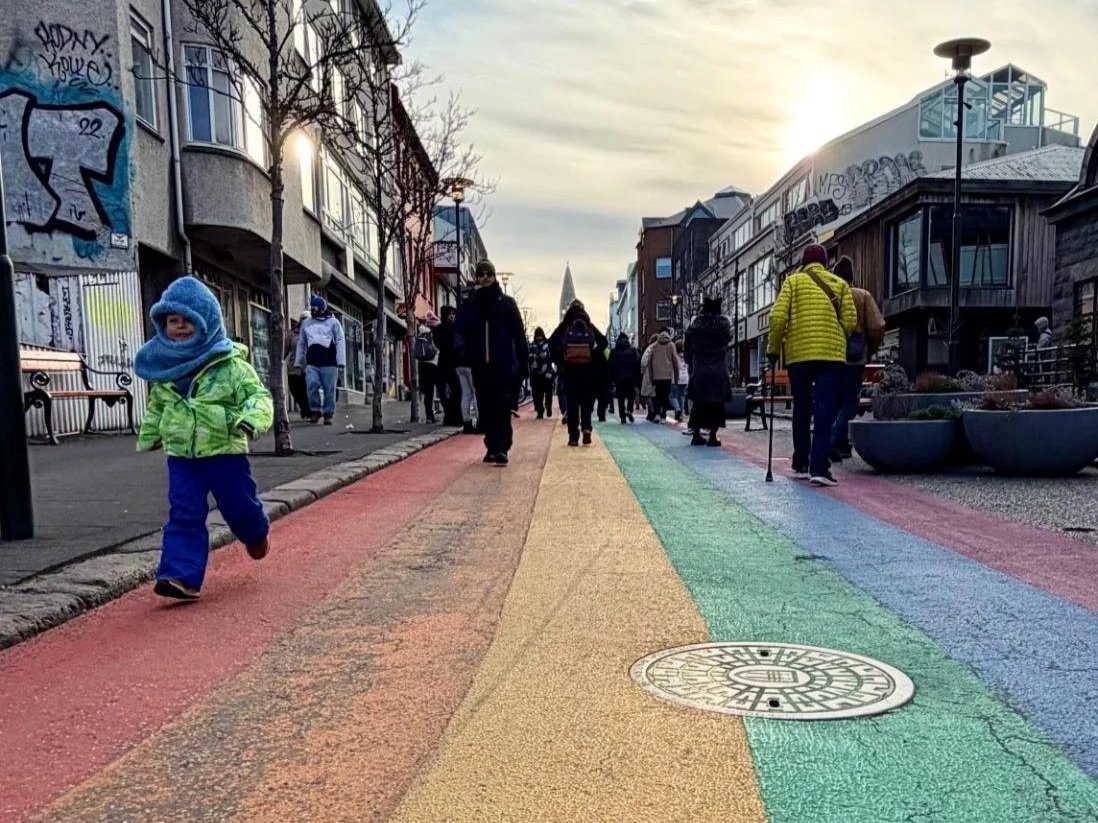
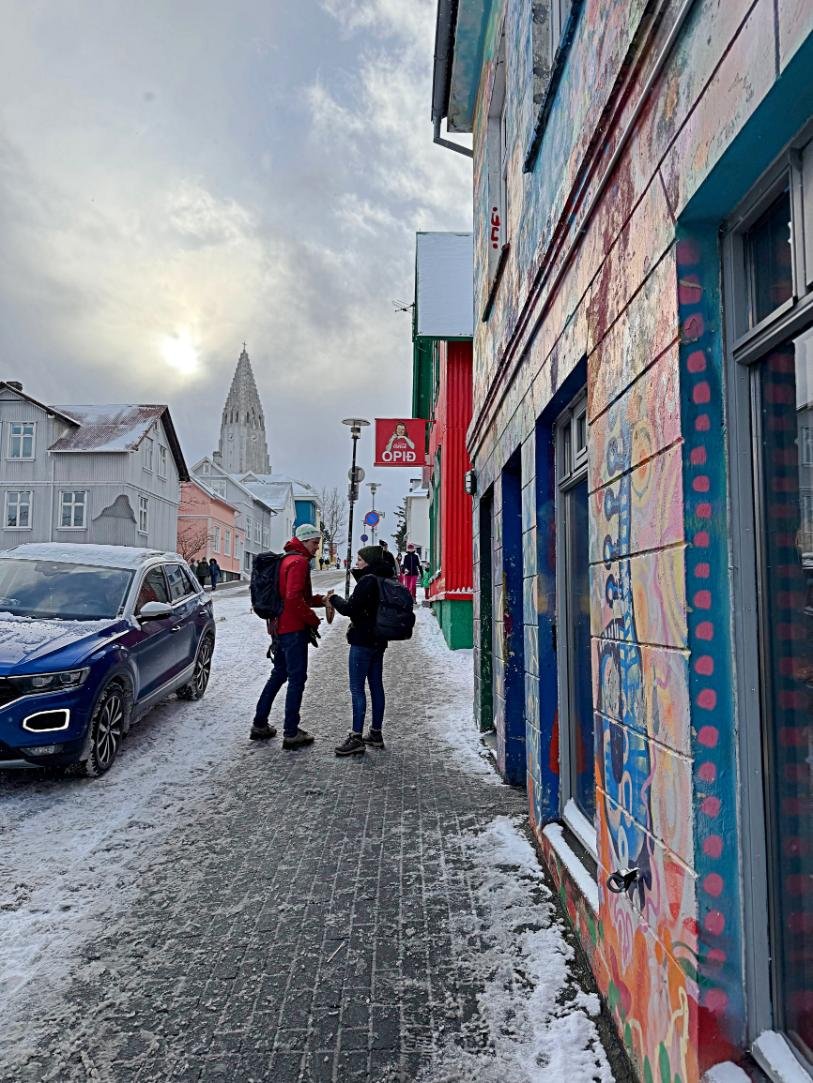
All cities should have a permanent rainbow street!
Last update: August 2026
Reykjavik, Iceland, as cool as it is, has earned its reputation as one of Europe's pricier capitals. A sit-down dinner for two, a round of drinks, a whale watching tour — the numbers add up fast, and they tend to go in one direction. But here's something the typical "budget Iceland" articles gloss over: Reykjavik has a surprisingly solid free list of things to do. Not "free in the sense that you're still spending on transport and food" free — genuinely, spend-nothing free.
The locals aren't eating at tourist restaurants or paying for entry to every museum. They're swimming in geothermal pools, walking the harbor, browsing flea markets, and sitting outside bakeries with a coffee and a pastry watching the northern lights. Most of that costs very little, and some of it costs nothing at all.
🛌 Where to stay:
• Guesthouses & apartments in Reykjavík — for a genuine local feel and better value, filter for guesthouses and local apartments rather than chain hotels. The difference in price (and atmosphere) is significant, especially off-season
• Brekka Retreat, Hvalfjörður — 50 minutes from Reykjavík and genuinely one of the best things we did in Iceland. Private Finnish sauna, geothermal hot tub, northern lights overhead. If you want one night away from the city that feels like a completely different country, this is it. We stayed there
🇮🇸 Top experiences:
• Hidden people walking tour — the most distinctively Icelandic thing you can do in Reykjavík. The stories around specific rocks and neighborhoods are fascinating, and the guides take the huldufólk belief system seriously — because Iceland does
• Reykjavík cat tour — absurd in the best way. The city's cats basically run the place and this tour exists because it should. Perfect if you want something genuinely unusual
• Browse more Reykjavík experiences — Golden Circle day trips, northern lights tours, whale watching, the Lava Show
🚗 Reykjavík is walkable, but the best of Iceland is outside it. Book a rental car for day trips to the South Coast, Golden Circle, or Snæfellsnes — you'll cover three times the ground and spend less than a group tour.
Walk the city: it costs nothing, it’s worth it and it takes all day
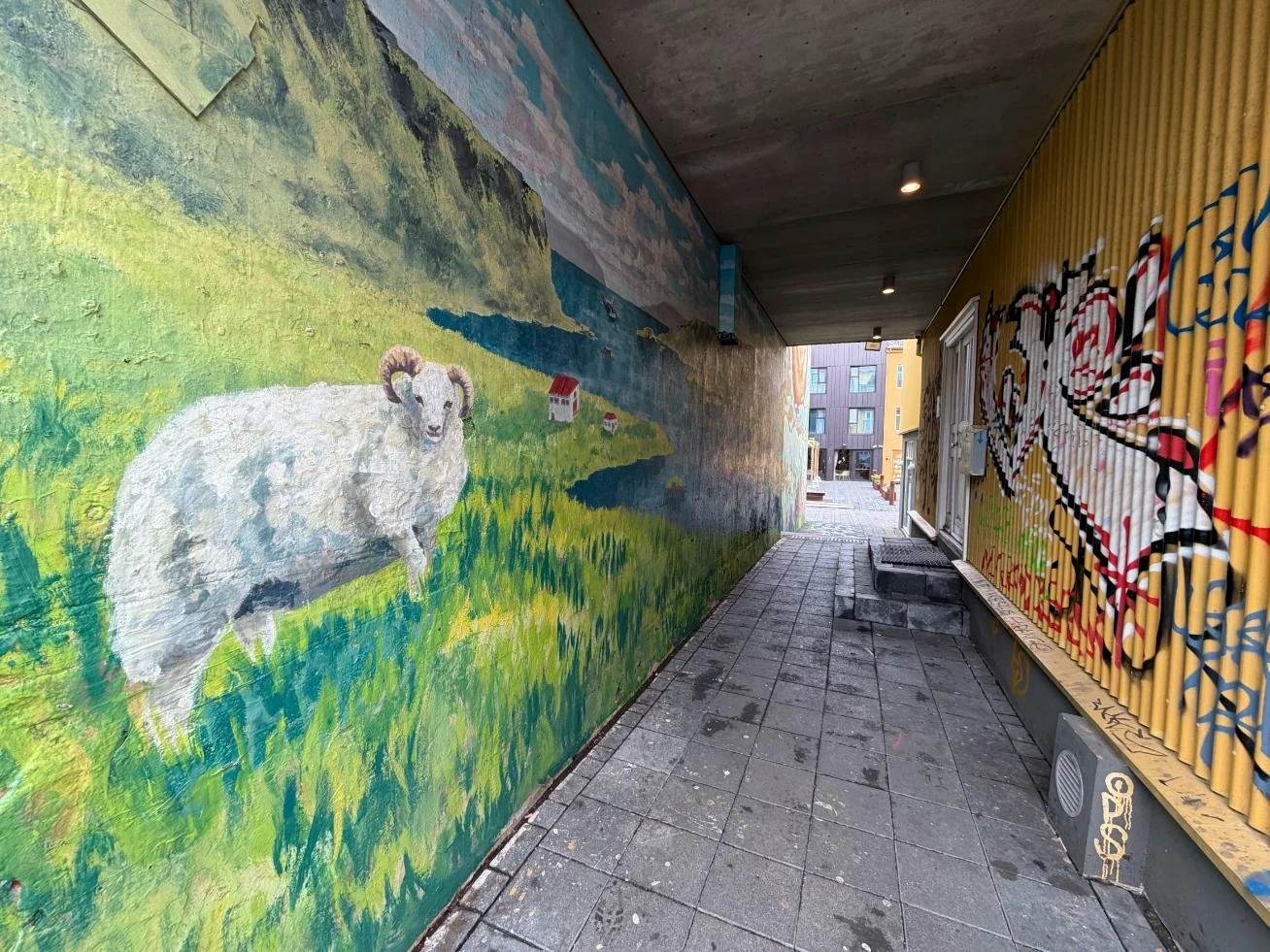
Street art is everywheeeeere in Reykjavík
Reykjavik is small enough to walk almost entirely on foot, and the city itself is the attraction in a way that gets underestimated.
Laugavegur and the side streets
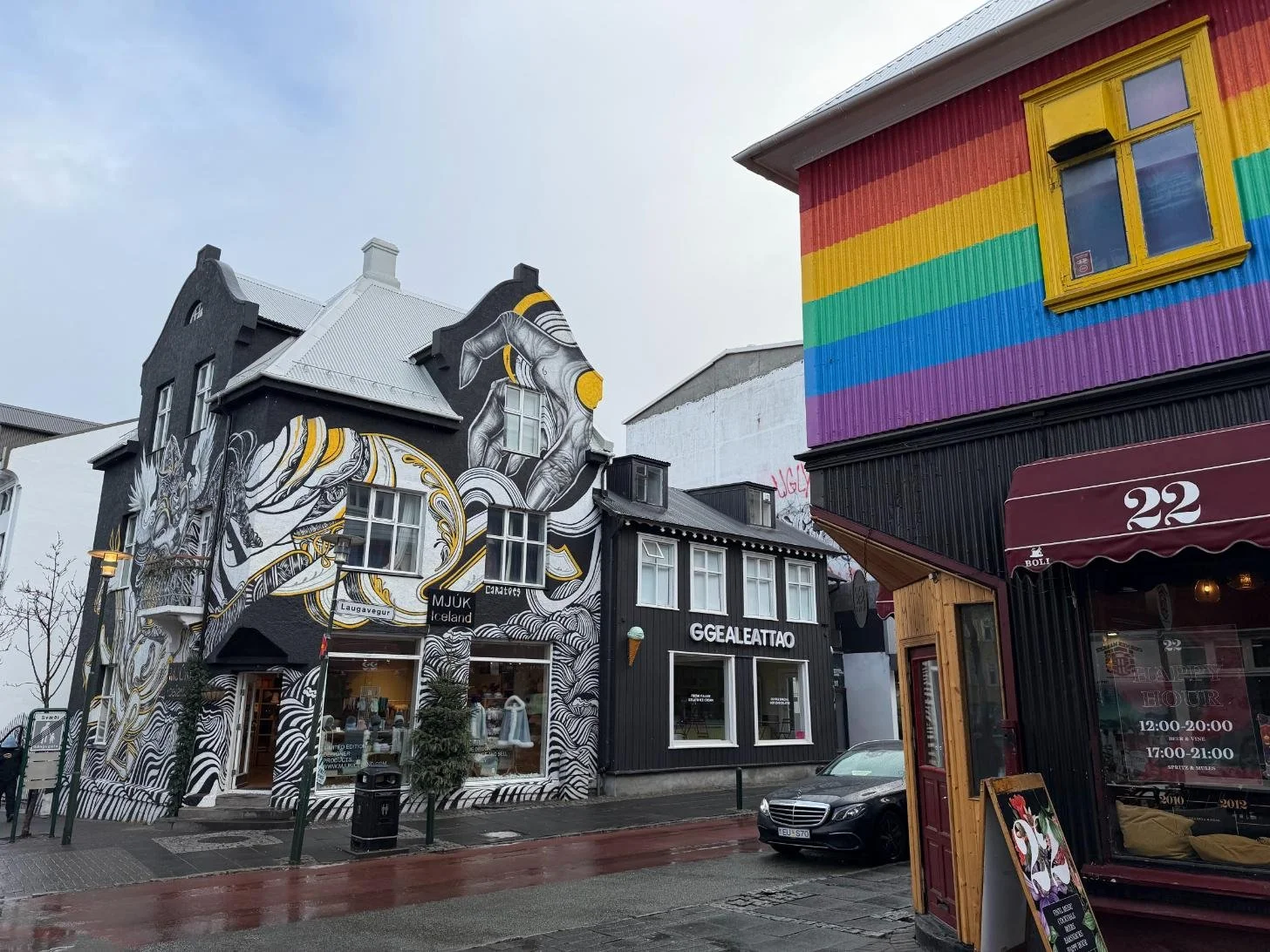
Start on Laugavegur — the main shopping street — and work outward from there. The surrounding alleys are full of painted corrugated iron houses, small galleries, independent coffee shops, and enough street murals to occupy an afternoon if you pay attention. It's the kind of street where window-shopping is genuinely enjoyable even if you don't plan to buy anything.
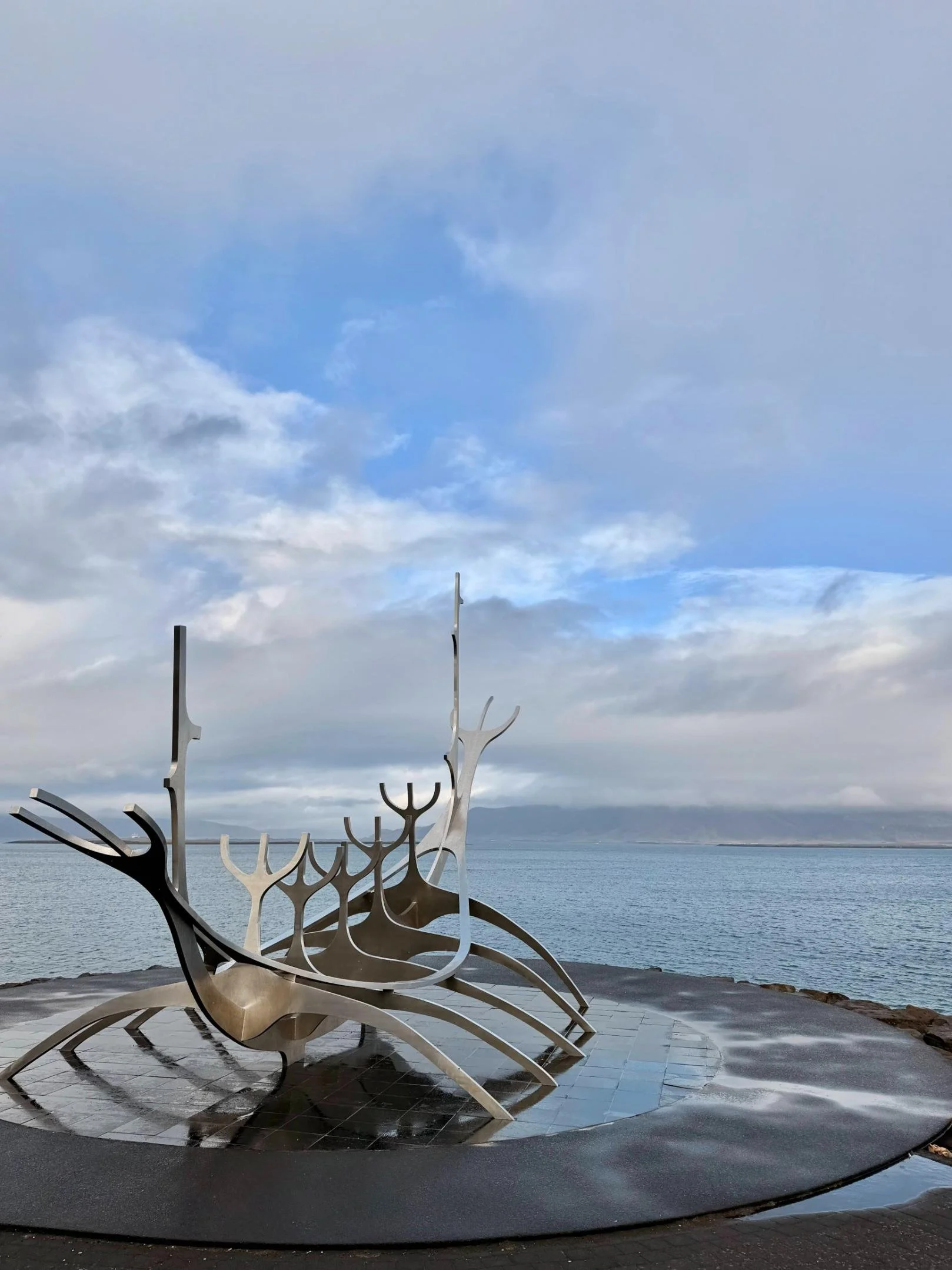
The harbor and Sun Voyager
The harbor is a 10-minute walk from the center and worth the detour. The Sólfar Sun Voyager — the large steel sculpture on the waterfront that looks like a Viking ship — is one of those pieces of public art that actually earns its reputation. Free, always accessible, and best photographed in the golden hour light (or with northern lights!) Iceland does better than almost anywhere.
Grandi: where locals actually go
The Grandi neighborhood, just beyond the old harbor, has shifted from working fishing district to a mix of local restaurants, museums & attractions, street art, and a food hall. You can walk through the whole thing without spending a cent, and the atmosphere is more local than most of central Reykjavik.
Cat crawl
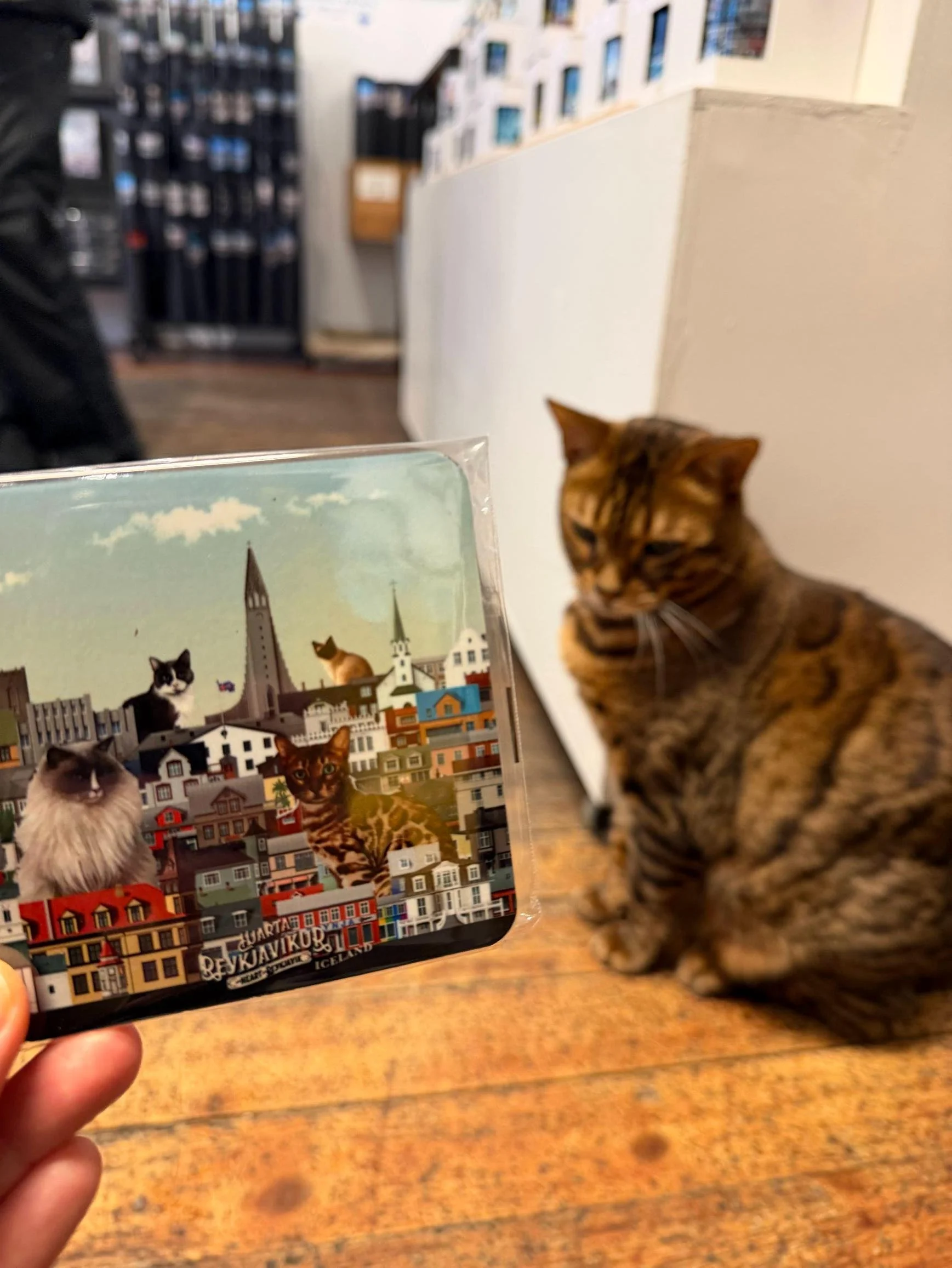
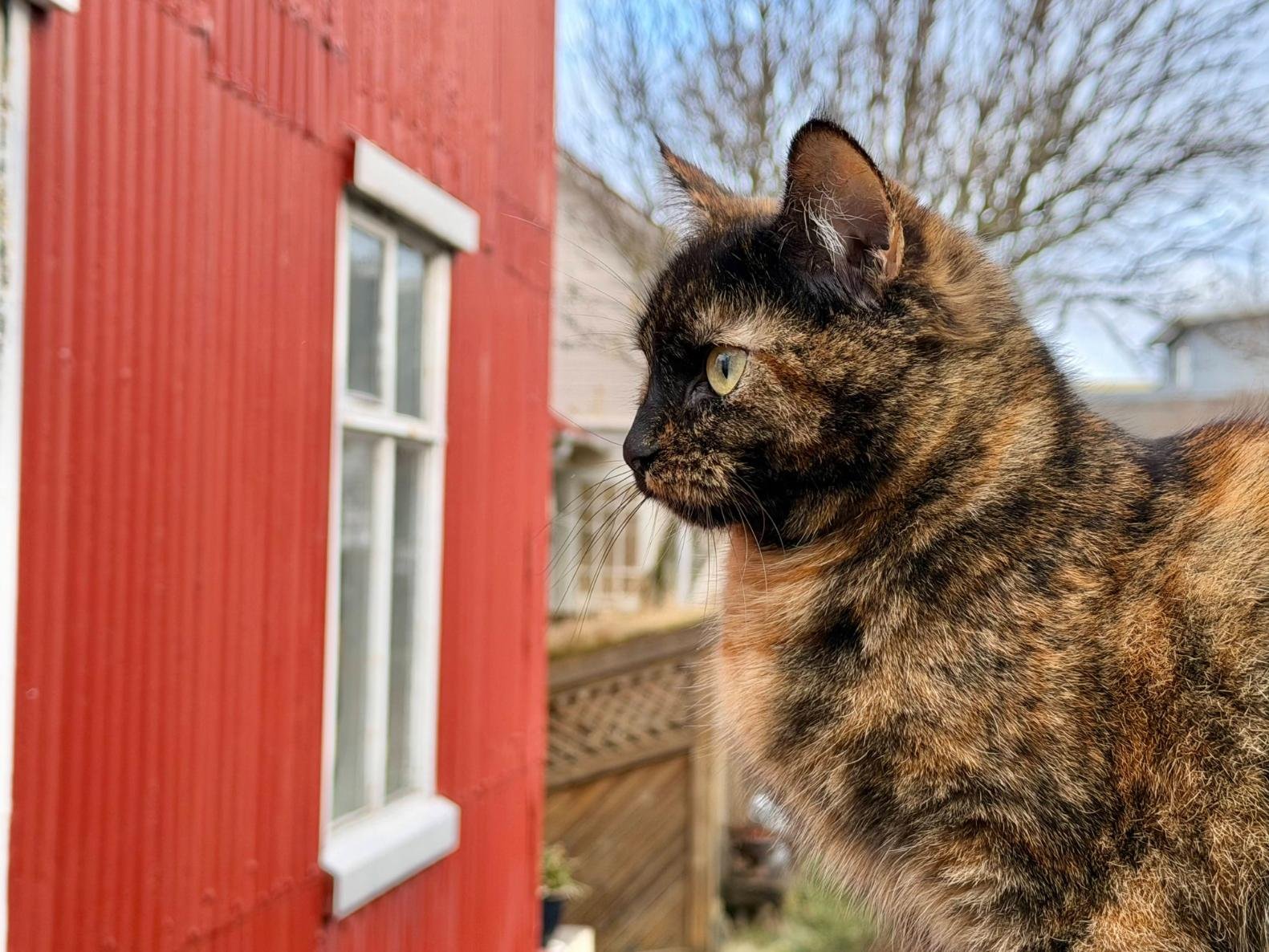
One of the most unexpectedly delightful (and totally free) things to do in Reykjavík? Go on a casual cat crawl. The city is famously cat-friendly, and these furry locals basically run the place. You’ll spot them lounging in bookstore windows, curled up in cozy coffee houses, or casually supervising customers in grocery stores like they’re on payroll. No map needed just wander, keep your eyes low, and accept that at some point, your sightseeing will be interrupted by a very important cat demanding attention.
You’ll also find cat-themed shops, and the true cat lovers might be interested in a very fluffy guided cat tour.
Street murals
Reykjavik has quietly become one of Europe's more interesting cities for public art. Large-scale murals fill entire building facades, sculptures turn up on unexpected corners, and painted staircases are scattered through the residential streets. No official map needed — just walk slowly and look up and sideways. The murals are concentrated around Grandi, along Laugavegur, and on the streets running parallel to it. Some of the pieces are… intriguing, or just awesome.
Free city walking tours
Reykjavik has free walking tours — tip-based, led by local guides — that are worth doing on your first day or two in the city. They cover the main central area and provide enough historical and cultural context to make the rest of your time more interesting. We really enjoyed it, and we actually mention it in our tips to travel Iceland on a budget.
Hallgrímskirkja church: go in, skip the elevator

What a curious church!
The church that dominates the Reykjavik skyline (funny enough, at the end of Rainbow Street) is free to enter. Most people photograph it from the outside — and the exterior, with the statue of Leifur Eiríksson out front, is genuinely impressive — but the interior is worth at least 15 minutes. The enormous Klais pipe organ, the clean lines of the basalt-column-inspired architecture, the light through the long nave.
The elevator to the observation tower costs. It's a nice view, but if you've done Perlan or just want to save money, skip it. The church itself is the point.

Penguin tip:
Planning an Iceland trip? Travel insurance can save you money. We use and recommend HeyMondo — great coverage, and you get 5–15% off if you book through us!
Harpa concert hall: free to walk around inside
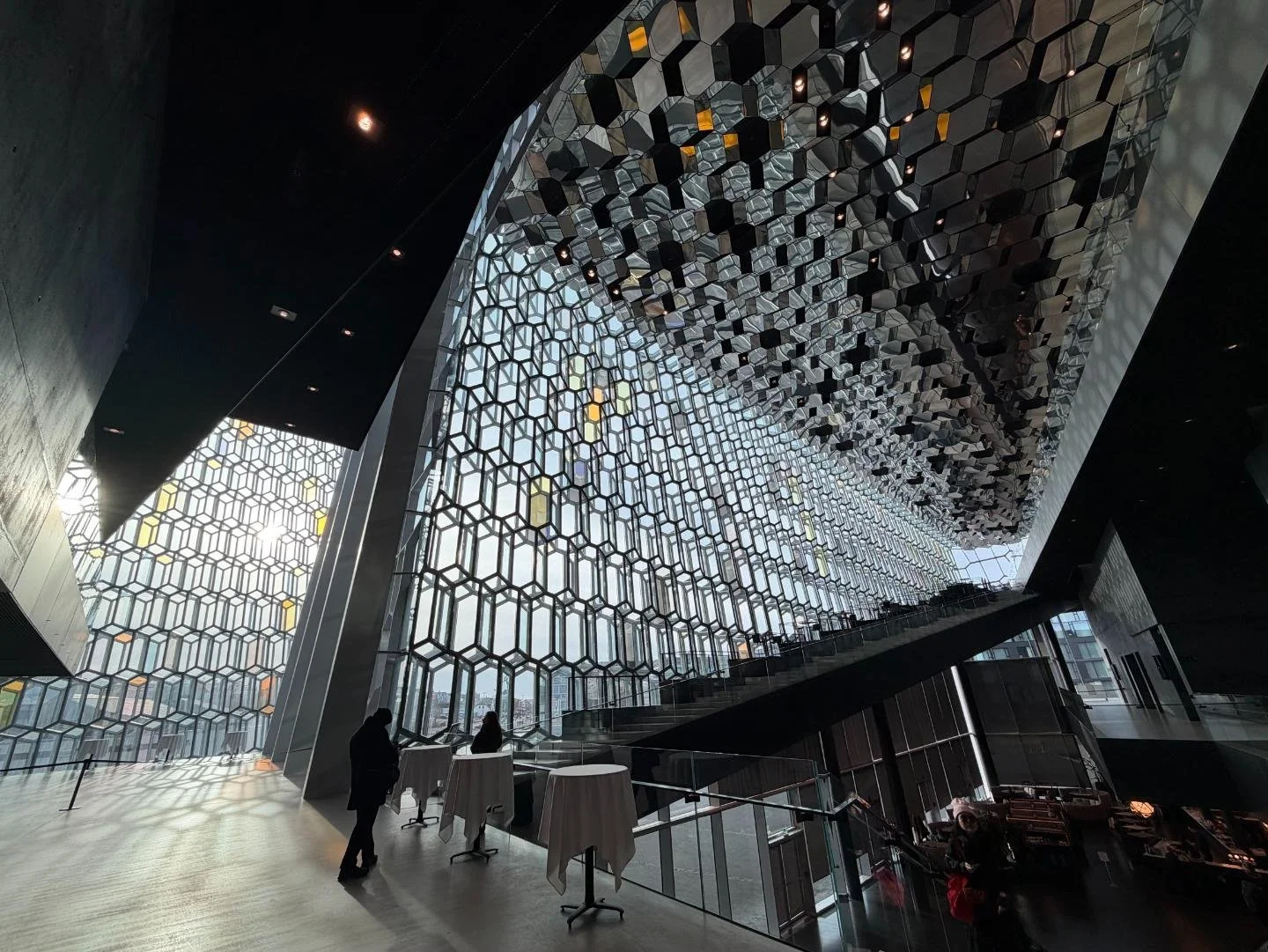
I love Sense8, so I had to take a picture! Plus it’s such a cool building.
Harpa is technically a concert hall and conference center, but walking through the main lobby and atrium is free and genuinely worth doing. The facade — designed in collaboration with artist Ólafur Elíasson — is made up of geometric glass panels that catch and scatter light differently depending on the time of day and the angle of the sun. On a clear Icelandic morning, against a snowy backdrop, it's extraordinary.
Pick up a program while you're there. Harpa runs free lunchtime concerts and occasional free events, particularly in summer. Worth checking what's on during your visit. Read our guide to Iceland in summer for more things to do.
Fellow fans of Sense8, hear hear! You’ll recognize Harpa from Riley’s dad’s concert!
Zoom in on the map to explore hotels and stays in Reykjavík
Reykjavik City Hall: free toilets, the 3D map, and the lake
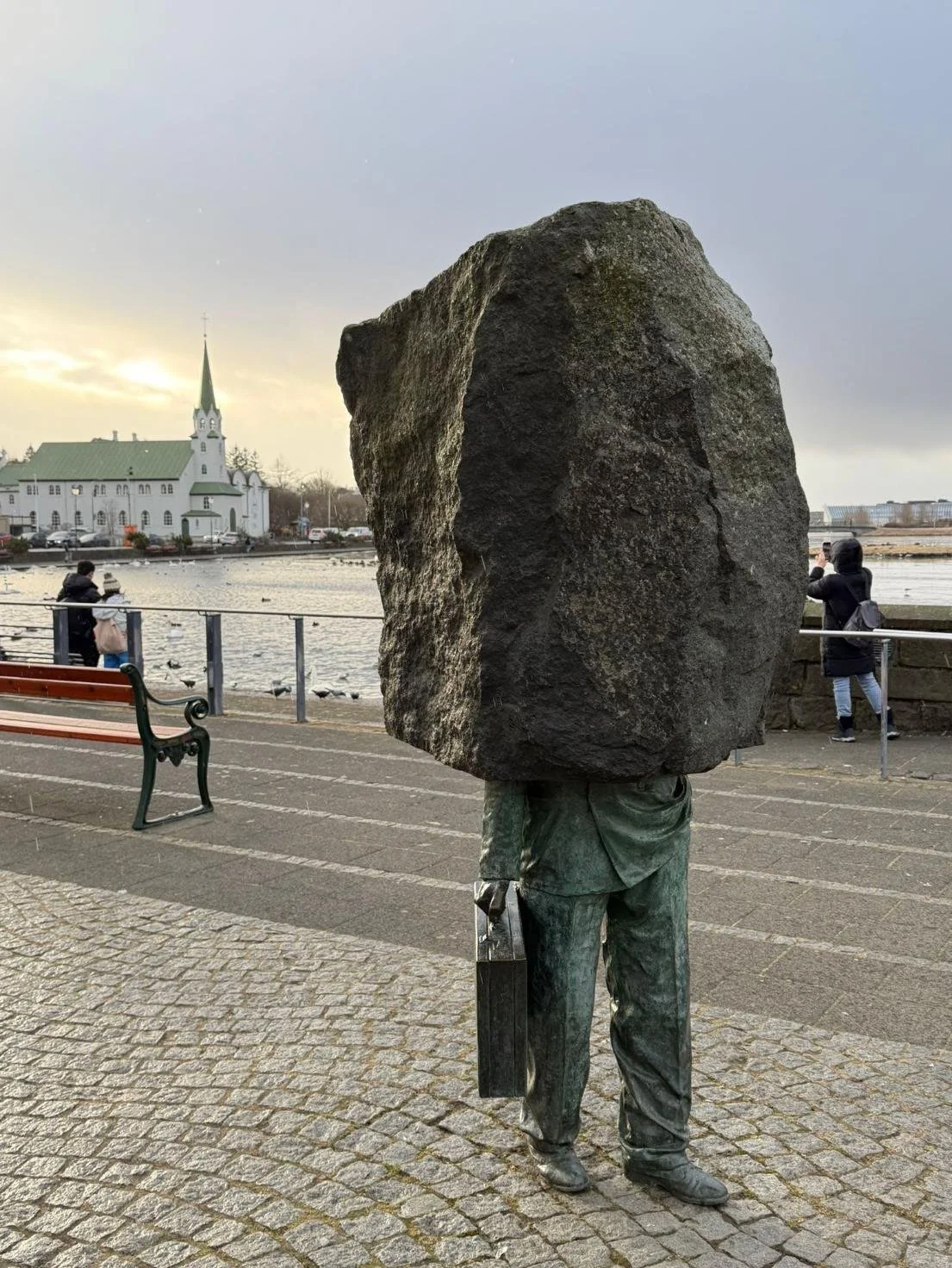
The unknown bureaucrat, in front of Reykjavík’s city hall
Reykjavik's City Hall sits right on the edge of Tjörnin, the small lake in the center of the city. The building is free to enter, and inside there's a large 3D relief map of Iceland that gives you an immediate, physical sense of the country's geography — the highlands, the glaciers, the coastline, all laid out at scale. If you're doing a Ring Road trip or trying to understand Iceland spatially, it's one of the more useful free stops in the city. Oh, and useful insider tip: there’s free bathrooms!
Tjörnin itself is worth a walk around. Ducks, geese, Arctic terns in summer, views of the colorful houses along the southern bank. The kind of quiet city moment that doesn't cost anything and often ends up being the thing you remember.
Explore tours in Reykjavík:
Fischersund: Sigur Rós frontman's perfume house
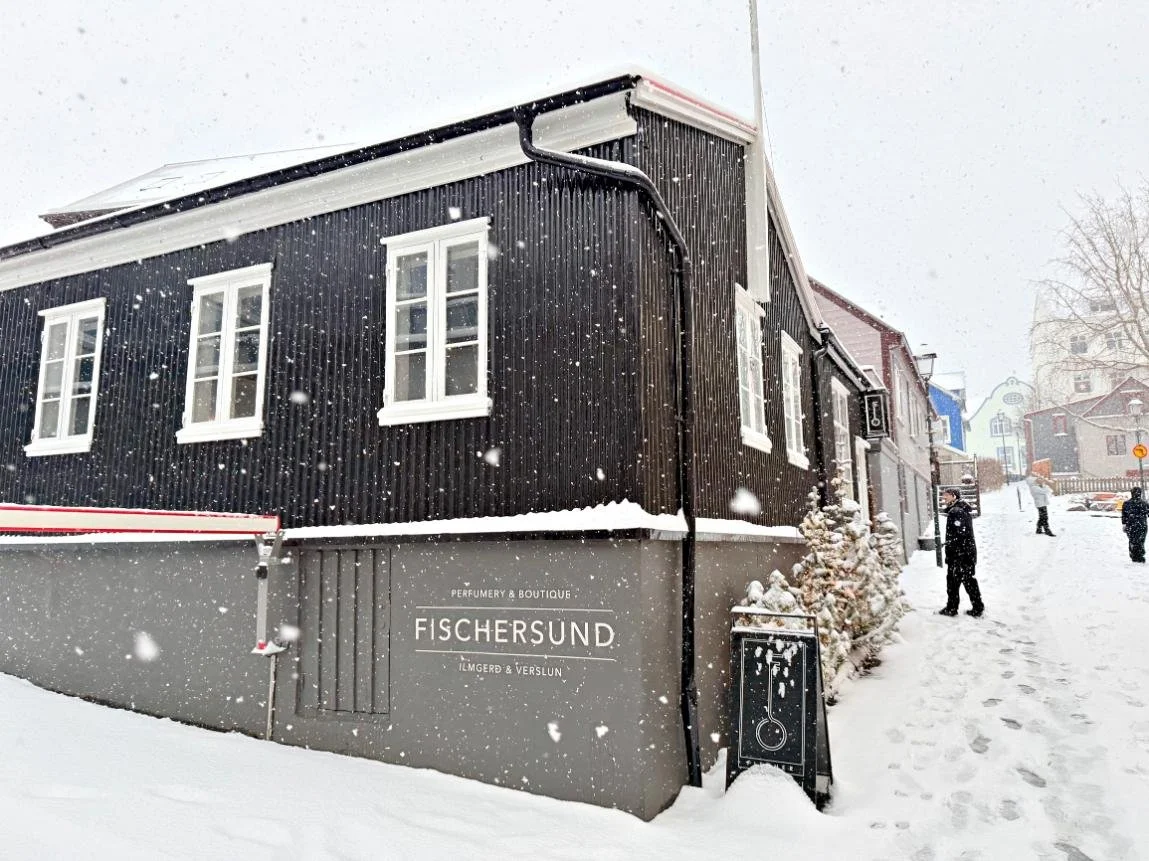
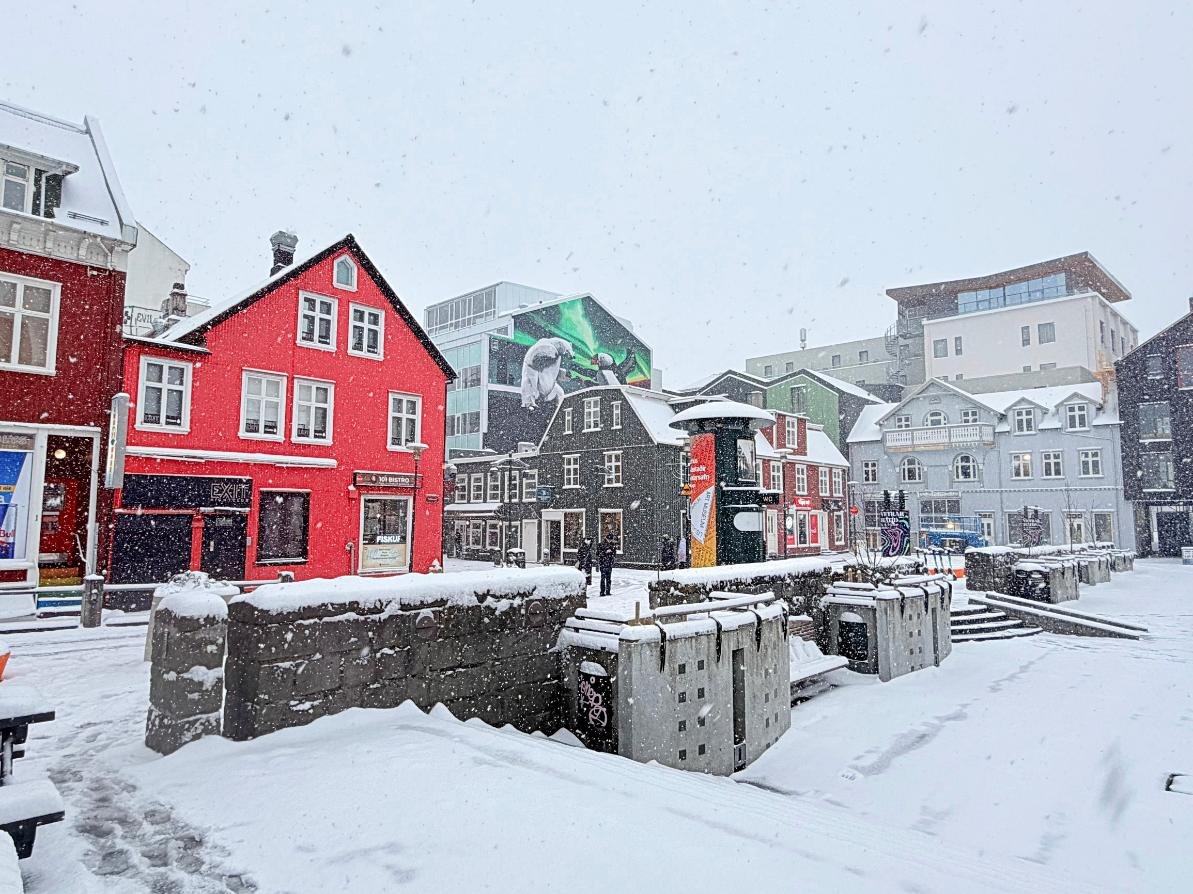
What an ambiance on a snowy day!
This one isn't in most travel guides, and it should be. Fischersund is a perfumery and creative space on a small street of the same name in the center of Reykjavik, founded by Jónsi — the lead singer of Sigur Rós — and his siblings. The 19th-century building is built around fragrant raw materials: botanical walls, tinctures, resin encasements, moving images on screens. It's free to visit, and even if you have no interest in perfume (trust us, these are something else, and we’re not big on perfume), the space itself is worth seeing — it's one of the stranger and more beautiful rooms in the city. And the ambiance was even more incredible on a snowy day!
If you do want to smell things and spend money, there's a scent bar. If you just want to look, nobody minds, and the staff will happily tell you stories and poems.
Follow the hidden people

Our free city walk guide told us stories about the hidden people. You’d better not mess with them!
Iceland has a long and genuinely serious relationship with the huldufólk — the hidden people, a class of beings thought to inhabit certain rocks, hills, and cliffs around the country. This isn't just old folklore kept alive for tourists. Surveys have consistently found a significant portion of Icelanders unwilling to rule out their existence, and the practical consequences are real: construction projects in Iceland have been rerouted, delayed, or abandoned when crews reported that machinery kept breaking down near certain rocks for no explicable reason.
The elf rock in Grjótaþorp
Reykjavik's oldest neighborhood, Grjótaþorp, has its own huldufólk rock — a boulder that locals have protected and worked around for generations. It's not marked with a big sign, which is partly the point. Walking through Grjótaþorp (a five-minute walk from Hallgrímskirkja) is worth doing regardless; it's the oldest surviving residential area in the city, with small timber houses that feel genuinely out of time.
The Kópavogur drilling story
Just south of Reykjavik, a hill called Álfhóll — literally "elf hill" — has been the site of one of the most-cited huldufólk stories in Iceland. Road crews attempting to build through it reported machinery failures going back to the 1940s. A second attempt decades later saw heavy equipment break down repeatedly without explanation. In the 1990s, powerful drills reportedly broke apart without leaving a mark on the rock. The road was eventually built around the hill. Whether you find that story convincing or not (you should, you definitely should, don’t mess with the hidden people), the fact that it influenced actual infrastructure planning says something real about the culture.
Hidden people walking tours
Several operators in Reykjavik run dedicated huldufólk walking tours, covering the cultural history, specific local sites, and the broader belief system. They're tip-based or modestly priced, and genuinely entertaining even for committed skeptics. Check current availability before you go — schedules vary by season.
Perlan and the Öskjuhlíð forest
The Perlan building — the glass dome on the hill south of the city center — contains a paid museum (Wonders of Iceland), but the hill it sits on, Öskjuhlíð, is entirely free. The city planted a geothermal forest here over several decades, which sounds strange for Iceland, but the birch woodland that's grown up around the hill is genuinely pleasant for a walk. Trails wind through the trees with occasional clearings offering city views, and it's almost always quiet. Good for clearing your head after the museum-and-coffee loop of the city center — or if you desperately need tree hugging after several days on barren volcanic land.
Pools & Beach

Jake releasing endorphins at Nauthólsvík!
Nauthólsvík: a geothermal beach in the North Atlantic
This is the most uniquely Icelandic thing on this list. Nauthólsvík is a small sandy beach about 10 minutes from the city center where the ocean water is warmed with excess geothermal heat (is it, really?) to create a genuinely swimmable lagoon. The entry fee is low — one of the few things in Reykjavik where you pay a little and get a lot. The combination of golden sand, warm water, and the sight of the North Atlantic stretching out in front of you on a clear Icelandic day is something you will not find anywhere else. We absolutely loved it, and going from the lovely ocean at -0.9ºC and the hot tub, walking barefoot in the snow, was really cool, literally. It’s also a great way to chat with the locals.
Changing facilities and hot tubs on site. Bring your own towel if you want to avoid the rental cost. We actually mention it in our Iceland Travel Guide.
The public pools: the best cheap thing in Iceland
It’s genuinely the thing locals do more than anything else. Reykjavik's public swimming pools — Vesturbæjarlaug, Laugardalslaug, Sundhöll, and several others — are geothermally heated, cheap to enter, and the central social institution of Icelandic life. Hot pots at varying temperatures, steam rooms, lap lanes, sometimes waterslides. Locals come before work, after work, at the weekend.
The entry fee is low by any standard — and by Reykjavik standards, it's practically nothing. The main way to save even more: bring your own towel and your own flip-flops. Rentals are available but add up if you're visiting more than once. The pools are spread around the city, so you're likely within walking distance of at least one.
If you're visiting Iceland for more than a few days and you don't do a public pool, you've missed something central to how the country works.
For more alternatives to the Blue Lagoon that won't empty your wallet — including a free hot spring hike you can do from outside the city — see our Iceland alternatives guide.
Second-hand shopping and Kolaportið flea market
Kolaportið flea market
Kolaportið, the indoor flea market in the old customs house by the harbor, runs every Saturday and Sunday from 11am to 5pm year-round. It's a genuine local institution: secondhand clothes, vintage finds, Icelandic books, crafts, kitchenware, and a food section where you can find traditional products including skyr, dried fish, and hákarl (fermented shark — one of those things worth trying once). Entry is free. Whether you buy anything is up to you.
The honest note: Kolaportið isn't a bargain hunter's paradise on every visit, and prices vary widely. But the atmosphere is worth the visit regardless, and the food is not crazy expensive for local products.
Vintage stores on and around Laugavegur
Laugavegur and the surrounding streets have a handful of small thrift stores and vintage shops. Again, not always cheap — Reykjavik thrift has caught up with international pricing in recent years — but the selection is genuinely interesting. Good for a browse even if you walk out empty-handed.
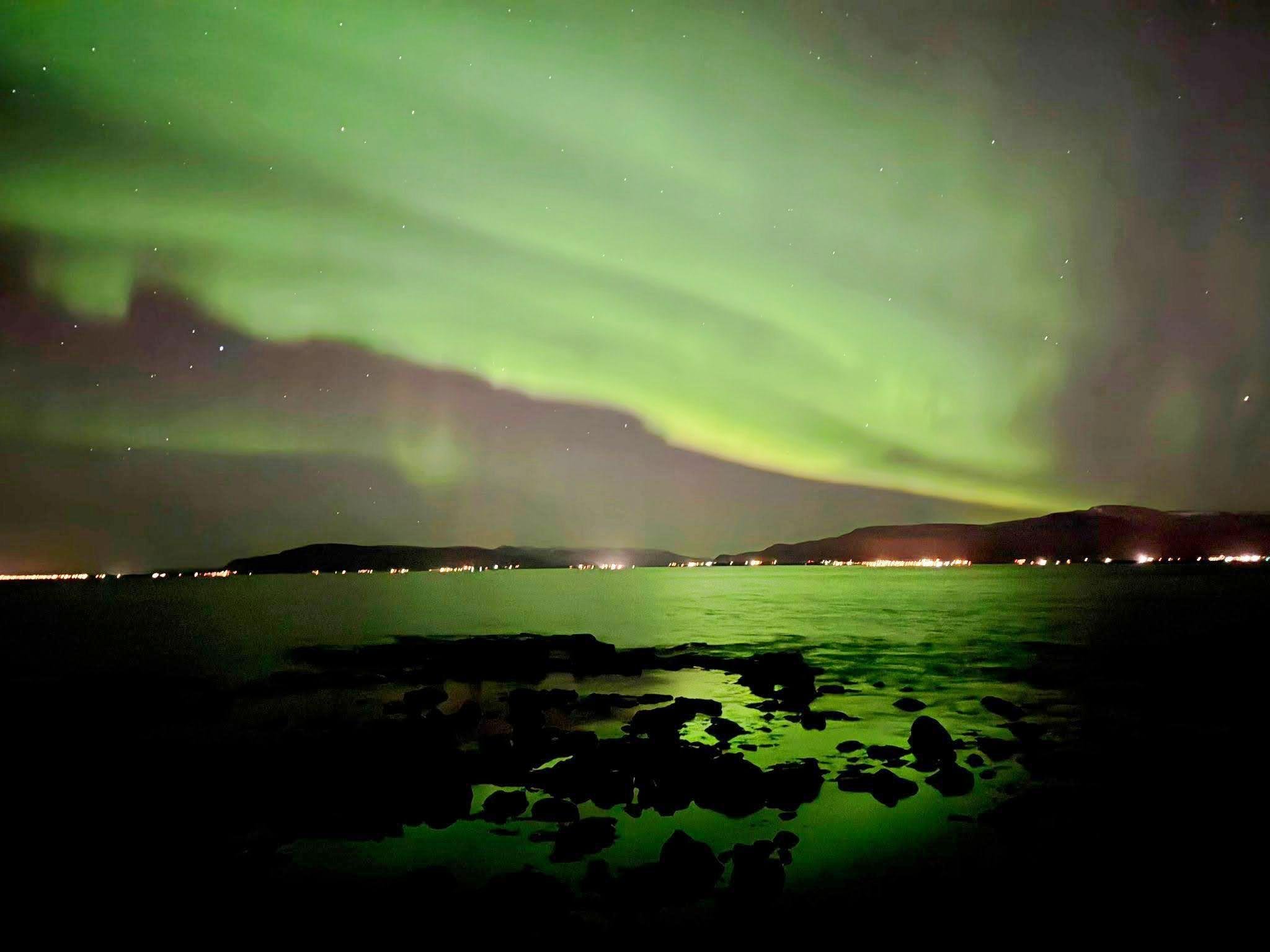
Grótta lighthouse: the best free northern lights spot near the city

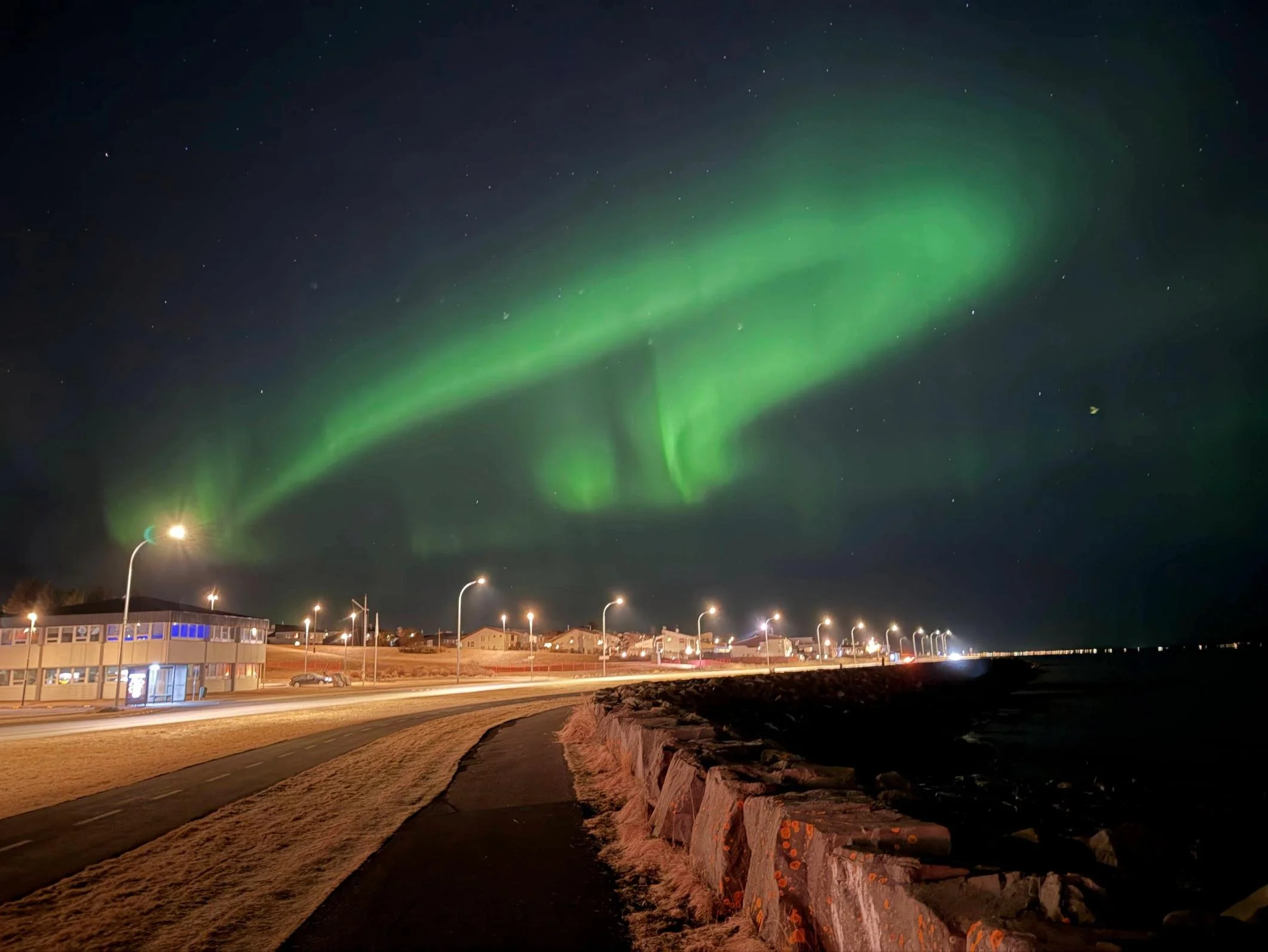
What a night!
Grótta is a small tidal island about 15 minutes by car or bus from the city center (we walked to it), with a lighthouse at its tip and an unobstructed view of the horizon in multiple directions. In winter it's one of the most accessible northern lights viewing points in the Reykjavik area — low enough light pollution compared to the city center, and with enough sky to watch the aurora develop properly. Free to visit, no entry fee.
Note the tidal access: the path to the island is only passable at low tide, so check tide tables before you go. When the tide is in, the surrounding area is still a pleasant walk with harbor and mountain views. In summer it's a good spot for birdlife.
The only issue is that when the aurora forecast is good and the sky is clear, Grotta gets crowded really fast. If you prefer to enjoy your aurora in peace (guilty here), just stop before getting there.
For more on planning a northern lights trip around Iceland — including whether it's worth coming to Iceland specifically for the aurora — see our full northern lights guide and our guide to the best time to see the aurora in Iceland.
Free live music: more than you'd expect
Did you know?
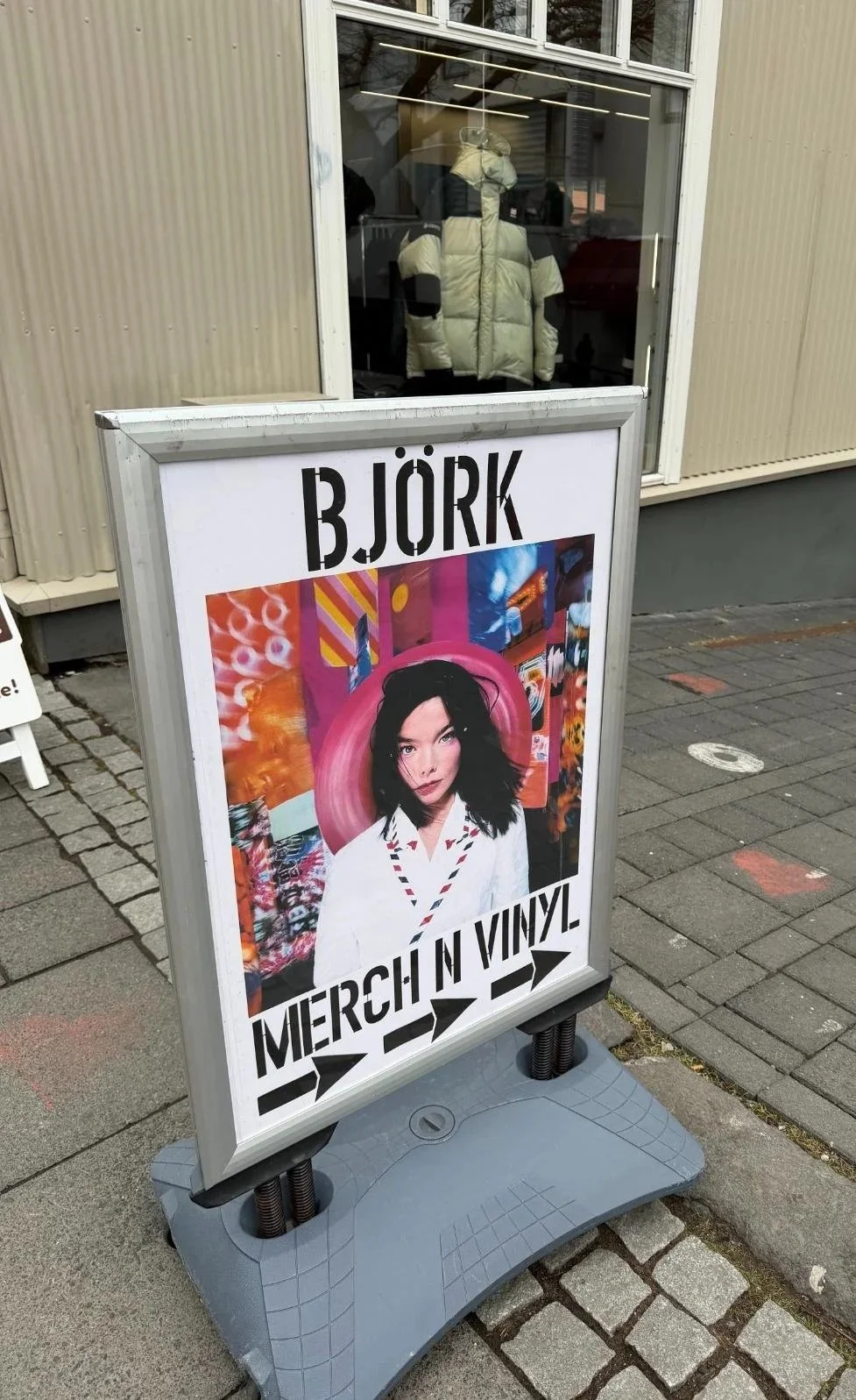
Iceland produces more musicians (and probably artists in general) per capita than almost any country on earth. For a nation of around 370,000 people, the output is genuinely hard to explain — Björk, Sigur Rós, Of Monsters and Men, Kaleo, Ásgeir, and dozens of smaller acts. Whether it's the long dark winters, the inspiring landscapes, the isolation, the out-of-the-box thinking, the small tight-knit creative community, or some combination of all of it, music is woven into Icelandic life in a way you feel as soon as you spend time in Reykjavik.
Reykjavik punches well above its size when it comes to live music, and a meaningful chunk of it is free. Bars, bookstores, record shops, and the occasional second-hand store host acoustic sets, jazz nights, singer-songwriter sessions, and experimental performances throughout the week — not just on weekends. It's an ingrained part of the culture rather than a promotional strategy.
Two venues worth knowing specifically: 12 Tónar is a legendary record store on Skólavörðustígur that regularly hosts free intimate concerts by Icelandic musicians — you can sit with an espresso, browse vinyl, and hear something genuinely good without paying a cent. Hús Mál og Menningar, the bookstore-bar right on Laugavegur, has an upstairs stage with a regular program of acoustic sets, spoken word, and small concerts. Neither requires a ticket — just show up.
Beyond those two, it's worth checking what's on before your visit. Bars like Gaukurinn and Mengi have frequent programming, and smaller venues often have no-cover nights early in the week. The live music landscape changes enough that the best approach is to check listings a day or two in advance rather than rely on any fixed schedule.
Where to find what's on: The Reykjavik Grapevine events calendar is the most reliable English-language source — it's the local English paper and covers everything from big concerts to free gallery openings. Visit Reykjavik's events page is worth a look for official programming. And if you're on Facebook: Icelanders organize a lot of local events there, so searching Reykjavik event pages will surface things that don't appear anywhere else.
Eating without the bill shock
Fiskbúðin (fish markets) over restaurants
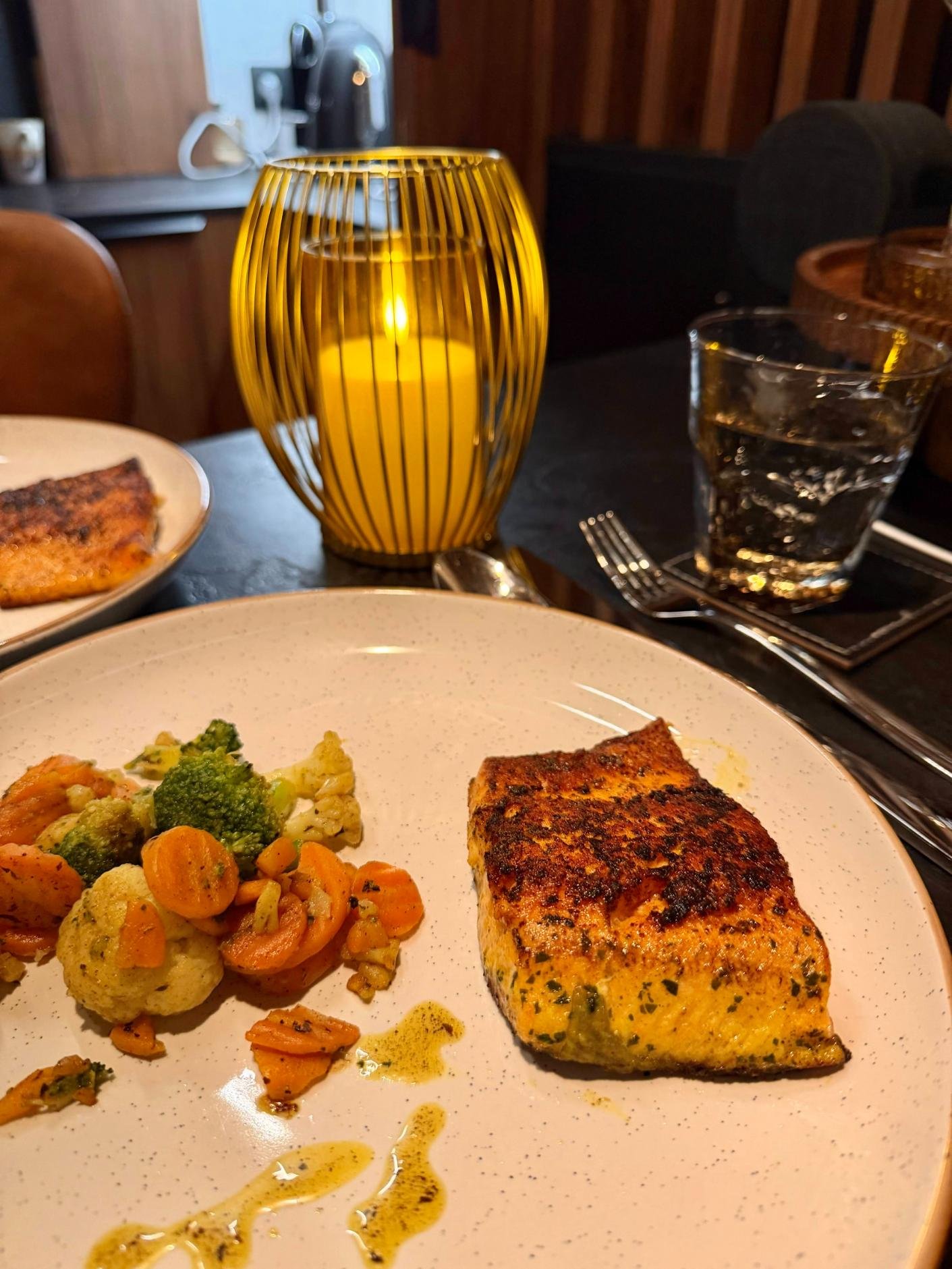
Arctic char from a fish shop at our accommodation. OMG!
The fish shops — particularly in the Grandi harbor area — sell fresh fish dishes, fish soup, and cooked seafood at a fraction of what a restaurant charges for the same quality. This is where local workers eat lunch. It's counter service, often paper plates, occasionally plastic stools. The fish is as good as it gets. Our favorite is Fiskbúðin Vegamót, in the Sjkól neighbourhood.
Your own fika, Reykjavik version
This is a habit worth building for any expensive Nordic city (you’ll find a section about fika in our Arctic food article): buy a pastry and a coffee from one of the bakeries (Brauð & Co is a local favorite, usually a line but worth it), and sit with it somewhere with a view rather than at a restaurant table running up a tab. The harbor, a bench by Tjörnin, the steps of Hallgrímskirkja… weather allowing. The pastry-and-coffee-with-a-view approach costs a fraction of a café sit-down and is often the better experience anyway.
A lamb kebab
Icelandic lamb is genuinely some of the best in the world — the sheep roam free, eat wild herbs, and it shows in the flavor. Most visitors only encounter it at restaurant prices. The exception is the lamb kebab, which turns up at a handful of small kebab shops around the city center. It's one of the few genuinely cheap hot meals in Reykjavik, and it's actually good in a way that generic fast food rarely is. We had a fabulous shawarma at the Syrian restaurant “Arabian Taste”. Try their babaganoush too!
Bónus and Krónan
The two main budget supermarkets. Bónus — the one with the pink pig on the sign — is the cheaper of the two. For lunch and dinner at the apartment or campervan, this is where you shop.
Is the Reykjavik City Card worth it?
We covered this in our Iceland budget guide — but the short version: it makes sense if you plan to visit multiple paid museums and use public buses regularly during a short city-focused trip. The card covers the main museums, the public pools, and the family zoo in Laugardalur (Húsdýragarðurinn) — a small park with Icelandic animals that's genuinely charming if you have an hour and especially if you're traveling with kids.
If your itinerary is mostly free sites and day trips by rental car, the math often doesn't work. Be honest with yourself about how many of those paid attractions you'll actually enter versus how many you'll walk past.
✈️ Find flights
🏨 Explore hotels, apartments, guesthouses, cabins
🧭 Browse activities and tours
🚗 Compare car rentals
🧳 Get travel gear
🛡️ Travel safe with Heymondo Travel Insurance (5–15% off)
📱 Get a travel eSIM
🐾 Protect & track Arctic wildlife with Fahlo Bracelets (20% off)
FAQ: Free and cheap tours & things to do in Reykjavík
Is Reykjavik walkable?
Yes — the city center is very compact and most of the sites mentioned in this guide are withina short walking distance of each other. The exceptions are Grótta (15-minute drive or bus), Nauthólsvík (10-15 minutes south of center), and Perlan (uphill, 20-minute walk or a short bus ride), although we personally walked to all of these places.
Is it free to enter Hallgrímskirkja?
The church itself is free to enter. The tower elevator observation deck charges an entry fee. The church interior is the more interesting part for most visitors, so skipping the tower is a reasonable call.
What's the cheapest way to experience geothermal water in Reykjavik?
The public pools are your best option — a low entry fee, fully heated by geothermal energy, with hot tubs at different temperatures. Nauthólsvík geothermal beach is also affordable and has the added novelty of being an actual beach on the North Atlantic.
Are the public pools worth visiting?
Yes, emphatically. They're the social heart of the city and one of the few experiences in Reykjavik that's cheap, excellent, and genuinely Icelandic. Bring your own towel and flip-flops to avoid rental fees.
Is Grótta actually good for northern lights?
It's one of the better spots near Reykjavik, with less light pollution than the city center and a clear horizon for watching the aurora develop. The access depends on the tide, so check conditions before going. You still need clear skies and solar activity — Grótta doesn't solve those variables, it just gets you closer to ideal viewing conditions without leaving the city. If you prefer to watch the aurora in peace, stop before Grotta.
Do Icelanders really believe in the hidden people?
It's more complicated than a yes or no. Many Icelanders are agnostic on the question rather than full believers — but very few will dismiss it entirely, and construction projects have genuinely been altered to avoid disturbing rocks thought to be inhabited. Whether the huldufólk are real or not, the belief is real, and it shapes how people interact with the landscape in ways that are worth understanding.
Here is a playlist to get in the Reykjavík vibe:
Reykjavik is an expensive city — but it rewards people who pay attention, because it’s truly unique. The best things to do in Reykjavík aren't behind a ticket booth: they're on the harbor at golden hour, in the hot pot at the local pool, in a record store where someone is playing a set for an audience of twelve. If you're planning a broader Iceland trip and want to keep the whole thing from getting out of hand, our budget guide covers the rest — flights, rental cars, food, and accommodation across the country.
Finally, you’ll find all our Iceland Travel Guides here.

Free download
Travel Cheaper Cheat Sheet
27 tips on flights, hotels, hidden costs and more — spend less without missing what actually matters.
No spam. Unsubscribe anytime.
Best Northern Lights Hotels in Iceland
Things to Do in Iceland in Winter
Northern Lights in Iceland: Is It Worth It?
Best Time for Northern Lights in Iceland
Ring Road & Practical Planning:
Iceland Road Trip: South Ring Road Self-Drive
Where to Stay on Iceland's Ring Road
How to Travel Iceland on a Budget
Travel Insurance for Iceland
Best Time to Visit Iceland & Things to Do
Things to Do in Iceland in Summer
Free and Cheap Things to Do in Reykjavík
Iceland Without the Crowds
Horseback Riding in Iceland
Lava Show in Reykjavík
Silfra Snorkeling in Þingvellir
Glacier Hike & Ice Cave in Iceland
Stays & Hot Springs:
Brekka Retreat, Hvalfjörður
Hvammsvík Hot Springs, Hvalfjörður
Aurora Igloo South, Hella
Hotel Keflavik & Spa, near KEF Airport & Blue Lagoon
