
Merino, mittens and a very honest note about bathrooms.

“The cold never bothered me anyway” (except in Svalbard)
We've been to the Arctic repeatedly, and yes, voluntarily, for over two decades. We've also learned most of these tips the hard way, so you don't have to.
And I (Eli) wrote my Master's thesis on polar tourism, which adds an extra (merino) layer of knowledge!
So, here’s what to wear in the Arctic, season by season, with our best proven tips. And if you want to receive this straight to your inbox as a practical PDF guide to print, click here.
Jump to: Winter · Northern lights · Shoulder seasons · Summer · Temperatures · Checklist · Resources · Safety · FAQ
What to wear in the Arctic: quick answer
The Arctic is not one temperature. Tromsø, Norway, in January can hover around freezing, while inland Lapland and Arctic Canada can be 30°C colder. The system is the same everywhere, though: layers.
The onion rule: 3 layers
Base layer: merino wool, next to your skin. We tend to run hot, so we love it. It keeps you warm without turning into a sweat bag, and it doesn't smell after a few days so you can pack just one or two.
Mid layer: a wool sweater, fleece, or thin down jacket. We prefer wool over fleece, for sweating reasons.
Outer shell: windproof and waterproof, with a good hood. Wind makes cold feel much colder, so this layer matters more than anything else.
Think onion. Many thin layers beat one giant puffy coat, because you can adjust.
🐧 Penguin Trampoline tip: If you get itchy with wool, your base layer should fix that. If not, try to put your wool garment in the freezer overnight!
Four rules
No cotton. It holds sweat and cold. That includes T-shirts and cotton socks.
Cover everything below −20°C / −4°F. Bare skin gets frostbite fast, so think neck, face, wrists, and ankles.
Take a layer off before you sweat. Sweat is what makes you cold later. The Arctic doesn't care if you run warm. Ask Jake, who walked around with his jacket open at −30°C in Kiruna.
Invest in your feet first. Cold feet end more outdoor plans than anything else.
A note on synthetics
Merino is our pick, unless you have very reactive skin. Synthetic base layers are a fine budget option if you'll be mostly standing still or sitting, like watching the northern lights, riding a snowmobile, or sitting in a sled. If you'll be moving hard, like hiking or mushing, skip them. Sweat can freeze against you.
🐧 Penguin Trampoline tip: You don't have to buy everything at home. We got our Inuit down jackets at a local store in Nuuk for a bargain (spring sale), and we're still thrilled about it. Our merino neck warmers came from Svalbard, and they're absolute lifesavers. If you visit Alaska, the Army surplus store is a great place to check out. Finally, big outdoor brands in Nordic countries can be cheaper than in Southern Europe, and you'll find sport outlets and second-hand stores in every city.
Planning the whole trip? Start with The Ultimate Arctic Travel Guide.
Winter, November to March
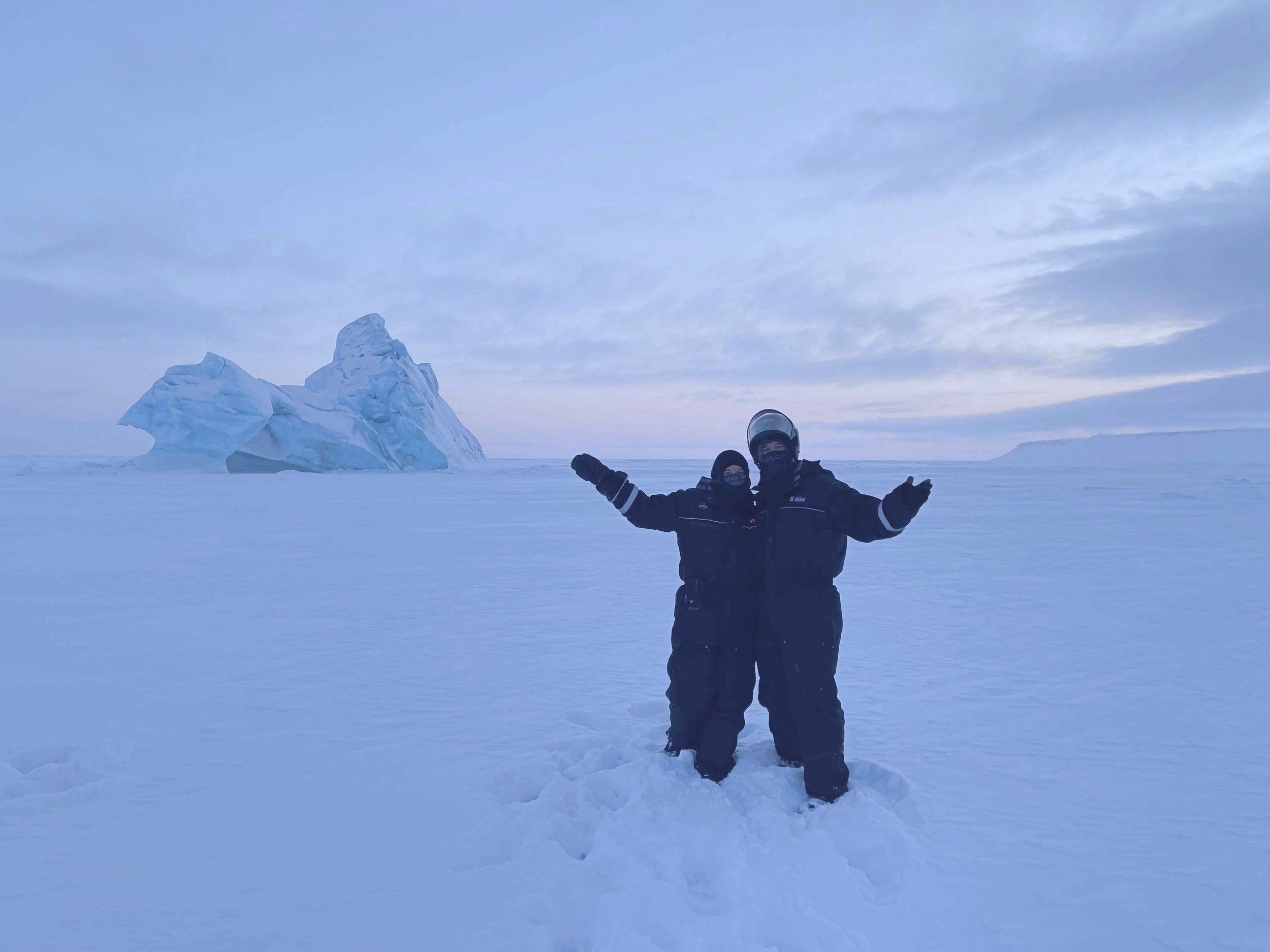
10 hours on a snowmobile to reach the East Coast of Svalbard!
This is the coldest and darkest time, with polar night. Inland Lapland and Arctic Canada can hit −35°C / −31°F in January, and some places go colder. We experienced −38°C in Svalbard! Coastal places like Tromsø, Iceland, and southern Greenland are milder, but wetter and windier.
Head to toe
Head: a wool or merino hat that covers your ears, plus a thick buff or balaclava. Cold air hits your jawline and neck first. Thin fabric freezes in wind, so choose wool if possible. In winter, a headband usually isn't enough, unless you have a really good hood.
Body: the three layers above. Add a long down parka if you'll be standing around.
Hands: thin touchscreen liner gloves under big waterproof mittens. Mittens are warmer than gloves, because your fingers share heat (how cute). The liner gloves are essentials so you can take pictures and use your phone without getting frostbite.
Legs, feet and extras
Legs: thermal leggings under insulated, windproof snow pants. Size up so there's room for the leggings or tights, and see the thigh tip below.
Feet: two pairs of socks, a thin merino liner and a thicker wool pair, in insulated, waterproof boots rated for around −30°C / −22°F. Size up so there's room for air. We got the two-sock trick from a Swede in Luleå. I'm prone to blisters and it's a lifesaver. The layers slide against each other instead of against your skin.
Extras: sport-style sunglasses if you don't go in the heart of the winter. When the sun comes back, they're not optional (snow and ice glare). Hand and toe warmers for long days outside. Swimsuit for sauna and cold plunges.
🐧 Penguin Trampoline tip: Snow pants too tight at the thighs? It's a common problem (myself included). Insulated and Gore-Tex pants usually aren't stretchy, and thermal leggings underneath make it worse. You have three fixes:
Get a bigger size, if the pants have an adjustable waist, or wear a belt to keep them up. Just make sure the waist is high enough so you can squat down without a freezing bum… to take northern lights pictures, for example!
Buy a model with zippers on the thighs. They also vent sweat when you're wearing base layers and moving around.
Try them on over your leggings before you commit, or make sure you can return them.
Boots, bathrooms and bare hands
🐧 Penguin Trampoline tip: Snow boots or hiking boots? Snow boots are great, and necessary to get around in deep winter. They're just not ideal for long hikes. If you plan on real hiking days, bring proper hiking boots. And if you don't own any, or they hurt your ankle bone (welcome to the club), waterproof or Gore-Tex gaiters over your regular shoes are the next best thing. They keep snow, mud and slush out.
Trails can also be icy. Pack microspikes, and in deep snow you may need snowshoes or skis instead.
The bathroom problem
Nobody tells you this part. Cold makes you pee more, and going outside at −25°C / −13°F will take all the energy and warmth you have left, because you have to take off your snow overall and all your layers. Our advice: have someone else carry your clothes and hand them back to you in a strategic order. Yes, really. And don't skip the water to avoid it. Dry Arctic air dehydrates you faster than you notice, and hydration bladders freeze faster than you can say "rookie mistake." Use an insulated bottle or a thermos, and keep it inside your jacket.
🐧 Penguin Trampoline tip: Never take your gloves off to use your camera. I learned that the hard way on my first trip to Lapland. At −30°C / −22°F, I took off two layers of gloves to snap a photo. After a minute, I could barely move my hand and had superficial frostbite. Use the touchscreen liners, keep a spare pair in your pocket, and put the mittens right back on.
Northern lights nights

In our happy place, Lofoten Islands!
You'll be standing still outside for hours waiting for the northern lights, and standing still (sometimes on a frozen lake or by a fjord, which adds even more cold) is the coldest thing you can do, even if the temperature looks decent on paper. Dress warmer than you would for a daytime activity at the same temperature, and then add a layer or two.
What to add
An extra insulating layer on top and bottom
Insulated mittens and hand warmers
Touchscreen liners, so you can use your phone or your camera's remote
A red-light headlamp, which keeps your eyes adjusted to the dark and your hands free on icy ground
A thermos with something hot. Soup, blueberry tea or hot chocolate on a freezing night is hygge, right there.
A foam kneeling pad or something to sit on, because the ground steals heat
A blanket or a sleeping bag if you're waiting at your own spot
Spare camera and phone batteries, kept warm in an inside pocket
A tripod. Not technically what to wear, but if you want photos, you need one. Long exposures don't work handheld, especially when you're frozen and shaking like a leaf. Our Northern Lights Photography Guide covers settings and gear.
Thermos wisdom
A nice Swede once told us to bring vodka instead of water, because it freezes slower. We won't tell you whether that was good advice or not.
Tour operators usually provide thermal suits and boots, so check what's included before you buy anything. Our full What to Wear for a Northern Lights Trip guide has more, and the Northern Lights Hub is the place to start planning the rest.
🐧 Penguin Trampoline tip: When you get back inside, don't jump straight into a steaming shower. It can burn your skin before you even realize it (I burned my thighs like that). Warm up gradually.
Shoulder seasons, September to October and April to May

In Tromsø in May, layers are still necessary — And don’t forget your sunglasses!
These months are the hardest to pack for, because the weather can be mental. Mornings can be frosty and afternoons mild. Expect rain, wet snow, and wind. And if you're hiking, expect high mountains conditions even at an altitude of 400 meters (1300 ft.).
Keep the same three layers, but go lighter. It's not too cold in Arctic Norway in October, but we still layer up as we usually get a lovely snow or ice storm on hikes, for example at Mt. Ryten in Lofoten or Haldde in Alta.
Headband instead of a hat when you hike. Most hats are too warm once you start moving and make you sweat. What you really need is ear protection from the wind, and a midweight headband does that. Keep a hat in your daypack for breaks and cold mornings.
Hiking boots, or gaiters. Waterproof boots matter more than very warm ones, since wet feet are the main problem here (think mud and slush). If you don't have hiking boots, or they hurt your ankle bone, waterproof or Gore-Tex gaiters over your regular shoes are the next best thing.
Gloves and a light buff stay in your daypack even on a sunny day.
Pack microspikes. They're lighter and easier than crampons on partly icy trails, and spring snowpack is often icy in the morning and slushy by afternoon.
April and May still feel like winter in the far north. The sun is bright and the snow glare is real, so bring sunglasses and sunscreen.
Remember to bring a swimsuit for sauna and cold plunges.
September and October are early aurora season, and the fall colors, called ruska in Finland, are unreal. Dress for the northern lights nights above.
Heading to Lofoten? Read Lofoten in Winter for what the islands are like once the weather turns.
Summer, June to August
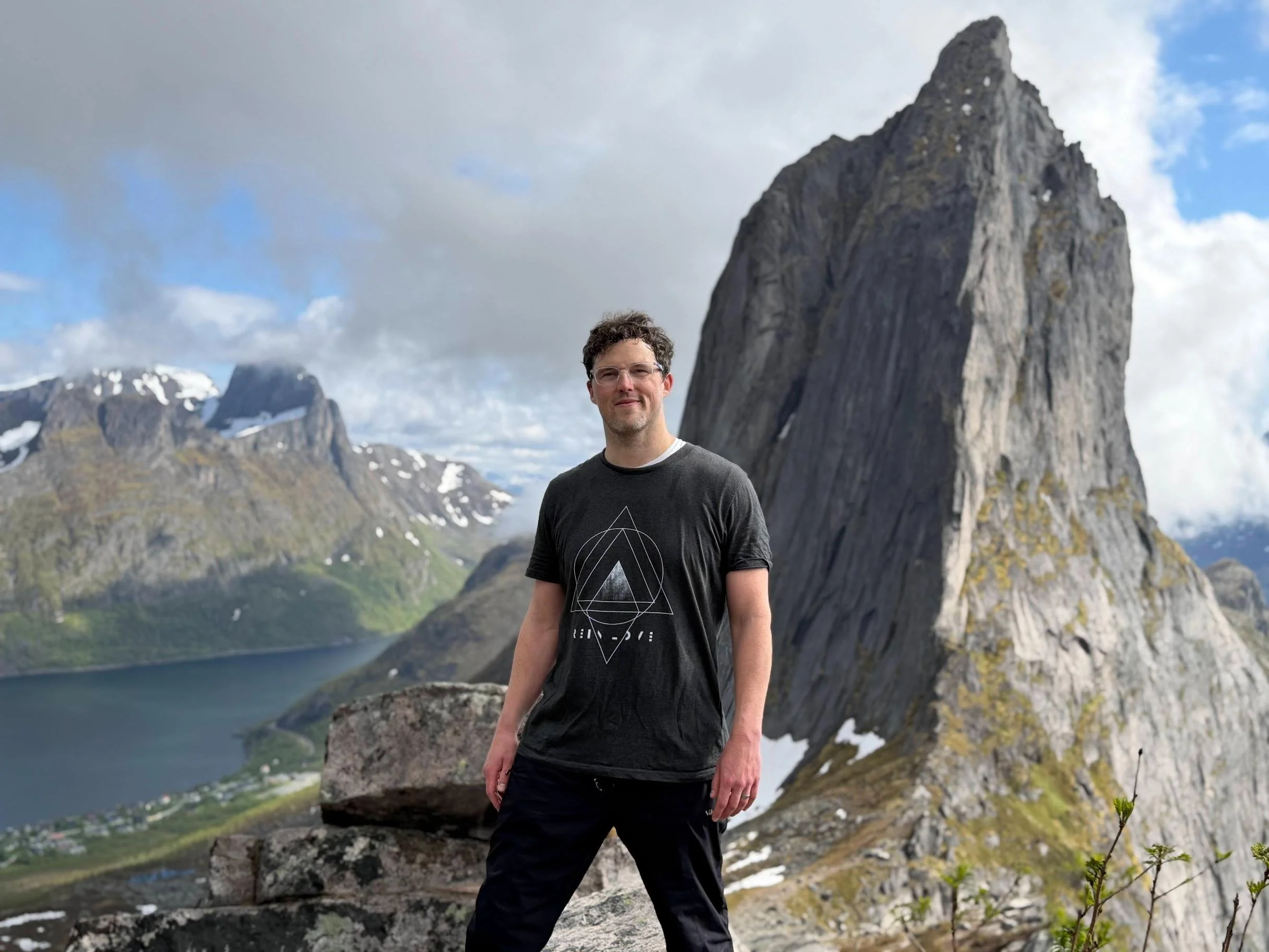
We ran hot hiking up Hesten, Senja, in May, but needed our layers after 10 minutes at the top!
The Arctic in summer is mild (it can get warm in the sun but you remember where you are the minute the wind shows up) and the sun may not set at all.
Layers still apply. A T-shirt on a sunny afternoon, a fleece and a shell by the water or near a glacier.
Waterproof jacket and waterproof boots. Rain is common, and trails can be wet.
Sleep mask (worth paying a bit more for a good one). Ours were lifesavers in Ilulissat, where the 1 a.m. sun bounced off the ice and straight into the room. The midnight sun is magical... until your cabin has no proper shutters, which is typical in the North.
Sunscreen and sport sunglasses. The sun stays up for a long time, and water and ice reflect it.
Insect repellent or a head net. Mosquitoes and midges can be intense in some places, especially inland Lapland, Alaska, and Arctic Canada.
Boats and glaciers are cold. Wear your warm layers, even in July, or pack them in your daypack.
Crampons and microspikes are usually not needed in peak summer, except on glaciers with a guide or if you hike really high summits.
Swimsuit for sauna and cold plunges.
Summer plans? See Things to Do in Tromsø in Summer and Iceland in Summer: Weather and Things to Do.
Temperatures by Arctic region
Here's what to expect, region by region. Averages are for planning, never promises! Use the averages to pack. Use the records to remember that the Arctic likes surprises. Averages are daily lows to highs, rounded.
| Place | Jan | Apr | Jul | Oct | Record low | Record high |
|---|---|---|---|---|---|---|
| Tromsø Norway | −5 to 0°C 23 to 32°F | −2 to 4°C 28 to 39°F | 9 to 16°C 48 to 61°F | 1 to 6°C 34 to 43°F | −18.4°C −1.1°F | 30.2°C 86.4°F |
| Kiruna Sweden | −16 to −7°C 3 to 19°F | −7 to 2°C 19 to 36°F | 9 to 18°C 48 to 64°F | −4 to 2°C 25 to 36°F | −42.3°C −44.1°F | 30.1°C 86.2°F |
| Rovaniemi Finland | −17 to −7°C 1 to 19°F | −6 to 5°C 21 to 41°F | 10 to 21°C 50 to 70°F | −2 to 4°C 28 to 39°F | −47.5°C −53.5°F | 32.2°C 90.0°F |
| Longyearbyen Svalbard | −14 to −8°C 7 to 18°F | −12 to −6°C 10 to 21°F | 5 to 9°C 41 to 48°F | −6 to −2°C 21 to 28°F | −46.3°C −51.3°F | 21.3°C 70.3°F |
| Nuuk Greenland | −10 to −5°C 14 to 23°F | −5 to −1°C 23 to 30°F | 4 to 10°C 39 to 50°F | −2 to 2°C 28 to 36°F | −32.5°C −26.5°F | 26.3°C 79.3°F |
| Ilulissat Greenland | −16 to −9°C 3 to 16°F | −12 to −4°C 10 to 25°F | 5 to 12°C 41 to 54°F | −6 to 0°C 21 to 32°F | −40.5°C −40.9°F | 21.7°C 71.1°F |
| Reykjavík Iceland | −2 to 3°C 28 to 37°F | 1 to 7°C 34 to 45°F | 9 to 15°C 48 to 59°F | 2 to 8°C 36 to 46°F | −19.7°C −3.5°F | 25.7°C 78.3°F |
| Fairbanks Alaska | −27 to −18°C −17 to 0°F | −6 to 8°C 21 to 46°F | 12 to 23°C 54 to 73°F | −8 to 1°C 18 to 34°F | n/a | n/a |
| Churchill Canada | −29 to −21°C −20 to −6°F | −14 to −5°C 7 to 23°F | 8 to 18°C 46 to 64°F | −3 to 2°C 27 to 36°F | −45.6°C −50.1°F | 36.9°C 98.4°F |
Arctic packing checklist

The massive icebergs of Disko Bay, Greenland
Always
Merino base layer, top and bottom
Wool or fleece mid layer
Windproof, waterproof shell with a good hood
Waterproof or snow pants
Merino liner socks and thick wool socks
Hat and a buff
Gloves or mittens, plus touchscreen liners and a spare pair
Waterproof boots
Hiking boots, or gaiters
Sport sunglasses
Daypack, snacks and water
Swimsuit, for sauna and plunges
Phone with local emergency numbers
Winter and northern lights
Insulated parka, ideally long down
Extra insulating layer, top and bottom
Balaclava or thick buff
Snow pants with room for leggings, plus a belt or thigh zips
Snow boots rated around −30°C / −22°F
Insulated mittens, hand and toe warmers
Red-light headlamp
Thermos and insulated bottle, no hydration bladder
Kneeling pad or sit pad
Blanket or sleeping bag, if waiting at your own spot
Spare batteries, kept warm
Tripod, and a camera remote if you like
Microspikes, snowshoes or skis, if hiking
Shoulder seasons
Midweight headband, for hiking
Microspikes
Sunscreen, for April and May
Summer
Sleep mask
Sunscreen
Insect repellent or head net
Light rain jacket
Warm layers in your daypack
Heading to Greenland? Read our guide: What to Pack for Greenland.
Free guide
What to Wear in the Arctic
A full packing checklist for every season + our proven tips after two decades up north. Straight to your inbox.
No spam. Unsubscribe anytime.
Want help planning your Arctic trip? Book a private video consultation with us.
Plan the rest of your Arctic trip
What to wear is only one piece. Here are our go-to travel resources.
Arctic guides from Penguin Trampoline
Insurance and eSIM
Heymondo: 5% to 15% off comprehensive coverage built for adventure travel, hiking, and snowmobiling. Even a small fall on Arctic terrain can cost a lot, which is why we use it.
Nomad eSIM: Prepaid data plans for regional and global travel across more than 200 destinations.
Airalo: Instant eSIM activation in over 200 countries, so you can skip roaming fees.
Arctic clothing and gear
Amazon: Our hand-picked, tried-and-tested Arctic gear, including examples of everything we discuss in this guide.
Stays and transport
Booking.com Stays: A huge selection of hotels and apartments, with flexible cancellations and Genius perks.
Booking.com Cars: Compares major and local rental agencies worldwide, with no hidden fees.
Omio: Plans multi-step routes across trains, buses, ferries, and flights, with easy mobile tickets.
Tours and wildlife
GetYourGuide: Top local tours, skip-the-line activities, and last-minute spots.
Viator: Niche experiences, outdoor adventures, and guided outings.
Fahlo bracelets: 20% off wild animal tracking bracelets for penguins, turtles, and polar bears, and they support conservation. Naturally, we're fans of the penguin one.
Final word on safety in the Arctic

Always keep your distance with animals, even if they look that cute — Here in Churchill, Canada
Adventure doesn't mean being reckless, and that's why we're still here to write about it. These are our tried-and-tested tips, based on our own trips over the years. They're not a guarantee, and every person, trip, and day is different. The Arctic is wild, and the weather can change fast, so you're responsible for your own safety and choices, and Penguin Trampoline can't be held accountable in any case.
A few basics
Respect nature. Keep your distance from wildlife. Polar bears, reindeer, and moose aren't photo props or stuffed animals. And never underestimate the Arctic weather. Leave only your footsteps.
Follow local safety rules. If a guide, a sign, a tourism board, a weather forecast or a local says no, the answer is no.
Ask locals when in doubt. They know the ice, the trails, and the weather better than any guide, including ours.
Check the forecast and daylight. Tell someone your route before you go.
Always have food, water and a cell phone with local emergency numbers.
Turn around if it isn't safe. Bad weather, tired legs, wet feet in freezing temperatures or night coming means heading back. The mountain will still be there tomorrow.
Hiking up north? Read Travel Insurance for Hiking and Backpackers before you go.
Keep wA/Ondering, stay safe, take care of each other, and of the Arctic. 🐧
✈️ Find flights
🏨 Explore hotels, apartments, guesthouses, cabins
🧭 Browse activities and tours
🚗 Compare car rentals
🧳 Get travel gear (including our Arctic essentials)
🛡️ Travel safe with Heymondo Travel Insurance (5–15% off)
📱 Get a travel eSIM
🐾 Protect & track Arctic wildlife with Fahlo Bracelets (20% off)
FAQ: What to wear in the Arctic
Can I wear jeans?
Nope. Denim gets wet and stays wet. You'll be colder than a snowman in a freezer.
🐧 Quick funny story: The first time I went to Kiruna, I was a student with no money. My outfit at −30°C / −22°F was jeans with rain pants on top, two pairs of socks, and plastic bags around my feet. I made it, but it was not a good idea. Ah, the youth. Learn from me, not with me.
Snow boots or hiking boots?
Snow boots are great, and necessary to get around in deep winter. They're just not ideal for long hikes. If you plan on real hiking days, bring proper hiking boots. And if you don't own any, or they hurt your ankle bone (welcome to the club), waterproof or Gore-Tex gaiters over your regular shoes are the next best thing. They keep snow, mud and slush out.
Rent, buy, or buy used?
It depends on whether you'll use the gear again.
Rent the big items, like a parka and boots, for a single trip. Many tour operators and accommodations include thermal suits, or offer to rent them for a small supplement.
Buy the things that touch your skin, like base layers, socks, and liners.
Buy second-hand if it's a once-in-a-lifetime Arctic trip. Vinted is a great platform in many European countries, and now in the US. There are also special Facebook groups, like UK-based ones for Finnish Lapland. Fair warning: you might catch the Arctic virus and need the gear again!
Invest if you'll reuse it regularly. We personally love Nordic brands like Haglöfs and Fjällräven. For shoes we always go with Salomon, because I'm from the Alps and my feet got used to them from an early age. Jake swears by them too now! I also like Rossignol for their awesome design and quality (I'm proud because it comes from my hometown, Voiron!)
Free guide
What to Wear in the Arctic
A full packing checklist for every season + our proven tips after two decades up north. Straight to your inbox.
No spam. Unsubscribe anytime.
Want help planning your Arctic trip? Book a private video consultation with us.
