
Lofoten in Winter: Is it Worth it, and What to Expect
Is Lofoten worth visiting in winter? Our guide to weather, northern lights, things to do, safety, and the best places to stay. Lofoten isn’t a winter hiking destination — but there’s so much more!
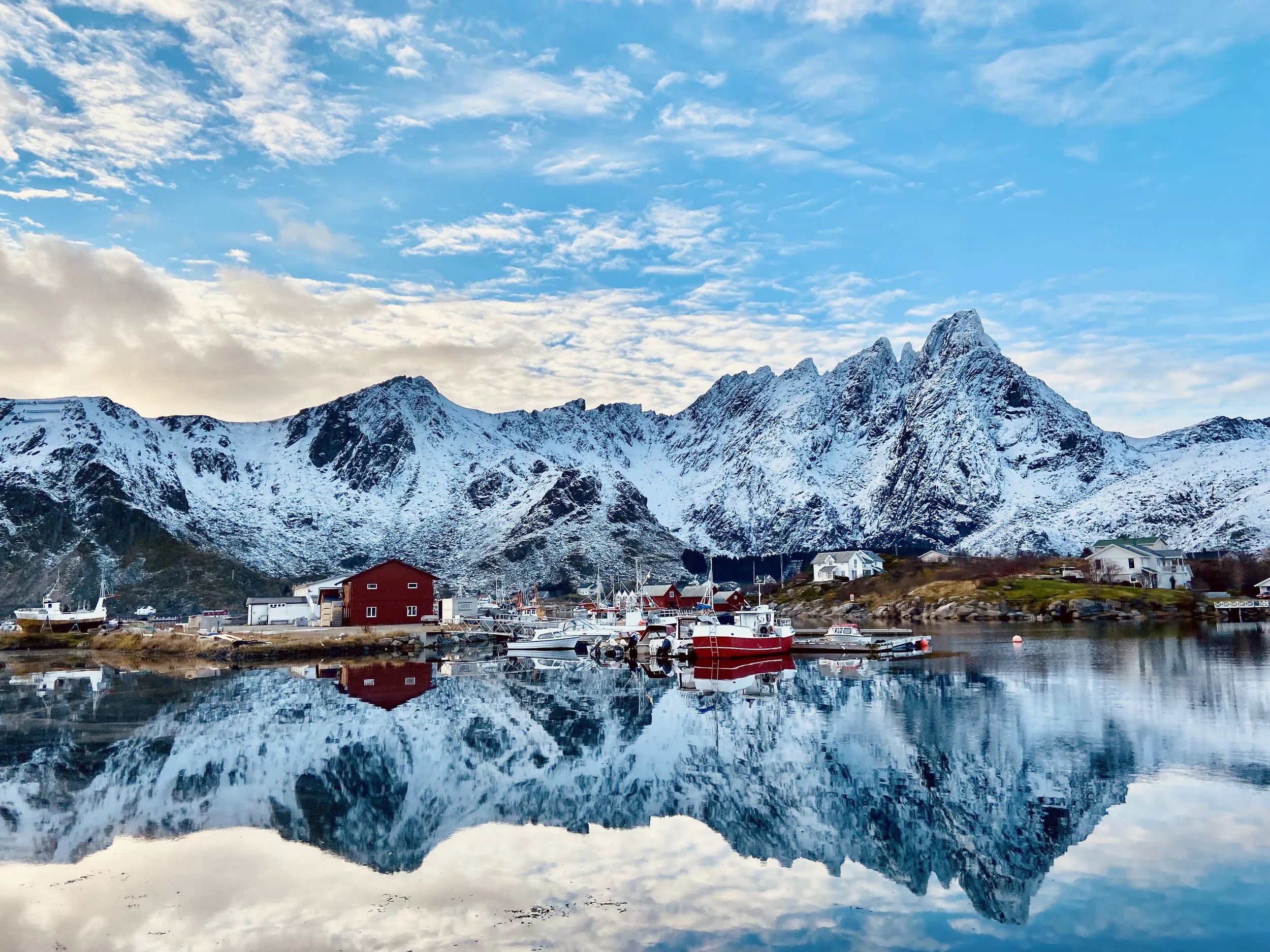
The Lofoten islands are gorgeous in every season, but look at that with a blanket of snow…
Last update: August 2026
If you’ve been researching the Lofoten Islands, Norway, you’ve probably noticed a pattern: most content focuses on summer. Hiking. Midnight sun. Dry trails and long days.
So a fair question comes up fast: Is Lofoten actually worth visiting in winter? Our answer is ABSOLUTELY yes — if you understand what kind of trip it becomes. Winter in Lofoten is quieter, moodier, and less predictable. You won’t hike high ridges, but you’ll spend more time watching weather, light, and sea. And trust us, you’ll want to, because this is without a doubt one of the most spectacular places on earth. It also means lower prices and a lot less people, which is always nice — in our humble opinion.
If that sounds appealing, winter can be one of the most rewarding times to go.
🛌 Where to stay:
• Rostad Retro Rorbuer, Reine — we stayed here on a last-minute deal and it turned out to be one of the best views we've ever had.
• Skarungen, Kabelvåg — we stayed here and it's one of Lofoten's best wellness stays.
• Kaikanten Rorbuer, Sennesvik — we stayed here in October and got a northern lights show right by the pier. Great value.
• Eliassen Rorbuer, Hamnøy — the red cabins from every Lofoten photo you've ever seen.
🇳🇴 Top experiences:
• Northern lights tour from Henningsvær — small group (max 7), guided by a local who tracks the forecast in real time.
• Snowshoe hike — Enjoy the still, frozen beauty of Lofoten without the crowds
🚗 You need a car in Lofoten. The islands stretch 170km and public transport isn't great. Book your rental in Bodø before you cross — significantly cheaper than picking one up on the islands.
Is Lofoten worth it in winter, without hiking, and what are the things to do?
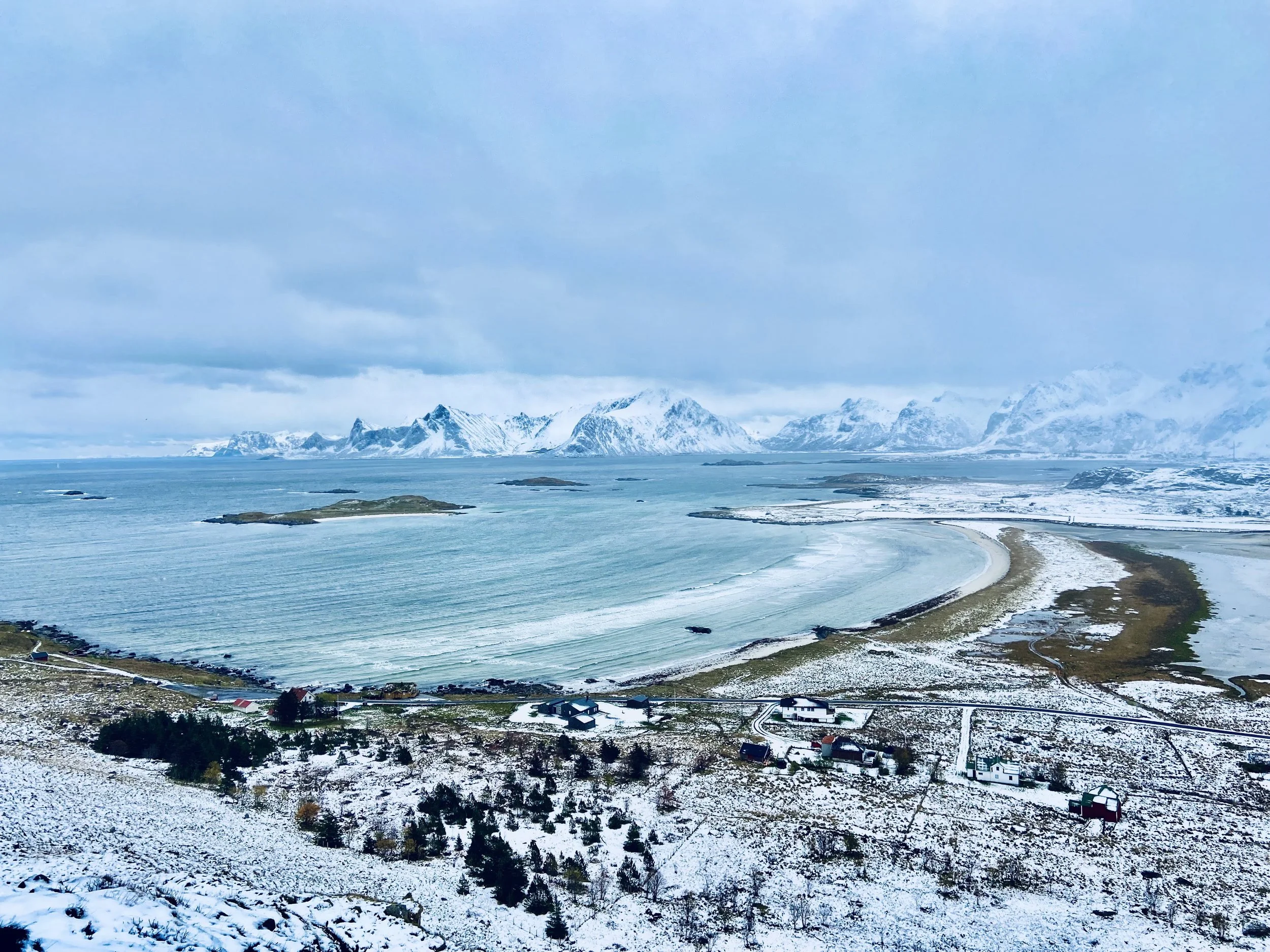
Even in October, we couldn’t go very far on the Røren/Ytresandheia due to snow
Yes — but not for the same reasons as summer.
Winter in Lofoten isn’t about ticking off summits. It’s about:
coastal walks at sea level
beaches dusted with snow
watching storms roll in from the Atlantic
driving short distances and stopping often
cozying up by the fire in a hotel or rorbu by the sea
You trade altitude for atmosphere.
If hiking is the only reason you’re interested in Lofoten, winter will disappoint. If landscape, light, and stillness matter to you, winter often feels more intimate than summer ever does.
You’ll find more details about each season in our guide: Best time to visit Lofoten.
A word of warning: Winter is not hiking season in Lofoten. Popular trails such as Reinebringen become extremely dangerous under snow and ice, with multiple serious accidents every year. Steep slopes, wind exposure, and avalanche risk make unguided winter hikes unsafe. In winter, stick to coastal walks, viewpoints at sea level, and guided activities designed for the season.
Read our hiking in Lofoten guide for more information.
What does Lofoten feel like in winter?

Norwegian postcard, anyone?
Winter changes the rhythm of the islands completely.
Days are shorter, roads are calmer, and villages feel lived-in rather than visited. Fishing boats still move through the fjords. Lights glow inside rorbuer at dusk. The landscape doesn’t ask you to conquer it — it asks you to slow down.
This is not an action-packed itinerary destination in winter. It’s a presence-based one.
Can you see the northern lights in Lofoten?

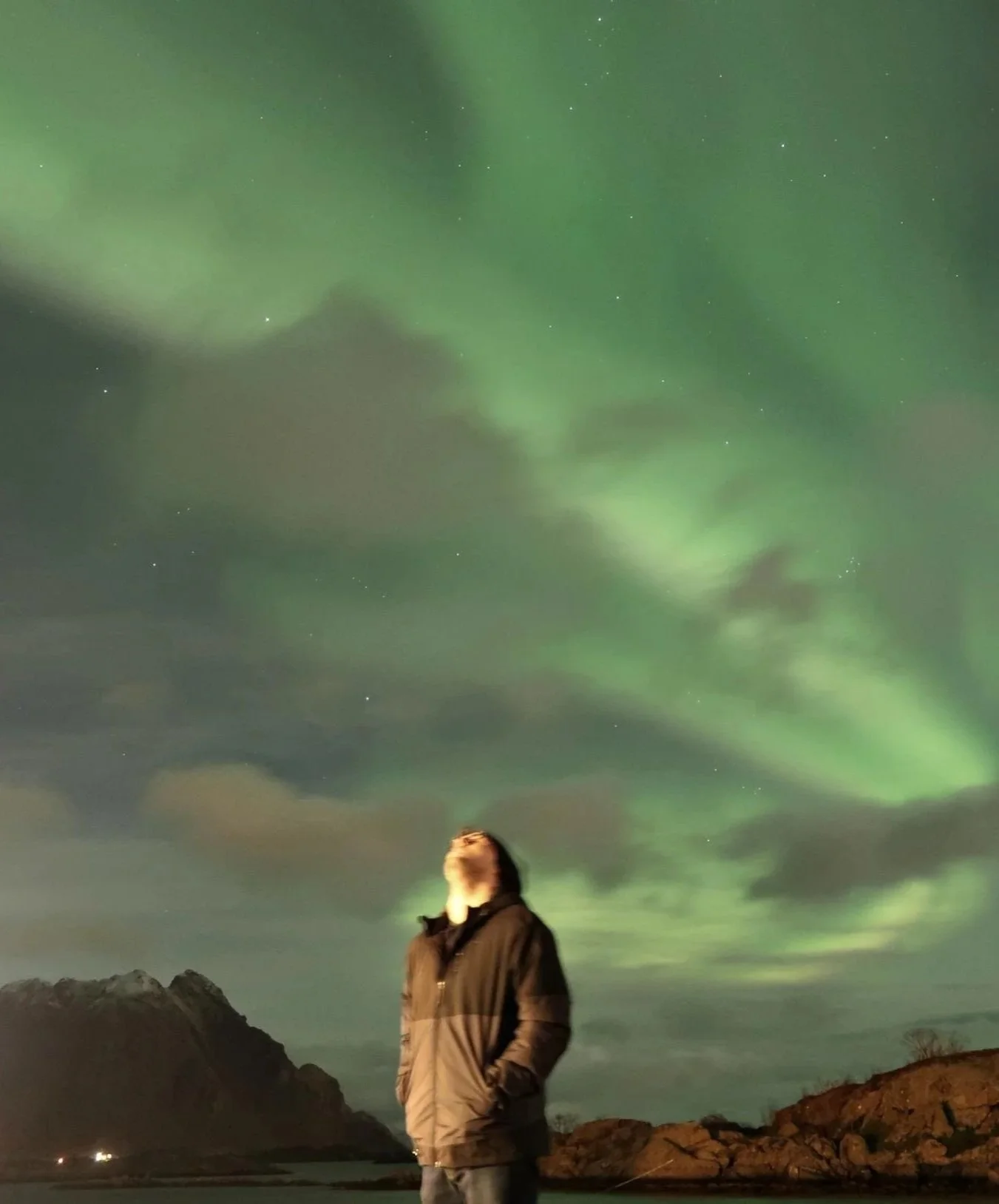
That night, it was very cloudy where we were staying, so we drove across to Haukland beach for clear skies!
Despite their Caribbean-looking beaches, Lofoten is way north of the Arctic Circle. So, you can see the northern lights in Lofoten — and when conditions line up, the backdrop is spectacular. Mountains rising straight from the sea, reflections in fjords, snow-covered beaches.
But this comes with an important caveat: Lofoten weather is famously unstable.
Clouds move fast. Storm systems roll in from the ocean. Clear skies aren’t guaranteed, even during strong aurora activity.
If northern lights are your only goal, places further inland often offer more consistent conditions. If you’re happy to treat the aurora as a bonus rather than a promise, Lofoten delivers some of the most dramatic settings in the Arctic when you do get lucky. We wrote a dedicated Northern Lights in Lofoten guide that covers everything — where to position yourself, what to realistically expect, camera settings, guided tours, and how to read the forecasts.
We strongly recommend renting a car so you can follow clear skies, which can change dramatically from one side of the islands to the other. It’s usually cheaper to rent a car in Bodø. You can read our guide to a Rental Car in Bodø here.
Everything Northern Lights
Even wondered about the science behind the aurora? Want to know when is the best time to see the northern lights, and the best locations? Need some photography tips, or to know what to wear? Our Northern Lights Hub has it all!
Things to do in Lofoten in winter
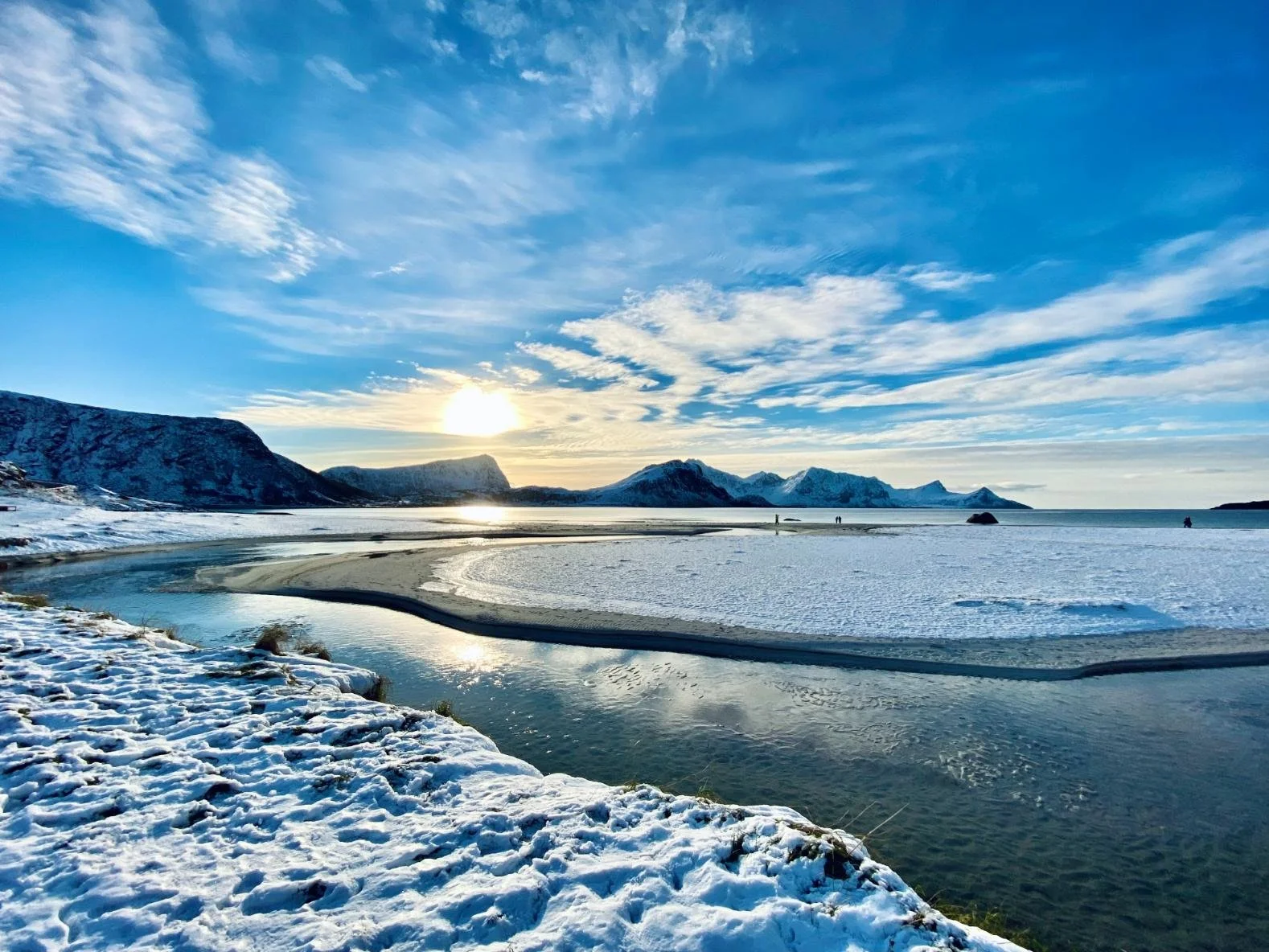
The sun was weak, but the light was incredible at Haukland beach on a frozen morning!
Winter activities in Lofoten are fewer than in summer — but they’re more focused. Instead of filling every hour, you choose a handful of experiences that work well with the season.

Did you know?
The Lofoten Islands are one of the world’s most unexpected cold-water surf destinations. Beaches like Unstad are surfed year-round, including in winter (sometimes under the aurora!), thanks to powerful Atlantic swells. Surfers wear thick dry suits, and conditions are only suitable for experienced cold-water surfers. We didn’t try ourselves, but certainely enjoyed the hot chocolate at the local surf bar!
Popular winter activities include:
Northern lights tours
Guided aurora tours are useful in winter, especially when cloud cover varies across the islands. Operators often drive short distances to find clearer skies and quieter spots.Winter sea kayaking (conditions permitting)
On calm days, guided kayaking is possible year-round. Dry suits are provided, and winter light makes even short paddles memorable.Wildlife and sea eagle safaris
Winter is a strong season for sea eagles, particularly around fjords and fishing areas.Photography-focused excursions
These islands are a dream for photographers. Some tours are designed specifically around winter light, weather, and coastal scenery rather than long itineraries.Short snow-shoe hikes
Slow travel, slow hiking. Totally worth in in these winter landscapes!

Even if you don’t stay at Skarungen rorbuer, you can enjoy their awesome sauna with hot tub and cold dip!
Free or cheap activities include:
short coastal walks and village exploring
photography and watching changing light
sauna sessions followed by cold plunges
aurora watching from beaches or quiet roads
Evenings tend to revolve around being indoors early, cooking, reading, or watching weather patterns shift outside the window.
This is not boredom — it’s uncluttered time.
Read our guide to things to do in Lofoten year-round for more.
Where to stay in Lofoten in winter
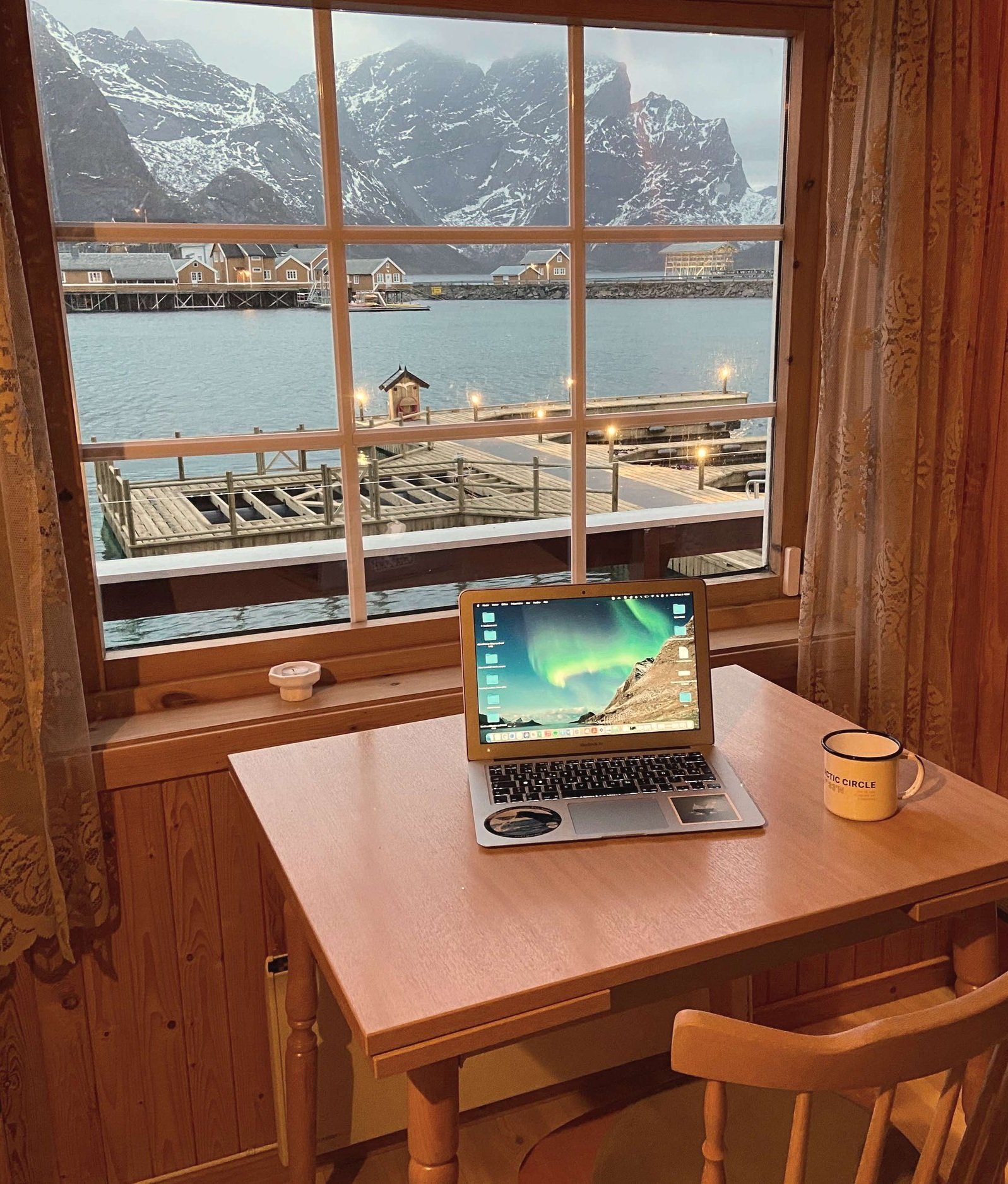
So hard to work with these views! (Rostad Retro Rorbuer)
In winter, where you stay in the Lofoten Islands matters more than how many places you see. Rorbuer and small village-based hotels work especially well because they let you slow down and adapt to conditions rather than rushing between sights.
Good winter-friendly options include traditional rorbuer in villages like Reine and Hamnøy, such as Eliassen Rorbuer or our favorite, Rostad Retro Rorbuer, where you’re surrounded by mountains, water, and dark skies — ideal for quiet winter evenings and northern lights when conditions allow. In Ballstad, places like Hattvika Lodge offer a good balance between atmosphere and accessibility, especially useful in winter.
If you prefer a hotel-style stay with easy road access, options such as Thon Hotel Lofoten work well as practical winter bases without committing to long daily drives.
For more options, explore our Lofoten Hotels and Rorbuer Guide. Not sure where to base yourself? Read our guide to Where to Stay in Lofoten by Area.
Or find a magical place to stay in the Lofoten (zoom in and out):
Is winter Lofoten better than Tromsø?
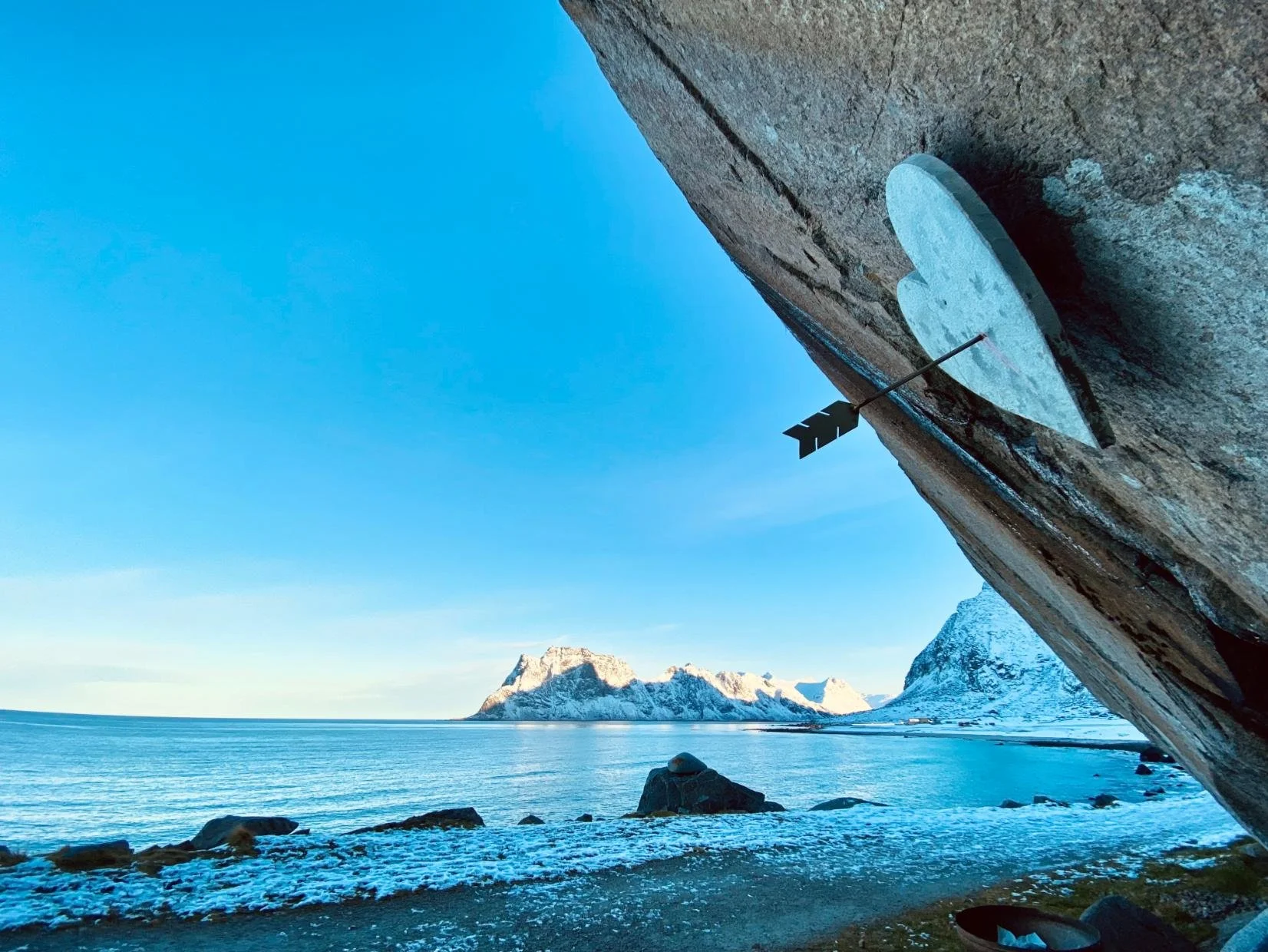
Our heart belongs to Lofoten!
They’re very, very different trips.
Tromsø is built around winter tourism: tours, nightlife, restaurants, and a busy aurora scene. Lofoten is quieter, more dispersed, and less structured.
Choose Tromsø if you want:
guaranteed tour options
social energy
minimal self-planning
Choose Lofoten if you want:
fewer people
dramatic scenery at all hours
a slower, more introspective trip
Neither is “better” — they simply reward different travel styles.

Penguin tip:
Wherever you go in the Arctic, we recommend a travel insurance. Get 5 to 15 % with our partner HeyMondo!
How to get around Lofoten in winter
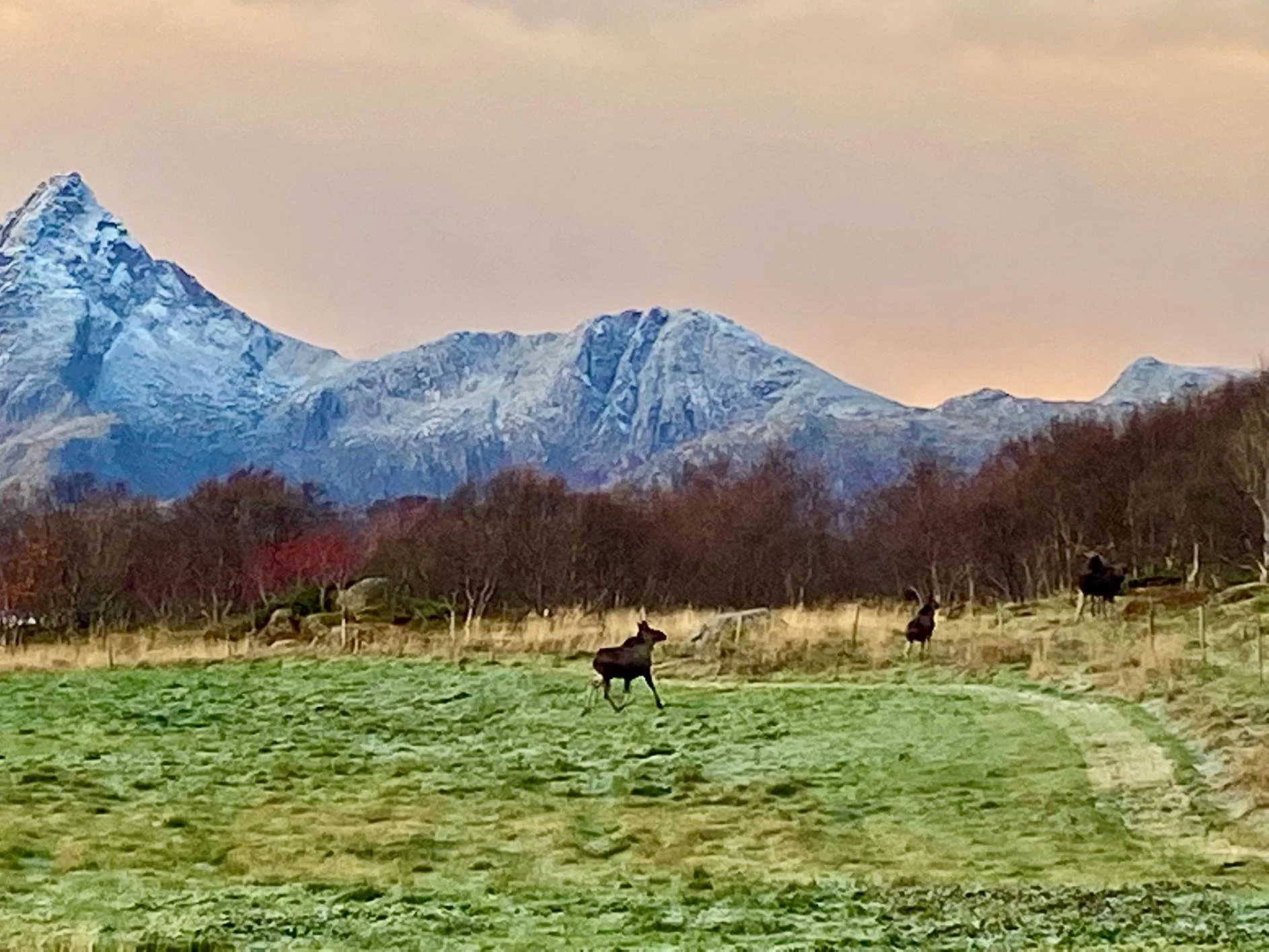
You might scare a moose or two on the road!
While visiting the Lofoten with public transport is possible in summer, options are very limited in winter, and a rental car is highly recommended.
Winter driving is manageable, but conditions change quickly.
Expect:
snow-covered roads
strong winds on bridges
occasional short closures during storms
You don’t need to cover long distances each day. In fact, winter trips work best when you choose one area and explore locally rather than trying to see everything.
Flexibility matters more than planning every stop. Follow the weather, follow the light, and you’re in for a treat!
✈️ Find flights
🏨 Explore hotels, apartments, guesthouses, cabins
🧭 Browse activities and tours
🚗 Compare car rentals
🧳 Get travel gear
🛡️ Travel safe with Heymondo Travel Insurance (5–15% off)
📱 Get a travel eSIM
🐾 Protect & track Arctic wildlife with Fahlo Bracelets (20% off)
FAQ: Lofoten in winter
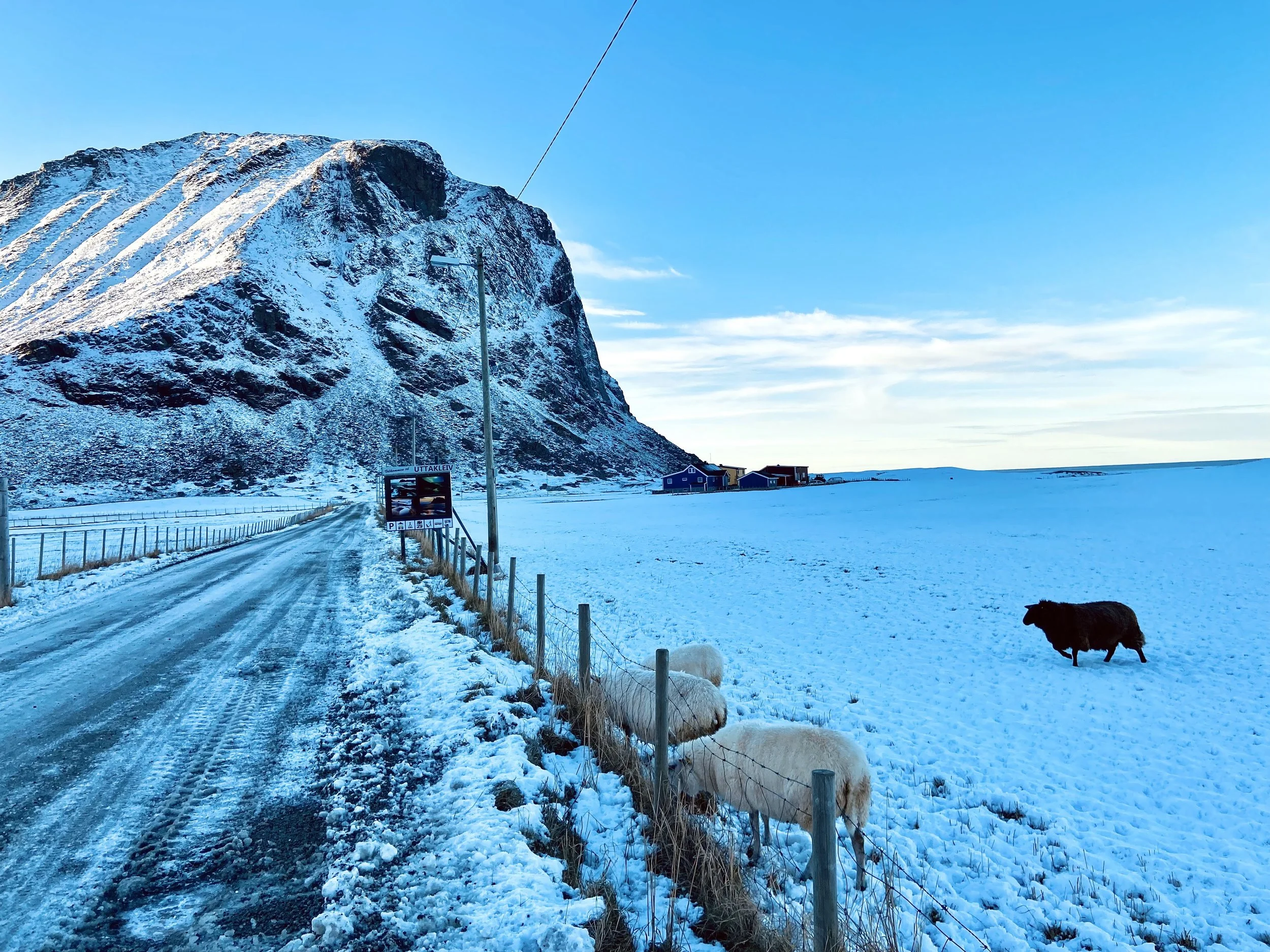
Sheep don’t get cold, so wear a wool sweater and visit Lofoten in winter!
Is Lofoten worth visiting in winter?
Yes — if you’re looking for dramatic scenery, fewer crowds, and a slower pace. Winter Lofoten is about atmosphere and light rather than hiking or packed itineraries.
Can you see the northern lights in Lofoten?
Yes, but sightings are less consistent than in inland destinations due to coastal weather. When skies clear, the combination of aurora, mountains, and sea can be spectacular.
What do you do in Lofoten in winter if you can’t hike?
Winter activities focus on coastal walks, photography, guided aurora tours, kayaking when conditions allow, wildlife watching, and enjoying rorbuer life — cooking, reading, and watching the weather shift.
Is Lofoten better than Tromsø in winter?
They offer very different experiences. Tromsø is more social and tour-oriented, while Lofoten is quieter, more dispersed, and better suited to travelers who enjoy slow travel and fewer crowds.
Do you need a car in Lofoten in winter?
A car makes winter travel easier, but you don’t need to cover long distances. Winter trips work best when you choose one area and explore locally, staying flexible around weather.
Here is my favorite travel playlist for an Arctic trip - and to call the aurora:
So — is winter in the Lofoten Islands worth it?
Yes, if you come for atmosphere rather than altitude.
Winter strips Lofoten back to its essentials: dramatic light, changing weather, quiet villages, and landscapes that feel almost oversized when there are fewer people around. You won’t hike high peaks, and you won’t control the weather — but you’ll experience a slower, more intimate side of the islands that summer never quite delivers.
If you’re comfortable letting conditions shape your days, choosing a strong base, and treating the northern lights as a possibility rather than a promise, trust us, winter can be one of the most rewarding times to visit Lofoten.
Finally, explore all our Norway Travel Guides here.

Free download
Travel Cheaper Cheat Sheet
27 tips on flights, hotels, hidden costs and more — spend less without missing what actually matters.
No spam. Unsubscribe anytime.
