
Renting a Car in Tromsø: Everything You Need to Know
Do you need a car in Tromsø? It depends on what kind of trip you're planning. Here's our answer — and what to know before you book.
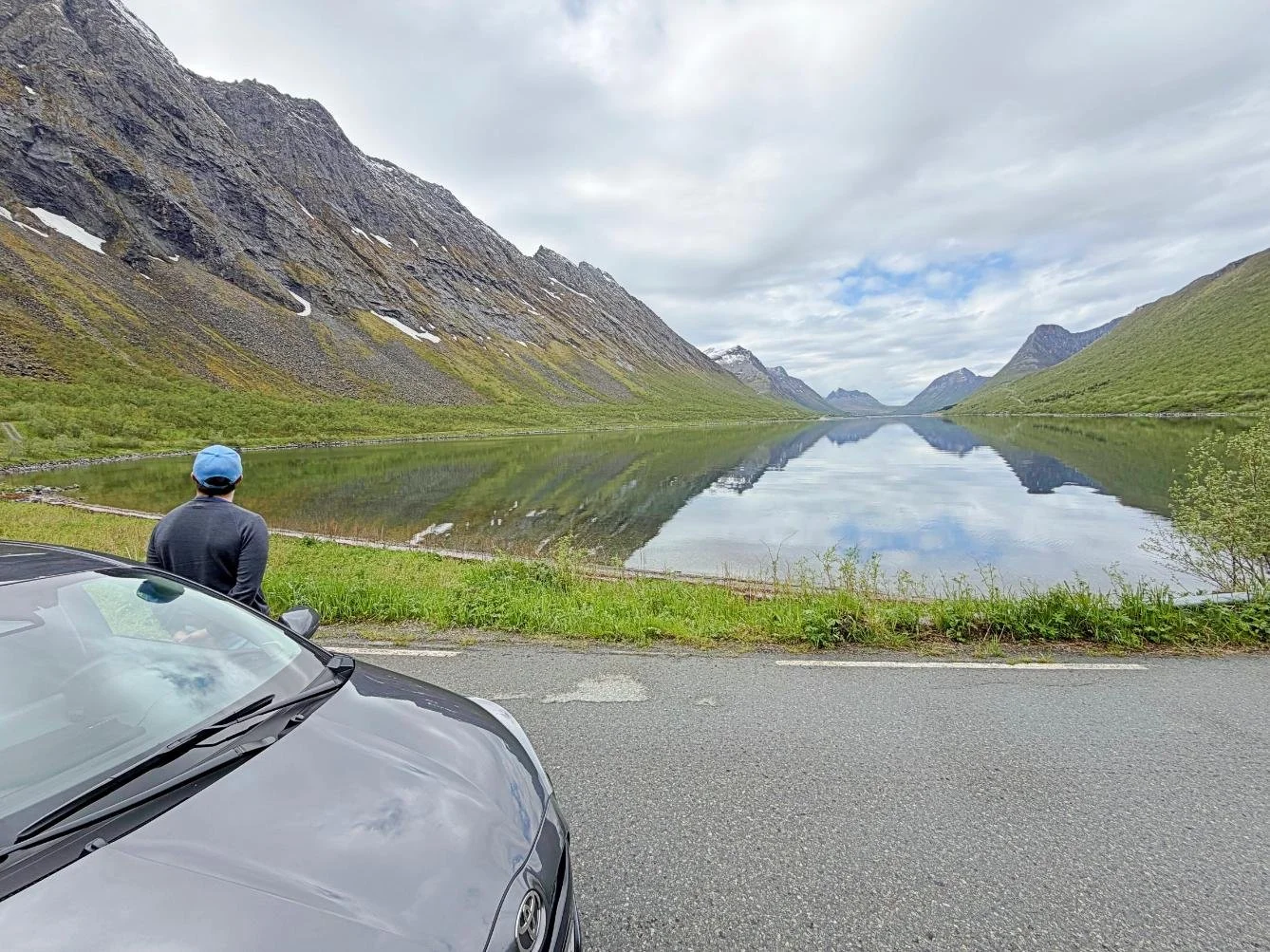
The old road to Gryllefjord on Senja — all to ourselves!
Tromsø, Norway, works perfectly well without a car for a lot of visitors. The city is walkable, the buses are functional, and most of the big tour operators will pick you up from your hotel. If you're spending a few nights chasing the northern lights on guided tours and doing daytime activities in the city, you can get by just fine on foot and public transport.
But if you want to explore the region — drive out to fjords on your own schedule, stop where you want, visit Senja (unless you take a day trip), push further toward the Lofoten Islands or the North Cape — a rental car changes the entire trip. In our humble opinion, Northern Norway is one of the great road trip destinations in the world. A car doesn't just add convenience; it opens up a completely different way of traveling, and absolute freedom.
This guide covers everything you need to know about renting a car in Tromsø, from picking it up at the airport to driving on snow-covered roads in the dark.
🛌 Where to stay:
• Villa Havblikk, Tromsdalen — we stayed here. Minutes from the Sherpa Steps trailhead, with fjord views and a suite in the original 1917 villa.
• The House of Aurora, Ersfjordbotn — we stayed here. Steps from Kvaløya's best trails, cozy and spotless, with reindeer wandering through in summer.
• Sommarøy Arctic Hotel — beach cabins an hour from Tromsø, with a horizon that goes on forever.
🇳🇴 Top experiences:
• Guided snowshoe hike to Fløya — a local guide handles the route and the ride, so you just focus on the climb.
• Northern lights & arctic tours, Kvaløya — guided chases with real-time forecast tracking.
• Sea kayaking, Kvaløya — paddle the fjords at midnight sun or under the aurora.
🚗 Rental cars for the region — worth it for Kvaløya, Sommarøy, Senja, the Lyngen and beyond.
Jump to: Do you need a car? · Where to rent · Airport vs city pickup · Driving tips · Where to go · Oslo to Tromsø by car · Accommodation · FAQ
Do you need a car in Tromsø?

Norway offers some of the most beautiful roads in the world (in our humble opinion) - here on Kvaløya
Not necessarily — but it helps more than in most places.
Tromsø city itself is compact. Most hotels are within walking distance of restaurants, shops, and the waterfront. Public buses connect the city center to the Arctic Cathedral (Tromsdalen), Fjellheisen cable car, and several local viewpoints. For city-based activities and organized tours, you don't need to drive.
Where a car becomes useful is when you want to move beyond the city on your own terms. Aurora chasing (read our Northern Lights in Tromsø Guide) is the clearest example: with a car, you can follow the gap in the clouds instead of waiting for a minibus to catch up to you. When the forecast shifts at 10pm and the clear sky is suddenly an hour east, a car means you go. Without one, you're on the tour operator's schedule.
Beyond aurora, a car gives you access to:
Kvaløya, the island immediately west of Tromsø, full of amazing photo spots & awesome hikes (check our full Kvaløya guide)
Senja, approximately 2 to 3 hours south, one of Norway's most dramatic and least-visited islands. Explore our guide to the best hotels & cabins in Senja, our full guide to Senja’s highlights beyond hiking. and our Senja hiking guide.
The Lyngen Peninsula, about 2 hours east, with fjords and glacier views that almost no one reaches via bus
The Lofoten Islands, 5-6 hours south but entirely feasible as a multi-day road trip from Tromsø (read our Lofoten Travel Guide)
The North Cape, roughly 9 hours northeast — a popular summer drive that very few visitors do from Tromsø
Alta, around 6 hours — off-the-beaten-path and seriously underrated (read our Alta Travel Guide)
If you're spending three or more nights in the region and want flexibility, rent a car. If you're there for two nights on a tight itinerary with pre-booked tours, you probably don't need one. Explore our favorite things to do in Tromsø if you’re staying in town!
Where to rent a car in Tromsø
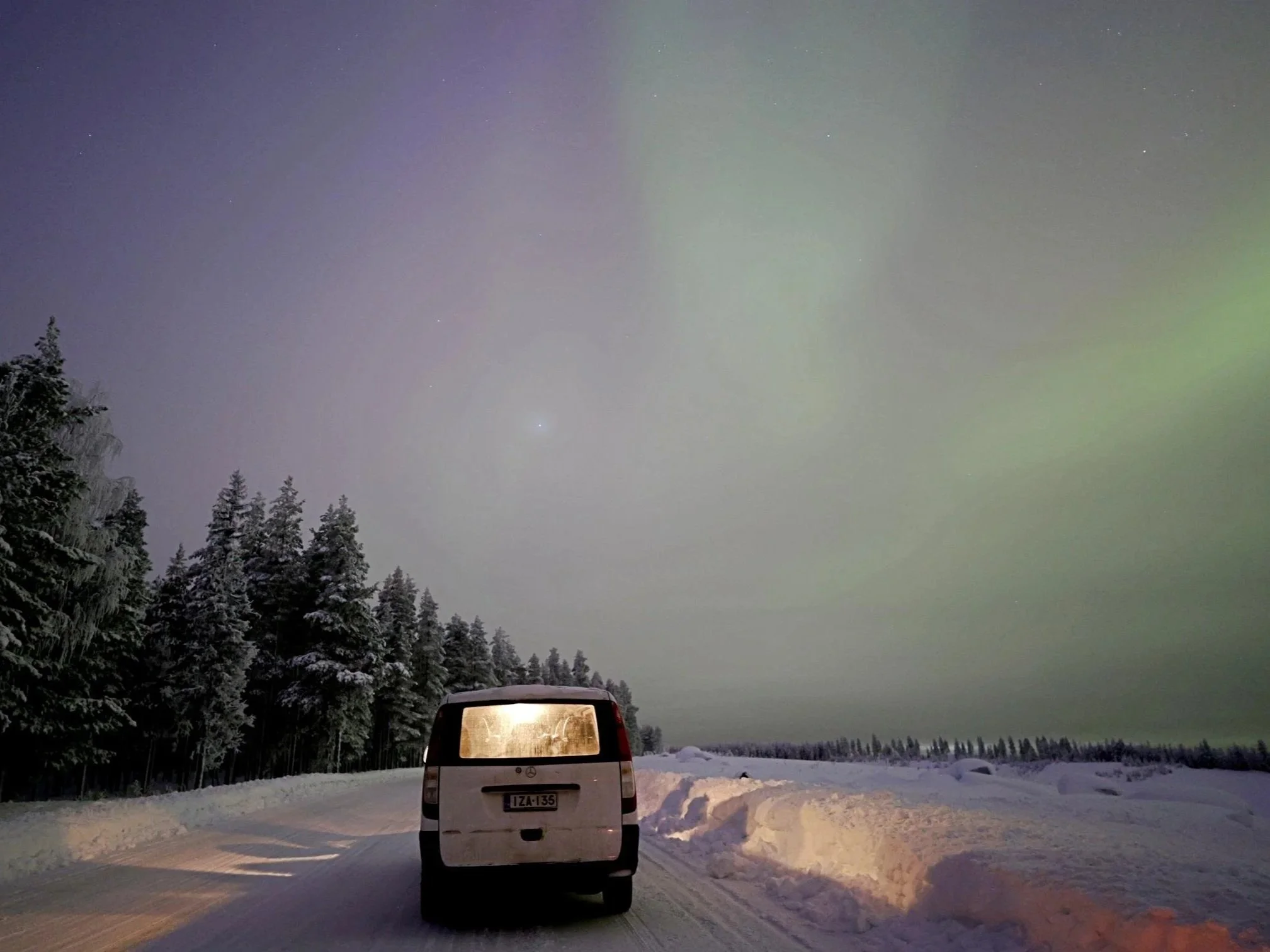
Northern lights season mean higher car rental prices
The easiest place to book is through a comparison platform so you can see all the available options in one place, rather than checking each company's site individually. We use Booking.com for Northern Norway bookings — it pulls rates from the major companies operating at Tromsø Airport and lets you compare insurance options, vehicle categories, and pickup policies at the same time.
This is especially useful in Tromsø because winter rental prices and availability vary a lot by date. Northern lights season (February and March in particular) books up quickly, and prices at the airport peak during busy weekends.

Penguin tip:
Book your rental car before you book tours or activities. In peak season, the car categories that matter for winter driving — SUVs and AWD vehicles — sell out faster than standard economy cars.
Tromsø Airport vs city pickup
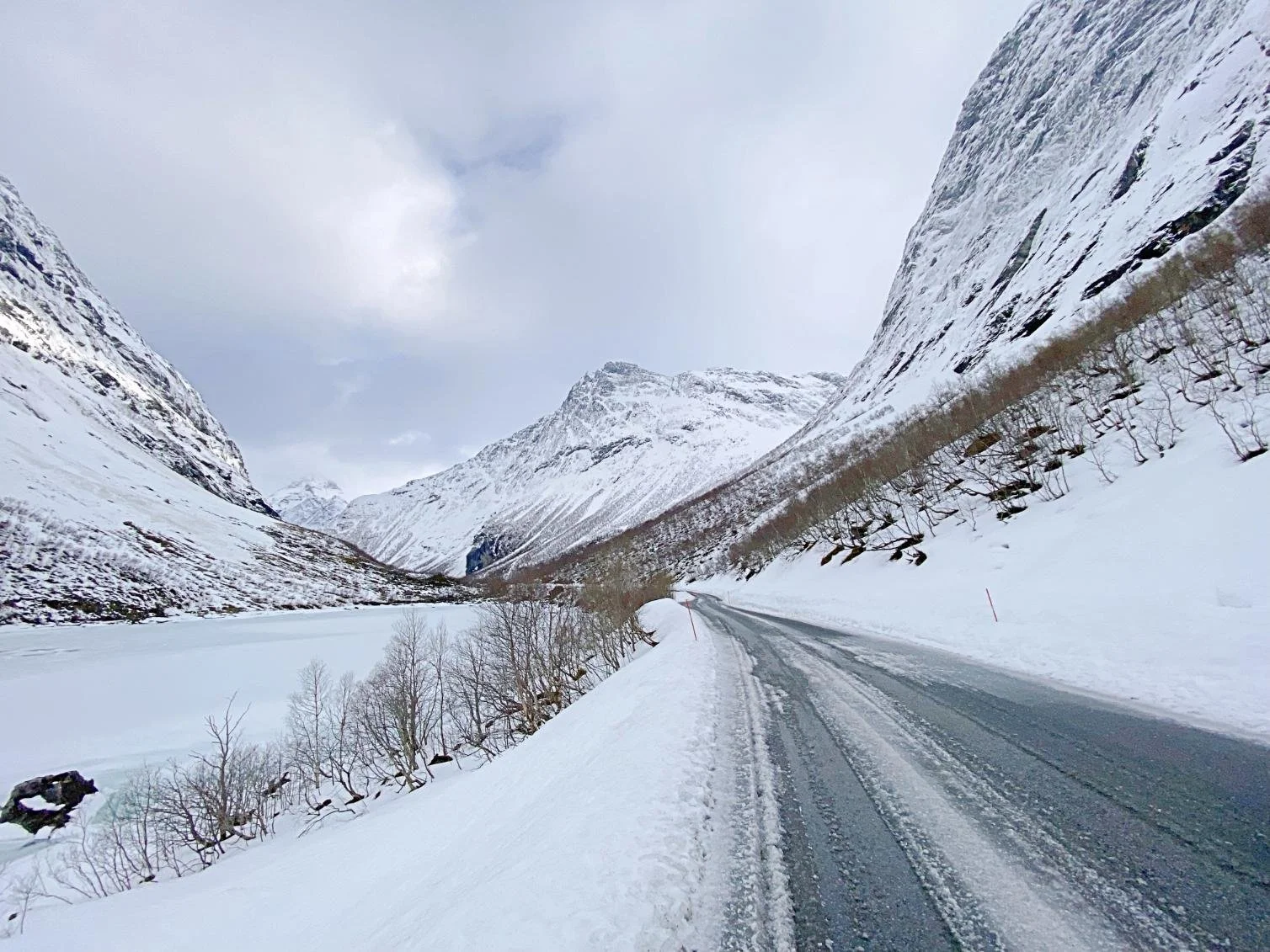
Cars are equiped with winter tires
Tromsø Airport (TOS) is the most convenient pickup point for most visitors, and all major rental companies operate desks there. You collect the car immediately after landing, drive into the city (about 10 minutes), and return it on the way home — no buses or transfers involved.
If you're arriving late or staying in the city center for a few days before you need the car, it can make sense to pick up from a city location instead. A few companies have downtown Tromsø offices, though availability is more limited than at the airport.
One thing worth knowing: airport pickup in Norway means the car comes equipped for the conditions. Winter rentals automatically come with studded tires or winter tires by law, which is what you want. You don't need to request this separately — it's mandatory for cars operated in Northern Norway during winter months.
Driving tips for Northern Norway

We (and Mac) love Norwegian ferries!
This section matters more than it would for most destinations. Northern Norway in winter is not a normal driving environment. None of it is particularly dangerous if you know what to expect — but it requires active attention, and, possibly, some experience.
What you'll actually be driving
Norway has one of the highest EV adoption rates in the world, and the rental fleet reflects that. Most cars available in Tromsø are electric or hybrid — fully petrol cars are increasingly rare on the market. If you're expecting a classic gas-powered rental, you may be choosing between a hybrid or a full EV rather than making that call yourself.
The good news is that charging infrastructure in Norway is excellent, including in Northern Norway. Charging stations are common in city centers, at larger hotels, in front of convenience stores, and along the main E6 highway. If you're renting an EV, plan your charges around your route the same way you'd plan fuel stops, and you won't have issues. Your range can be slightly lower in very cold temperatures, so factor that in on longer drives.
One thing American visitors specifically will appreciate: unlike in southern Europe, where manual transmissions dominate and automatics come at a premium, Norway's rental fleet is predominantly automatic. If that’s a must-have for you, be sure to select an automatic car when booking.
Roads and conditions
The main roads around Tromsø are kept clear and gritted, but conditions change fast. Snow, ice, black ice on bridges, and poor visibility in storms are all normal in the Arctic. Check road conditions before you drive anywhere unfamiliar. The Norwegian Public Roads Administration runs a real-time road conditions map at vegvesen.no — worth bookmarking.
Road closures happen. Some mountain passes close in storms and reopen hours later. A few routes, including some toward the Lyngen Peninsula, Oldervik and parts of the road to Senja, can be affected. Always check before heading out on a longer drive.
In summer, road work is common, and you might have to be patient when driving around.
Speed and distance
Distances in Northern Norway are longer than they look on a map (oh, dear fjords), and speed limits are lower than you'd expect (80 km/h on most routes, with sections at 60 or 70 km/h; roughly 37 to 50 mph for our American readers). Factor more time than your navigation app suggests, especially in winter when the roads demand slower, more concentrated driving.
Daylight
During the polar night (roughly late November to mid-January), you're doing a lot of driving in darkness. This is fine, but it does mean you need good headlights and you need to stay alert.
Animals
Animals — reindeer especially — can cross roads at anytime with very little warning. Sheep, cows and goats — and the occasional moose — also own the road. Be patient and very mindful.
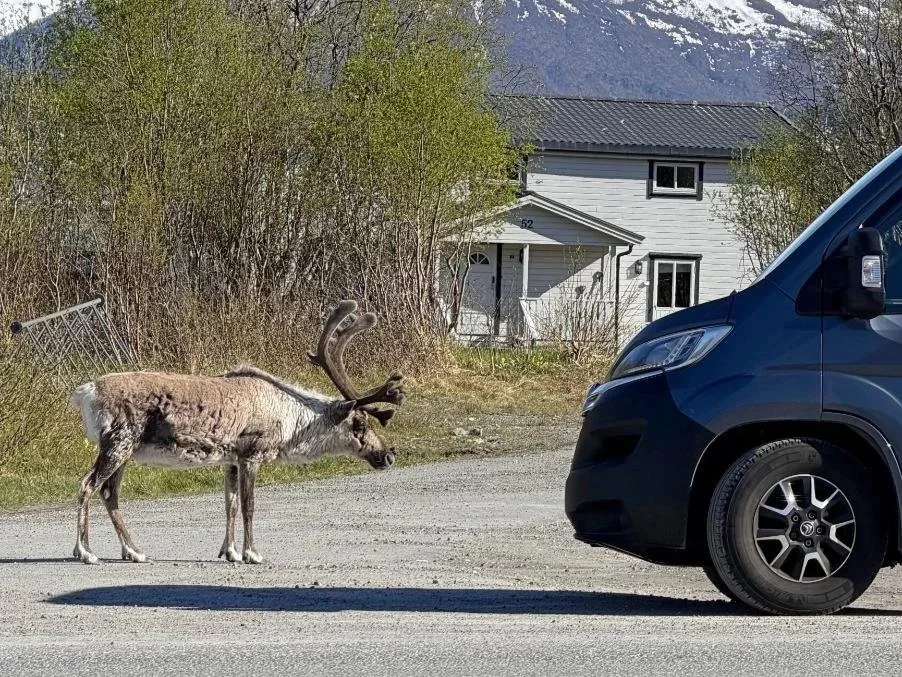
You shall not pass, car.
Fuel
Fill up in Tromsø before you head out on any longer drive. Gas stations exist in larger towns along major routes, but in remote areas — parts of Senja, dead-end fjord roads — there may not be a station for a long stretch. Don't rely on finding one when you need it.
Tunnels
Northern Norway has a lot of subsea tunnels. Some are long and steep, and they connect islands and peninsulas in ways that would otherwise require ferries. Navigation apps handle them fine, but they can catch you off guard the first time, especially when there’s a roundabout in the middle. Some have no tolls, and some others have automatic cameras to register your license plate. The car rental company will apply all tolls, including bridges, tunnels and ferry costs, at the end.
Ferries
If you're driving to Lofoten, Senja, or, actually, most parts of the Norwegian coast, ferries are a normal part of the road. You drive onto the ferry, park, wait 20 to 45 minutes (some crossings are longer), and drive off the other side. It's a routine part of Norwegian road travel, and we personally love it.
Payment is fully automated. Norway uses a license plate recognition system on its ferries, the same technology used for tunnel tolls. A camera (or a friendly Norwegian — especially on at the Senja/Kvaløya crossing!) reads your plate as you board, and the fare is billed automatically to whatever payment method is registered to that plate (so, most likely your car rental agency).
What you do need to check is the timetable. Ferries run on a schedule, and your navigation app routes you onto them as if they're roads, but it often won't show you when the next departure is. Check times before you head out — the Ferje app (by Skyss) covers most routes, or search for the specific crossing online. Some crossings run every 20 to 30 minutes, and you can just show up; others are less frequent and worth timing your drive around. Also, some routes are extremely popular in summer (for example, Senja to Kvaløya), so it’s a good idea to arrive in advance.
Road trips from Tromsø
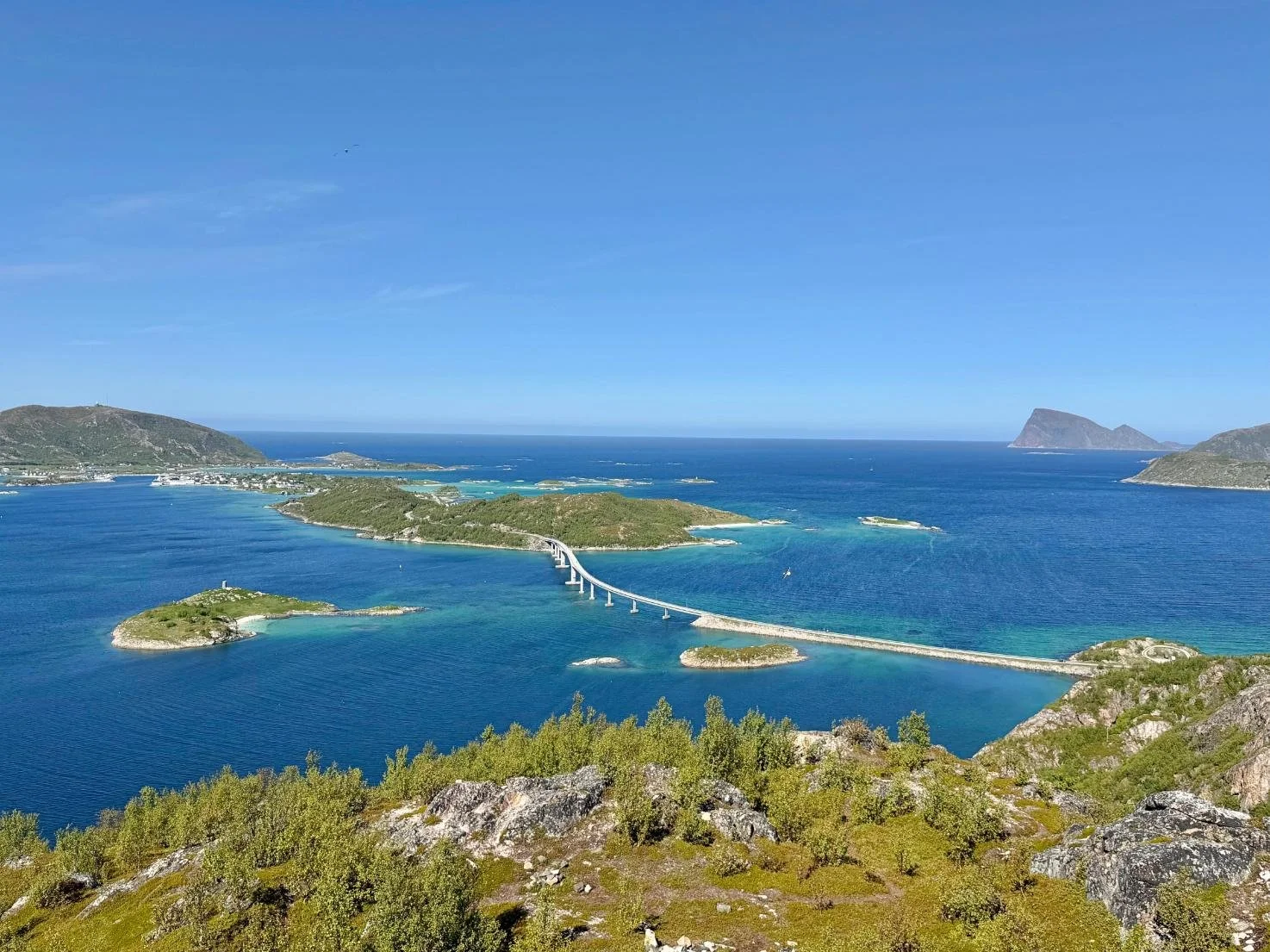
The road to Sommarøy…
Tromsø to Senja
Senja is the clearest argument for renting a car. Norway's second-largest island sits about 2 to 3 hours south of Tromsø and is one of the most visually dramatic places in the country — sea stacks, empty beaches, mountain ridges, small fishing villages — with a fraction of Lofoten's visitor numbers and hard-core hikes that will make Reinebringen feel like a Sunday stroll (read our Guide to Lofoten Hiking here).
The island's western coastline is where the scenery peaks, and the drive around it is worth doing slowly. Give yourself at least two to three days on the island (more if you’re a serious hiker) to avoid just ticking viewpoints.
For places to stay on Senja, we've stayed at Mefjord Brygge in the fishing village of Mefjordvær and at Senja Moments Tranøya, a private island guesthouse. For hiking and the outer coast, Yttersia Base is well positioned. There's also a day tour from Tromsø to Senja if you'd rather not drive.
Tromsø to Lofoten by road
This is one of the great drives in Norway. Tromsø to Lofoten is roughly 5-7 hours by car depending on where you’re going and the weather is spectacular! — it's a long day, but the route is wonderful, and many people do it as part of a multi-day loop. The most popular version: drive south through Senja, continue down the coast, and cross onto the Lofoten Islands via the E10 at Å or work your way up from the ferry at Bodø (explore our favorite things to do in Bodø).
Many visitors combine Lofoten, Senja, and Tromsø into a single road trip of 5 to 10 days. The order depends on your flight in and out, but Tromsø-Senja-Lofoten works well as a southward loop, or Lofoten-Senja-Tromsø in reverse.
We included it in our Tromsø Summer Guide!
Tromsø to the North Cape
The North Cape is the point you can actually drive to (Nordkapp), roughly 9 hours northeast of Tromsø via the E6 and E69. In summer, it's a popular drive with long daylight hours and a dramatic plateau at the end. In winter, the E69 approach to Nordkapp closes, so the timing matters — this is primarily a summer road trip.
The drive itself passes through Alta, Hammerfest, and Honningsvåg, with reindeer sightings almost guaranteed and occasional whale activity in the Barents Sea region. If Alta is somewhere you're considering anyway, there are plenty of trips from Alta worth adding to the route.
Kvaløya
Closest of all — Kvaløya is where most visitors end up when they self-drive around Tromsø. The bridge from the city takes you there in minutes, and the fjords on the western side of the island are the best accessible spots for aurora watching near the city (we included a few places to stay there in our Guide to the Best Northern Lights Hotels in Tromsø). Ersfjordbotn is the most well-known viewpoint; Sommarøy, at the far end of the island, has darker skies and a more exposed coastal feel. Read our Sommarøy Travel Guide.
Compare rental cars in Tromsø:
Can you drive from Oslo to Tromsø?
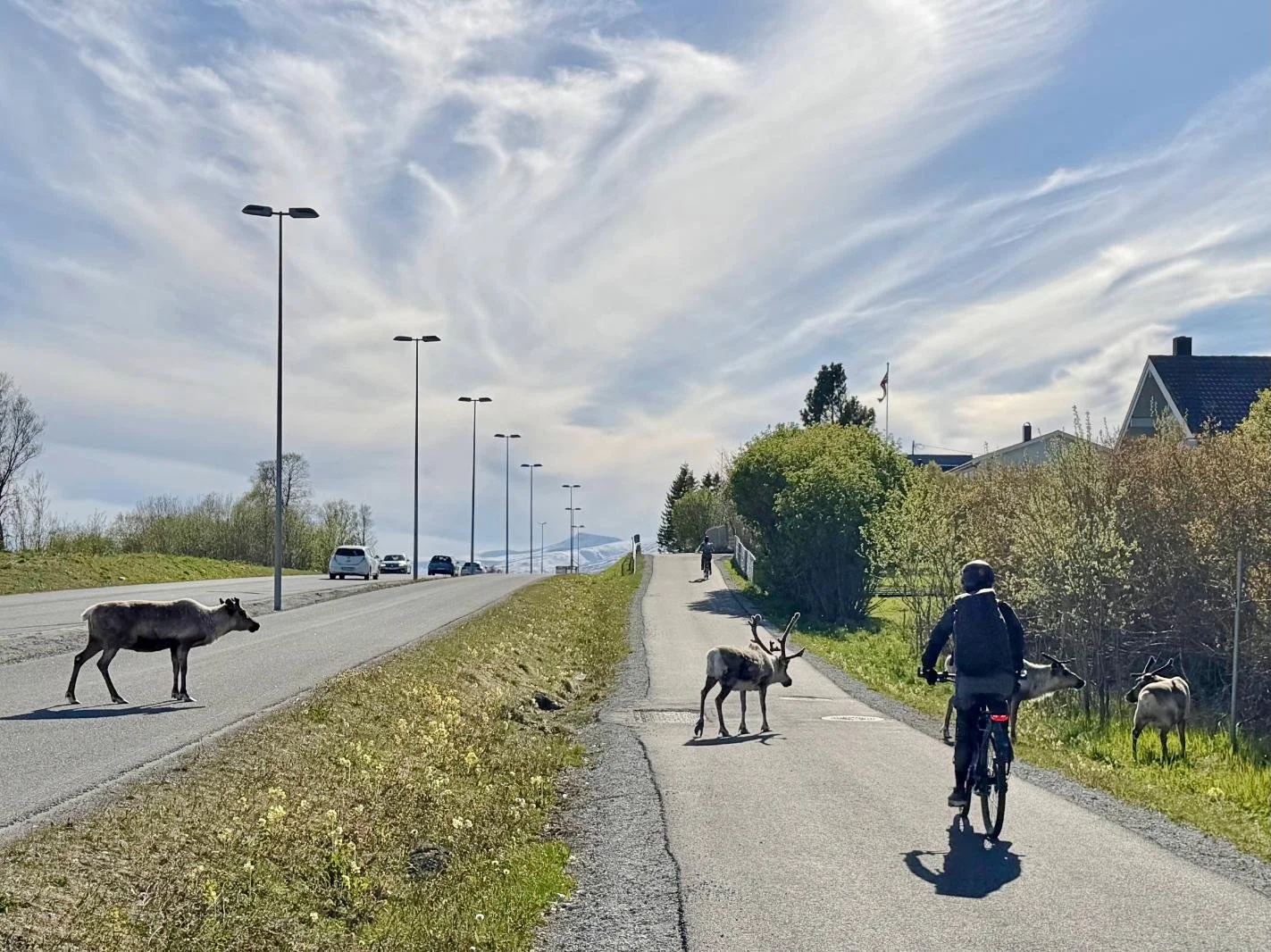
When driving in Northern Norway and Sápmi in general, remember: reindeer own the road (and bike line, apparently) — Here in Kvaløya
Technically yes — the distance is approximately 1,700 to 1,800 kilometers depending on the route, and it's possible to do it by road (via Norway or Sweden). In practice, it's a very long journey — around 22 to 23 hours of driving (without breaks), so most people break it into two or three days and stop in cities like Trondheim or Mo i Rana along the way.
Unless you're specifically doing a full Norway or Sweden road trip from south to north, flying to Tromsø and renting a car there makes way more sense. Tromsø Airport has excellent connections from Oslo (under 2 hours by plane) and from several UK and European airports. Most visitors fly in and pick up their rental on arrival.
If you are doing the full drive as a road trip experience, the route through the interior of Norway (via the E6 north) is the main option, and the scenery from Trondheim northward through Mo i Rana and Narvik is worth the time. You could also incorporate Lofoten on this route before continuing to Tromsø.
Where to stay in Tromsø?
🐧 Northern lights: Best Hotels in Tromsø for the Northern Lights
🐧 For broader accommodation across all price points and areas: Where to Stay in Tromsø
Browse hotels, cabins, and apartments in and around Tromsø:
✈️ Find flights
🏨 Explore hotels, apartments, guesthouses, cabins
🧭 Browse activities and tours
🚗 Compare car rentals
🧳 Get travel gear (including our Arctic essentials)
🛡️ Travel safe with Heymondo Travel Insurance (5–15% off)
📱 Get a travel eSIM
🐾 Protect & track Arctic wildlife with Fahlo Bracelets (20% off)
FAQ: Renting a car in Tromsø
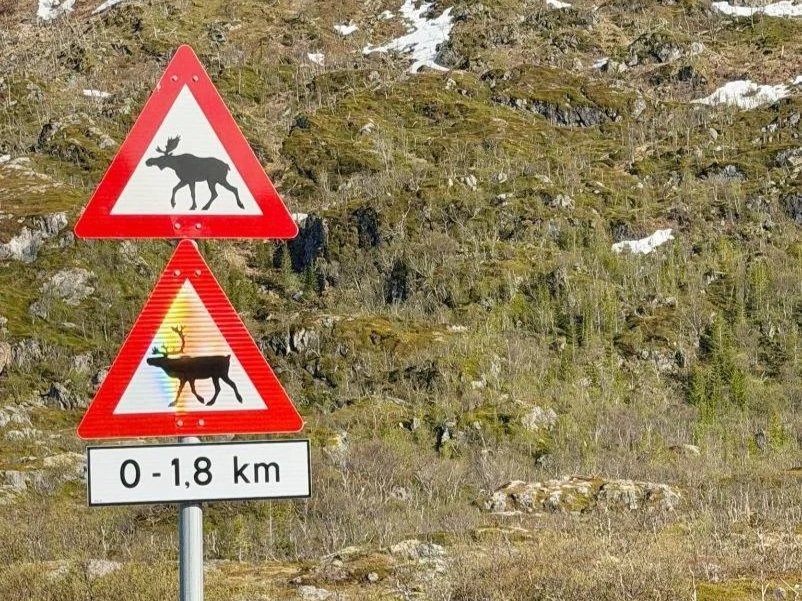
Double cool animals!
Do I need an international driving permit to rent a car in Tromsø? If your license is in a Roman-alphabet language, a standard driving license from your home country is typically accepted by Norwegian rental companies. If your license is in a non-Roman script (Arabic, Chinese, etc.), you'll need an International Driving Permit. Check the specific requirements with your rental company when you book.
Can I take the rental car on ferries? Yes — cars can travel on Norwegian ferries, including the ones that cross between islands on some Lofoten and Senja routes. Check whether your rental company has restrictions on ferry crossings, which most don't, but it's worth confirming.
Do rental cars in Tromsø come with winter tires? Yes. Norwegian law requires winter tires (or studded tires) on all vehicles during winter months in Northern Norway. Your rental car will be equipped accordingly — you don't need to request this separately.
What size car should I rent for Northern Norway? An SUV or crossover is more comfortable than a standard economy car on winter roads. AWD isn't legally required, but it gives you more confidence on icy roads. If you're planning longer drives into remote areas, it's worth the upgrade.
Is it safe to drive in Tromsø in winter? Yes, with appropriate care. The roads are maintained, the cars come with winter tires, and the conditions — while real — are manageable for anyone who drives sensibly and checks road conditions before heading out. Thousands of visitors self-drive here every winter without incident. The key is not to treat it like summer driving: allow more time, reduce speed, and pay attention to weather updates.
How far in advance should I book? For February and March (peak northern lights season), book as early as possible. SUVs and larger vehicles book out weeks in advance. For other times of year, a week or two ahead is usually fine, but locking it in earlier always gets you better rates.
Ready to book? Compare rental car rates in Tromsø at Booking.com— it pulls options from all the major companies at Tromsø Airport in one place. We also tested their premium insurance policy, and we had no issue submitting a claim and getting our money back.
If you don’t want to rent a car during the whole stay, read our guide to Hikes by Bus from Tromsø. And if you haven’t figured out your transport yet, read our guide: How to Get to Tromsø.
Finally, if you want to drive further, explore all our Norway Travel Guides here.

Free download
Travel Cheaper Cheat Sheet
27 tips on flights, hotels, hidden costs and more — spend less without missing what actually matters.
No spam. Unsubscribe anytime.
