
Northern Lights in Tromsø: Best Time, Best Spots & Is It Really a Good Aurora Destination
Our personal guide — including the clouds, the tours, the best spots and the things nobody tells you

Northern lights on Kvaløya (and a bit of soccer support) - Takk to our friend Henrik from Unique Norway for the photo!
Tromsø, Norway, has become almost synonymous with the northern lights. It sits at 69.6°N, deep inside the auroral oval, with fjords and mountains in every direction and more tour operators than anywhere else in Northern Norway. Every winter, tens of thousands of people fly in with one mission (or shall I say, obsession). Some get lucky on their first night. Others spend a week chasing gaps in the cloud cover. Most land somewhere in between.
We've been to Tromsø more than once — summer and winter — and the honest answer to "is Tromsø good for northern lights?" is: yes, with some caveats you should know before booking anything. This guide to the northern lights in Tromsø tells you when to come, where to go when the sky clears, and how to maximize the nights you have.
🛌 Where to stay:
• Villa Havblikk, Tromsdalen — we stayed here. Restored 1917 villa, fjord views, real personality.
• House of Aurora, Ersfjordbotn — we stayed here. Dark skies, fjord reflections, reindeer at the door.
• Æra Glass Cabins, Krokelvdalen — floor-to-ceiling glass, WhatsApp aurora alerts, sauna.
• Scandic Ishavshotel — best-positioned city hotel, right on the harbor.
🇳🇴 Top experiences:
• Northern lights minibus tour — guides chase clear skies in real time, hot food and free photos included.
• Reindeer sledding, dinner & aurora — the full Arctic evening in one tour.
• Snowshoe aurora tour — into the dark wilderness on foot.
🚗 Tours include pickup from most hotels. But a rental car lets you chase clear skies independently.
Jump to: Is Tromsø good for northern lights? · Best time to visit · Best spots · How to read the forecast · Tours vs DIY · Where to stay · Photography · What to wear · How many nights · Getting there
Is Tromsø good for the northern lights?

Yeah, a break in the clouds!
Yes — with a couple of important caveats. Tromsø is one of the world's best northern lights destinations by location. It sits directly under the auroral oval, the ring around the poles where aurora activity is most intense. Even a modest solar event produces visible lights here. The city has excellent flight connections, more guided tour options than anywhere in Norway, and enough infrastructure that chasing clear skies is doable for anyone.
The first caveat is weather. Tromsø sits on a coastal island and is exposed to Atlantic weather systems. Cloud cover is frequent, especially in November and January. Alta, four hours to the east, has significantly clearer skies on average — the mountains shelter it from incoming storms in a way Tromsø's position doesn't allow. If this is your only trip and you have just three nights, you have a better statistical chance of success in Alta.
The second caveat is the size of the city. Tromsø is a large city (especially by Arctic standards): around 77,000 people, a busy airport, cruise ships in the harbor, and hundreds of tour buses operating on peak winter weekends. Think of it less like Abisko or Lyngen, which are pure aurora destinations, and more like Rovaniemi in Finnish Lapland: a well-connected hub that organizes aurora experiences brilliantly, but where the actual aurora watching happens outside the city, not in it. This popularity also reflects on high prices in winter.
That said, most people pick Tromsø anyway, and for good reason: the city is more accessible, more developed for visitors, and the tours here are world-class at getting you to clear sky when it exists. With a week and the right approach, Tromsø will most likely deliver. And when it does — fjords below, mountains in the back, curtains of green and sometimes purple overhead — it's everything the photos promise.
🐧 Tromsø vs Alta: If you're undecided between the two, read our full Tromsø vs Alta comparison. Short version: Tromsø for variety and tour options, Alta for clearer skies and a quieter experience.
🐧 All of Norway: For a broader overview of every northern lights destination in the country — Alta, Lofoten, Svalbard, Kirkenes — see our complete guide to the Northern Lights in Norway and explore our best tips in our Northern Lights Hub.
Best time to see the northern lights in Tromsø
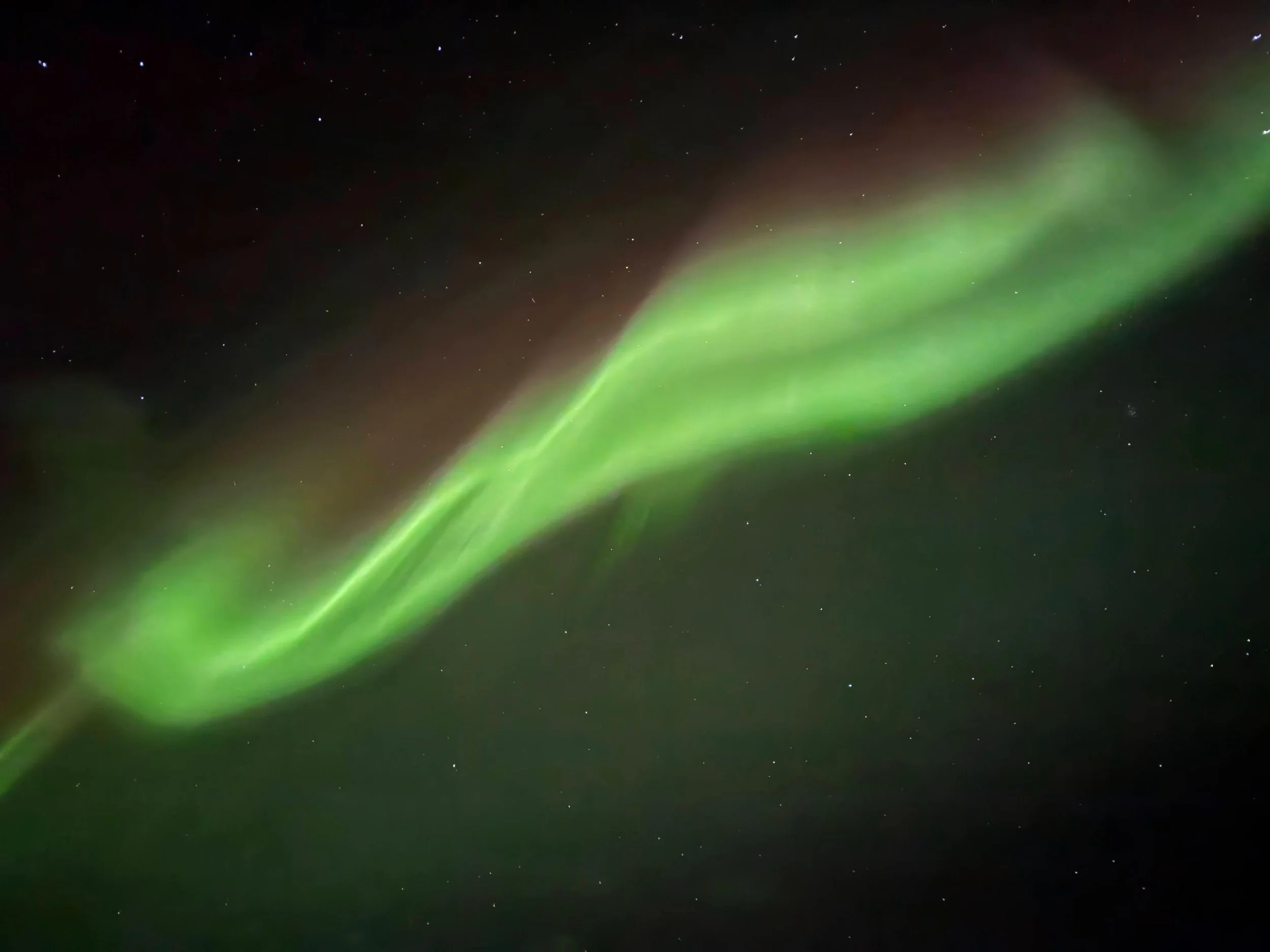
We took this picture in February
The northern lights require two things: darkness and a clear sky. In Tromsø, you need to be there between early September and early April to have both. Outside that window, the sky doesn't get dark enough for the aurora to be visible even when it's active.
The polar night
When the sun doesn't rise at all — runs from approximately 27 November to 15 January in Tromsø. This is when the city is dark around the clock, which sounds ideal but also coincides with the stormiest, cloudiest stretch of the year. Don't plan your trip around the polar night just for aurora purposes (which you should never do anyway, as the Arctic has so much more to offer).
Northern lights in Tromsø month by month
September — October: The aurora season opens quietly. Nights are short at first (September still has some light) but lengthen fast. We had good experiences in October — the weather can be more stable than deep winter, it’s not that cold, prices are cheaper, you can combine the aurora with the hiking season’s final opportune conditions, and there's a real chance of strong solar activity during this period of the solar cycle. Worth considering seriously if you're flexible.
November: Long nights, but this is one of Tromsø's cloudiest months. Not impossible, but statistically frustrating. If November is your only option, book a tour with a free rebooking policy and stay as many nights as you can afford.
December — January: The darkest period. Aurora can be dramatic when the sky clears, but weather is the biggest obstacle. January in particular can bring prolonged cloud cover. The atmosphere in the Arctic during the polar night is surreal — it's just not the most reliable aurora window.
February — March: The sweet spot. Temperatures are still properly cold, snow is still there, nights are long but not endless, and the weather tends to settle compared to midwinter. Clear periods are more frequent. Many experienced aurora chasers consider February–March the best time to visit Tromsø specifically. March is especially good: the equinox effect amplifies geomagnetic activity, the days are lengthening, and you can often combine decent aurora nights with daytime skiing, dogsledding or snowshoeing.
🐧 Go deeper with our full guide to the best time to see the northern lights.

Penguin tip:
Whatever month you visit, give yourself at least four nights. Three is the minimum. The aurora is a natural phenomemon, and therefore not on a schedule — some trips produce lights on night one, others on night five. The more nights you have, the calmer the whole experience becomes.
Best spots to see the northern lights in Tromsø
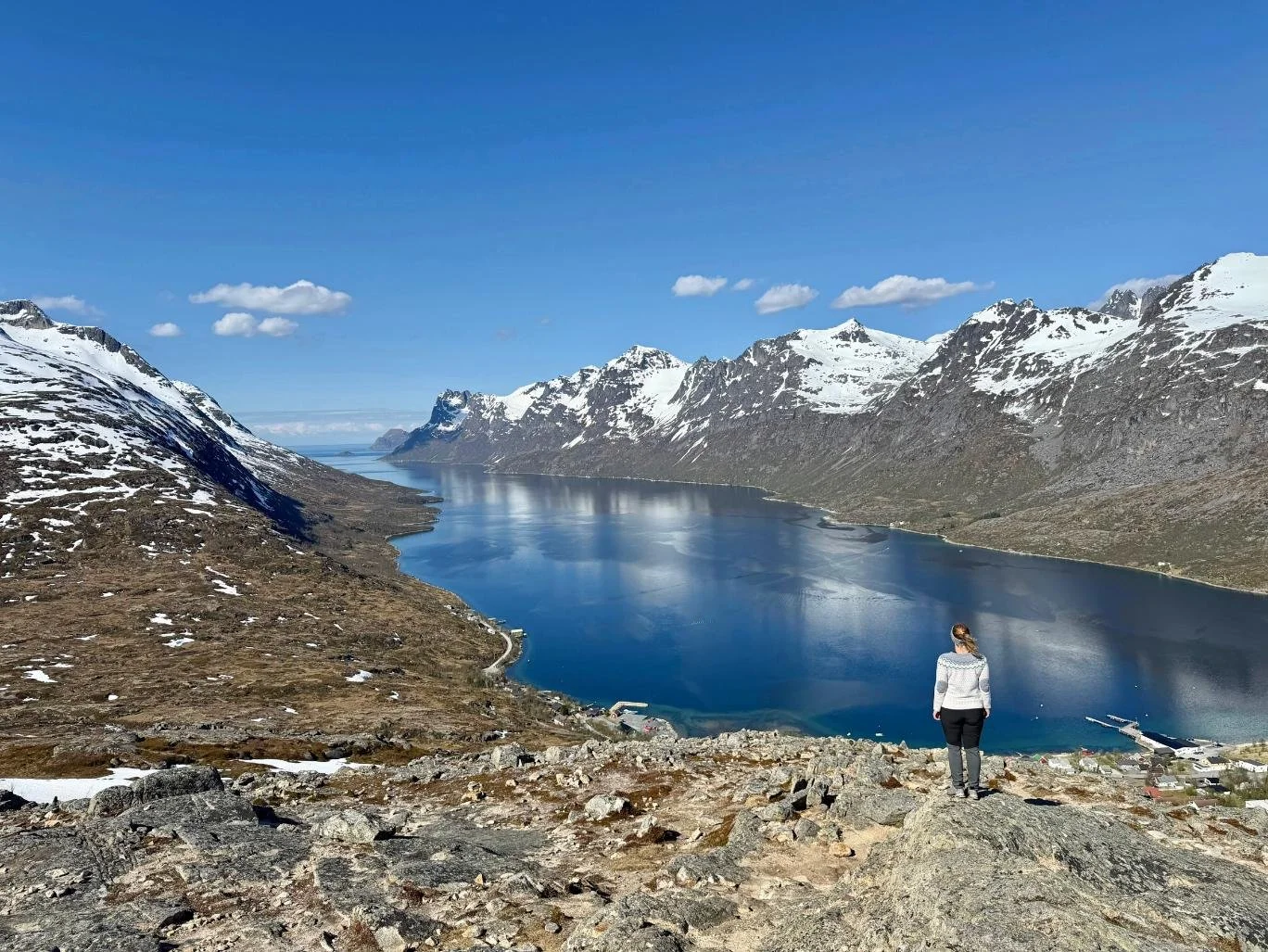
Above Ersfjordbotn on Kvaløya - imagine with the northern lights!
The key rule: get away from the city lights, and get under a clear patch of sky. These two things are often the same direction.
From the city itself — on Tromsøya
Light pollution is the main obstacle on the island, but there are several spots that reduce it. For strong displays (KP 3+) these work well. For faint aurora, you'll want to go further.
The north jetty — Walk down to the base of the bridge and follow the waterfront path underneath it, then out onto the pier. From here you get the classic Tromsø image: the Arctic Cathedral and the bridge reflected in the dark water, with open sky above. Moderate light pollution but strong photography potential. Easy walk from the center.
Telegrafbukta — The southern tip of Tromsøya, reachable by bus 33 (take bus 34 back). A beach with open views east, south, and west — the horizon is wide in three directions, and light pollution is noticeably lower here than in the center. A small wooded area, a pier, and seating make it comfortable for a wait. One of the better on-island options.
Prestvannet — A lake sitting on the high ground at the top of the island, about 20 minutes' walk from the center, or bus lines 28 and 40. The elevation helps, the sky opens up over the water, and locals have been coming here for aurora for decades. Newer housing nearby has added some ambient light, but it's still a solid mid-effort option with good photography potential.
Grønnåsen ski jumps — Near the university area in the northern part of the island. Bus 24 to the Echrehagen stop, then follow signs to Grønnåsen Hoppsenter. The open hillside around the ski jumps gives you a darker sky than the central waterfront. One of the medium jumps has a staircase you can climb for elevated views — go carefully and with spikes in icy conditions.
Varden — The highest point on Tromsøya, reached via bus lines 20 or 42. The best no-tour viewpoint on the island with far-reaching views of the surrounding fjords and islands, and lower light pollution. Recommended in autumn; in winter the paths become treacherous and are better left to experienced hikers with the right footwear. Worth the effort if conditions allow.
Fjellheisen cable car — Technically on the mainland (Tromsdalen side), but 10 minutes by bus 26 from the center. The cable car up to Storsteinen puts you 421 meters above everything, with a 360° panorama — city below, fjords in every direction, sky unobstructed. One of the most spectacular accessible aurora platforms anywhere near Tromsø. Check the evening schedule before you go. The Arctic Cathedral is also in Tromsdalen, a lovely background if the aurora shows up.
Kvaløya — 15 to 45 minutes out
This is where most tour operators take their groups, and for good reason. Kvaløya's fjords face north with minimal light interference, the roads let you move quickly if clouds are patchy, and spots like Ersfjordbotn and the western coast of the island give you dark-sky conditions with dramatic foregrounds. If you have a rental car, Kvaløya should be your first move when the forecast looks promising (always read winter driving guidelines and exercise extreme caution). Read our guide to renting a car in Tromsø for more.
Ersfjordbotn specifically is one of the best spots in the Tromsø region — a sheltered fjord with reflections on calm nights and wide-open sky overhead. This is where most of the tour buses arrive, which means it can get busy, but it gets busy for a reason. Definitely worth visiting even without the northern lights (direct bus from Tromsø). Read our full Kvaløya guide for more.
Sommarøy — 1 hour out
Further west on Kvaløya and out onto the island of Sommarøy, the skies are noticeably darker and the horizon is almost completely open. More drive time means more flexibility when clouds are patchy — you can often find clear sky here when Tromsø itself is overcast. Also home to the famous Sommarøy Arctic Hotel. Read our Sommarøy Travel Guide for more.
Oldervik — 1 hour out
We weren’t sure if we wanted to include our little secret, but that’s how much we love you, little penguins! About 40km northeast of Tromsø along a dead-end fjord road, Oldervik is one of those spots that most aurora visitors never hear about and none of the tour buses visit. It's a tiny hamlet backed by steep mountains, with the fjord opening in front of you and direct views across to the Lyngen Alps on the opposite shore — a setting that's hard to beat for drama. The catch is the road: it's the only way in and out, and it's occasionally closed for avalanche risk in winter. Check conditions before you go, and keep an eye on updates during your stay. But it's reachable by public bus from Tromsø, which means you don't need a car to get there (do check the schedule; they’re not frequent) — you just need to be the kind of person who looks beyond the standard itinerary (and we really respect you for this).
Lyngen Alps — 2 hours out
The Lyngen peninsula has some of the best aurora skies in the region — inland fjords, mountain shadows blocking wind-driven cloud, and near-zero light pollution. Most tours don't venture this far, but some specialist chase tours do. If you're staying at Lyngen North Glass Igloo Hotel or North Experience Basecamp, you're already in position with panoramic windows and no need to step outside to look up.
Senja — 2 to 3 hours out
Norway's second-largest island is a different kind of option — less "dedicated aurora destination", more "extraordinary place where the northern lights happen to appear over dramatic scenery." Senja's northwest coast faces open ocean with minimal light pollution, and the island gets really dark skies from late September through March. It works best as part of a multi-day Tromsø-area road trip rather than a single-night chase: drive over, spend a night or two (or more…), head back. The reward is wide-open sky over sea stacks and fjords with almost no one around. Explore our guide to the best hotels & cabins in Senja.
How to read the aurora forecast for Tromsø
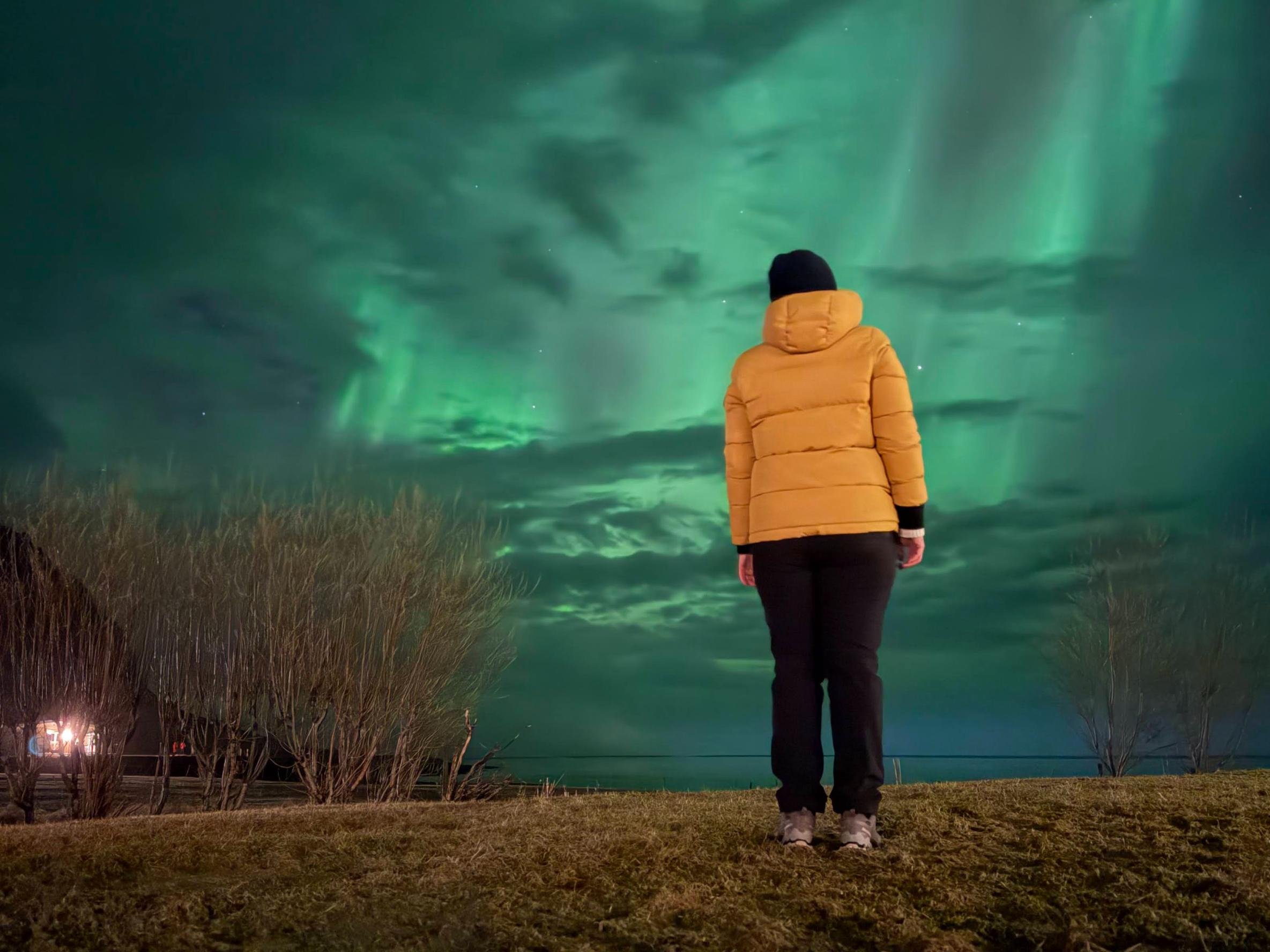
This was a promising KP 4, but clouds got in the way…
The forecast tools are worth knowing, but none of them are perfectly reliable. Here's how to use them without going as mad as a reindeer during rutting season:
The KP index
This mysterious number measures global geomagnetic activity on a scale of 0–9. In Tromsø, KP 1–2 is enough for visible aurora on a clear night — you don't need a KP 5 storm. Don't wait for big numbers. A quiet KP 2 with clear skies beats a KP 7 under cloud every time.
Cloud cover is everything
This is the forecast that actually matters. Check yr.no for hour-by-hour cloud cover around Tromsø — it's Norway's national weather service and is more accurate for this region than international apps. Look at cloud cover for Tromsø city, for Kvaløya, and for the Lyngen area separately. When the city is cloudy but Lyngen is clear, a good tour will get you there.
The SpaceWeatherLive KP forecast (spaceweatherlive.com)
It’s useful for 2–3 day outlooks. The Tromsø aurora alert Facebook group (Tromsø Aurora Alert) is also genuinely helpful — local photographers and chasers post real-time updates when the sky opens up.
Don't trust the 7-day forecast
Beyond 3 days, aurora and weather forecasts for this region are essentially guesswork. Plan flexible evenings, not specific nights. Even on the night of, we’ve seen KP dropping or rising unexpectedly within an hour.
🐧 For everything aurora-related, including our best proven tips, explore our Northern Lights Hub (yes, we’re obsessed).
Aurora tours vs doing it yourself
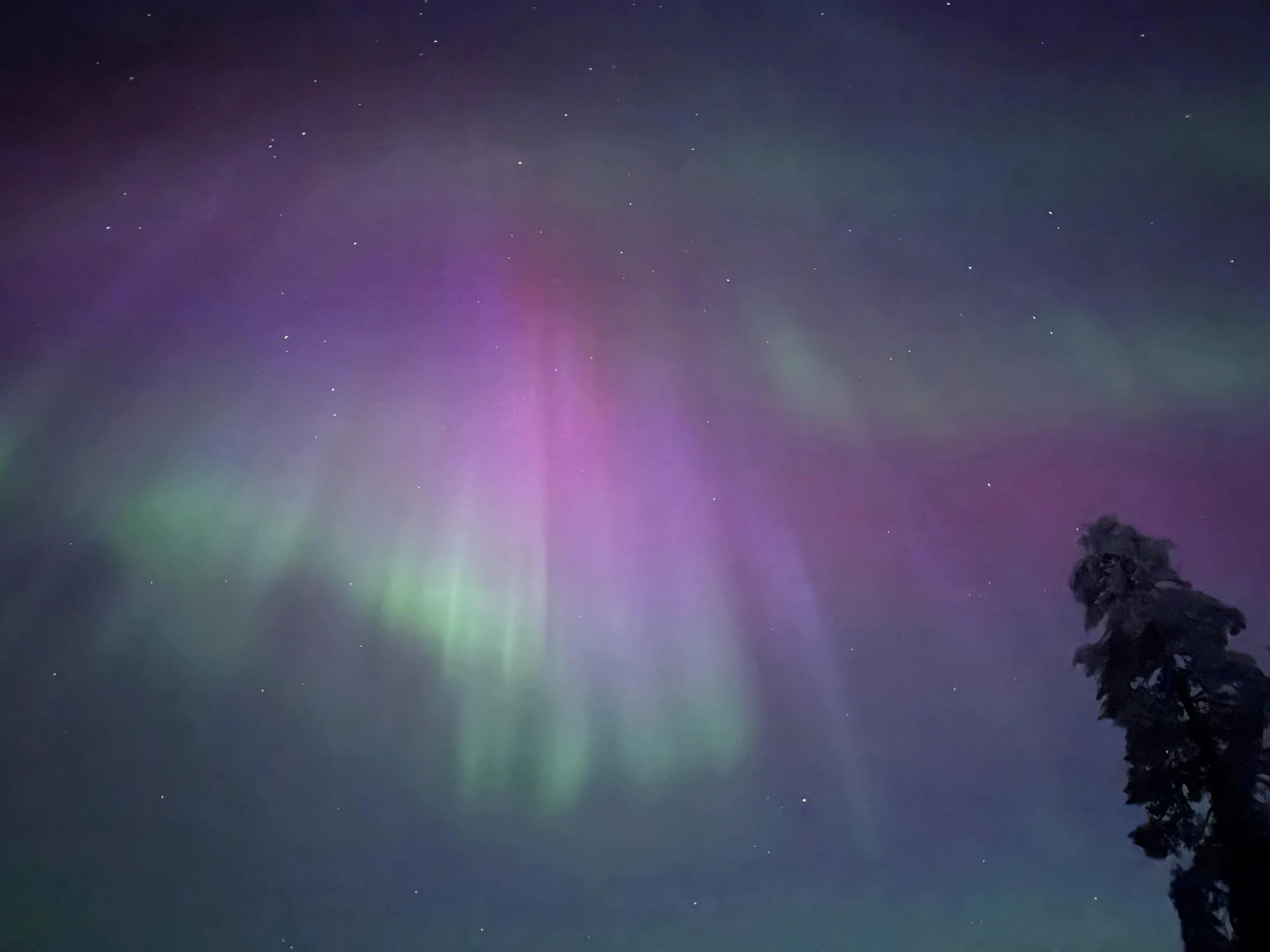
The sky was super cloudy in Tromsø, but our guide knew exactly where to go
Both work. The right choice depends on your comfort with winter driving and your tolerance for logistics.
When guided tours make sense
It’s your first experience with the northern lights, you don't have a rental car, you're not confident driving on icy roads at night, or you want someone else to make the cloud-chasing decisions. Good Tromsø aurora tour operators have local knowledge that is hard to replicate — they know which valleys tend to clear first, which roads give you fast escape routes from incoming clouds, and when to cut losses and move. It's not a guarantee, but it's definitely an advantage, especially if you’re short on time.
Went renting a car and self-drive make sense
You're experienced with northern lights chasing and winter driving (not just confident — experienced), you want maximum flexibility, and you're comfortable making fast decisions with an unfamiliar map. Studded tires or snow chains are non-negotiable. The freedom to move instantly when a gap appears is a real advantage. Just be honest with yourself about the winter roads — black ice on a mountain pass in the dark is not the same as a snowy motorway.
One note from experience: not all tours are equal. Some operators run large buses to the same three spots every night regardless of conditions and call it a night after an hour. Others have small groups, real-time cloud-chasing, and local, passionate guides who are willing to drive further. Read recent reviews carefully and look for operators who explicitly describe their cloud-chasing approach. We have a dedicated Best Northern Lights Tours in Tromsø guide for a full breakdown.
🐧 Not sure about the best decision? Read our guide: Northern Lights Without a Car.
Browse northern lights tours with reviews in Tromsø:
Where to stay for the northern lights in Tromsø
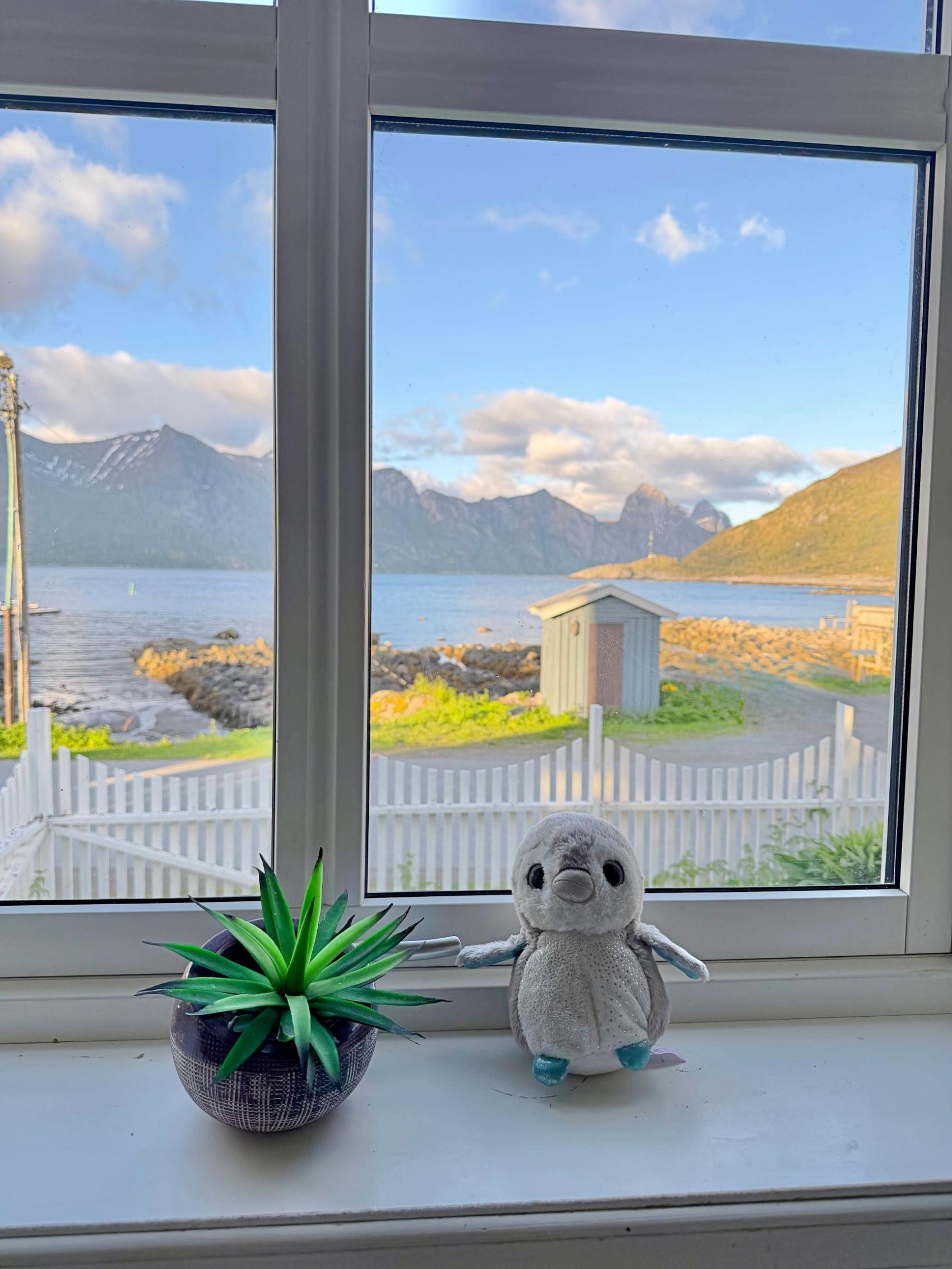
The views from Mefjord Brygge are awesome, whether it is with northern lights or the midnight sun
The short version: staying outside the city always gives you a distinct advantage. Tromsø island itself is light-polluted — hotels on Tromsøya are convenient, but you'll need to travel for solid aurora conditions every night.
On the mainland (Tromsdalen)
5–10 minutes from the city, noticeably less light pollution, fjord views toward the cathedral. Villa Havblikk and Tromsø Lodge & Camping are the best options.
On the mainland (Krokelvdalen)
Past Movik on the mainland road, 30 minutes from the city. Minimal light pollution by the water, mountains all around, with Æra's glass cabins sitting right in the middle of them. Yes, it’s a splurge. But wow.
On Kvaløya
Where the tours go. The House of Aurora Ersfjordbotn puts you right at the prime viewing spot. Steam Pier is a good self-catering base with bus access into the city.
On Håkøya Island
25 minutes out, completely dark, the highest-rated property in the region. Håkøya Lodge is lovely for couples who want privacy and the best sky position near Tromsø.
Further out — Sommarøy
Not many options there, but if budget allows, check out the famous Sommarøy Arctic Hotel.
Further out — Lyngen Alps
Lyngen North Glass Igloo Hotel and North Experience Basecamp offer glass-roof aurora viewing from bed — weather windows are better here than in the city and the mountain scenery is extraordinary.
Further out — Senja
Best for those doing a road trip from Tromsø rather than a single-night chase. Accommodation on the island ranges from Yttersia Base in Skaland (great base for hiking and the outer coast), Mefjord Brygge in the fishing village of Mefjordvær, and Senja Moments Tranøya, a private island guesthouse accessible only by boat. None are aurora-specialist setups — they're places where the northern lights are a genuine bonus on top of everything else the island offers.
🐧 Full coverage of all options, with honest pros and cons: Best Hotels in Tromsø for the Northern Lights
🐧 For broader accommodation across all price points and areas: Where to Stay in Tromsø
Find hotels, cabins and apartments in and around Tromsø:
Aurora photography in Tromsø
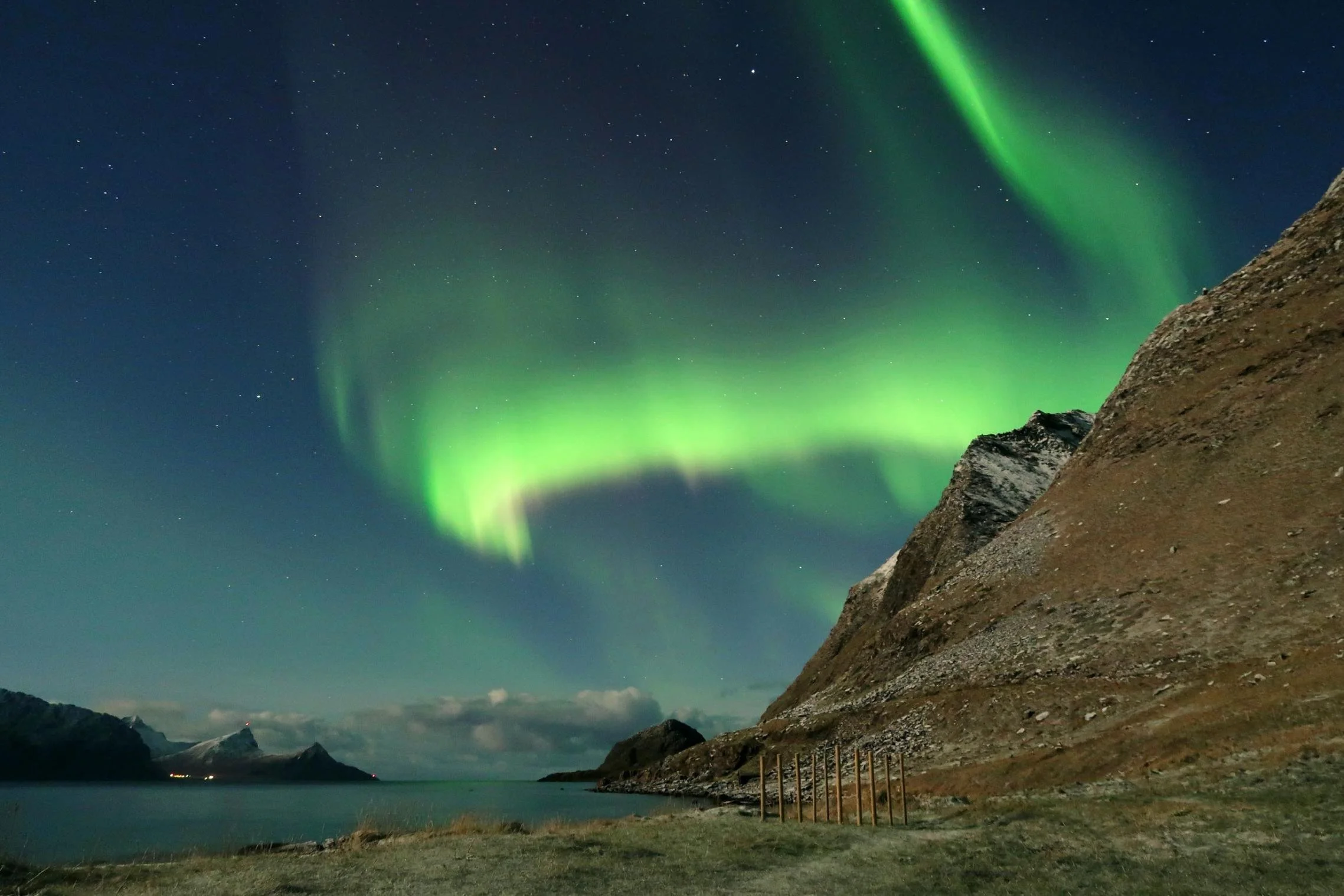
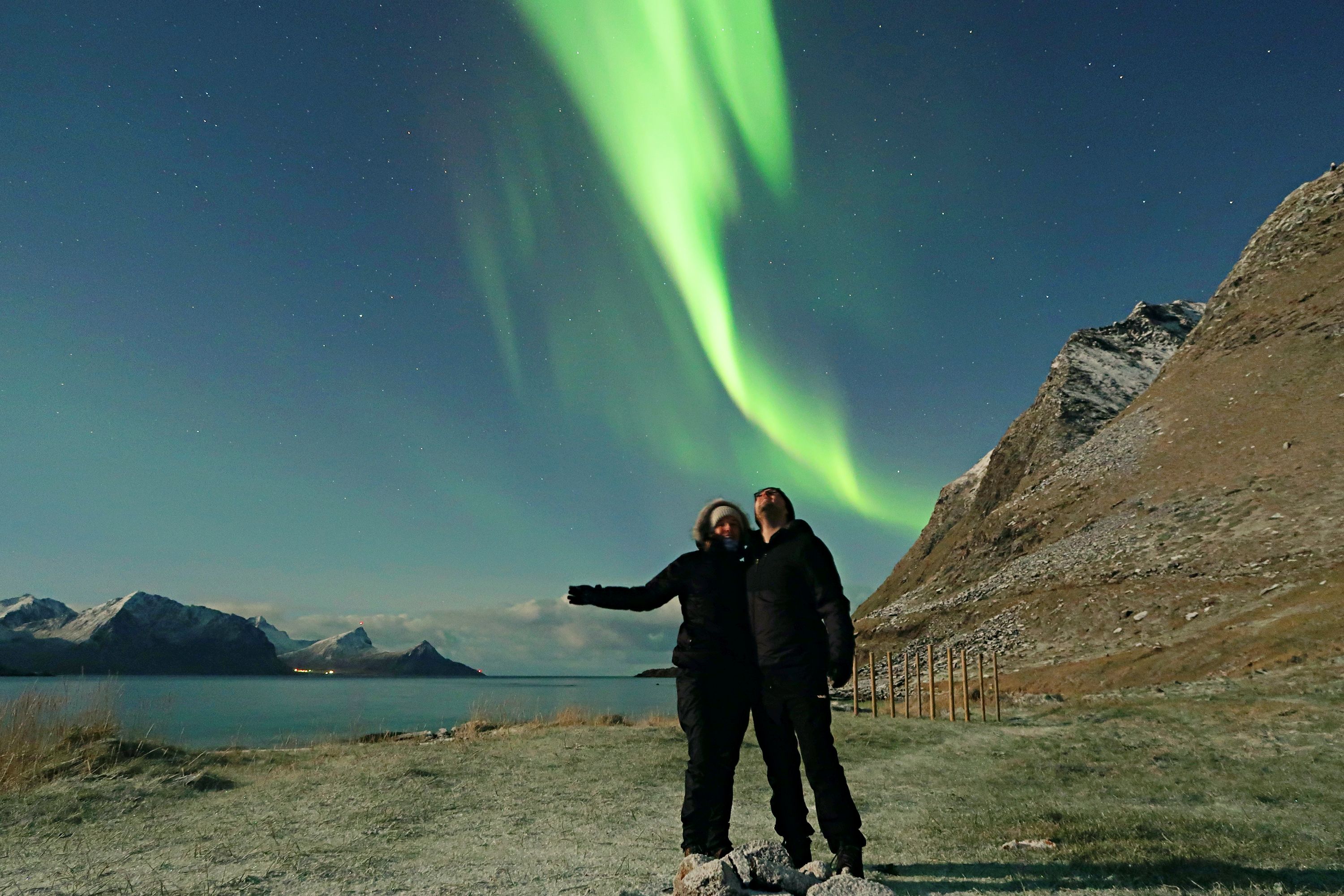
The moon was out and naturally lightened the background
Norway's fjords make for extraordinary foregrounds — still water reflections, mountain silhouettes, the Arctic Cathedral lit up below a dancing sky. You don't need complex settings, but you do need a tripod and manual control.
A starting point that works in most conditions: ISO 1600, f/2.0, 4–6 seconds. Adjust from there — if the aurora is moving fast, drop the exposure time and raise the ISO. If it's slow and faint, try a longer exposure. Manual focus on a bright star; autofocus will hunt in the dark and miss.
Nowadays, most cell phones do a decent job if the activity is strong enough, but the stillness rule still applies.
Cold kills batteries faster than anything. Bring at least two, keep the spares in an inner pocket, and swap them out before you think you need to (don’t forget to have liner gloves).
🐧 For a full camera settings guide and tips, see our Northern Lights Photography Guide.
What to wear for aurora watching in Tromsø

Tromsø doesn’t get that cold by Arctic standards… but the windchill from the sea and mountains is real!
Don’t let the relatively mild temperatures fool you. Technically, it’s not as cold as Finnish Lapland or Swedish Lapland. But that’s without the windchill and humidity factor. You’ll be standing still outside, in the dark, at temperatures that can drop to -15°C or below. Dress as if you're waiting for a bus that might not come for two hours — because sometimes that's exactly what's happening.
The layering system: merino wool base layer (top and bottom), mid-layer fleece or down jacket, insulated waterproof outer shell. Insulated boots rated to -20°C or lower. Wool socks, not cotton. Mittens over thin liner gloves (you'll want the liners for phone use). A balaclava or neck gaiter. A warm hat that covers your ears properly. Heated insoles. And headlamps with a red-light mode are useful — red preserves your night vision while you set up a camera or read a map.
🐧 Full packing list: What to Wear for a Northern Lights Trip and our Arctic Gear List on Amazon.
How many nights do you need?

On that trip (November), we had to wait a week to get a real break in the clouds!
Three nights is the absolute minimum and should be treated as optimistic. Four or five gives you a genuinely good chance. Seven nights, especially across February or March, puts the odds firmly in your favor.
The reason isn't just the forecast — it's that aurora watching requires a certain patience. Having a full week means you can relax on cloudy nights, enjoy Tromsø itself (read our Favorite Things to See & Do in Tromsø), and stay out late on the clear ones without the pressure of it being your last chance. We’ll be honest with you even if it hurts (almost as much as exposed fingers in Arctic winter): trips built around three nights and "one good aurora night" tend to end in disappointment more often than not.
Getting to Tromsø
Tromsø Airport (TOS) has direct connections from Oslo (around 2 hours), and direct or one-stop flights from several European cities, including London, Frankfurt, Munich, Amsterdam, and many more in winter. Norwegian Air and SAS cover most routes; winter prices spike in December and February, so book early if those are your months.
From the airport to the city center is a 10-minute express bus (30-40 minute regular bus, but cheaper) or taxi ride.
Read our detailed guide: How to Get to Tromsø.
✈️ Find flights
🏨 Explore hotels, apartments, guesthouses, cabins
🧭 Browse activities and tours
🚗 Compare car rentals
🧳 Get travel gear (including our Arctic essentials)
🛡️ Travel safe with Heymondo Travel Insurance (5–15% off)
📱 Get a travel eSIM
🐾 Protect & track wildlife with Fahlo Bracelets (20% off)
FAQ: Northern lights in Tromsø
Is Tromsø good for the northern lights? Yes — Tromsø sits deep inside the auroral oval at 69.6°N and sees frequent aurora activity between October and March. The honest caveat is that cloud cover can be persistent, especially in November and January. Tromsø works best as a well-connected base with excellent tour operators rather than a destination where you simply step outside and see the lights. Plan to travel outside the city — to Kvaløya, the Lyngen Alps, or Senja — for the best conditions.
What is the best time to see the northern lights in Tromsø? February and March are the sweet spot: nights are long, the weather is more stable than midwinter, and the spring equinox effect boosts geomagnetic activity. October is also underrated — more stable weather than deep winter, and the solar cycle has been active. The polar night (late November to mid-January) sounds romantic but is actually Tromsø's cloudiest period. Avoid planning your trip solely around the polar night.
Can you see the northern lights from Tromsø city center? On very strong nights (KP 4+) you can see aurora from the city edges and waterfront. For most displays, you'll need to get out of the city — light pollution and limited horizons make the center a poor aurora-watching spot. The Fjellheisen cable car is the best option if you want to stay close: it puts you 421 meters above the lights at the top of Storsteinen with an open sky in every direction.
What are the chances of seeing the northern lights in Tromsø? With four or more nights in a good month (February, March, or October), your chances are genuinely high — probably 70–80% for at least one meaningful sighting. With three nights in a cloudy month, the odds drop significantly. The aurora itself is active most nights; the real variable is cloud cover. Tours that actively chase clear sky improve your odds considerably over staying put.
Where are the best spots to see the northern lights near Tromsø? Ersfjordbotn on Kvaløya (30 min) is the most popular and reliable spot — dark skies, fjord reflections, and wide-open horizon. Tromsdalen (5 min) is the closest option with a meaningful light pollution reduction. Sommarøy (1 hour) has some of the darkest skies within easy range. The Lyngen Alps (2 hours) offer the best weather windows and most dramatic scenery. Senja (1.5–2 hours) is worth it for a longer road trip.
What is the aurora forecast for Tromsø tonight? For real-time aurora conditions, check yr.no for cloud cover hour by hour (the most important variable), spaceweatherlive.com for the KP index and solar wind speed, and the Tromsø Aurora Alert Facebook group for local updates from photographers on the ground. No forecast beyond 2–3 days is reliable — plan flexible evenings rather than specific nights.
Is Tromsø or Abisko better for the northern lights? Abisko in Swedish Lapland has a drier, more sheltered climate and the famous "blue hole" — a semi-permanent gap in cloud cover formed by the surrounding mountains. On paper, Abisko has more clear nights. But Tromsø has far more flights, more tour options, more infrastructure, and fjord scenery that Abisko can't match. Many experienced chasers combine the two: base in Tromsø for the first part of the trip, add an Abisko night if the Tromsø weather is stubborn.
Do I need a guided northern lights tour in Tromsø? Not strictly, but it helps. Good Tromsø guides chase cloud cover in real time — they'll drive you 90 minutes to Lyngen or Senja if that's where the sky is clear, and you'd never find that on your own without local knowledge and a rental car. If you do rent a car, you have the same flexibility, but only if you're genuinely experienced with winter driving on Norwegian mountain roads. See our Best Northern Lights Tours in Tromsø guide for tour recommendations.
How many nights should I book in Tromsø for the northern lights? Four to five nights is the practical minimum for a reasonable chance of success. Three nights is possible but stressful — one cloudy night and you odds are already down 33%. Seven nights essentially guarantees at least one clear night across any month from October to March. Book refundable tours where possible so you can rebook within your stay if early nights are cloudy.
Tromsø is (very) loud about the northern lights — and it has every right to be. The location is exceptional, the tour infrastructure is the best in Norway, and the combination of fjords, islands, and mountain corridors means that when the sky opens up, it opens up spectacularly. The catch is the same one it's always been: the weather decides, not your itinerary. Go with that expectation — flexible, patient, ready to drive — and Tromsø is a great choice. Go expecting the lights to appear on command, right in the middle of Tromsøya and the city will frustrate you. But the whole region is definitely worth the gamble.
Finally, explore all our Arctic Norway Travel Guides here.
Planning a Northern Lights Trip? ✨
Get a free aurora checklist straight to your inbox.
No spam. Just northern lights strategy (and occasional penguin energy).
Thank you, little penguin! 🐧
Check your inbox — our best Northern Lights tips are on the way.
Best Hotels for the Northern Lights in Tromsø
Where to Stay in Tromsø
Villa Havblikk, Tromsø Review
Northern Lights:
Northern Lights in Tromsø
Best Northern Lights Tours in Tromsø
Alternatives to Tromsø for the Northern Lights
Practical:
Renting a Car in Tromsø
How to Get to Tromsø
Best Time to Visit Tromsø
