
Northern Lights in Lofoten: When to go, Where to see Them & What to Actually Expect
A realistic guide to chasing the aurora in one of Europe's most dramatic settings
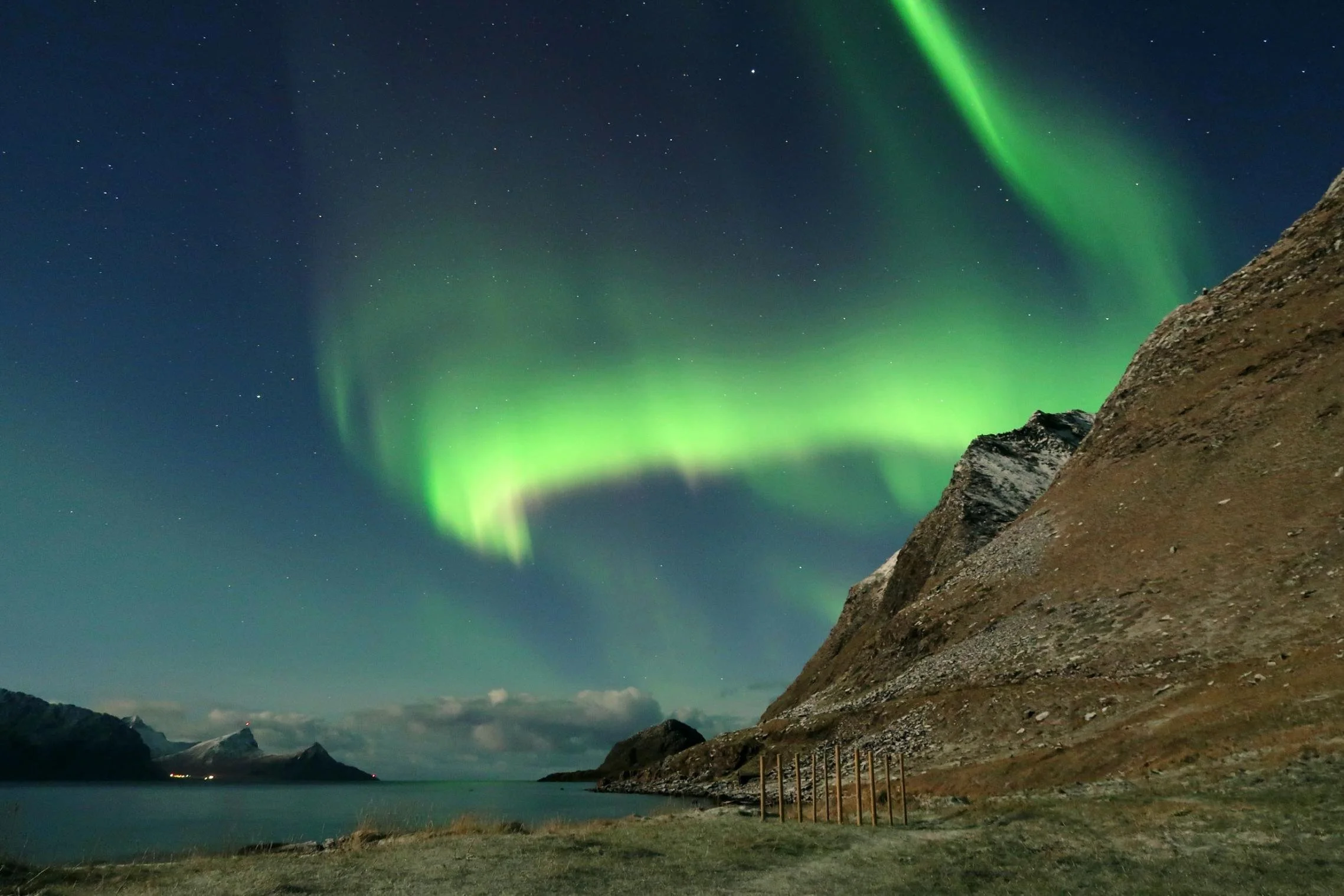
We had to drive to the other side of the island (Haukland beach) for clear skies
Last update: August 2026
There is a version of the Lofoten northern lights experience that looks like the photos — green curtains filling the sky above a red rorbuer, the aurora reflected in a still fjord, the mountains black against a luminous horizon. That version is real. We've seen it several times. What the photos don't show is the three nights of solid cloud cover that preceded it, the midnight drive to a different beach because the sky looked slightly less terrible to the west, and the moment it cleared just enough, just long enough.
Lofoten is one of the best places in Europe to see the northern lights, and this is why we included it in our favorite Alternatives to Tromsø for the Northern Lights! But it’s also one of the cloudiest. Knowing both things before you go is key if you have high aurora hopes.
🛌 Where to stay:
• Rostad Retro Rorbuer, Reine — we stayed here on a last-minute deal and it turned out to be one of the best views we've ever had.
• Skarungen, Kabelvåg — we stayed here and it's one of Lofoten's best wellness stays.
• Kaikanten Rorbuer, Sennesvik — we stayed here in October and got a northern lights show right by the pier. Great value.
• Eliassen Rorbuer, Hamnøy — the red cabins from every Lofoten photo you've ever seen.
🇳🇴 Top experiences:
• Northern lights tour from Svolvær — small group in a minivan to stay warm.
• Northern lights tour from Henningsvær — small group (max 7), guided by a local who tracks the forecast in real time.
• Snowshoe hike — Enjoy the still, frozen beauty of Lofoten without the crowds
🚗 You need a car in Lofoten, especially for the northern lights. Book your rental in Bodø before you cross — significantly cheaper than picking one up on the islands.
Quick navigation: Why Lofoten? · When to go · Best viewing spots · How to forecast · Guided tours · Photography · Where to stay · FAQ
Why Lofoten for the northern lights? — the geographic advantage
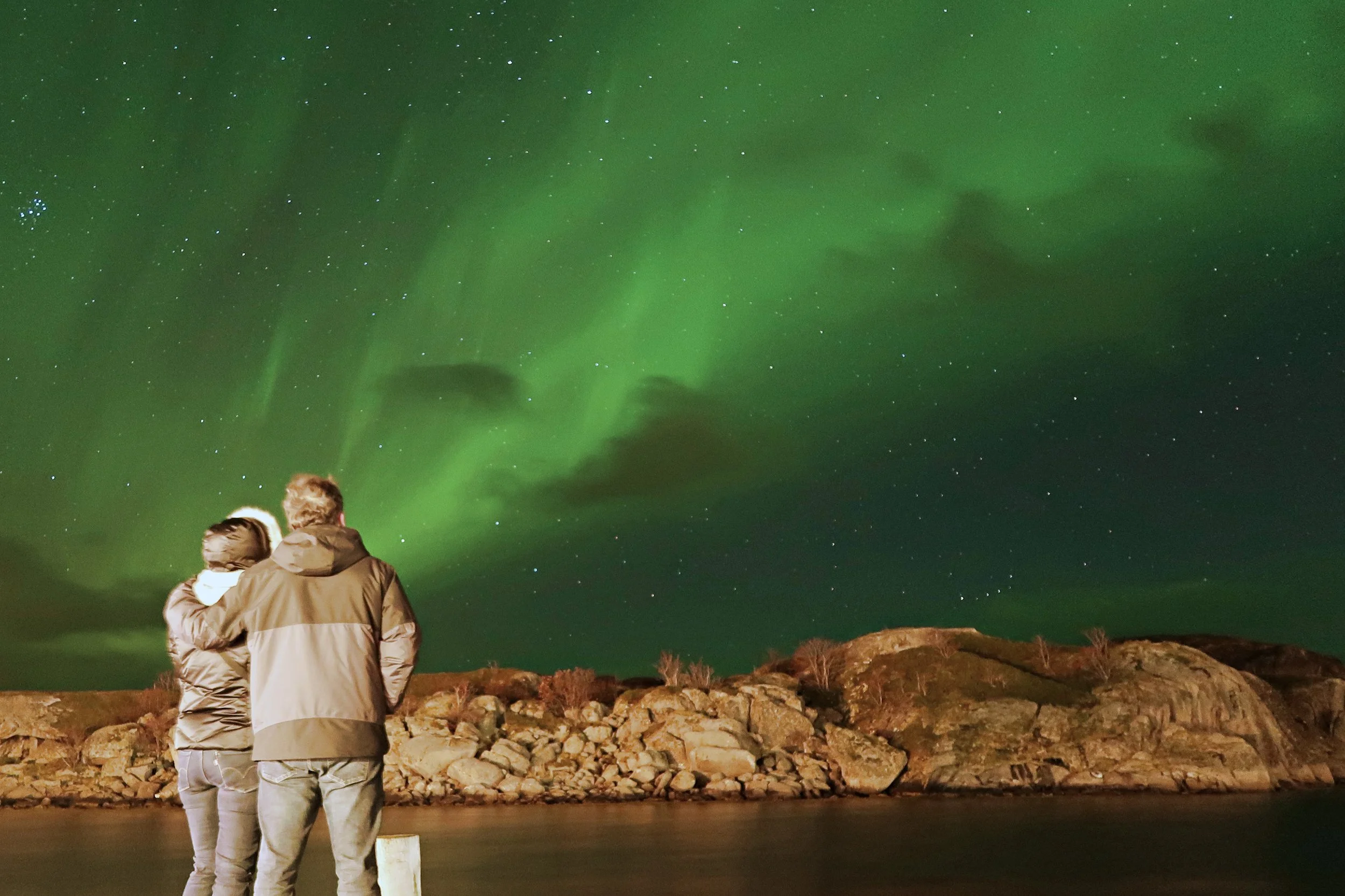
That happened right in front of our accommodation (Kaikanten Rorbuer)
Lofoten sits inside the auroral oval — the ring-shaped zone around the magnetic pole where aurora activity is most intense and most frequent. This means two things that matter practically. First, you don't need a high KP index to see the lights here; a KP of 2 to 3 is enough when skies are clear, compared to the KP 5 or higher you'd need further south. Second, when a strong aurora display happens, the lights don't just appear on the horizon — they fill the entire sky directly overhead. That's a different experience to watching a faint green smear in the distance (your camera picks it up, but you might not).
The backdrop doesn't hurt either... The combination of sharp peaks, fjord reflections, fishing villages, and dramatic Arctic coastline makes Lofoten one of the most photographed aurora locations on earth for good reason. The setting turns a good display into something incredibly cinematic, like Norway only is capable of.
Buuuut…. sorry to to be an aurora pooper: the challenge is the weather. Lofoten's exposed position in the Norwegian Sea means cloud cover is persistent, unpredictable, and regularly ruins otherwise promising nights. With the exception of Iceland, this is the craziest weather we’ve ever seen. Sure, being inside the auroral oval (more on that in our article: What are the northern lights) gives you more opportunities than locations further south — but it doesn't make those opportunities immune to Norwegian weather (read our article: Northern lights in Norway for more).
Note before you chase the northern lights: Lofoten is remote, wild, and full of surprises — which is exactly why we love it. But a sprained ankle while trying to run for an aurora selfie can get expensive fast. We always travel with Heymondo Travel Insurance, and you get 5% off (sometimes up to 15%) through our link.

Penguin Trampoline tip:
The single most important factor for seeing the northern lights in Lofoten isn't the KP index — it's cloud cover. A KP of 1 with a clear sky beats a KP of 8 under total cloud. Check yr.no obsessively, not spaceweather.com.
When to see the northern lights in Lofoten — month by month
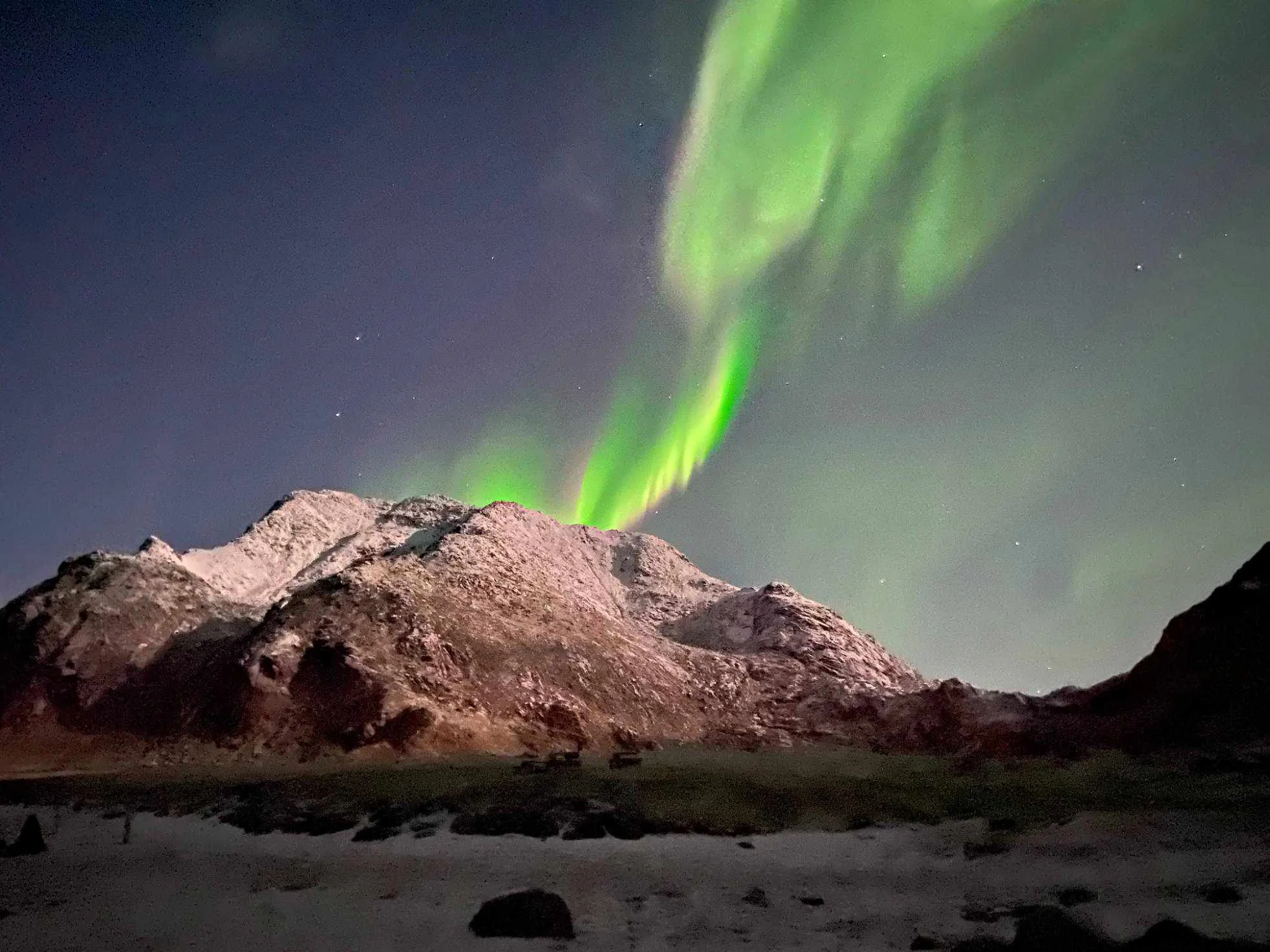
We took this photo in October
The aurora season in Lofoten runs from late August through mid-April — roughly when the nights are dark enough to see the lights. Outside that window, the midnight sun means the sky never gets dark (even if it seems like it). Within the season, timing matters. Read our guide: Best time to see the northern lights for more.
September and October are underrated. Darkness returns after the summer, the weather is often more stable than deep winter, and the combination of geomagnetic activity and cleaner skies gives you strong odds. September has around 14 hours of darkness per day. The autumn colors on the landscape are also extraordinary if you're there for more than the aurora. We saw multiple aurora displays in October, but we stayed for a couple of weeks.
November and December bring long nights — by December, Lofoten gets as little as three hours of daylight around the solstice, meaning weeks of near-continuous darkness. The opportunity is significant. The weather is also at its most volatile, and overcast nights can stretch for days without a break.
January and February offer the best balance of long dark nights and improving weather windows. January is particularly good for photography — the light during the brief daylight hours has a quality that doesn't exist anywhere else. And, thanks to the Gulf Stream, it’s not as cold as in Lapland, for example (but do consider the wind chill factor). Our Lofoten in winter guide covers the broader winter experience.
March is statistically the strongest month across multiple seasons of data. Solar activity tends to be high, weather windows are more reliable than the depths of winter, and the growing daylight means you can hike and explore during the day and chase aurora at night.
The for-a-reason cliché applies here: book a minimum of five nights. Cloud cover is the most common reason people miss the aurora even during active periods, and it can persist for longer than a long weekend allows.
For a full month-by-month breakdown of what Lofoten offers across all seasons — not just aurora — our best time to visit Lofoten guide covers everything.
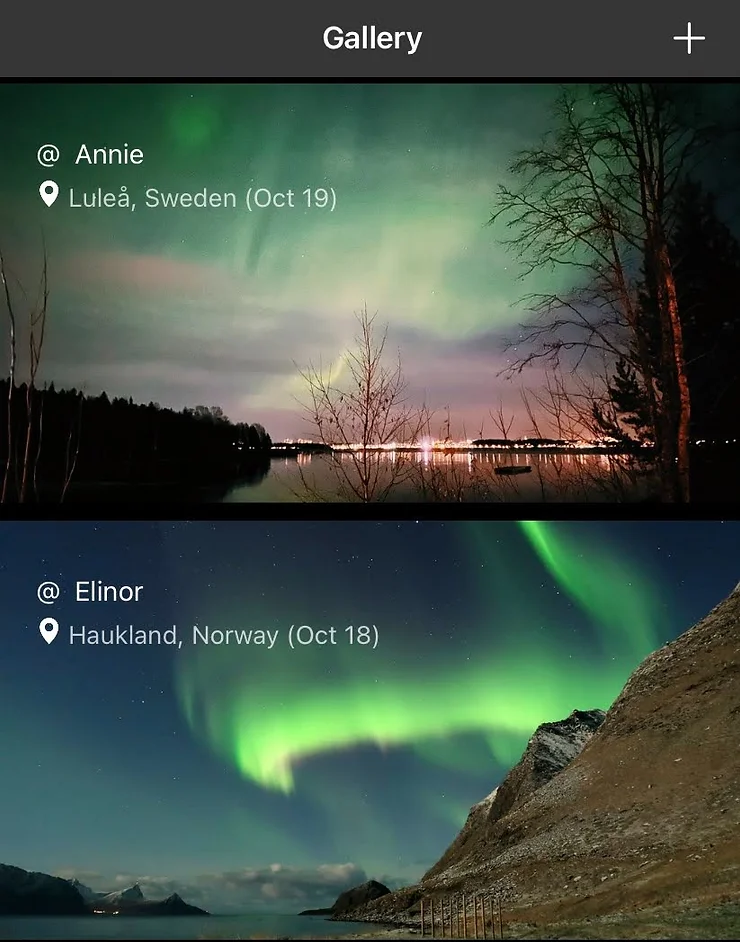
Uttakleiv and Haukland beaches are great spots to watch the Northern Lights, if weather and solar activity allow. One of my (Elu) pictures, taken at Haukland beach, was featured in My Aurora App.
Best spots to see the northern lights in Lofoten
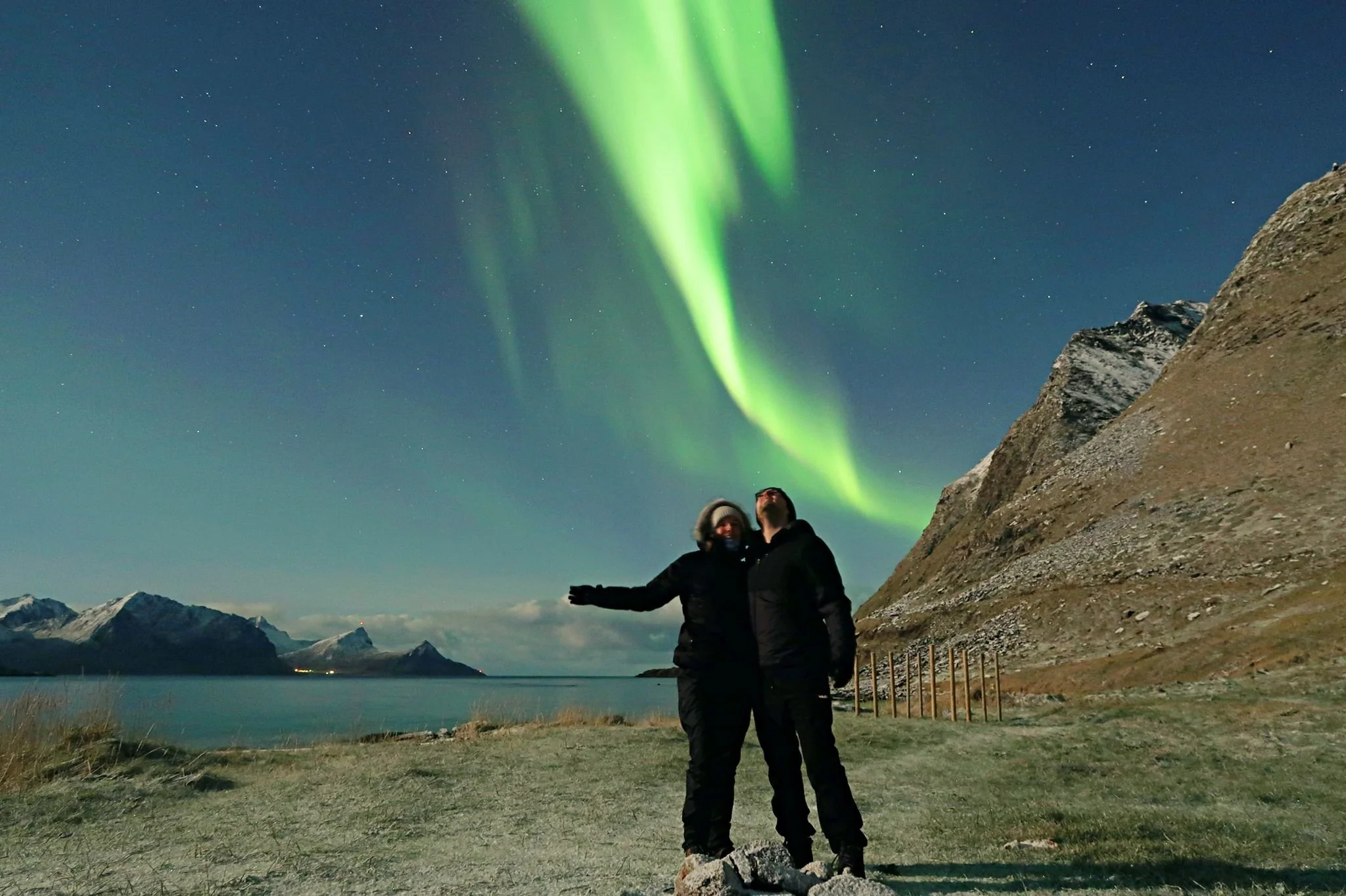
That night, we started at Uttakleiv and finished at Haukland beach
The general rule: get away from artificial light, face north, and find water for reflections if you can. Most of Lofoten qualifies — the archipelago has very little light pollution outside Svolvær — but some spots are meaningfully better than others as mountains can get in the way (which can be pretty too if kp is strong enough).
🏖️ Uttakleiv beach
The most iconic aurora photography location in Lofoten and genuinely deserving of the reputation. The beach faces directly north with an unobstructed horizon, minimal light pollution, and the famous Dragon's Eye rock pool in the foreground that appears in what feels like half the aurora photographs ever taken here. The mountain peaks frame the sky without blocking it. Get here early on promising nights — it draws a crowd. In October, we indeed met a few other cars, but the beach is big enough. We drove from the other side of the island due to clouds, and it was really worth it.
🏖️ Haukland beach
Right next to Uttakleiv and often done on the same night. Haukland faces slightly southwest, which gives you different compositional angles and flexibility to reposition if the aurora is more active in one part of the sky. Both beaches together give you almost 360 degrees of sky access. Walkable between the two. We had to move to this one after Uttakleiv.
🎣 Reine and Hamnøy
The postcard villages of the southern islands — red rorbuer, fjord reflections, peaks rising from the water. Reine specifically offers multiple shooting directions from northwest to east, and the mountains are far enough away to frame the sky without blocking it. Hamnøy is slightly smaller and often less crowded. Eliassen Rorbuer in Hamnøy is arguably the most photographed accommodation location in Lofoten for aurora shots. Photographers love it, so book in advance.
🏖️ Skagsanden beach, Flakstad
A wide crescent of white sand with a clear northern horizon and mountain peaks that allow broad viewing angles across most of the sky. Less crowded than Uttakleiv on busy nights and equally strong as a photography location for wide aurora displays.
🏝️ Gimsøya island
Less visited than the southern beaches and significantly darker. Gimsøya sits on the northern coast with an unimpeded view toward the auroral oval, and the absence of crowds means you're working with the landscape rather than around other photographers' tripods. Lofoten Links Lodges here has floor-to-ceiling north-facing windows that function as a viewing platform from your room.
How to forecast a northern lights night in Lofoten
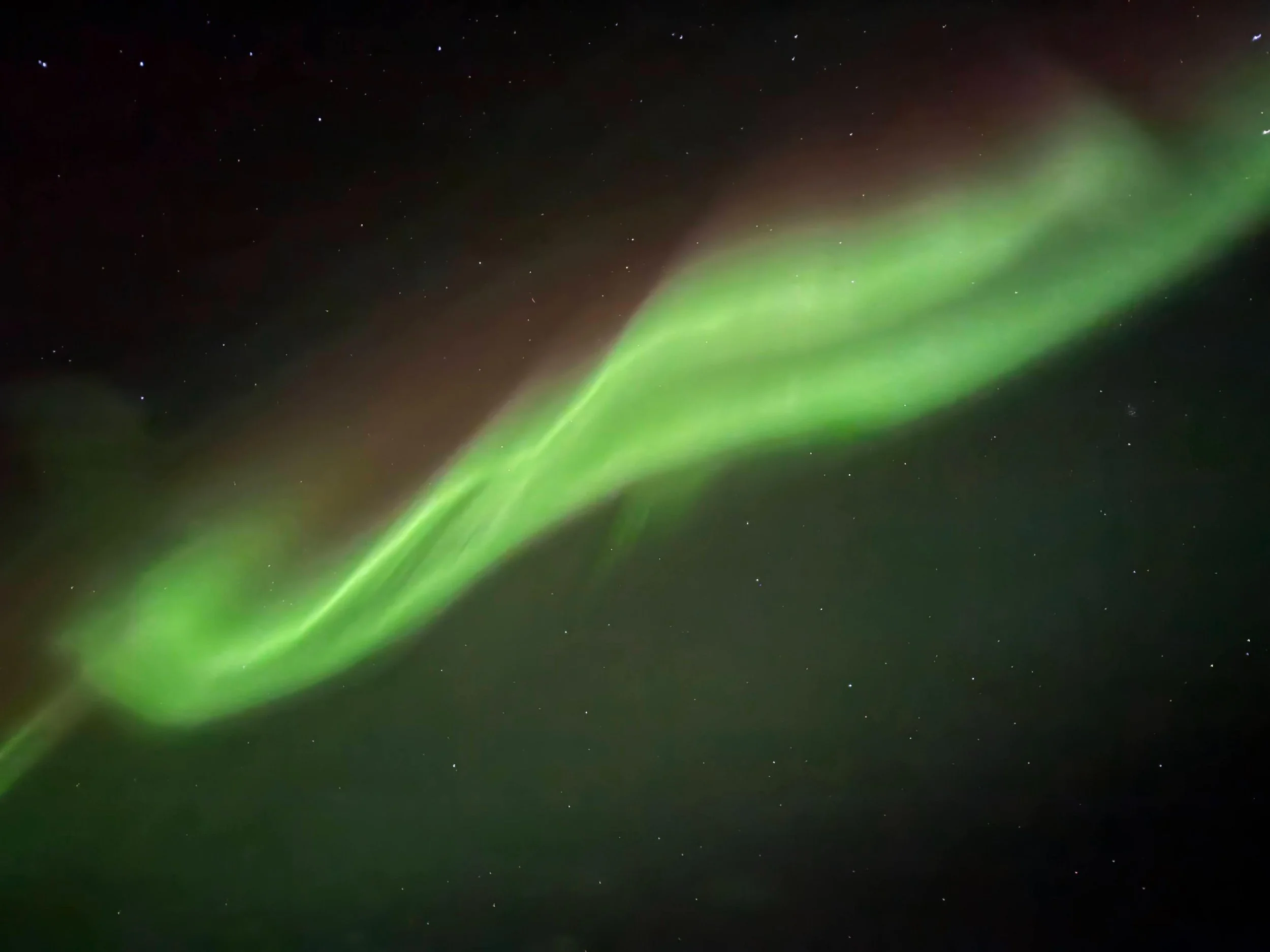
This was solid KP3, and the sky cleared up for a short window
Aurora forecasting has two independent variables, both of which need to cooperate: geomagnetic activity (the KP index) and cloud cover. Miss either and you miss the show.
For KP index: PolarForecast provides a Lofoten-specific aurora forecast. AuroraMe combines KP data with cloud cover and moon phase into a single usability score. Our go-to is usually MyAuroraForecast, which is a very comprehensive free app. At Lofoten's latitude, KP 2-3 is enough for visible aurora on clear nights — you don't need to wait for a KP 5 storm event.
For cloud cover: yr.no is the Norwegian meteorological service and significantly more accurate for Lofoten conditions than international apps. Check it hourly on promising nights. Also check neighboring regions — if your immediate area is forecast to be overcast but a 45-minute drive shows a clearing, that drive is often worth it. And it happens a lot.
The honest reality: we have seen many nights when the probability reads 100% and nothing appears, and nights when it reads near zero and the sky explodes. The forecast narrows the odds; it doesn't determine the outcome. Remember: nature calls the shots here. The strategy that works is staying flexible, keeping the car ready, and not writing off a night until you've actually seen the sky.
Best viewing hours are centered around magnetic midnight — roughly 22:00 to 02:00 local time, though strong displays can happen any time after full darkness.
You’ll find more tips in our general guide: Northern Lights for Dummies and everything you need to know on our Northern Lights Hub.
Guided northern lights tours in Lofoten
The argument for a guided tour in Lofoten is different from, say, a city tour. The value isn't access — you can drive to every viewing spot yourself with a rental car. It's local weather knowledge. A good guide knows which direction tends to clear first, which spots face which compass points, and has made the same drive a hundred nights before you. On a marginal weather night, that knowledge is the difference between finding a gap in the cloud cover and going home disappointed.
When choosing a tour, look for small group sizes (eight guests or fewer gives you more flexibility to reposition quickly), a chase-based approach rather than a fixed location, and guides with multi-season Lofoten experience. Photography-focused tours are worth the upgrade if you want settings guidance alongside the aurora chase itself, and you can even book a private tour if you’re traveling with a group or can afford it.
GetYourGuide and Viator both list Lofoten northern lights tours with verified reviews — useful for comparing options and reading recent guest experiences before committing.
Photography — aurora in Lofoten

The hardest thing is to stay still for photos when it’s freezing — well done Jake!
We have a full northern lights photography guide on the hub covering settings, gear, and technique for beginners. The Lofoten-specific additions:
Settings starting point: aperture as wide as your lens allows (f/1.4–f/2.8), ISO 1600–3200, shutter speed 5–15 seconds. Adjust based on brightness — a strong active aurora will blow out at ISO 3200 with a 15-second exposure. When the lights intensify, cut ISO and shorten shutter speed to keep the curtains sharp rather than smeared.
The fjord reflection: Lofoten's specific photographic opportunity. Still water in a sheltered fjord doubles the visual impact of an aurora display. Reine, Hamnøy, and the calmer bays near Haukland are the natural starting points. Wind creates ripples that break the reflection — still nights are as valuable as clear ones here.
Foreground matters more here than almost anywhere. The rorbuer, the peaks, the rock formations at Uttakleiv, the fishing boats in harbor — Lofoten gives you foreground interest that most aurora locations don't. Compose for the landscape as much as the lights.
Battery drain in the cold is real. Keep a spare battery in an inner pocket against your body. Camera batteries at -10°C lose charge significantly faster than at room temperature.
Where to stay in Lofoten for the best northern lights views
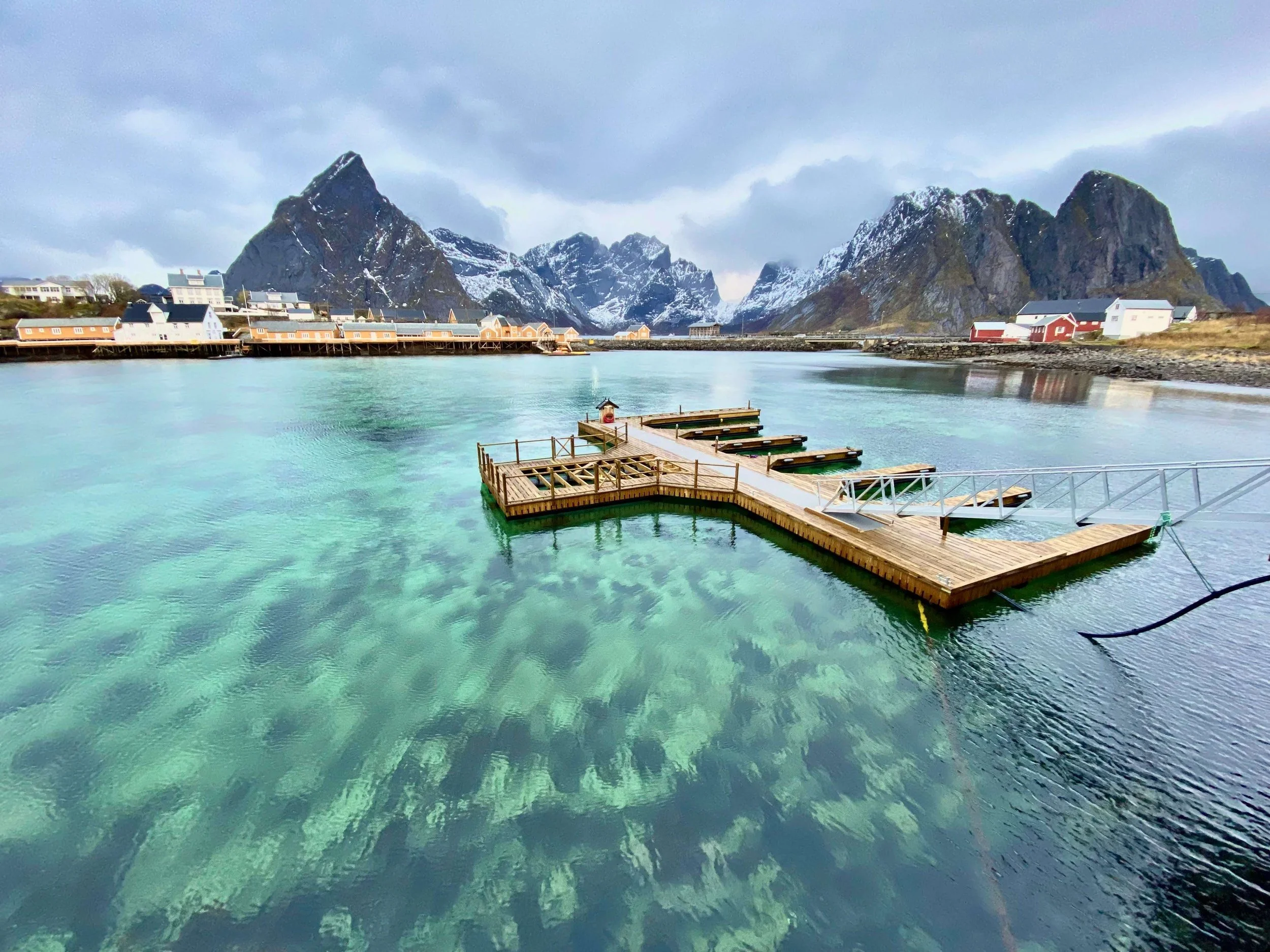
Can you imagine this view with the northern lights? (Rostad Retro Rorbuer)
Not all rorbuer and hotels are equal for aurora viewing — the compass direction your windows face matters more than the star rating.
Eliassen Rorbuer in Hamnøy is the most celebrated aurora accommodation in Lofoten. The red rorbuer cabins sit directly over the Reinefjord, and guests regularly report seeing aurora from their windows without leaving the cabin. Book months ahead — this is not a last-minute option.
Lofoten Links Lodges on Gimsøya has floor-to-ceiling north-facing windows designed with aurora viewing in mind. The location on the northern coast of Gimsøya means genuinely dark skies with an unobstructed northern horizon from the lodge itself.
Reinefjorden Sjøhus near Reine has modern rooms with large windows facing the fjord — more contemporary than the traditional rorbuer aesthetic but strong on aurora views.
Rostad Retro Rorbuer near Reine is one of our favorite accommodations in the Lofoten. And the view is priceless even without the northern lights.
Our guide to Rorbuer and Hotels in Lofoten covers specific properties across the islands with notes on which areas put you closest to the best viewing conditions. Not sure where to base yourself? Read our guide Where to Stay in Lofoten by Area. You can also explore our favorite Northern Lights Hotels in Lofoten.
🗺️ Zoom in on the map below to find a rorbu or hotel with aurora views in Lofoten:
✈️ Find flights
🏨 Explore hotels, apartments, guesthouses, cabins
🧭 Browse activities and tours
🚗 Compare car rentals
🧳 Get travel gear (including our Arctic essentials)
🛡️ Travel safe with Heymondo Travel Insurance (5–15% off)
📱 Get a travel eSIM
🐾 Protect & track Arctic wildlife with Fahlo Bracelets (20% off)
FAQ: Northern lights in Lofoten
When is the best time to see the northern lights in Lofoten?
The aurora season runs late August through mid-April. September, October, and March are the sweet spots — strong geomagnetic activity, reasonable chances of clear skies, and fewer crowds than peak winter. December through February offers the longest nights but the most challenging weather. March is statistically the strongest single month.
What KP index do you need to see the northern lights in Lofoten?
KP 2–3 is sufficient at Lofoten's latitude. The islands sit inside the auroral oval, meaning lower activity levels are visible here than at locations further south. Cloud cover is a bigger practical obstacle than KP level.
What are the best spots to see the northern lights in Lofoten?
Uttakleiv beach is the most acclaimed location — clear northward horizon, minimal light pollution, strong foreground interest. Haukland beach (right next door), Skagsanden on Flakstad, Reine and Hamnøy in the south, and Gimsøya island in the north are all excellent alternatives with fewer people on busy nights.
Do I need a guided tour to see the northern lights in Lofoten?
No — you can self-guide with a car (read our guide to Renting a Car in Lofoten), the right forecast apps, and flexibility to drive toward clear skies. A guide adds value through local weather knowledge, which on marginal nights can make the difference between finding a gap in the clouds and missing the display entirely.
How many nights should I book for the northern lights in Lofoten?
Five nights minimum for a realistic chance. Cloud cover is the most common reason people miss the lights, and it can persist for several consecutive nights even during active aurora periods. Seven nights significantly improves your odds.
Can you see the northern lights from a rorbuer in Lofoten?
Yes, from the right ones. Eliassen Rorbuer in Hamnøy and Lofoten Links Lodges on Gimsøya are specifically noted for aurora visibility from the property. North-facing windows in any accommodation help — ask when booking which direction the main windows face.
We have a special playlist to call the northern lights. Give it a try!
The northern lights in Lofoten will, at some point in a five-to-seven night stay during the right season, probably appear. They may appear briefly and faintly, or they may fill the entire sky and make the whole trip feel absurdly worth it. They will almost certainly not appear on command. The clouds will have (strong) opinions.
What Lofoten adds to the aurora experience is that even the nights when nothing happens are spent in one of the most dramatically beautiful places in Europe. The waiting isn't a problem — it's part of it. And when the sky finally clears and the lights come out over the fjord, the context makes it hit harder than it would anywhere else.
For everything else worth doing while you're here — the hiking, the whale watching, the villages, the sauna over the fjord — our things to do in Lofoten guide has the full picture.
Finally, explore all our Northern Norway Travel guides here.
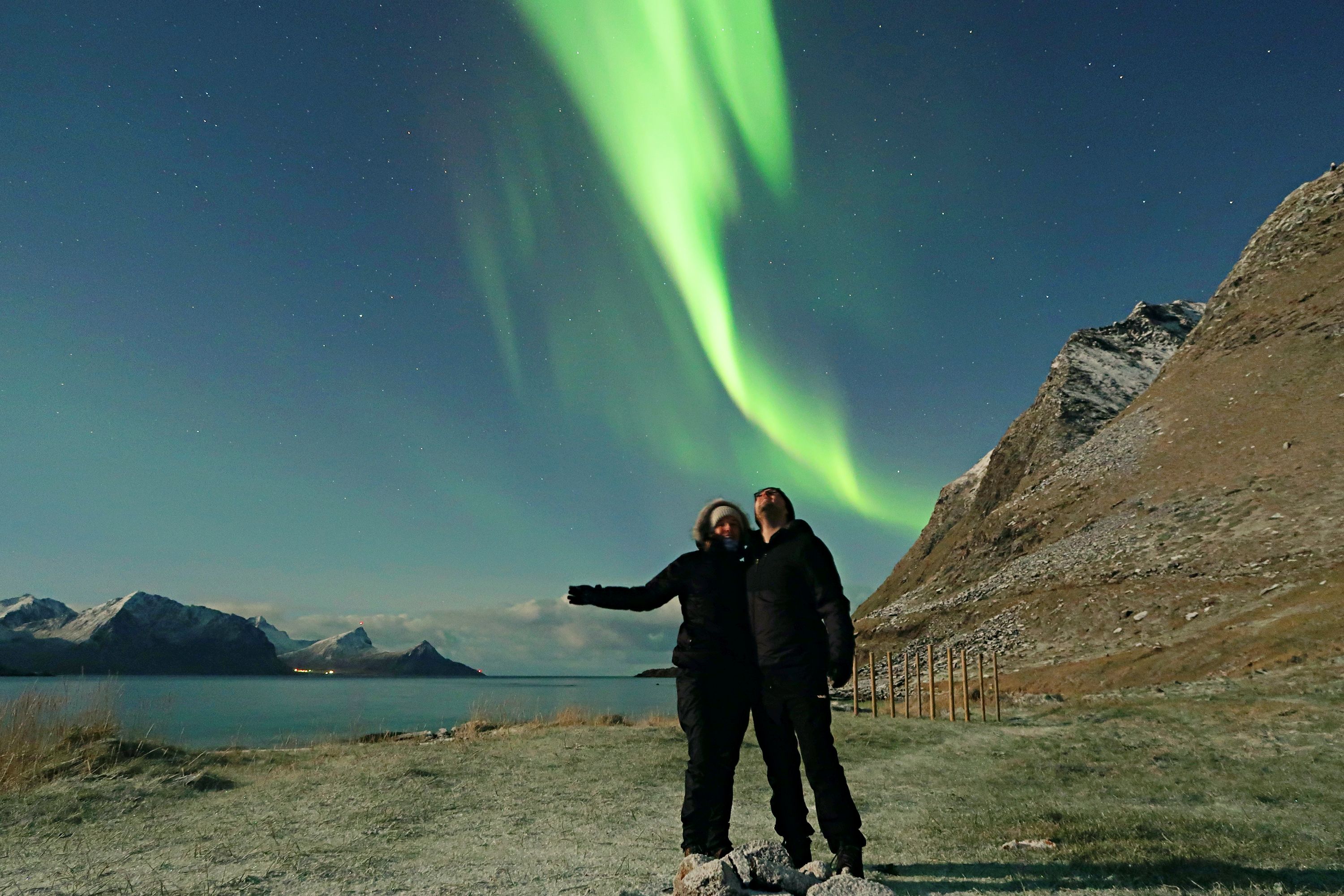
Planning a Northern Lights Trip? ✨
Get a free aurora checklist straight to your inbox.
No spam. Just northern lights strategy (and occasional penguin energy).
Thank you, little penguin! 🐧
Check your inbox — our best Northern Lights tips are on the way.
Where to stay
Lofoten Hotels & Rorbuer
Where to Stay in Lofoten by Area
Best Northern Lights Hotels in Lofoten
Best Reine Rorbuer
Best Hotels in Svolvær
Things to do and when to go
Things to Do in Lofoten
Lofoten Hiking Guide
Best Time to Visit Lofoten
Northern Lights in Lofoten
Lofoten in Winter
Getting there and around
How to Get to Lofoten
Tromsø to Lofoten Road Trip
Renting a Car in Lofoten
