
Things to Do in Lofoten: Tours, Villages & Arctic Experiences
Lofoten is not all about hiking. From whale watching and sea eagle safaris to kayaking tours, wild camping, and art galleries in the Arctic, we’re sharing our favorite things to do.

I can’t get tired of rorbuer!
Last update: August 2026
Most people come to Lofoten, Norway, for the scenery and leave surprised by how much there is to actually do in it. Hiking gets most of the attention — and we've written a full hiking guide in Lofoten if that's your priority — but the things to do in Lofoten go well beyond trails. Whale watching in the Arctic dark. Kayaking under the midnight sun. Sea eagles dropping from altitude to snatch fish from the surface beside your boat. A fishing village frozen somewhere between 1890 and now. The Northern Lights over the harbor. In fact, these islands are so incredibly beautiful that the top activity there is photography tours!
This is everything worth doing in Lofoten beyond the hikes, with notes on what each experience is actually like and when to go for it.
Not sure when to plan your trip? Start with our guide to the best time to visit Lofoten.
🛌 Where to stay:
• Rostad Retro Rorbuer, Reine — we stayed here on a last-minute deal and it turned out to be one of the best views we've ever had.
• Skarungen, Kabelvåg — we stayed here and it's one of Lofoten's best wellness stays.
• Kaikanten Rorbuer, Sennesvik — we stayed here in October and got a northern lights show right by the pier. Great value.
• Eliassen Rorbuer, Hamnøy — the red cabins from every Lofoten photo you've ever seen.
🇳🇴 Top experiences:
• Midnight sun kayak — paddle past rorbuer and mountain peaks straight into the fjord.
• Northern lights tour from Henningsvær — small group (max 7), guided by a local who tracks the forecast in real time.
• Snowshoe hike — Enjoy the still, frozen beauty of Lofoten without the crowds
🚗 You need a car in Lofoten. The islands stretch 170km and public transport isn't great. Book your rental in Bodø before you cross — significantly cheaper than picking one up on the islands.
What are the best things to do in Lofoten besides hiking? Quick answer
The best things to do in Lofoten go well beyond hiking.
On the water: whale watching runs October through January when orcas and humpbacks follow the herring into the fjords; sea eagle safaris run year-round and put Europe's largest eagles directly beside your RIB boat; midnight sun kayaking is best May through July.
On land: Henningsvær has over 800 rock climbing routes on superb granite, Unstad Beach runs a surf school with Arctic waves year-round, and wild camping is legal across most of the islands under Norway's allemannsretten.
The villages are worth slowing down for — Henningsvær for its art scene, Nusfjord for one of Norway's most intact historic fishing environments, and Å (the village at the end of the road) for its 19th-century fishing museum with a still-operating 1878 stone bakery.
In winter, the northern lights over the fjords are the main draw, with late September through early April being the season.
Things to do on the water — Lofoten's best marine activities
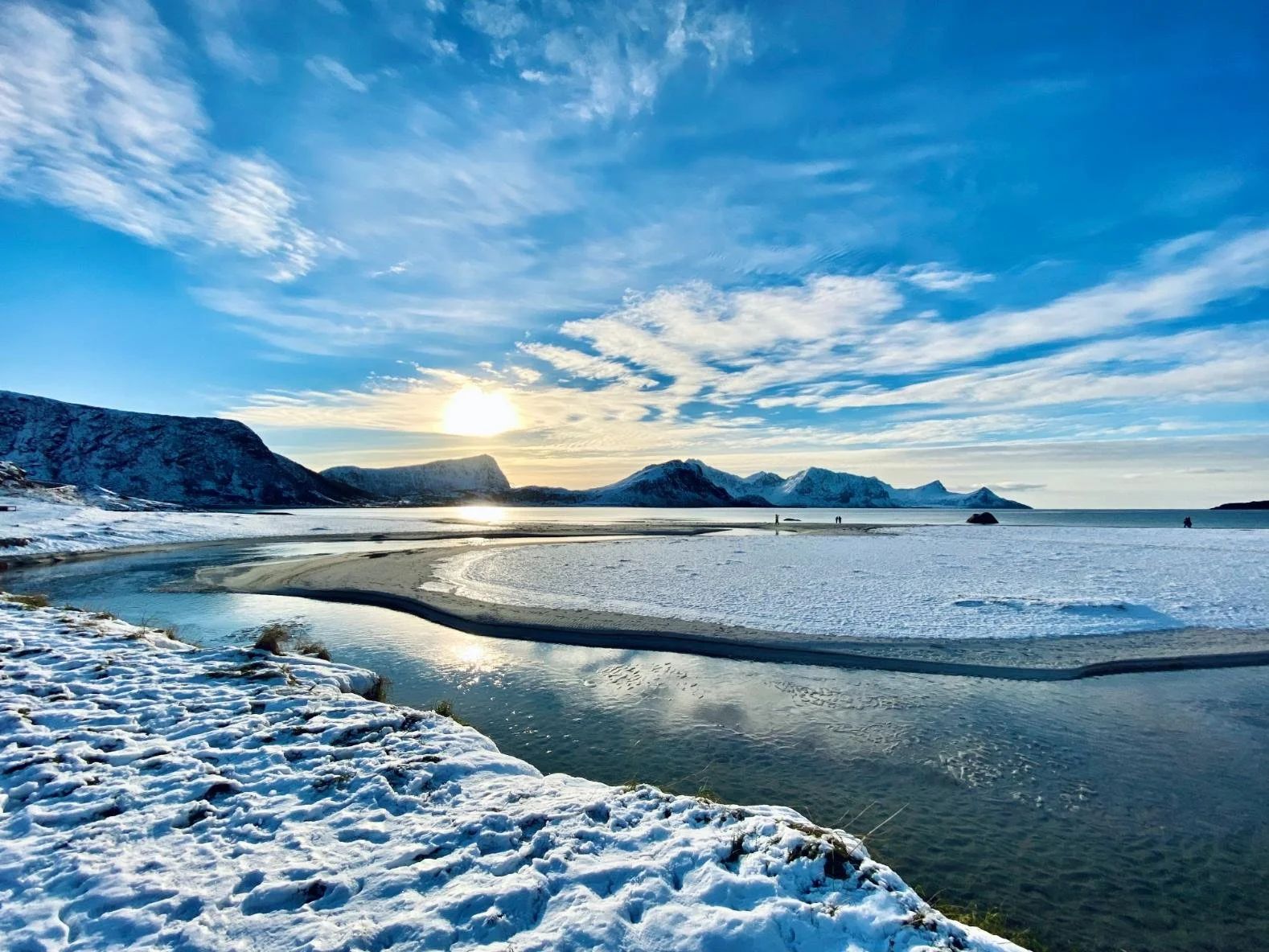
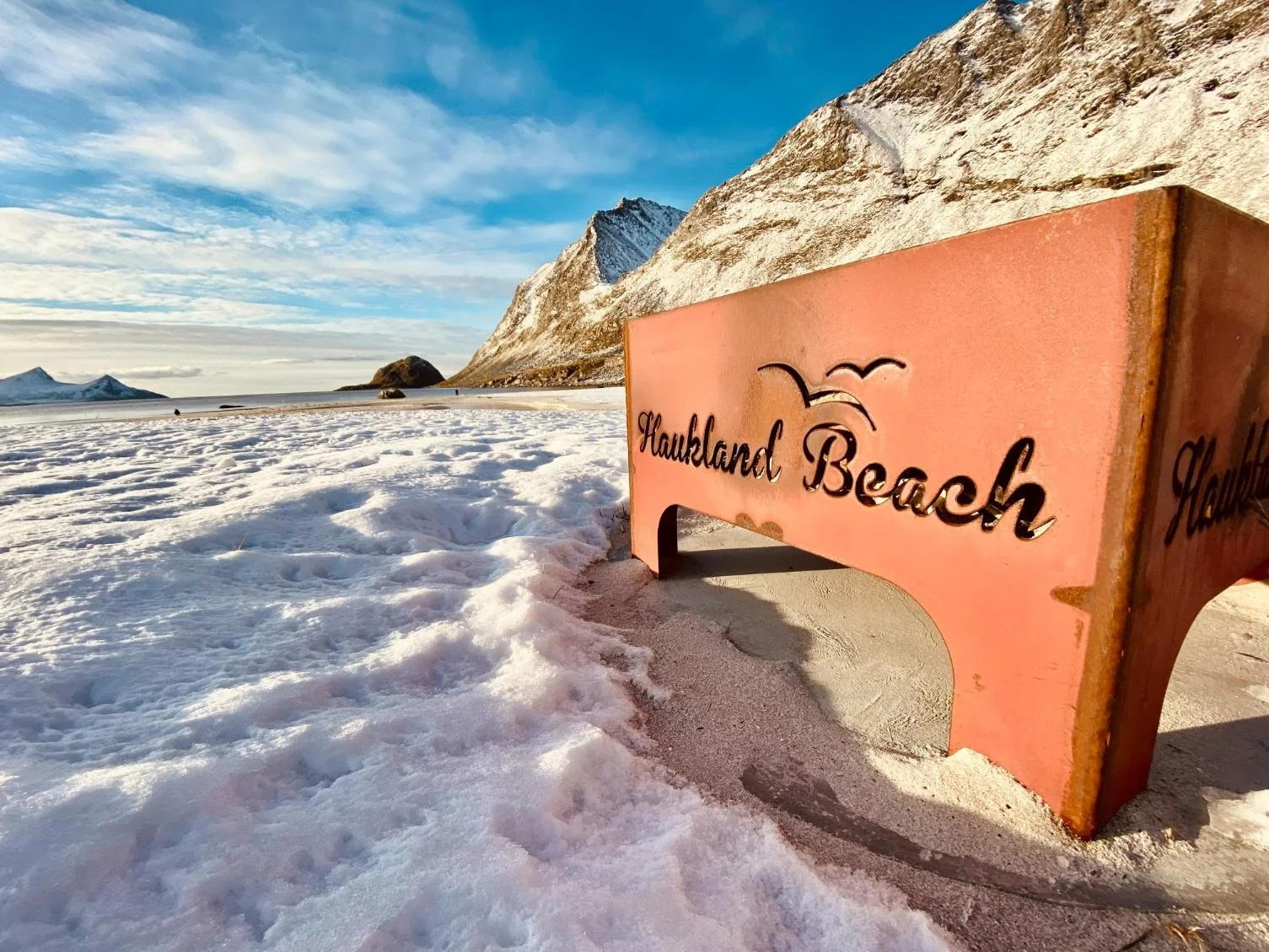
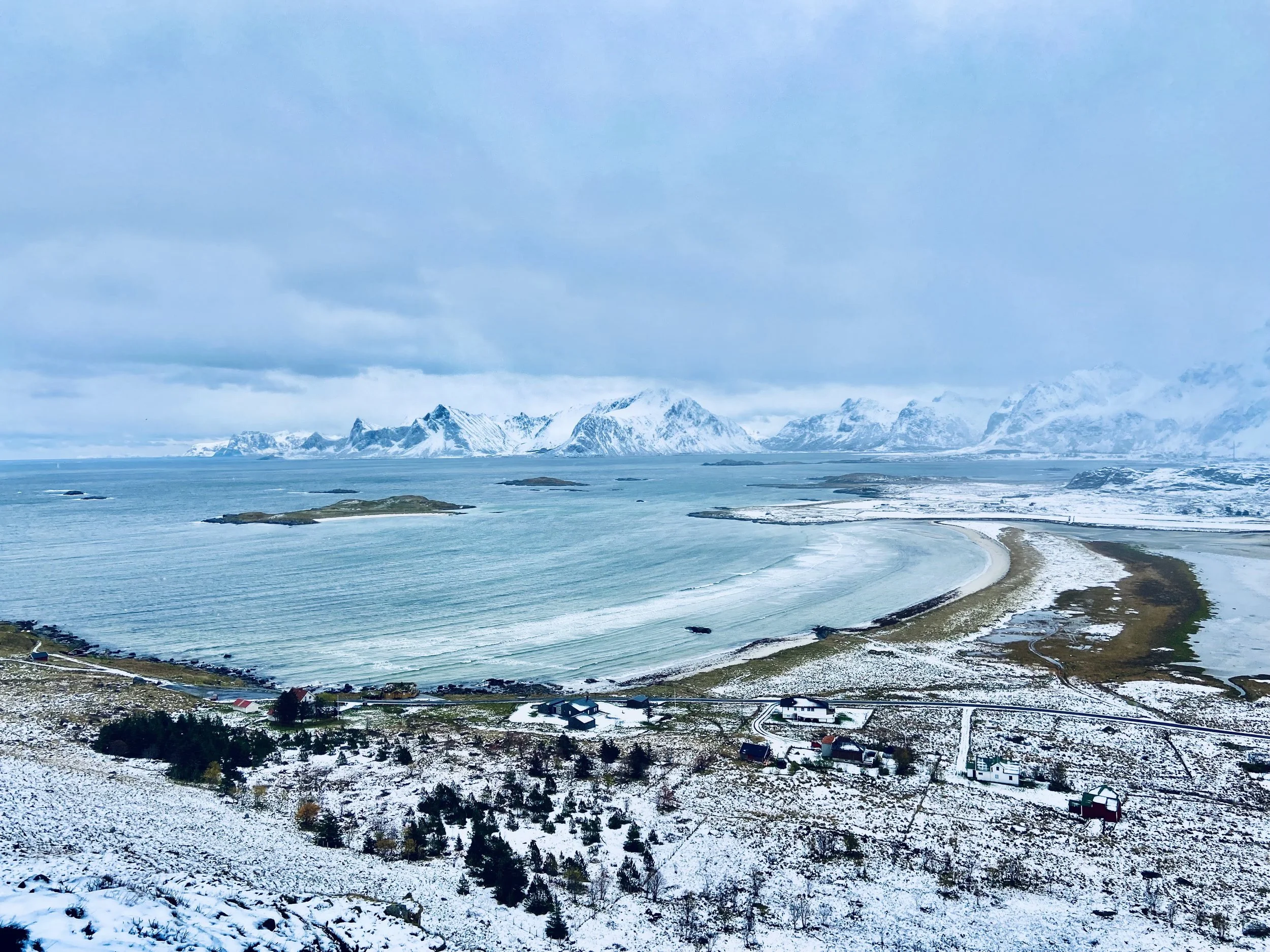
Icy morning at Haukland beach (October)
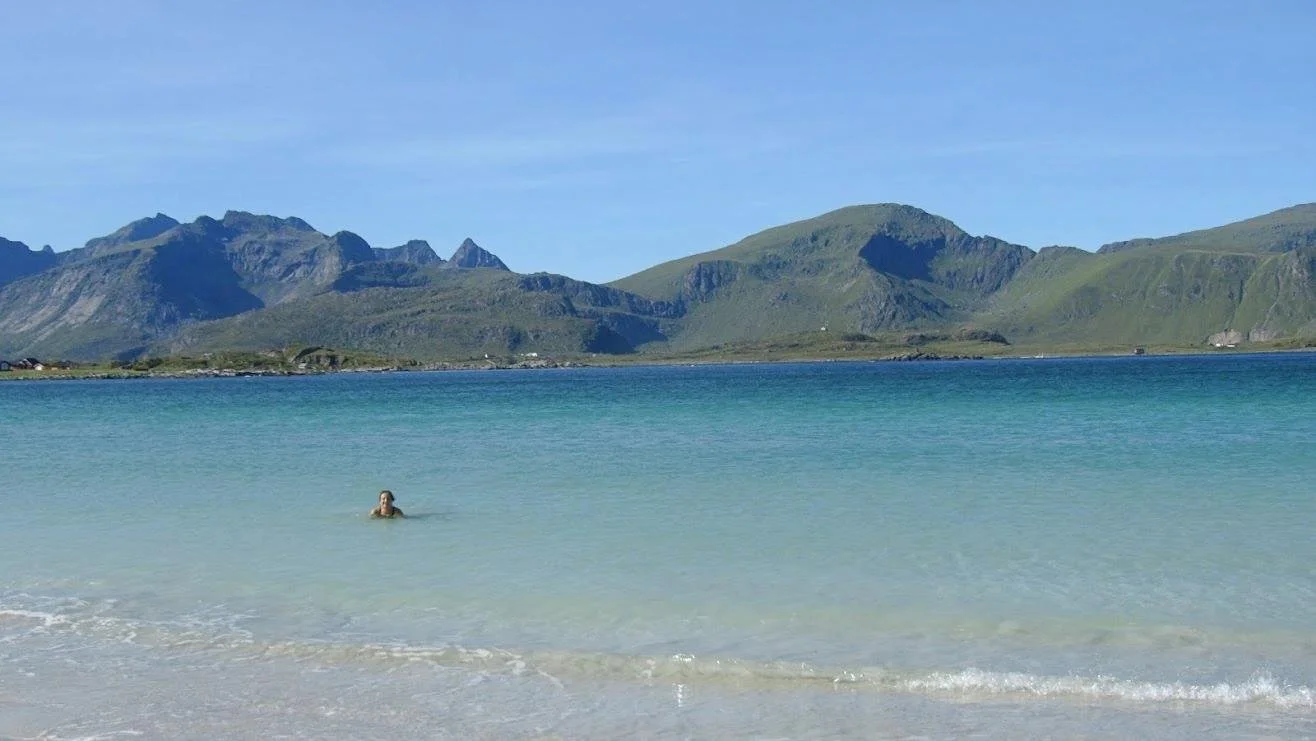
The water around Lofoten is doing things you don't expect from the Arctic. Turquoise in summer (and warmer than you would think at this latitude — I didn’t say 'warm', I said 'warmer')and ink-dark in winter, full of wildlife year-round. Most of the best activities in Lofoten involve getting on it in some form.
Whale watching boat tours in Lofoten
Best for: winter visits, wildlife photography, something genuinely unlike anything else
Whale watching is Lofoten's most underrated activity — partly because most visitors don't realize it's possible at all, and partly because it happens in winter, when the herring move in and the orcas and humpbacks follow. The season runs from late October through January for the peak spectacle, with humpbacks sometimes visible through March. Tours run from Svolvær as day trips — a combination of bus and RIB boat — heading out to Andenes in Vesterålen where the whale concentration is highest. The sighting rates are among the best in Europe.
Species you can realistically expect to see depending on timing: orcas, humpbacks, sperm whales (year-round from Andenes), minke and fin whales, and pilot whales. White-beaked dolphins are a common bonus. It is cold on a RIB in November. Dress accordingly, and then dress warmer than that.
When to go: Late October through January for orcas and humpbacks. Year-round for sperm whales at Andenes. Operators: Arctic Route (Svolvær departures), Fjord Tours.
→ Browse whale watching and wildlife tours
Kayak tours
Best for: summer visits, those who want to slow down and see Lofoten from the water
Paddling across a still Lofoten fjord in the small hours of a June morning, with the sun still above the horizon and the only sounds being oystercatchers (they’re loud!) and your own paddle — this is one of those travel experiences that's difficult to adequately explain afterward. The water is glass-flat in sheltered areas, the reflections of the peaks are almost hallucinatory, and the occasional seal surfacing nearby adds to the general sense that you've ended up somewhere that doesn't follow normal rules.
Guided kayaking runs from a few hours to multi-day expeditions. For beginners, Svolvær harbor and the sheltered waters of Reinefjorden and Kjerkfjorden are the natural starting points. More experienced paddlers can go further out into the outer archipelago around Eggum. Midnight sun kayaking runs from mid-May through late July; if Northern Lights are your thing, paddling in the dark with aurora overhead is also a thing — late August through April.
Operators: Lofoten Arctic Adventures, Henningsvær Adventure Sports, Expedition Engineering.
Sea eagle safari
Best for: wildlife lovers, photographers, short bursts of pure drama
Europe's largest eagle population lives in Lofoten, and the sea eagle safari is the most reliable way to get close to them. The format is simple: a RIB boat heads out into the fjords around Svolvær, the guide throws fish into the water, and the eagles — eight-foot wingspan, prehistoric-looking, completely unbothered by the boat — come down to take them.
The moment an eagle drops from altitude and hits the surface beside you is the kind of thing that makes a camera completely insufficient. Two hours, year-round, suitable for ages eight and up. Worth doing even if you've seen eagles before.
Tours depart from Svolvær.
→ Browse sea eagle and wildlife tours
Fishing
Best for: winter and spring visits, those wanting an immersive cultural experience
Lofoten's entire identity was built on cod. The Lofotfisket — the annual cod migration — has been drawing fishermen to these islands since the Viking age, and the tradition continues: every year from January through April, the Northeast Arctic cod returns to spawn in the waters around the archipelago. At its peak in late February and March, this is one of the largest seasonal cod migrations on earth.
Guided fishing tours are available for visitors with no experience — boat fishing, shore fishing, and tours that will cook your catch for you afterward. Staying in a rorbu during fishing season adds another layer to it; these cabins were built specifically for the fishermen who came to work these waters, and you can feel that history when the boats are going out in the early morning dark. They’re by far our favorite type of accommodation.
Season: January–April for cod (Lofotfisket). Year-round guided fishing available.
Scuba diving
Best for: summer visits, divers looking for something different in Arctic waters
Lofoten is not an obvious diving destination, which is precisely why the divers who come here tend to be serious about it. Visibility runs 10–20 meters, peaking in July and August. The water is cold year-round — 12–15°C in summer, dropping to 2–6°C in winter — so a drysuit is standard rather than optional.
What you get for the effort: dense kelp forests of Laminaria hyperborean, dramatic vertical rock faces, crabs, nudibranchs, and genuinely colorful passages. The MS Hadsel wreck near Reine is the most noted site. It's not tropical diving, but the underwater landscape matches the above-water one in terms of scale and strangeness.
Best season: July–August for visibility and water temperature.
Beaches in Lofoten and surfing
Best for: summer visits, the surreal experience of Arctic white sand, earning your swim
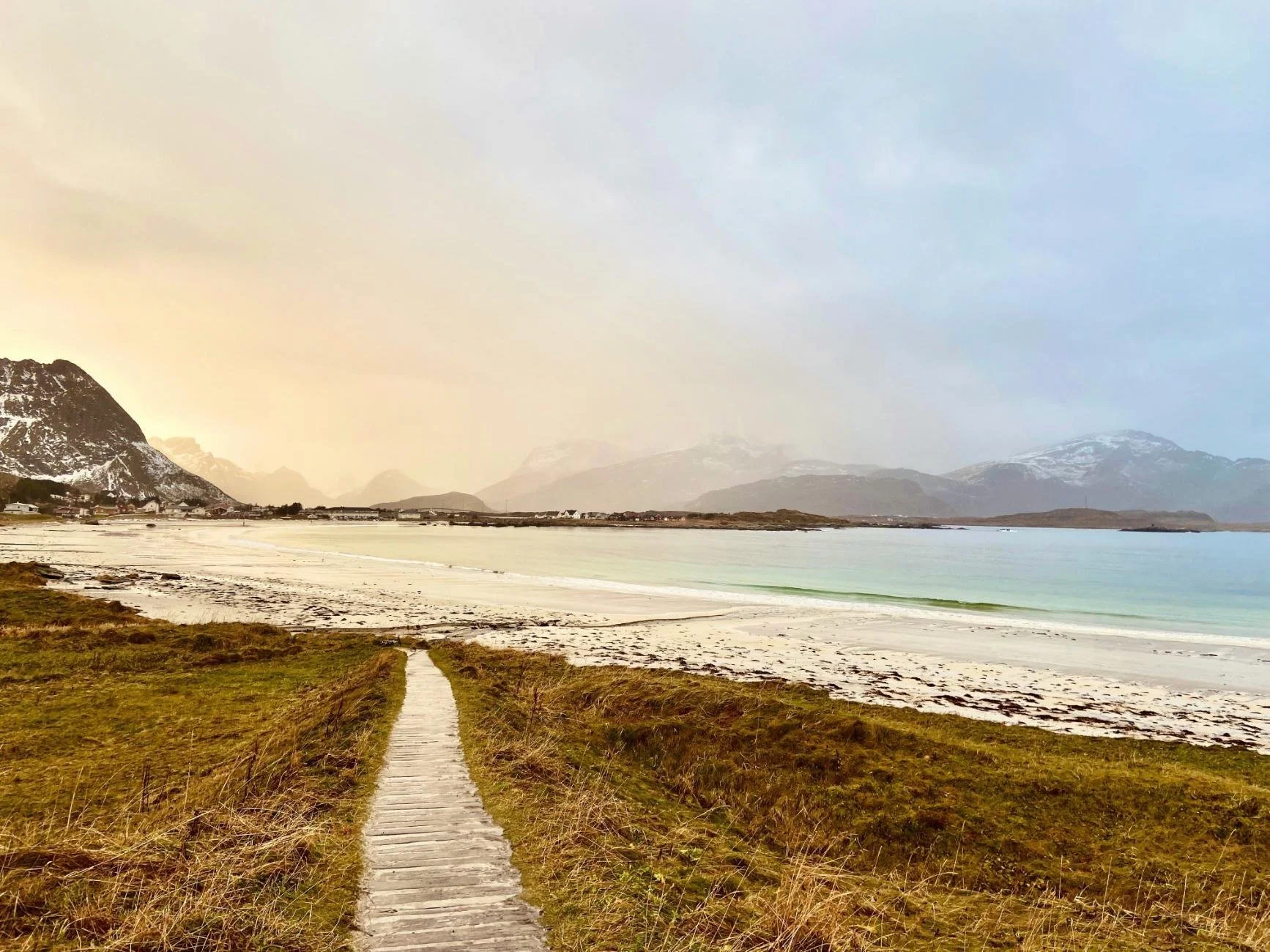
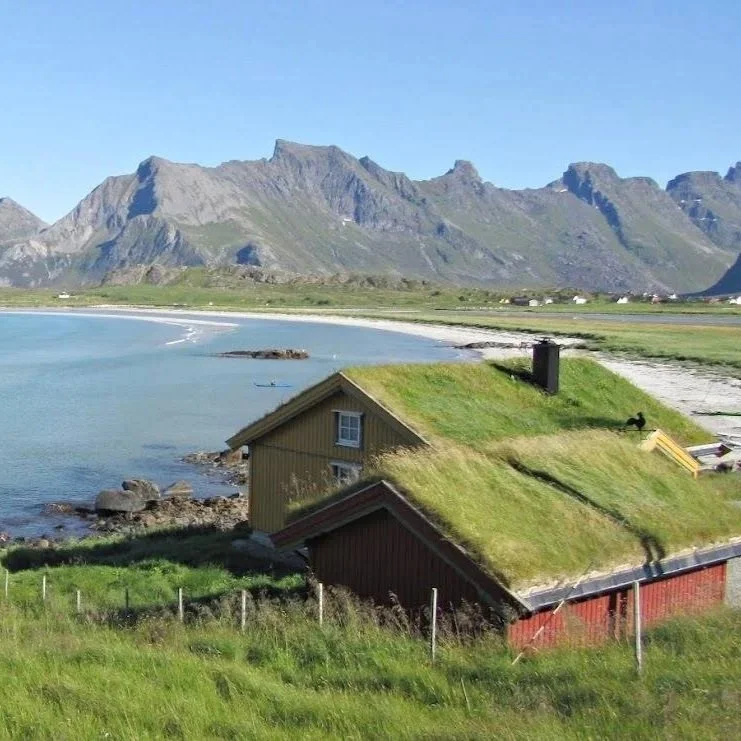
Lofoten beaches look like they belong somewhere tropical. Seriously, there’s a reason why we included them in our favorite beaches in Europe! White sand, turquoise water, mountains dropping straight into the sea. They are emphatically not tropical — the water temperature ranges from bracing to genuinely cold depending on the season, although the water is not as cold as you would think at this latitude — but the visual contrast between Arctic landscape and what appears to be a Caribbean shoreline is one of the things that makes these islands so disorienting (they even look fake!) in the best sense.
The beaches divide cleanly into two categories: the ones you can drive to, and the ones that require effort. Both are worth your time.
The drive-to beaches
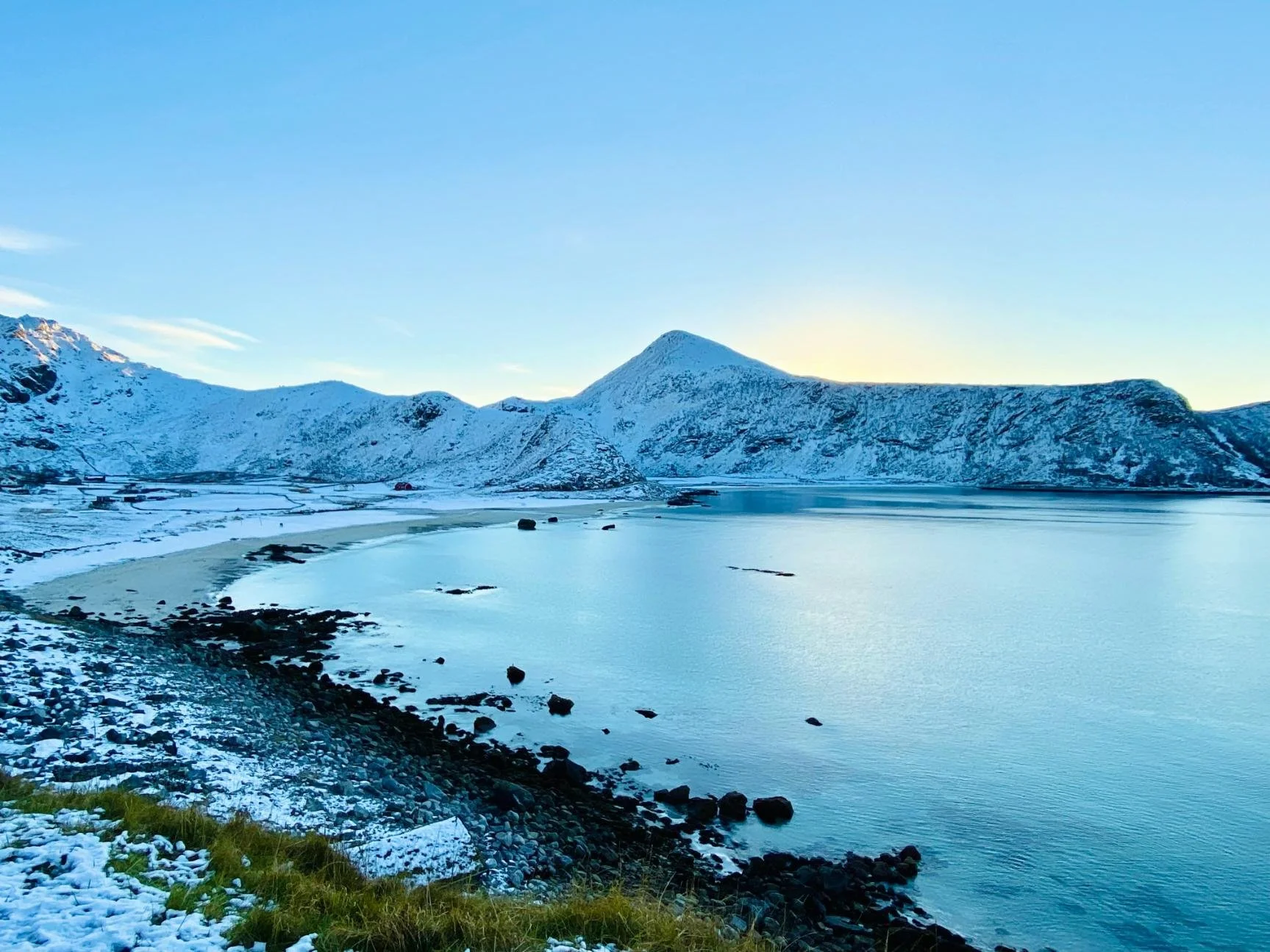
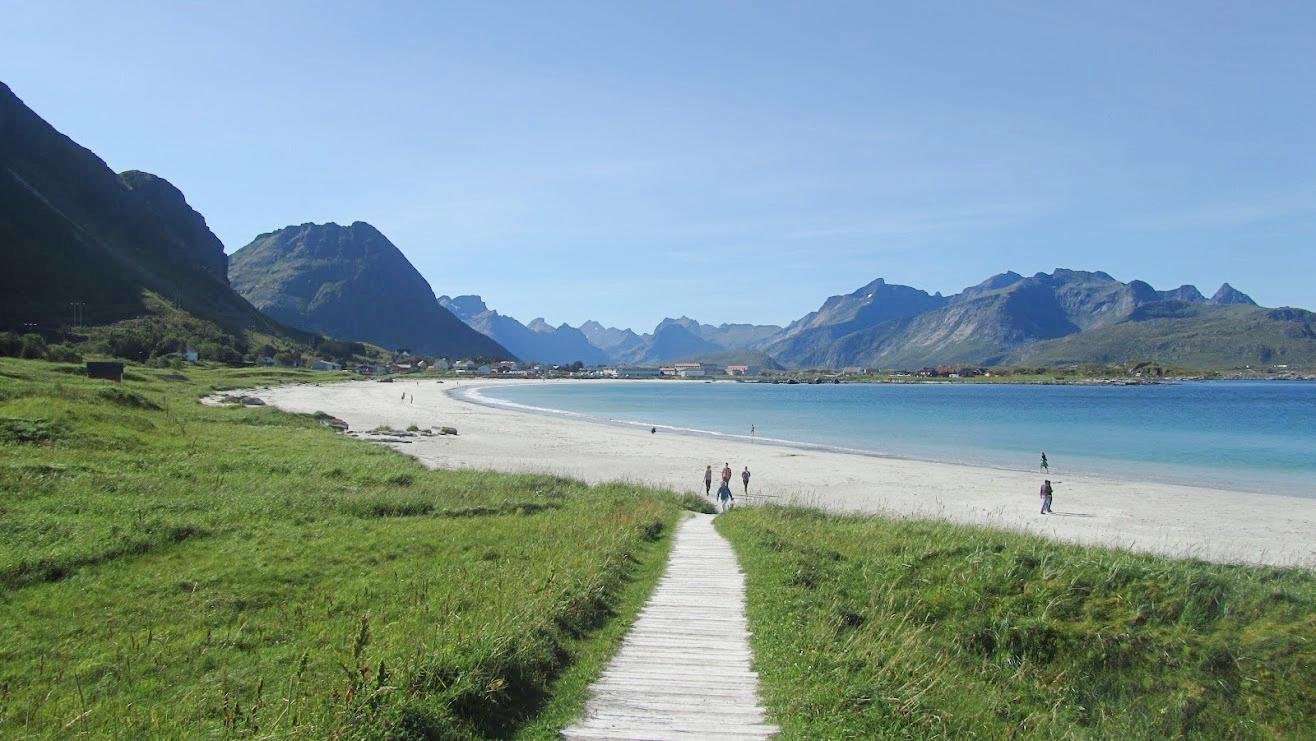
Haukland and Uttakleiv sit next to each other on the northwest coast of Vestvågøy and are consistently voted among Norway's most beautiful beaches. Haukland — over 500 meters of white sand with clear turquoise water, backed by mountains, and a parking area right at the sand — is the more accessible of the two and earned the title of Norway's most beautiful beach in national polling (we can only agree). Uttakleiv, a short drive further along the same road, is the more photographed: a combination of sand and large rounded pebble stones with a rocky shoreline that offers what feels like unlimited photographic possibilities. Both face northwest, which makes them exceptional Northern Lights and midnight sun positions depending on the season.
Ramberg/Skagsanden on Flakstadøy is Lofoten's biggest beach — a wide crescent of white sand curving around Flakstadfjord with a backdrop of sharp peaks. It's popular, which means it gets crowded on summer afternoons, but in the evening under the golden light of the midnight sun it earns every photo taken of it.
Unstad deserves its own paragraph and then some. It's one of the world's most northerly surf beaches and the break that essentially created the concept of Arctic cold-water surfing when it went viral in the early 2010s. The setting is genuinely jaw-dropping — waves coming in against a wall of mountains, snow on the peaks, surfers in thick wetsuits doing things that look improbable given the latitude. Unstad Arctic Surf operates cabins, a restaurant, and a surf school with full rental equipment, which means you can show up without gear and still get in the water.
One honest note: Unstad has gone from off-the-beaten-track discovery to the most crowded break in Scandinavia. It's still worth going, but serious surfers should know what they're walking into in summer. The actual best surf season is autumn and winter — November through March — when the swells are consistent, the waves are at their biggest, and the crowds have thinned significantly. Summer waves are gentler and more beginner-friendly, which is fine if learning is the goal. The surfing vibe is something you wouldn’t expect from an Arctic town!
If you want quality waves without the crowds, Flakstad/Skagsanden beach is the better-kept secret — a wide beach break with multiple peaks over a sandy bottom, friendlier conditions than Unstad, and far fewer people. Myrland, on the north-facing coast, is less crowded still: an exposed beach break known among surfers who've done their research, surrounded by large boulders and the kind of scenery that makes you feel like you've found something most people haven't.
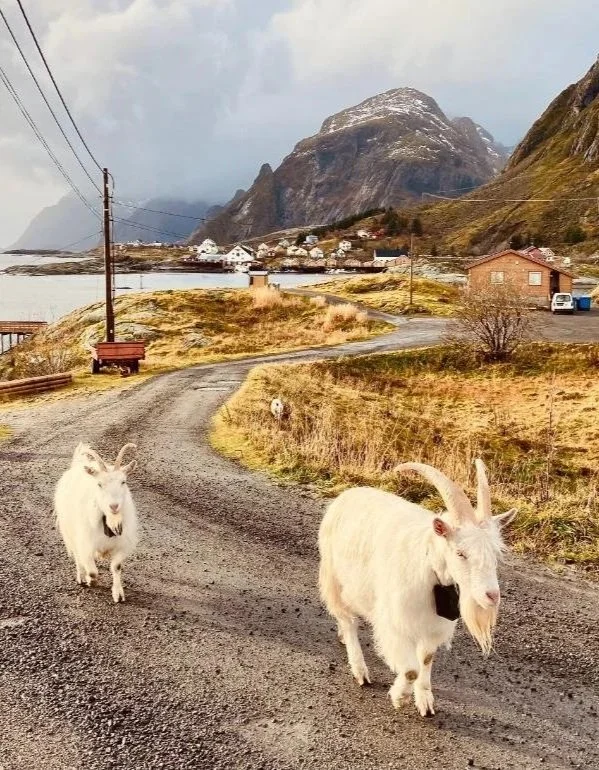
Cheeeese
On your way to or from Unstad, the road takes you past Lofoten Gårdsysteri — an organic goat farm run by a Dutch couple who moved to Vestvågøya with 150 goats and have been making some of the best cheese in Northern Norway ever since. The farm shop is open Monday to Saturday and sells the full range: semi-hard goat's cheeses, feta, halloumi, a cumin Nøkkelost, and fresh spreadable varieties. The farm café serves them properly, and if you want to go further there are cheese-making classes and farm tours.
The beaches that require effort
Bunes Beach is the most accessible of the remote options: a ferry from Reine to Vindstad (around 30 minutes across the fjord), followed by a 3-kilometer walk of about 45 minutes. What you get at the end is one of the most isolated and visually striking beaches in the islands — vast white sand, sheer mountains, almost no one else there. The ferry runs seasonally; check schedules in advance and book early in summer.
Horseid Beach is further into the commitment zone. The same ferry from Reine drops you at Kirkefjord instead of Vindstad, then it's a 6.5-kilometer hike over a mountain pass — around two hours — to reach the beach. Inside Lofotodden National Park, receiving a fraction of the visitors of any other beach in Lofoten, it's the kind of place that rewards people who are specifically looking for somewhere that most people haven't reached. Best treated as an overnight camping destination rather than a day trip.
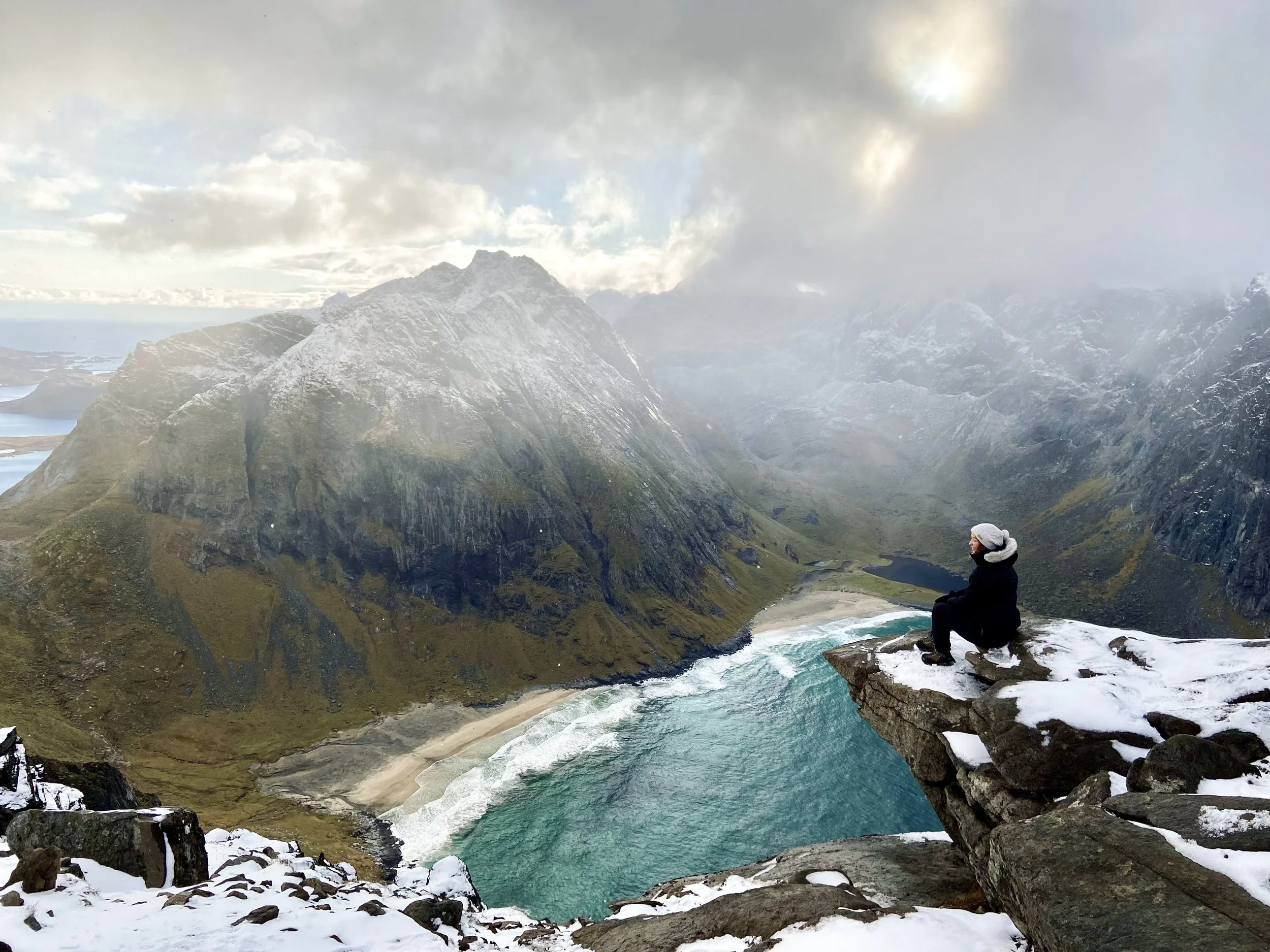
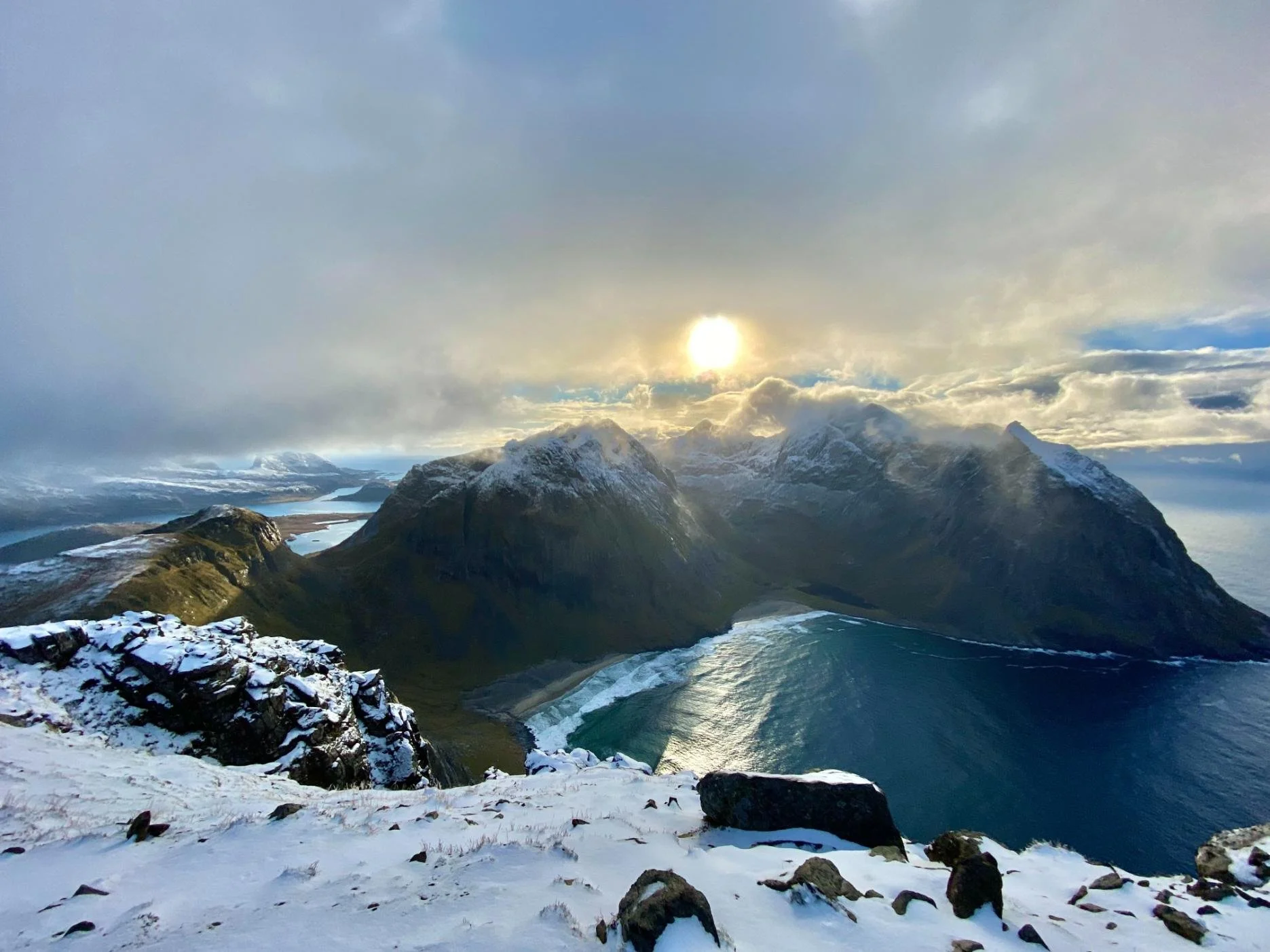
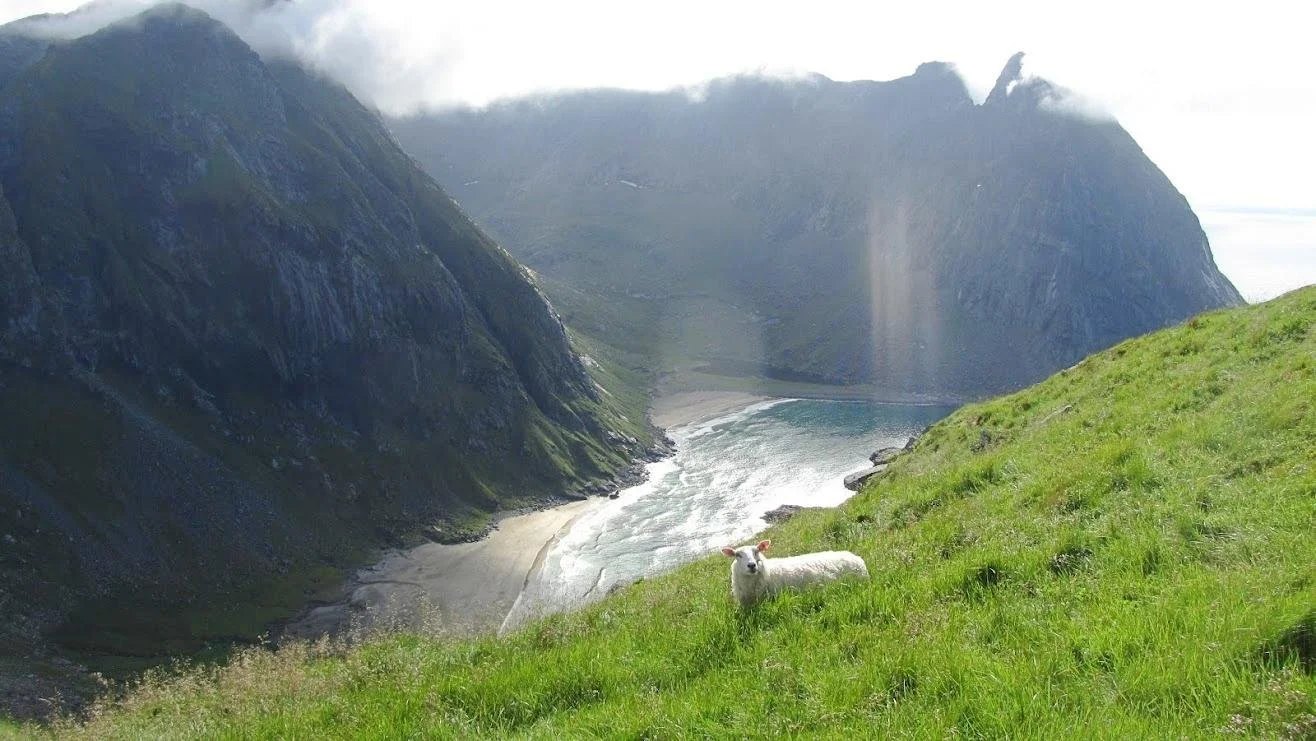
Kvalvika Beach is covered in detail in our hiking guide — it involves a hike from Fredvang parking and is often combined with Mount Ryten. The same warnings apply: the turquoise water looks swimmable and isn't, and the trail becomes seriously slippery when wet.
Things to do land — Villages, culture & wild camping

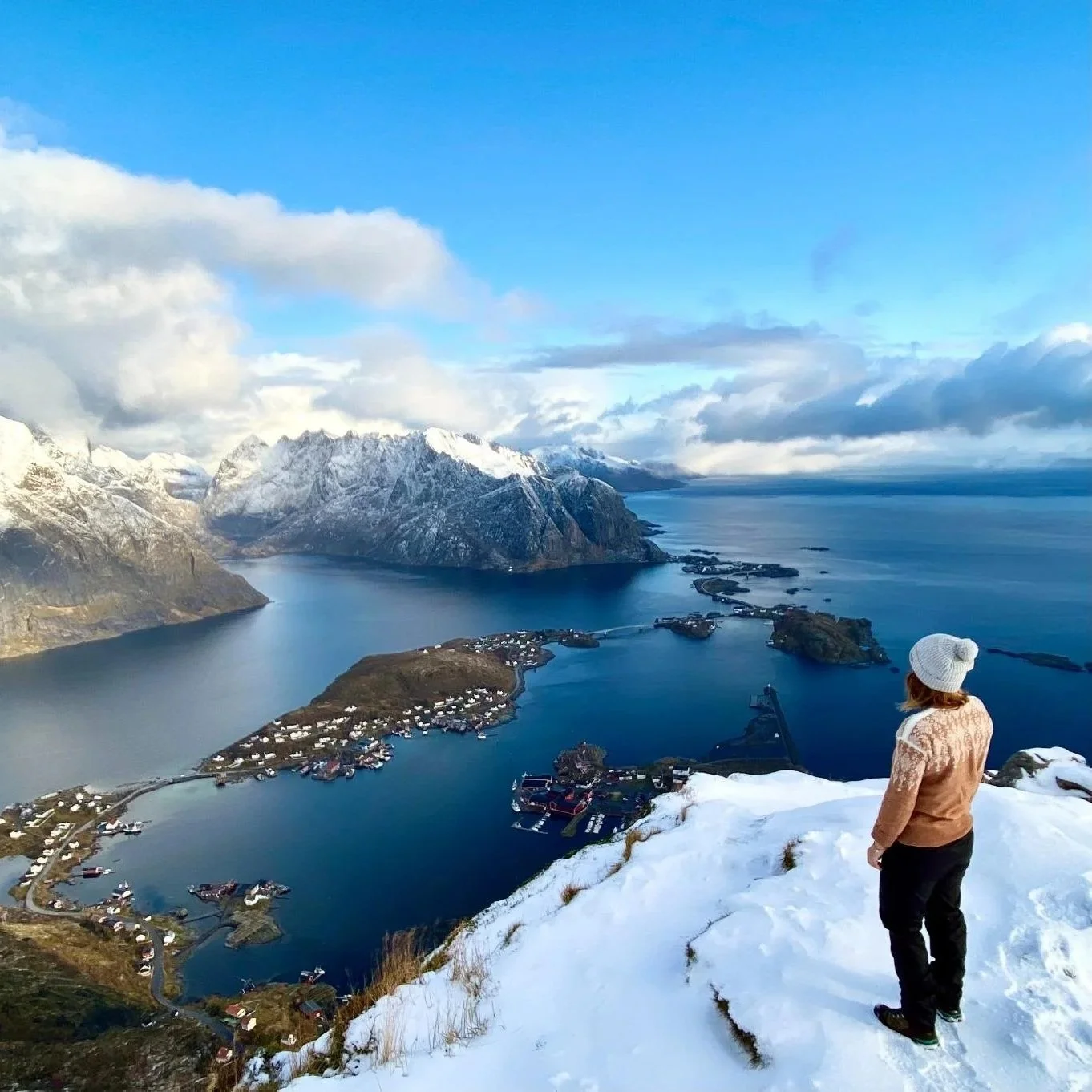
We made it to Reinebringen!
Rock climbing
Best for: summer visits, experienced climbers, adventurous beginners with a guide
Lofoten is one of Europe's most celebrated climbing destinations, and Henningsvær is the epicenter — a village that's become a mecca for climbers drawn by the quality of the granite, the scale of the walls, and the particular strangeness of climbing at midnight under a sun that won't go down. Over 800 trad and sport routes are documented across the islands, ranging from single-pitch beginner lines to 20-pitch multi-day commitments on faces over 500 meters high.
The routes here are predominantly traditional — gear-protected on superb quality granite — which means the experience is closer to proper mountain climbing than sport climbing gym culture. The legendary Svolværgeita (the Goat), a 14-pitch route above Svolvær, is the one that draws climbers from across Europe specifically (you might have seen it on Instagram). The best season is June through August, when you have 24 hours of daylight and the weather is at its most reliable — though "reliable" remains a relative term in Lofoten.
If you're new to trad climbing, going with a guide here is not optional — these are serious mountain routes, not via ferratas.
Wild camping in Lofoten
Best for: budget travelers, those who want total immersion in the landscape (and trust us, waking up to these views is luxury)
Norway's allemannsretten — the right to roam — gives you legal access to uncultivated land across the country, including Lofoten. In practice, this means you can pitch a tent in the mountains, on coastal headlands, and in open countryside without asking anyone's permission. It's one of the genuine freedoms of traveling in Norway, and Lofoten's landscape rewards it generously.
The rules are straightforward: stay at least 150 meters from the nearest occupied building (which is very easy up north), no cultivated land, move on after two nights in the same spot, and leave no trace. A few important caveats specific to Lofoten: a 2020 municipal regulation added restrictions in certain high-use areas, particularly in July and early August — the Lofoten Outdoor Council maintains a digital map of permitted zones that's worth checking before you go. Campervans and motor vehicles cannot go off-road under Norwegian law, which is separate from the right to roam.
Outside peak season, wild camping here is extraordinary. Waking up to a fjord view with no one else around, in a place that looks like a geography textbook illustration of dramatic Arctic coastline, is the kind of travel experience that's hard to replicate anywhere else. Well, ok, except in other regions of Norway like Senja :-)

Penguin tip:
The Lofoten Outdoor Council's camping map (available via the Visit Lofoten website) is updated annually and shows exactly where wild camping is and isn't permitted. Check it before planning any overnight spots, especially if visiting in summer.
Sauna & sea dip at Skårungen
Best for: post-hike recovery, winter visits, anyone who needs an excuse to sit still for two hours
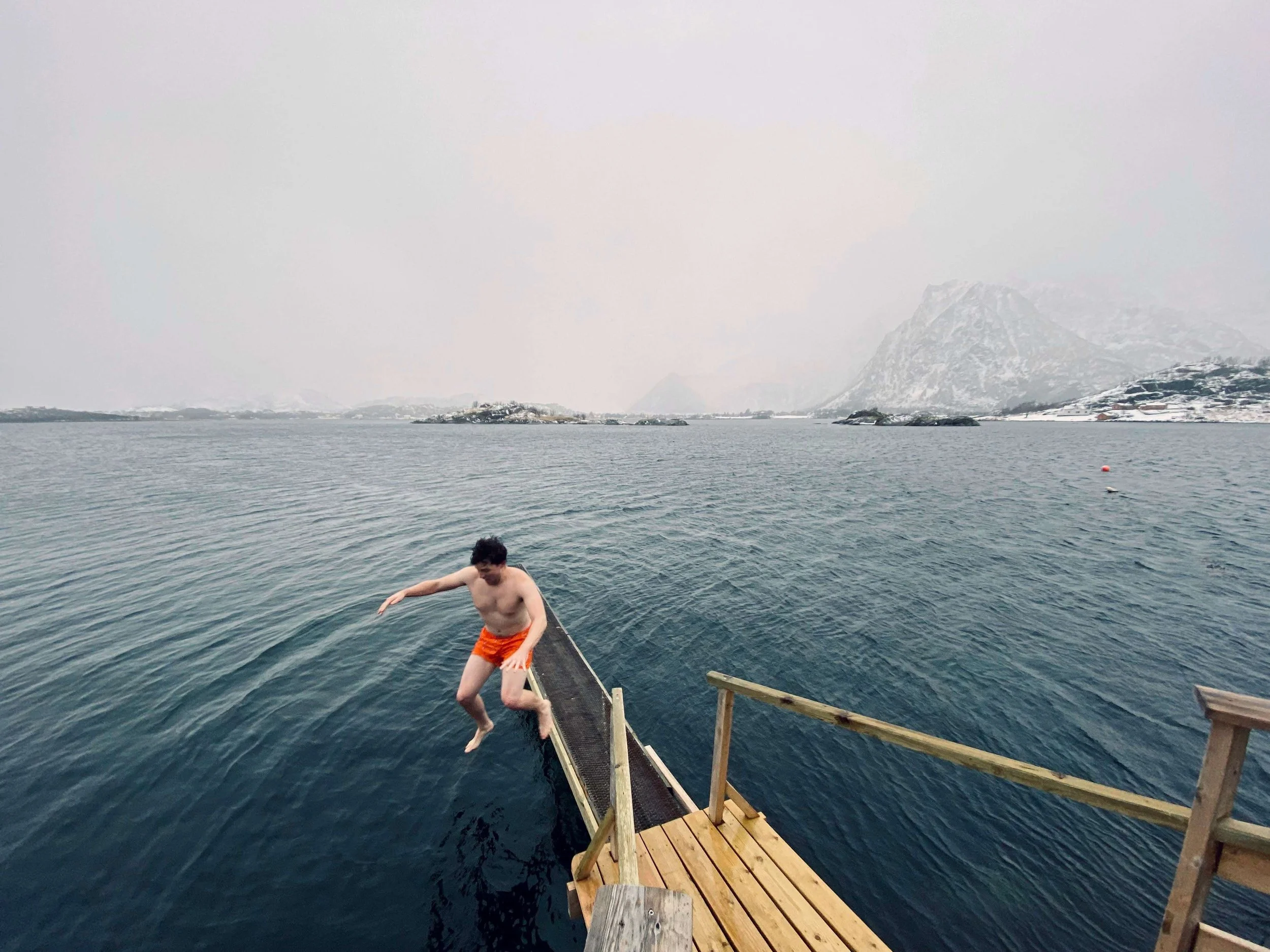
We stayed in a rustic rorbu Skårungen years ago and thought the location was special. We came back after the renovation — the new spa opened in May 2024 — and it's even better. The sauna sits at the end of the pier above the Vestfjord, with floor-to-ceiling windows framing the Vågekallen mountain across the water. Wood-fired, seating up to twelve, and completely private — when you book the spa at Skårungen you get the entire space exclusively, no strangers, no schedule overlap. There's a wood-fired hot tub on the pier alongside it for the cold-plunge interval that Nordic sauna culture insists upon and that you will initially resist and then immediately become evangelical about (trust us, we’re addicted).
The standard session runs 1.5 hours. You can add a Finnish massage and they have a drinks license, which tells you something about the atmosphere they're going for. As a way to end a day of hiking or after a cold morning out on a RIB boat, it is extremely effective.
Skårungen is in Ørsvågvær, near Kabelvåg on Austvågøya. Booking is essential — the spa slots fill quickly, especially in winter.
Henningsvær
Best for: a half-day or full day off the main tourist trail, art and food
Henningsvær gets called Lofoten's hippest village, which risks making it sound more self-conscious than it actually is. It's an island fishing village connected to the main archipelago by a series of narrow bridges, surrounded by water on all sides, with a contemporary art scene that materialized somewhat improbably in the Arctic and has been quietly building ever since.
The Kaviar Factory is the anchor — a converted fish-processing plant turned contemporary art venue with a hotel, café, and restaurant, hosting local and international artists in a space that still shows its industrial origins. Galleri Lofoten has Norway's largest collection of Northern Norwegian paintings. Engelskmannsbrygga is a restored wharf with ceramicists, glassblowers, and craftspeople working in what were once fish-processing buildings.
Did you know?
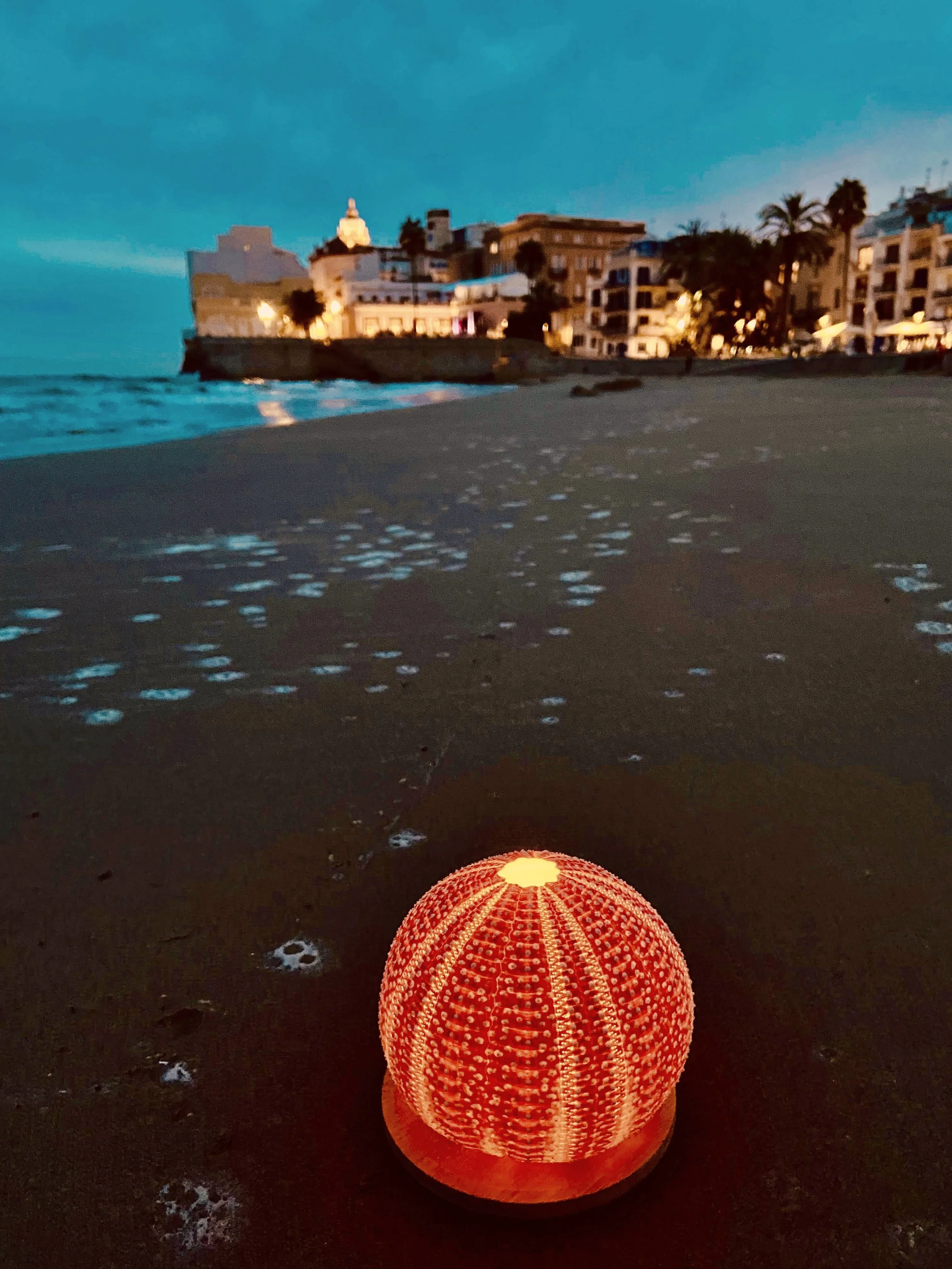
Unlike in most regions of the world, sea urchins are a threat to the ecosystem in the Lofoten and other parts of Norway, as they eat Norway’s “rain forest”: kelp. Alexandra and Matias had the genius idea to make lamps out of them: Lofotlys!
If you visit Henningsvær, pop by their workshop. It’s an amazing souvenir to bring back home.
Pic: We brought ours home (Sitges)
Outside the galleries, the village has good restaurants (we love Fiskekrogen) and the kind of harbor atmosphere that's easy to spend several hours in without noticing. It's also a climbing hub — the rock faces around Henningsvær (and the famous rocks in Svolvær) attract sport climbers, which adds another unexpected dimension to the place.
Getting there: Follow the E10 to Kabelvåg, then the FV816 south toward Henningsvær. About 20 minutes from Svolvær by car.
Svolvær
Best for: using as a base, boat trips to Trollfjord, getting a feel for Lofoten's only real town
Svolvær is where most visitors arrive and where most of the tour operators are based — which makes it less of a destination in itself and more of a hub that connects you to everything else. That said, it earns a half-day of genuine attention. The Trollfjord boat trip is the centerpiece: a short but dramatic fjord accessible only from the water, with walls that close in on both sides until the passage feels improbably narrow for the boat you're on. Sea eagles are almost guaranteed here, which is why the sea eagle safari operators run from Svolvær.
The walk around Svinøya Island takes about an hour and gives you a quieter look at the harbor side of the town. The Lofoten War Museum covers Norway's World War II occupation with more depth than most visitors expect from a building this size. Magic Ice, in a former fish-freezing plant, is a gallery carved entirely from Arctic ice — genuinely worth the 20 minutes if you're curious, easy to skip if you're not. The stockfish racks at the harbor entrance, covered in cod drying in the wind, are one of those images that makes the industrial history of this place suddenly very concrete.
Svolvær is also the departure point for whale watching day trips out to Andenes, and the arrival point for the Bodø ferry — so most itineraries pass through here regardless.
Getting there: direct flights from Oslo and other Norwegian cities to Svolvær airport (SVJ). Ferry from Bodø also arrives here and at Moskenes.
Nusfjord
Best for: those who've already seen Å, history enthusiasts, Northern Lights seekers
Nusfjord is the fishing village that gets described as a "hidden gem" so often it no longer qualifies as hidden — but the description is accurate in the sense that matters. It's one of the oldest and most intact fishing villages in Norway: original boathouses, a working smithy, a smokehouse, a cod liver oil factory, a post office unchanged since the cod-fishing era. You walk through it rather than look at it from a viewpoint, which is a different experience to the photogenic-from-a-distance villages further west.
Entry costs around NOK 100 per person, which pays for the preserved historic buildings and keeps the crowds manageable. Go in the morning when it's quietest. You can book guided fishing trips with Captain Jan Martin directly from the village harbor, kayak in the fjord between the mountains, and in winter the remoteness and dark skies make it one of the better Northern Lights watching positions in the islands. Rorbuer accommodation in the original fishermen's cabins is available if you want to stay.
Getting there: off the E10 south of Leknes, signposted toward Flakstad. About 45 minutes from Reine by car.
The Norwegian Fishing Village Museum in Å
Best for: understanding what Lofoten actually was before the Instagram era
Å is the last village at the southern end of the E10 — the road simply stops there — and it contains one of the best preserved 19th-century fishing environments in Norway (and it’s just cool to pronounce the village’s name). The Norwegian Fishing Village Museum is less a conventional museum than a working village preserved in amber: original boathouses, a cod liver oil factory, a smithy, a post office, fishermen's cabins, and a bakery operating from an 1878 stone oven that still produces bread and cinnamon rolls in summer.
In season (June through September), the museum runs demonstrations — blacksmithing, cod liver oil production, paint making, textile work — that give some texture to what life looked like in a place whose entire economy for centuries revolved around one fish. The bakery alone is worth the drive to the end of the road.
If you’re going to pay for something, in our opinion, this is more interesting than Nusfjórd.
Open June–September daily 11–18; November–May Monday–Friday 11–15 (closed December–early January). The drive from Reine to Å is 15 minutes south along the E10.
The northern lights
Best for: October–March visits, the single most searched Lofoten experience
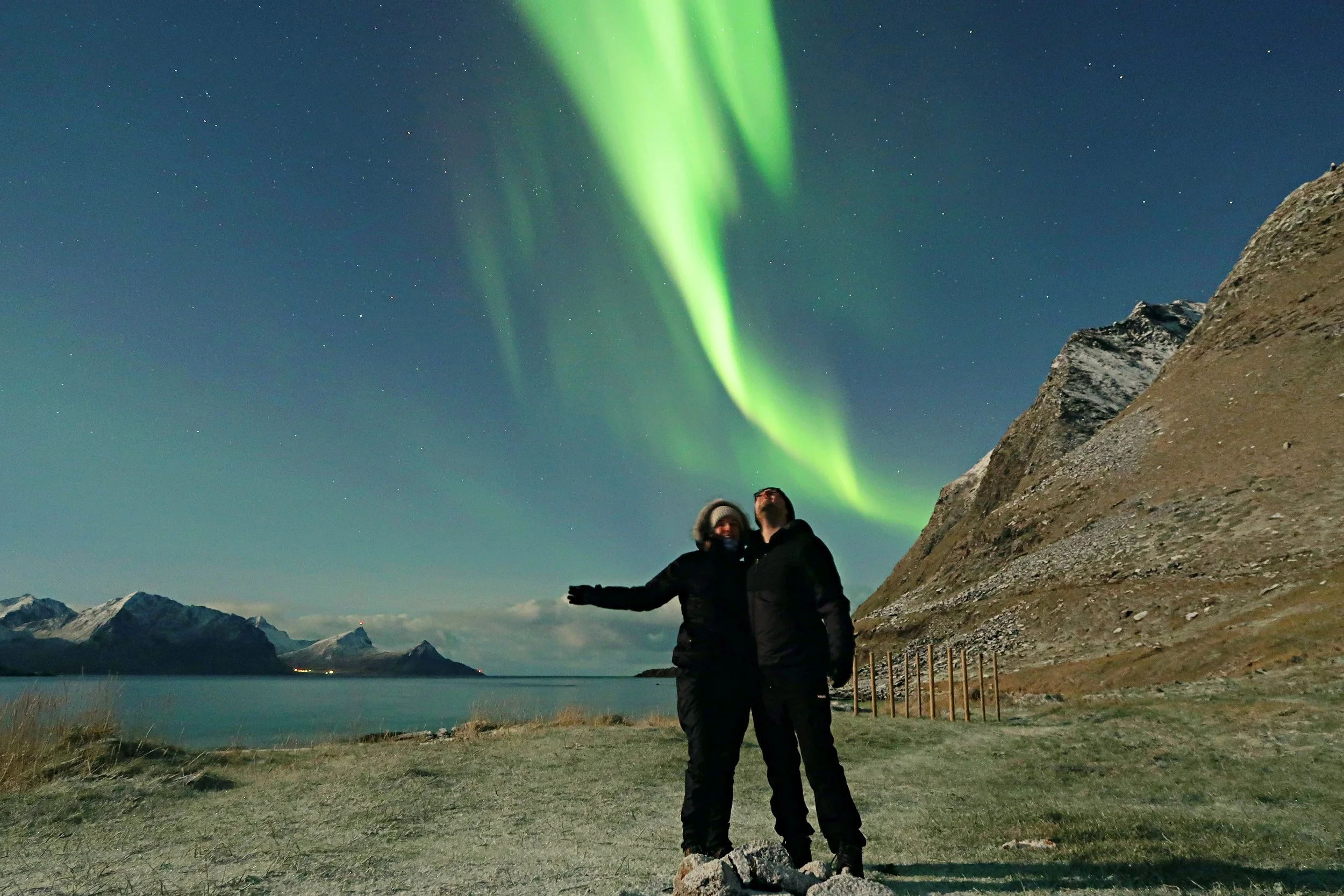
The Northern Lights over Lofoten are in a category of their own — the combination of dark winter nights, clear Arctic skies, and the dramatic mountain-and-fjord backdrop creates conditions that photographers and aurora chasers specifically seek out. The season runs late September through early April, with December through February typically offering the longest nights and best chance of clear skies.
You can chase them yourself or go on a photography tour.
We wrote a dedicated Northern Lights in Lofoten guide that covers everything — where to position yourself, what to realistically expect, camera settings, guided tours, and how to read the forecasts. You can also read our Lofoten in winter guide, which covers the broader winter experience including aurora conditions.
For photo settings, gear advice, and the best Northern Lights destinations across Scandinavia, check out our full 👉 Northern Lights Hub.
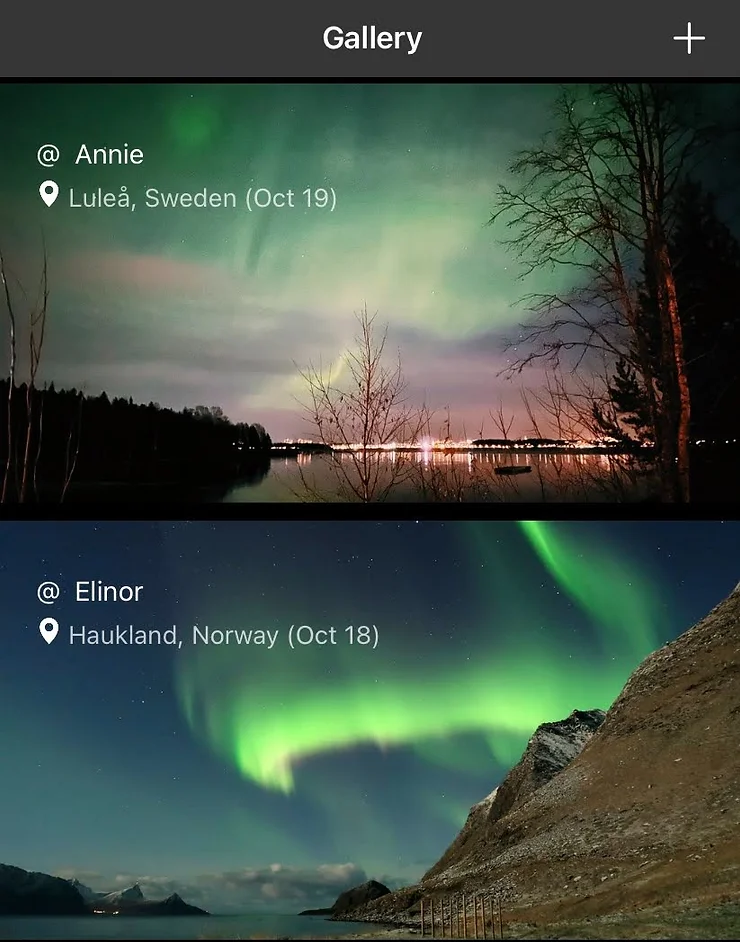
Uttakleiv and Haukland beaches are great spots to watch the Northern Lights, if weather and solar activity allow. One of my (Elu) pictures, taken at Haukland beach, was featured in My Aurora App.
Hiking
Best for: summer and shoulder seasons — the trails are the backbone of a Lofoten trip
Hiking deserves its own guide rather than a section here — the trails in Lofoten are varied enough, and the conditions specific enough, that collapsing them into a bullet point does everyone a disservice. We've covered all five trails we've done personally — Reinebringen, Ryten, Kvalvika Beach, Røren, and Mannen — with verified distances, honest difficulty notes, and what the conditions are actually like season to season.
→ Read our full Lofoten hiking guide
Note before you put on your hiking shoes: Lofoten is remote, wild, and full of steep surprises — which is exactly why we love it. But a sprained ankle on a ridgeline or a missed ferry thanks to rogue weather can get expensive fast. We always travel with Heymondo Travel Insurance, and you get 5% off (sometimes up to 15%) through our link. It covers hiking, ferries, even lost luggage full of fish-shaped sweaters. Worth it for peace of mind in the Arctic wild. You might also be interested in our hiking & backpacker travel insurance guide.
Bowse tours with reviews in Lofoten:
Where to stay in Lofoten
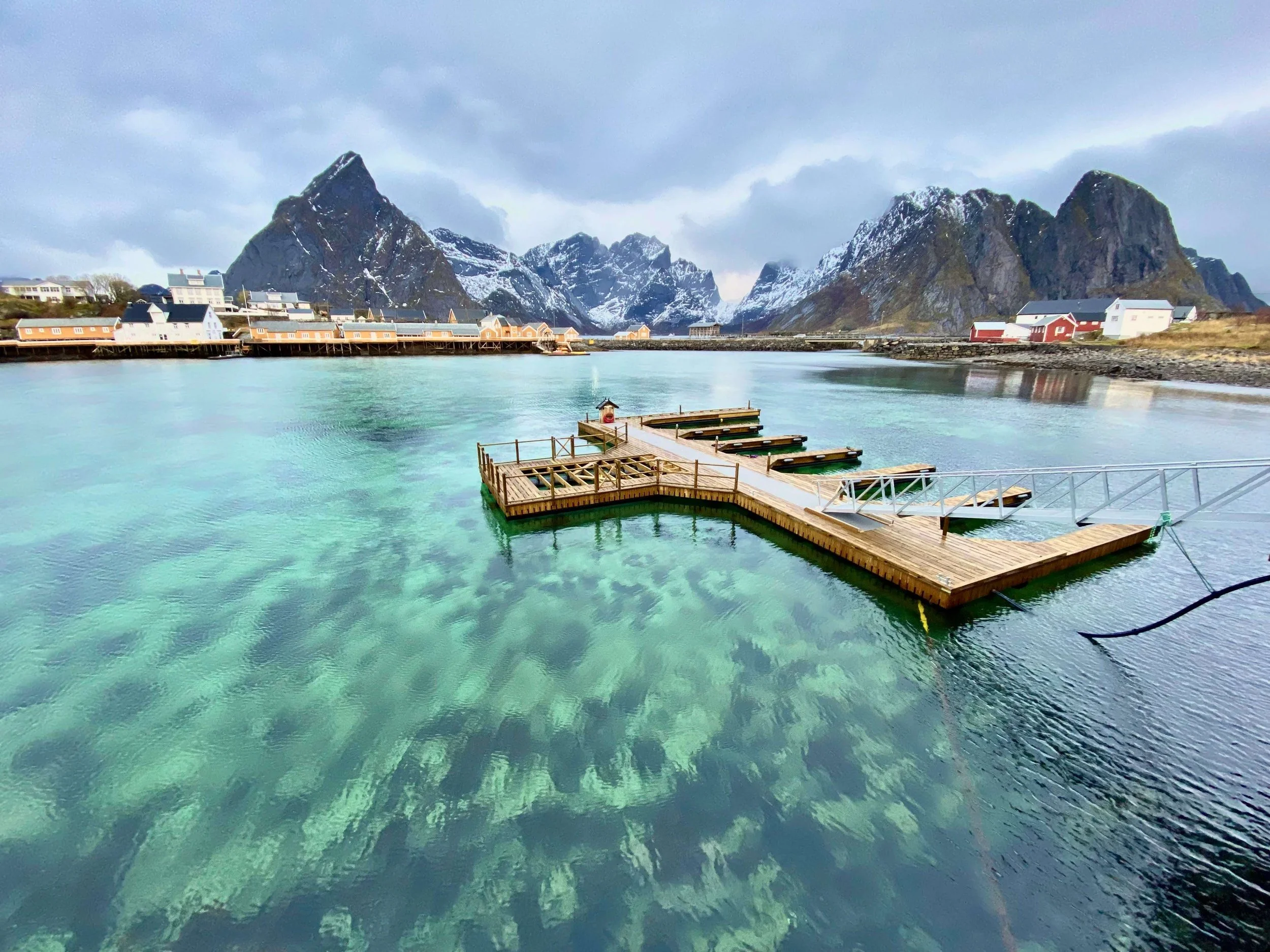
Wow, the view from our awesome rorbu near Reine
Reine and Hamnøy put you closest to Reinebringen and the southern fjords. Svolvær and Henningsvær give you the best access to whale watching tours, sea eagle safaris, and kayaking operators in the north. Most things in between are reachable by car (read our guide to Renting a Car in Lofoten) in under an hour regardless of where you base yourself.
Our full guide to Rorbuer and Hotels in Lofoten covers specific properties across the islands, including the ones we've personally stayed in — with notes on which areas put you closest to which activities.
Not sure where to base yourself? Read our guide Where to Stay in Lofoten by Area.
Zoom in on the map below to find a rorbu or hotel in Lofoten:
How to get to and plan your trip to the Lofoten Islands
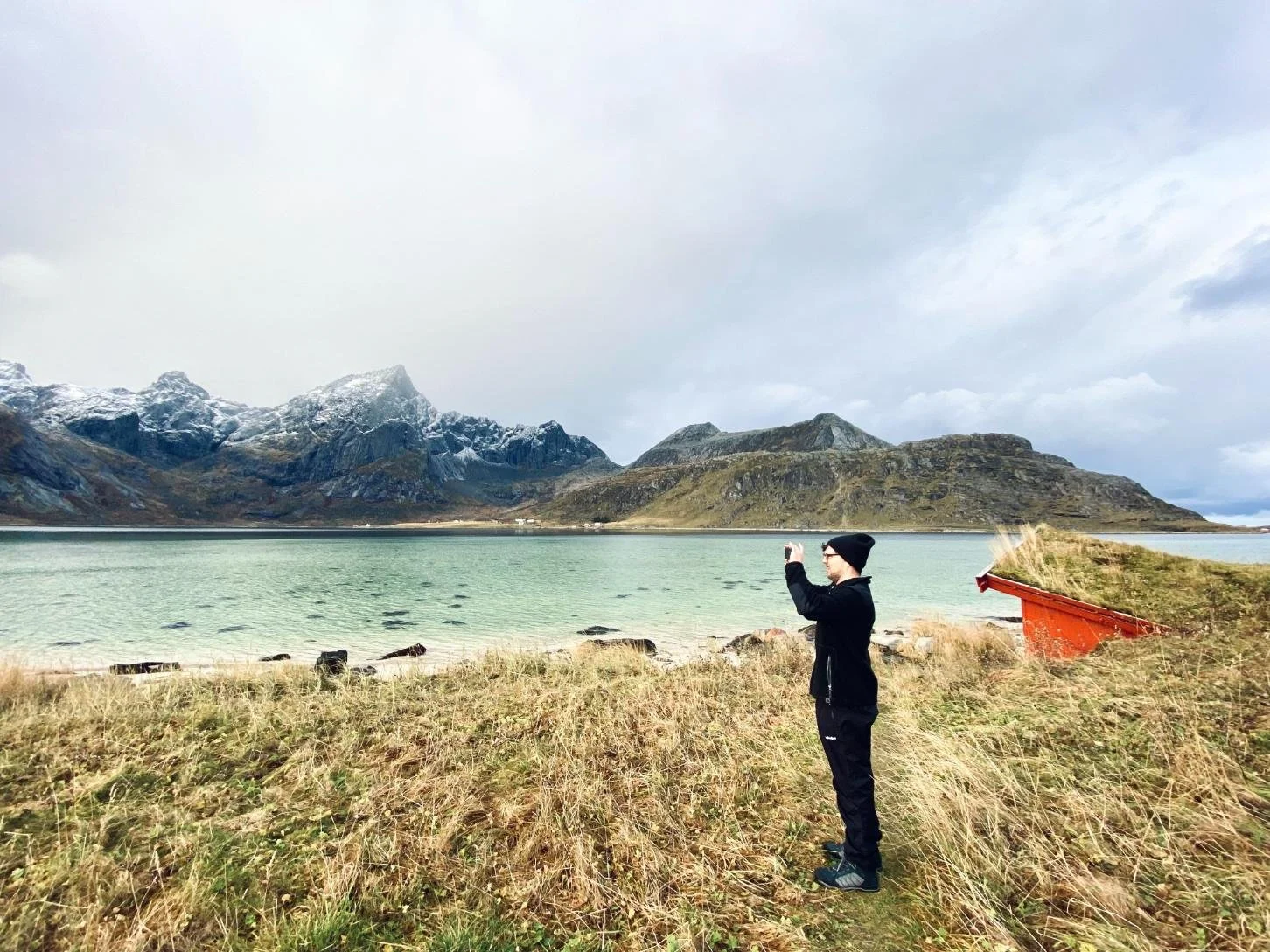
Just drive around the islands to find hidden gems!
Getting to Lofoten feels like a small adventure in itself — part of the charm. Most visitors fly into Bodø, then take the ferry to Moskenes or a short flight to Leknes or Svolvær. The ferry is our pick: it’s dramatic, affordable, and the first taste of what’s to come — walls of mountains rising straight from the sea. Read our guide to How to Get to Lofoten for more details on all the options.
Once on the islands, public transport exists but it’s not ideal for explorers. Renting a car gives you total freedom to stop at roadside beaches, mountain trails, or any random café that looks too cute to ignore. It’s usually cheaper to rent a car in Bodø. You can read our guide to a Rental Car in Bodø here.
👉 Check car rentals in Lofoten
Pro tip: Flying to, and renting a car in Bodø and take it on the ferry might be cheaper than renting a car in the Lofoten.
If you’re coming between October and March, remember that Northern Lights season brings both magic and moody weather. Roads can get icy, ferries run less frequently, and a flexible mindset (and schedule) goes a long way.
Quick tips for planning your trip
Book early – Rorbuer and ferries fill up fast. If you see a rorbu you love, grab it.
Pack for anything – Sun, wind, sideways rain, sometimes all before lunch.
Rent a car or camper – Best way to explore at your own pace.
Get travel insurance – The weather rules here. Flights and ferries get delayed, so Heymondo is worth the peace of mind. Get 5-15% off if you book through us!
Slow down – Distances look short on a map, but every curve hides another photo stop.
✈️ Find flights
🏨 Explore hotels, apartments, guesthouses, cabins
🧭 Browse activities and tours
🚗 Compare car rentals
🧳 Get travel gear (including our Arctic essentials)
🛡️ Travel safe with Heymondo Travel Insurance (5–15% off)
📱 Get a travel eSIM
🐾 Protect & track Arctic wildlife with Fahlo Bracelets (20% off)
FAQ: Tours and things to do in Lofoten
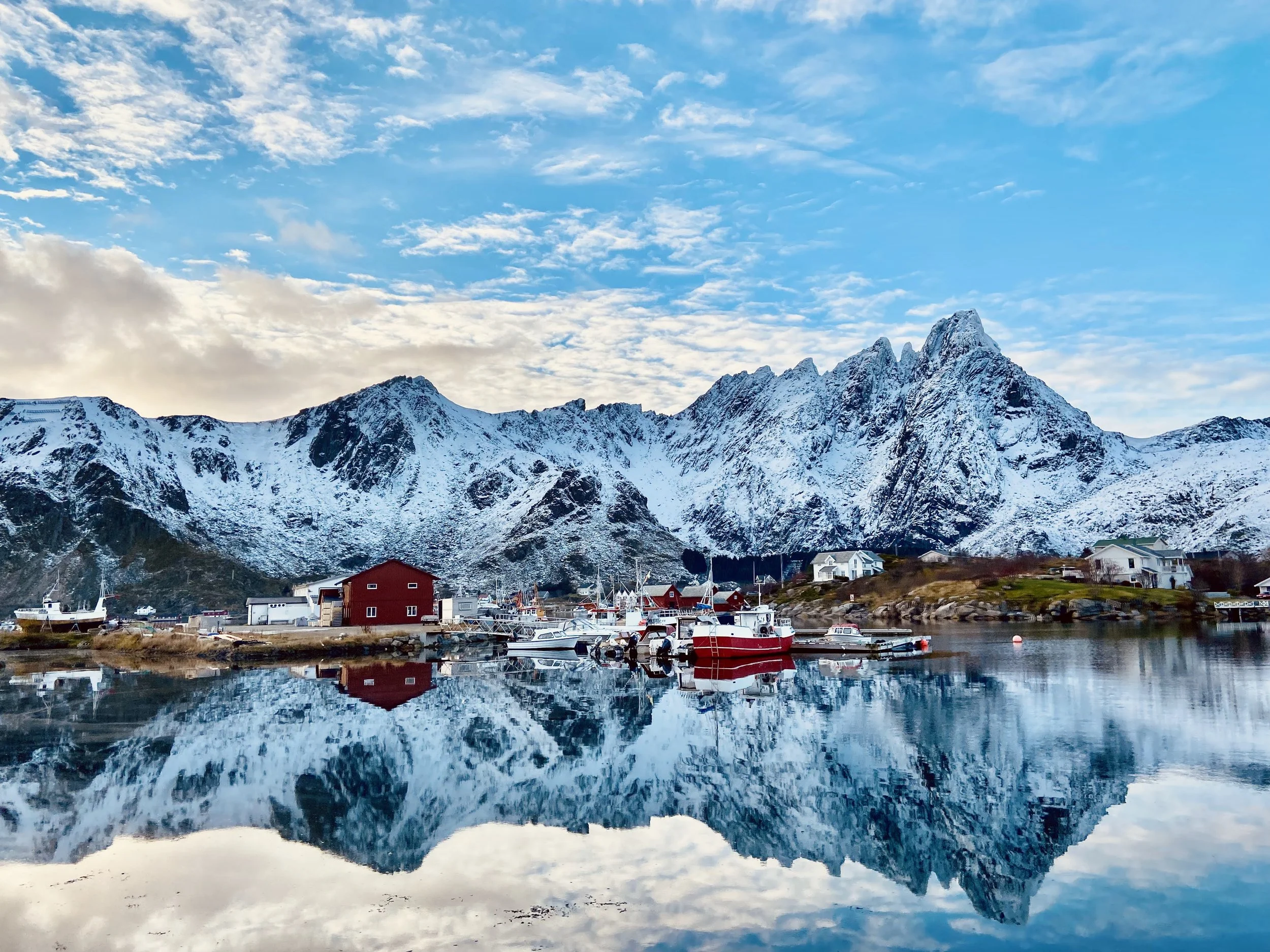
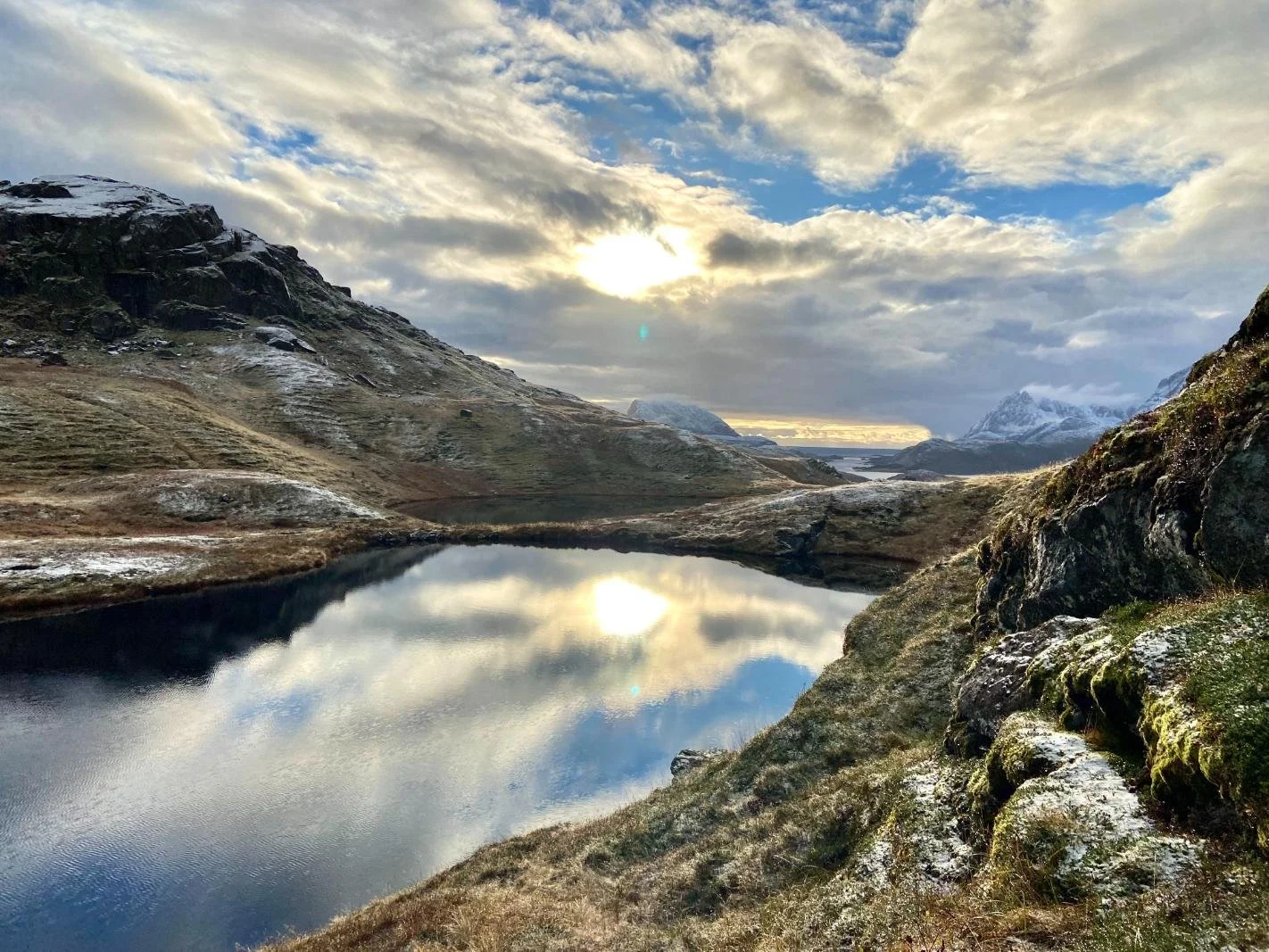
Perfect reflection on our way to Kvalvika Beach ‐ Voted picture of the month by Foap
What are the best things to do in Lofoten in summer?
Hiking and kayaking are the summer anchors — long daylight hours and mostly snow-free trails make both significantly easier than other seasons. Henningsvær and the museum village of Å are worth a day each. Wild camping under the midnight sun, if you're equipped for it, is the kind of experience that's hard to replicate anywhere else.
What are the best things to do in Lofoten in winter?
Whale watching is the winter activity that most people don't know about and most people who do it call a highlight of their trip. Northern Lights viewing is the obvious draw. Fishing season (January–April) gives you access to the Lofotfisket cod tradition. Winter hiking is possible on some trails with the right gear — read our hiking guide for which ones and what's required.
What are the best things to do in Reine, Lofoten?
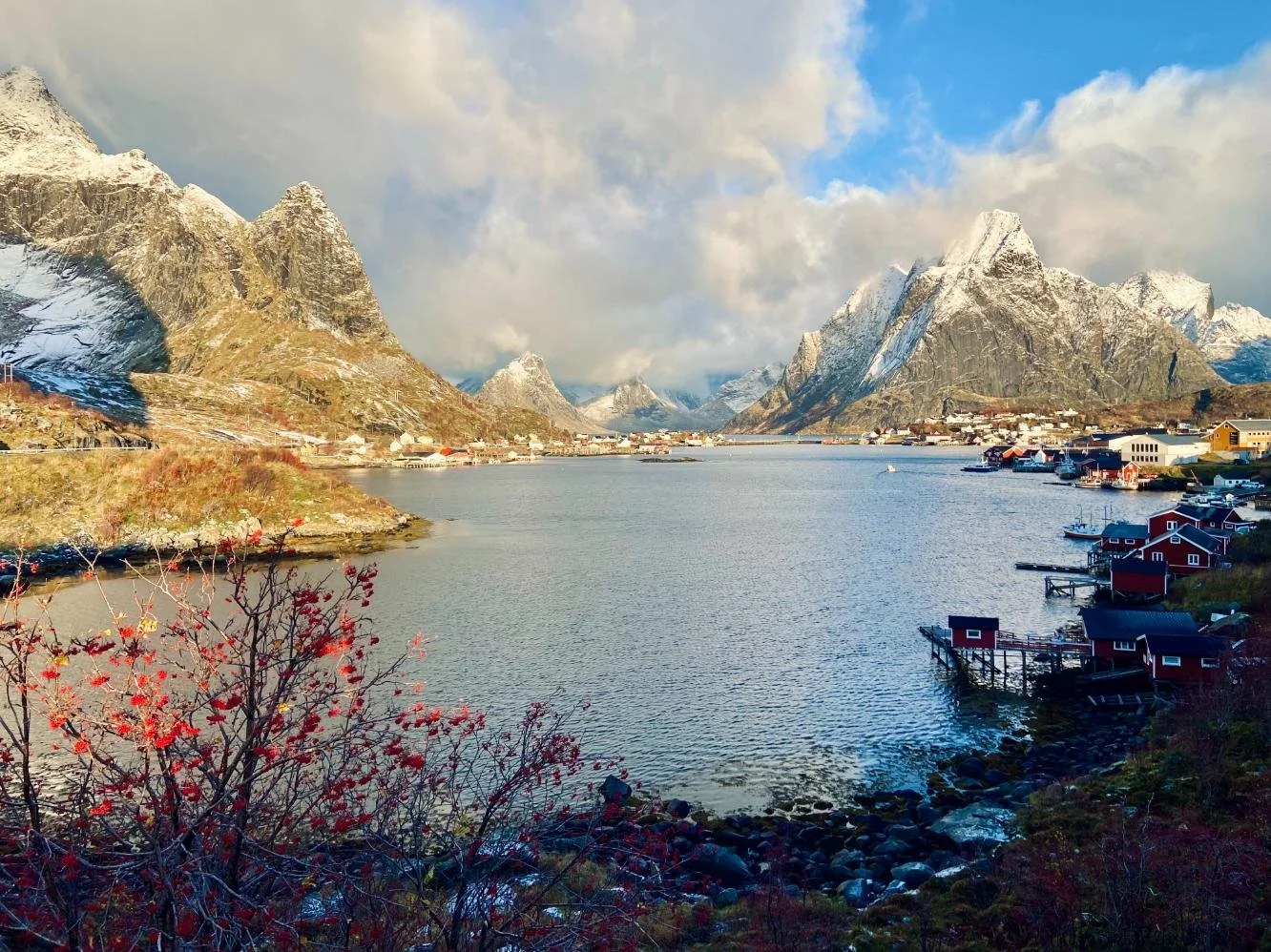
Reine is the base for Reinebringen — the most iconic hike in Lofoten — and for the boat trips into Reinefjorden. The village itself is small but photogenic to a degree that feels almost unfair, with red rorbuer reflected in still water and peaks rising from the fjord on all sides. Kayaking in the fjord, fishing tours, and the short drive south to Å and the fishing museum are all good half-day options.
Is Lofoten good for non-hikers?
Very much so. Whale watching, sea eagle safaris, kayaking tours, and the cultural side — Henningsvær's galleries, the Å museum, the rorbuer experience, the fishing heritage — are all entirely separate from the hiking. The landscape is dramatic from a car window and from a boat. You don't need to climb anything to get what Lofoten offers.
How many days do you need in Lofoten?
Five to seven days is the sweet spot for covering the main activities without rushing. Three days is doable but you'll be making compromises. If you're combining hiking with whale watching and want to explore the villages properly, a week disappears quickly.
Lofoten has a way of expanding whatever time you've given it. You arrive thinking you'll hike a couple of trails and see the Northern Lights, and you leave having watched an orca surface thirty meters from a RIB boat, eaten stockfish in a harbor that looks exactly as it did a hundred years ago, and sat in a wood-fired sauna above a fjord until you lost track of what time it was — which is easy to do when the sun doesn't set.
If you're still working out when to go, our month-by-month guide to the best time to visit Lofoten breaks down exactly what each season actually offers.
Finally, explore all our Norway Travel Guides here.

Free download
Travel Cheaper Cheat Sheet
27 tips on flights, hotels, hidden costs and more — spend less without missing what actually matters.
No spam. Unsubscribe anytime.
