
Northern Lights in the Faroe Islands: Can you See Them, When to Go & What to Expect
Our guide to chasing the aurora in an archipelago dear to our hearts
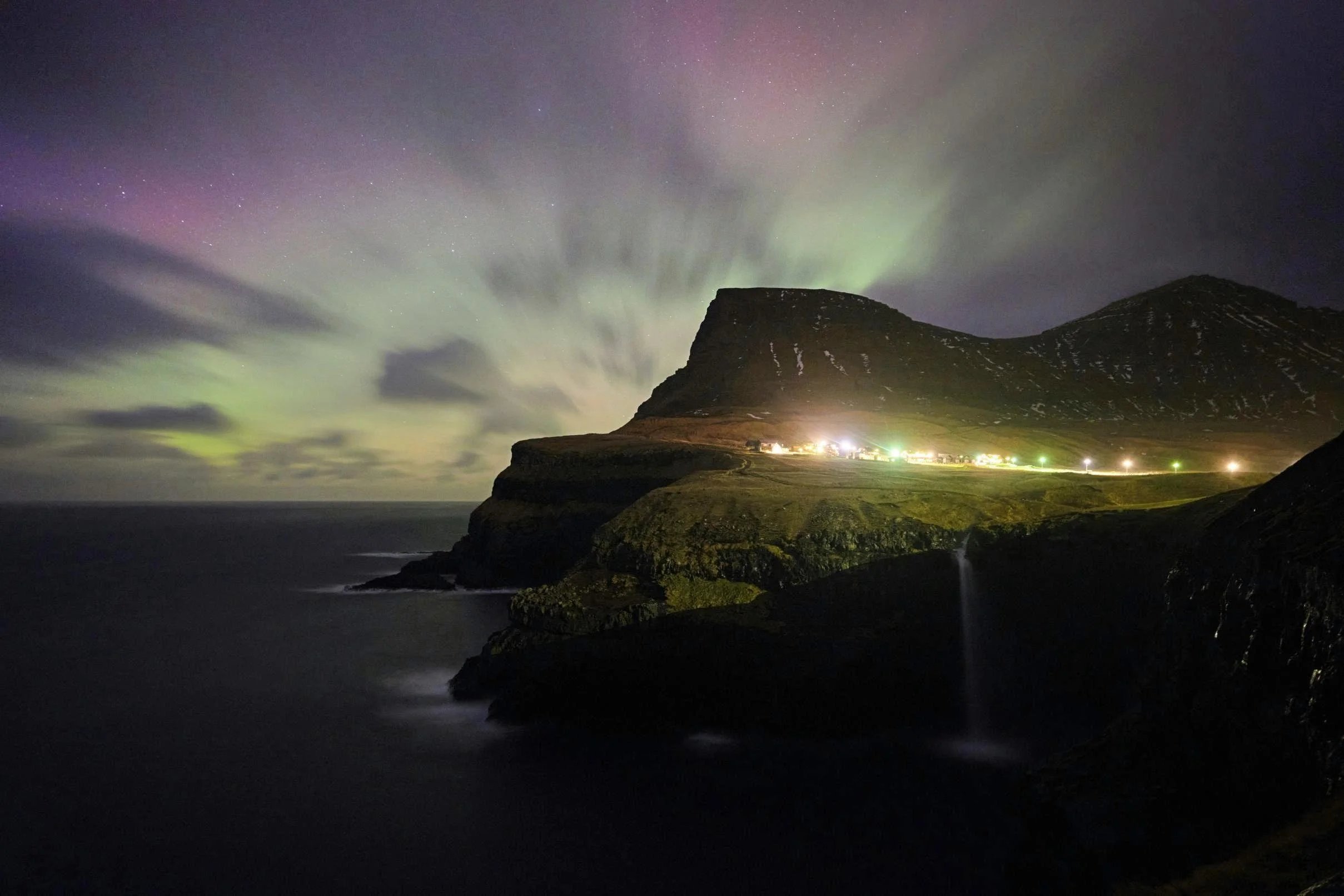
Gásaladur is a prime spot to watch the northern lights in the Faroe Islands (Photo credit: Joshua Kettle)
Last update: August 2026
Before we dive into our aurora guide: yes, you can see the northern lights in the Faroe Islands. The question people should be asking isn't whether the aurora appears here — it does — but what it takes for it to appear, and how honest you're willing to be with yourself about the weather. The Faroes are not Iceland nor Lofoten. They sit at a latitude where the northern lights demand stronger geomagnetic conditions to show up, and they sit in the North Atlantic, which means cloud cover is a near-permanent feature of life.
When the aurora does appear over the Faroe Islands, the backdrop is incredible. The Faroes offer an aurora experience that is different — wilder, more remote, less curated — from anywhere else you can chase the lights in Europe.
🛌 Where to stay:
• Hotel Brandan, Tórshavn — we stayed here. Only Green Key certified hotel on the islands, great staff, central.
• Múlafossur Cottages, Gásadalur — turf-roofed, right by the waterfall that drops into the ocean.
• Gjáargarður Guesthouse, Gjögv — turf-roofed village guesthouse, trailheads at the door.
🇫🇴 Top experiences:
• Boat trip to Mykines (puffin island) — the express crossing to the Faroes' most iconic island.
• Sea kayaking at Vestmanna — paddle into the bird cliffs and sea caves.
• Private highlights tour — lakes, waterfalls, and villages with a local guide.
🚗 A car is essential in the Faroes. Book yours here — islands are connected by tunnel and bridge, but buses are very limited.
Quick navigation: Can you see them? · When to go · Best viewing spots · How to forecast · Guided tours · Photography · Where to stay · FAQ
Can you see the northern lights in the Faroe Islands?
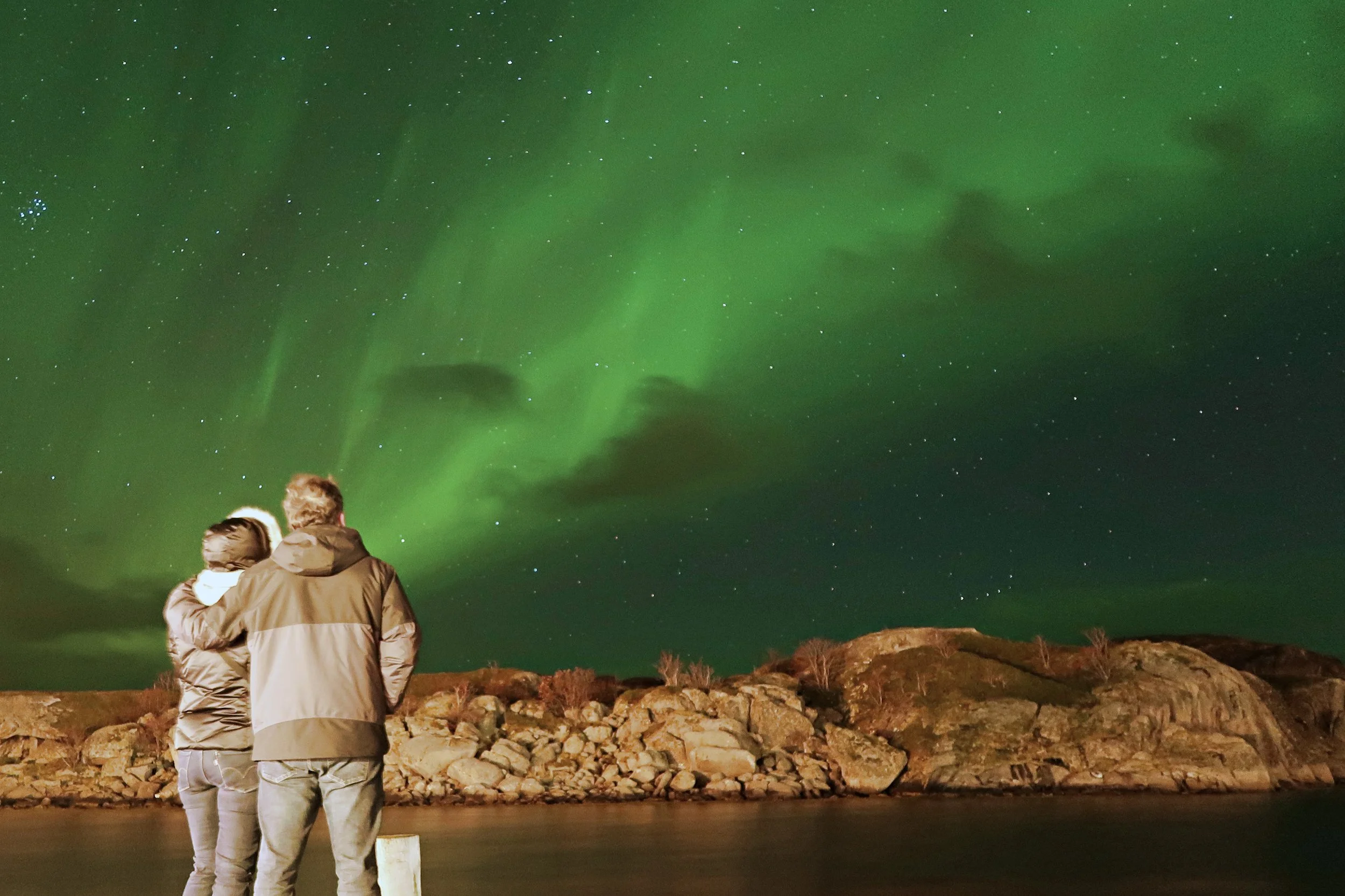
We got lucky!
The Faroe Islands sit at roughly 62°N — south of the auroral oval, the band around the magnetic pole where aurora activity is most concentrated (more on that in our article: What are the northern lights). Lofoten, at 68°N, sits inside the oval, which is why even a KP index of 2 to 3 produces visible aurora there on a clear night. In the Faroes, you need a KP of 3 to 4 as a practical minimum, and KP 5 or above for a display that fills the sky rather than appearing as a glow on the northern horizon. That's a meaningful difference, and it limits the odds.
It also means the timing logic shifts. In Lofoten, you're waiting primarily for the clouds to clear. In the Faroes, you're waiting for both — a cloud break and a strong enough geomagnetic event. That combination happens less predictably, which is why aurora sightings here feel earned in a way that make them even more special.
The silver lining: the Faroes are dramatically undercrowded compared to Iceland and Norway as an aurora destination. There is no tour bus convoy pulling into a field. No queue at the famous viewpoint. When the sky clears and the lights appear, it's you, the cliffs, and the ocean.
Note before you chase the northern lights: The Faroe are remote, wild, and full of surprises — which is exactly why we love them. But a sprained ankle while trying to run for an aurora selfie can get expensive fast. We always travel with Heymondo Travel Insurance, and you get 5% off (sometimes up to 15%) through our link.
When to see the northern lights in the Faroe Islands — month by month
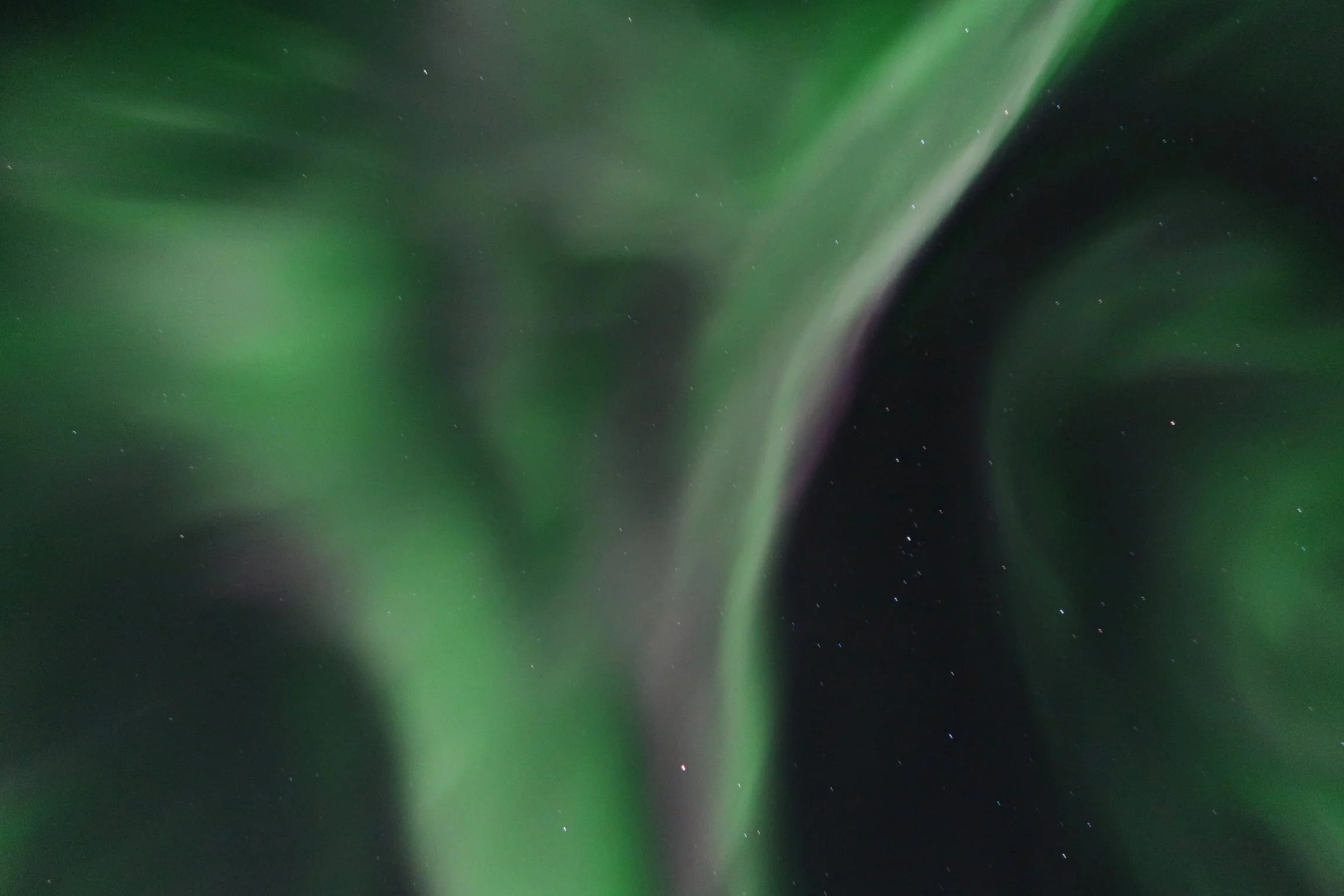
To see the aurora overhead at this latitude, you need a high KP
The aurora season runs from late August through mid-April, when nights are dark enough for the lights to be visible. Within that window, the Faroes have some specific timing advantages worth knowing.
September and October are among the best months, and not just because darkness returns after the summer. Aurora activity across the Northern Hemisphere tends to peak around the equinoxes — a well-documented (and tested by ourselves) geomagnetic pattern that means September and March regularly produce stronger displays than the months around them. Combined with weather that is often more settled than deep winter, September and October offer a strong combination of opportunity and conditions.
November through January brings the longest dark nights — by December, the Faroes get fewer than five hours of daylight — but the weather is at its most punishing. Atlantic storms arrive in sequence, overcast skies can persist for a week without a meaningful break, and wind-driven rain makes outdoor aurora hunting genuinely uncomfortable. The opportunities are real; the conditions make them hard to take.
February and March see the second equinoctial peak in geomagnetic activity, improving weather windows compared to midwinter, and enough darkness to work with. March is consistently strong across aurora destinations at this latitude and the Faroes follow the same pattern. If you have flexibility, March is a good month. Early April is still possible but the night is getting shorter by the minute.
Book at least seven nights (you won’t regret it, even if you don’t see the lights). In the Faroes specifically, five nights is the minimum we'd suggest anywhere; here, given the cloud cover reality, a week gives you a meaningfully better chance of finding a gap that coincides with aurora activity. Read our guide: Best time to see the northern lights and Best time to visit the Faroe Islands for more information.
Best spots to see the northern lights in the Faroe Islands
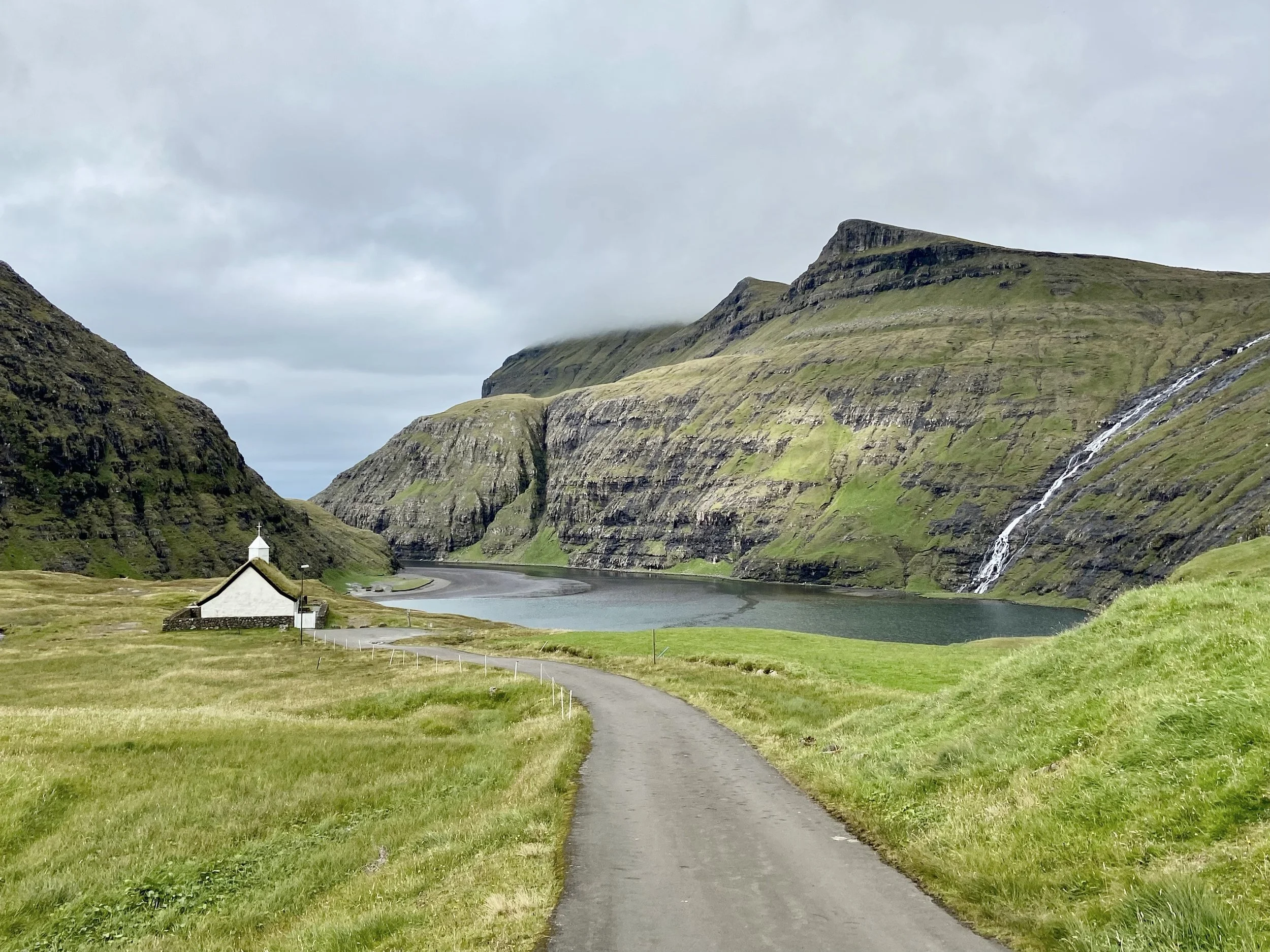
Saksun is a great spot if the northern lights show up… but also if they don’t!
The Faroes have very little light pollution outside Tórshavn — the capital's glow makes it difficult to see anything from within the city, but driving twenty minutes in almost any direction puts you in genuine darkness. The practical goal is to find a north-facing location away from hills that block the horizon, with water in the foreground if you're shooting.
🌊 Gásadalur, Vágar
One of the most remote and dramatic villages in the Faroes, Gásadalur sits above the famous Múlafossur waterfall on the western edge of Vágar island. The horizon here is open ocean to the northwest, the village itself has minimal light, and the combination of waterfall, cliffs, and sea creates foreground that would be absurd in any other context. Aurora reflecting off the water below a cascading fall is the image. Getting here requires driving the tunnel from the airport side — plan the route before it's dark. You’ll find more information about this idyllic village in our guide to the Faroe Islands.
🏝️ Vágar island generally
Away from the airport area, Vágar's western and northern coasts are among the darkest places in the Faroes. The Sørvágsvatn area offers the combination of lake reflections and open sky that makes for strong photography. Scout the location in daylight, and use a flashlight at night — the paths along the lake are uneven and the cliffs are not fenced.
🏔️ Saksun, Streymoy
A tidal lagoon village at the end of a long valley on the northern coast of Streymoy, Saksun is one of the darkest accessible locations on the main island. The lagoon provides reflective water and the mountains frame — but don't fully block — the northern sky. The drive in is narrow; go slowly and you'll arrive at one of the most photogenic dark-sky locations in the archipelago. We included it in our guide: Hiking in the Faroe Islands.
🏘️ Gjógv, Eysturoy
A small village on the northern coast of Eysturoy built around a natural sea gorge. Dark, north-facing, and dramatically situated above the ocean. The gorge makes for strong foreground interest and the absence of crowds means you're not negotiating with other tripods. The village is roughly 45 minutes from Tórshavn via the submarine tunnel.
🌿 Eiði, Eysturoy
The northern tip of Eysturoy has an open northern horizon and sits between two of the Faroes' most recognizable sea stacks, Enniberg and the Risin og Kellingin pair. The village has minimal light pollution and the flat land to the north gives clear sightlines toward the aurora zone.

Penguin Trampoline tip:
Download your offline maps before leaving accommodation. Mobile data across the Faroes is unreliable on rural roads at night (and not part of free EU roaming, so get a travel eSIM), and several of the best viewing spots involve unmarked tracks. Organic Maps or Maps.me with offline Faroe tiles downloaded in advance.
🦅 Faroe Wildlife & Sea Life
The waters around the Faroe Islands are far from empty — think puffins overhead, seabirds circling cliffs, and whales passing through the fjords.
If you want to follow their journeys long after you’ve left, check out our partner Fahlo — their Wildlife Bracelets support marine research and let you track real wahles, dolphins, seals and sea turtles around the North Atlantic.
💙🐋 Our readers get 20% off through this link: Track a real whale with Fahlo
How to forecast a northern lights night in the Faroe Islands
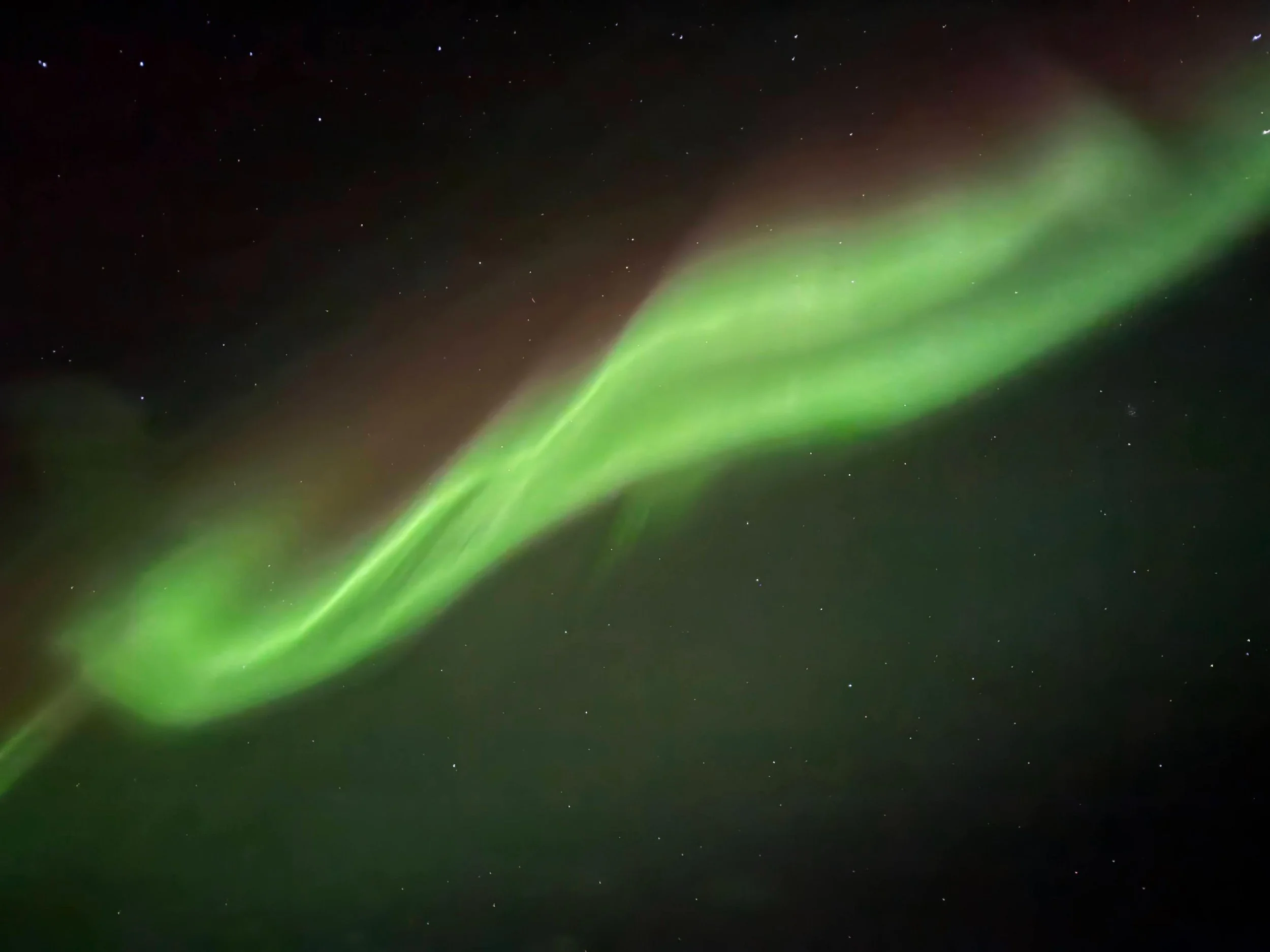
The sky cleared up for a very short window
Aurora forecasting in the Faroes requires tracking the same two variables as anywhere else — geomagnetic activity and cloud cover — but the bar on the geomagnetic side is higher than you'll find in guides written for Iceland or northern Norway.
For KP index: At Faroe latitudes, KP 3 is roughly the minimum for aurora to be visible on the northern horizon under ideal conditions; KP 4 to 5 is where displays become reliable and overhead activity becomes possible. NOAA's Space Weather Prediction Center (spaceweather.noaa.gov) provides 3-day aurora forecasts. SpaceWeatherLive and MyAuroraForecast app both give real-time KP readings and short-range forecasts with clarity that works for non-scientists.
For cloud cover: yr.no covers the Faroe Islands and is substantially more accurate for local conditions than international weather apps. This is the same service used across Norway and the North Atlantic and it's the one to bookmark. Check individual village forecasts rather than a general Faroe Islands forecast — conditions vary significantly between the eastern and western islands, and a front that's sitting over Tórshavn may have cleared on Vágar.
The cloud mobility strategy: When the overall forecast looks bad, check neighboring areas. The Faroes are small enough that a 30-minute drive can sometimes exit a cloud system. Check forecasts for Vágar, Eysturoy, and Suðuroy separately — if one island shows a clearing window and KP is elevated, that drive is worth it.
Best viewing hours: Aurora activity peaks around magnetic midnight, roughly 21:30 to 01:30 local time in the Faroes, though significant displays can occur any time after full darkness.
You’ll find more tips in our general guide: Northern Lights for Dummies and everything you need to know on our Northern Lights Hub.
Guided northern lights tours in the Faroe Islands
The guided tour market in the Faroes is smaller than in Lofoten or Iceland, but tours do exist — and local knowledge of which island or which valley tends to clear first on a given night has genuine value here, more so than in destinations where the viewing spots are well-established and the logistics are straightforward.
Look for small-group tours with a chase approach — guides who drive toward clearing skies rather than committing to a fixed location. Given the Faroes' compact geography (you can drive across the connected islands in under two hours), a mobile approach is far more effective than waiting at a single viewpoint.
GetYourGuide and Viator both list Faroe Islands aurora tours (in season) with verified recent reviews. Checking availability in advance is worth doing — the tour market here is limited enough that popular dates fill quickly during active aurora seasons.
Of course, you can chase the northern lights on your own with a rental car.
Photography — aurora in the Faroe Islands
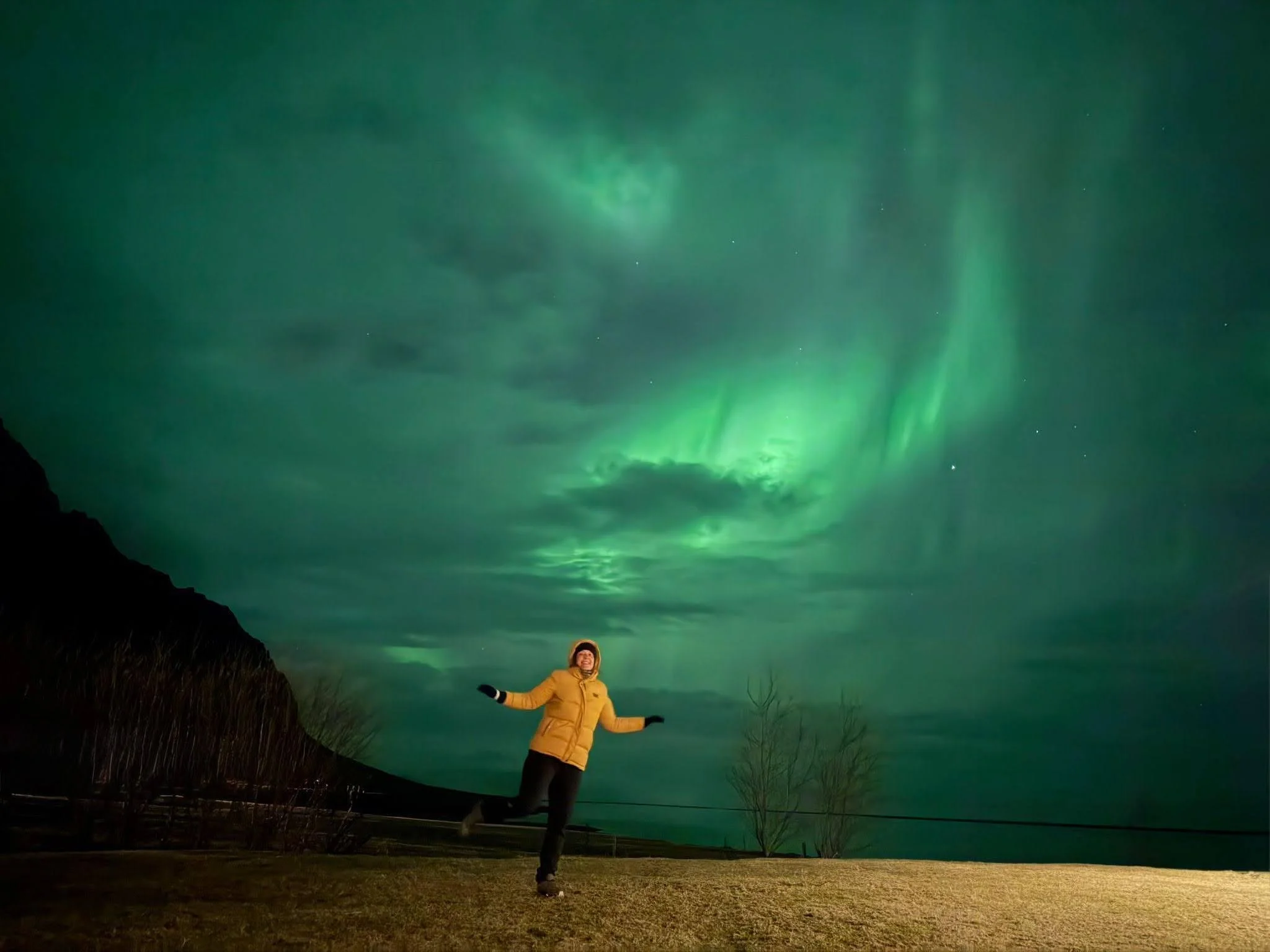
The hardest thing is to stay still for photos when it’s freezing — well done Eli!
The Faroes offer aurora photography foreground that's very different from any other destination on the northern lights circuit. The combination of sea cliffs, gorges, waterfalls, and grass-roofed houses means you're composing against subjects that most aurora photographers haven't used. That novelty (and the extra challenge) is part of the appeal.
Our full northern lights photography guide covers settings, gear, and technique for beginners. The Faroe-specific notes:
Settings starting point: aperture as wide as your lens allows (f/1.4–f/2.8), ISO 1600–3200, shutter speed 5–15 seconds. In the Faroes, you may be shooting at the lower end of geomagnetic activity — faint aurora requires longer exposures and higher ISO than the dramatic curtain displays you see in photos from Lofoten or Iceland. Be patient with your exposures.
Wind and exposure: The Faroe Islands are exceptionally windy (to the point of crawling sometimes), and a long exposure on a windy night will blur any foreground vegetation. Bring a heavy tripod or sandbags, set the timer delay to avoid shutter shake, and check that your tripod legs aren't moving between shots.
The waterfall and gorge opportunities: Gásadalur's Múlafossur and Gjógv's sea gorge are the most distinctive foreground subjects on the islands. Both require scouting in daylight — the paths are uneven and the drop-offs are serious. Know where you're standing before it's dark and the aurora is happening.
Battery drain: Faroe winters are cold and wet. Keep spare batteries in an inner pocket and keep the camera body dry. A waterproof camera bag or cover is worth packing even if it seems excessive.
Where to stay in the Faroe Islands for the best northern lights views
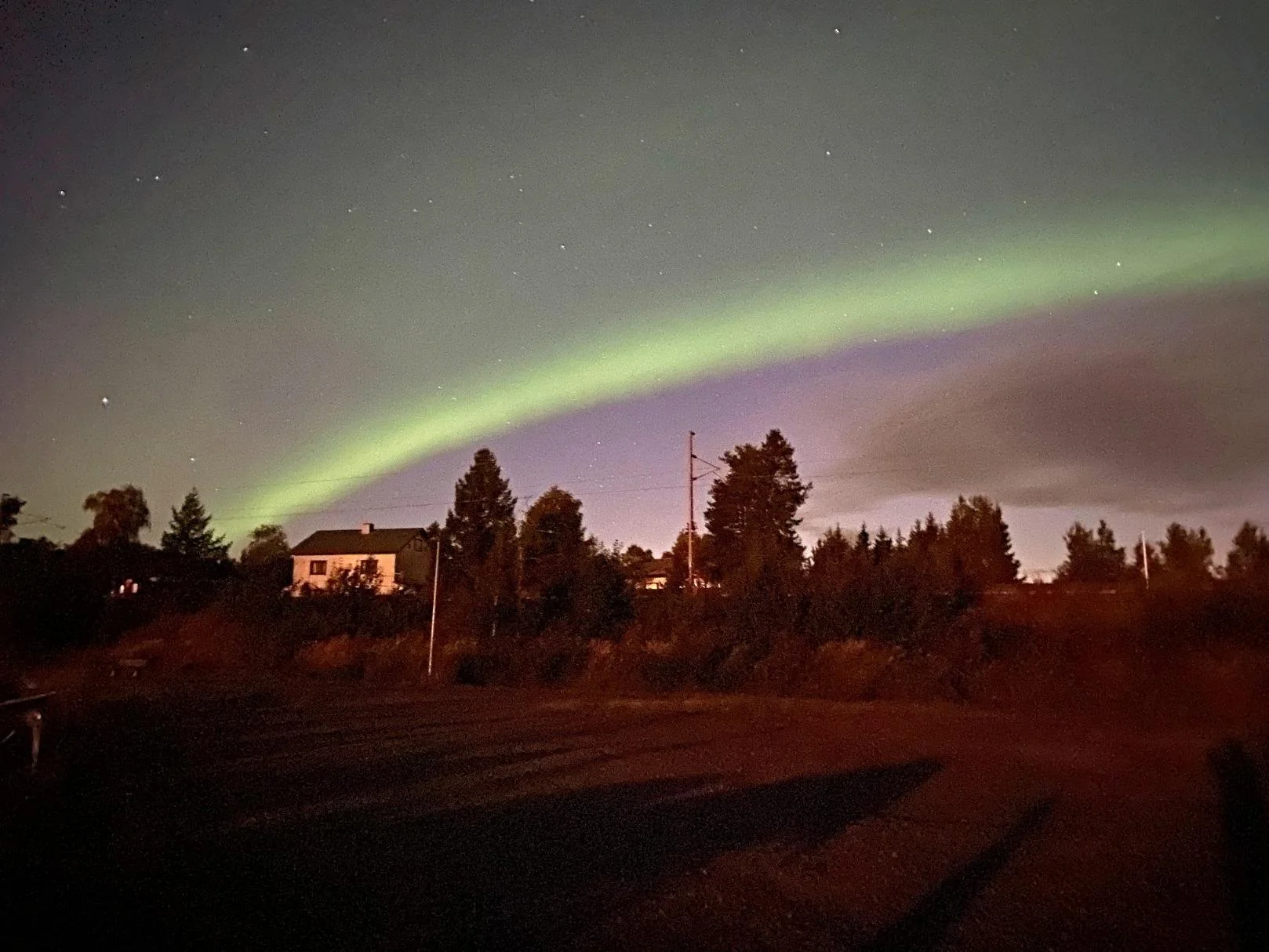
Stepped right out of our accommodation to see this!
The most important factor in accommodation choice for aurora viewing in the Faroes is the same as everywhere: how dark is the sky outside your window, and how far are you from the nearest village light? Tórshavn is convenient but too bright for viewing from your room. Properties on Vágar and Eysturoy — particularly in the small villages we mentioned as aurora spots — put you in the right conditions and cut the drive between your bed and the sky.
🌊 Múlafossur Cottages, Gásadalur
Six turf-roofed cottages built between 2020 and 2023 in what is arguably the most dramatic village setting in the Faroes — directly above Múlafossur waterfall on the western edge of Vágar. The owner Jákup Suni specifically highlights winter as a season when guests have the chance to see the northern lights; the combination of the waterfall, sea cliffs, and open Atlantic horizon below the aurora is an image most photographers have only dreamed about. Gásadalur is confirmed by Visit Faroe Islands as one of the top aurora locations in the archipelago, and the village has essentially zero light pollution. Book well ahead — there are only six cottages and they fill quickly in the aurora season.
🏡 Gásadalur Apartments, Gásadalur
Two-bedroom self-catering apartments in the same village, with balconies overlooking the waterfall. Same dark sky, same aurora conditions as Múlafossur Cottages — the difference is self-catering flexibility and a slightly different vantage point. A good option if the cottages are full, and the balcony facing the ocean gives you the aurora-over-waterfall composition without leaving the property.
🏘️ Gjáargarður Guesthouse, Gjógv
The most celebrated guesthouse in the Faroes, set in Gjógv — a 400-year-old village on the northern coast of Eysturoy built around a natural sea gorge. Visit Faroe Islands lists Gjógv as one of the prime aurora viewing locations on the islands, and the guesthouse's large windows looking out across the valley and toward the gorge make it easy to watch conditions from inside. The on-site restaurant is exceptional (we love Arctic food!). The village has minimal light pollution, and the north-facing gorge gives you a dramatic foreground for photography.
Our full guide to places to stay in the Faroe Islands covers properties across all the islands including Tórshavn options for those who prefer a city base with driving access to dark-sky locations.
Zoom in on the map below to find a fisherman’s house or hotel with aurora views in the Faroe Islands:
FAQ: Northern lights in the Faroe Islands
Can you see the northern lights in the Faroe Islands?
Yes. The Faroe Islands sit at around 62°N — south of the auroral oval — which means you need stronger geomagnetic activity (roughly KP 3 to 4 as a minimum) than at higher-latitude destinations like Lofoten or northern Iceland. When conditions align, the lights are visible and the landscape they appear over is extraordinary. Cloud cover is the bigger practical obstacle on most nights.
What is the best time to see the northern lights in the Faroe Islands?
The aurora season runs from late August through mid-April. September, October, and March are the strongest months — geomagnetic activity tends to peak around the equinoxes, and the weather is often more manageable than the depths of winter. December and January offer the longest dark nights but the most persistent cloud cover and storms.
What time of year are the northern lights visible in the Faroe Islands?
From late August through mid-April, when the nights are dark enough. Outside that window, summer daylight prevents the sky from darkening sufficiently. The most active months for aurora sightings are September through October and February through March.
How many nights should I book to see the northern lights in the Faroe Islands?
Seven nights gives you a realistic chance. The Faroes combine challenging weather with latitude that requires stronger geomagnetic conditions than Norway or Iceland. Five nights is a minimum; a week significantly improves your odds of finding a night when both cloud cover and KP cooperate.
What KP index do you need to see the northern lights in the Faroe Islands?
KP 3 is roughly the minimum for aurora to appear on the northern horizon under ideal conditions. KP 4 to 5 produces more reliable and visible displays. At KP 6 and above, aurora can fill the sky directly overhead. This is a higher threshold than Lofoten (where KP 2 to 3 is often sufficient) because the Faroes sit south of the auroral oval.
Where are the best spots to see the northern lights in the Faroe Islands?
Away from Tórshavn's light pollution on north-facing coastlines and remote villages. Gásadalur on Vágar (above Múlafossur waterfall), Saksun on Streymoy, Gjógv on Eysturoy, and the northern coast of Eiði are the strongest locations — dark, north-facing, with dramatic foreground for photography.
We have a special playlist to call the northern lights. Give it a try!
The northern lights in the Faroe Islands are not guaranteed. More than most aurora destinations, they require conditions that don't cooperate on demand — a strong enough geomagnetic event, a clearing in cloud cover that arrives and holds, and enough darkness. And we won’t sugarcoat it: that combination is rarer here than in Lofoten or Iceland.
What the Faroes offer instead is an aurora experience that is entirely unmediated. No infrastructure built around the lights, no designated viewpoints with tour bus parking, no crowds yelling while you’re trying to enjoy the magic (we’ve been there). When the sky clears and the KP rises and the lights come out over the Atlantic horizon, you are standing in one of the most remote and beautiful landscapes in Europe, and there's no one else there.
For everything else the islands offer across all seasons, read our general guide to the Faroe Islands. And if your mind is set on seeing the aurora, our northern lights hub covers the full picture of where and how to chase the aurora across Europe — including our best places to see the northern lights in Europe guide if you're weighing the Faroes against other destinations.
Finally, explore all our Faroe Islands Travel Guides here.
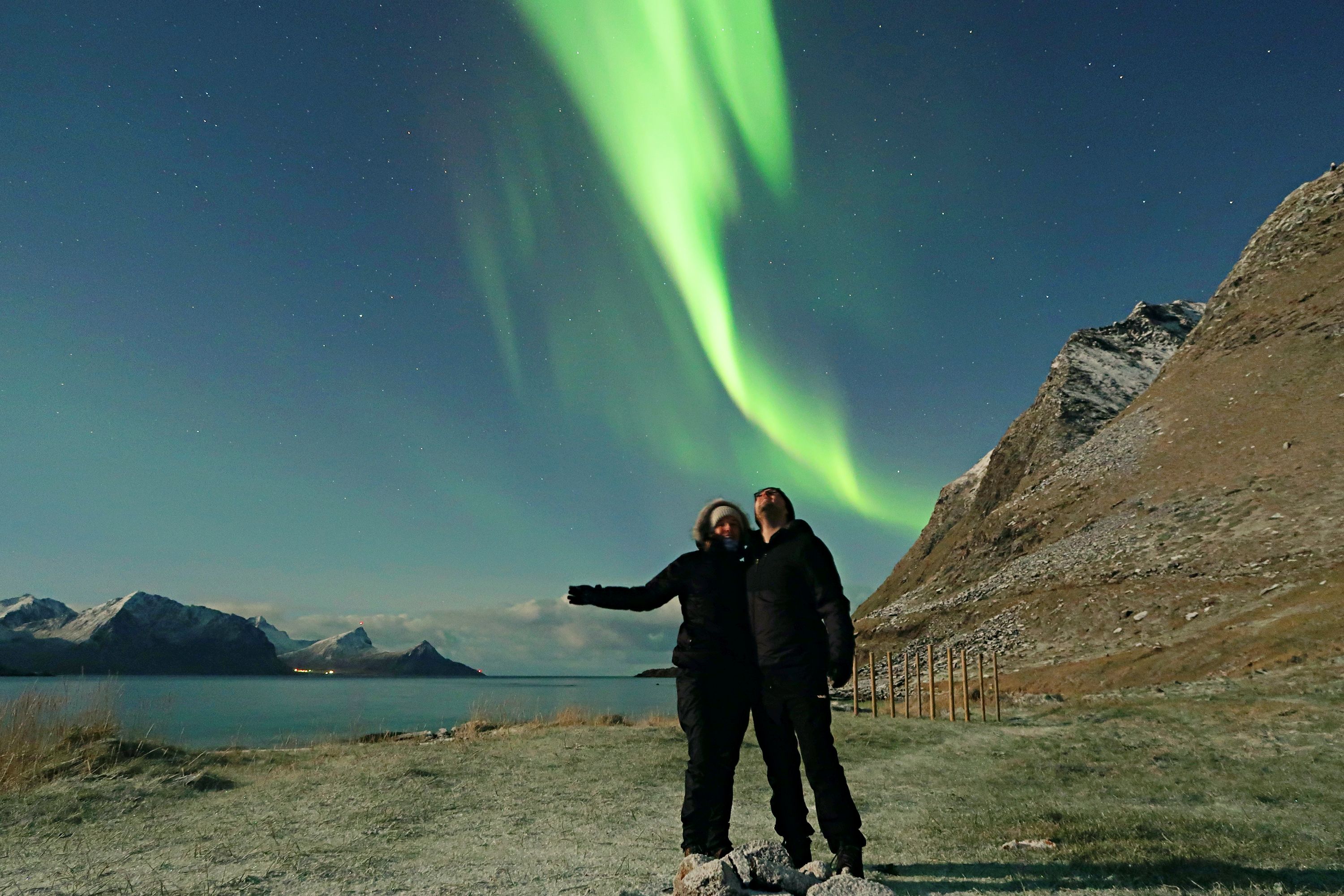
Planning a Northern Lights Trip? ✨
Get a free aurora checklist straight to your inbox.
No spam. Just northern lights strategy (and occasional penguin energy).
Thank you, little penguin! 🐧
Check your inbox — our best Northern Lights tips are on the way.
