
Best Time to Visit the Faroe Islands (Month-by-Month guide)
Fog, wind, and magic — here’s our guide to when to visit the Faroe Islands depending on what you can handle (and want to do). Same islands. Totally different moods. Choose wisely.
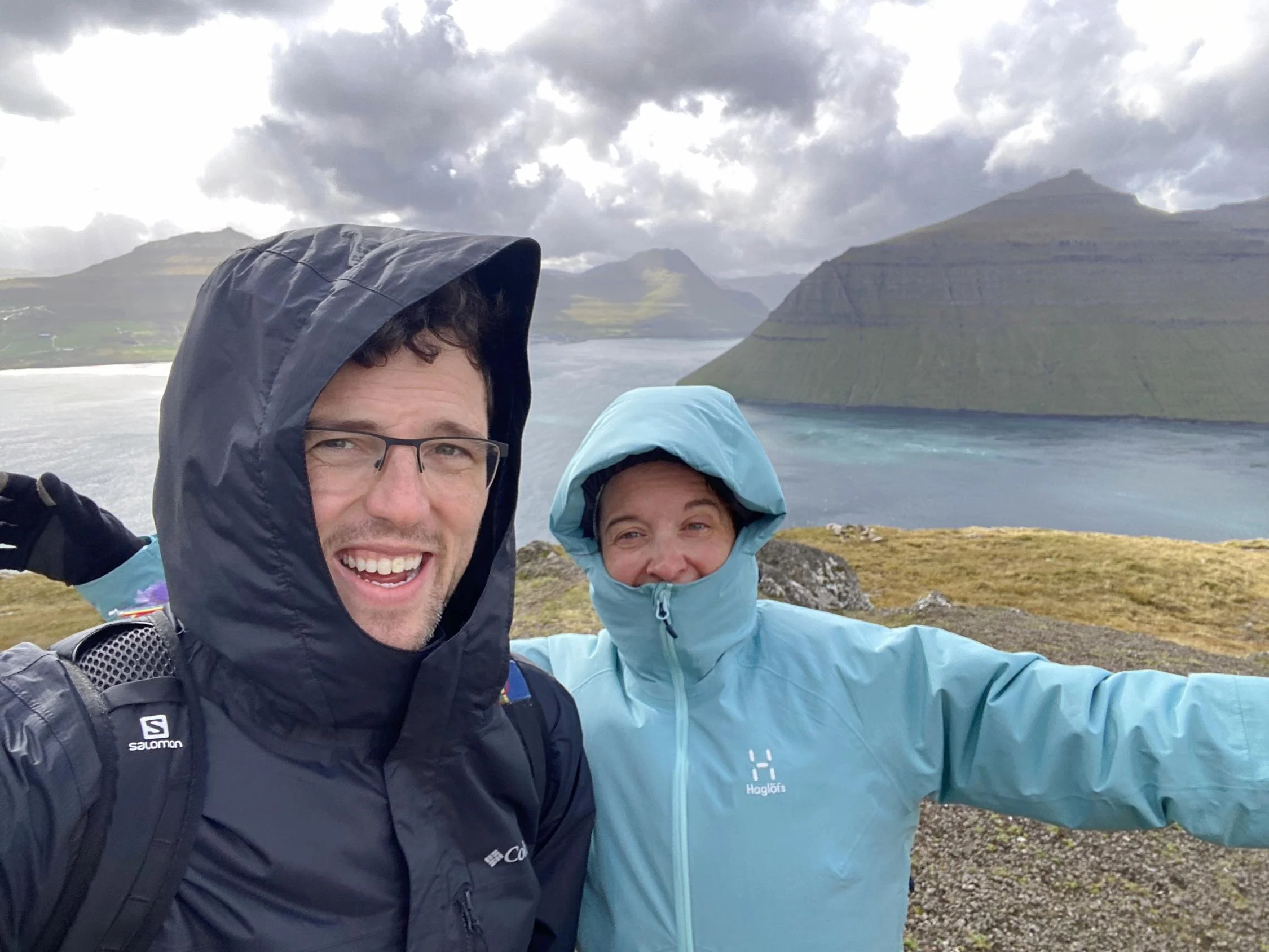
The wind was so strong that day (early September), we had to modify our hiking plans twice!
Last update: August 2026
Best time to visit the Faroe Islands according to us at Penguin Trampoline? The short answer is: they don’t have a “wrong” season. They have consequences (evil laugh).
Pick the wrong moment for you, and you’ll fight wind, crowds, or closed routes. Pick the right one, and the islands open up — quietly, dramatically, on their own terms.
We went late August to early September — for our wedding elopement before our official wedding in Spain — and it turned out to be the sweet spot. But that doesn’t mean it’s the best time for everyone.
This guide is structured the way people actually search—and plan: by season first, with month-level truth where it matters.
Spoiler alert: Weather is fickle year-round. Don’t expect guaranteed sun just because it’s summer!
🛌 Where to stay:
• Hotel Brandan, Tórshavn — we stayed here. Only Green Key certified hotel on the islands, great staff, central.
• Múlafossur Cottages, Gásadalur — turf-roofed, right by the waterfall that drops into the ocean.
• Gjáargarður Guesthouse, Gjögv — turf-roofed village guesthouse, trailheads at the door.
🇫🇴 Top experiences:
• Boat trip to Mykines (puffin island) — the express crossing to the Faroes' most iconic island.
• Sea kayaking at Vestmanna — paddle into the bird cliffs and sea caves.
• Private highlights tour — lakes, waterfalls, and villages with a local guide.
🚗 A car is essential in the Faroes. Book yours here — islands are connected by tunnel and bridge, but buses are very limited.
When is the best time to visit the Faroe Islands: the quick answer (for planners in a hurry)
Based on our experience at Penguin Trampoline, the best time to visit the Faroe Islands is between May and September, when days are long, weather is more stable (by Faroese standards), and it’s possible to explore the islands without constant disruption. That’s when we’d recommend going if your goal is hiking, seeing the cliffs and waterfalls, and moving around without too many limitations. But even in summer, conditions change fast— fog, wind, and rain are part of the experience.
What makes the Faroes different is that timing isn’t just about weather — it’s about how much you’re willing to deal with unpredictability. Summer gives you the highest chances of access and visibility, while shoulder seasons feel wilder and quieter but come with more restrictions. There’s no perfect time, just trade-offs depending on how much uncertainty you’re willing to embrace.
Best overall balance: late August to early September
Best weather & full access: June to August
Fewer crowds, good value: May and September
Raw, dramatic, limited access: October to March
If you want the nuance, keep reading.
This video was filmed in late August-early September
Summer in the Faroe Islands (June–August)
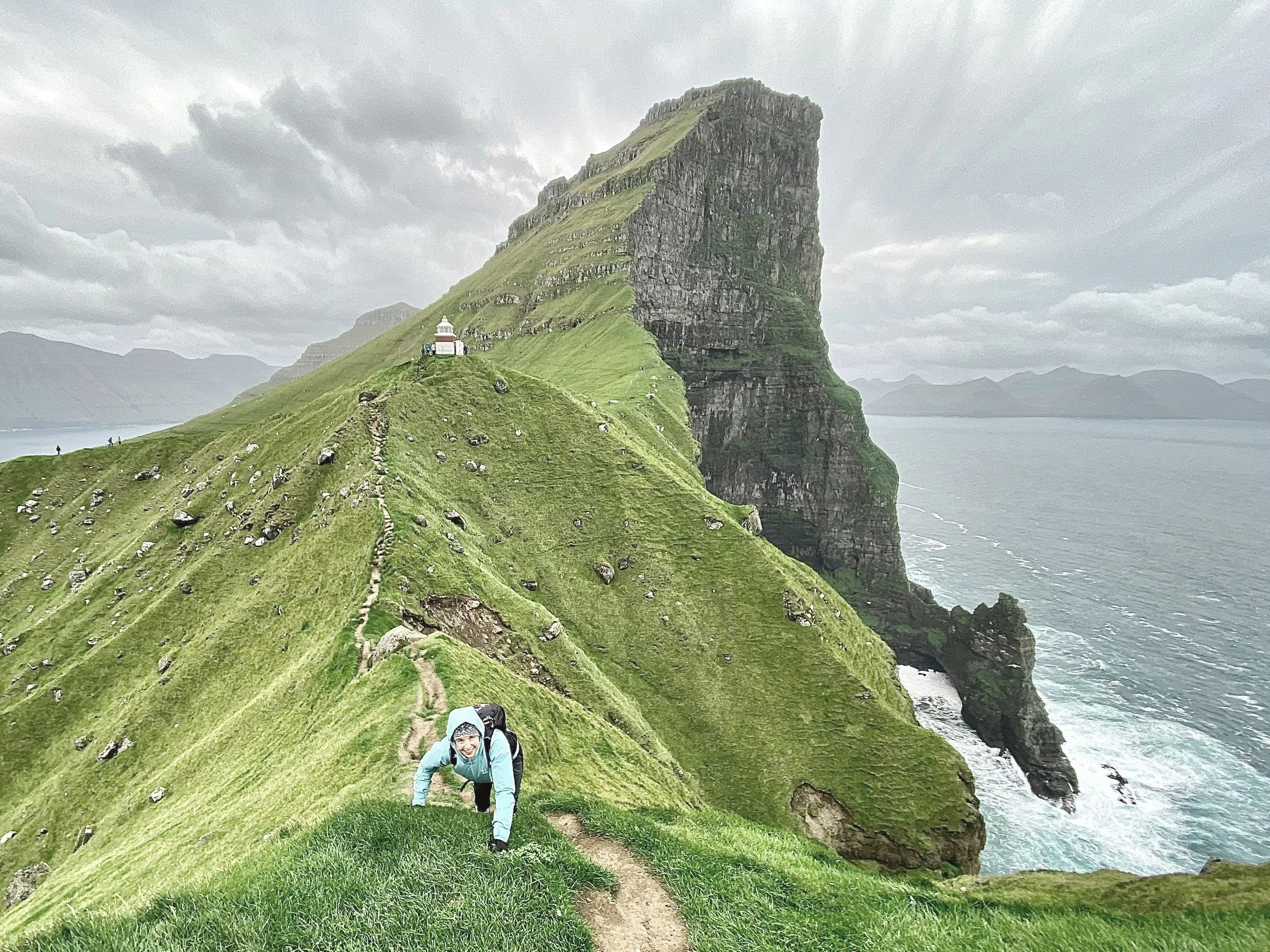
The wind is no joke, even in summer! Here in stunning Kalsøy
Best for access, hiking, and long days — also the busiest
Summer is when everything works. Roads are open, ferries run smoothly, hiking routes are accessible, and daylight feels almost endless. It’s also when the Faroe Islands stop being a secret. If you want to hit the trails, read our guide:hiking in the Faroe Islands.
Average temperatures range from 10–13°C (50–55°F). It rarely gets hot, but the long daylight and calmer conditions make it feel milder than the numbers suggest. We had days (ok, one day in late August) where we hiked in a t-shirt for a while!
Summer is also whale season, even though they are present year-round in Faroe waters. Sightings peak from late spring to early autumn, roughly May to September. During summer, species like pilot whales, minke whales, and occasionally humpbacks pass through the surrounding seas, making boat trips and even shore-based sightings more likely. There’s no guaranteed “whale month” here—conditions, luck, and timing matter more than calendars—but June to August offers the best balance of calmer seas and longer days. Outside summer, sightings still happen, but weather and visibility make them far less predictable.
June: long days, rising popularity
June brings extraordinary light and fully open infrastructure. You get the benefits of summer without the absolute peak crowds.
Long daylight hours
Great hiking conditions
Still possible to find quiet moments
If you want the classic Faroe experience with a bit of breathing room, June is a strong choice.
Best for: first-time visitors who want everything open
Watch out for: prices starting to climb
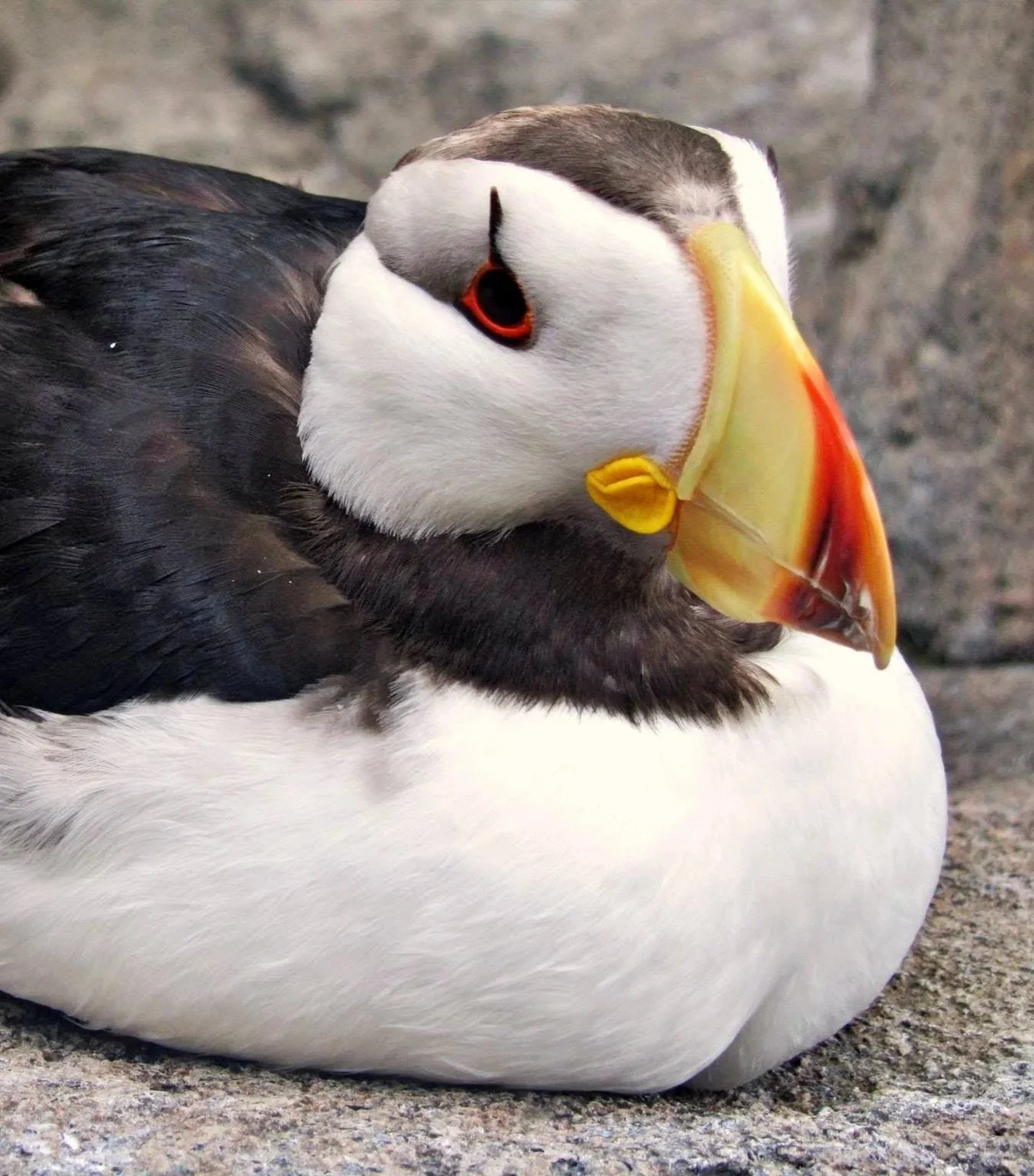
Someone said puffins?
Puffin season in the Faroe Islands runs roughly from late April to early August, with June and July being the most reliable months to see them. By mid to late August, most puffins start leaving the cliffs and heading back out to sea, so sightings become rare. If seeing puffins is a priority, plan for early summer—and be prepared for popular bird cliffs to be busy.
July: peak season (beautiful, busy, intense)
July is the busiest month of the year. There’s no polite way to say it.
Landscapes are at their greenest
Festivals and events add energy
Every iconic viewpoint is popular
You’ll need patience at peak hours, especially around famous spots and small villages. Early mornings and late evenings become your best friends.
Best for: summer-only travelers, festivals
Not ideal if: solitude is your priority
August: still summer, slightly calmer
August begins to ease. Early August still feels like July; late August is where things soften.
Hiking conditions remain excellent
Light is still generous
Crowds slowly thin
This is when summer starts letting go — without actually leaving.
Best for: hikers, road trips, photographers
Follow a whale, sea turtle, shark, or dolphin. Fahlo’s ocean-themed bracelets fund marine conservation and give you live tracking access with names, locations, and movement updates.
👉 Get 20% off Sea Life Bracelets
Shoulder season in the Faroe Islands (May & September)
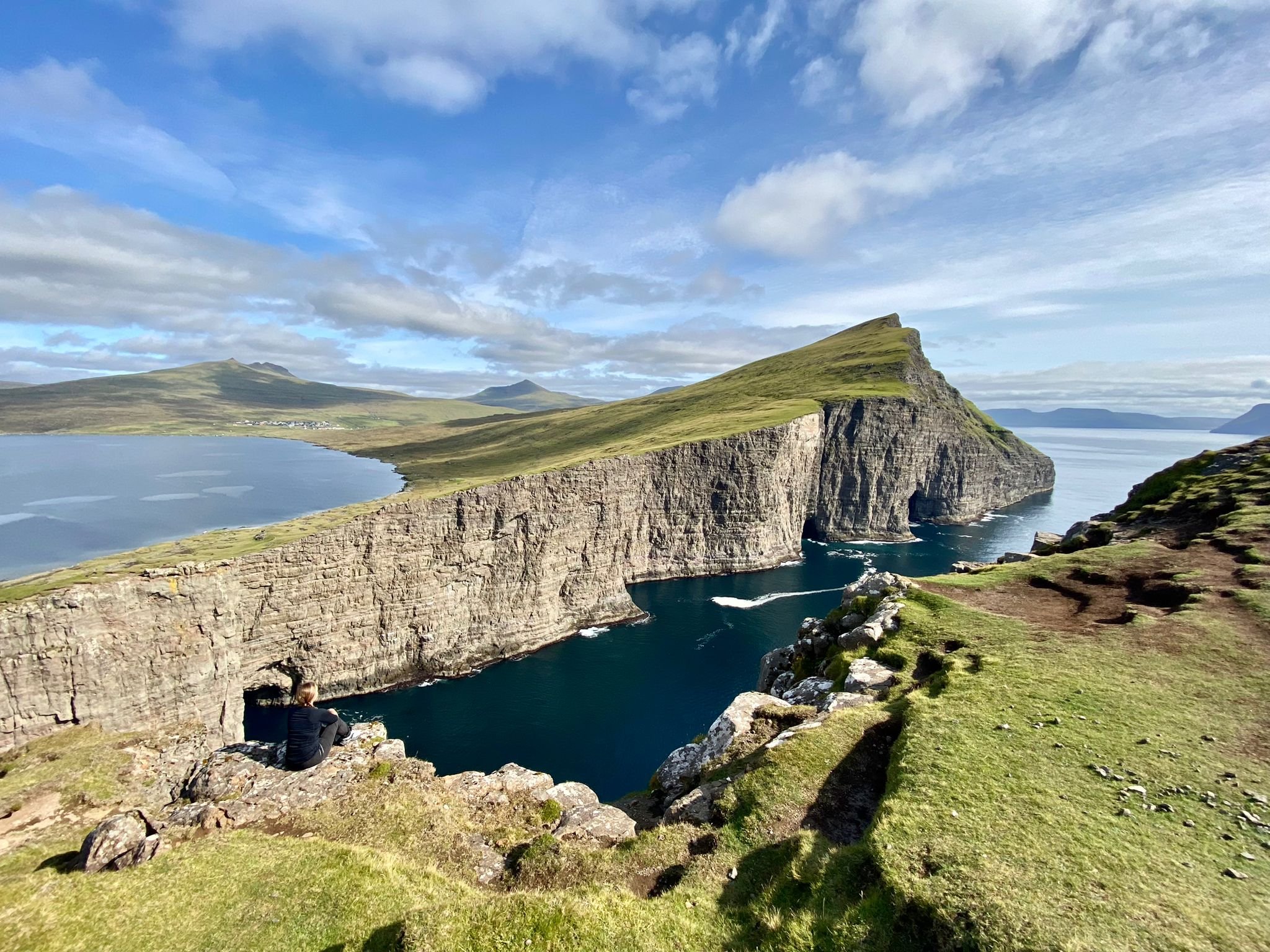
We got stunning and warm weather for our September hike to Trælanípa
Fewer people, more atmosphere, better balance
If there’s a secret sweet spot, it lives here.
Expect 7–11°C (45–52°F). May feels fresh and crisp; September cooler and windier, with faster weather changes.
May: underrated and quietly excellent
May is when the islands wake up, but before the crowds arrive.
Longer days
Greener landscapes by the week
Fewer visitors, lower prices
It’s not full summer yet, but it feels honest and calm.
Best for: slow travel, photography, people allergic to crowds (guilty…)
Late August to early September: our sweet spot
This is when we went—and we’d do it again without hesitation.
What we loved:
Fewer tour buses
Quieter roads and viewpoints
Landscapes still green
Moody light and fast-changing skies
Cheaper accommodation
Weather is never stable here, but in this window, the pace changes. The islands feel calmer and more real.
Best for: travelers who value atmosphere over perfection
September: autumn edges in
Early September is still very workable. As the month goes on, days shorten and winds pick up.
Dramatic skies
Noticeably fewer visitors
Hiking still possible
It’s introspective, quieter, and very Faroe in spirit.
Best for: moody landscapes, flexible itineraries
Be ready to: adapt plans day by day — we had to have B and C plans for a couple of hikes due to strong winds

Penguin tip:
If the wind picks up on your hike, and you’re on a ridge, start crawling instead of walking, and hold on to rocks or whatever you can find. I (Eli) used a backpack for added weight.
Winter in the Faroe Islands (October–March)
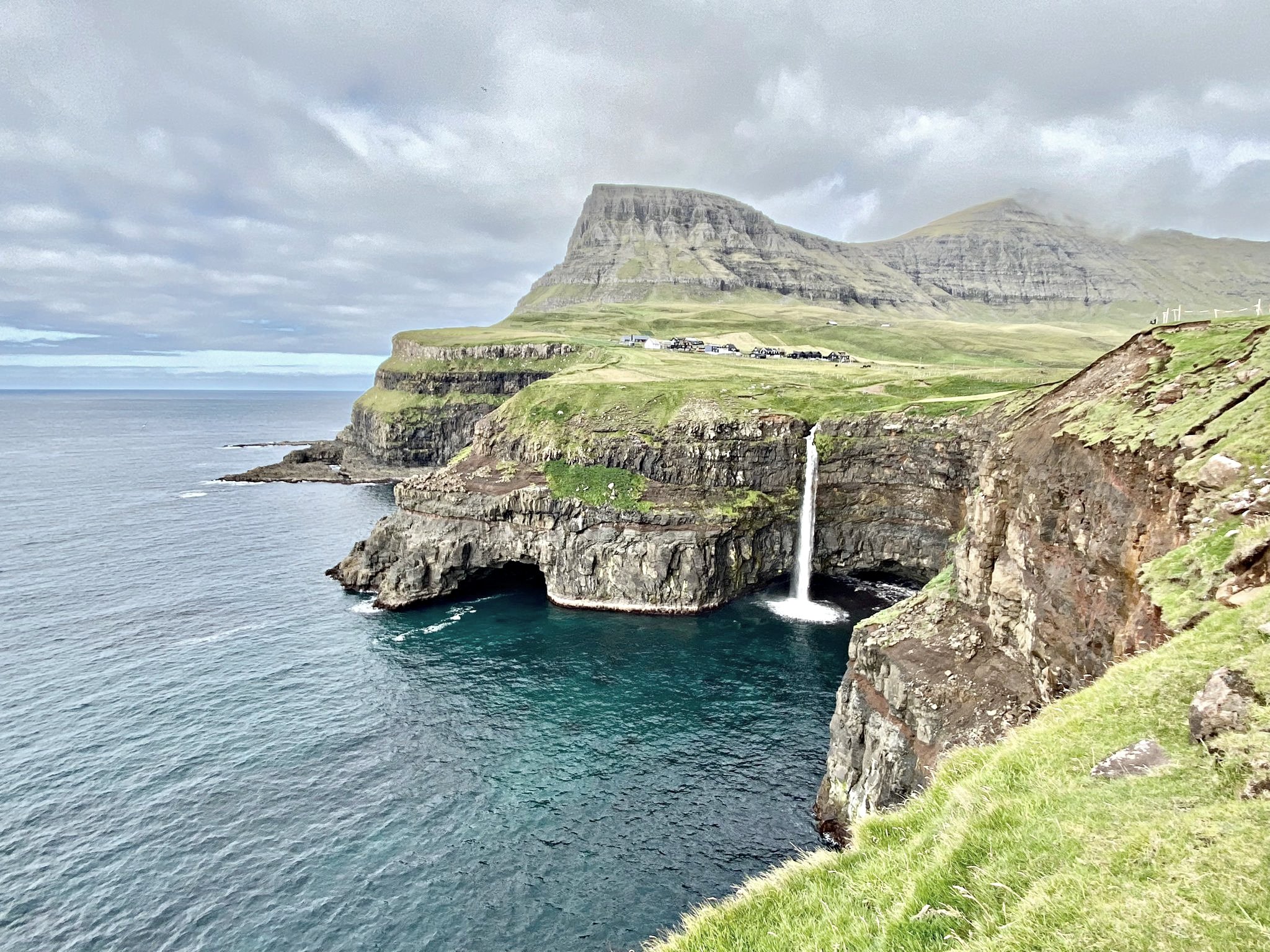
Múlafossur doesn't require hiking, so it's accessible year-round. And we've seen pictures: it's stunning when surrounded by snow!
Wild, dramatic, and not for checklist travel
Winter is not about seeing everything. It’s about feeling the place. We actually want to come back in winter — everything is so cozy inside, it’s the perfect “hygge” contrast with the moody weather!
Temperatures usually sit between 2–7°C (35–45°F). Cold is rarely extreme, but wind and humidity make it feel harsher than mainland Europe.
And if solar activity is intense enough, you might catch a glimpse of the northern lights. Read our guide to the northern lights in the Faroe Islands.
October: raw and beautiful, with limits
Storms roll in. Light fades. Some hikes become unsafe.
You gain atmosphere and emptiness—but lose predictability.
Best for: photographers, writers, repeat visitors
November to February: short days, big moods
This is the quietest time of year.
Very limited daylight
Frequent storms
Fewer transport options
For most first-time visitors, this isn’t ideal. For a few, it’s unforgettable.
Best for: those who know exactly what they’re getting into
March: more light, still unpredictable
March brings longer days, but winter hasn’t fully loosened its grip.
Fewer tourists
Increasing daylight
Weather roulette
In winter especially, it’s wise to have a travel insurance (get 5-15% off with our partner Heymondo) as the Faroe Islands are not a member of the EU.
Where to stay in the Faroe Islands

We thoroughly enjoyed the tub and cold dips in the sea, in this fishermen’s cabin — would be awesome in winter too!
For first-time visitors, staying centrally makes everything easier. The capital area gives you access to multiple islands without constant relocations.
Tórshavn: best base for restaurants, ferries, and flexibility
Villages near Vágar or Eysturoy: quieter, closer to nature, great for road trips with a rental car
Klaksvík for easy access to the north and Kalsøy (check our Klaksvík accommodation guide)
Accommodation in the Faroe Islands fills fast in summer, especially July and August. Shoulder season offers better availability and prices—another reason it shines.
You’ll find more options in our guide: Best places to stay in the Faroe Islands.
And for a deeper breakdown of bases, routes, and what surprised us on the ground, see our full Faroe Islands travel guide.
Zoom in on the map below to find a hotel or cosy fishermen's cabin:
So… when is the best time to visit the Faroe Islands?
The honest answer depends on how you travel:
Want everything open → June or early August
Want fewer crowds, still green → late August to early September
Want quiet and value → May or September
Want raw and wild → winter, if you’re prepared
If you loved Iceland but felt it had become too busy, shoulder season in the Faroe Islands is where the magic still lives.
Finally, no matter the season, the Faroe Islands reward flexibility.
You don’t fight the weather here. You follow it. You change plans. You stop when the light shifts. We actually had the same experience in the Lofoten Islands.
That’s not a downside. That’s the point.
Note on travel eSIM: The Faroe Islands are outside EU free roaming. Like Greenland, the Faroes are a self-governing territory of Denmark but have never been part of the EU, and the Roam Like at Home regulation doesn't apply here. EU travelers should expect standard international roaming rates, which over a week-long trip — especially one built around chasing the northern lights and driving between islands in the dark — add up to a cost that a travel eSIM avoids entirely.
FAQ – Best time to visit the Faroe Islands
When is the best time to visit the Faroe Islands?
Late August to early September offers the best balance of accessibility, fewer crowds, and atmospheric light, while landscapes remain green.
Is summer the best time to go to the Faroe Islands?
Summer provides the best access and hiking conditions, but July is peak season with higher prices and more visitors. June and late August are often better-balanced options.
What is the warmest month in the Faroe Islands?
July and August are the warmest months, with average temperatures around 12–13°C (mid-50s°F).
Can you visit the Faroe Islands in winter?
Yes, but winter travel comes with short daylight, frequent storms, and limited hiking access. It’s better suited to experienced, flexible travelers than first-time visitors.
When is puffin season in the Faroe Islands?
Puffins are typically present from late April to early August, with the best chances of seeing them in June and July.
When is whale season in the Faroe Islands?
Whales can be seen year-round, but sightings are most common from May to September, especially during summer when sea conditions are calmer.
Can you see the Northern Lights in the Faroe Islands?
Yes, but sightings are occasional and unpredictable. Northern Lights are possible between October and March, during strong solar activity and clear skies, but cloud cover often limits visibility.
If the Faroe Islands are about to follow the Iceland–Lofoten curve — and all signs say they are — then timing matters more than ever. Going a little earlier, a little quieter, and a little off-peak might be the smartest travel decision you make.
Finally, explore all our Faroe Islands Travel Guides here.

Free download
Travel Cheaper Cheat Sheet
27 tips on flights, hotels, hidden costs and more — spend less without missing what actually matters.
No spam. Unsubscribe anytime.
