
Things to Do in Senja, Norway: The Complete Guide to Senja's Highlights
Beyond the hikes: scenic route stops, beaches, fishing, and wildlife on Norway's wildest island.

Look at the devil’s…. errrr… Okshornan from Tungeneset!
Senja, Norway, gets compared to Lofoten constantly, and the comparison holds right up until you notice how empty the roads are. Same jagged peaks, same fishing heritage, same beaches that shouldn't exist this far north, but far fewer people, far fewer signposts, far fewer villages, and long stretches where you won't pass another car. It's less “developed” as a destination, in the best way. Here are the best things to do in Senja beyond the hiking trails, whether you're not up for a strenuous summit or you just want to fill the days between hikes.
🛌 Where to stay:
• Mefjord Brygge, Mefjordvær — we stayed here. Fishing village atmosphere, timber houses, sauna, rental boats.
• Yttersia Base, Skaland — we stayed here. Husfjellet trailhead at the door.
• Senja Moments Tranøya — a private car-free island with zero light pollution and Viking burial mounds.
• Polar Panorama Lodge, Fjordgård — the best base for hiking Segla and Hesten.
🇳🇴 Top experiences:
• Guided kayak tour through the Bergsøyan archipelago — paddling out from Skaland into a scatter of small islands off Senja's north coast.
• Private guided mountain hike on Senja — a local guide (we know and can vouch for him) takes you up one of the island's dramatic peaks at your own pace.
• Northern lights tour on Senja — a guided aurora chase with hot drinks and snacks included.
• Guided ski touring on Senja — backcountry ski touring with a local guide across the island's peaks.
🚗 A car is essential on Senja. Book yours in Tromsø before you arrive — there's no public transport on the island.
Jump to: The scenic route · Hiking · Beaches · Fishing · Wildlife and boat trips · Villages worth stopping in · Museums and local history · Summer on Senja · Winter on Senja · Ånderdalen National Park · Shopping · Where to eat · Practical tips · FAQ
Things to do in Senja, Norway: Quick answer
If you only have a day or two, prioritize the Senja National Scenic Route between Botnhamn and Gryllefjord, stopping at Tungeneset and Bergsbotn, then finish at Ersfjordstranda beach. Add a boat trip if you can, whether that's sea fishing, a whale safari out of Mefjordvær in winter, or a kayak paddle from Hamn i Senja in summer. Hikers should see our Senja hiking guide for Segla, Hesten, and Husfjellet. Everyone needs a rental car, since Senja has no public transport connecting its villages and viewpoints.
Senja's National Scenic Route and its viewpoints
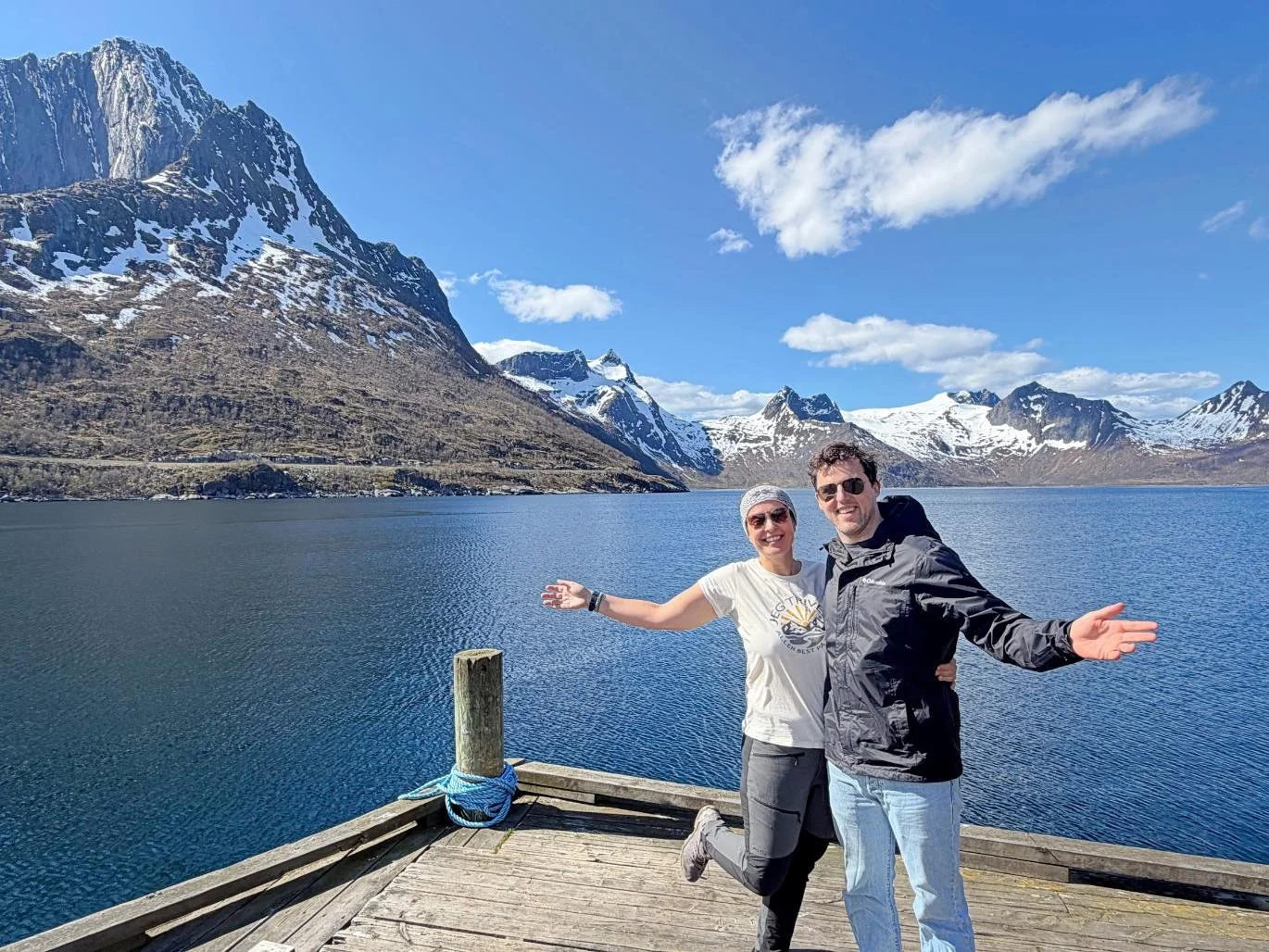
First stop on the scenic road: Mefjord!
Norway has eighteen official National Tourist Routes, and the stretch across Senja, between Botnhamn in the north and Gryllefjord in the south along Highway 862, is widely considered one of the most dramatic of them. It's narrow, it turns constantly, and it's lined with purpose-built viewpoints that are attractions in their own right, not just pull-offs. Unlike Lofoten's E10, which fills up with camper vans in summer, Senja's route stays quiet enough that you can actually stop at a viewpoint and have it to yourself. (Ok, in summer, wake up early).
Tungeneset
Tungeneset is probably the single most photographed spot on the island. A wooden walkway built from Siberian larch runs out between the Steinfjord and the Ersfjord, facing the Norwegian Sea on one side and the jagged Okshornan peaks on the other. Visitors often call Okshornan "the Devil's Jaw" or "Devil's Teeth," but our Norwegian friend Henrik warned us that local fishing communities don't use that name themselves, for understandable reasons if you think about what it means to work the water beneath a rock formation named after the devil. Please, use Okshornan.
Bergsbotn
Bergsbotn, above the village of Skaland, is a cantilevered viewing platform that extends out over Bergsfjorden. It's a little wobbly underfoot (fun!) but gives a full panorama of the fjord and surrounding peaks, and it doubles as a solid northern lights spot in winter thanks to its elevation and open view north.
Reindeer on the road
Keep an eye out for free-roaming reindeer near the road, especially in spring. They wander onto the tarmac without much warning, which is one more reason a scenic drive here deserves your full attention, or a guide who can watch the road while you watch the view.

Penguin tip:
If you'd rather look at the scenery than the road, our Senja day trip from Tromsø guide covers a small-group guided option that handles the driving for you.
Hiking on Senja
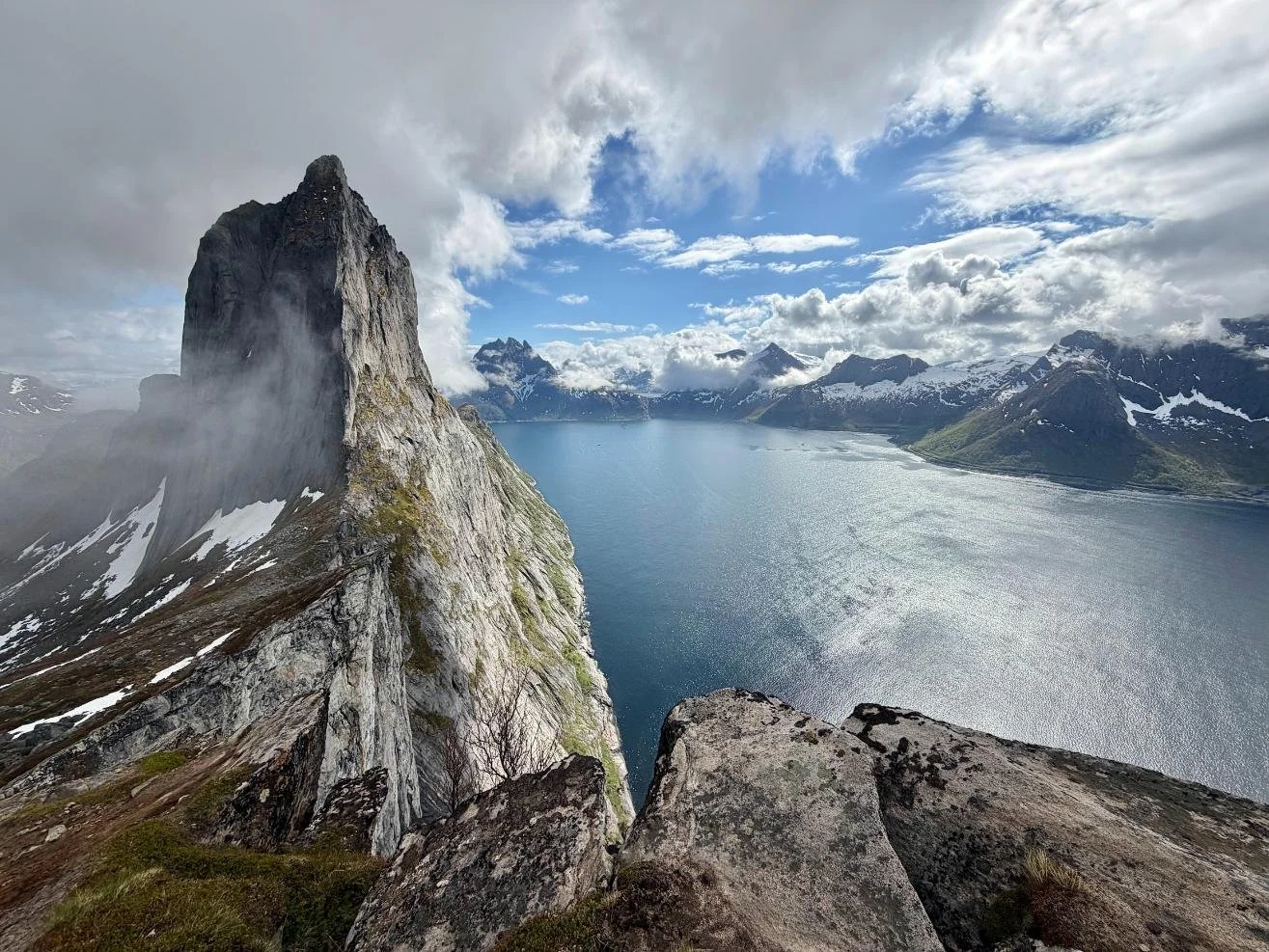
View of Segla from Hesten — what an epic hike!
As hikers, we’ll tell you that hiking is the main event on Senja, and everything else in this guide is what to do around it. Segla, Hesten, and Husfjellet draw people here from across Norway for a reason: steep, largely unmarked trails that end at some of the most dramatic viewpoints in the Arctic and crazy-looking peaks. We've written a full, separate guide to the island's best trails, including difficulty, timing, and what to expect from our own hikes there. See our Senja hiking guide for the full breakdown.
Beaches on Senja
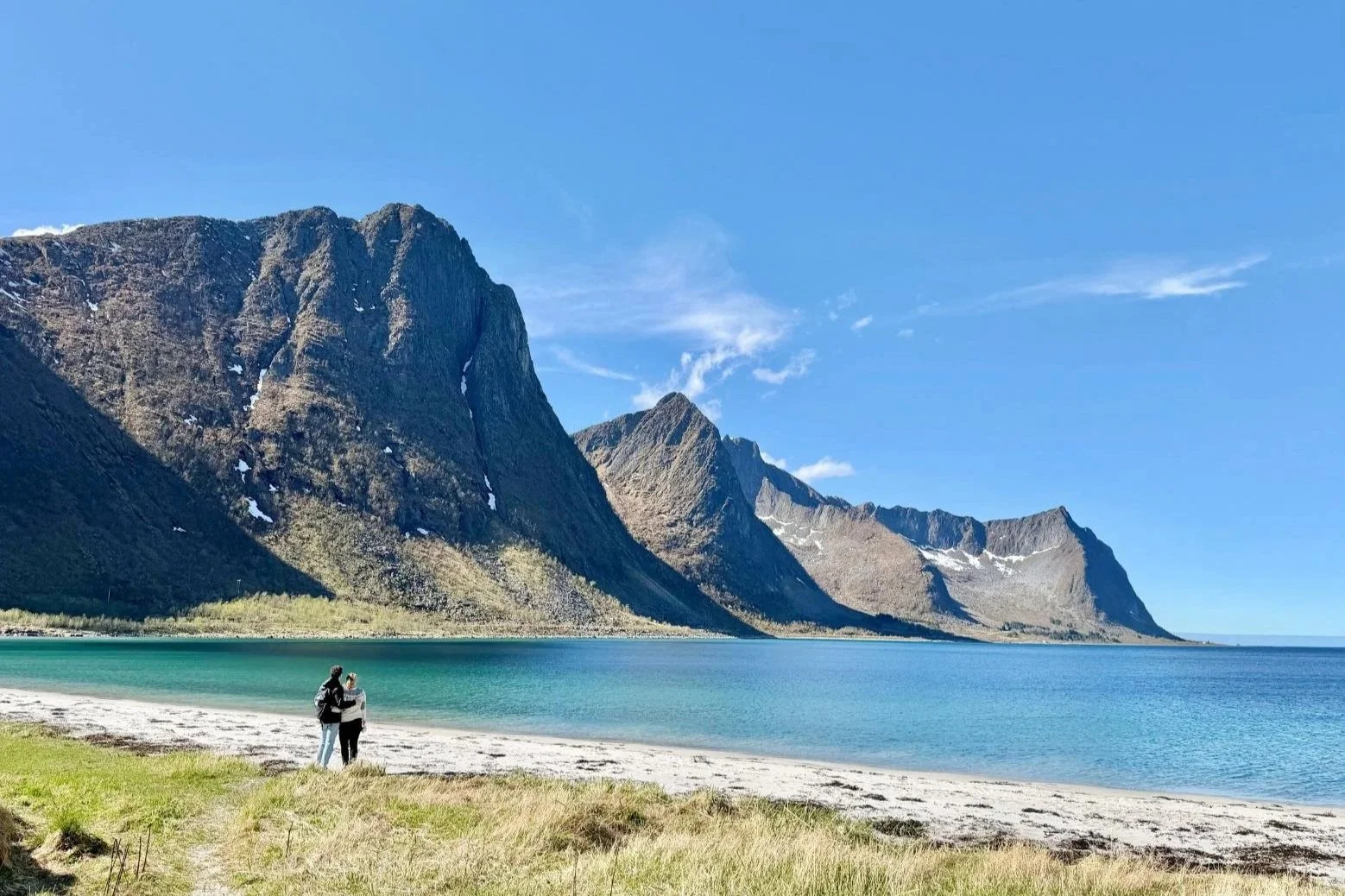
Mid-May, we had Ersfjordstranda all to ourselves
It sounds implausible this far north, but Senja's beaches compete with anywhere in Norway, Lofoten included, and you'll typically have more of the sand to yourself.
Ersfjordstranda
Ersfjordstranda is the one everyone photographs: fine white sand, water that goes turquoise in the sun (courtesy of the Gulf Stream, which keeps it more bearable than the latitude suggests, though still cold, don’t get us wrong), and mountains closing in on every side. It's also the most popular wild camping spot on Senja, with public restrooms, a shower for rinsing off sand and salt water, and a striking gold-clad restroom building, nicknamed the "Golden Toilet," that's become something of an attraction itself. In 2026, the whole place is under renovation though. Arrive early in summer if you want a parking spot, and it's a good spot for the northern lights outside the camping season, roughly September through April.
Quieter alternatives
Other beaches worth knowing about include the sands around Bøvær (oh what a dreamy place - read our guide to Yttersia Base and Skaland for more), Steinfjord, and Færøya (this last one is only accessible by sea).
Senja fishing: sea fishing charters and what you can catch
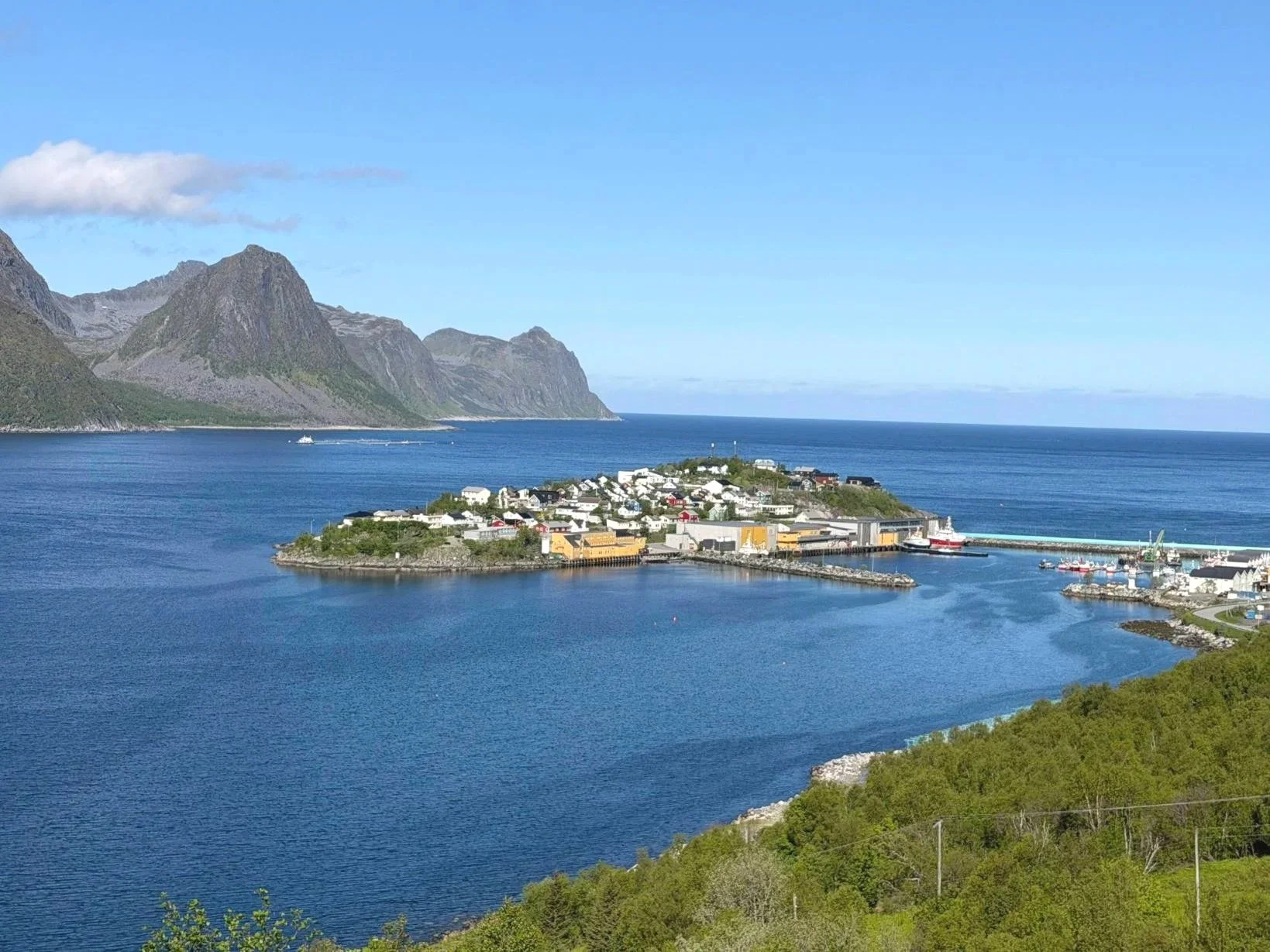
Husøy fishing village
Senja sits on some of Norway's richest fishing grounds, and sea fishing is one of the more popular things to do here for a reason beyond the scenery.
Charter trips
Charter operators run out of several villages, including Skaland and the fishing camps around Steinfjord, and trips typically target cod, halibut, coalfish, wolffish, and redfish, with gear, warm cabins, and usually hot drinks included. Camps like Camp Steinfjord specialize in serious halibut and cod fishing if that's the focus of your trip rather than a side activity.
Shore fishing and regulations
If you're not chartering a boat, shore fishing is also possible in several spots, though you'll want to check current Norwegian fishing regulations for tourists before you cast a line. Your accommodation host or a local tourist office is the most reliable place to confirm this before you go.
Wildlife and boat trips: whales, sea eagles, and kayaking
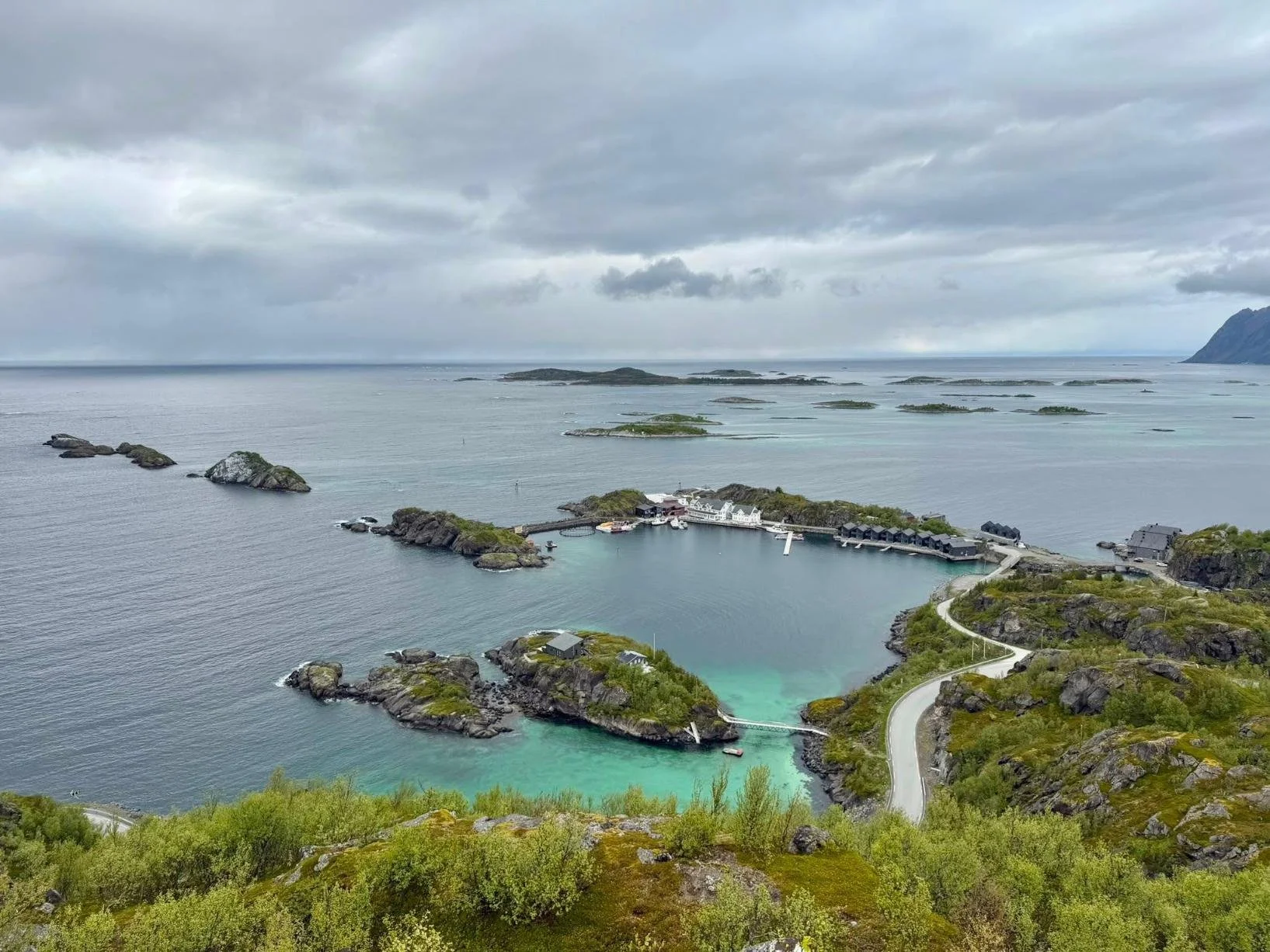
Hamn in Senja
Whale watching
Whale watching is one of Senja's best-kept secrets, and part of what makes the island feel wilder than its more famous neighbor. From roughly December through March, humpback whales and orcas follow the herring migration into the fjords around the island, and boat safaris run out of villages like Mefjordvær. It's the same season as the northern lights, so a winter trip can plausibly deliver both in one visit, weather depending.
Kayaking around Hamn i Senja
In summer, kayaking is a highlight around Hamn i Senja, on the western coast. The archipelago just offshore is calm enough for relaxed paddling and known for sightings of sea eagles, seals, and cormorants, plus the option of fishing or a picnic on white-sand beaches along the way (and this turquoise water…). Hamn i Senja also rents boats, kayaks, and paddleboards, and runs midnight fjord cruises in summer.
You can browse kayak and canoe tours here.
RIB boat tours
RIB boat tours are available from several points on the island too, for a faster way to cover the coastline and get close to sea cliffs and wildlife that aren't reachable on foot.
Villages worth stopping in
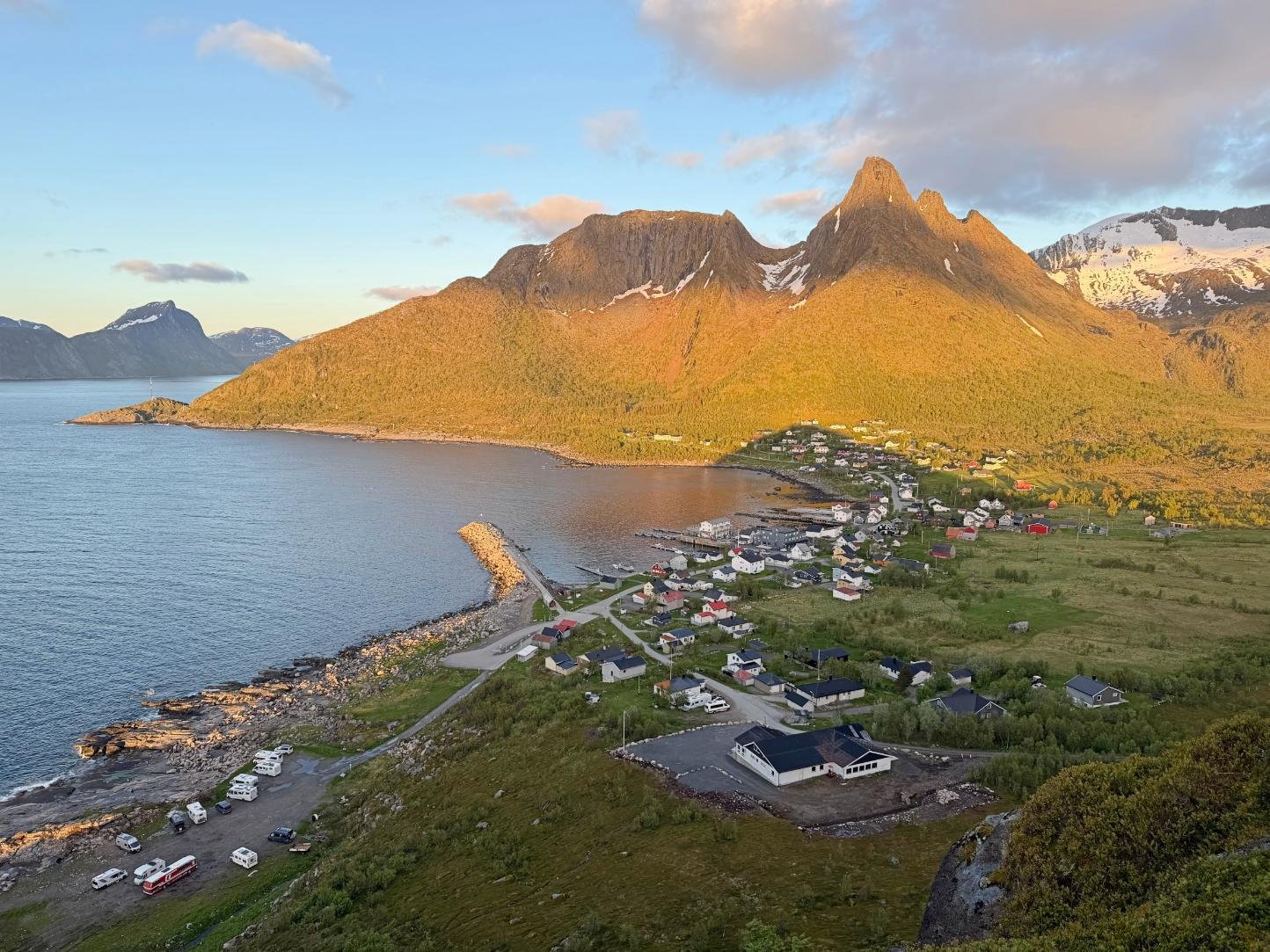
Mefjordvær in the midnight sun from Knuten
Senja's villages are as much a part of "things to do" here as any single viewpoint, and most feel more like working fishing communities than tourist stops, which is exactly the appeal. Sure, they look a bit less scenic than the rorbuer villages in Lofoten, but their surroundings are always absolutely stunning.
Fjordgård and Skaland
Fjordgård and Skaland, on the west coast, double as hiking trailheads (see our hiking guide) but are worth a slow wander on their own. We stayed in Skaland — read our full Yttersia Base review here.
Mefjordvær and Senjahopen
Mefjordvær sits between towering mountains and open ocean and is a good base for both a short midnight sun walk and a winter whale safari. We stayed there — read our full Mefjord Brygge review here.
Senjahopen, on Medfjorden, has a fjord-side viewpoint that's easy to miss on a map and worth the stop.
Husøy and Gryllefjord
Husøy is a tiny fishing island connected to the mainland by a narrow causeway, densely packed with brightly colored houses. Gryllefjord anchors the southern end of the scenic route, with a ferry connection toward Andøya if you're continuing your trip that way. If you’re going that far, drive on the old road: silence is underrated until you remember what it feels like.
Museums and local history
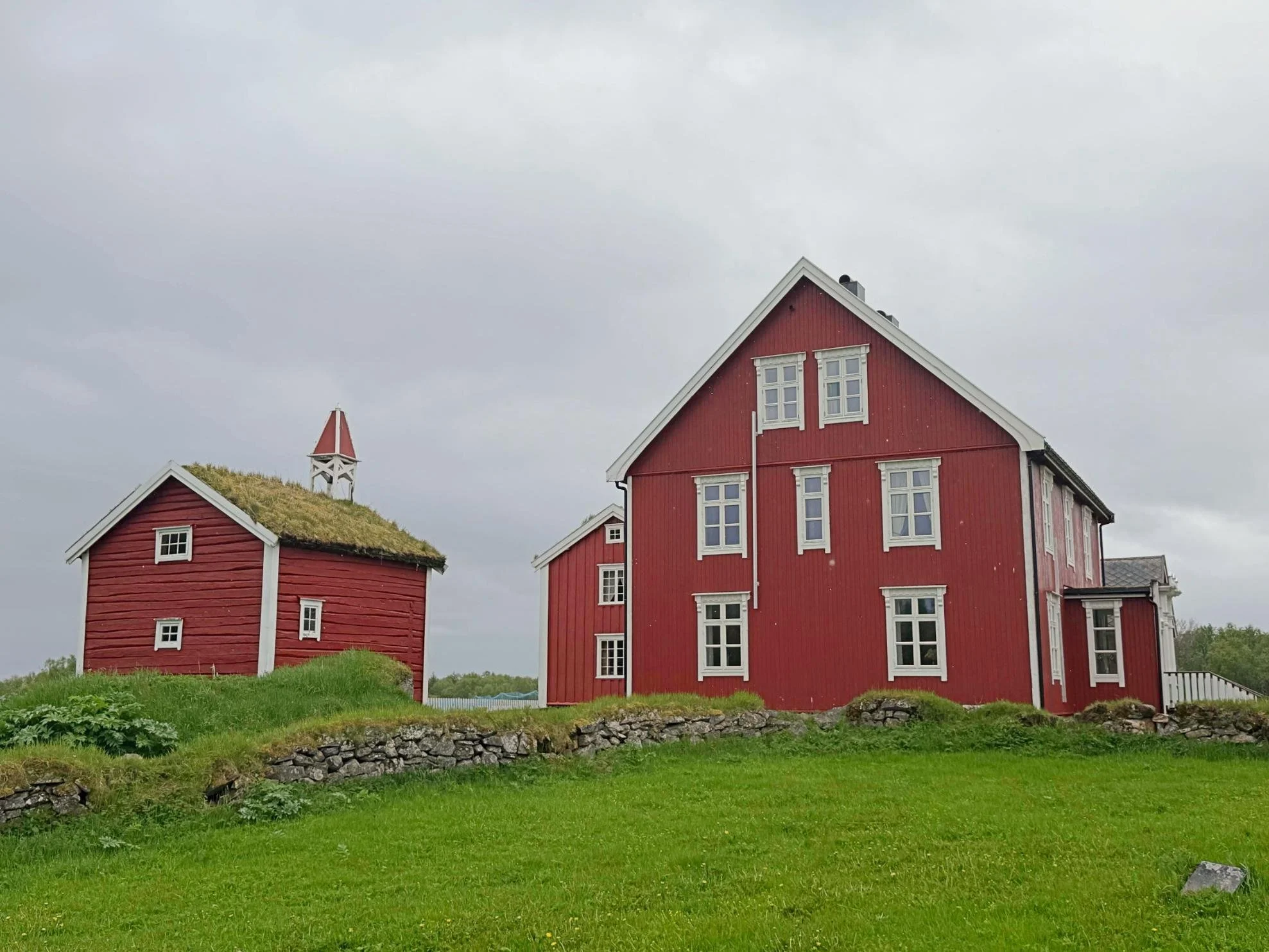
Tranøya guesthouse
Senja isn't a museum-hopping destination, but a handful of stops are worth it if you like a bit of history with your scenery or if the weather is really being a diva (which happens quite often).
Kaperdalen Sámi Museum
Kaperdalen, on the eastern side of the island, was the last settlement used by Senja's Sámi community and is one of the best-preserved land-Sami sites in Norway. It's now an open-air museum, accessible year-round.
Sážža, Senja Nature and Culture Center
Near the entrance to Ånderdalen National Park at Øverbotn, Sážža is a joint project between the Midt-Troms Museum and the national park board, with a permanent exhibition covering the natural and cultural history of both Senja and the park, including the Sami heritage tied to Kaperdalen.
Tranøya
A little further afield, the island of Tranøya has one of the oldest churches in central Troms (built in 1773, the third on the site, with the first possibly dating to the 13th century) and Viking burial mounds up to 11 meters across. If you always dreamt of being on a private island, it’s an awesome place to spend a night or two. We visited and wrote a full review, including the guided history tour of the church and old cemetery: Senja Moments Tranøya.
Summer on Senja

Jake is mesmerized by the midnight sun (Mefjordvær)
Senja sits well north of the Arctic Circle, so for a stretch of summer the sun never fully sets. This is the midnight sun, and it's one of the best reasons to plan a summer trip here rather than to Lofoten, where the same phenomenon draws far bigger crowds.
When to see the midnight sun on Senja
The midnight sun on Senja runs roughly from late May to late July. Outside that window, on either side, you still get very long, bright evenings well into what would normally be night.
What to do with the extra daylight
The practical upside is that you can pack more into a day without racing the sunset, especially for hiking, camping and driving. We hiked up Knuten, above Mefjordvær, at midnight under full daylight, and it remains one of the best low-effort payoffs on the island (full details in our hiking guide). Midnight fjord cruises from Hamn i Senja take advantage of the same light, and a late-evening stop at Ersfjordstranda or one of Senja's scenic route viewpoints often means having the place to yourself after the day-trippers have gone. Fishing, kayaking, and photography all benefit from the same stretched-out light, and summer is also when the scenic route and most hiking trails are reliably free of snow.
🐧 Penguin tip: Pack a good sleeping mask. Midnight sun is spectacular right up until you're trying to fall asleep in a room that looks like 11am.
Winter on Senja: northern lights, snow, and husky sledding
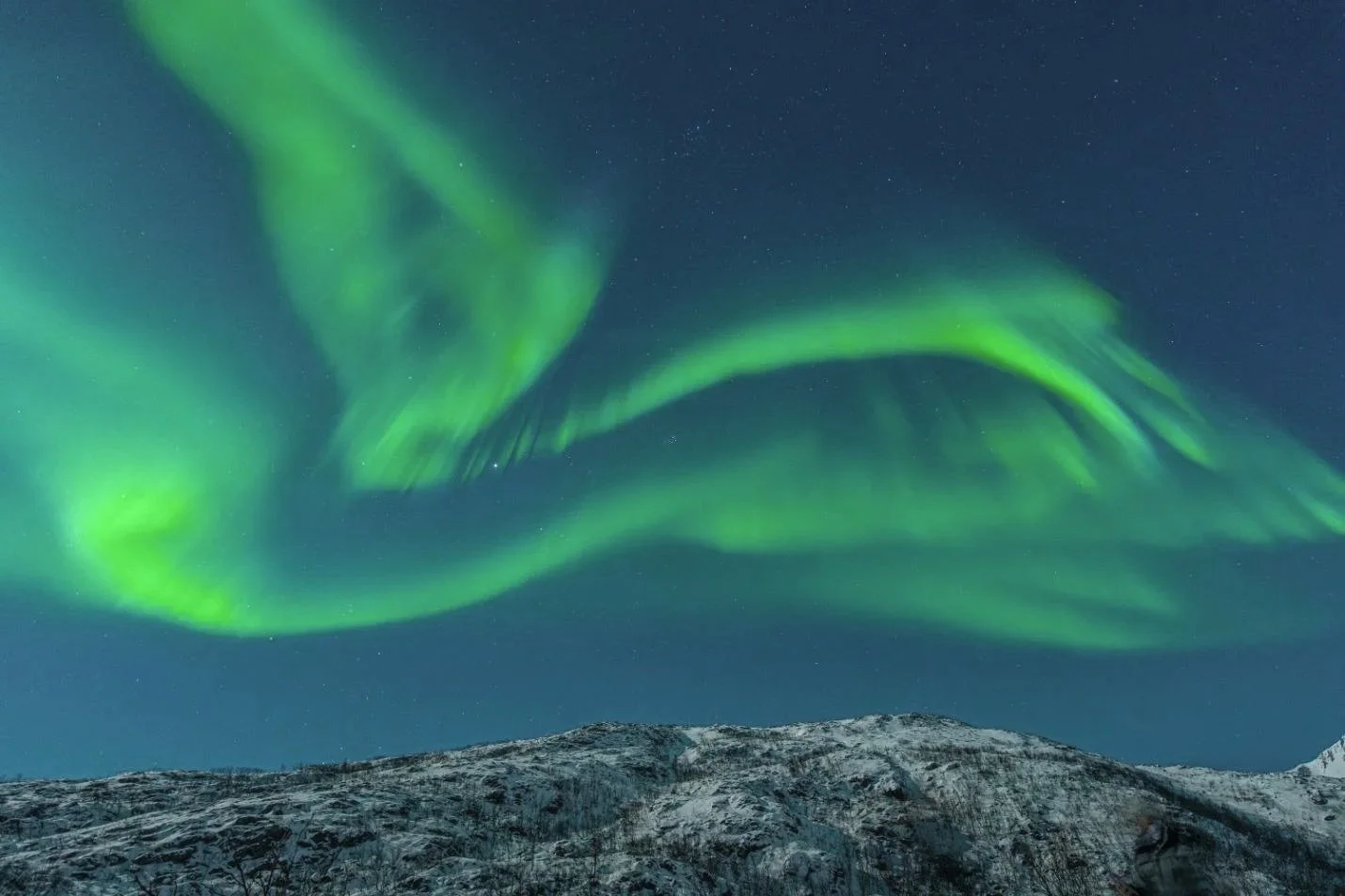
Lady Aurora - Thank you Henrik (Unique Norway) for the picture!
Northern lights
Senja sits well within the auroral oval, and with very little light pollution outside its handful of villages, it's one of the best places in Northern Norway to see the northern lights, broadly from late September through April, with the darkest, most reliable months in the depths of winter. Bergsbotn and Ersfjordstranda both come up repeatedly as decent aurora spots thanks to their open, elevated views north.
You can compare northern lights tours here, or try your luck with the resources available on our Northern Lights Hub.
Husky sledding and snowshoeing
Winter also brings dog sledding. Senja Husky Adventure, based near Vangsvik, runs trips through the season with options ranging from daytime sledding to trips under the northern lights. Snowshoeing, skiing and guided winter hiking are also on offer.
You can compare winter sport tours here.
🐧 Penguin tip: Winter driving on Senja's scenic route is a different proposition from summer, and there's even less traffic to help you feel out the road. If you're not confident on snow and ice with limited daylight, a guided tour or a local husky/snowshoe operator takes that pressure off entirely.
Ånderdalen National Park
The southern interior of Senja, between Tranøyfjord, Selfjord, and Sifjord, is a very different landscape from the sharp peaks along the coast: old-growth pine and birch forest, lakes, rivers, and a quieter feel than the coastline itself. It's a worthwhile contrast if you're spending more than a couple of days on the island. You’ll find more information in our Senja hiking guide.
Shopping on Senja

Shopping and lunch at Mitra in Gryllefjord
Ok, don’t get too excited, shopaholics: Senja isn't a shopping destination, and frankly, that's part of the point. There are no real shops in the way a city visitor might expect, but a few practical and slightly quirky stops are worth knowing about. Personally, this is our favorite kind of shopping!
Grocery stores
Most villages have a small Coop, Spar, or Joker grocery store, and this is where most day-to-day shopping happens. Some run unstaffed in the evenings: you tap your card to unlock the door, shop, scan your own items, and pay, with no cashier in sight. It's completely normal in rural Norway and is an attraction in itself for us, outsiders!
Second-hand and antique shops
In Skaland, Retro Skaland is a small second-hand shop worth ducking into for the finds themselves, and for the waffles with brunost (Norwegian brown cheese) and jam usually on offer alongside. In Gryllefjord, a similar bruktbutikk (second-hand shop), ran as a supported-work program by Mitra AS, sells secondhand furniture, clothes, and gift items out of a converted space, with a small café attached. The owner is absolutely lovely, and you’ll probably spend more time there than you think, especially on a rainy day! We got adorable, super Scandinavian candle holders, a wood plate in Norwegian for our dream home in Norway, books, and other little whatnots for less than 100 NOK. Who said Norway was expensive?
Where to eat on Senja
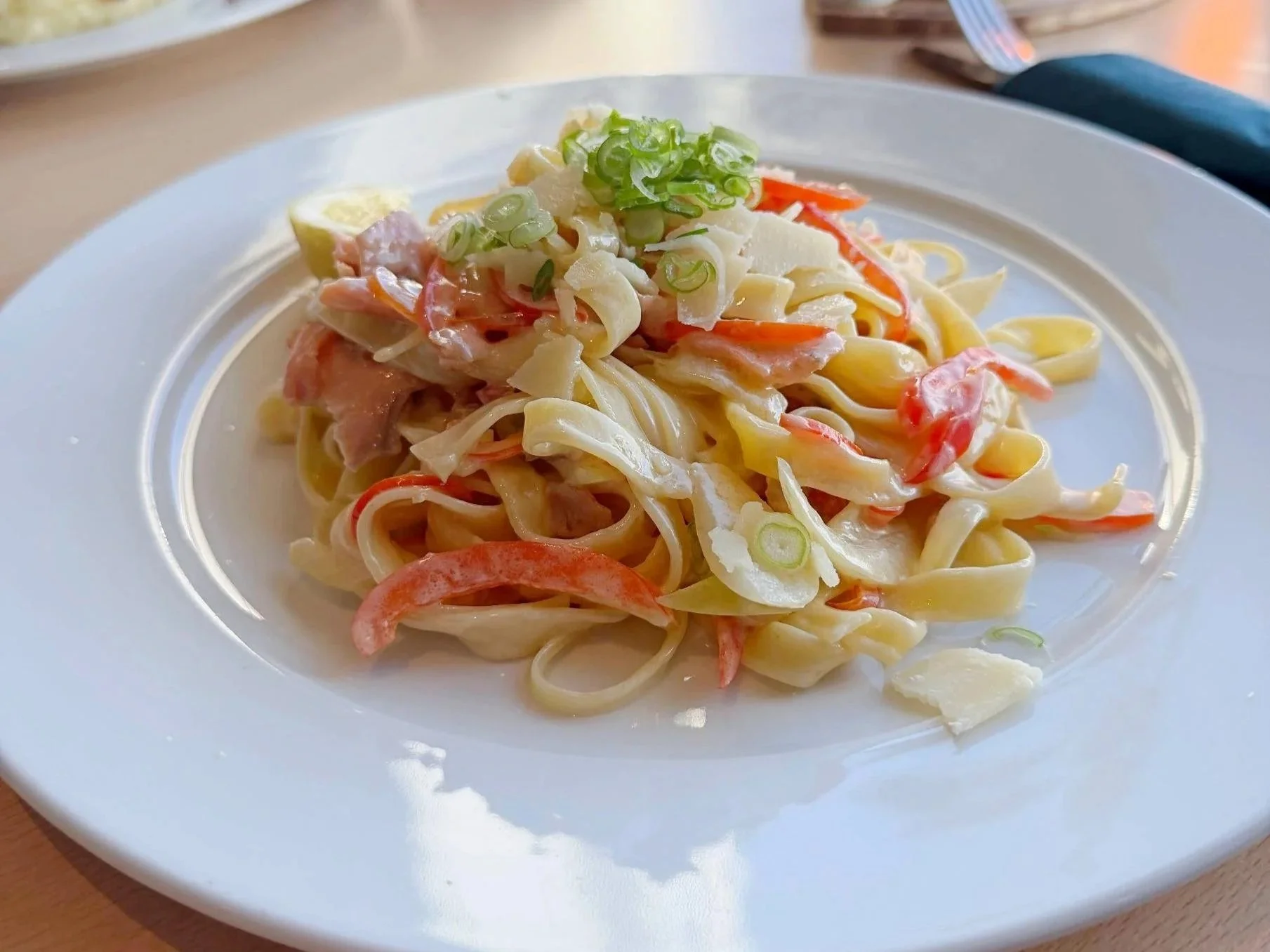
If you eat at Nordisk Bris, do yourself a favor and order the salmon pasta
Restaurants thin out fast once you leave the main villages, so a little planning helps, especially outside peak summer. If you stay in cabin with your own kitchen, you’ll find small but really well-stocked grocery stores across the island.
Nordisk Bris, Skaland
Next to Yttersia Base lodge, Nordisk Bris serves an Arctic-coast-inspired menu built on local, seasonal ingredients, open for breakfast, lunch, dinner and anytime during the day for coffee and cake to guests and non-guests alike. We can’t tell you how good that salmon pasta was after hiking all day. We reviewed it in detail, including our actual meals there: Yttersia Base & Nordisk Bris.
Salteriet, Mefjordvær
At Mefjord Brygge, the Salteriet Restaurant and Bar sits in a former saltery on the old harbor, decorated with fishing equipment and photos from the village's past, with a menu built around local coastal ingredients and a terrace for sunny days. We stayed at Mefjord Brygge: read our full Mefjord Brygge review for details.
Storbrygga Spiseri, Hamn i Senja
There’s also a restaurant at Hamn i Senja. Storbrygga Spiseri sits right on the pier with views of the Sukkertoppen mountain and the harbor, serving traditional Northern Norwegian dishes such as reindeer and skrei (Arctic cod) with a creative touch. It's open year-round for breakfast, lunch, and dinner, with a lighter lounge menu, outdoor pier seating in summer, and reservations recommended since it gets busy. We can’t vouch for it, but it has good ratings.
Everyday and budget options
Outside the handful of sit-down restaurants attached to hotels and lodges, expect to lean on grocery stores, hotel dining rooms, and the odd café. The Gryllefjord bruktbutikk mentioned above doubles as one of the cheapest bites on the island, with hot dogs and traditional Norwegian cakes alongside its second-hand racks, a good option if you're passing through on the ferry route and don't want a proper sit-down (and expensive) meal.
Practical tips for visiting Senja
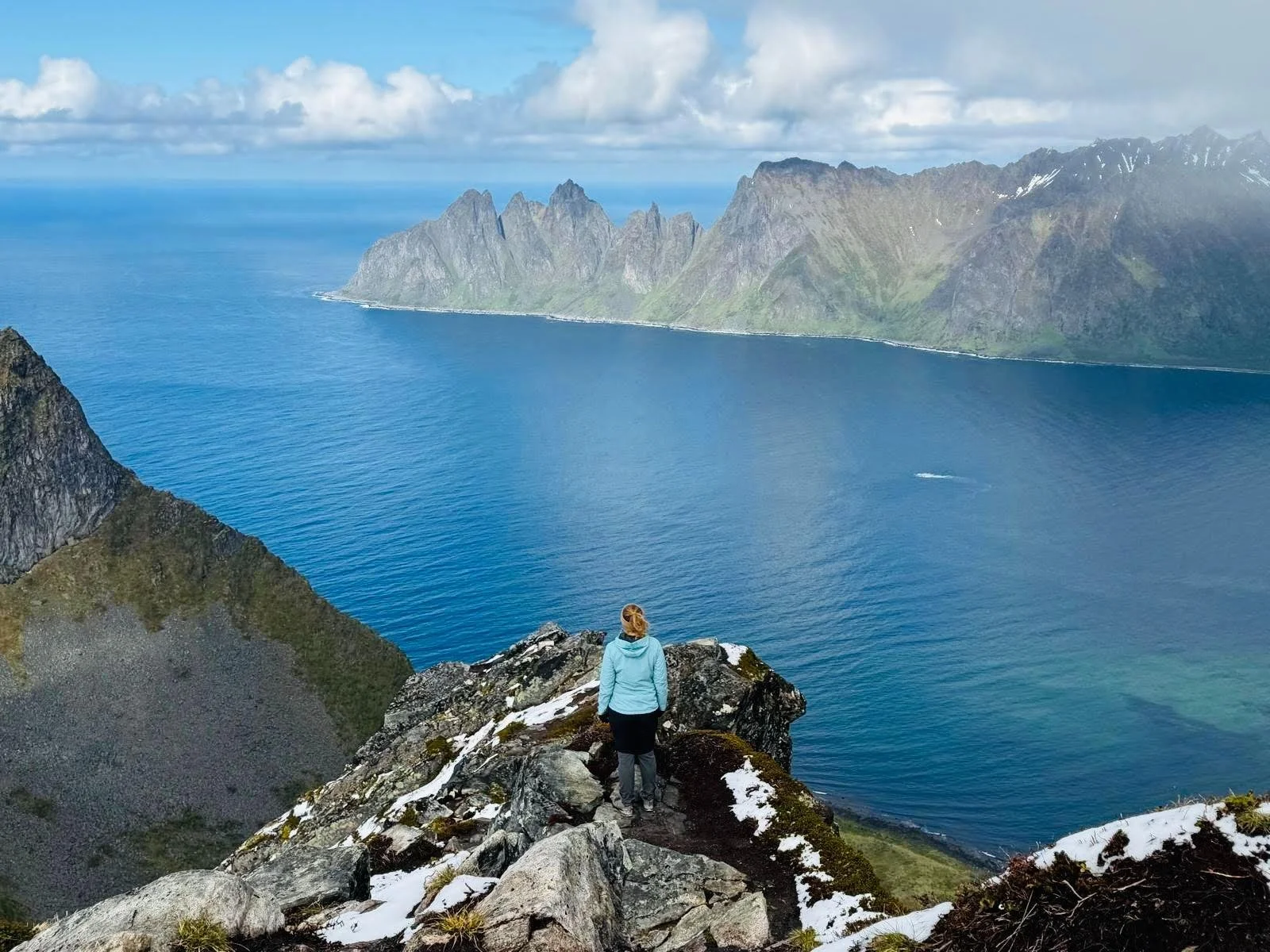
You need a car to access hiking trails (here at Husfjellet)
You need a rental car
There's no public transport network connecting Senja's villages, trailheads, and viewpoints. See our guide to renting a car in Tromsø before you arrive.
Getting to Senja
Most visitors reach Senja by car from Tromsø, roughly two to three hours depending on your route, often via the Brensholmen–Botnhamn ferry for the most scenic approach. If you'd rather not drive the scenic route yourself, our Senja day trip from Tromsø guide covers a guided small-group option that runs year-round.
How long to stay
A day trip from Tromsø covers the highlights at a rushed pace. Two to three days lets you see the main viewpoints, a beach, and a village or two without hurrying. If you're combining hiking, fishing, or a winter whale safari, plan for closer to four or five days. Trust us, it will always be too short.
Best time to visit Senja
Mid-June through September gives you the warmest weather, the most reliable road conditions, and the midnight sun. Winter (roughly December through March) trades that for the northern lights and whale watching season, at the cost of shorter days and more demanding driving conditions.
Where to stay in Senja
See our full guide to hotels and cabins in Senja for options across the island, including the ones we stayed at ourselves.
Browse hotels & cabins around Senja:
🐧 Penguin tip: If you search around for things to do on Senja, you may come across mentions or old photos of Senjatrollet, once billed as the world's largest troll statue, at 18 meters tall, near Finnsæter. Worth knowing this attraction burned down in a fire in March 2019 and is gone. Some older travel content online still lists it as current, so don't plan a stop around it. It really did look cool though!
✈️ Find flights
🏨 Explore hotels, apartments, guesthouses, cabins
🧭 Browse activities and tours
🚗 Compare car rentals
🧳 Get travel gear
🛡️ Travel safe with Heymondo Travel Insurance (5–15% off)
📱 Get a travel eSIM
🐾 Protect & track Arctic wildlife with Fahlo Bracelets (20% off)
FAQ: Things to do in Senja, Norway
What is Senja best known for? Senja is best known for the contrast between sharp granite peaks and the sea, its National Scenic Route between Botnhamn and Gryllefjord, and beaches like Ersfjordstranda that look out of place this far north. It's often described as a wilder, less crowded alternative to Lofoten (we agree).
What are the top things to see in Senja? Tungeneset and Bergsbotn viewpoints, Ersfjordstranda beach, the villages of Fjordgård, Skaland, Mefjordvær, and Husøy, and, for hikers, Segla and Hesten. See our hiking guide for trail details.
Is Senja worth visiting if you don't want to/can’t hike? Yes. The scenic route, beaches, fishing charters, kayaking, whale watching in winter, and the villages themselves don't require any serious hiking. Several viewpoints, including Tungeneset and Bergsbotn, involve only a short, flat walk.
Can you see the northern lights on Senja? Yes. Senja sits within the auroral oval with very little light pollution, and is considered one of the better spots in Northern Norway for aurora viewing, roughly late September through April, with the darkest months offering the best odds.
Do you need a car to get around Senja? Yes. There's no public transport connecting the island's trailheads, viewpoints, and villages, so a rental car is effectively required for independent travel. Guided day tours from Tromsø are an alternative if you'd rather not drive.
How do you get to Senja from Tromsø? By car, typically two to three hours depending on route, often via the Brensholmen–Botnhamn ferry. See our full guide on getting to Senja from Tromsø.
We had been wanting to visit Senja for years — actually, since Lofoten became a bit crowded for our taste. We were expecting a quieter version of Lofoten and left thinking the comparison undersells it. The scenic route alone would justify a couple of days, and that's before you factor in a beach that looks lifted from somewhere tropical, whale-rich fjords in winter, and villages that still feel like working fishing communities rather than stops on a tour itinerary. Whether you're hiking Segla, chasing the midnight sun on a kayak, watching orcas from a boat in January, or just pulling over at Tungeneset, Senja will take your breath away (we can vouch for that, unless you’re very, very blasé… or Norwegian). It's wilder than Lofoten, it's quieter than Lofoten, and for now, at least, it still feels like a genuine place and not a tourist destination.
Finally, explore all our Northern Norway Travel Guides here.

Free download
Travel Cheaper Cheat Sheet
27 tips on flights, hotels, hidden costs and more — spend less without missing what actually matters.
No spam. Unsubscribe anytime.
