
Best Time to Visit Rovaniemi (and Finnish Lapland as a Whole)
Because Rovaniemi is the gateway. Lapland is the experience.
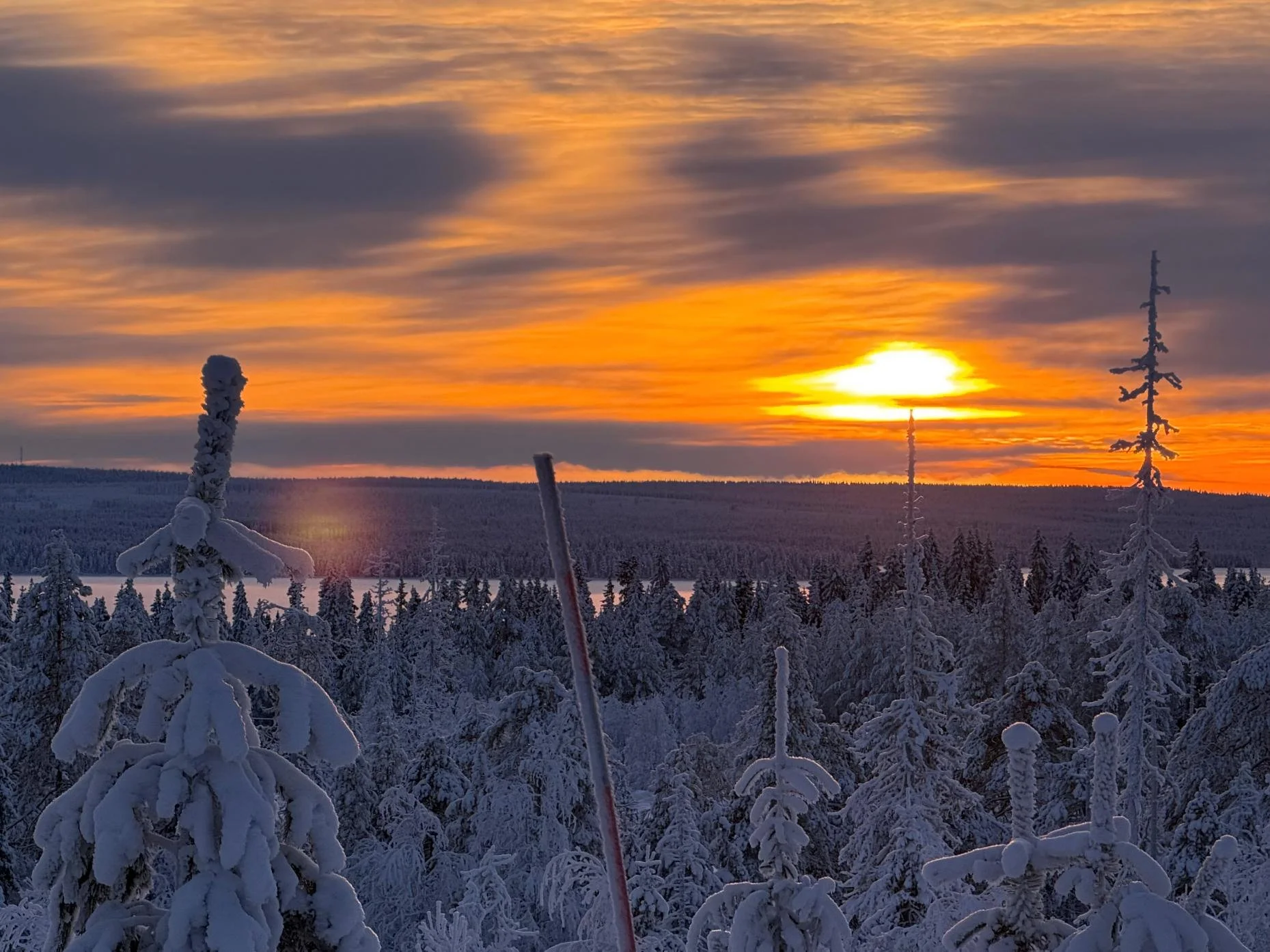
Winter sunset in Riisitunturi National Park
Last update: August 2026
Rovaniemi, Finnish Lapland, sits just below the Arctic Circle and markets itself as the official hometown of Santa Claus. It’s easy to reach, well-developed, and famous worldwide.
But timing here isn’t just about temperature. In the Arctic, light changes everything. Dark winter for auroras, endless summer for midnight sun, golden autumn (ruska) for quiet forests.
And depending on when you go — and whether you stay in Rovaniemi or beyond — your experience can feel wildly different.
So, when is the best time to visit Rovaniemi and Finnish Lapland? Let’s break it down, with pros and cons of each month and season.
🛌 Where to stay:
• Arctic SnowHotel & Glass Igloos — rebuilt from ice and snow every winter, with heated glass igloos and an aurora alarm that wakes you when the lights appear.
• Arctic TreeHouse Hotel — cube-shaped suites on a quiet hillside, with floor-to-ceiling windows looking out over the forest.
• Villa Lucky — we stayed here. Run by a local aurora guide, spacious and cozy, close enough to town but dark enough for northern lights nights.
🇫🇮 Top experiences:
• Northern lights tour — a small-group aurora chase with a local guide who adjusts the route in real time based on clouds and forecasts.
• Sauna and ice dipping experience — the classic Nordic reset: heat up slowly, then lower yourself into a hole cut into the ice.
• Riisitunturi National Park day trip — snow-laden "tykky" trees that turn the forest into surreal, rounded white sculptures, with transport and lunch included.
🚗 Rental cars for the region — useful if you want to the northern lights on your own schedule.

Waiting hours outside for the northern lights is not the same at -30ºC than at 5ºC…
When is the best time to visit Rovaniemi and Finnish Lapland? Short answer
Best for snow, Santa madness & classic winter activities: January–March
Best for northern lights with fewer crowds and milder temperatures: Late September–November (read our guide to the Northern Lights in Lapland and our guide to Seeing the Northern Lights in Rovaniemi)
Most crowded & expensive: December. Read our guide to Lapland on a Budget for tips.
Most peaceful Arctic atmosphere: Smaller Finnish Lapland villages in autumn (ruska colors) or late winter
Keep reading for all the details and our personal tips!
Winter (December–March): Snow, Santa & northern lights
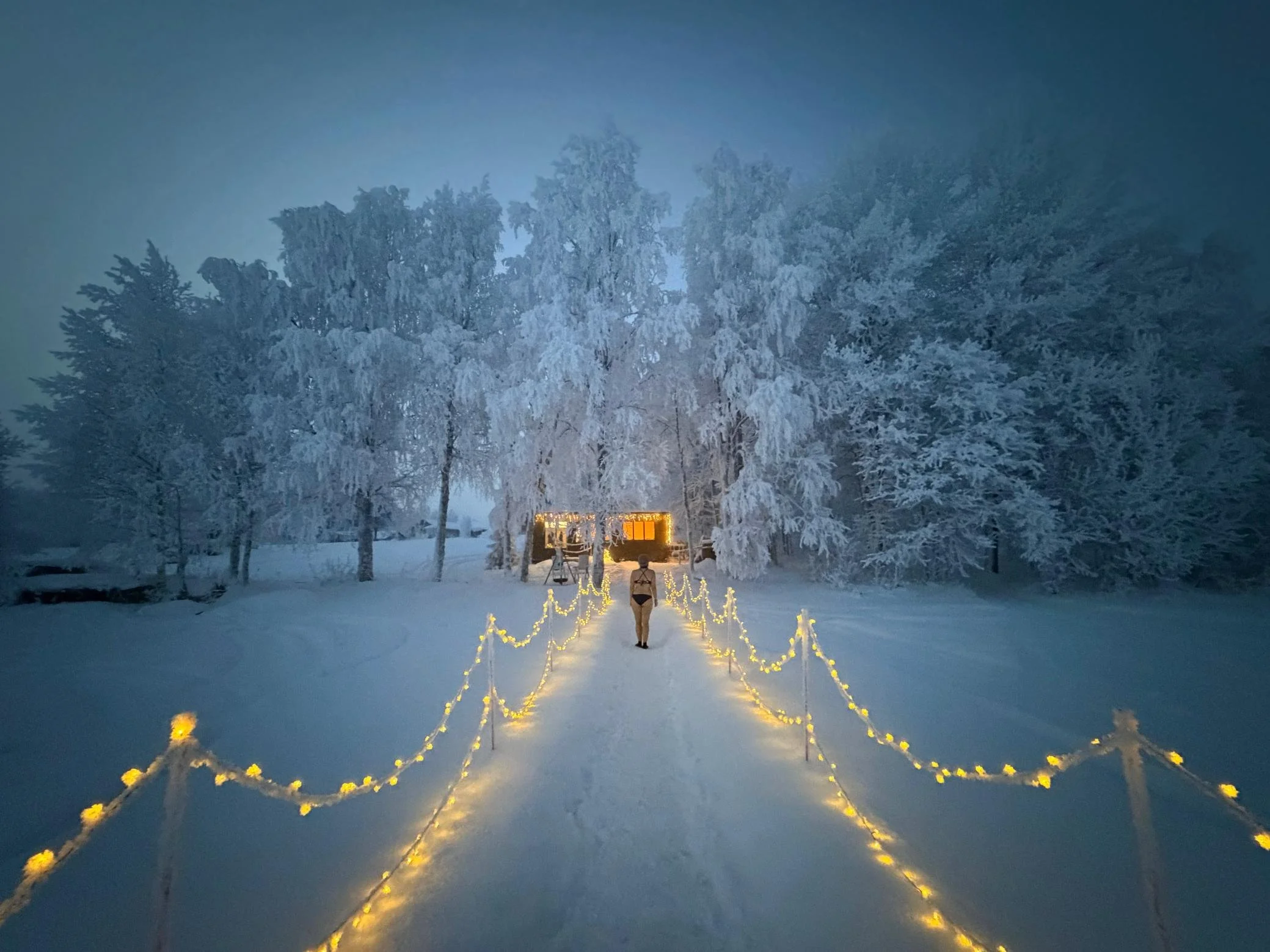
Ok, winter is our favorite season in the Arctic — here enjoying a sauna + ice dip experience
Winter is why most people book Rovaniemi.
We’ve done the full winter lineup ourselves — husky sledding, snowmobiling, sauna + ice dip, snow hotel, northern lights, frozen river landscapes — and broke it down in our guide: Winter activities in Rovaniemi.
December: Magical but intense
December is peak season. It’s festive. It’s snowy. It’s dramatic. It’s also crowded.
Santa Claus Village fills up, hotels surge in price, and cozy cabins book months in advance.
If Christmas atmosphere is your priority, December works beautifully.
If you’re seeking quiet Arctic wilderness, December in Rovaniemi may feel very, very busy. Read our article: Christmas in Rovaniemi and Finnish Lapland for more.
We’ve outlined calmer alternatives to alternatives to Rovaniemi for Christmas magic here.
January–March: The sweet spot
This is our favorite winter window for Finnish and Swedish Lapland.
• Deep snow and tykky (more on these snow-covered trees here)
• Better activity availability
• Strong northern lights chances
• Slightly calmer than Christmas
• Short days with the magical polar (blue) light
That being said, we enjoy extreme cold and the special atmosphere it creates. If cold is not your thing, that might not be the best season. March is less harsh though — winter landscapes with milder temperatures and more daylight for photography and exploring.
If auroras are your main goal, read our Northern Lights in Rovaniemi guide.
If you do want to visit Rovaniemi and surroundings in December (and even early January), book VERY early. Some tour operators book hundreds of rooms more than a year in advance.
Zoom in and out on the map below to check availability for hotels and cabins in Rovaniemi and around
Autumn (September–November): Quiet aurora season and ruska
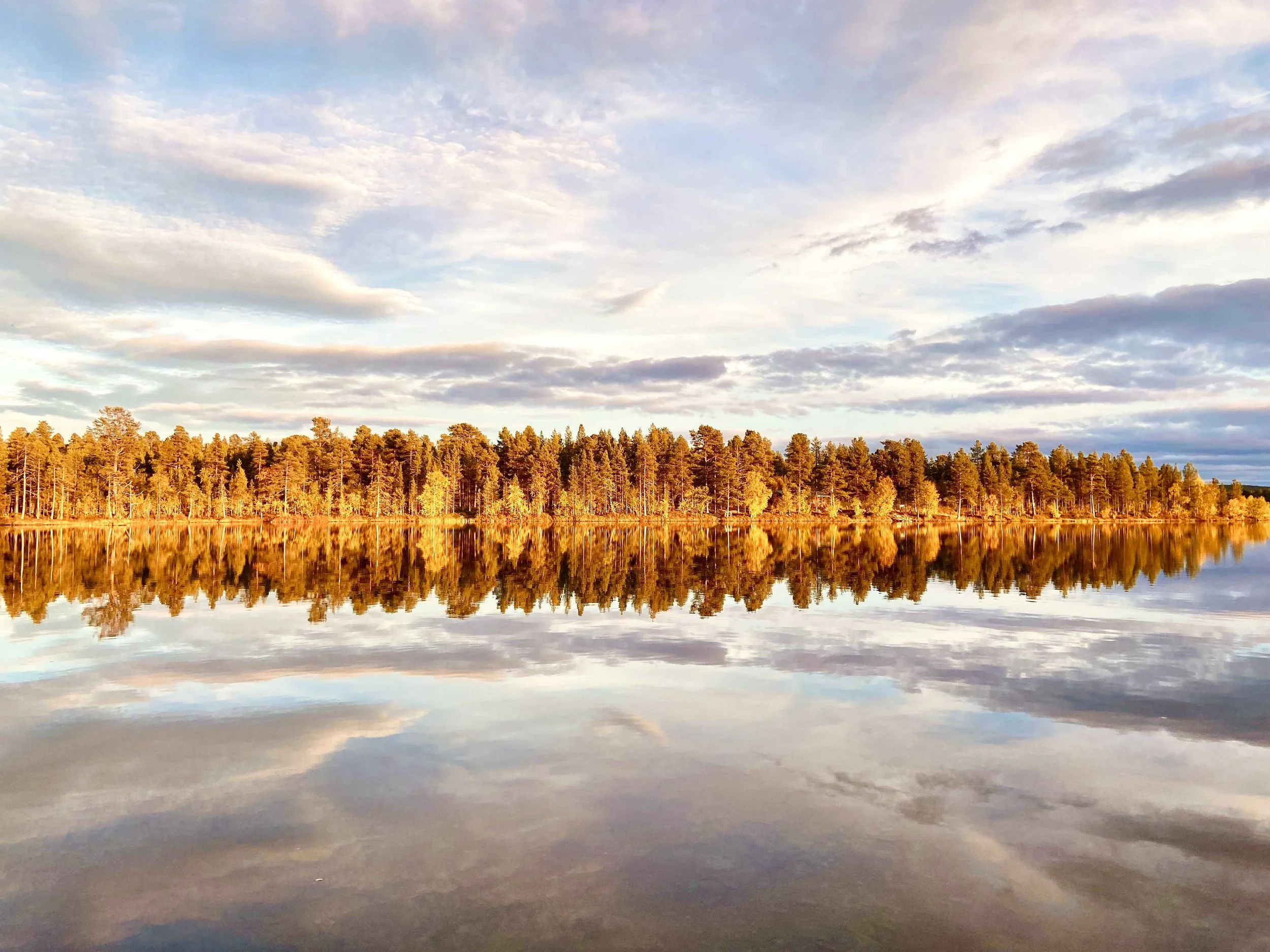
We stayed in a cabin near Inari in Septemberand swam every day in the lake, enjoy the stunning ruska colors
This is underrated. Personally, we love fall up North. September and October bring:
• Dark skies for northern lights with milder temperatures
• Fewer tourists
• Much lower accommodation prices (we booked cabins by a lake with sauna for 60€/night)
• Dramatic fall colors (ruska)
There’s usually no snow yet. If snow is essential, wait until late November or even later depending on the year (global warming…).
But if your focus is auroras and atmosphere, autumn is calm and beautiful.
Just a small caveat: weather tends to be moody.
We experienced Finnish Lapland in fall and loved the slower rhythm. Read our experience: Finnish Lapland in fall.
No Santa queues. No packed tour buses. Just hiking, forest, sauna, cold dips and repeat
Spring (April–May): Bright snow & shoulder season calm
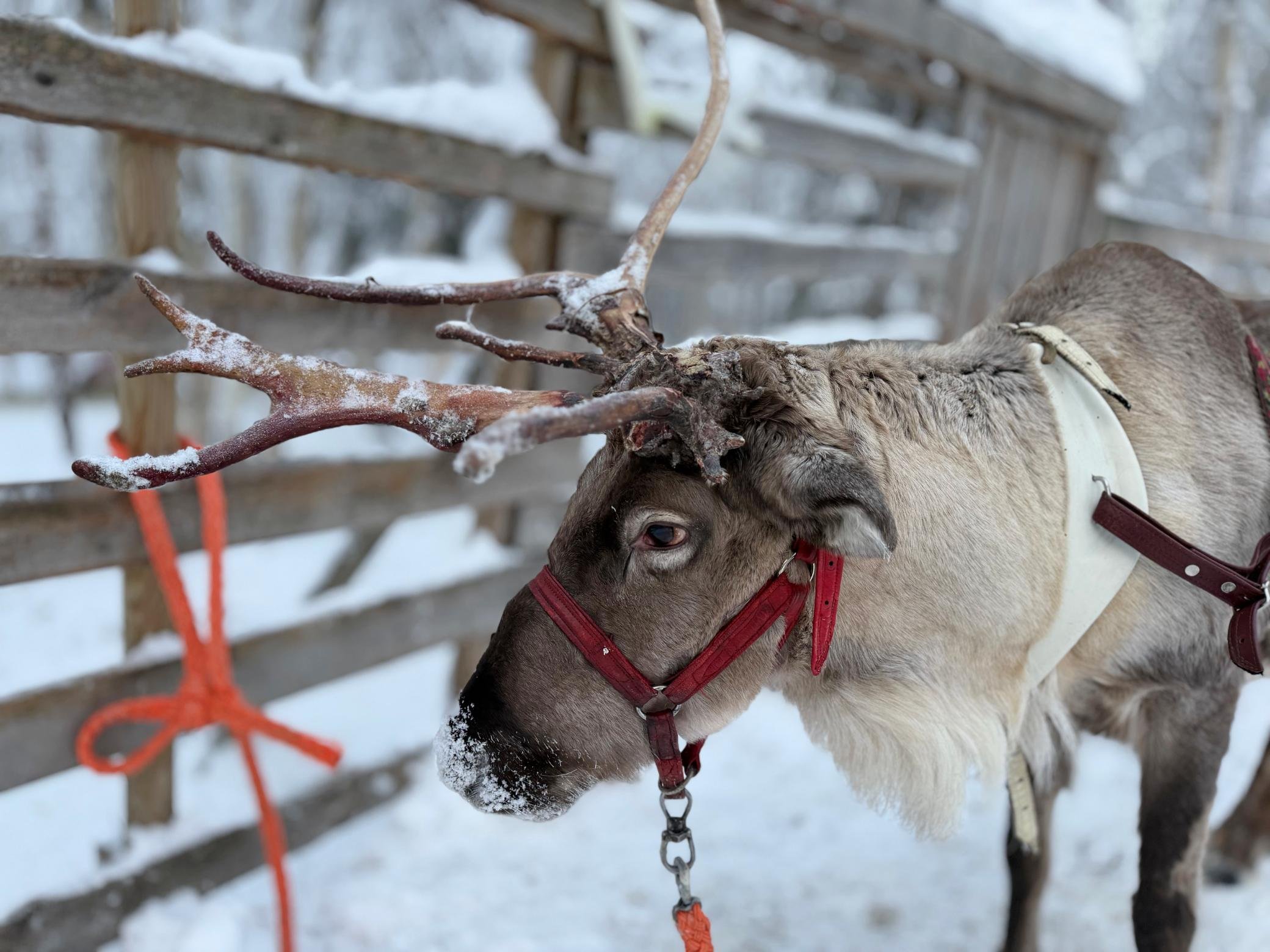
In early spring, you can still enjoy a reindeer sleigh ride! — Here our super chill reindeer Manu
April still offers snow and many winter activities.
Tourism drops sharply after Easter, days get longer and sunnier, and accommodation availability improves.
It’s one of the most balanced times to experience winter landscapes without peak-season pressure.
By May, snow begins melting and winter tours close.
Summer (June–August): Midnight sun Lapland
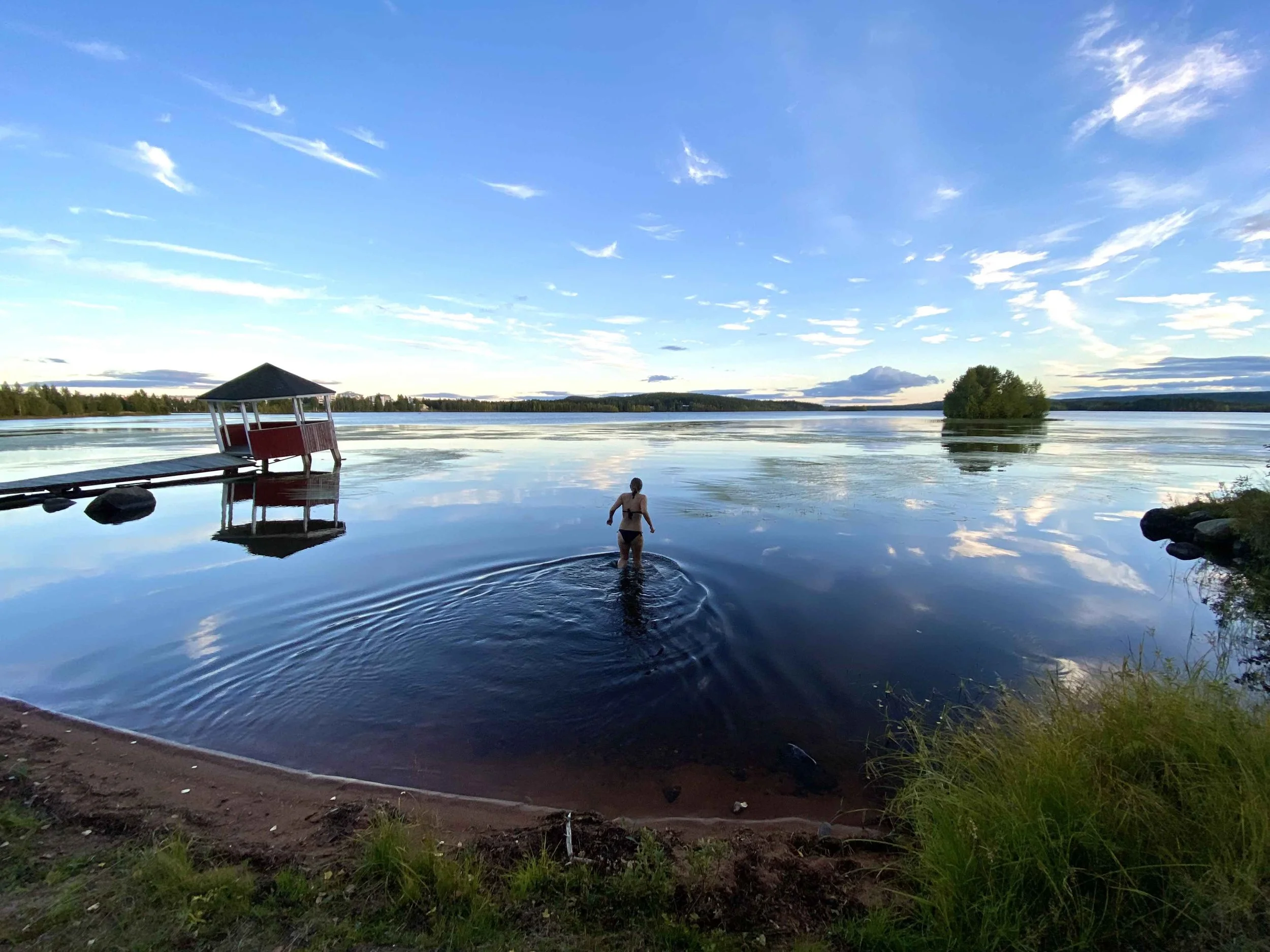
Swimming in the middle of the “night” is so cool (literally) — Here in Kemijärvi
Summer Lapland is a different world, often overlooked by foreign visitors.
No snow, no northern lights, no husky safaris.
Instead:
• 24-hour daylight
• Forest hiking
• River walks
• Lake swimming/fishing
• Calm landscapes
It’s very peaceful and photogenic — but it’s not the “snow globe Lapland” many people imagine.
Month-by-month overview
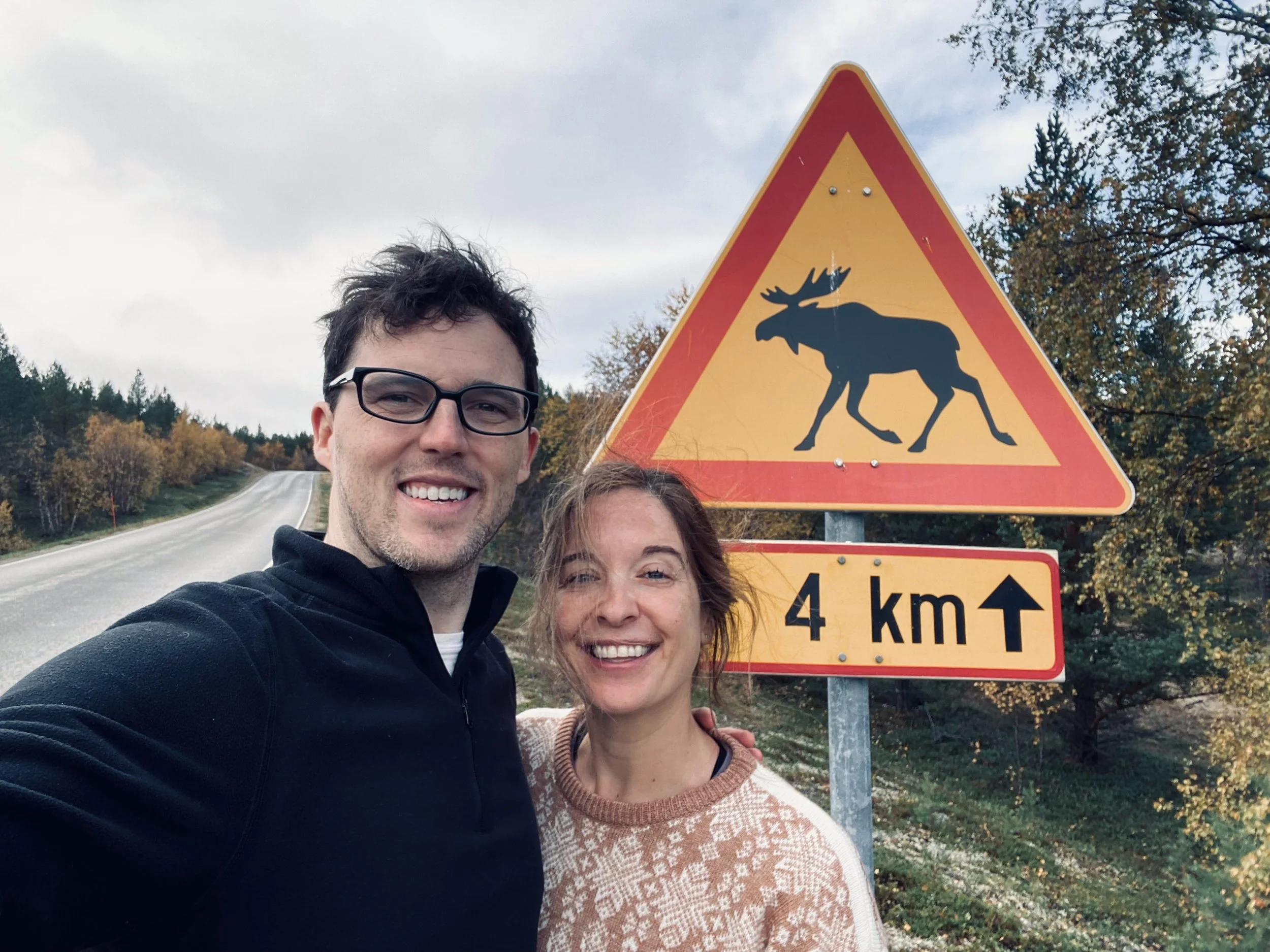
In any season, watch moose and reindeer when driving in Lapland!
Here’s a quick planner-friendly breakdown:
👉 Check out our Northern Lights Hub for everything aurora — best locations, best time, tips, photography, science, what to wear, etc.
If you also want to visit Swedish Lapland or Arctic Norway, read our guide: Best time to visit Lapland.

Penguin Trampoline tip:
For any Arctic adventure, we recommend a travel insurance. Get 5 to 15 % with our partner HeyMondo!
Should you stay in Rovaniemi — Or look beyond?
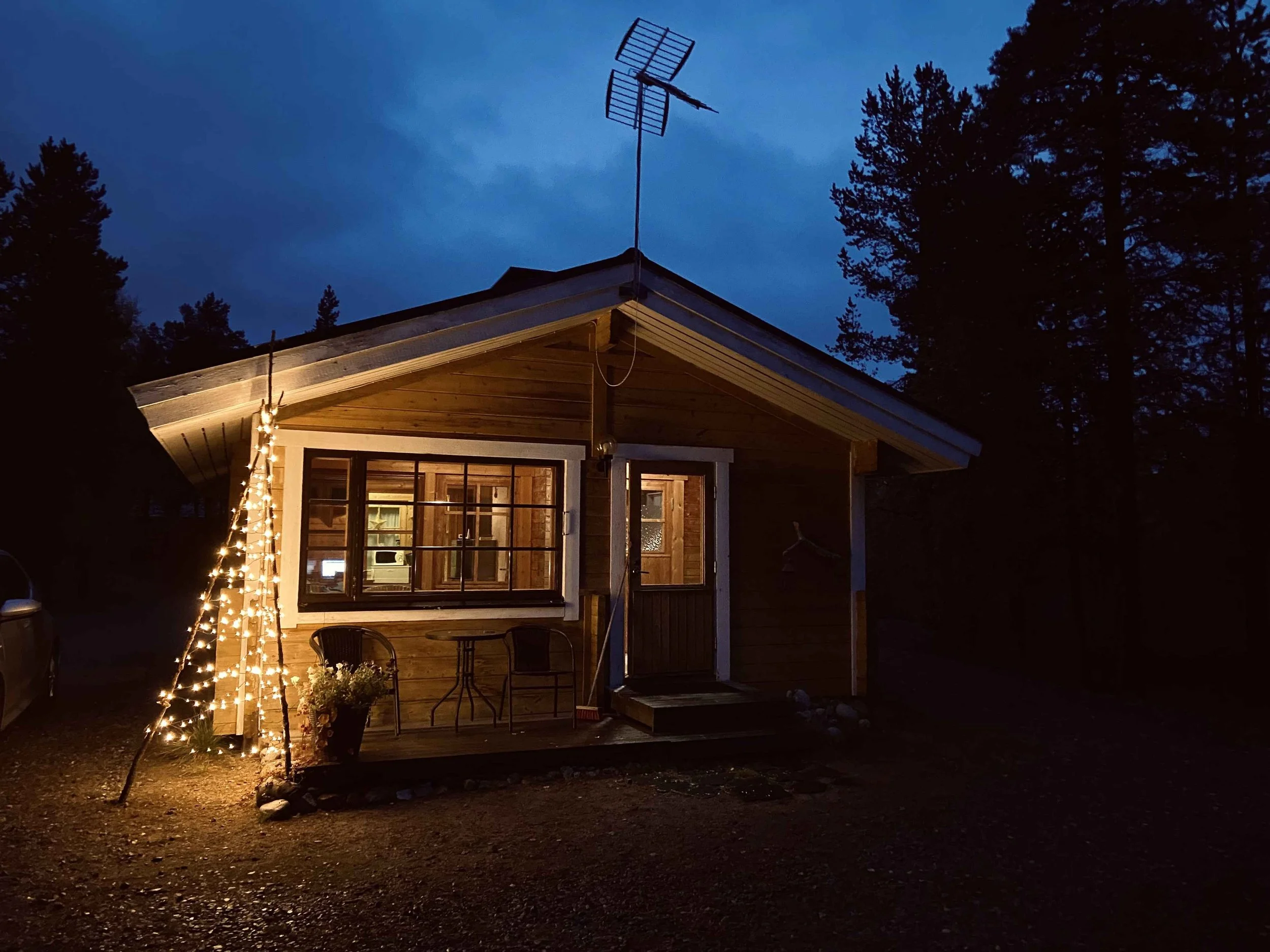
If you’re driving, it’s worth booking a cabin outside of Rovaniemi… with sauna!
Rovaniemi is the easiest base, no doubt. Flights land here, tours depart from here, and infrastructure is solid. It’s especially practical for families and groups of friends (I met there with two of my friends via direct flights, and we all came from different airports), and/or if your time is limited.
But Lapland is much bigger (and interesting!) than one town.
If you want:
• Remote cabins
• Fewer tour buses
• More silence
• A deeper wilderness atmosphere
Then smaller Finnish Lapland villages often feel more magical — especially during peak winter.
If you’re hesitating between Swedish Lapland and Finnish Lapland, read our Rovaniemi vs. Kiruna comparison.
If you’re looking for alternatives during busy winter months, check this article.
Timing matters. But location matters just as much. Sometimes the best move isn’t changing the month — it’s shifting the base.
Where to stay in Rovaniemi
If you choose Rovaniemi itself, we’ve broken down the best accommodation options in our Rovaniemi hotel guide.
December and February school holidays book out very early — especially unique glass cabins, the Arctic Snow Hotel and countryside stays.
Secure accommodation first, and then activities.
Zoom in and out on the map below to explore cabins and hotels in Finnish Lapland:
✈️ Find flights
🏨 Explore hotels, apartments, guesthouses, cabins
🧭 Browse activities and tours
🚗 Compare car rentals
🧳 Get travel gear (including our Arctic essentials)
🛡️ Travel safe with Heymondo Travel Insurance (5–15% off)
📱 Get a travel eSIM
🐾 Protect & track Arctic wildlife with Fahlo Bracelets (20% off)
FAQ: Best time to visit Rovaniemi
Is Rovaniemi worth visiting?
Yes — especially if it’s your first trip to Finnish Lapland. It’s easy to reach, well set up for winter activities, and a great base. Just know it can feel busy in peak season, so staying slightly outside town or choosing quieter Lapland alternatives can make the trip feel more Arctic and less theme-park adjacent.
What is the best month to visit Rovaniemi for Northern Lights?
For a strong mix of darkness, winter atmosphere, and fewer crowds, October to March is the main Northern Lights window. For the best “winter + aurora” balance, January–March often wins.
When is the best time to visit Rovaniemi for snow?
For reliable snow and full winter activities, aim for January to March. Snow can arrive earlier, but those months are typically the most dependable for a proper winter landscape.
Is December a good time to visit Rovaniemi?
December is great if you want Christmas atmosphere and Santa season — but it’s also the busiest and most expensive period. If you want similar winter magic with fewer crowds, consider January or early March, or base yourself outside Rovaniemi.
How early do you need to book Rovaniemi for Christmas?
For mid-December through early January, it’s smart to book 4–8 months in advance, especially for glass igloos, unique cabins, and family-friendly stays. Flights and popular winter tours can also sell out early. If you’re planning around school holidays, earlier is safer.
When can you see tykky in Finnish Lapland?
Tykky is when trees get coated in thick layers of snow and ice until they look like frozen sculptures. The best window is usually January to March, when temperatures stay consistently below freezing and snow builds up over time.
For the most dramatic tykky landscapes, head away from the city and toward higher, forested fells. Classic places include Riisitunturi National Park and the Posio area. You can also find tykky conditions in parts of eastern and northern Lapland when the weather lines up.
What is the best time to see ruska in Finnish Lapland?
Ruska is Finland’s autumn foliage season, and it typically peaks from mid-September to early October. Forests go full gold-and-rust mode, crowds drop, and it’s one of the most peaceful times to explore Lapland.
We wrote a full cozy guide to Finnish Lapland in fall.
How many days do you need in Rovaniemi?
Most people need 3 to 5 days to do the highlights comfortably. But fair warning: you’ll probably want to stay longer anyway.
Is Finnish Lapland better than Rovaniemi?
Rovaniemi is part of Finnish Lapland, but it’s the most developed and most visited hub. If you want quieter, wilder, more immersive Lapland, smaller villages and wilderness stays can feel more magical — especially during peak winter.
When should you avoid Rovaniemi?
If you dislike crowds and inflated prices, avoid mid-December through early January and busy winter school holiday weeks. It’s still beautiful, just less calm.
Here is my go-to travel playlist for an Arctic trip - and to call the mighty northern lights:
Rovaniemi is a gateway. Finnish Lapland is the real experience.
Choose December for the Christmas spectacle. Choose January–March for deep winter. Choose autumn for quiet auroras. And choose smaller Lapland villages if crowds aren’t your thing.
In the Arctic, timing isn’t just one more thing to consider. It reshapes the entire trip.
Finally, explore all our Lapland Travel Guides here.

Free download
Travel Cheaper Cheat Sheet
27 tips on flights, hotels, hidden costs and more — spend less without missing what actually matters.
No spam. Unsubscribe anytime.
Best Hotels in Rovaniemi
Winter Activities in Rovaniemi
Christmas in Rovaniemi
Best Time to Visit Rovaniemi & Finnish Lapland
How to See the Northern Lights in Rovaniemi
Magical Alternatives to Rovaniemi
Our Northern Lights Tour in Rovaniemi
How to Get to Rovaniemi
Best Glass Igloos in Finland
Aurora Tours in Finnish Lapland
Northern Lights in Lapland
Best Aurora Hotels in Finland
Northern Lights Hub
Lapland in General:
Finnish Lapland in Fall
One Lapland Trip, Three Countries
Kiruna vs. Rovaniemi
Lapland on a Budget
Sauna and Ice Dip
Arctic Food Guide
