
Best Time to Visit Lapland (Finland, Sweden & Norway)
When is the best time to visit Lapland? Finland vs Sweden vs Norway compared — snow reliability, Northern Lights season, midnight sun, and real climate differences.

We’ve seen the northern lights across Lapland in different seasons — here in February near Rovaniemi, Finnish Lapland
Last update: August 2026
Lapland is not one place.
It stretches across Finland, Sweden, Norway and Russia, and each side behaves differently. Different snow patterns. Different temperatures. Different landscapes.
If you’re asking:
Will there be snow in Lapland in December?
Is Lapland warmer in Norway than Finland?
When is snow guaranteed?
Is November too early?
Is April too late?
You’re asking the right questions and will find an answer in this guide!
🛌 Where to stay:
• Camp Alta, Kiruna — we stayed here. Lakeside cabins just outside town, wood stoves, and open sky over the frozen lake for the aurora.
• Arctic TreeHouse Hotel, Rovaniemi — glass-walled treehouse suites just outside the center, a design-forward base for the Finnish leg.
• Villa Havblikk, Tromsø — we stayed here. Independent 1917 villa rebuilt with real character, fjord views, and a proper bar.
🇸🇪🇫🇮🇳🇴 Top experiences:
• 🇸🇪 Dog sledding near Abisko — mushing through the national park's snowy trails, no experience needed.
• 🇫🇮 Lapland Reindeer and Husky Safari from Rovaniemi — reindeer farm visit, sleigh ride, and a husky-sled run through the forest.
• 🇳🇴 Northern Lights tour in Tromsø — a guided chase to the clearest skies outside the city.
🚗 Compare car rentals for the trip: Booking.com car rentals — only worth it if you're confident driving in Arctic winter conditions, fine the rest of the year (but watch the reindeer).
When is the best time to visit Lapland? Quick answer
Best for guaranteed snow: January to March
Best for Northern Lights: Late September to March (read our guide to the northern lights in Lapland here)
Best for milder winter: Coastal Norway
Best for deep winter magic (snowy forests): Finnish & Swedish inland, January-February
Best for midnight sun: June and July
Now let’s break it down properly.
When is snow guaranteed in Lapland?
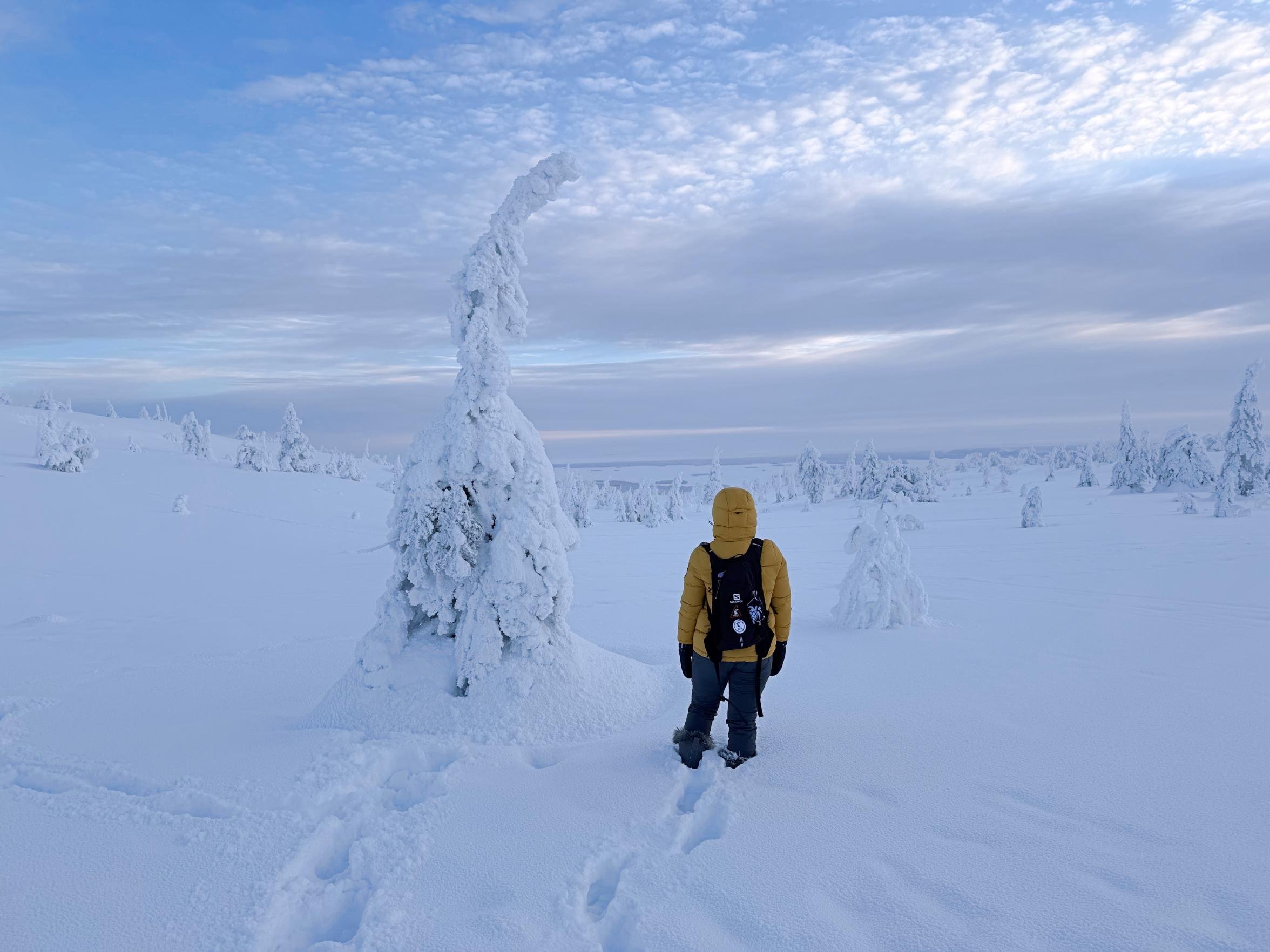
Riisitunturi National Park, in Finnish Lapland, is famous for its “tykky” tree in winter
This is the question everyone really wants answered. The short version: Lapland is cold, and most of it boasts an Arctic climate. But snow timing varies depending on geography.
Finnish Lapland (Rovaniemi, Saariselkä, etc.)
If you’re staying around Rovaniemi or further north in winter:
Snow usually becomes reliable from late December
January to March is very safe
April still has deep snow inland, but you won’t see “tykky” trees
Finnish Lapland is forest-heavy. This is where you get that heavy “tykky” snow — trees bending under thick white layers.
Temperatures can drop to −30°C or lower inland, but the air is dry and the wind is usually calmer than Norway.
If your priority is winter postcard scenery, Finland is definitely the safest bet. Read our dedicated guides to learn more:
👉 Winter activities in Rovaniemi
👉 Best time to visit Rovaniemi and Finnish Lapland
👉 Sauna + ice dip in Finnish Lapland
👉 Northern lights in Rovaniemi
👉 Magical Christmas alternatives to Rovaniemi
👉 Best Northern Lights Hotels in Finland
👉 How to See the Northern Lights in Rovaniemi
Explore tours and accommodations in Rovaniemi:
Swedish Lapland (Kiruna, Abisko)
Snow reliability in Swedish Lapland is similar to Finland:
Very reliable January to April
Late December is usually safe
November is more variable
The difference is landscape. Around Kiruna and Abisko, forests open into tundra. Big skies. Wider horizons. Fewer trees blocking the view.
Abisko is also known for relatively clearer skies compared to coastal Norway — something aurora hunters care about.
Coastal Swedish Lapland, around Luleå, is slightly milder because of the Baltic Sea. Snow still arrives in winter, but conditions can be more variable than in Kiruna. What Luleå offers instead is frozen sea ice and archipelago landscapes, which feel very different from the tundra around Abisko.
If you want snow plus vast Arctic space without Rovaniemi crowds, Sweden is strong. Read our guides to learn more:
👉 Kiruna and Swedish Lapland travel guide
👉 Things to do in Kiruna in winter
👉 Best hotels in Swedish Lapland
Check tours and places to stay in Abisko:
Explore tours and places to stay in Kiruna:
Norwegian Arctic (Tromsø, Alta)
In Northern Norway, Lapland looks and feels very different. This region is warmed by the Gulf Stream, which means:
Warmer average temperatures
More coastal wind
More weather variability
Early December can be inconsistent for snow in Tromsø. Alta, further inland in Finnmark, is colder and more reliable.
The windchill factor matters here. Trust us: −5°C in Tromsø can feel harsher than −15°C in inland Finland because of wind.
If your priority is dramatic fjords and mountains rising straight from the sea, Norway definitely wins visually. And you can imagine with northern lights dancing above! But if your priority is snow certainty, inland Finland and Sweden are more stable, and correspond more to the idea of a winter wonderland.
👉 Best hotels in Tromsø for the northern lights
Find things to do and a place to stay in Alta:
Explore tours and places to stay in Tromsø:
Is Lapland in Norway warmer than Finland?

In October, we could still hike in Alta, and we got the first snowfall — Here at the top of Mt. Haldde
Yes — on paper. Norway’s coast is significantly milder because of the Gulf Stream. Tromsø often sits around −5°C to −10°C in winter.
Finnish and Swedish inland can easily drop below −20°C. But temperature is only half the story.
Finland’s cold is dry and still. Norway’s cold is windy and coastal.
Comfort depends on exposure, not just numbers.

Did you know?
Lapland and Sápmi are often treated as the same, but they refer to different concepts. Lapland is the modern geographical term most travelers use. Sápmi is the traditional homeland of the Sámi people, stretching across parts of Norway, Sweden, Finland, and Russia.
Is snow guaranteed in December in Lapland?
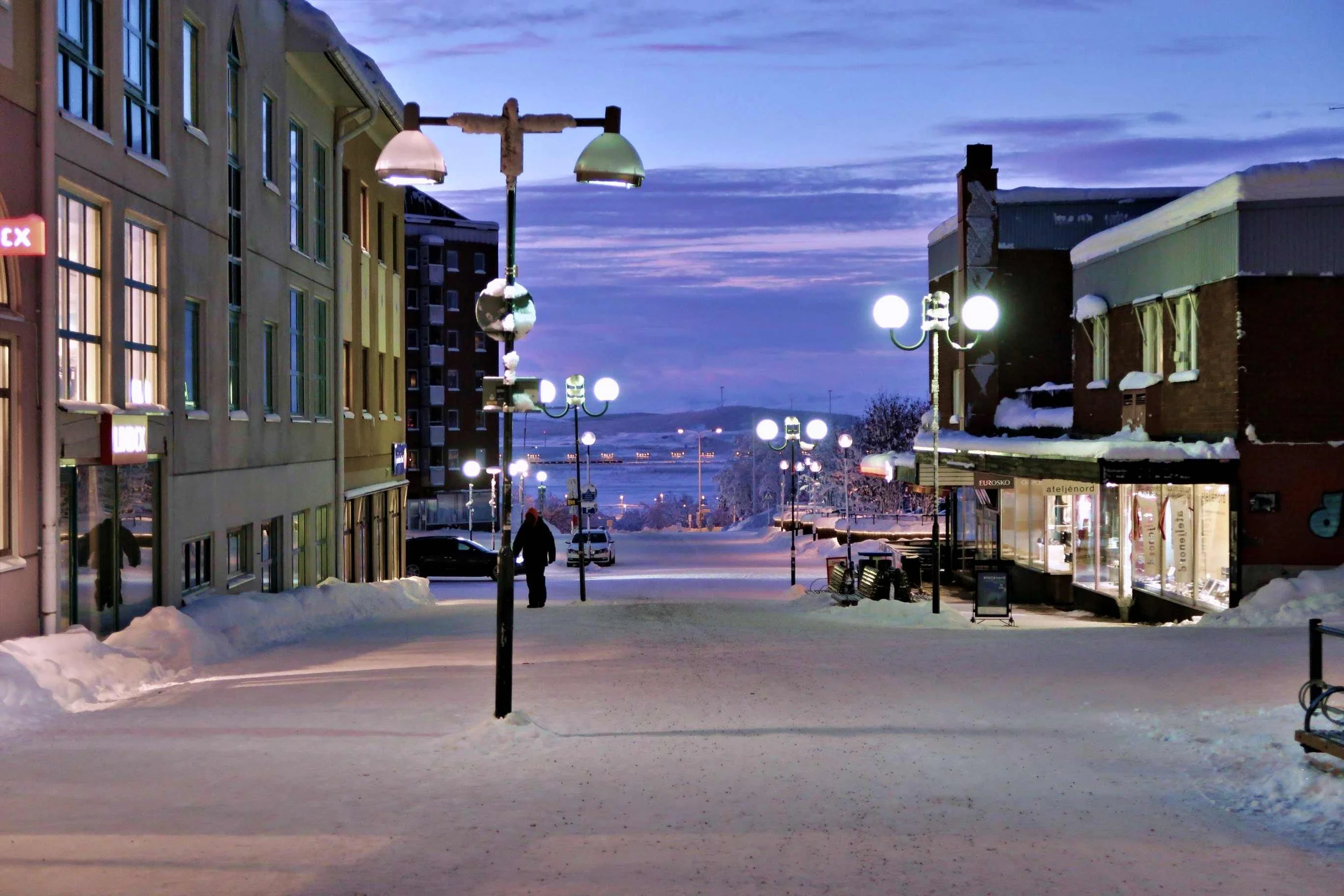
Snow is very likely in Lapland in December, but days will be darker than in the heart of the winter — Here in Kiruna, Swedish Lapland
This is where most booking anxiety lives.
Early December (before Christmas)
Finland & Sweden: Snow likely, but not guaranteed every year
Coastal Norway: Higher risk of rain or thin coverage
Late December (Christmas period)
Snow usually established in Finland & Sweden
Norway more reliable than early December, but still weather-dependent
If your trip is built around snowmobiles, dog sledding, and thick forest scenery, January to March is safer than early December.
If you’re flexible and mainly want Christmas atmosphere + darkness, December works. Read our article: Christmas in Rovaniemi and Finnish Lapland for more.
When are the northern lights best in Lapland?
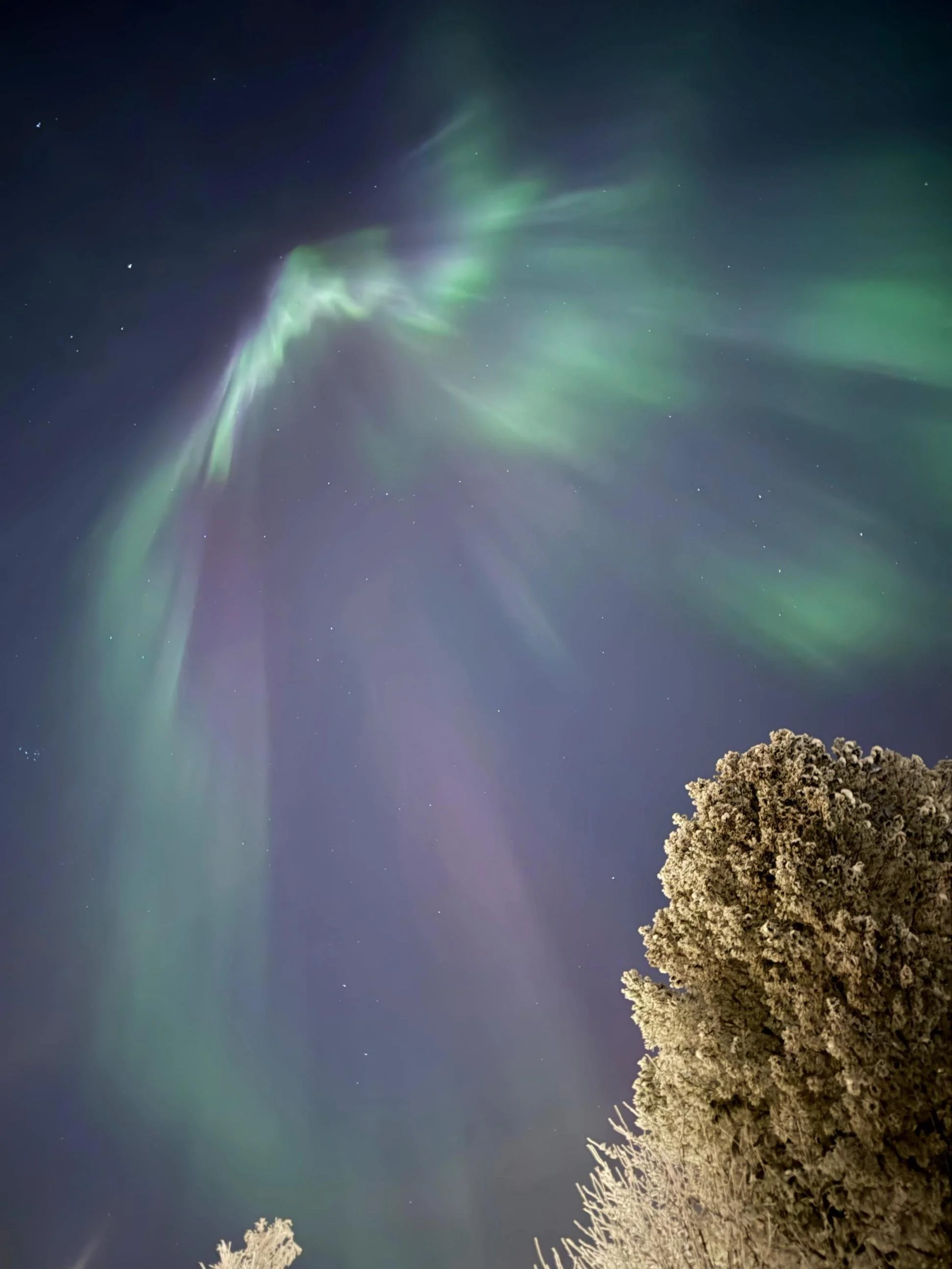
Northern lights in Rovaniemi in February
Aurora season runs roughly from late September to late March, when nights are dark enough. Based on our own experience, northern lights are stronger around the fall equinox, but we’ve seen excellent ones in the heart of the winter too. And weather is always unpredictable in the Arctic.
But there are a few differences between regions:
Norway: Coastal clouds can block visibility
Swedish Lapland (Abisko): Known for clearer skies
Finnish Lapland: Very good balance of darkness + accessibility
Darkness + clear skies + solar activity = success. And these factors matter way more than the country.

Penguin tip:
Dreaming of seeing the northern lights? Our Northern Lights Hub covers the science, the best times and places to see it, our favorite apps, photography basics, and tips from our own Arctic trips.
What about November and autumn in Lapland?
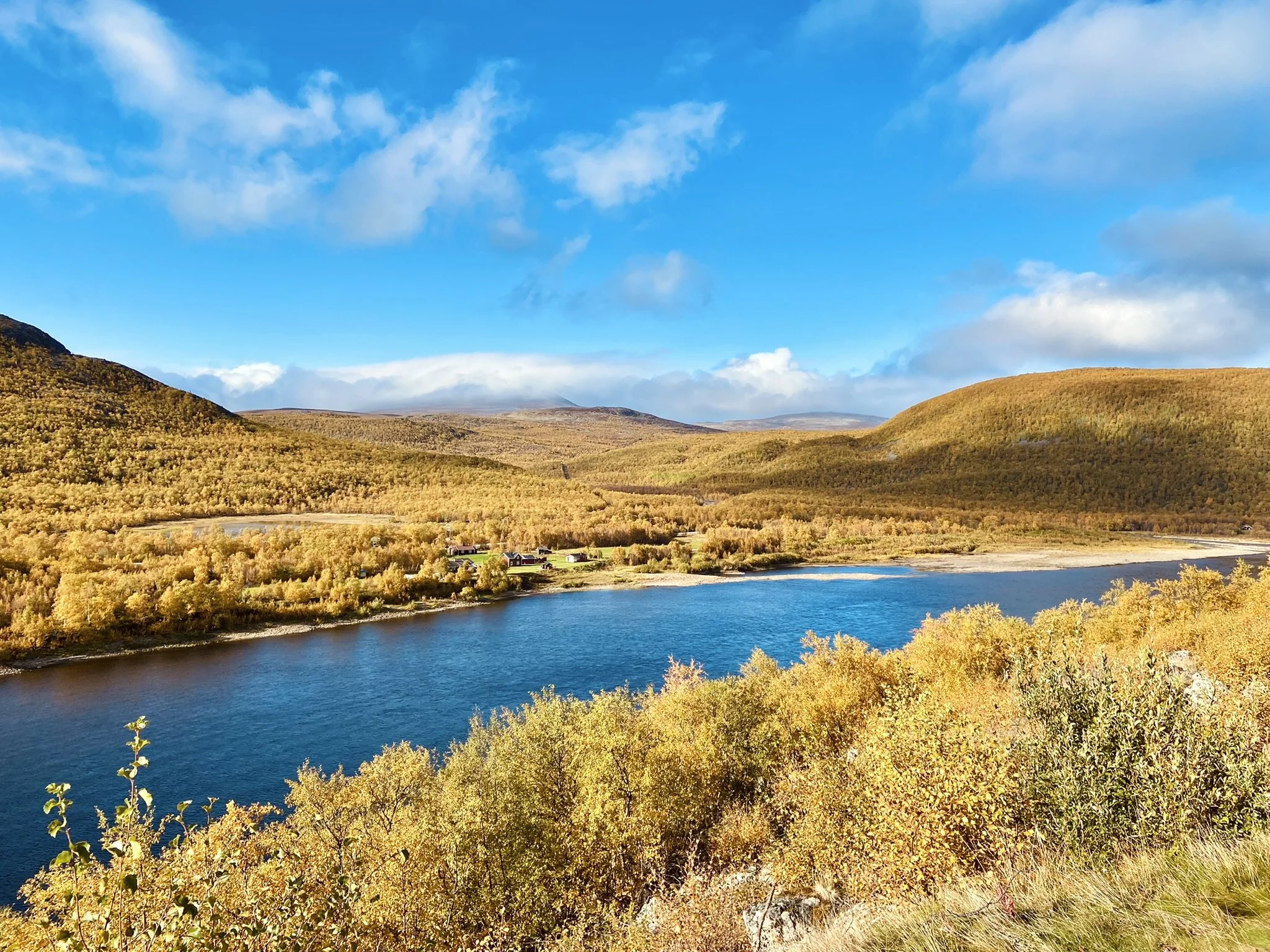
Late September, standing in Finnish Lapland (near Utsjoki), with Norway on the other side!
November is transitional.
Dark
Often snow arriving
Not peak winter scenery yet
Fewer tourists
It can feel moody and atmospheric — but not postcard winter magic yet.
If snow is non-negotiable, November is risky. If quiet and early auroras matter more, autumn can work. And you might get the first snowfall, which is pretty magical (we did in Alta and the Lofoten). Earlier in fall, Finnish Lapland is spectacular with its “ruska” colors.
Is April and spring too late for Lapland?
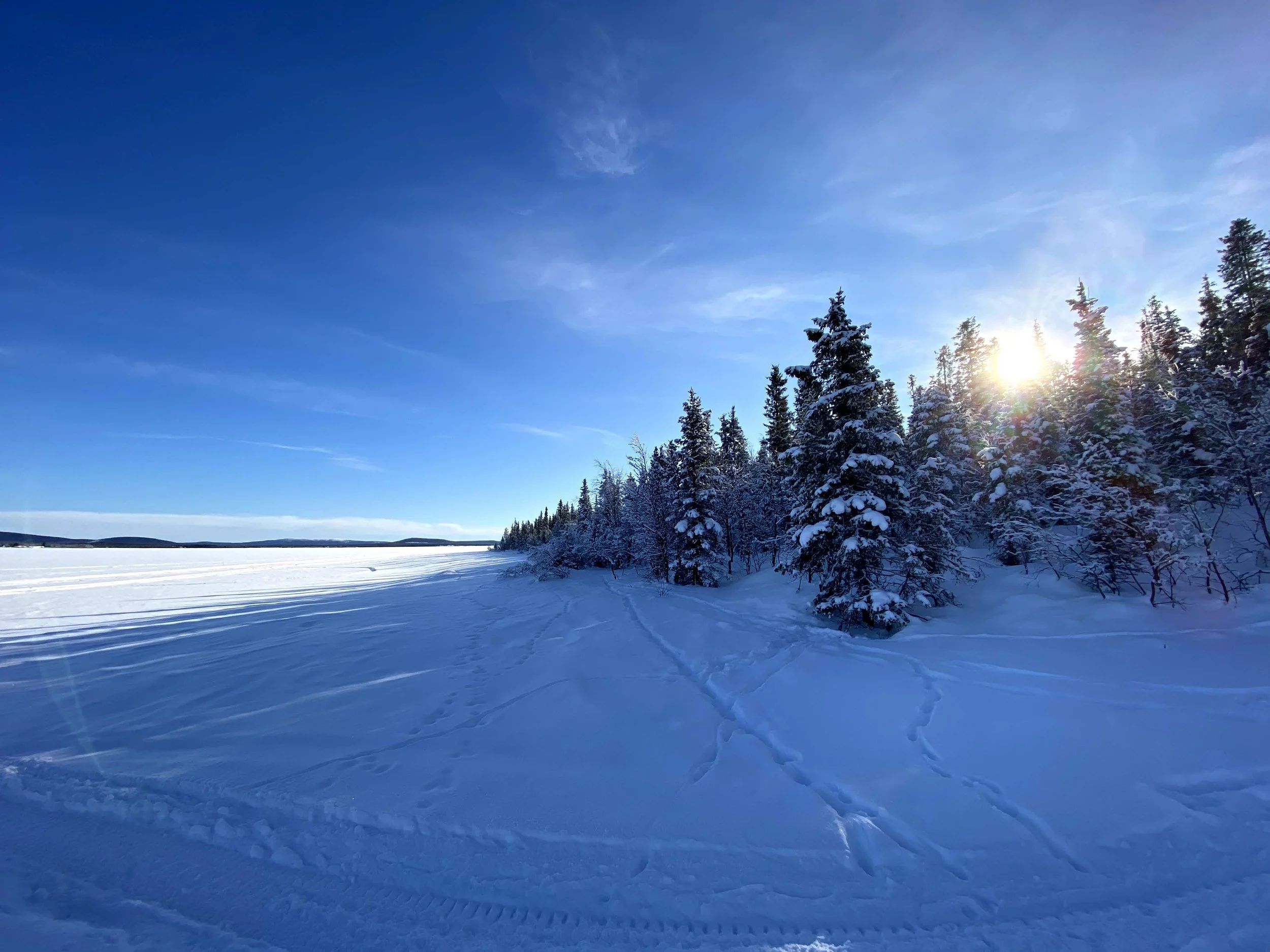
In April, the sun is back for good and the air is crispy-blue (just made up a new word)! — Here in Jukkasjärvi, Swedish Lapland
Not at all, but with a few caveats. In inland Finland and Sweden, in April:
Snow remains deep
Days are longer
Light becomes beautiful and soft
April is excellent for:
Skiing
Dog sledding (if snow conditions are good for the dogs — tours are more unpredictable)
Snow activities without polar darkness
Northern lights early April
Coastal Norway starts shifting faster toward spring.

Wherever you want to go in Lapland, we recommend a travel insurance. Get 5 to 15 % with our partner HeyMondo!
Best time for the midnight sun in Lapland

Summer in Lapland is awesome, but personnally we have a hard time going to bed!
June and July bring 24-hour daylight above the Arctic Circle.
Differences:
Finland: Forest + lakes + glowing evening light
Sweden: Wide tundra + open Arctic horizons
Norway: Midnight sun over fjords and mountain silhouettes
There is no snow and no aurora. This is hiking, kayaking, fishing, road trip season.
Completely different Lapland, but absolutely magical too. Just remember to bring a sleeping mask and mosquito repellent!
Finland vs Sweden vs Norway: Which should you choose?
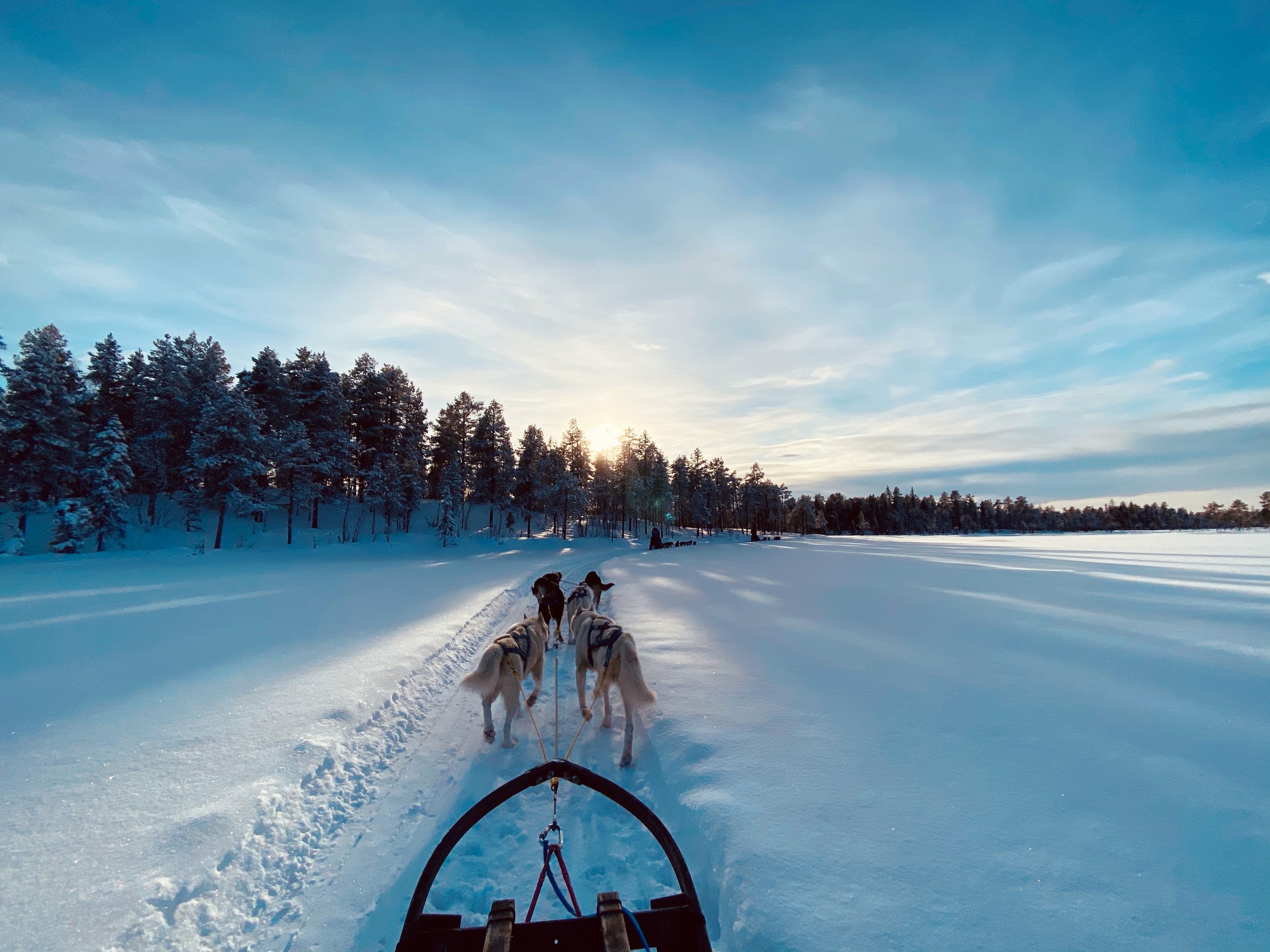
We love Lapland in every season, but we particularly enjoy winter for deep snow, mushing and northern lights — Here near Kiruna, Swedish Lapland
Choose Finnish Lapland if: You want reliable snow, forest magic, Santa vibes and classic winter activities.
Choose Swedish Lapland if: You want snow plus big tundra landscapes and clearer skies.
Choose Norwegian Arctic if: You want dramatic fjords, slightly milder temperatures, and cinematic scenery.
There is no absolute “best”, there’s only best for your priority.
And if you have time, we strongly recommend combining 2 or 3 countries. We suggest a few itineraries in our guide:
👉 One Lapland trip, three countries
Month-by-month summary
November – Dark, transitional, snow uncertain
December – Atmospheric, snow builds, early month riskier
January–March – Safest snow window across all regions
April – Still snowy inland, longer days
May – Melting season, not ideal for winter magic
June–July – Midnight sun, hiking season (If you’re into hiking, read our guide to Hiking in Finnish Lapland).
September–October – Aurora returns, autumn colours, no winter snow
✈️ Find flights
🏨 Explore hotels, apartments, guesthouses, cabins
🧭 Browse activities and tours
🚗 Compare car rentals
🧳 Get travel gear
🛡️ Travel safe with Heymondo Travel Insurance (5–15% off)
📱 Get a travel eSIM
🐾 Protect & track Arctic wildlife with Fahlo Bracelets (20% off)
FAQ: Best time to visit Lapland
When is snow guaranteed in Lapland?
Snow is most reliable from January to March across Finnish and Swedish Lapland, and inland northern Norway such as Alta. Early December and November can be less predictable, especially along the Norwegian coast.
Is December a good time to visit Lapland?
Yes, but it depends on your expectations. Early December can be risky for thick snow cover. Late December is usually more reliable in Finland and Sweden. Around Christmas, places like Rovaniemi become extremely busy due to Santa tourism, with higher prices and larger crowds. If snow is essential and you prefer fewer people, January or February is safer.
Which country has the most reliable snow: Finland, Sweden, or Norway?
Inland Finland and Swedish Lapland are generally more consistent for deep winter conditions. Coastal Norway is milder and can have more weather variation.
When is the best time to see the Northern Lights in Lapland?
The Northern Lights are visible from late September to late March, when nights are dark enough. Clear skies matter more than country choice.
Is Lapland warmer in Norway than in Finland?
Yes. Coastal northern Norway is usually warmer because of the Gulf Stream. However, wind can make it feel colder than inland Finland’s dry Arctic cold.
Is April too late for winter activities in Lapland?
No, especially inland. April often still has deep snow and longer daylight hours. However, dog sledding in April depends on snow depth and trail conditions. If temperatures rise or snow coverage becomes thin, some operators may shorten or adjust routes for the safety of the dogs.
Here is my go-to travel playlist for an Arctic trip - and to call the northern lights in season:
Lapland is a region shaped by forests, fjords, tundra, inland cold, coastal wind, and geography that genuinely changes the experience from one side of a border to another.
If you want snow certainty, aim for January to March.
If you want auroras without deep winter cold, look at late September or March.
If you want drama over predictability, Norway always delivers.
If you want classic winter silence, inland Finland and Sweden are hard to beat.
And if you want to understand how to combine all three properly, read our three-country Lapland guide. You can also explore all of our Lapland Travel Guides here.
Wherever and whenever you go, we’re pretty sure you’ll fall in love with Lapland just like we keep doing over and over again.

Free download
Travel Cheaper Cheat Sheet
27 tips on flights, hotels, hidden costs and more — spend less without missing what actually matters.
No spam. Unsubscribe anytime.
