
Best Time to Visit Svalbard — Polar Bears, Aurora & Midnight Sun Explained
When to visit Svalbard for polar bears, northern lights, wildlife & midnight sun. Our month-by-month guide with real Arctic experience.

Standing on the sea on the East Coast in February
Last update: August 2026
When we wrote Norway, Svalbard and Jan Mayen — Next level Arctic, what impressed us most wasn’t a single activity. It was scale. The exposed mountains and the quiet Longyearbyen streets. That feeling that you are standing at the edge of the world, while having all the modern amenities.
In the high Arctic, what you feel there depends entirely on light. And light depends entirely on season. If you’re wondering about the best time to visit Svalbard, Norway, here is a month-by-month breakdown, based on two decades of Arctic experience.
🛌 Where to stay:
• Funken Lodge — the coziest, most comfortable option in town, worth it after long days of snowmobiling or aurora hunting.
• Basecamp Hotel — built from driftwood and decorated with pelts, with a rooftop glass loft that's one of the best aurora-watching spots in town.
• Gjestehuset 102 — we stayed here. Simple, friendly guesthouse with glacier views and a shared kitchen, the budget-friendly pick.
🇳🇴 Top experiences:
• Northern lights tour — for the polar night window, October through February.
• Wildlife expedition for Arctic foxes and walrus — for spring and summer, when polar bear and wildlife odds are highest.
• Boat trip to Barentsburg — a Russian settlement, a summer-only excursion and one of the strangest places in the Arctic.
When is the best time to visit Svalbard? Short answer
The best time to visit Svalbard depends entirely on what you're there for. June through August is expedition season — sea ice retreats, ships can reach remote areas, and your chances of spotting polar bears are at their highest. October through February is when you go for northern lights: polar night means aurora can appear at any hour with no daylight to compete, though temperatures regularly drop below -30°C and the cold is in a different category from mainland Lapland. March is the sweet spot for winter activities — snow coverage, snowmobile excursions, and returning daylight without the full darkness of polar night. May and September are quieter shoulder months with some atmosphere but limited expedition access.
Whatever you're after, Svalbard requires planning: you can't leave Longyearbyen without a guide or a rifle, rooms fill fast in summer, and this is not the kind of place you improvise.
Svalbard seasons explained (with months and temperatures)
Svalbard does not follow mainland Norway’s rhythm. It has five functional seasons.
Winter (November–February)
Average temperatures:
November: −8°C to −2°C
December–January: −14°C to −8°C
February: −16°C to −10°C (these are average. Temperatures often drop way below — we experienced -35ºC in February)
Light:
Polar night from mid-November to late January
No sunrise during peak period
This is true darkness. When we talk about Svalbard feeling like another planet, winter is where that sensation peaks. Even midday is blue twilight or black sky.
Best for:
Snowmobile excursions
Ice caves
Atmospheric photography
Not ideal for:
Boat expeditions
Wildlife diversity
If you are searching for the best time to see the northern lights in Svalbard, this is the answer. October to February, with peak darkness November–January.
But it’s intense. Temperatures can be extreme, and don’t underestimate the wind chill/ice factor. We’re used to -30ºC (for example, in Swedish Lapland or Finnish Lapland), but we’ve never felt as cold as in Svalbard.

Don’t you dare dying!
Svalbard is full of Arctic hazards, but here’s the strangest one: you can’t be buried there. Since the 1950s, Longyearbyen has stopped local burials because the permafrost preserves bodies instead of letting them decompose. Anyone who is seriously ill is transferred to the mainland.
Here’s Eli trying not to die in February!
Sunny winter (March–April)
Average temperatures:
March: −17°C to −10°C
April: −14°C to −6°C
Light:
Sun returns mid-February
By April, long bright days
This is arguably the most balanced winter window. You get:
Snow coverage
Dramatic Arctic light
Aurora potential in March
More psychological ease than polar night
If you are researching the best time to visit Svalbard in winter, March is often the sweet spot, and prices start to increase as well.
Spring (May)
Average temperatures:
May: −7°C to −1°C
Light:
Midnight sun begins late April
May is transitional. Sea ice is still present offshore. Snow remains in many areas. Birdlife begins returning.
Operationally, it depends on ice conditions. Some maritime routes may begin reopening, but full expedition access is not guaranteed.
It’s a shoulder month with atmosphere and fewer visitors.
Summer (June–August)
Average temperatures:
June: 0°C to 5°C
July: 3°C to 7°C
August: 2°C to 6°C
Light:
24-hour daylight
This is expedition season.
Summer allows:
Boat-based circumnavigation
Polar bear-focused expeditions
Walrus haul-outs
Seabird cliffs
Whale sightings
If you are searching for the best time to see polar bears in Svalbard, June through August is the most reliable period due to navigational access.
If you are looking for the best time to see wildlife in Svalbard, summer wins for diversity.
Autumn (September–October)
Average temperatures:
September: 0°C to 4°C
October: −6°C to 0°C
Light:
Darkness returns progressively
Aurora visibility resumes
Autumn is quieter. Boat operations reduce as conditions shift. Wildlife activity tapers. Darkness increases.
If you want:
Fewer visitors
Early aurora potential
Moody Arctic landscapes
September and October can work. But this is not peak wildlife season.
Best time to see polar bears in Svalbard

Longyear is a “safe” zone, but you can’t leave it without a gun or an armed guide
You might have heard horror stories about polar bear attacks in Svalbard. Quick reassurance: polar bears usually don’t roam near Longyear, even though you can’t leave the safe perimeter without a gun or an armed guide.

A roaring proposal
Jake proposed just beyond the polar bear warning sign, north of Longyearbyen, after we’d spent an entire week waiting for the Northern Lights to appear. They never did.
For a self-confessed polar bear addict (Eli here), I couldn’t have imagined a “cooler” setting. The only complication was the temperature: −36°C. I couldn’t remove my second pair of gloves for more than a few seconds, which meant we managed exactly one photo before rushing inside.
We later discovered the ring was on the wrong hand.
Polar bears follow sea ice. Access follows navigation. Navigation follows ice retreat. That’s why June–August is the strategic window.
You increase your probability of sightings because ships can reach more remote areas. Expedition length and flexibility matter. We explain the differences between expedition types in our Svalbard tours & expeditions guide.
No serious guide will EVER promise sightings. Probability improves with access, but polar bears are free and it’s up to them to show up or not.
🐻❄️ Are you as obsessed by polar bears as we are? You can track a real polar bear as it roams the Arctic with Fahlo’s Ice Tracker bracelet. They partner with Polar Bears International, which we interviewed in another article. Get 20% off if you use our link!
Best time to see northern lights in Svalbard
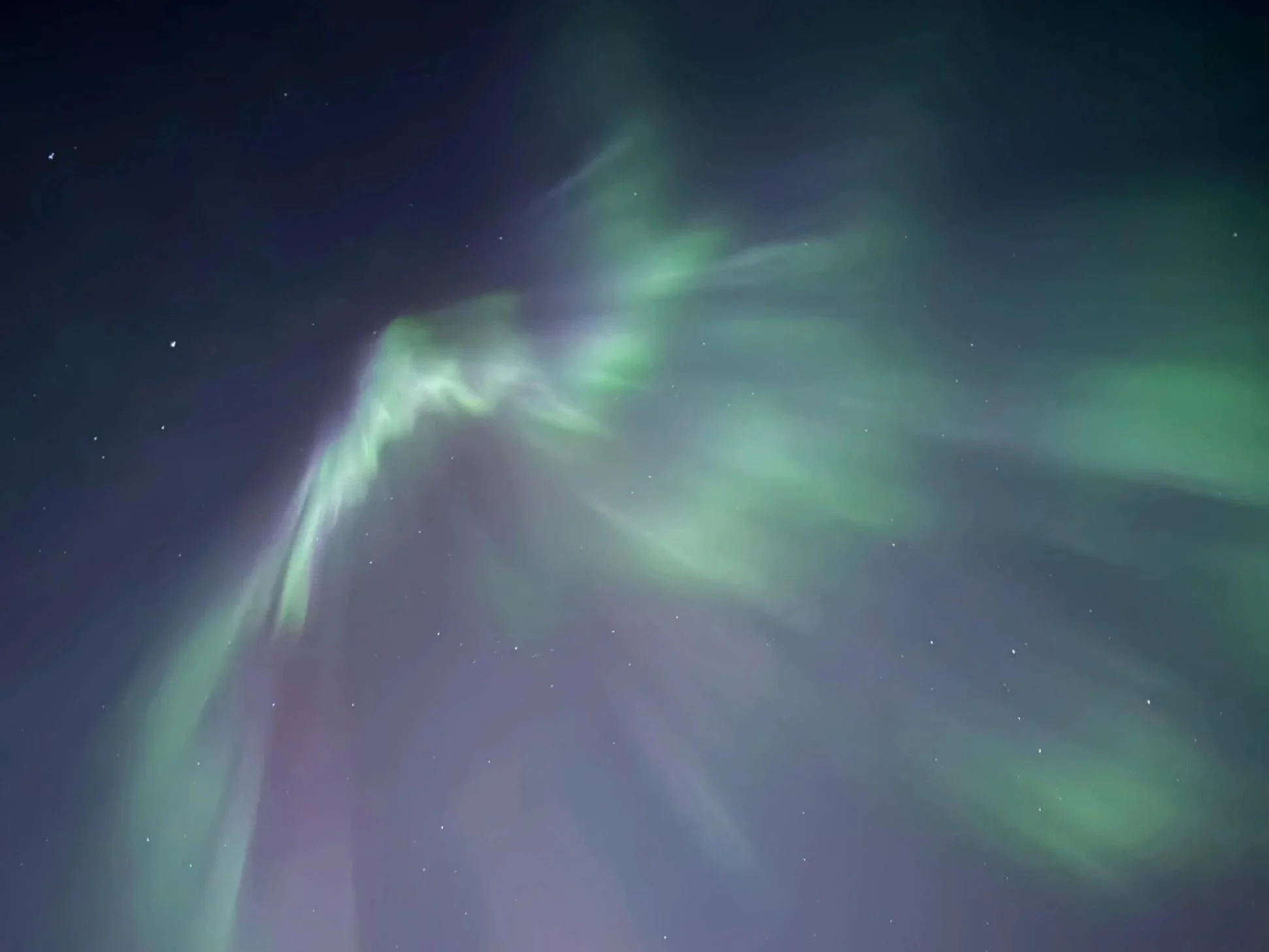
It’s worth waiting in freezing temperatures for this!
Northern lights are visible when:
It’s dark
The sky is clear
Solar activity cooperates
In Svalbard, that means October through February.
The unique element here is polar night. During peak winter, aurora can appear in the middle of the day because there is no daylight interference.
If aurora is your main goal, winter is ideal. If you want wildlife diversity alongside aurora, you will not get both at peak levels. Just bear in mind that extreme cold temperatures make it difficult to wait outside for hours.
Check our guide to the northern lights in Norway, and our Northern Lights Hub for our best tips!
Is Svalbard worth visiting?

Noon in Svalbard in February — Awesome snowshoe hike above Longyear!
Standing in Longyearbyen feels a world away from standing in mainland Norway. It’s a lot wilder. Raw.
Svalbard is worth visiting if:
You value remoteness
You accept cost (you can’t leave Longyear without a tour)
You plan intentionally
You respect environmental constraints
It’s not your first Arctic experience (especially if you visit in winter)
It’s not spontaneous tourism. It’s deliberate, extreme travel.

Penguin tip:
Arctic adventures aren’t risk-free. We even had a snowmobile accident ourselves. Get proper travel insurance that actually covers outdoor activities and remote destinations. We use Heymondo because their plans include adventure coverage, and booking through our link gives you at least 5% off, sometimes 15% during promos.
Where to stay and why timing matters
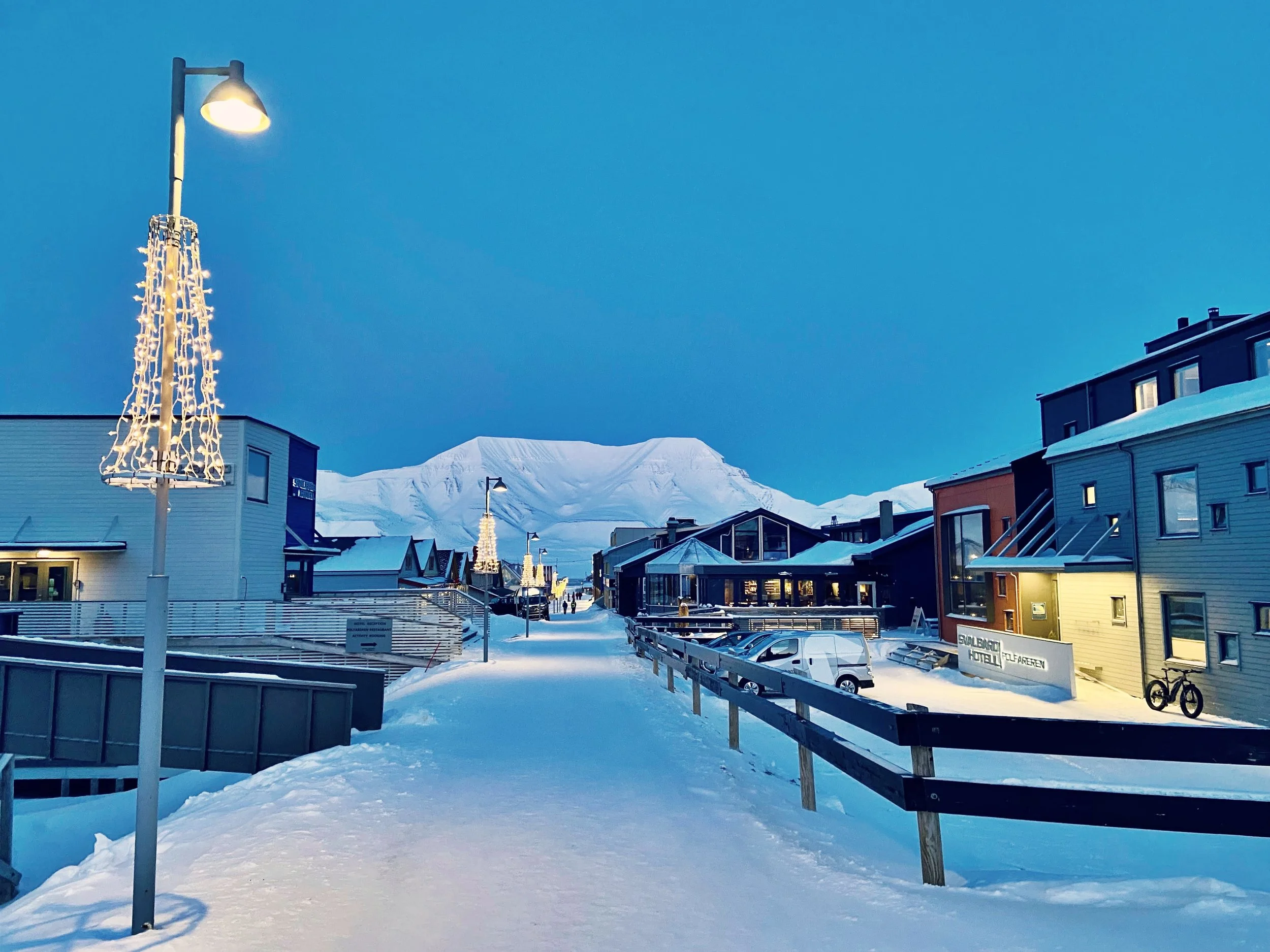
Longyear “main street”, with accommodations, bars, restaurants and shops
It all comes down to your preferences, budget and availability, but here’s a brief guide. Longyearbyen is small. Inventory is limited.
In summer, rooms fill really fast due to expedition traffic. In winter, interior comfort and proximity to snow-based tours matter more.
Our best hotels in Svalbard guide breaks down which properties suit different travel styles and seasons.
Zoom in on the map below to find a hotel in Svalbard:
✈️ Find flights
🏨 Explore hotels, apartments, guesthouses, cabins
🧭 Browse activities and tours
🧳 Get travel gear (including our Arctic favorites)
🛡️ Travel safe with Heymondo Travel Insurance (5–15% off)
📱 Get a travel eSIM
🐾 Protect & track Arctic wildlife with Fahlo Bracelets (20% off)
FAQ: Best time to visit Svalbard
When is the best time to visit Svalbard?
June to August is best for wildlife and polar bear expeditions. October to February is best for northern lights. March is ideal for winter activities with returning daylight.
When can you see polar bears in Svalbard?
Polar bears can be present year-round, but June through August offers the most reliable expedition access due to sea ice conditions.
When can you see northern lights in Svalbard?
Northern lights are visible from October through February, with peak darkness during polar night from November to January.
What is Svalbard weather like in summer?
Summer temperatures range from 0°C to 7°C, with 24-hour daylight and cold coastal winds.
Is Svalbard worth visiting?
Yes, if you are prepared for a remote, expensive, and environmentally regulated Arctic experience that requires careful planning.
Finally, get in the mood to start planning your Arctic adventure in Svalbard and Jan Mayen:
As usual in the Arctic, there’s no universal best time to visit Svalbard.
There is only clarity of objective. If you want:
Maximum wildlife and polar bear probability → July
Pure aurora and full darkness → December
Snow adventure with daylight balance → March
Expedition flexibility without peak pressure → Late June
Choose your season, and plan accordingly. You won’t regret it!
Finally, explore all our Arctic Norway Travel Guides here.

Free download
Travel Cheaper Cheat Sheet
27 tips on flights, hotels, hidden costs and more — spend less without missing what actually matters.
No spam. Unsubscribe anytime.
