
Nomad eSIM Review: We Used It Across America
We tested Nomad eSIM across Texas, Wyoming, Montana and Idaho. Here is our experience.

Publishing on Penguin Trampoline with Nomad eSIM from Yellowstone National Park
This article was created in partnership with Nomad eSIM. All opinions are our own.
We installed Nomad eSIM before boarding our flight to Texas. The moment we landed and switched off airplane mode, it connected, and we were already texting our pick-up before we made it to baggage claim.
That first impression set the tone for a road trip that took us through Texas, Wyoming, Montana, and Idaho. Here's what we found out.
Jump to: What is Nomad eSIM? · Our experience · Coverage · Plans & pricing · Pros & cons · How it compares · Perks & loyalty · Best for · FAQ
What is Nomad eSIM?
Nomad eSIM is a travel eSIM provider. You buy a data plan for your destination before you leave home, install it via QR code or the app, and activate when you land. No physical SIM swap, no roaming charges from your home carrier, no running around trying to find Wi-Fi (we’ve been there), and no stress at the airport. If you need to stay connected while you travel, an eSIM is a game-changer.
Nomad eSIM covers 200+ destinations with both fixed-data and unlimited plan options.
Our experience

Staying connected even in Wyoming!
We used Nomad eSIM on a US road trip across Texas, Wyoming, Montana, and Idaho. We installed it at home before departure, so it was ready to go once we landed.
Texas and Idaho were smooth. Coverage was strong, speeds were fast, and the activation on landing in Houston was instant. Wyoming and Montana were a little different, as we were traveling through some very remote/mountainous stretches, and there were patches with little or no signal. But we were traveling with American family on US domestic carriers, and they had no signal in the same spots. Based on our offbeat experience, it’s just what remote travel looks like regardless of the provider.
🐧 Penguin tip: When coverage drops, go into your phone's network settings and switch carrier manually. Nomad eSIM connects through several networks, and in the US, we toggled between AT&T and Verizon depending on where we were. In parts of Wyoming, Verizon had signal where AT&T didn't, and vice versa.
Coverage

On this Montana road, nobody had coverage, including our American family with local providers
For cities, main highways, and popular destinations across the US, Nomad eSIM held up well throughout our trip. For the remote areas we love, like mountain roads in Wyoming and Montana, as mentioned, coverage was limited at times, but this matched what local US carriers were getting in the same spots.
Nomad eSIM covers 200+ destinations globally. As a general advice, go with a generous data plan so you're not rationing, switch networks when signal drops, and download offline maps before you leave the last town.
Plans & pricing
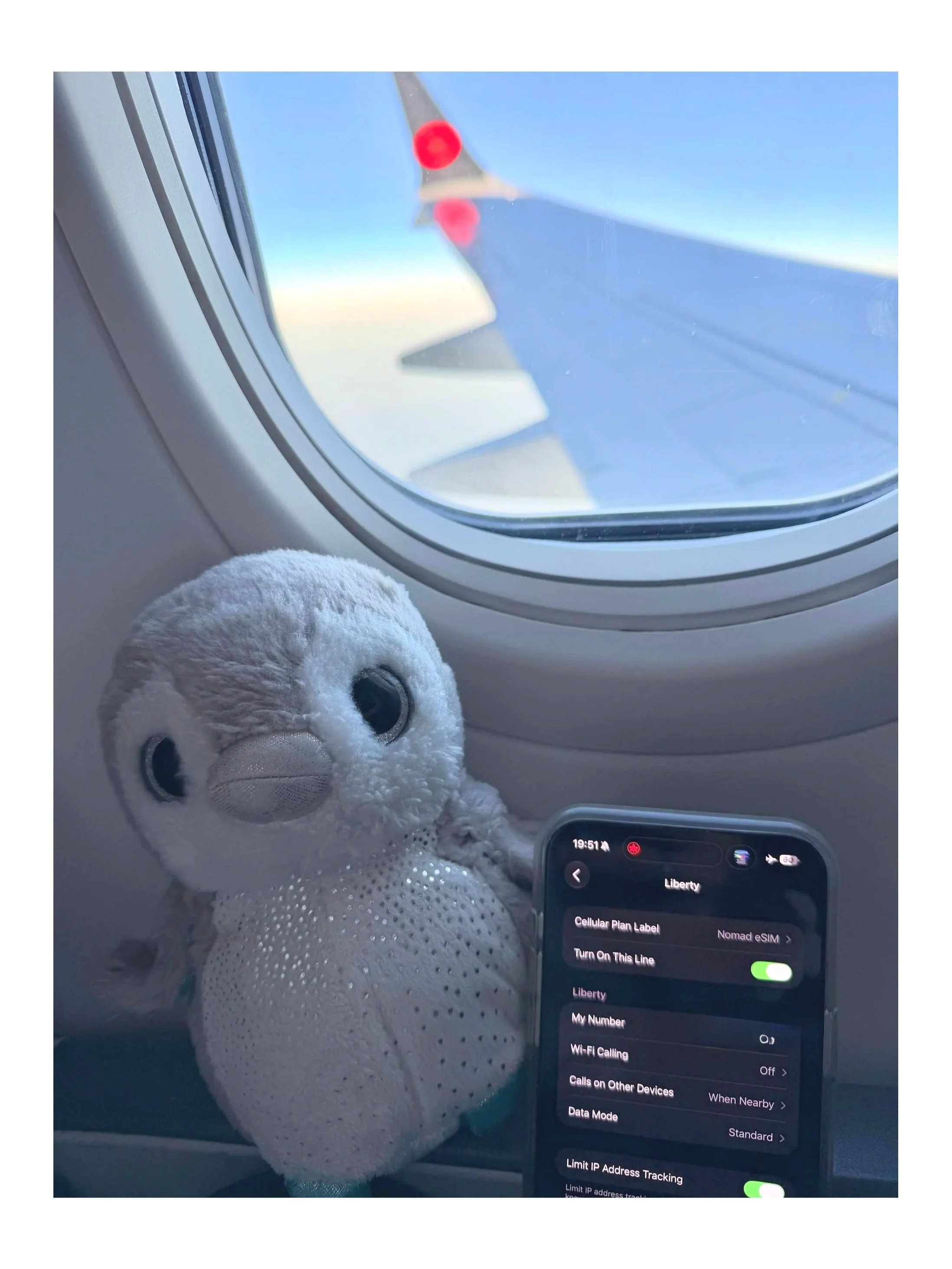
Mac is excited to activate his eSIM upon landing in Houston
Fixed-data plans — standard GB packages, right for most trips
Unlimited plans — better for heavy use, video calls, video games (right, Jake?) or hotspot sharing
Regional plans — one purchase covering multiple countries
60-day activation window — buy the plan whenever, activate when you land
Hotspot and tethering are supported on all plans. Nomad eSIM also has a data calculator if you're unsure how much you need.
Nomad eSIM plans for the US
Nomad eSIM connects to Verizon and AT&T in the US, which is exactly what we needed, since being able to switch between the two manually is a real advantage in areas where one has better signal than the other (see coverage section above).
Plans start from $5 and all can be activated within 60 days of purchase. The range covers short trips and longer stays: fixed-data plans from 1GB up to 100GB, and unlimited options for 3, 5, or 7 days. For a road trip like ours (three weeks across four states), 10 GB were enough as we were on Wi-Fi a lot too. If you're hotspotting regularly, size up.
If you're covering multiple countries, Nomad eSIM also has a North America regional plan (US, Canada, Mexico) and global plans covering 98 or 123 destinations.
For current pricing and plans, check Nomad eSIM.
Pros & cons
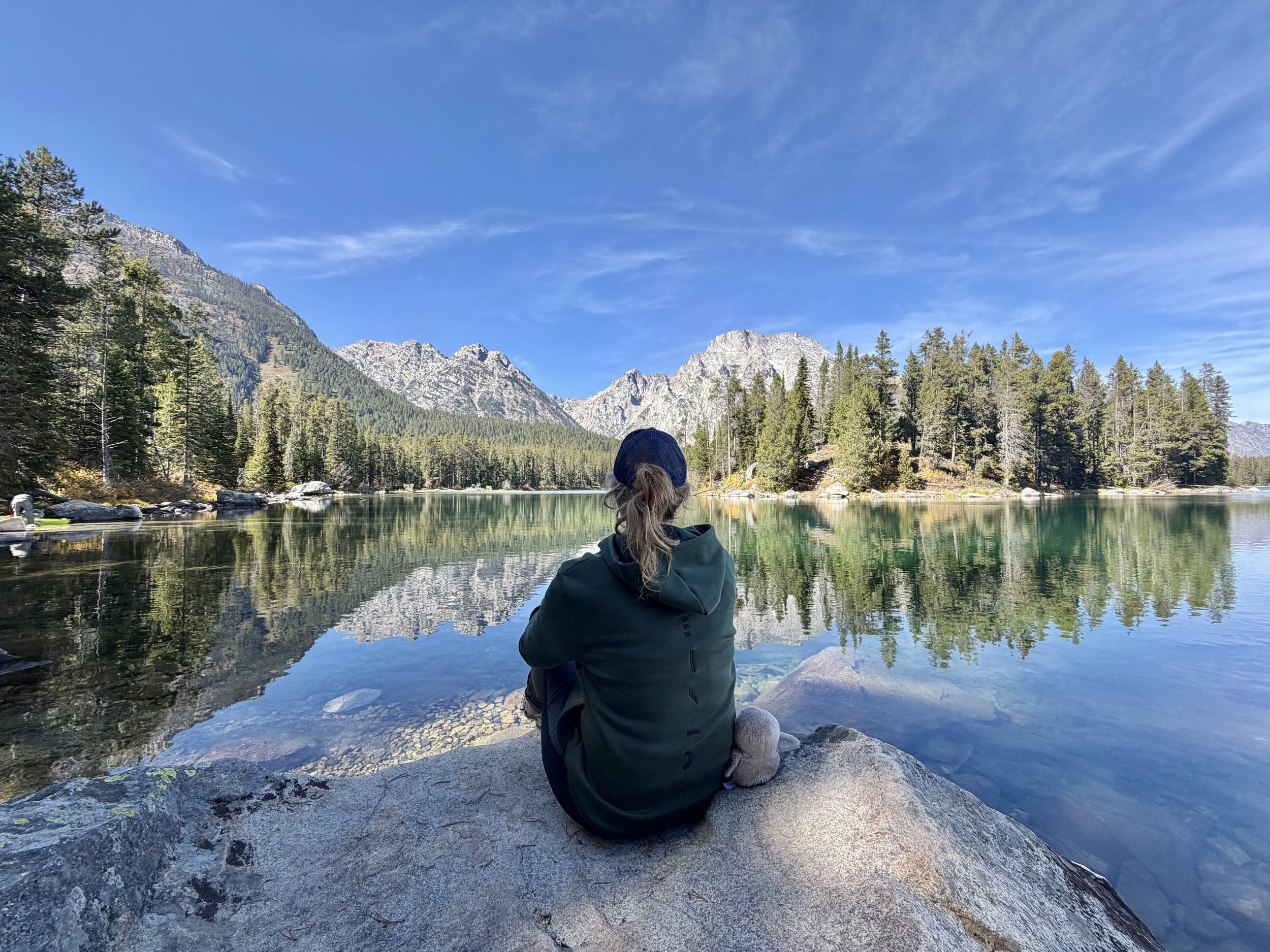
Sometimes, being disconnected for a while is great! Here at Grand Teton National Park
What we liked
Activated the moment we landed: no setup stress at the airport
Verizon and AT&T coverage in one plan, switchable manually when one drops
60-day activation window: buy it when you book, activate when you land
Competitive pricing for the US, especially the 20GB and 50GB plans
Hotspot supported on all plans
The app is clean and easy: checking data balance and buying add-ons is straightforward
Loyalty program that rewards frequent use
What to know before you buy
Data-only (no local phone number except a special plan for the UK), but you can call via WhatsApp, Messengers and iMessage
Very remote areas will have limited signal (based on our experience, it’s the same as any provider, including domestic carriers)
No auto-renewing subscription. You need to buy plans manually, which suits us but worth knowing if you prefer set-and-forget
How Nomad eSIM compares
As much as we like to try cool travel stuff before they get popular, we're not the only ones who've tested it. Nomad eSIM has over 40,000 reviews on Trustpilot and consistently strong app store ratings. Below is a comparison against other providers:
| Provider | Trustpilot | iOS | Android |
|---|---|---|---|
| Nomad eSIM | 4.3★ (40K+ reviews) | 4.8★ | 4.7★ |
| Airalo | 3.9★ | 4.7★ | 4.6★ |
| Holafly | 4.6★ | 4.6★ | 4.5★ |
| Saily | 4.7★ | 4.7★ | 4.6★ |
| Roamless | 4.5★ | 4.4★ | 4.3★ |
It's also been rated the fastest global median download speed by Ookla, which is an independent speed testing organization — not a claim Nomad eSIM made about themselves.
We compare Nomad eSIM and Airalo in more depth in our eSIM comparison article if that's useful.
Perks & loyalty
Free 1GB trial
Available in 76 destinations. A good way to try it on a short trip before committing to a full plan.
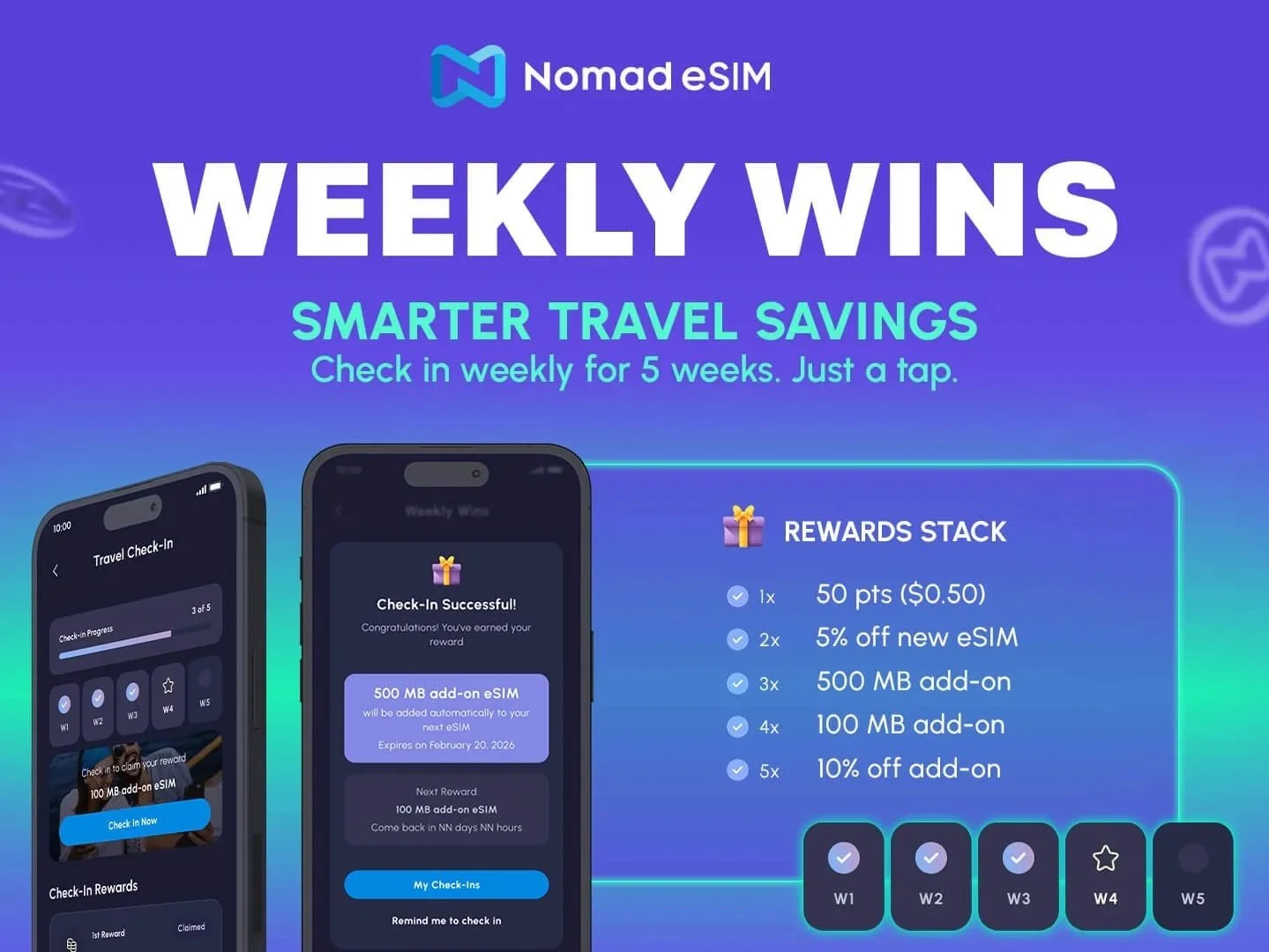
Weekly wins
Check in regularly to unlock points and discounts.
Nomad points & rewards
You earn points on eligible purchases and can put them towards future plans.
Nomad membership
A loyalty program you're automatically enrolled in when you sign up. The more you travel with Nomad eSIM, the better the perks get. We love that obviously, as frequent travelers.
Best for
Best for the US & North America: Strong coverage on main routes, fast speeds, easy activation.
Best for multi-country trips: Regional plans cover several destinations under one purchase.
Best for advance planners: Buy months ahead, activate when you land.
Best for hotspot/tethering: All plans support it.
Best for frequent travelers (welcome to the Penguin Trampoline club!): The loyalty program is excellent!
FAQ: Nomad eSIM
How do you install Nomad eSIM?
Download the app or scan the QR code from your confirmation email. Do it at home before you travel. You’ll need a data connection, so don't leave it for the airport. On landing, switch off airplane mode and enable data roaming for your Nomad eSIM line.
What do you do if coverage is weak?
Go into your phone's network settings and switch carrier manually. In the US, toggling between AT&T and Verizon can make a real difference depending on where you are.
Does Nomad eSIM work in rural areas?
On main routes and in towns, yes. Very remote areas will have limited coverage. but this is the same with every provider, including domestic carriers.
Can you hotspot with Nomad eSIM?
Yes, all plans support it. It pulls from your data allowance so size up if you're planning to share regularly.
Is it data-only?
Yes — like most travel eSIMs. WhatsApp, iMessage, and FaceTime cover everything you'd realistically need.
Can I buy it in advance?
Yes, and we'd recommend it. The 60-day activation window means you can buy well before your trip and activate when you land.
What is Nomad Membership?
A free loyalty program you're automatically enrolled in. Your purchases build towards tiers with better perks over time — nothing to sign up for separately.
Nomad eSIM did what it's supposed to do. It was there when we landed, reliable on the main routes, and when coverage dropped in remote Wyoming and Montana, it was for the same reason every other carrier dropped: there's just no infrastructure out there… or the mountains are too high! Knowing you can switch networks manually (AT&T to Verizon and back) is a useful thing to remember on a road trip like this.
The 60-day activation window, the loyalty program, and the strong app ratings put it ahead of most providers we've tried for US travel, and we’ll be glad to use it again on future trips in other countries.

Free download
Travel Cheaper Cheat Sheet
27 tips on flights, hotels, hidden costs and more — spend less without missing what actually matters.
No spam. Unsubscribe anytime.
Save on Your Travel Insurance
Annual Multi-trip Travel Insurance and Long Stay
Travel Insurance for Digital Nomads
Backpacker and Hiking Travel Insurance
How to Travel Cheaper
How to Find Cheap Flights
How to Find Cheap Accommodation
Travel Discounts & Deals
Best Traveling eSIM
