
Best Travel eSIM for 2026: Airalo vs Nomad eSIM (We've Tested Both)
A travel eSIM lets you skip roaming charges and local SIM queues entirely

Stay connected with an eSIM to follow Penguin Trampoline :-) Look how happy I am!
Last update: September 2026
We switched to a traveling eSIM a few trips ago, especially for the US. The logic is simple: roaming charges from your home carrier are expensive and unpredictable, hunting for a local SIM on arrival wastes the first hour of any trip, and a travel eSIM solves both problems before you've left home. This best eSIM for travel guide covers what a travel eSIM actually is, the ones we recommend, and what you need to check before buying one.
Note: Part of this article was created in partnership with Nomad eSIM.
Jump to: Best eSIM for travel · How it works · Speed · Coverage · Activation · Plans & flexibility · Perks & loyalty · Comparison table · Compatibility · FAQ
What is the best traveling eSIM?

Jake loves to stay connected to show the northern lights to his parents, live! Here in Iceland
Airalo is the best eSIM for travel in our opinion. It's the largest eSIM marketplace available, covering 200+ countries and regions, with local and regional data plans that cost a fraction of what your home carrier charges for international roaming. You buy the plan through the app before you travel, scan a QR code to activate, and arrive at your destination with data already working. For most destinations — Norway, Iceland, Greenland, Canada, the US, across Europe — Airalo has a plan that covers you from the moment you land.
That being said, we recently tried Nomad eSIM and loved the flexibility to install the eSIM in advance, as well as all the discounts & perks. More on that below.
How a travel eSIM works

With a travel eSIM, you can send your amazing sunset pictures to your loved ones! - Here in Portugal
An eSIM is a digital SIM card built into your phone. Instead of swapping a physical SIM, you download a carrier profile onto the eSIM and activate it — the whole process takes about five minutes and happens through an app. Your original number stays active on your physical SIM or primary eSIM profile, so you can still receive calls and texts from home. The travel eSIM runs alongside it, giving you local data at local prices.
The practical difference from roaming: you know exactly what you're buying before you go. For example, a 10GB plan costs a fixed amount. You're not watching your data anxiously because a surprise roaming bill is waiting at the end of the trip.

Penguin tip:
Buy and install your eSIM at home on WiFi before you leave, and get connected immediately upon landing to look for the best way to reach your accommodation!
🛡️ Planning a trip? We use and recommend Heymondo travel insurance — and you get a 5–15% discount* through our link.
Speed
This is where Nomad eSIM has a clear edge on paper — it's rated fastest global median download speed by Ookla, which is a legitimate third-party benchmark. In practice, we noticed strong speeds when we used it in Texas.
That said, Airalo has been consistently reliable for us across a wide range of destinations, including places where the network infrastructure is patchy to begin with. Raw speed matters less when you're in a fjord with one signal bar.
Edge: Nomad for raw speed. Airalo for consistent reliability across varied destinations.
Coverage

Greenland is not part of the EU/EEA, so "free roaming" doesn’t apply for EU citizens.
We've used Airalo in places like the Faroe Islands and Greenland, and having a reliable Internet coverage in those places felt like magic!
Nomad covers 200+ destinations too and is excellent for the US, Europe, and major travel corridors. But if your itinerary includes somewhere off the beaten path, we can vouch for Airalo.
Edge: Airalo.
Activation
Both work the same way in principle — you install the eSIM before you board and activate on arrival. Where Nomad has an advantage is the 60-day activation window: you can buy the plan well ahead of your trip and activate whenever you actually land.
Airalo plans activate on purchase or on first use depending on the plan, so it's worth checking before you buy if you're planning ahead.
We recently tested Nomad eSIM and installed it before we boarded our flight to Texas. The moment we landed, we activated the plan and it worked instantly. We were already texting our pick-up (thank you, Jake’s parents!) before we even went to baggage claim.
Edge: Nomad for flexibility. Both are seamless in practice.
Plans & flexibility
Airalo is a marketplace: hundreds of providers, hundreds of plans, every destination, every price point. You can go very cheap for a short trip or get a regional multi-country plan for a longer journey. That variety is hard to beat, but it can be a bit overwhelming.
Nomad offers fixed-data and unlimited plans, which is useful if you're a heavy user and want to stop watching your data. But the catalogue is narrower (but also simpler if you prefer less options).
Edge: Airalo.
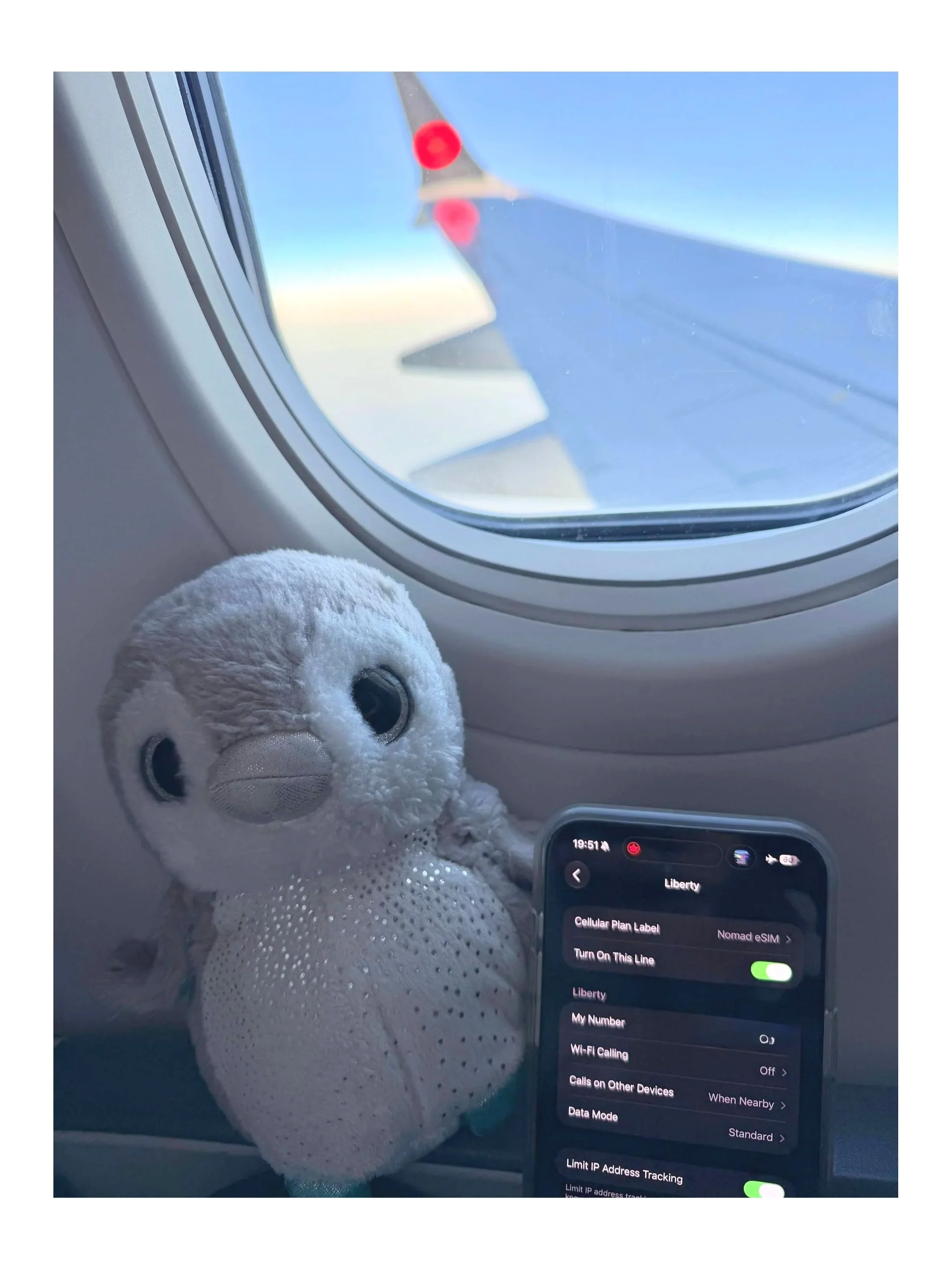
Mac is excited to activate his eSIM
Perks & loyalty
Nomad wins in this category. They offer a free 1GB trial in 76 destinations (useful for a first test), a Weekly Wins promo for top-ups, Nomad Points & Rewards, and a Nomad Membership loyalty program for frequent travelers.
We already received a discount for our next trip via the app a couple of days after we activated our eSIM for the US.
Airalo has Airmoney (credit back on purchases) but no loyalty tier system.
If you travel frequently and want to earn something back, Nomad's program is more developed.
Edge: Nomad.
Comparison table
| Airalo | Nomad eSIM | |
|---|---|---|
| Destinations | 200+ | 200+ |
| Activation window | Immediate | 60 days after purchase |
| Plan types | Data packages | Fixed data + unlimited |
| Speed | — | Fastest global median (Ookla) |
| Reviews | 4.7★ App Store | 4.3★ Trustpilot · 4.8★ iOS & Android |
| Free trial | ❌ | ✅ 1GB in 76 destinations |
| Loyalty program | ❌ | ✅ Points, Membership |
| Best for | Widest plan variety | Performance + frequent travelers |
For anything involving remote or unusual destinations, which we love at Penguin Trampoline, Airalo is our go-to.
Nomad eSIM is the one we'd recommend for the US, Canada, and major destinations, particularly if you want the best possible speeds, a flexible activation window, or you travel frequently enough to benefit from their loyalty program. We used it on our last US trip and it was a breeze. Read our full review here if you want to go deeper.
Is your phone compatible?
Most modern smartphones support eSIM, but it's worth confirming before you buy. As a general guide:
iPhone: iPhone XS and later models support eSIM. iPhone 14 and later (US models) are eSIM-only with no physical SIM tray.
Android: Most flagship Android phones from 2020 onward support eSIM — Samsung Galaxy S20+, Google Pixel 3a+, and most recent Huawei, Sony, and OnePlus models. Check your specific model in Settings → About Phone or on the manufacturer's website.
Unlocked phones only: If your phone is carrier-locked, it may not accept a third-party eSIM. Most phones sold directly or paid off are unlocked — check with your carrier if unsure.
🐧 Penguin tip: Check your device compatibility on the Airalo or Nomad eSIM website before purchasing. It takes thirty seconds and saves the frustration of buying a plan you can't use.
FAQ: Best traveling eSIM
What is a travel eSIM? A travel eSIM is a digital SIM card that lets you use local data in another country without swapping your physical SIM or paying international roaming charges. You buy a plan through an app like Airalo or Nomad eSIM, activate it via QR code, and your phone connects to a local carrier network on arrival.
Is an eSIM better than roaming for international travel? For most travelers, yes. Roaming charges from home carriers are typically far more expensive than a dedicated travel eSIM plan, and the costs are unpredictable. An eSIM gives you a fixed data allowance at a fixed price, set up before you leave.
Does Airalo work in remote destinations? Yes — Airalo covers 200+ countries including less-traveled destinations like Greenland, the Faroe Islands, Iceland, and Svalbard. Coverage quality depends on local network infrastructure, so very remote areas (high mountains, deep fjords, the Greenland ice sheet) may have limited signal regardless of provider.
Can I keep my regular number with a travel eSIM? Yes. Your home SIM and eSIM run simultaneously. Your regular number stays active for calls and texts; the travel eSIM handles data. You can switch between them in your phone's settings.
How much does a travel eSIM cost? It varies by destination and data allowance. Most plans are significantly cheaper than international roaming — typically a few dollars to $30–40 for a week of data depending on the country. You choose the plan size before you buy.
Do I need to buy a separate eSIM for each country? Not necessarily. Airalo offers regional plans covering multiple countries under a single purchase — useful for a multi-country European journey, for example.
Is Nomad eSIM any good?
Yes — especially for the US and major destinations. It's Ookla-rated for fastest global median download speed, has 40,000+ Trustpilot reviews, and the activation experience is genuinely seamless. We used it on our last US trip and it connected the moment we landed.
Airalo vs Nomad eSIM — which should I pick?
Both work well. Airalo has the widest marketplace and the most plan options. Nomad wins on verified speed data, a free 1GB trial in 76 countries, and a loyalty program for frequent travelers. If you're going to the US and want one less thing to think about at the airport, Nomad is our pick.
We use an eSIM alongside travel insurance on every trip — the two cover different things but both fall into the category of things you sort before you leave, not after something goes wrong. For insurance, our guides cover travel insurance for Norway, travel insurance for Iceland, travel insurance for hikers, travel insurance for digital nomads, and annual multi-trip plans if you travel more than a couple of times a year. — And you get a 5–15% discount* through our link!

Free download
Travel Cheaper Cheat Sheet
27 tips on flights, hotels, hidden costs and more — spend less without missing what actually matters.
No spam. Unsubscribe anytime.
Save on Your Travel Insurance
Annual Multi-trip Travel Insurance and Long Stay
Travel Insurance for Digital Nomads
Backpacker and Hiking Travel Insurance
How to Travel Cheaper
How to Find Cheap Flights
How to Find Cheap Accommodation
Travel Discounts & Deals
Best Traveling eSIM
