
Grand Teton and Yellowstone Itinerary for Non-Hikers: 7 Easy Days by Car
Geysers, canyons, and Teton views, with almost no hiking (for once!)
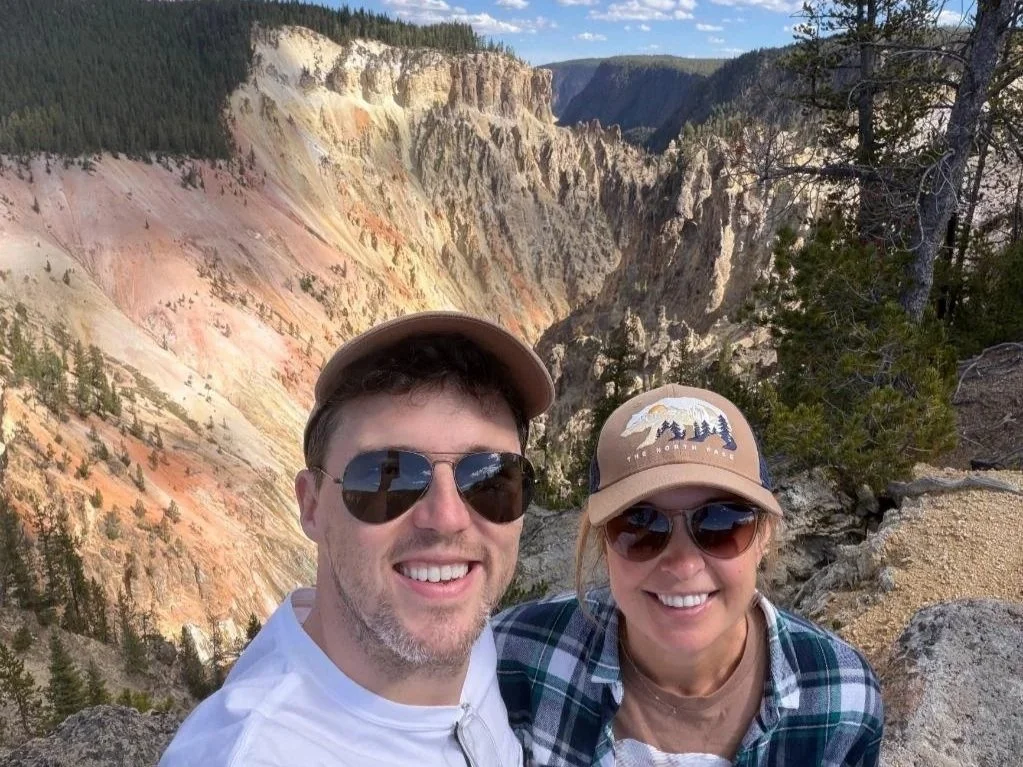
Artist Point in Yellowstone
We are big hikers and love to go off the beaten path… which is exactly why this itinerary has almost no hiking in it, and stays very much on the beaten track!
We spent a week between Yellowstone and Grand Teton, USA, traveling with Jake's parents, so our usual plan changed: no long trails, no climbing, nothing that needed boots. So we went for a route built from boardwalks, drive-up overlooks, and a couple of walks short and flat enough for almost anyone. It works for small children, older travelers, and most mobility needs, and where it doesn't, we say so.
Many Yellowstone and Grand Teton itineraries assume you will spend your days on trails (and I did go camping in Yellowstone many years ago). This one is based on car access and comfort. Here’s the full week, flying in and out of Bozeman, with two bases for the parks.
🛌 Where to stay:
• Red Bear Inn, Ennis — A hotel in Ennis with free on-site parking, a lounge, and mountain views from the rooms, on the road toward Yellowstone's West Entrance.
• Teton Valley Cabins, Driggs — Cabins in Driggs, on the Idaho side of the Teton Range.
• Explorer Cabins at Yellowstone, West Yellowstone — Cabins in West Yellowstone, the gateway town at the park's West Entrance.
🇺🇸 Top experiences:
• Full-day Yellowstone wildlife safari in Lamar Valley from Bozeman — A guided wildlife day in Lamar Valley, the part of Yellowstone this route leaves out.
• Lamar Valley wildlife van tour from West Yellowstone — A van tour of Yellowstone's upper loop that starts in West Yellowstone.
🚗 Compare car rentals at Bozeman airport — Every day in this itinerary assumes a rental car.
Jump to: Arrival · Day 1: Old Faithful · Day 2: Hayden to Mammoth · Day 3: Ennis · Day 4: To Driggs · Day 5: Jackson · Day 6: Grand Teton · Day 7: Big Sky · Tips · FAQ
Best Grand Teton and Yellowstone itinerary: quick answer
Fly into Bozeman, rent a car, and use two bases for the parks: Ennis, Montana, for Yellowstone, and Driggs, Idaho, for Grand Teton. That meant unpacking twice, with one last night in Bozeman before an early flight.
The week in short: an arrival day, a day of geysers around Old Faithful, a long day for Hayden Valley, the Grand Canyon of the Yellowstone, and Mammoth, a slow day of hot springs and ghost towns around Ennis, a travel day through Idaho to Driggs, a foggy day of waterfalls, hot springs, and Jackson, one full day in Grand Teton, and a scenic drive back to Bozeman. Everything is a viewpoint you can drive to, a boardwalk, or a short flat walk, and we mark the few places where stairs or slopes show up.
We went in late September, with fall color, cool mornings, and a few foggy ones. This is a highlights week, not a deep dive, and it is built for people who want the famous sights without the trail miles.
Arrival: land in Bozeman and drive to Ennis
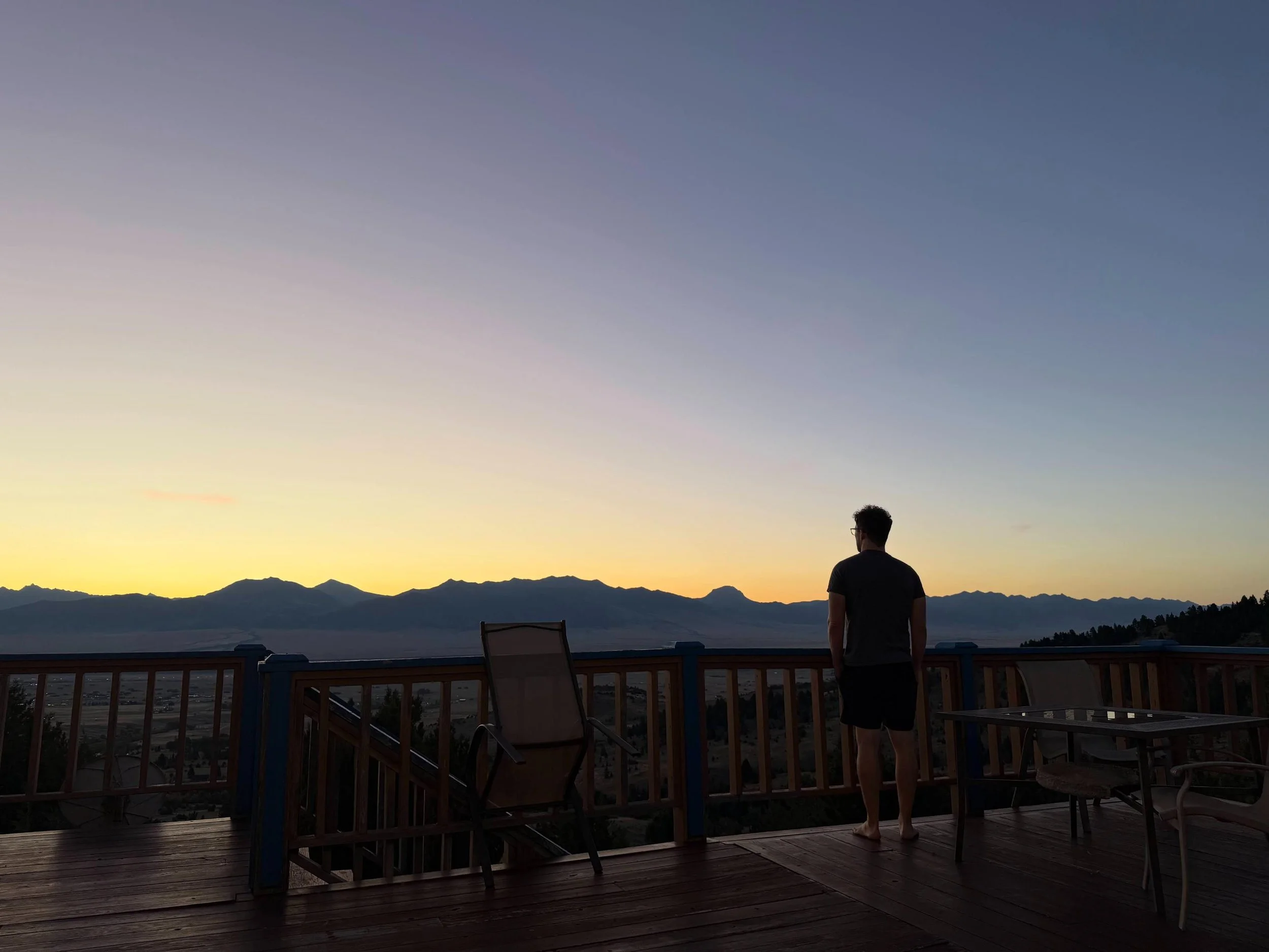
Enjoying the view and fresh morning air at our accommodation in Ennis
We landed late from Houston, picked up a rental car, and drove south to Ennis, Montana, our base for the Yellowstone half of the week. Ennis is about 54 miles from Bozeman by the route through Norris and down the Madison Valley, and it’s on the road toward Yellowstone's West Entrance.
If you’re visiting from abroad, sort out mobile data before you land. We have used Nomad across on this trip and wrote up how it went in our Nomad eSIM Review: We Used it Across America.
Day 1: Old Faithful, Midway, Fountain Paint Pot, and Grand Prismatic
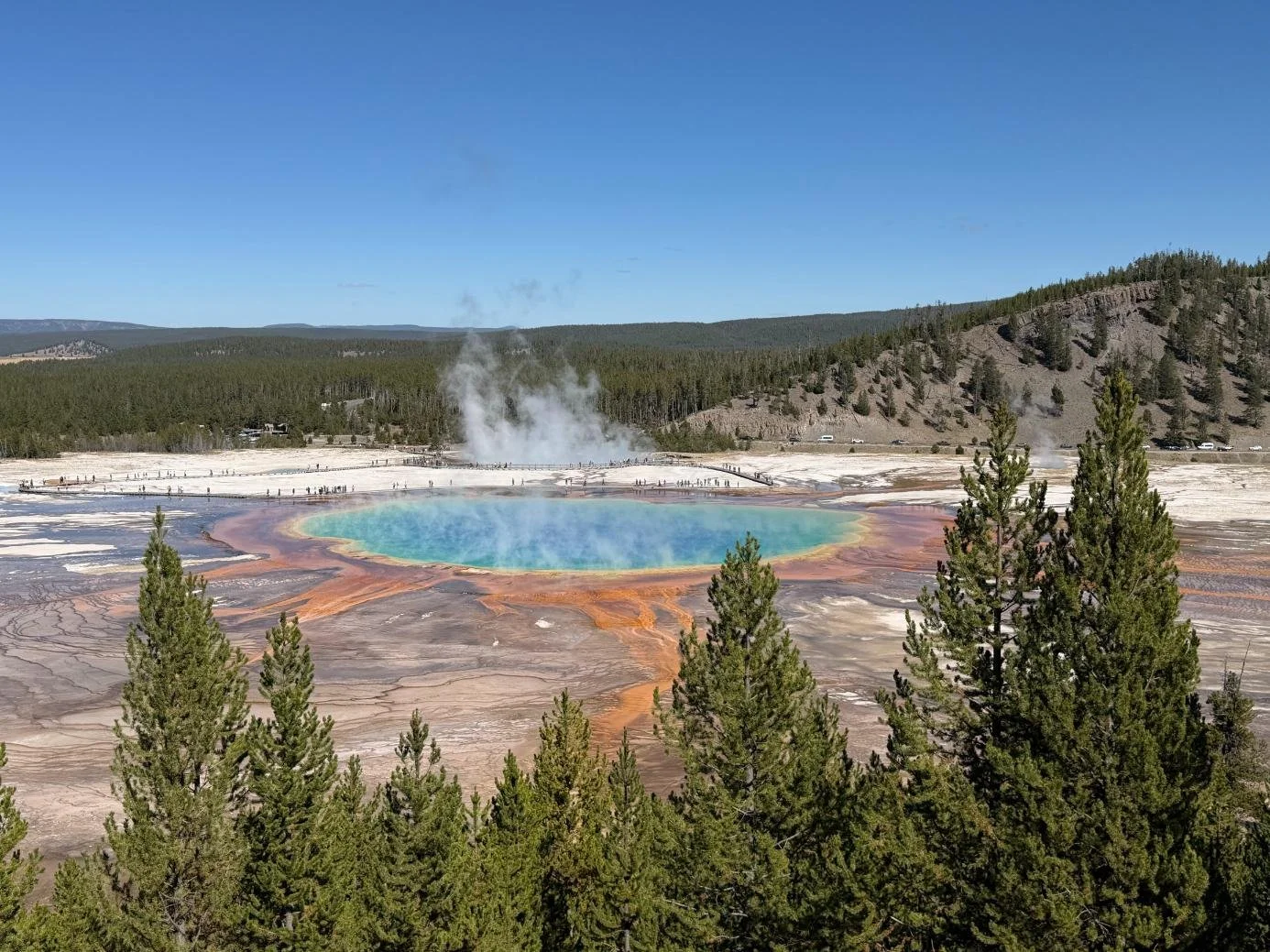
The grand, Grand Prismatic from the viewpoint
This is the geyser day (yay!), and nearly all of it happens along one road. Apart from our beloved Iceland, this is probably one of the very few places in the world with such a geothermal concentration. From Ennis we drove to West Yellowstone, entered at the West Entrance, and followed the road past Madison Junction toward Old Faithful. The Park Service puts the drive from the West Entrance to Madison Junction at about 30 minutes on average, but even late September and with a National Park pass, we had to wait in line at the gate.
On the road in: bison and elk
The Park Service notes that in fall, bison herds favor the meadows along the Madison and Gibbon rivers and often use the entrance road, and elk gather in the meadows between Seven Mile Bridge and Madison Junction during the rut. Take this into account, as a bison in the road sets the pace for everyone behind it (it’s called a bison jam). We saw a female elk (a cow, to be correct!), and a few bisons on top of a hill.
Old Faithful: ten minutes after we parked
We had perfect timing and we didn’t do it on purpose. Old Faithful erupted about ten minutes after we parked. You can plan for that kind of luck, since rangers predict its eruptions and the Park Service suggests arriving at least ten minutes ahead. The viewing area is a semicircle less than a quarter mile from the Visitor Education Center, and wide, wheelchair accessible walkways run from the visitor center and every parking area to the geyser.
Old Faithful is one (big) act in a long show. The Upper Geyser Basin holds at least 150 geysers within a single square mile, and rangers also predict several of the bigger ones, including Castle, Grand, Daisy, and Riverside.
Midway Geyser Basin and Grand Prismatic Spring
Midway is six miles north of Old Faithful. The boardwalk, the parking, and the restrooms are all wheelchair accessible, and the boardwalk puts you beside Grand Prismatic Spring, the largest hot spring in Yellowstone. It’s my favorite, since you won’t see this array of colors in Iceland. The Park Service lists it at roughly 200 to 330 feet across and more than 121 feet deep. Next door, Excelsior Geyser is a crater about 200 by 300 feet that sends more than 4,000 gallons of water a minute into the Firehole River.
Stay on the boardwalk and don’t try to get close for a pretty photo. The ground and water in thermal areas can cause severe burns and even death.
The short walk to the Grand Prismatic viewpoint
For an elevated view of the whole spring, take the Grand Prismatic Overlook trail. It starts at the Fairy Falls parking lot, about a mile south of Midway, and is 1.2 miles round trip. The Park Service rates it an easy hike, with a gradual climb of about 105 feet, and we agree. It’s, with a gentle climb, but if someone in your group uses a wheelchair or a walker or can’t exercise at all, the Midway boardwalk is the better choice.
Fountain Paint Pot
Fountain Paint Pot is eight miles north of Old Faithful, on the way back toward Madison. The loop is about half a mile of boardwalk and it fits in all four kinds of thermal feature: mudpots, fumaroles, hot springs, and geysers. The first stretch is level and wheelchair accessible, with easy access to Silex Spring. Further along there are steep sections and stairs, so anyone who prefers to skip them can turn around where the level part ends.
🐧 Penguin tip: Parking areas at the summer (and even in late September!) thermal sites get crowded, and it’s best to visit at off-hours, if you can. The Fairy Falls lot is the tightest of them. If it’s full, do Fountain Paint Pot and Midway first and try the overlook again on your way out. If everyone in your group can walk, you can also park along the road in many places.
Day 2: Hayden Valley, the Grand Canyon of the Yellowstone, Mammoth, and Norris
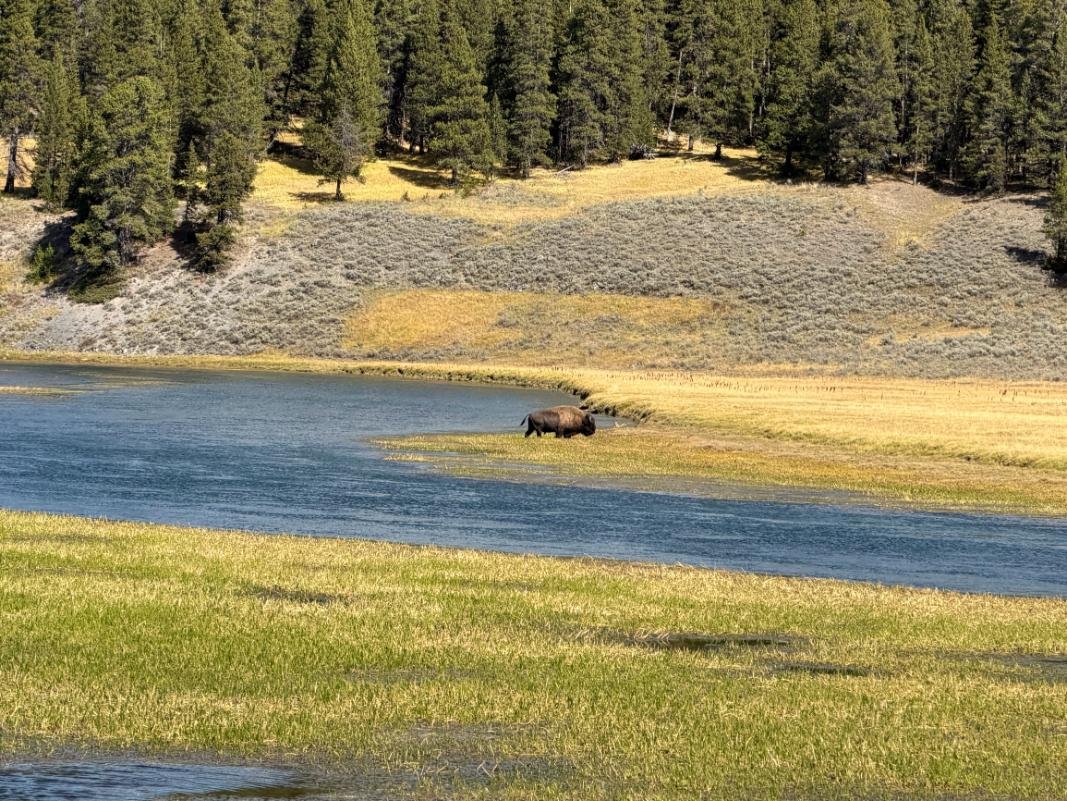
Bison in Hayden Valley. The colors!
This is the long day. The drive itself about three and a half hours from Ennis to Mammoth Hot Springs, and about two and a half hours back, before any stops. If your group runs out of patience for the car, Mammoth is the stop to cut.
Hayden Valley: bison paradise
A nice visitor recommended us to go to Hayden Valley for bison watching. It’s marshy, nearly treeless ground that was once part of an arm of Yellowstone Lake. The Park Service calls it one of the best places in the lower 48 to see grizzly bears, bison, and elk. Well, we saw bisons. Many bisons.
They live in the valley year-round, and despite their chill attitude and fluffy looks, and they have injured more people in Yellowstone than any other animal. Stay at least 25 yards from bison and elk and 100 yards from bears and wolves (which is more unlikely), drive carefully around the herd, and never stop in the roadway. And please, please, don’t honk at them (we saw it). A national park is not a place to be in a hurry.
Grand Canyon of the Yellowstone
The canyon is roughly 20 miles long and more than 1,000 feet deep. The walls are gray and yellow because of iron compounds in altered rock, with some of the yellow coming from iron and sulfur. The Lower Falls drop 308 feet and the Upper Falls 109, and because the canyon bends between them, you can’t see both from one spot.
For non-hikers, the useful detail is where the accessible path starts. According to the Park Service, the longest stretch of accessible trail begins at the Lookout Point and Grand View parking lots on the North Rim. On the South Rim, the road ends at the Artist Point parking area, with a view of the Lower Falls. Despite the name, Artist Point is not where Thomas Moran painted the canyon. It’s still absolutely magnificent., especially the contrast between the forest green coniferous and the red rock.
Mammoth Hot Springs
Mammoth is the far end of the day, and the one stop where stairs become a real question. If you want to do the whole thing, plan for steep grades and many stairs across the terrace trails on the route from the Lower to the Upper Terraces. The tops of Canary Springs and Palette Springs are wheelchair accessible when there is no snow on the ground. Upper Terrace Drive, a one-mile loop that shows the terraces from the car, is listed as a summer road, so check its status. We were limited timewise, so we only stopped for half an hour.
Late September is also elk rut season at Mammoth, and the elk live in the village year-round. I saw many on my former trips year ago, and they’re not afraid of humans. That doesn’t mean they want to be pet: give them room.
Norris Geyser Basin on the way back
We stopped at Norris on the drive home, which broke up the two and a half hours nicely. The basin has two boardwalk loops. Porcelain Basin is 0.75 miles of bare ground and boardwalk with almost no trees. Back Basin is a 1.5 mile loop, more wooded, with features scattered along it. We went down to it but didn’t do the whole loop.
Norris is also home to Steamboat Geyser, the tallest geyser in the world, with major eruptions of roughly 300 to 400 feet that are unpredictable and often years apart. If you happen to catch one, you might want to play the lottery!
Day 3: A slow day around Ennis, with hot springs and ghost towns

Bear Trap Canyon trail on a beautiful September Sunday!
After a long day in the car, we gave the car a break. Day 3 stays in the beautiful Madison Valley, with a soak, a short river walk, and two ghost towns.
Norris Hot Springs
Not to be confused with Norris Geyser Basin in the park, Norris Hot Springs is a hot spring in the town of Norris, Montana, on Highway 84, about 16 miles from Ennis by the Bozeman tourism office's count. Mineral water rises from underground at about 120 degrees Fahrenheit into a historic wooden pool that is emptied nightly, and there’s a restaurant (with a lot of local ingredients) on site, plus live acoustic music on weekends. We loved the chill, slightly hippy vibe. It’s not open every day of the week, so check the hours before you drive over.
Fall color along the Madison River
The Madison River runs through the valley, and in late September the foliage was changing color. You don’tneed a plan for this part. Pull off, look, and keep going.
A short walk in Bear Trap Canyon
The Bear Trap Canyon trail follows the Madison River into the canyon and is rated easy. It’s 7 miles round trip to Bear Trap Creek and 15 miles round trip to the dam, so we only walked the first short section of it. The trailhead is at the end of a gravel road, about three miles from the turnoff on Highway 84. Carry bear spray if yo plan to go further, and watch for rattlesnakes. It’s also a good spot for fly fishing.
Virginia City and Nevada City
Gold was found in Alder Gulch in May 1863, and Virginia City was the capital of Montana Territory from 1865 to 1875. Today the state-run Montana Heritage Commission looks after the historic district, with preserved buildings, Boot Hill, and a narrow-gauge railroad, the Alder Gulch Short Line, that runs to Nevada City. Dredge mining almost destroyed Nevada City, and it has since been rebuilt as an outdoor museum of historic buildings. Really, really cool. After the museum, we explored the shops in lovely Virginia City, and most of them are also historical. As a European who has watched too many movies, I absolutely loved it.
Find accommodation and tours around Yellowstone:
Day 4: West Yellowstone, then through Idaho to Driggs
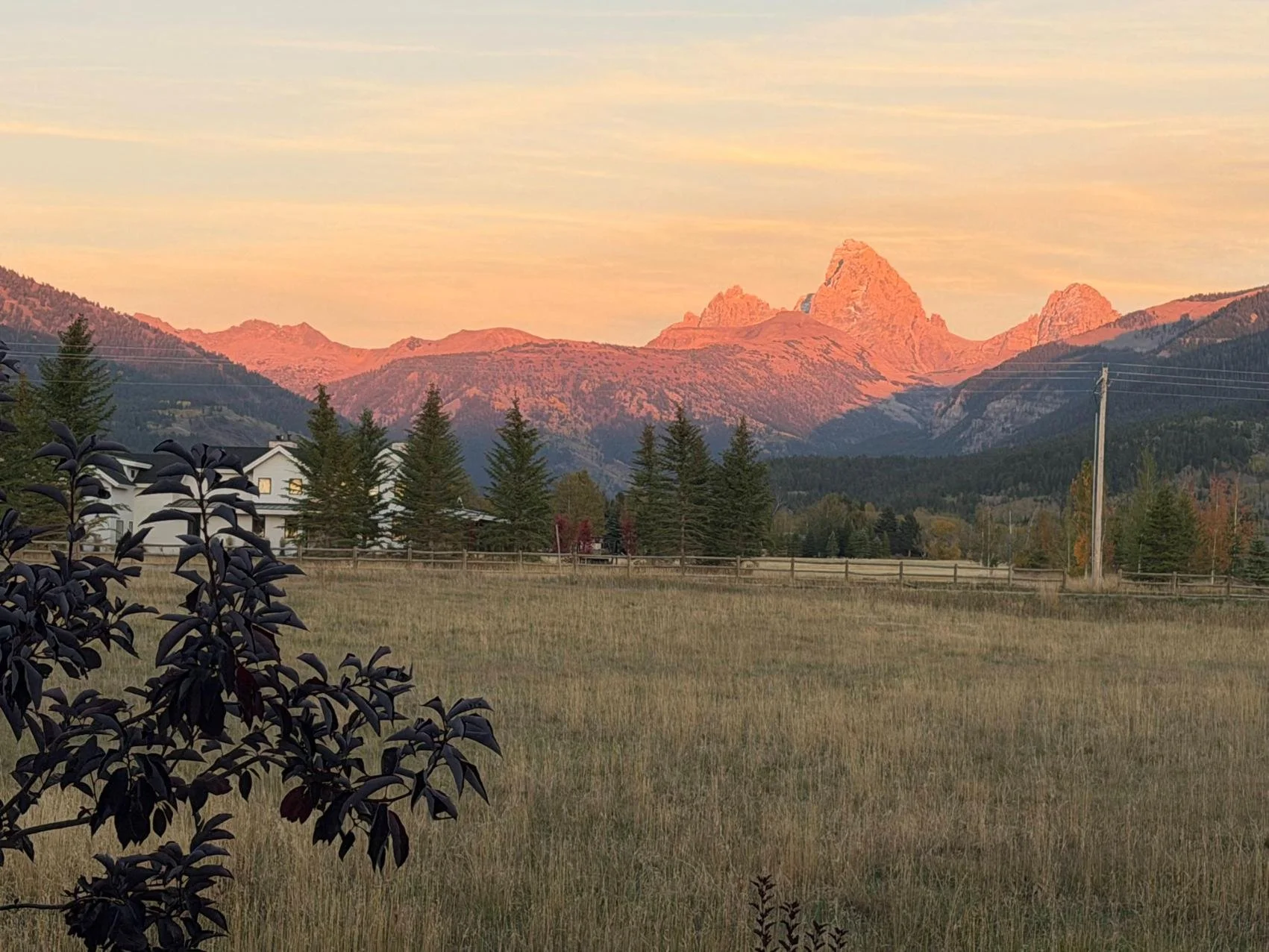
Grand Teton view from our accommodation in Driggs at sunset
We started the day celebrating my birthday with a delicious breakfast (and a lovely waiter, thanks for the birthday blueberry muffin!) at Ennis’s Yesterday’s Sauna Fountain. Then we went back to West Yellowstone, the town at the park's West Entrance, for souvenir shopping, then drove through Idaho to Driggs, where we based ourselves in North Driggs for the Grand Teton half of the week. Oh, and we had a birthday dinner at El Tequila in Rexburg, with yummy Pollo a la crema and fried ice cream (¡Gracias a la encantadora camarera!).
Day 5: A foggy day, Fall Creek Falls, Astoria Hot Springs, and Jackson

Based on the weather forecast, we decided to keep Grand Teton for the next day. We spent this one on waterfalls and hot springs.
Fall Creek Falls
Fall Creek Falls is near Swan Valley, Idaho, right off Highway 26 and about 25.6 miles from Driggs by one trail guide's count. It’s a short drive on a dirt road to a small parking lot and a roadside viewing area, and the walk to the falls is about 0.1 miles out and back. Jake and I went down to expore the cave, but the ground is uneven and the rock is slippery, so his parents stayed at the viewpoint. Expect fall color along the way.
Astoria Hot Springs Park
Astoria Hot Springs Park is about 20 minutes south of Jackson, with paved access and structured parking. It has four hot pools, a cold plunge (yay!!), and a shallow children's pool, and two of the pools are accessible. We loved it as it feels a bit wilder than Norris. It was not crowded at all and reminded us of Iceland, even if the sulphur smell is not as strong.
Jackson, and dinner at the Silver Dollar
Jackson was the payoff for a gray day. It’s a good place to buy souvenirs (even if it’s really touristy), and we ate at the Silver Dollar Bar and Grill inside the Wort Hotel: bison chili, trout, and elk gyros, all local, all delicius. The hotel was built in 1941 by brothers John and Jess Wort, and the bar got its name in 1950, when an S-shaped bar inlaid with 2,032 uncirculated 1921 silver dollars was installed.
Day 6: Grand Teton highlights
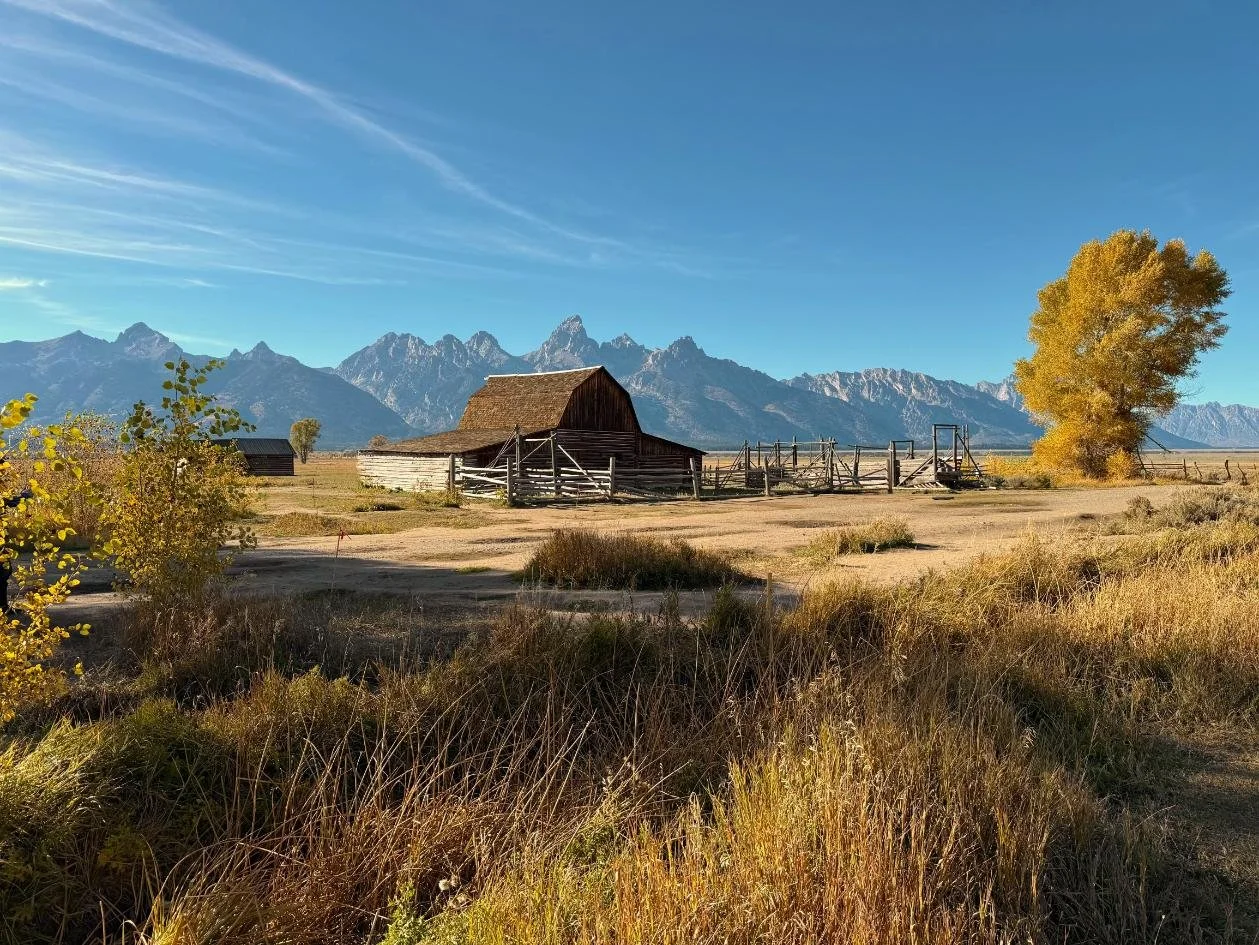
Mormon Row is as photogenic as it gets
The day began very foggy and completely cleared by mid-morning (phew). This is the one full day in Grand Teton, and it works as a drive with stops.
Snake River Overlook and the mountain-range overlooks
Snake River Overlook is about 8.5 miles north of Moose Junction on US 26/89/191, and it’s definitely wheelchair accessible. Ansel Adams photographed the Tetons and the Snake River from roughly this spot, though trees have grown since and the exact place is unknown. We also pulled off at the other overlooks along the road, which is the right way to do this park when nobody wants to climb anything. No snow on the peaks just yet, but still beautiful.
Jenny Lake
The Jenny Lake Visitor Center sits in the historic Harrison Crandall Studio, built in the 1920s and renovated in 2019. The Discovery Trail runs about 0.35 miles to the lakeshore, paved and wheelchair accessible, with interpretive panels along the way. It was a bit too crowded for our taste, even mid-morning, but it gets better if you walk a mile or two away.
String Lake and Leigh Lake
String Lake is shallow, popular for picnics and swimming, and easy to reach from the North Jenny Lake Junction on Teton Park Road. We did a short, flat walk around String and Leigh Lakes, which was lovely, and ate our picnic there. It reminded me of Banff and Jasper National Parks in Canada! Black bears are common around these lakes, so keep your food with you and use the bear boxes when you are done.
Jackson Lake, at low water
Jackson Lake was very low when we visited due to a lack of snow the former winter, and many of its viewpoints weren’t at their best. If the lake is low when you go, spend the time at the mountain-side stops instead.
Mormon Row
From Moose, Mormon Row is about a mile north on US 26/89/191, then about 1.5 miles east on Antelope Flats Road. The old Moulton homestead barns and the Pink House stand there with the Teton Range behind them. It’s the nº1 photo stop in Grand Teton, apparently. Parking is limited and often full at sunrise, midday, and sunset. It was pretty busy mid-afternoon too.
🐧 Penguin tip: Parking at Mormon Row, Jenny Lake, and String Lake is limited. Aim for the first part of the day if you can (and weather allowing), and wake up early. The ambiance will be more magical!
Find accommodation and tours around Grand Teton:
Day 7: Mesa Falls, Big Sky, and a night in Bozeman
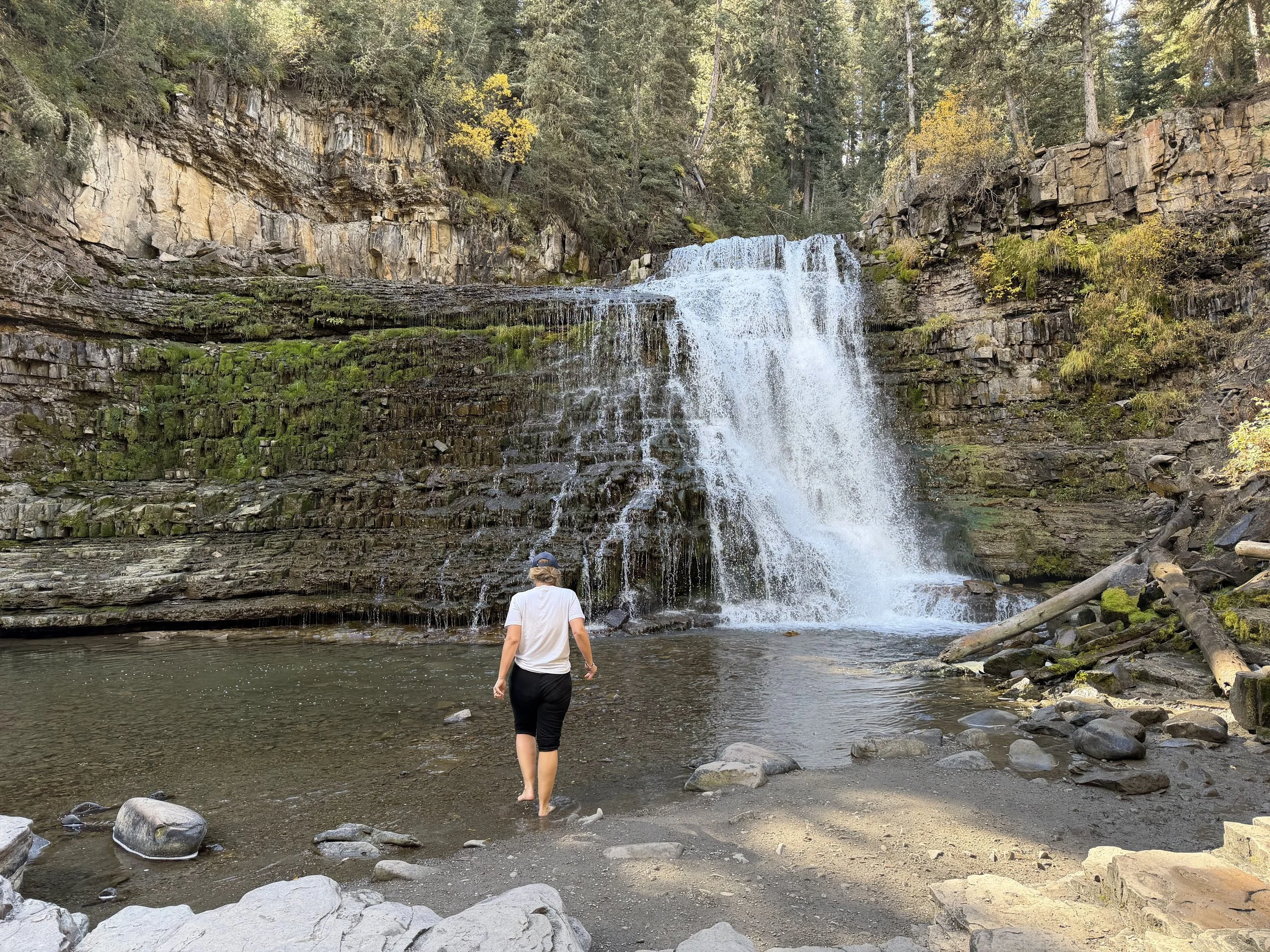
Enjoying the cold water at Ousel Fall after a 4-month heatwave in Spain!
The last day is a scenic drive with two short stops, ending where we began.
The Mesa Falls Scenic Byway
We took the Mesa Falls Scenic Byway, Idaho Highway 47 east of Ashton, hoping to see the falls. The falls were closed for road and access work when we arrived. The drive was worth it anyway, with free-roaming cattle on the road and almost nobody else. Check the status with the Ashton and Island Park Ranger District before you go.
Ousel Falls and lunch in Big Sky
Near Big Sky we walked to beautiful Ousel Falls. The trail is 1.6 miles round trip, easy and family friendly, and it descends gently into the ravine, so the way back is uphill. The trailhead is about two miles south of Big Sky Town Center. For lunch we went to Blue Moon Bakery, which has a good atmosphere, and we stopped by the lovely Big Sky chapel.
An evening in Bozeman
We finished by walking around Bozeman, which is a really cool town and super pedestrian-friendly (not a given in the US!). Our flight left early the next morning, so we stayed the night at Atwell Suites Belgrade near the airport. It felt very fancy for a 3* hotel, and staff was great.
Planning tips for a no-hiking week in Yellowstone and Grand Teton
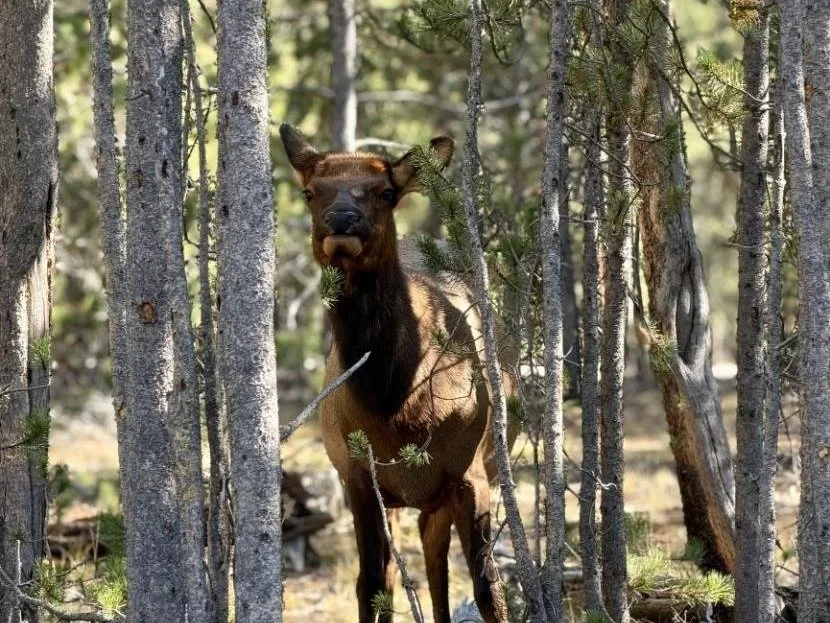
Elks seem sweet but an elk cow, like any animal mama, can be aggressive when cubs are around
Park passes
Two parks mean two entrance passes. Visitors traveling to or from Yellowstone through Grand Teton pay a separate entrance fee, and each park's standard pass is valid for seven days. Visitors who live outside the US pay an additional per-person fee at both parks unless they hold an annual or America the Beautiful pass. We had a National Park pass, so we couldn’t enter both parks.
Road opening
Most Yellowstone roads open in mid-April and stay open through October 31, and most close to regular vehicles from early November to late April. September as one of its busiest months, with most facilities open, while campgrounds and boating on Yellowstone Lake begin to close and early snow is possible at higher elevations. When we went, it was exceptionnaly warm. Several visitor centers and lodges close in the first half of October, so check the operating dates.
Both parks had road projects underway in 2026, so check the road status pages on each driving day.
Stairs and enclines
For stairs and slopes, the ones to know are the stairs past the first stretch at Fountain Paint Pot, the terraces at Mammoth, the gradual climb to the Grand Prismatic overlook, the uneven rock at Fall Creek Falls, and the uphill return from Ousel Falls.
Animal safety
It sounds like common sense, but trust us, it’s not for everyone. As the souvenir t-shirts and magnets remind visitors: do not take selfies with the fluffy bison.
Bison look calm, but they have injured more people in Yellowstone than any other animal, and they can run much faster than you can. Stay at least 25 yards from bison and elk, give them room on the road, and use your zoom instead of your feet. Cow elks are just as dangerous when protecting calves in spring.
All of Yellowstone is grizzly and black bear country. The Park Service asks visitors to stay at least 100 yards from bears and from wolves (which are rarely seen), to carry bear spray if you walk on trails and know how to use it, and never to feed wildlife. If a bear approaches your car, honk. What to do in a closer encounter depends on the bear's behavior, so read the Park Service bear safety page before you go. Grand Teton has its own wildlife rules, so check its Park Service pages as well.
But the most common cause of injury and death in Yellowstone is traffic!. When animals appear beside the road (bison, elk, moose or bear jam), watch the speed limit, don’t park in the middle of the road, and pull fully off before you get out of the car.
Where to stay
We split the week between two off-the-beaten-path bases, one on the Yellowstone side and one near Grand Teton, which kept the driving days manageable. Your best base depends on the season, your budget, and how much time you want in the car. We’re preparing detailed where-to-stay guides for both Yellowstone and Grand Teton, so keep an eye out for them.
✈️ Find flights
🏨 Explore hotels, apartments, guesthouses, cabins
🧭 Browse activities and tours
🚗 Compare car rentals
🧳 Get travel gear
🛡️ Travel safe with Heymondo Travel Insurance (5–15% off)
📱 Get a travel eSIM
🐾 Protect & track American wildlife with Fahlo Bracelets (20% off)
FAQ: Grand Teton and Yellowstone itinerary by car

Picnic with a view (and Mac the penguin) at Leigh Lake in Grand Teton
How many days do you need for Yellowstone and Grand Teton without hiking?
We used an arrival day plus seven full days: two days in Yellowstone, a slow day around Ennis, a travel day through Idaho, a foggy day around Jackson, one full day in Grand Teton, and a scenic drive back to Bozeman. It’s a highlights week, and two days inside Yellowstone is tight given the distances.
Where should you stay for this itinerary?
We used two home exchanges: one in Ennis, Montana, for Yellowstone, and one in North Driggs, Idaho, for Grand Teton, plus a last night in Bozeman before an early flight. Ennis is about 54 miles from Bozeman and sits on the road toward Yellowstone's West Entrance. West Yellowstone, the town at that entrance, is another option for the Yellowstone days.
Is this itinerary suitable for wheelchairs, older travelers, and young children?
Most of it works, with exceptions. The Park Service lists wheelchair accessible walkways to Old Faithful and an accessible boardwalk and parking at Midway Geyser Basin. The first stretch of Fountain Paint Pot is level and accessible, Snake River Overlook is listed as wheelchair accessible, and the Jenny Lake Discovery Trail is paved and accessible at about 0.35 miles. Mammoth's terraces have steep grades and stairs, the Grand Prismatic overlook climbs about 105 feet, and the ground near Fall Creek Falls is uneven and rocky. Check the Park Service accessibility pages for current details.
Is late September a good time to visit Yellowstone and Grand Teton?
We went in late September and found fall color, cool mornings, and some fog. The Park Service lists September as one of the busiest months, with most facilities open, while campgrounds and Yellowstone Lake boating services begin to close and early snow is possible at higher elevations. Several visitor centers and lodges close in the first half of October, so check operating dates.
Do you need a separate pass for Yellowstone and Grand Teton?
Yes. The Park Service says visitors traveling to or from Yellowstone through Grand Teton must pay a separate entrance fee, and each park's standard pass is valid for seven days. Visitors who live outside the US pay an additional per-person fee at both parks unless they hold an annual or America the Beautiful pass. Check current fees on the Park Service pages.
Do you need reservations to enter Yellowstone?
At the time of writing, the Park Service says vehicle reservations are not required to enter Yellowstone, though an entrance pass is required. Rules can change, so check before you travel.
Is Mammoth Hot Springs worth the drive from the west side?
It made for a long day. Our drive was about three and a half hours from Ennis to Mammoth and about two and a half hours back, before stops, and the terraces have steep grades and stairs. If your group is tired of the car, skip Mammoth and keep Hayden Valley, the Grand Canyon of the Yellowstone, and Norris.
How do you time Old Faithful?
Rangers predict its eruptions, and the Park Service suggests arriving at least ten minutes before the predicted time. We were lucky: it erupted about ten minutes after we parked.
You don’t need to hike to see Yellowstone and Grand Teton (although we can’t wait to go back and explore these trails!). You need a car (the goal of American national parks is to make them accessible) and some patience for bison. Our week was a highlights tour, and it still left plenty to come back for. Old Faithful ten minutes after we parked. Fog lifting off the Tetons by mid-morning. Cattle on a scenic road, and nobody else in sight.
Finally, explore all of our USA Travel Guides here.

Free download
Travel Cheaper Cheat Sheet
27 tips on flights, hotels, hidden costs and more — spend less without missing what actually matters.
No spam. Unsubscribe anytime.
