
What Sighted Travelers Completely Miss - Sensory Experiences by Tour de Sens
Guest post by Laura, founder of Tour de Sens — 15 years of leading blind and sighted travelers together have changed the way she sees every destination.
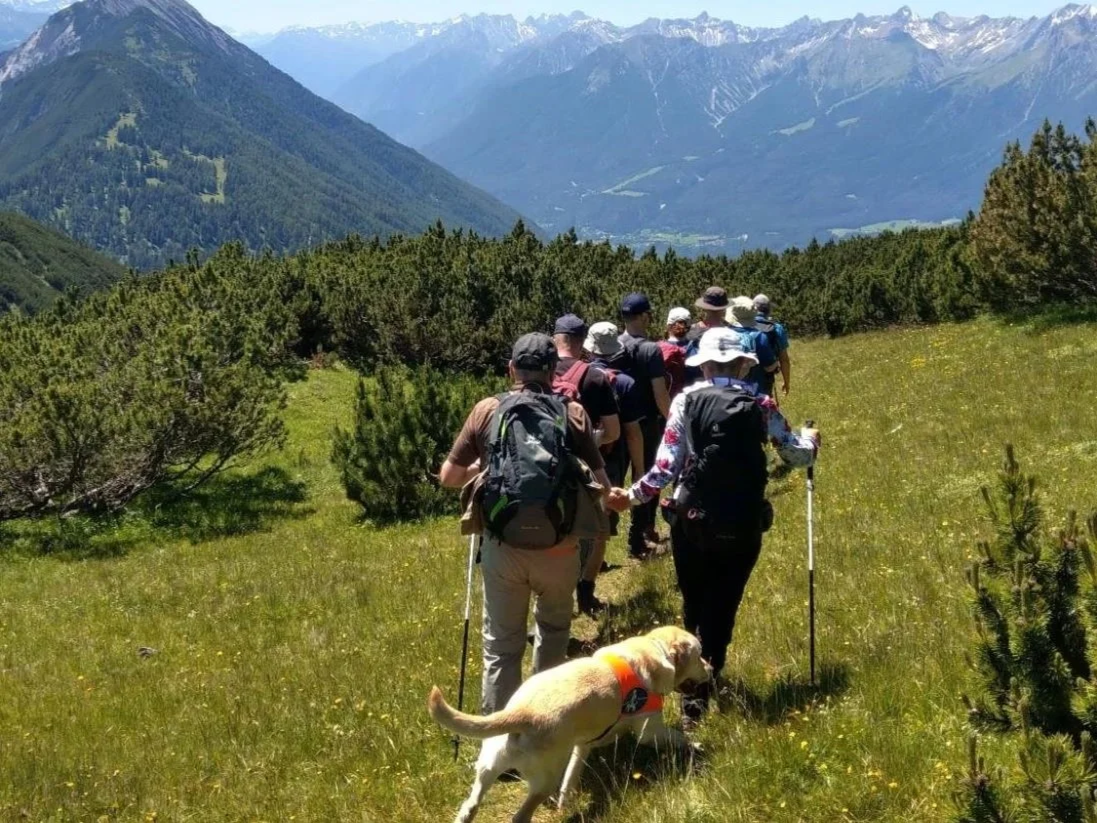
Hiking in the Alps - Photo credit: Tour de Sens
Laura and I met during our Master of Arts in European Tourism Management, a program between Sweden, Germany, the Netherlands, France, the UK and Spain that attracted people who thought about travel differently. Just a few years after we graduated, she was already building what would become Tour de Sens: an inclusive tourism company that organizes trips for blind, visually impaired, and sighted travelers together, built around experiencing the world through all the senses.
I've been watching Tour de Sens grow ever since, and it never stopped impressing me. The approach is unlike anything else in travel: 3D-printed tactile models of cities and mountain trails so visually impaired guests can understand a space before arriving, private museum openings so guests can touch the artworks, mixed groups sharing completely different sensory experiences of the same place.
It felt natural to invite her to write something for Penguin Trampoline. We're a blog about wA/Onder and respect, about seeing places as they actually are rather than as they're packaged for quick consumption. What Laura does every day sits right at the heart of that. This is her piece — and I think it will change how you experience your next trip.
— Elinor, Penguin Trampoline
What sighted travelers completely miss
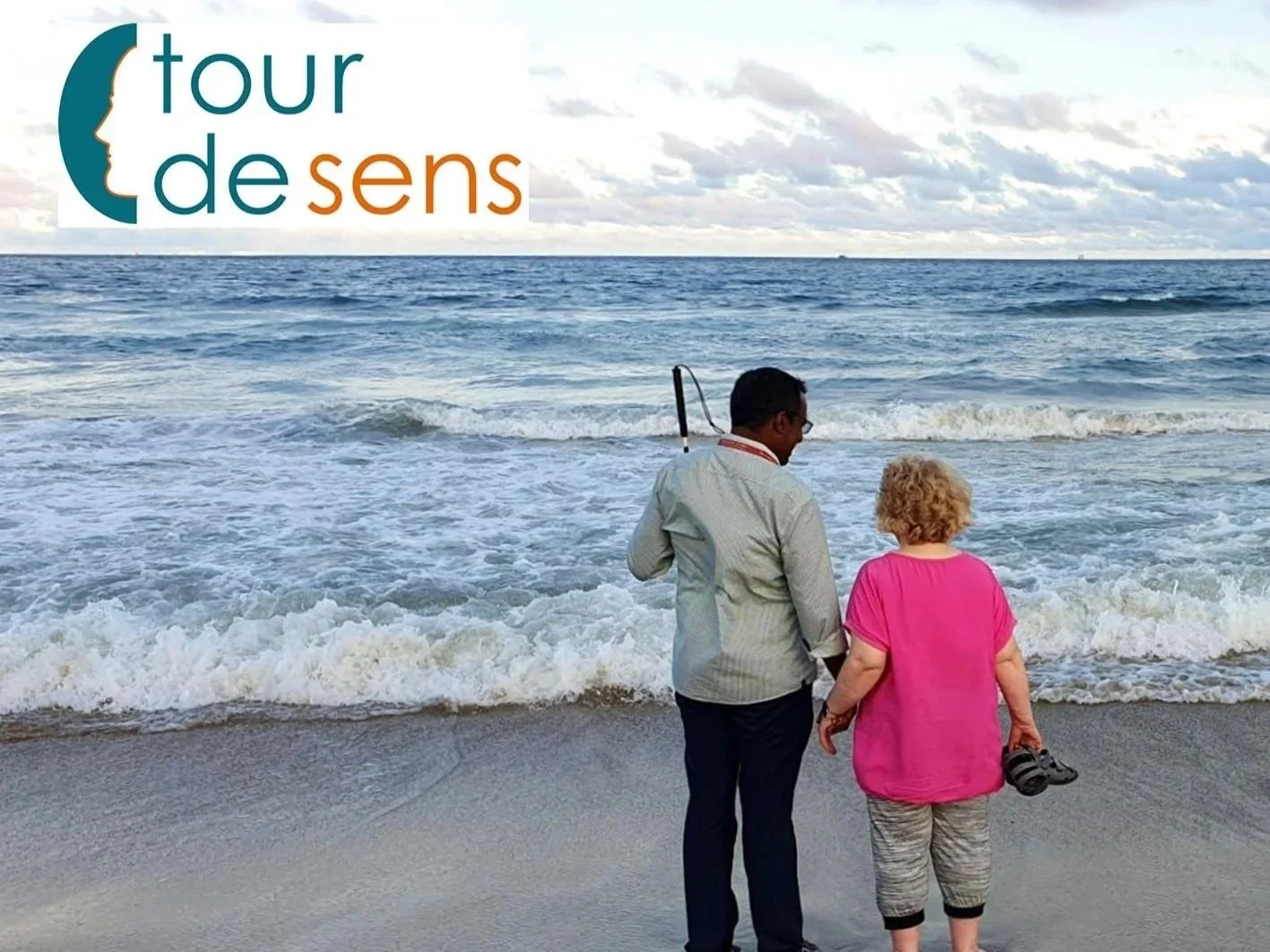
Experiencing the sea differently - Photo credit: Tour de Sens
What makes traveling special? It's a question people often ask themselves when planning a trip, setting out on one, or returning from one.
For many, it's the visual impressions and photos they bring back or share on social media with their friends: the sunrise by the sea, the stunning viewpoint in the mountains, a city's impressive skyline. But it's mainly the other sensory impressions that truly immerse you in a different, and perhaps even foreign, world. The ones that really show you that you're in a different place and that what you're experiencing is happening right now, in front of you. What does the still-damp sand on the beach smell like at sunrise? What do the sounds from the valley sound like when you're at a viewpoint in the mountains? How do car horns blow in a foreign city, and how do the people there interact with you?
If you are blind or visually impaired, these non-visual impressions are often more intense than when traveling the world as a sighted person. On our trips, blind, visually impaired, and sighted people travel together, sharing their different sensory experiences and experiencing the destination in a more diverse and intense way.
I've been running Tour de Sens for 15 years now: an inclusive tourism company for blind, visually impaired, and sighted guests, traveling to countless countries, regions, and unique spots on the planet. And there were so many things and experiences that led me to travel the world in a completely different way today. I'd like to describe two of them here.
The Camino de Santiago through sound and scent

3D map of the Portuguese Way of St James - Photo credit: Tour de Sens
One was a blind traveler's account of his perceptions along the Portuguese Way of St. James, a route I often lead as a tour guide myself, which runs through Portugal and Spain.
While I would mainly list the breathtaking landscape of the Atlantic coast and the iconic architecture of Portuguese cities or villages of Spanish Galicia, his impressions were quite different. He told me about the soothing sound of walking sticks he heard every morning as we joined the stream of pilgrims: a sound he missed once he returned home. He told me about the interesting designs on the milestones along the Camino de Santiago, some depicting a scallop shell, others the figure of St. James or just the kilometers left to Santiago. He described the scent of seaweed on the beaches of northern Portugal and the aroma of fried fish in the restaurants in the evening. He told me that coffee in Portugal has a different aromatic note than in Spain and that the two languages differ greatly in their sound and pace. His account went on much longer.
But even from these impressions alone, I realized how much I, having traveled through the region so often, overlook or fail to fully experience, simply because I'm so distracted by my sense of sight.
Touching the Guggenheim Bilbao
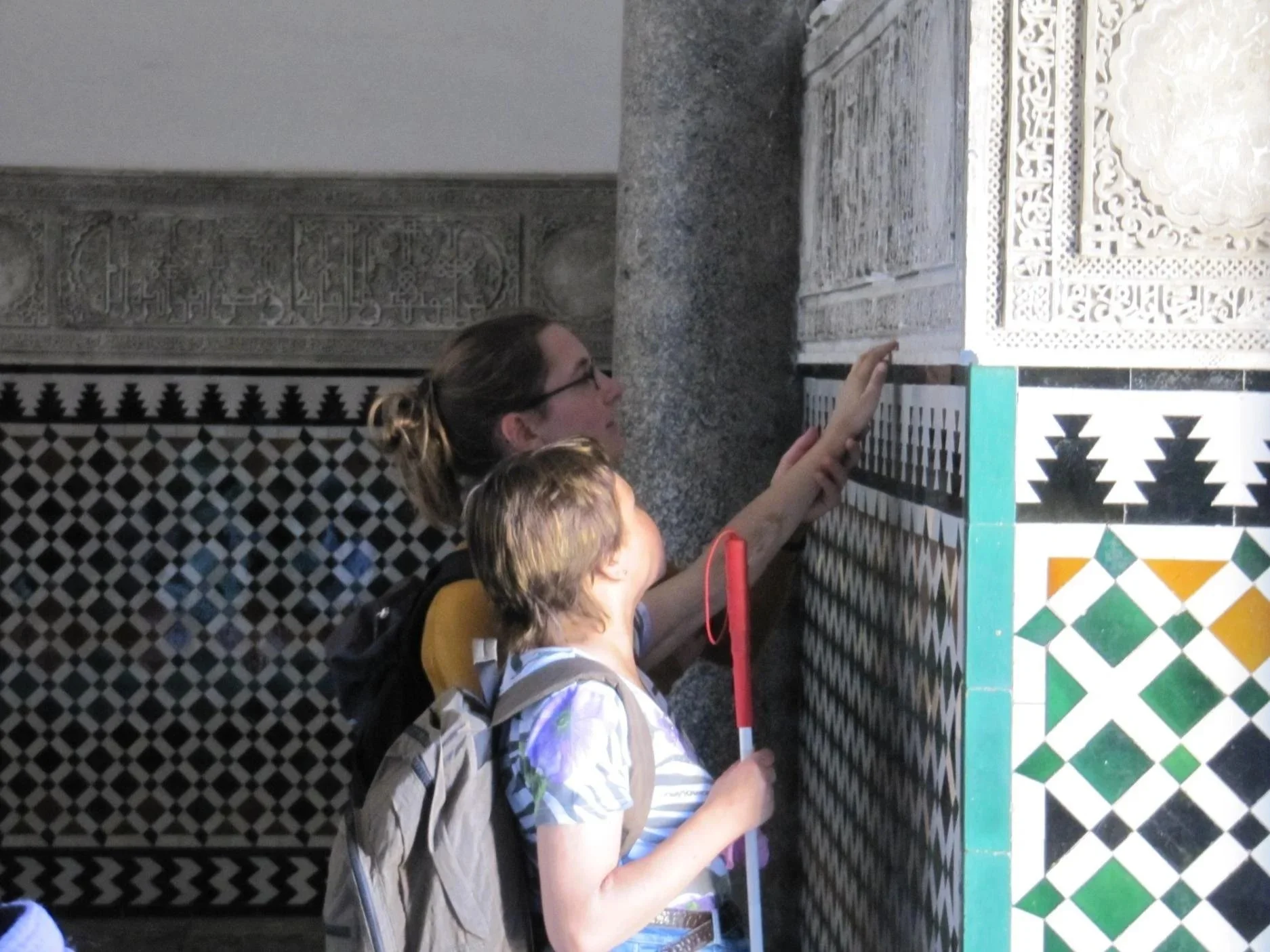
Visiting a museum with a different perspective - Photo credit: Tour de Sens
Another experience that stayed with me happened during our trip to the Basque Country, Spain.
In Bilbao, we visited the famous Guggenheim Museum on a Monday. The museum was actually closed that day, but it opened its doors especially for us so that our guests could touch the artworks. Our sighted guests, in particular, were deeply moved by this opportunity. For the first time, they felt they could put away their smartphones and devote themselves entirely to the artworks. They loved getting up close to the exhibits and touching them.
As a result, the museum began developing a program that would allow other guests without visual impairments to have exactly this same experience, because they too realized that experiences are often not mainly visual.
If you're interested in experiencing the world through other senses, or in helping a blind or visually impaired person travel, you can find more information at Tour de Sens.
🐧 A note from Penguin Trampoline: If Laura's piece made you think differently about how you experience places, that's exactly what we're here for. Curiosity is a compass. Respect starts with wA/Onder.

Free download
Travel Cheaper Cheat Sheet
27 tips on flights, hotels, hidden costs and more — spend less without missing what actually matters.
No spam. Unsubscribe anytime.
Explore all our Portugal guides
Explore all our Spain guides
How People Are Actually Traveling in 2026 (and Why Quieter Destinations Are Winning)
Book a travel consultation
